Yellow Perch Spawning Behavior in Ohio
If you've spent any time chasing those delicious yellow perch in Ohio, whether it's on the vast expanse of Lake Erie or one of our smaller inland lakes, you know they can be an incredibly rewarding catch. But just like any fish, their behavior isn't constant; it changes dramatically with the seasons. Understanding the intricacies of yellow perch spawning behavior in Ohio isn't just a fascinating biological lesson; it's a critical piece of the puzzle for any angler hoping to consistently find and catch these popular panfish. This comprehensive guide will dive deep into the annual ritual of yellow perch spawning, shedding light on the "when," "where," and "how" of this vital period, and explaining why knowing these details can dramatically improve your success on the water.
The Annual Rite: When Yellow Perch Spawn in Ohio
There's a definite magic in the air (or, more accurately, in the water) when spring begins to show its face in Ohio. For many species, it marks the start of their annual reproductive cycle, and yellow perch are no exception. This isn't a random event; it's a precisely timed biological imperative driven by environmental cues, primarily water temperature and day length. Missing this window, either as a fish or an angler, means missing out on a critical part of the year.
Timing is Everything: Peak Spawning Windows
In Ohio, yellow perch typically begin their spawning ritual as the ice breaks up and early spring truly settles in. We're generally talking late March through April, though it can certainly stretch into early May depending on how quickly the season warms up. It’s not a single day affair; it’s a process that can last a few weeks within a given body of water. Anglers often refer to this as the "spawn run," especially on Lake Erie where large schools migrate to specific areas. Think of it like a spring break for fish, but with a very important purpose!
During this time, the fish become incredibly focused on their reproductive duties, and their normal feeding patterns can change. Before the actual spawning begins, they're often gorging themselves, building up energy reserves for the strenuous activity ahead. Then, during the peak of the spawn, their attention might be elsewhere, making them trickier to entice with a bait. However, right after spawning, they're often ravenous again, looking to replenish those lost reserves. This ebb and flow is why timing your fishing trips with the various stages of the spawn is so crucial. You can find more general information about these patterns in our Ohio Yellow Perch Fishing Guide.
Water Temperature: The Ultimate Trigger
While the calendar gives us a general idea, the true key to unlocking the yellow perch spawn is water temperature. These fish are cold-blooded creatures, and their metabolic processes, including reproduction, are directly tied to the temperature of their environment. For yellow perch in Ohio, the magic number typically falls in the range of 45°F to 52°F (around 7°C to 11°C). Once the water consistently hits this thermal sweet spot, the action begins.
Early spring rains, runoff from snowmelt, and sunny days can rapidly change these temperatures, sometimes even causing fluctuations that might delay or accelerate the spawn. A sudden cold snap after a warm spell can send them deeper, waiting for conditions to stabilize. Conversely, a prolonged period of warm, sunny weather in early spring can kick things off earlier than expected. This makes paying attention to local water temperature reports and even carrying your own thermometer an invaluable tool for any serious perch angler. You might even find specialized, waterproof thermometers on platforms like Amazon that can give you real-time readings from your boat or the bank.
Where Yellow Perch Choose to Spawn in Ohio Waters
Just knowing when they spawn isn't enough; you also need to know where they're going to conduct their business. Yellow perch aren't just haphazardly dropping eggs anywhere; they seek out very specific habitats that offer the best chances for their offspring to survive. These chosen locations are often overlooked by casual anglers, but understanding them can give you a significant advantage.
Shallow, Vegetated Havens
When it comes to prime spawning grounds, yellow perch have a clear preference: shallow, protected areas. This often means coves, bays, or channels that are out of the main current flow, especially in larger bodies of water like Lake Erie. These areas warm up faster in the spring sun, reaching those critical spawning temperatures sooner than deeper, open water. More importantly, they provide crucial cover for the delicate egg strands.
Think about places where sunlight can penetrate easily, encouraging the growth of submerged aquatic vegetation. Old lily pad fields, cattail stands along the shore, submerged brush, or even just patches of fine aquatic grasses are all highly attractive to spawning perch. These plants offer a place for the unique, gelatinous egg strands to adhere, suspending them safely above the bottom silt and away from many bottom-dwelling predators. These shallow zones also tend to have slightly calmer waters, preventing the eggs from being washed away by strong currents or wave action. Many inland lakes around Ohio, from Buckeye Lake to Indian Lake, will see perch move into these specific shallow areas.
Structure and Substrate Preferences
Beyond vegetation, yellow perch also utilize other forms of structure for their spawning activities. While dense plant growth is ideal, they will readily attach their egg ribbons to submerged brush piles, fallen trees, old docks, pilings, and even discarded Christmas trees that have been sunk for habitat. The key is providing a vertical or semi-vertical surface where the eggs can hang freely. This is a big reason why areas with diverse underwater structure tend to hold healthier perch populations.
The substrate – what's on the bottom – also plays a role, albeit a less direct one for egg attachment. While the eggs themselves are suspended, the overall health of the spawning bed can be influenced by the bottom composition. Perch prefer areas with relatively clean bottoms, free from excessive muck or silt that could smother developing eggs if they were to detach. Harder bottoms, like gravel or sand, with sparse vegetation, can also be utilized. The overall water quality and oxygen levels in these shallow areas are also vital, as low oxygen can be detrimental to egg development. Knowing the Yellow Perch Identification and Habits can give you even more insight into their general habitat preferences, which often overlap with their spawning needs.
The Spawning Act: From Courtship to Egg Deposition
The actual process of spawning is a fascinating display of instinctual behavior. It's not just a simple release of eggs and milt; there's a specific progression of events that culminates in the creation of the next generation of yellow perch. Understanding these stages can help anglers anticipate where and how perch might be holding and behaving.
The Dance of the Perch: Pre-Spawn Behavior
Before the main event, yellow perch engage in a distinct pre-spawn migration and staging. Often, large schools of mature male and female perch will move from deeper wintering grounds into transition areas adjacent to their chosen spawning sites. They gather in these staging zones, often in slightly deeper pockets just outside the shallowest vegetation, or along the first breaklines. Here, they feed heavily, building up the energy reserves necessary for spawning. This pre-spawn feeding frenzy can be one of the absolute best times to target large numbers of aggressive perch. They are actively looking for food, and if you can locate these staging schools, you're in for some fast action.
The males typically arrive at the spawning grounds before the females, cruising the area and perhaps engaging in some preliminary courtship displays. Once the females arrive, the "dance" intensifies. While not as elaborate as some other fish species, there is a clear interaction. Males will follow females closely, nudging them, and attempting to position themselves to fertilize the eggs as they are released. It’s a group effort, often involving several males attending a single female, increasing the chances of successful fertilization.
Ribbon of Life: Egg Strands and Their Characteristics
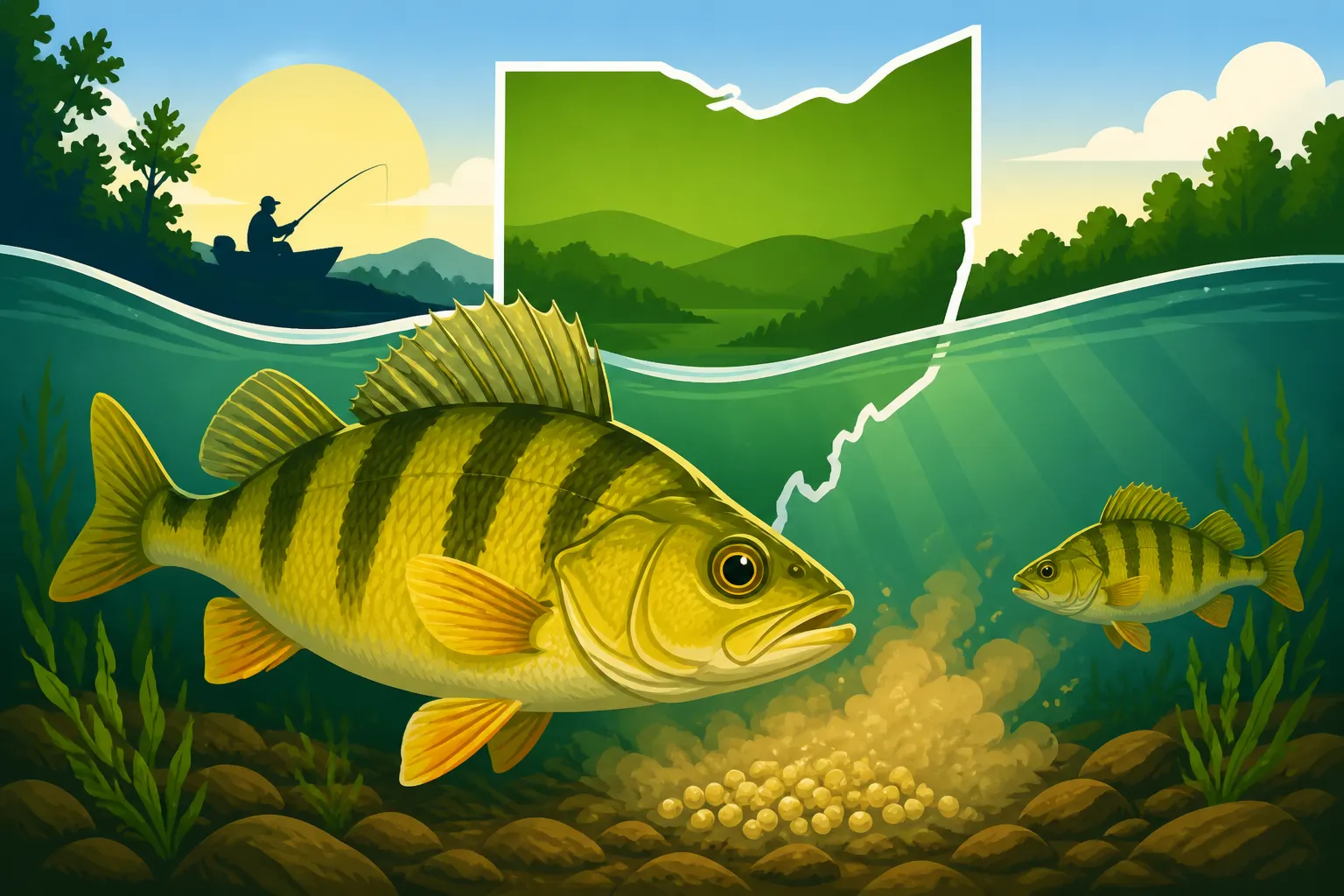
One of the most distinctive features of yellow perch spawning is their unique egg mass. Unlike many fish that scatter individual eggs, yellow perch eggs are released in long, accordion-like, gelatinous ribbons. These translucent strands can be quite impressive, often measuring several feet in length and containing thousands upon thousands of tiny eggs. A single large female can lay a ribbon containing anywhere from 10,000 to 50,000 eggs, sometimes even more!
These ribbons are designed to be buoyant and sticky, allowing them to drape over and adhere to submerged vegetation, branches, or other structure. This keeps the eggs suspended in the water column, where oxygen levels are generally higher and predation from bottom-dwelling scavengers might be less intense. The gelatinous matrix also offers some degree of protection from physical damage and certain pathogens. If you've ever pulled up a piece of submerged brush in spring and seen a translucent, elongated, somewhat accordion-shaped mass, you've witnessed this "ribbon of life" firsthand. Seeing these ribbons is a sure sign that the perch spawn is in full swing or has recently occurred in that area.
Parental Care (or Lack Thereof)
Once the eggs are laid and fertilized, the parental duties of the yellow perch are essentially over. There is no active nest guarding, no fanning of eggs, and no protection of fry from either the male or the female. This is a common strategy among many "broadcast spawners," where sheer numbers are the primary defense against predation and environmental challenges.
The adult perch will typically disperse from the immediate spawning grounds shortly after depositing their eggs. They might move to nearby deeper water to rest and recuperate, or they might immediately transition into post-spawn feeding mode. The survival of the eggs and subsequent fry is left to chance, dependent on favorable water conditions, adequate oxygen, and successful evasion of the many predators that view fish eggs as a nutritious snack. Many species, from other fish to aquatic insects and even waterfowl, will gorge on perch eggs if given the opportunity. This lack of parental care is why perch need to lay such a massive quantity of eggs to ensure enough survive to bolster future populations.
Factors Influencing Spawning Success and Population Health
Yellow perch populations, especially in a dynamic system like Lake Erie or Ohio's various reservoirs, can fluctuate significantly year to year. While the biological drive to spawn is constant, the success of that spawn is heavily influenced by a myriad of environmental and human-made factors. These factors ultimately determine the strength of future year classes and, consequently, the quality of fishing for years to come.
Environmental Conditions: Water Levels and Clarity
Two of the most critical environmental factors affecting yellow perch spawning success are water levels and water clarity. In many of Ohio's inland lakes and certainly along Lake Erie's shoreline, fluctuating water levels can have a profound impact. If water levels are unusually low during the spring, prime shallow spawning habitats – those vegetated coves and bays – might become exposed, stranding egg masses and preventing access for spawning fish. Conversely, extremely high water levels might inundate new areas, but if those areas lack suitable vegetation or structure, they won't be utilized effectively. Stable water levels during the critical spawning period are generally best for maximizing reproductive success.
Water clarity also plays a significant role. Yellow perch are primarily sight feeders, and while they don't necessarily need crystal clear water for spawning, excessively turbid or muddy conditions can be problematic. Heavy spring rains can lead to significant runoff, bringing silt and sediment into shallow spawning areas. This suspended sediment can settle on egg masses, effectively suffocating them by blocking oxygen exchange. It can also reduce light penetration, hindering the growth of the aquatic vegetation that provides essential egg attachment sites. Clearer water, especially during the hatch, allows the tiny fry to navigate and find food more effectively.
Predation and Competition during Spawning
The spawning period is a vulnerable time for yellow perch, both for the adult fish and their eggs. The adult perch, preoccupied with reproduction, may be less wary and more susceptible to predation from larger fish like northern pike, walleye, or even other species of bass. Birds like cormorants and herons also take advantage of the concentrations of fish in shallow areas.
However, the most intense predation pressure is on the eggs themselves. As mentioned, the gelatinous ribbons are a protein-rich food source for a host of aquatic critters. Crayfish, various minnow species, snails, insect larvae, and even other yellow perch (cannibalism is not uncommon in the fish world!) will readily consume egg masses. In areas with high predator densities, a significant percentage of the laid eggs may never hatch. Moreover, competition for spawning habitat can occur with other fish species that spawn at similar times, potentially displacing perch from ideal locations. Even smaller organisms, like zebra mussels, can foul spawning habitat by consuming plankton that the young perch fry would otherwise rely on.
Human Impact: Angling Pressure and Habitat Degradation
Humans, too, play a role in the success of yellow perch spawning. Angling pressure during the spawn, while often productive for anglers due to fish concentrations, can also exert stress on the population. While regulations are in place to manage harvest, heavy catch-and-release during the most vulnerable periods can still impact fish. It's why understanding regulations like Lake Erie Yellow Perch Daily Limit in the West Zone or Lake Erie Yellow Perch Daily Limit in the Central Zone is so vital for conservation.
Perhaps a more significant long-term impact comes from habitat degradation. Development along shorelines, dredging, pollution runoff from agriculture and urban areas, and the removal of submerged vegetation all contribute to the loss or deterioration of critical spawning grounds. Healthy, diverse aquatic vegetation and natural shoreline structure are vital for yellow perch reproduction. Efforts to protect and restore these habitats are crucial for sustaining robust perch populations in Ohio's waters. Anglers who are passionate about perch fishing can advocate for these conservation efforts, helping to ensure future generations can enjoy the same opportunities. Sometimes, a quick search on Amazon can even yield books or resources on local aquatic conservation efforts that you might want to get involved with.
How Spawning Behavior Impacts Angling Opportunities
Alright, let's get down to brass tacks: how does all this biological information translate into better fishing for you? Understanding the different phases of the yellow perch spawning cycle can dramatically influence your strategy, from where you fish to what baits and techniques you employ. It's about being in the right place at the right time, with the right approach.
Pre-Spawn: Prime Time for Aggressive Bites
The pre-spawn period is arguably one of the most exciting times to target yellow perch in Ohio. As we discussed, perch are actively feeding to build up energy reserves for the upcoming reproductive effort. They're often schooling in transition areas – slightly deeper flats or breaklines adjacent to their eventual shallow spawning grounds. This means they are concentrated, actively looking for food, and often willing to hit a variety of baits.
During this phase, look for them along the first significant drop-offs near shallow bays or points that will eventually warm up and host the spawn. You might find them in 15-25 feet of water, depending on the body of water. Standard perch rigs, like a Sabiki rig or a two-hook spreader rig baited with emerald shiners, fathead minnows, or even pieces of nightcrawler, can be incredibly effective. Drifting these rigs slowly over suspected staging areas is a killer technique, particularly on Lake Erie. The fish are often aggressive, making this a fantastic time for both quantity and quality. For more on tactics, check out Drift Fishing for Lake Erie Yellow Perch.
During Spawning: A Challenging Yet Rewarding Period
When the yellow perch are in the thick of spawning, things can get a bit trickier. Their primary focus shifts from feeding to reproduction, and they might not be as eager to chase down a bait. However, this doesn't mean they're impossible to catch. It just requires a more refined approach. You'll want to focus your efforts directly on or very near the actual spawning grounds: those shallow, vegetated areas or brush piles.
Fishing during the spawn often means targeting shallower water, sometimes as little as 3-10 feet deep, depending on the lake. Look for the actual egg ribbons if you can, as that's a direct indicator. Live bait, especially small minnows, tend to be most effective as they represent an easy, protein-rich meal that doesn't require much effort to catch. Slow presentations are key. A small jig tipped with a minnow or a piece of worm, fished under a slip bobber, can be deadly when presented directly into the cover where they're spawning. You might not catch as many fish as during the pre-spawn, but the fish you do catch will often be large, ripe females, full of eggs. This is also a good time to remember ethical angling, practicing responsible catch-and-release to help ensure successful spawning.
Post-Spawn Recovery: Finding Hungry Perch
After the arduous task of spawning, yellow perch are often exhausted and in need of replenishment. This post-spawn period can be another fantastic time to target them, as they quickly revert to aggressive feeding behavior to recover their strength. They'll often disperse slightly from the immediate spawning grounds, but they won't go far.
Look for post-spawn perch to move to slightly deeper water, often holding on the edges of the spawning flats, along breaklines, or near submerged structure that offers both cover and access to food sources. They'll be looking for easy meals, making minnows, worms, and even small crayfish imitations highly effective. The key here is to find those recovering schools. Pay attention to changes in water temperature and locate concentrations of baitfish, as the perch won't be far behind. They might not be in the exact same spots as the pre-spawn, but their drive to eat will be just as strong. Understanding their recovery areas can be just as important as knowing where they spawn.
| Spawning Phase | Water Temperature Range (approx.) | Typical Location | Angling Strategy & Behavior |
|---|---|---|---|
| Pre-Spawn | 40-48°F (4-9°C) | Deeper staging areas, breaklines near shallow bays | Aggressive feeding, concentrated schools. Use minnows, worms, jigs. |
| Peak Spawn | 45-52°F (7-11°C) | Shallow, vegetated coves, brush piles, submerged structure | Focused on reproduction, less aggressive. Slow presentations, live bait directly in cover. |
| Post-Spawn | 50-60°F (10-15°C) | Edges of spawning flats, nearby deeper structure, breaklines | Recovering from spawn, strong feeding drive. Minnows, worms, small crankbaits. |
By meticulously observing these three phases of the yellow perch spawning cycle in Ohio, anglers can adapt their tactics, significantly increasing their chances of a successful and memorable fishing trip. Remember, fish are creatures of habit, and their most powerful habit is reproduction. Tap into that knowledge, and you'll be well on your way to becoming a yellow perch master.
Disclaimer
This article is for general informational purposes only and does not constitute professional advice. Laws, prices and regulations vary by location and change over time. Consult a qualified professional for guidance on your specific situation.