What a Leesville Strain Muskie Is
For many devoted muskie anglers in Ohio, the term "Leesville strain" conjures up images of massive, hard-fighting fish and legendary battles on the water. But for those newer to the sport or just curious about Ohio's exceptional muskie fishery, it might sound a bit mysterious. What exactly is a Leesville strain muskie, and why does it matter? This guide will demystify this iconic fish, exploring its origins, unique characteristics, its crucial role in Ohio's muskie program, and where you might encounter one of these elusive giants.
Understanding the Leesville Strain Muskie
When we talk about a "Leesville strain muskie," we're not just talking about any muskie caught in Leesville Lake. We're referring to a specific genetic lineage of muskellunge that originated from that very lake in eastern Ohio. This strain has been selectively managed and propagated by the Ohio Department of Natural Resources (ODNR) for decades, making it a cornerstone of the state's highly successful muskie stocking program. It's a testament to dedicated fisheries management and a true success story for Ohio anglers.
The Origins and Genetics of the Leesville Strain
The story of the Leesville strain begins, fittingly, at Leesville Lake. This lake has long been known for producing impressive muskellunge, and fisheries biologists recognized that these fish possessed desirable traits, such as strong growth rates and adaptability to Ohio's diverse aquatic environments. Unlike muskie found in some other regions, the Leesville strain has adapted well to the reservoir systems and inland lakes that dominate much of Ohio's fishing landscape. They thrive in these waters, which has made them an ideal candidate for stocking efforts across the state.
Their genetic makeup is unique and has been carefully preserved through breeding programs. While specific genetic markers can be highly technical, the practical result is a muskie known for its vigor and propensity to reach large sizes. This careful genetic management helps ensure that the fish stocked into public waters are robust and have the best chance of survival and growth, ultimately providing thrilling opportunities for anglers. It's a biological advantage that contributes significantly to the quality of muskie fishing in Ohio.
Physical Characteristics and Identification
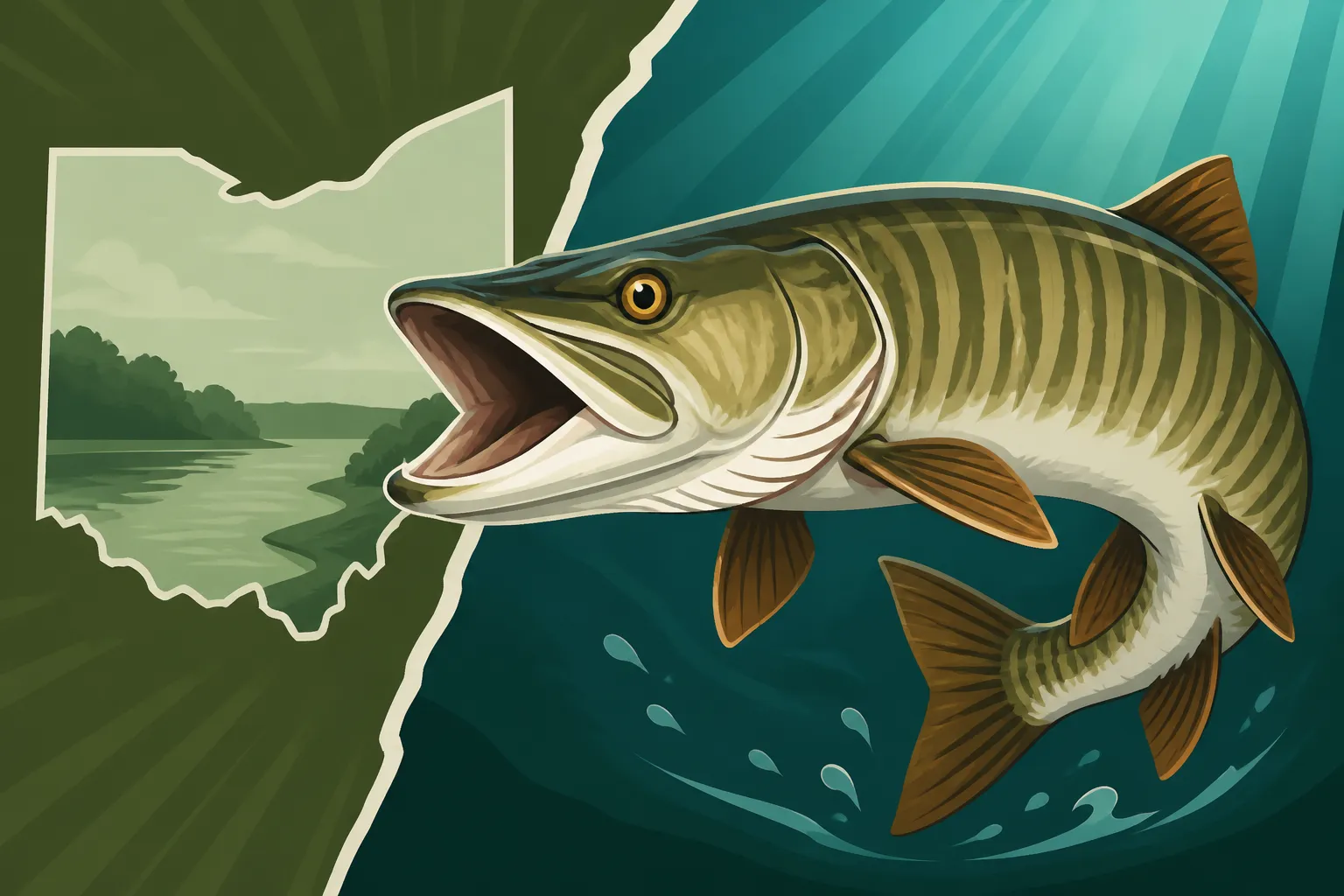
Visually, a Leesville strain muskie typically displays robust body confirmation and often exhibits beautiful, distinct markings. While muskie coloration and patterning can vary widely even within the same strain due to environmental factors, many Leesville strain fish are noted for their darker, often barred or spotted patterns, which can range from olive green to brown on a lighter background. They possess the classic elongated, powerful body shape synonymous with muskellunge, perfectly designed for ambush predation.
Distinguishing a muskie from its close relative, the Northern Pike, is crucial, especially when regulations differ. Muskellunge, including the Leesville strain, typically have scales only on the upper half of their cheek and gill cover, while Northern Pike have full scaling on both. Additionally, the tail fin of a muskie usually comes to a more pronounced "W" shape, or point, compared to the more rounded or slightly forked tail of a pike. Pay attention to the sensory pores under the jaw as well; muskie generally have 6-9 pores on each side, whereas pike have 5 or fewer. For a deeper dive into these differences, check out our guide on Ohio Muskie vs Northern Pike Identification. These subtle cues become second nature to experienced muskie hunters, allowing them to quickly identify their quarry on the water.
The Importance of Leesville Strain in Ohio's Muskie Program
The Leesville strain isn't just a curiosity; it's a cornerstone of Ohio's reputation as a premier muskie fishing destination. The intentional management and widespread stocking of this particular strain have had profound positive impacts on the state's fisheries and the angling community. It's a story of successful conservation and enhancement that directly benefits every muskie enthusiast.
A Legacy of Stocking and Management
The Ohio Department of Natural Resources (ODNR) has played a pivotal role in elevating muskie fishing by strategically propagating and stocking the Leesville strain. Their commitment dates back decades, recognizing the potential of this robust fish to thrive in Ohio's waters. The strain's natural resilience and impressive growth rates made it an obvious choice for a statewide stocking program. This wasn't a haphazard effort; it involved meticulous collection of broodstock, careful spawning, and the raising of fingerlings in state hatcheries before their release into designated muskie lakes.
This continuous stocking ensures a healthy and abundant muskie population across multiple bodies of water. Without this dedicated management, Ohio's muskie fishery simply wouldn't be what it is today. It's a proactive approach that safeguards the future of muskie angling, providing opportunities for both seasoned veterans and aspiring muskie hunters to pursue these magnificent fish.
Contributing to Ohio's Trophy Fishery
The Leesville strain is directly responsible for many of the trophy muskie that grace the pages of angling magazines and fuel countless fishing tales around campfires. Their genetic predisposition for growth, combined with abundant forage in Ohio's fertile lakes, allows these fish to reach truly impressive sizes. Anglers regularly report encounters with muskies pushing into the 40-inch class, and even larger, in many Ohio waters. For details on how these fish grow over time, our Muskie Growth Rate in Ohio Lakes article provides excellent insights.
The pursuit of these giant fish is a significant draw for anglers, solidifying Ohio's status on the national muskie fishing map. Catching a Leesville strain muskie, particularly a trophy-sized one, is considered a pinnacle achievement for many freshwater anglers. It's not just about the size, but the challenge they present—their powerful runs, acrobatic leaps, and often frustrating elusiveness make every encounter a memorable one. This commitment to fostering a trophy fishery through the Leesville strain creates an invaluable resource for the entire angling community. If you’re curious about just how big these fish can get, explore our post on How Big Muskie Get in Ohio Lakes.
Where to Find Leesville Strain Muskie in Ohio
While the name "Leesville strain" originates from Leesville Lake, these exceptional fish are far from confined to that single body of water. Thanks to the ODNR's extensive stocking efforts, Leesville strain muskie have been successfully introduced and now thrive in many of Ohio's premier muskie destinations. Knowing where to look and understanding their preferred habitats can significantly increase your chances of connecting with one of these apex predators.
Key Lakes and Reservoirs Stocked with Leesville Muskie
Ohio boasts a fantastic selection of muskie lakes, many of which are stocked with the Leesville strain. Of course, Leesville Lake itself remains a prime location, a living laboratory for the strain that bears its name. However, other prominent muskie waters like Alum Creek Lake near Columbus, West Branch Reservoir in northeast Ohio, Clear Fork Reservoir near Mansfield, and Piedmont Lake in southeastern Ohio are all excellent choices. Each of these lakes offers unique characteristics but shares the common thread of hosting a healthy population of Leesville strain muskie. For a broader perspective on the state's best opportunities, consult our Best Ohio Lakes for Muskie Fishing Overall guide.
| Lake/Reservoir | Region of Ohio | Known For | Notes on Muskie Fishing |
|---|---|---|---|
| Leesville Lake | Eastern Ohio | Origin of the strain, clear water | Excellent trophy potential, good structure |
| Alum Creek Lake | Central Ohio | Large reservoir, diverse structure | Popular for trolling and casting, Alum Creek Lake Muskie Fishing Tips available |
| West Branch Reservoir | Northeast Ohio | Extensive weed beds, deep water | Consistent action, good numbers of fish, check out West Branch Reservoir Muskie Fishing |
| Clear Fork Reservoir | North-Central Ohio | Smaller, scenic, good structure | Can be challenging but rewarding |
| Piedmont Lake | Southeastern Ohio | Clear water, deep, timber | Known for big fish, read our Piedmont Lake Muskie Fishing Guide |
| Caesar Creek Lake | Southwest Ohio | Deep, clear, good forage | Growing reputation for muskie, consistent stocking |
Anglers often dedicate themselves to learning the nuances of a specific lake, but knowing that the high-quality Leesville strain populates many of these waters offers consistency across different fishing trips. Exploring a new muskie lake can be daunting, but the presence of this proven strain is always an encouraging factor.
Preferred Habitats and Locating These Fish
Muskies, regardless of strain, are masters of ambush, and the Leesville strain is no exception. They favor areas that provide cover, food, and opportunities to surprise unsuspecting prey. Look for submerged timber, which offers excellent ambush points and protection from the sun. Extensive weed lines, especially those with sharp breaks or deep edges, are also prime muskie territory. They'll often lurk just outside these cover areas, ready to dart out and strike.
Drop-offs, particularly those leading to deeper channels or basins, are another key area, especially as water temperatures fluctuate seasonally. In spring and fall, muskie might be found shallower as they follow baitfish, while in the heat of summer, they often retreat to cooler, deeper water, only moving shallow during low light periods. Understanding these seasonal movements and focusing on key structural elements is paramount for success. Our article on When Muskie Fishing Peaks in Ohio offers great insights into seasonal patterns. A good fish finder, coupled with a keen eye for shoreline features that extend underwater, will be your best friend in locating these elusive fish.
Angling Strategies for Leesville Strain Muskie
Chasing muskie is often described as the "sport of 10,000 casts," and for good reason. They are notoriously elusive, but incredibly rewarding when you finally get one to bite. Successfully targeting Leesville strain muskie requires preparation, the right gear, and a solid understanding of proven techniques. It's a commitment, but the payoff of landing one of Ohio's freshwater giants is unparalleled.
Essential Gear and Tackle for Muskie
Muskie fishing is not for the faint of heart, or for light tackle. These fish are powerful, and your gear needs to stand up to the challenge. You'll want a heavy-action baitcasting rod, typically 7 to 9 feet long, paired with a robust baitcasting reel capable of handling heavy lines and large lures. Braided line, usually 65-100 pound test, is a must for its strength and minimal stretch, providing excellent feel and hook-setting power. You'll also need a heavy-duty fluorocarbon or wire leader to prevent bite-offs from their razor-sharp teeth. Investing in a good muskie rod and reel combo, often available on Amazon, is crucial.
Lures are a huge part of the muskie game. Oversized bucktails, jerkbaits, glide baits, topwater lures, and large crankbaits are all staples in a muskie angler's tackle box. Each type has its time and place, depending on water conditions, fish activity, and depth. For those looking to expand their muskie lure collection, popular choices like oversized bucktails and jerkbaits can be found with a quick search on Amazon. Don't forget essential accessories like long-nose pliers or jaw spreaders for safe hook removal, and a large, knotless landing net designed for muskie. Always carry a large, knotless landing net and long-nose pliers; many anglers find reliable options for these essential muskie tools on Amazon. For a comprehensive breakdown of what lures to consider, refer to our Best Lures for Ohio Muskie guide.
Techniques and Tactics for Success
Patience and persistence are perhaps the most vital "techniques" in muskie fishing. You can go hours without a sniff, only to have a monster follow your lure to the boat. The "figure-eight" maneuver at the side of the boat, where you draw your lure in a large "8" pattern before lifting it out of the water, is absolutely critical. Many muskie will follow a lure for a long distance before striking at the very last second, and the figure-eight often triggers that final bite. Our detailed guide on Figure-Eight Retrieve for Muskie Fishing explains this crucial technique in depth.
Casting large baits repeatedly, sometimes for an entire day, requires stamina. Trolling with large crankbaits is another effective strategy, especially for covering vast amounts of water on larger lakes like Alum Creek or West Branch. Pay close attention to subtle changes in retrieve speed, pauses, and direction. Muskie are highly sensitive to these nuances. Understanding weather patterns, barometric pressure changes, and moon phases can also provide an edge, as these factors often influence muskie activity. A high-quality pair of polarized sunglasses, easily purchased from Amazon, will help you spot subtle changes in structure and even a following muskie. You might even find some excellent books on muskie fishing tactics, full of insights into strains like the Leesville, available on Amazon.
Regulations and Responsible Angling
Ohio has specific regulations in place to protect its muskie fishery and ensure its sustainability. These include minimum length limits and daily bag limits, which are designed to allow muskie to reach maturity and spawn, contributing to future generations. For inland lakes stocked with Leesville strain muskie, the minimum length limit is generally 42 inches. The daily bag limit is typically one muskie per angler. These regulations can change, so always double-check the current Ohio Muskie Minimum Length Limit on Inland Lakes and Ohio Muskie Daily Bag Limit before heading out.
Catch and release is highly encouraged, and for many dedicated muskie anglers, it's a deeply ingrained ethic. These fish are often old, slow-growing, and a valuable part of the ecosystem. Practicing proper handling techniques is vital to ensure the muskie's survival after release. Minimize air exposure, support the fish horizontally, and use appropriate tools for hook removal. Releasing a powerful Leesville strain muskie back into the water to fight another day is as rewarding as the catch itself, preserving these magnificent fish for generations to come.
Disclaimer
This article is for general informational purposes only and does not constitute professional advice. Laws, prices and regulations vary by location and change over time. Consult a qualified professional for guidance on your specific situation.