Are There Wild Trout Streams in Ohio?
For many anglers dreaming of tranquil mornings casting flies into crystal-clear streams, the thought of wild trout brings a special kind of magic. But in Ohio, a state renowned for its incredible Lake Erie walleye fishing and fantastic inland fisheries, you might find yourself wondering if wild trout even exist. The honest truth is, while Ohio might not be Yellowstone, there are indeed whispers and even tangible realities of wild trout populations, though they are far less common and much harder to find than their stocked counterparts. This guide aims to clear up the mystery, exploring where these elusive fish live, why they're so rare, and what it takes to find and protect them.
The Trout Landscape in Ohio: Stocked vs. Wild
When most people think about trout fishing in Ohio, their minds probably go straight to the state's very successful stocking programs. And for good reason! The Ohio Department of Natural Resources (ODNR) does an incredible job of making trout accessible to anglers across the state. But that's a different beast entirely from naturally reproducing, wild populations.
The Stocked Trout Program: Ohio's Main Effort
Ohio's trout program is primarily built around stocking rainbow trout. These fish are raised in hatcheries and released into dozens of lakes and streams, especially in the spring and fall, creating fantastic fishing opportunities. It’s a wonderful way for families and seasoned anglers alike to experience the thrill of trout fishing without having to travel out of state. You'll find these fish in spots like Clear Fork Reservoir, Plum Creek, and even certain metropolitan park lakes. The idea is to provide a "put-and-take" fishery, meaning you catch them shortly after they're stocked. They're often quite eager to bite, making for a fun day on the water, and they provide a delicious meal.
However, these stocked trout are generally not expected to survive through the warmer summer months or reproduce naturally in Ohio's climate. The water simply gets too warm, and many of our streams lack the consistent cold, clean water necessary for trout to thrive year-round and create future generations. You can find more details about these efforts in our Ohio Inland Trout Stocking Schedule and the general Ohio Rainbow Trout Stocking Program. This is where the distinction between "stocked" and "wild" becomes crucial. Stocked fish are a managed resource; wild fish are a natural miracle.
Why Wild Trout are a Rarity in Ohio
The main reason wild trout are so rare in Ohio boils down to one critical factor: habitat. Trout, especially brook trout (which are native to parts of Ohio), are incredibly sensitive to water temperature, oxygen levels, and habitat complexity. They need consistently cold water, ideally below 68 degrees Fahrenheit, year-round. They also need clean, well-oxygenated water, often fed by cold springs or groundwater. Furthermore, they require complex stream structures: riffles for feeding, deep pools for refuge, and gravel beds for spawning.
Ohio's geology and climate don't typically offer these conditions naturally across most of the state. Much of Ohio was historically forested, but widespread deforestation for agriculture and development, coupled with channelization of many streams, led to increased water temperatures, siltation, and a loss of vital overhead cover and stream complexity. These changes significantly reduced or eliminated the few suitable habitats that might have once supported native trout. The summer heat often pushes stream temperatures beyond what trout can tolerate, even in areas with decent water quality. It’s a tough environment for a cold-water species, which makes any discovery of a wild population feel like finding a hidden gem.
Where to Find Pockets of Wild Trout in Ohio (And Why They're Rare)
Despite the odds, there are indeed small, isolated pockets of wild trout in Ohio. These are not widespread, easily accessible fisheries, but rather delicate ecosystems clinging to existence in very specific conditions. These areas typically offer unique geographical features that create the necessary cold-water refugia.
North-Eastern Ohio: The Glacial Refuge
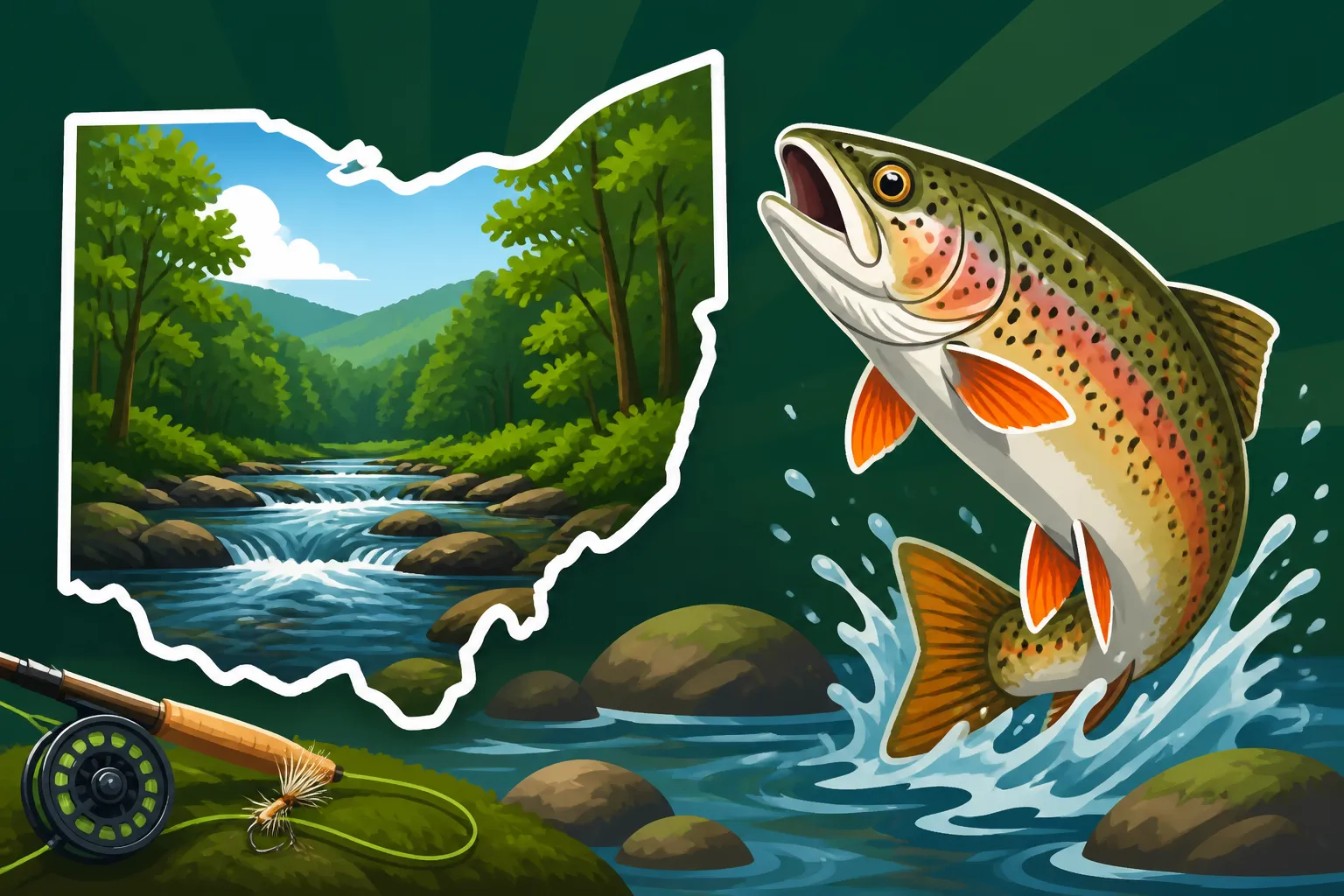
If you're going to find wild trout in Ohio, your best bet is often in the far northeastern corner of the state, particularly in counties like Ashtabula, Lake, Geauga, and parts of Trumbull. This region bears the most significant imprint of glacial activity, which left behind unique topographical features and geology. These areas are characterized by:
- Deep Ravines and Gorges: The steep-sided ravines carved by glacial meltwater and subsequent erosion provide significant shade, which helps keep stream temperatures lower. These valleys often feature dense canopy cover that further reduces direct sunlight.
- Cold Groundwater Seepage: Many of these ravines have natural springs and groundwater seeps that consistently feed cold water into the streams, acting like natural air conditioners. This constant influx of cold water is crucial for maintaining stable temperatures even during hot summers.
- Intact Forested Areas: Compared to other parts of Ohio, some of these areas have retained more of their original forested character, providing critical shade, filtering runoff, and stabilizing stream banks. This helps prevent siltation and maintain good water quality.
These are not robust, easily accessible fisheries. Instead, they are often small, remote tributaries that require significant effort to reach and explore. You won't find crowds of anglers here, and for good reason—the populations are fragile, and the fish are often small, a testament to their tough existence. Anglers exploring these areas are often looking for brook trout, Ohio's only truly native trout species, though some hardy brown trout might also establish wild populations in similar conditions. These streams are a stark contrast to the larger, more robust steelhead fisheries found in the larger Lake Erie tributaries, which are predominantly sustained by annual stocking programs, as outlined in our Ohio Steelhead Trout Fishing Guide.
Specific Stream Characteristics for Wild Trout Survival
What exactly makes a stream suitable for wild trout in Ohio? It's a combination of factors that create a very specific microclimate and habitat. If you're looking to identify potential wild trout water, keep an eye out for these characteristics:
- Headwaters Location: Wild trout are almost exclusively found in the uppermost reaches, or headwaters, of smaller stream systems. These are the sections where the stream is just beginning, often far from agricultural runoff or urban development, and where groundwater influence is strongest.
- Constant Cold Water Flow: This is non-negotiable. Look for springs, seeps, or feeder creeks that are noticeably colder to the touch, even on a warm day. Streams that rely solely on surface runoff will quickly warm up.
- Dense Overhead Canopy: Mature trees lining the banks provide crucial shade, especially during the peak of summer. This natural canopy helps insulate the water from direct sunlight, keeping temperatures down.
- Rocky or Gravel Substrate: Trout need clean, oxygen-rich gravel for spawning. Siltation can smother eggs, so streams with stable, rocky bottoms are vital. Riffles and runs over clean gravel also oxygenate the water.
- Complex Habitat Features: Look for fallen trees, undercut banks, boulders, and deep pools. These features provide cover from predators, refuge from strong currents, and crucial holding areas. A stream that looks like a uniform ditch is unlikely to hold wild trout.
- Limited Human Disturbance: Streams running through protected parklands, nature preserves, or heavily wooded private land are more likely to retain the pristine conditions wild trout need. Areas with heavy development, agriculture, or stream modification are usually not viable.
Finding these streams often requires a bit of detective work, referencing topographical maps, and understanding local geology. It's less about finding a well-known "fishing spot" and more about discovering a hidden natural sanctuary.
The Challenges of Sustaining Wild Trout Populations
Even in their secluded strongholds, Ohio's wild trout face an uphill battle. These populations are incredibly vulnerable to environmental changes, which is why their continued existence is so precarious. Understanding these challenges is key to appreciating and protecting these rare fisheries.
Habitat Degradation and Water Quality
One of the most persistent threats to wild trout populations in Ohio is habitat degradation. While some streams may still have pockets of cold water, maintaining overall habitat quality is a constant struggle. For instance, runoff from agricultural lands can carry sediments and nutrients into streams, leading to siltation that smothers gravel spawning beds and reduces water clarity. Urban and suburban development often introduces impervious surfaces, which increase stormwater runoff, leading to flashier flows that scour stream beds and erode banks. Even seemingly minor alterations, like removing streamside vegetation or channelizing a small section, can have devastating long-term effects on these sensitive ecosystems.
Furthermore, water quality can be impacted by pollution. While major point-source pollution has largely been mitigated in many areas, non-point source pollution from various land uses remains a concern. This can include pesticides, herbicides, and other chemicals that, even in trace amounts, can be detrimental to delicate aquatic insect populations—a primary food source for trout—and directly harm the fish themselves. Protecting these fragile wild trout streams means protecting the entire watershed that feeds them, from the headwaters all the way down.
Climate Change and Temperature Sensitivity
Perhaps the most significant long-term threat to wild trout in Ohio is climate change. As average temperatures rise, even marginally, the already limited cold-water refugia become increasingly stressed. A few degrees warmer water temperature can mean the difference between survival and death for trout, especially brook trout, which prefer water temperatures well below 68 degrees Fahrenheit. Prolonged periods of heat, combined with reduced summer rainfall, can lead to lower stream flows and even warmer water, pushing these fish beyond their physiological limits.
The unique glacial features that create cold springs and shaded ravines in northeastern Ohio offer some buffering against these changes, but even these areas are not immune. Trout spawning is also temperature-dependent, and altered seasonal temperature patterns could disrupt their reproductive cycles. This environmental pressure makes the conservation of existing wild trout habitats incredibly important, as these spots could become increasingly rare and valuable in a changing climate. It's a reminder that even in a state not known for wild trout, these fish serve as sensitive indicators of environmental health.
Angler Responsibility and Conservation Efforts
If you're lucky enough to find yourself on a stream that holds wild trout in Ohio, your role as an angler shifts significantly from that of a casual participant to a dedicated steward. The approach to fishing these delicate populations must be one of utmost respect and conservation.
Practicing Catch and Release for Wild Trout
For any wild trout encountered in Ohio, especially brook trout, practicing 100% catch and release is not just a recommendation—it's essential for their survival. These fish are rare, and their populations are often small and fragile. Even taking one fish can have a disproportionately large impact on the local population's ability to reproduce and sustain itself. When practicing catch and release, consider the following:
- Use Barbless Hooks: Barbless hooks minimize tissue damage, making it easier to release the fish quickly and safely. You can easily pinch down the barb on any hook with a pair of pliers.
- Minimize Handling: Try to keep the fish in the water as much as possible. If you must handle it, wet your hands first to protect its delicate slime coat, which acts as a barrier against disease. Avoid squeezing the fish.
- Quick Release: Have your camera ready (if you're taking a photo) and your release tool accessible. Get the hook out gently and quickly, and allow the fish to recover in the water before letting it go. If it's struggling, hold it upright in a calm current until it swims away on its own.
- Appropriate Tackle: Using light tackle that matches the size of these often-small fish (many wild brook trout might be under 10 inches) can help prevent over-stressing them during the fight. For fly anglers, this often means lighter tippets. You can find a good selection of specialized fly-fishing gear on Amazon for these delicate pursuits.
Remember, the goal is to enjoy the unique experience of encountering a wild fish and ensure that others can do the same for generations to come. Respecting these fragile populations is paramount to their continued existence. The rewards aren't measured in fillets, but in the sheer joy of knowing these wild creatures persist.
Supporting Conservation Initiatives
The future of wild trout in Ohio isn't just up to individual anglers; it requires broader conservation efforts. Numerous organizations, from local watershed groups to state agencies, work tirelessly to protect and restore aquatic habitats. Supporting these initiatives, whether through volunteering, donations, or simply raising awareness, can make a real difference.
These efforts might include:
- Stream Bank Stabilization Projects: Planting native vegetation along stream banks to reduce erosion, filter runoff, and provide shade.
- Removal of Barriers: Taking out old dams or culverts that prevent fish passage, allowing trout to access more habitat.
- Water Quality Monitoring: Regular testing of stream chemistry to identify and address pollution sources.
- Land Preservation: Protecting critical forested areas and wetlands that directly impact stream health.
Educating yourself and others about the importance of these small, cold-water streams is also a vital step. While Ohio's robust stocking program, which you can learn more about in Ohio Fishing License Guide for Residents and Nonresidents, ensures plenty of fishing opportunities, the unique magic of encountering a truly wild, native brook trout in its natural habitat is a testament to the resilience of nature and the importance of our collective conservation efforts. It reminds us that even in unexpected places, wildness can endure if we cherish and protect it.
| Wild Trout vs. Stocked Trout in Ohio | Wild Trout | Stocked Trout |
|---|---|---|
| Origin | Born and reproduce naturally in the stream | Raised in hatcheries and released by humans |
| Primary Species | Brook Trout (native), some Brown Trout | Rainbow Trout (most common), some Brown Trout |
| Habitat Requirements | Consistently cold, clean, oxygenated water; complex stream structure; dense shade | Less stringent, can survive temporarily in warmer waters post-stocking |
| Location | Rare, isolated headwater streams in specific cold-water refugia (e.g., NE Ohio ravines) | Widely distributed in lakes and streams across the state as part of a "put-and-take" program |
| Population Size | Small, delicate, highly vulnerable | Large numbers, sustained by continuous stocking |
| Appearance | Often more vibrant, natural coloration; smaller size typical | Can vary, often show hatchery-reared fin wear; can be larger due to hatchery feeding |
| Fishing Approach | Catch and Release mandatory for conservation; careful handling | Often kept for consumption within Ohio Statewide Bag and Size Limits |
| Survival | Year-round, reproducing generations | Generally limited to post-stocking period; rarely survive year-round or reproduce |
Disclaimer
This article is for general informational purposes only and does not constitute professional advice. Laws, prices and regulations vary by location and change over time. Consult a qualified professional for guidance on your specific situation.