Difference Between a Rainbow Trout and a Steelhead
It's incredibly common for anglers, even seasoned ones, to get a little tangled up when trying to distinguish between a rainbow trout and a steelhead, especially here in the Buckeye State where both are present and popular. This confusion is totally understandable, as they look so similar and share so much genetic material. This guide is here to untangle that fishing line of doubt, clearly outlining the defining characteristics and behaviors that separate these magnificent fish in Ohio's waters, so you can confidently identify your catch and understand their unique journeys.
The Core Identity: What Defines a Rainbow Trout?
When we talk about "rainbow trout" in Ohio, we're generally referring to the fish that live their entire lives in freshwater environments, primarily in streams, rivers, and inland lakes that are regularly stocked. These are your classic, beautiful, stream-dwelling trout, known for their vibrant colors and feisty fight. Many anglers start their trout fishing journey with these readily accessible fish.
The Inland Life Cycle: Staying Put
The most significant defining characteristic of a rainbow trout, in the context of differentiating it from a steelhead, is its life cycle. A true rainbow trout, often called a "resident" rainbow, completes its entire life cycle within the freshwater system where it hatched or was stocked. It doesn't migrate to a large body of water like Lake Erie. These fish will hatch, grow, mature, and spawn all within the same stream, river, or lake. Think of them as the homebodies of the trout world. They find a good stretch of water with plenty of food and cover, and they stick around. In Ohio, where natural reproduction of rainbow trout is limited, most of the rainbows you encounter are the result of the Ohio Rainbow Trout Stocking Program. The Ohio Department of Natural Resources (ODNR) actively stocks numerous public waters with these trout to provide fantastic fishing opportunities for anglers of all ages.
These stocked fish are usually raised in hatcheries until they reach a catchable size. Once released, they adapt to their new environment, feeding on insects, small crustaceans, and other aquatic life. Their survival and growth depend heavily on the quality of the water, the availability of food, and the lack of predatory pressure in these inland systems. This sedentary lifestyle, compared to their migratory cousins, is the fundamental biological split.
Appearance of Resident Rainbows
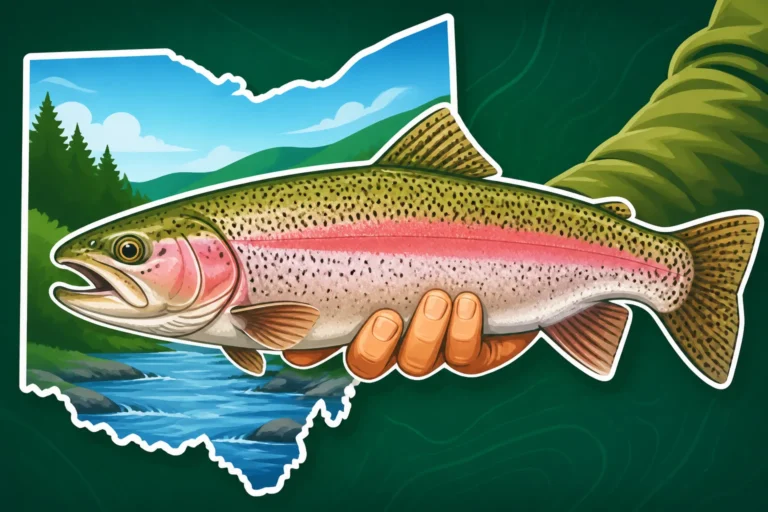
While both rainbow trout and steelhead are scientifically the same species (Oncorhynchus mykiss), their differing environments and life cycles lead to distinct variations in their appearance. Resident rainbow trout, especially those found in smaller, clearer streams, tend to exhibit more pronounced and vibrant coloration. You'll often see that characteristic iridescent pink or red lateral stripe running down their side, living up to their "rainbow" name. Their backs are typically a darker olive-green, fading to silvery sides and a white belly, and they are adorned with numerous small black spots on their back, sides, and fins, including the caudal (tail) fin.
The intensity of their colors can vary greatly depending on their specific habitat, diet, and even the time of year. Trout living in pristine, gravel-bottomed streams might have brighter, more vivid hues, while those in murkier lake environments might be a bit more subdued. The Size of Ohio's Stocked Rainbow Trout also plays a role, with smaller, recently stocked fish often showing more vibrant colors than older, larger specimens. Their fins tend to be a bit more rounded and less elongated than their migratory counterparts, and their overall body shape can be a bit chunkier, reflecting a life of less strenuous migration.
Habitat and Behavior of Stocked Rainbows in Ohio
In Ohio, resident rainbow trout are primarily found in waters designated for the Ohio Inland Trout Stocking Months. These include various inland lakes and ponds, and occasionally some smaller streams, particularly in the cooler months. You'll often find them in places like Clear Fork Reservoir, Roosevelt Lake, and certain urban ponds within metropolitan park systems. These environments provide the cooler water temperatures and oxygen levels necessary for trout survival, especially after they are released from the hatchery.
Their behavior is typically dictated by their environment and the availability of food. They tend to stick to areas with cover, such as submerged logs, rock formations, and undercut banks, which provide shelter from predators and strong currents. They'll actively feed on aquatic insects like mayflies, caddisflies, and stoneflies, as well as terrestrial insects that fall into the water. Anglers often target them using artificial flies, small spinners, power bait, or worms. Because these fish are often recently stocked and aren't subjected to the rigorous migrations of steelhead, they can sometimes be a bit easier to catch, making them a fantastic target for beginners or families enjoying a relaxed day of fishing. Understanding their typical habitats and feeding patterns is key to successful rainbow trout fishing in Ohio's inland waters.
Embracing the Journey: Understanding the Steelhead
Now, let's turn our attention to the steelhead, the chrome-bright, powerful migratory form of the rainbow trout that graces Ohio's Lake Erie tributaries. These fish are renowned for their incredible strength, stamina, and challenging battles, making them a coveted trophy for many Ohio anglers.
The Anadromous Nature: A Call to the Great Lakes
The most critical distinction, the very definition of a steelhead, is its anadromous life cycle. This means they are born in freshwater rivers and streams, migrate to a large saltwater (or in the Great Lakes region, large freshwater like Lake Erie) body to live and grow, and then return to their natal (or stocked) freshwater streams to spawn. For Ohio anglers, this migration occurs between Lake Erie and its tributaries, often referred to as "Steelhead Alley." This journey is physically demanding, transforming the fish from a vibrant, often colorful stream trout into a sleek, powerful, chrome-colored athlete.
The Steelhead Trout Life Cycle in Lake Erie Tributaries is fascinating. Young steelhead, called smolts, typically spend one to two years in their home rivers before making their perilous journey downstream to Lake Erie. Once in the vastness of the lake, they grow rapidly, feasting on baitfish and other abundant food sources. After two to four years in the lake, having reached a significant size and developed immense strength, they feel the irresistible urge to return to the rivers to spawn. These spawning runs, often triggered by changes in water temperature and flow, draw anglers to tributaries like the Grand River, Rocky River, and Vermilion River in droves. This migratory imperative is what truly defines a steelhead.
Appearance of Ohio Steelhead
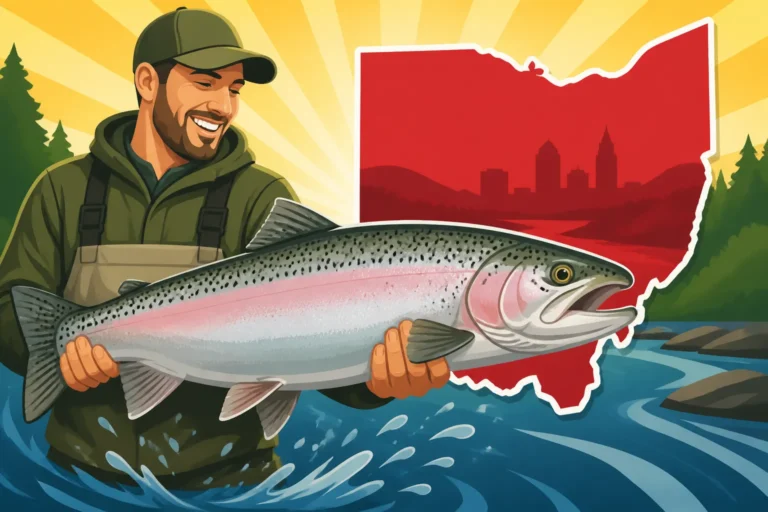
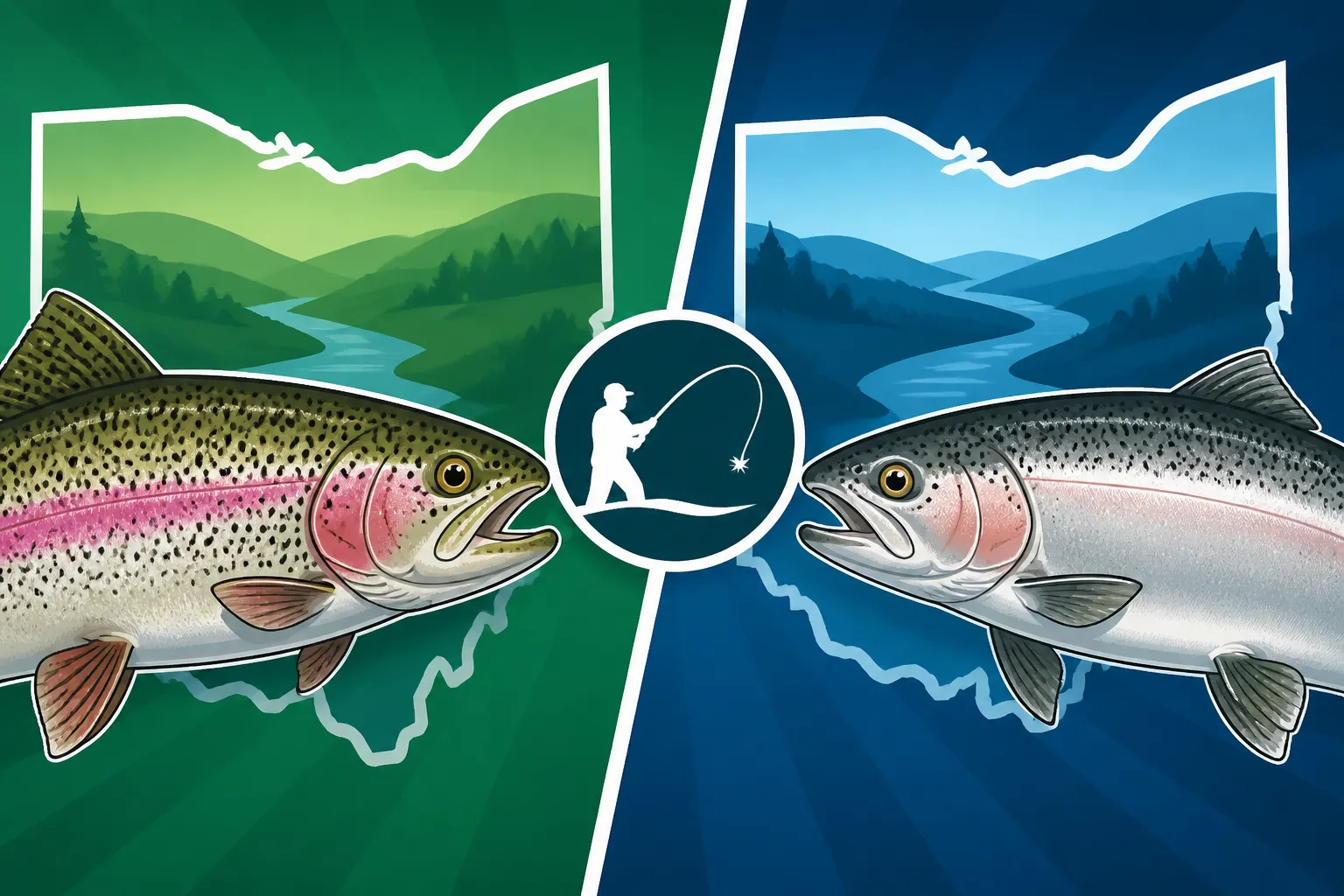
The appearance of steelhead, especially when they first enter the rivers from Lake Erie, is remarkably different from their resident rainbow cousins. They earn the nickname "chrome" for a reason – their bodies are typically a dazzling, reflective silver, with a steely blue or greenish tint on their backs. The iconic pink or red lateral stripe, so prominent on resident rainbows, is often faded or completely absent on a fresh-run steelhead, especially early in the spawning migration. They retain the small black spots, but these might be less distinct against their silvery background.
As they spend more time in the rivers, waiting to spawn, their coloration can begin to change. They may start to take on some of the more vibrant hues of a resident rainbow, with the lateral stripe becoming more apparent and their bodies darkening slightly. However, they almost always retain a more elongated, streamlined, and muscular build, a testament to their migratory life. Their fins, particularly the caudal fin, are often more pointed and robust, adapted for powerful swimming against strong currents. The sheer size difference is also notable; while stocked rainbows might top out at a few pounds, Ohio Steelhead Trout Fishing Guide often refer to steelhead weighing into the double digits.
Steelhead Habitat in Ohio's Tributaries
Steelhead in Ohio are almost exclusively found in the tributaries of Lake Erie, particularly during their spawning runs in the fall, winter, and spring. These rivers, such as the Rocky River, Chagrin River, Grand River, and Conneaut Creek, are known collectively as Ohio's "Steelhead Alley." The fish ascend these rivers from Lake Erie, seeking suitable gravel beds for spawning.
Their habitat preferences in the rivers are strategic. When they first enter, they often hold in deeper pools, slower runs, and behind large structures like boulders or fallen trees, seeking refuge from the current and predators. As they prepare to spawn, they'll move into shallower riffles and gravelly areas. Anglers targeting steelhead need to understand these holding patterns and migration routes. They feed less actively once they enter the rivers, their primary focus shifting to reproduction. However, they will still strike at lures and flies out of aggression or instinct, especially if presented effectively. Knowing when and where to find them, and understanding their more aggressive takes, is key to successful Ohio Steelhead Fishing Techniques. You can find excellent gear for these demanding fish on sites like Amazon, from strong fluorocarbon lines to specialized steelhead rods.
Key Distinctions: More Than Just a Name
The relationship between rainbow trout and steelhead is one of adaptation and environment. While genetically identical, their diverging life paths lead to significant, observable differences that every Ohio angler should know.
Biological and Genetic Similarities
Let's get scientific for a moment. Both the resident rainbow trout and the migratory steelhead are the exact same species: Oncorhynchus mykiss. This means they can interbreed, and in some systems, you might even find their offspring. The differences we observe are not due to separate species, but rather phenotypic plasticity – the ability of one genotype (the genetic makeup) to produce different phenotypes (the observable characteristics) when exposed to different environmental conditions. It's essentially a "nature vs. nurture" scenario where "nurture" (their environment and life history) shapes how their "nature" (genetics) expresses itself.
The ability to become either a resident rainbow or a migratory steelhead is often genetically influenced, but the environmental cues are what trigger the migratory behavior. Factors like food availability, water temperature, population density, and even the length of the freshwater stream they inhabit can influence whether a young trout decides to "smolt" (undergo physiological changes to survive in saltwater/large freshwater) and migrate, or stay put. This shared genetic heritage is why the confusion is so prevalent; without understanding their life history, it's easy to see them as interchangeable.
Behavioral Differences and Migration Patterns
The most glaring behavioral difference is, without a doubt, migration. Resident rainbow trout, as discussed, stay put. They establish territories, feed locally, and spawn in the same waters where they grew up. Their movements are typically limited to seeking food, cover, and spawning grounds within a relatively small geographical area. You might see them move upstream or downstream a few miles, but nothing compared to the epic journeys of their steelhead cousins.
Steelhead, on the other hand, are driven by an innate migratory instinct. They undertake significant journeys between the vastness of Lake Erie and the relatively confined spaces of its tributaries. These migrations are often synchronized with environmental cues, primarily water flow and temperature. In the fall, they begin their "staging" in the lake, often near river mouths, waiting for the first significant rains to raise water levels and cool temperatures, prompting them to enter the rivers. They'll spend the winter in the tributaries, sometimes dropping back to the lake and re-entering, before spawning in the spring. After spawning, many adult steelhead, unlike many salmon species, survive to return to the lake and potentially spawn again in subsequent years, earning them the moniker "chrome rockets" due to their incredible fight and speed. This annual pilgrimage is a true marvel of the natural world and a core part of the Ohio Fishing Season Calendar for many.
Size, Coloration, and Fin Characteristics
Beyond the life cycle, there are concrete physical characteristics that can help you tell them apart, especially when comparing a fresh-run steelhead to a resident rainbow.
- Size: Steelhead, having spent years feeding in the nutrient-rich waters of Lake Erie, grow significantly larger than most resident rainbow trout in Ohio. It's not uncommon for steelhead to reach 5-15 pounds, with some even larger, while most stocked rainbows in inland waters are in the 1-3 pound range.
- Coloration: This is often the most immediate visual cue. Fresh-run steelhead are typically brilliant silver or chrome, with a dark, often bluish-green back, and a faded or absent lateral red stripe. Their spots might be less distinct. Resident rainbows, especially those caught in clear, rocky streams, will boast a more vibrant, distinct pink or red lateral stripe and darker, more defined spots against an olive-green back and silvery sides.
- Body Shape: Steelhead are built for speed and power, featuring a more torpedo-shaped, streamlined body, optimized for navigating strong currents and open water. Resident rainbows can be a bit more robust or "stocky" in comparison, sometimes appearing deeper-bodied for their length.
- Fin Condition: Steelhead, after their arduous journey and life in the lake, often have more robust, sometimes even slightly tattered, fins. Their tail fin, in particular, will be broad and powerful. Resident trout, especially hatchery-raised ones, tend to have more pristine, often rounded fins.
Here's a quick comparison table to help visualize these differences:
| Feature | Resident Rainbow Trout (Inland) | Steelhead (Lake Erie Tributary) |
|---|---|---|
| Life Cycle | Spends entire life in freshwater streams/lakes | Migrates to Lake Erie, returns to streams to spawn |
| Primary Habitat | Stocked inland lakes, smaller streams | Lake Erie; spawning runs into tributaries |
| Appearance (Fresh) | Vibrant, distinct pink/red stripe; darker back; visible spots | Brilliant chrome/silver; faded or absent stripe; steely blue back; less distinct spots |
| Body Shape | Often stockier, deeper-bodied | Streamlined, torpedo-shaped, very muscular |
| Average Size | 1-3 lbs (stocked) | 5-15+ lbs |
| Fin Condition | Generally pristine, often rounded | Robust, powerful, sometimes frayed from journey |
| Diet | Aquatic/terrestrial insects, small baitfish | Primarily baitfish in Lake Erie |
Why the Confusion? Ohio's Unique Angling Landscape
It's really no wonder why anglers get these two mixed up. Ohio's unique position on the Great Lakes, combined with active stocking programs and specific terminology, creates a perfect storm for identity confusion. It's not just a casual mistake; it's a deep-seated part of the angling culture here.
The Role of Stocking Programs
One of the primary reasons for the persistent confusion stems directly from Ohio's extensive fish stocking efforts. The ODNR Division of Wildlife actively stocks both rainbow trout into various inland lakes and ponds and steelhead smolts into Lake Erie tributaries. Both of these are genetically rainbow trout. When you hear "rainbow trout" mentioned in the context of inland fishing, it almost always refers to the non-migratory form, often simply called "trout" for brevity. However, when anglers talk about the "steelhead run," they're specifically referring to the migratory form of the same species.
The stocking programs aim to enhance recreational fishing opportunities. For example, inland rainbow trout stockings provide readily accessible fishing for families and casual anglers in urban and rural ponds alike. Meanwhile, the Steelhead Strain Ohio Stocks in Its Rivers ensures that a robust population of these migratory giants continues to challenge serious river anglers. The challenge is that both are Oncorhynchus mykiss, and without a clear understanding of their life history and the specific water body you're fishing, it's easy to mistakenly label a small steelhead smolt in a river as a "rainbow trout" or assume any large trout in an inland lake could also become a steelhead. The terminology can be a bit of a linguistic trap!
Common Misconceptions Among Anglers
The misconceptions are widespread and understandable. Many anglers simply use "rainbow trout" as an umbrella term for any trout with a pink stripe, regardless of its migratory status. Others might believe that steelhead are an entirely different species of fish, distinct from rainbows. A common thought is that a rainbow trout that happens to wander into Lake Erie automatically becomes a steelhead, which isn't quite accurate in terms of its full life cycle and genetic predisposition for anadromy.
Another misconception often revolves around the fishing experience itself. People might assume that because both are "trout," the fighting characteristics are the same. While all trout fight well, the sheer power, speed, and aerial acrobatics of a large, fresh-run steelhead are in a different league compared to most resident rainbows. This physical difference, a result of their life in Lake Erie, often leads anglers to mentally classify them as entirely different creatures. Even experienced anglers, without a deeper understanding of the biology, might struggle to articulate the precise differences beyond "one is big and silver, the other is colorful and stays in the creek." It’s a nuance that takes time and experience to fully grasp.
Practical Identification Tips for Anglers
So, how can you, an Ohio angler, confidently tell the difference when you pull one of these beauties from the water?
- Location, Location, Location: This is your number one clue. If you're fishing in a small inland lake or pond that's stocked by the ODNR with "trout" (like most of the smaller urban ponds or state park lakes), you're almost certainly catching a resident rainbow trout. If you're fishing one of the major Lake Erie tributaries (Rocky, Grand, Chagrin, Vermilion, Conneaut creeks) during a known steelhead run (fall, winter, spring), and you hook a large, silver fish, it's a steelhead.
- Color and Sheen: A freshly caught steelhead, especially one that just came out of Lake Erie, will have that incredible chrome, silvery sheen. It will look like it was dipped in liquid metal, with a dark, often steel-blue or green back. The red or pink lateral stripe will be faint or non-existent. A resident rainbow will typically have a more vibrant, distinct pink/red stripe, and generally won't have the same high-gloss chrome finish. You can compare photos online or even look at a fishing gear site like Amazon for visual references to aid your identification.
- Body Shape and Fin Condition: Steelhead are built like athletes – sleek, muscular, and elongated. Resident rainbows can be a bit rounder or chunkier. Also, observe the fins. Steelhead often have more developed, pointed fins, especially the tail, indicative of their powerful swimming.
- Size: While not a definitive rule, the size difference is usually telling. If you hook a 5-pound plus rainbow-looking fish in an Ohio tributary of Lake Erie, it's a steelhead. If you catch a 1-2 pound rainbow in an inland lake, it's a resident rainbow.
- Check for Fin Clips: Sometimes, hatchery-raised steelhead smolts released into tributaries will have a small fin clip (adipose fin or other). While not always present, if you see one, it confirms its hatchery origin, which is typical for steelhead populations.
- Fight: This isn't an identification method for the fish in your hand, but it’s certainly a clue when you’re battling one! Steelhead often offer an incredibly powerful, acrobatic fight with long runs and jumps. Resident rainbows, while fun to catch, generally don't possess the same raw power and stamina.
By paying attention to these details, you'll not only impress your fishing buddies with your knowledge but also gain a deeper appreciation for the incredible biology and journey of these amazing fish. This understanding also helps in adhering to specific regulations, as Ohio Fishing Regulations Every Angler Should Know sometimes have different rules for inland trout vs. Lake Erie tributary steelhead, such as the Ohio Inland Trout Daily Limit.
Ultimately, whether you call it a rainbow or a steelhead, the thrill of hooking one is undeniable. But knowing the difference adds a whole new layer of appreciation to your Ohio fishing adventures!
Disclaimer
This article is for general informational purposes only and does not constitute professional advice. Laws, prices and regulations vary by location and change over time. Consult a qualified professional for guidance on your specific situation.