Difference Between Crappie and Bluegill
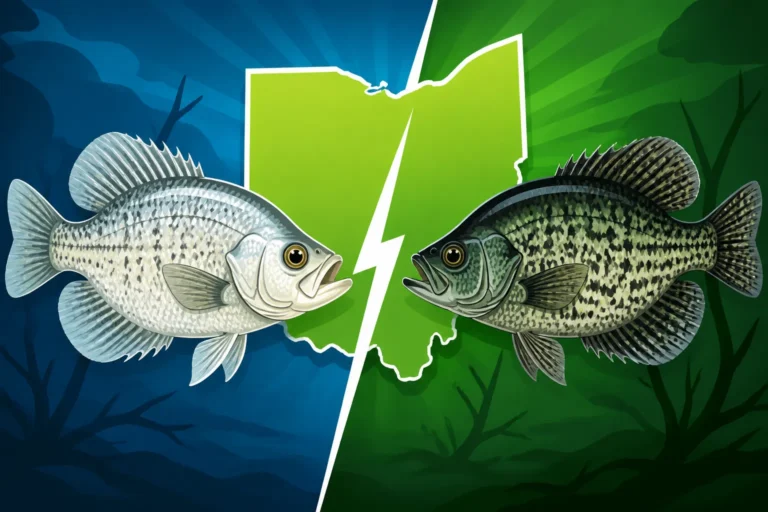
It's incredibly common for anglers, especially those new to the sport or just visiting Ohio's fantastic fishing waters, to sometimes mix up crappie and bluegill. Both are popular panfish, both are delicious on the dinner table, and both can often be found in similar habitats, leading to that moment of hesitation when you pull a fish out of the water and wonder, "Is this a crappie or a bluegill?" This guide is here to clear up that confusion once and for all, helping you identify these two distinct species and understand why knowing the difference can make you a more successful angler in Ohio.
Visual Distinctions: Spotting the Key Differences
Let's face it, when you're on the water, excited after a bite, the last thing you want is a lengthy identification process. Luckily, crappie and bluegill have several clear visual cues that set them apart. Once you know what to look for, telling them apart becomes second nature.
Body Shape and Dorsal Fin Structure
One of the most immediate giveaways when distinguishing between a crappie and a bluegill is their overall body shape and, more specifically, the structure of their dorsal fin. Imagine holding both in your hands – the difference would be palpable.
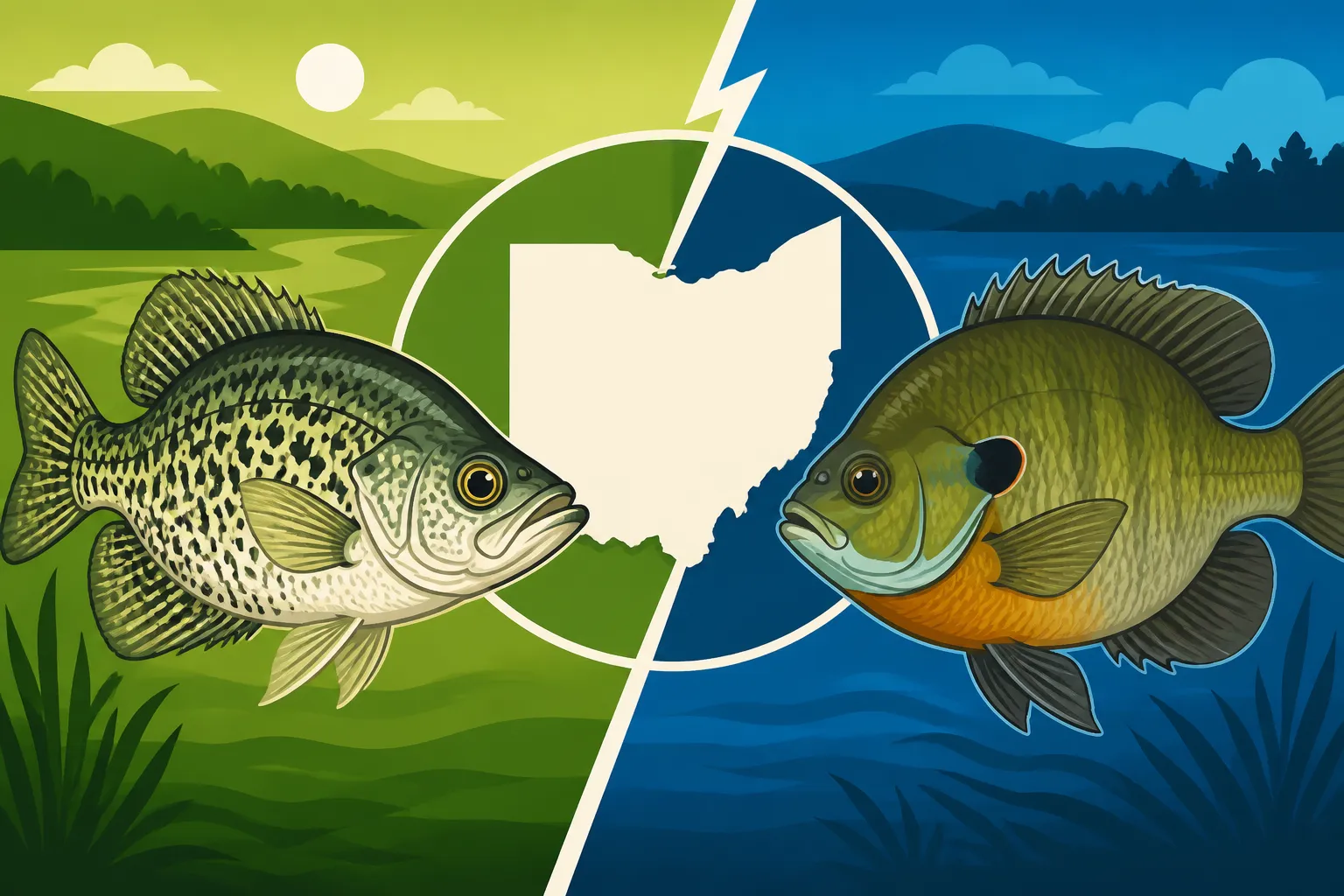
Crappie, whether black crappie or white crappie (and Ohio has both!), generally have a more elongated, somewhat compressed body shape. Think of them as being taller than they are wide, almost like a dinner plate turned on its side. Their most telling feature, however, is their dorsal fin. It's usually quite large and distinctive, and here's the kicker: the crappie's dorsal fin and anal fin are nearly identical in size and shape, often starting almost directly opposite each other on the fish's back and belly. For black crappie, specifically, you'll notice 7 or 8 distinct dorsal spines, giving that fin a robust, fan-like appearance. White crappie usually have 5 or 6 dorsal spines. This symmetry between the dorsal and anal fins is a huge clue. You can literally draw a vertical line down the fish, and both fins would mirror each other.
Bluegill, on the other hand, are built differently. They possess a much more rounded, disc-like, or "pan-shaped" body. If a crappie is a dinner plate on its side, a bluegill is more like a pancake! They are typically deeper-bodied relative to their length. Their dorsal fin is also quite different. While they have a dorsal fin, it's typically a single, continuous fin that is notched, appearing almost as two fins joined together. The spiny front part of the dorsal fin is distinctly separate from the softer-rayed rear part, and it does not mirror the anal fin in size or shape. The bluegill's anal fin is smaller and positioned further back than the crappie's. This more compact, robust build is characteristic of a bluegill.
Mouth Size and Eye Placement
Beyond the overall silhouette, take a closer look at their faces. The mouth and eyes can tell you a lot about these fish and even hint at their preferred diet.
Crappie have a relatively large mouth, extending back almost to the middle of their eye. This larger mouth is a clear indication of their predatory nature; they're built to engulf small baitfish, minnows, and larger insects. Their eyes tend to be proportionally large and positioned somewhat forward, giving them excellent vision for spotting prey in various light conditions, including low light. This adaptation is key to why crappie often feed effectively during dawn, dusk, or even at night. If you're comparing a crappie and a bluegill of similar length, the crappie's mouth will almost always appear significantly larger.
Bluegill, by contrast, possess a much smaller, upturned mouth. It rarely extends beyond the front edge of their eye. This smaller mouth is perfectly suited for their diet, which consists mainly of insects, insect larvae, small crustaceans, and plant matter. They are more "nibblers" than "gulpers." Their eyes are also proportionate to their head size but don't have the same forward, almost bulbous appearance as a crappie's. This difference in mouth size is critical when choosing your bait; what a crappie will readily take might be too large for a bluegill, and vice-versa. When you're picking out hooks or tiny jigs at a shop, like those you might find on Amazon, consider which species you're primarily targeting.
Coloration and Markings
While coloration can vary wildly based on water clarity, diet, and even breeding seasons, there are some general patterns to look for.
Crappie, especially black crappie, are often distinguished by irregular black blotches or speckles scattered across their silvery or greenish-gold bodies. These markings often create a mottled, almost camouflaged appearance. During spawning season, male black crappie can turn quite dark, sometimes almost entirely black, with very prominent vertical barring. White crappie tend to be more silvery overall, with distinct vertical bars or stripes along their sides, but these bars are usually less defined than the blotches of a black crappie. The intensity of these markings can fade or brighten depending on the environment—fish from stained water might be darker, while those from clear water can be lighter.
Bluegill typically exhibit a spectrum of colors, often ranging from olive green to dark blue or purplish on their backs, fading to a lighter green or yellow on their sides, and sometimes having a reddish-orange or yellow belly, especially during spawning. Their most distinctive marking is a dark, often black, "ear flap" or opercular tab located at the back edge of their gill plate. This is a very reliable identifier. They also usually have a small, dark spot at the base of their dorsal fin. While they might have faint vertical bars or stripes, these are usually less pronounced than those on a crappie and certainly lack the irregular blotchiness of a black crappie. The intensity of bluegill colors can be breathtakingly vibrant in healthy, clear waters.
Here's a quick comparison table to help solidify these visual cues:
| Feature | Crappie (Black & White) | Bluegill |
|---|---|---|
| Body Shape | Elongated, compressed, taller than wide (dinner plate-like) | Rounded, deep-bodied, disc-like (pancake-like) |
| Dorsal Fin | Large, distinct, dorsal and anal fins nearly symmetrical | Single, notched, spiny front part separate from soft-rayed |
| Dorsal Spines | Black: 7-8; White: 5-6 | Usually 10-11 |
| Mouth Size | Large, extends back almost to middle of eye | Small, upturned, rarely extends beyond front of eye |
| Eyes | Proportionally large, somewhat forward | Proportionate to head size |
| Color/Markings | Irregular black blotches/speckles (black crappie); silvery with vertical bars (white crappie) | Olive/blue/purple back, yellow/orange belly, distinct black "ear flap," dark spot on dorsal fin |
Habitat and Behavior: Where and How They Live
Beyond their looks, crappie and bluegill have different preferences for where they hang out and what they eat. Understanding these behavioral nuances is crucial for locating and catching them in Ohio's diverse waterways.
Preferred Environments and Structure
While both are panfish and can sometimes be found in the same general areas, they often favor slightly different types of underwater structure and cover. Think of it like a neighborhood: they might live on the same street, but one prefers the house with the big oak tree, and the other likes the one with the dense rose bushes.
Crappie, being ambush predators, absolutely adore structure—but specific kinds of it. They're often found around submerged timber, brush piles, fallen trees, dock pilings, bridge abutments, and even artificial fish attractors. They love vertical structure, congregating in schools around these features, often suspending at a particular depth. In lakes and reservoirs across Ohio, like those you'd find detailed in an Ohio Crappie Fishing Guide, you'll often find them just on the edge of a weedline or suspended over deeper channels, especially when they're not actively spawning. They seek out cover that provides shade and a place to hide before ambushing unsuspecting minnows. During the colder months, they tend to move deeper, holding tight to humps, deep-water brush, or channel edges.
Bluegill, on the other hand, also appreciate cover but often prefer denser, more horizontal types. They are masters of the weed beds, finding sanctuary and food amongst dense aquatic vegetation, lily pads, and shallow submerged grass. They'll also congregate around fallen logs, stumps, and dock areas, but often in shallower water than crappie might prefer. You'll find them closer to the shoreline in many Ohio lakes and ponds, rooting around for insects and larvae. When you're exploring Best Places to Catch Bluegill in Ohio, you'll notice many of those spots feature abundant shallow cover. They're not as prone to suspending in open water like crappie; instead, they hug the bottom or dense cover.
Schooling Habits and Diet
Their social tendencies and dietary preferences further highlight the differences.
Crappie are renowned for their schooling behavior. When you find one crappie, you've often found a whole school. They move together, feed together, and retreat together. This is fantastic news for anglers because once you dial into a crappie pattern, you can often catch multiple fish from the same spot. Their diet, as suggested by their larger mouths, is predominantly carnivorous. They feast on small baitfish like shad and minnows, as well as crayfish, aquatic insects, and zooplankton. This makes them highly responsive to baits that imitate these prey items.
Bluegill also school, but their schools tend to be less tightly packed and more spread out, especially in dense cover. They are often found in large aggregations, but they might not be as concentrated as a crappie school. Their diet is far more varied, reflecting their smaller mouths and bottom-feeding habits. They'll eat just about any invertebrate they can find: worms, insect larvae, tiny crustaceans, and even bits of plant material. This makes them incredibly fun to catch, as they'll hit a wide variety of small baits.
Spawning Differences
Both species reproduce in the spring, but even their spawning rituals have distinct differences.
Crappie typically spawn when water temperatures reach the mid-60s Fahrenheit, usually a bit earlier than bluegill. They prefer shallower areas with some submerged cover like brush, logs, or weed beds, creating nests in slightly deeper water than bluegill might. The males guard the nests. They are generally less aggressive on the beds than bluegill, often requiring a more subtle presentation to entice a bite. Understanding when Do Crappie Move Shallow in Spring in Ohio? is crucial for targeting them during this productive period.
Bluegill spawn later, generally when water temperatures climb into the high 60s or low 70s Fahrenheit. They are famous for their "fanning" behavior, where males aggressively clear out saucer-shaped nests in very shallow water, often in colonies. You can sometimes spot these nests from shore or hear the distinctive "popping" sound of bluegill defending their beds. The males are incredibly protective and will strike at anything perceived as a threat to their eggs or fry. This makes them relatively easy to catch during their When Bluegill Spawn in Ohio season.
Fishing Strategies: Tailoring Your Approach
Knowing the differences between crappie and bluegill means you can adjust your fishing techniques to target one species specifically or optimize for both. It's about working smarter, not harder, on the water.
Lures, Baits, and Techniques
The choice of what to tie on your line and how you present it will dramatically impact your success.
For crappie, because they primarily eat baitfish and larger insects, you'll want to focus on offerings that mimic these. Small jigs, typically 1/32 to 1/8 ounce, adorned with soft plastics like tube jigs, curly-tail grubs, or small paddletails are incredibly effective. Colors like chartreuse, white, and black/chartreuse are perennial favorites. Minnows, either live or dead, fished under a bobber or on a jig head, are also deadly. Spider rigging with multiple rods, or slow trolling with jigs and minnows, are popular techniques, especially on larger reservoirs. Vertical jigging directly over submerged brush piles or around dock pilings can also be incredibly productive. When stocking up on your crappie gear, check out the wide range of jigs and soft plastics available on Amazon; you'll find everything you need.
Bluegill, with their smaller mouths and varied diet, respond well to much smaller presentations. Tiny jigs (1/64 to 1/80 ounce), often tipped with a piece of worm, a wax worm, or a small grub, are perfect. Fly fishing with small poppers, nymphs, or wet flies can also be incredibly rewarding. Live bait, especially redworms, wax worms, or even corn, fished under a tiny bobber, is a classic and highly effective bluegill presentation. They are less particular about aggressive retrieves; a slow, subtle twitch or even just letting the bait sit still is often all it takes. For targeting bluegill, remember to size down your hooks significantly—small Aberdeen hooks are often ideal. For more specific advice, you can always refer to resources like Best Baits for Ohio Crappie which, while focused on crappie, often offers good contrast for other panfish.
Gear Considerations
Your rod, reel, and line choices should also reflect your target.
For crappie fishing, a light to medium-light action spinning rod, typically 6 to 7 feet long, paired with a small spinning reel spooled with 4 to 6-pound test monofilament or fluorocarbon line, is a good all-around setup. This offers enough backbone to handle larger crappie and enough sensitivity to detect subtle bites. Many crappie anglers also employ longer "crappie poles" for single-pole jigging into dense cover, extending their reach.
For bluegill, lighter is almost always better. An ultralight spinning rod, 5 to 6 feet long, with a small reel spooled with 2 to 4-pound test line, is ideal. This feather-light setup makes even a modest bluegill feel like a trophy and provides maximum sensitivity for their often-light bites. It also allows for delicate presentations of those tiny baits and jigs. Think about setting yourself up with a dedicated ultralight combo; it makes bluegill fishing so much more enjoyable, and you can find excellent options for beginners on Amazon.
Best Times to Target Each Species
Timing can be everything when pursuing panfish.
Crappie are known for their strong bite during the spring spawn, as they move shallow. Beyond that, they often bite well during low-light periods—dawn, dusk, and even at night, especially during warmer months. They can be found during the day, but often require more precise location on structure and deeper presentations. In the fall, they'll often feed aggressively before winter.
Bluegill are generally more active throughout the day, particularly during warmer, sunny periods when they are cruising the shallows and weed beds. They are less prone to shutting down in bright sunlight compared to crappie, making them an excellent choice for a family fishing trip during the middle of the day. Of course, like most fish, they'll still be very active during peak feeding times at dawn and dusk.
Why Knowing the Difference Matters for Ohio Anglers
Beyond simply identifying your catch, understanding the distinction between crappie and bluegill has practical implications for every angler fishing in Ohio. It affects compliance with regulations, improves your chances of a successful outing, and supports responsible conservation.
Regulation Compliance
Ohio has specific fishing regulations that often differ by species, and panfish are no exception. While many panfish fall under a general "no size limit" or generous daily bag limit, there can be specific nuances, especially for crappie. For instance, while Ohio Crappie Daily Limit might be generous statewide, certain lakes or specific zones might have special regulations for crappie that don't apply to bluegill, such as minimum length limits or reduced daily limits to protect specific populations.
Imagine a scenario where you're fishing a local lake. You've got a stringer full of what you think are panfish. If you've been catching crappie and mistake them for bluegill, you might inadvertently violate a length or bag limit that applies only to crappie. A wildlife officer, while usually understanding, will still enforce the rules. Always check the current Ohio Fishing Regulations Every Angler Should Know or the specific regulations for the body of water you're fishing. Knowing the difference ensures you stay on the right side of the law and protect the fisheries for future generations.
Optimizing Your Catch
As we've discussed, crappie and bluegill have different preferences for habitat, diet, and behavior. If you can confidently identify them, you can adjust your techniques on the fly to maximize your success.
Let's say you head out targeting panfish, but after an hour, you're primarily catching small bluegill. If you want to switch to crappie, knowing the distinct differences means you won't waste time continuing with bluegill-specific tactics. You'd change your location—moving to deeper brush piles or submerged timber—and switch your bait to something more appealing to crappie, like a small minnow or a soft plastic jig. Conversely, if you're trying to put a pile of bluegill in the cooler for a fish fry, you'd target shallow weed beds with small worms, knowing that the likelihood of a crappie hitting that setup is lower. This adaptive approach, fueled by accurate identification, is key to becoming a more effective and versatile angler. It allows you to fill your cooler with the species you want, whether it's the larger crappie or the abundant bluegill.
Conservation Efforts
Finally, understanding species identification contributes to broader conservation efforts. When you correctly identify your catch, you're better equipped to participate in citizen science (if available) or simply to make informed decisions about catch and release. For instance, if you're practicing catch and release for larger crappie to help maintain a healthy population (especially important given the Is There a Minimum Size Limit for Crappie in Ohio? discussion), mistaking a trophy bluegill for a crappie means you might release a fish that was otherwise fair game, or worse, keep a crappie that should have been released.
Accurate data on fish populations, often gathered through angler creel surveys, relies on correct species identification. By being able to tell the difference, you contribute to a more accurate understanding of Ohio's fisheries health. Every little bit helps ensure that future generations of Ohio anglers will have the same fantastic opportunities to enjoy the outdoors and the bounty of our waters.
So, the next time you feel a tug on your line and pull up a shimmering panfish, take a moment. Look at its body shape, check its mouth, examine its dorsal fin, and scan for that distinctive ear flap. You'll not only know exactly what you've caught, but you'll also be a more informed and responsible angler.
Disclaimer
This article is for general informational purposes only and does not constitute professional advice. Laws, prices and regulations vary by location and change over time. Consult a qualified professional for guidance on your specific situation.