When Bluegill Spawn in Ohio
It's a beautiful thing, spending a warm Ohio afternoon by the water, trying to coax a feisty bluegill onto your line. But sometimes, those panfish seem to vanish, leaving you scratching your head. One of the biggest keys to consistent bluegill success, especially when you're looking for those feisty, bigger males guarding nests, is understanding their spawning patterns. This guide will dive deep into when bluegill spawn in Ohio, what triggers it, and how you can use that knowledge to improve your angling adventures.
The Prime Bluegill Spawning Season in Ohio
For many Ohio anglers, the phrase "bluegill spawn" conjures images of late spring and early summer, and for good reason. This is indeed the sweet spot when these prolific panfish are most actively reproducing, making them both exciting and somewhat predictable to target. Knowing this general window is fantastic, but let's break down the specifics to really dial in your timing.
Peak Spawning Months
In Ohio, you can generally expect bluegill spawning activity to kick into high gear from late May through July. This timeframe covers the vast majority of the state, from the smaller farm ponds down south to the larger reservoirs in central and northern Ohio. During these months, bluegill are less concerned with feeding aggressively and more focused on the critical task of procreation.
Think of it like a community festival that lasts for weeks! Not all bluegill spawn at precisely the same moment, even within the same body of water. Younger bluegill might start a bit later, or mature fish might have multiple spawning cycles if conditions remain favorable. This extended period is fantastic news for anglers because it means there's a prolonged window to encounter active, shallow-water bluegill. While June is often considered the absolute prime month, don't write off late May or early August if you're chasing them.
Water Temperature as the Key Trigger
While calendar months give us a general idea, the actual trigger for bluegill spawning is all about water temperature. These fish are cold-blooded creatures, and their biological clocks are finely tuned to the thermal conditions of their environment. Once the water consistently reaches a certain temperature, usually in the mid-60s to low-70s Fahrenheit, the bluegill begin their spawning rituals.
You might notice that a particularly warm spring pushes the spawn earlier, sometimes into mid-May, especially in shallower ponds that heat up quickly. Conversely, a prolonged cool spring can delay it, pushing the peak into late June or even early July. This is why paying attention to local water temperature reports or even carrying your own thermometer is a game-changer. It's not just about the air temperature; it's about what's happening beneath the surface where the fish live. This critical temperature range aligns perfectly with when you might also be seeing When Bluegill Spawn in Ohio and other panfish become more active.
Understanding Bluegill Spawning Behavior and Habitat
Bluegill are fascinating fish with a well-defined spawning ritual. Understanding where and how they conduct this important part of their life cycle is crucial for anglers hoping to connect with them during this period. They're not just randomly dropping eggs; there's a method to their madness!
Nest Building and Location
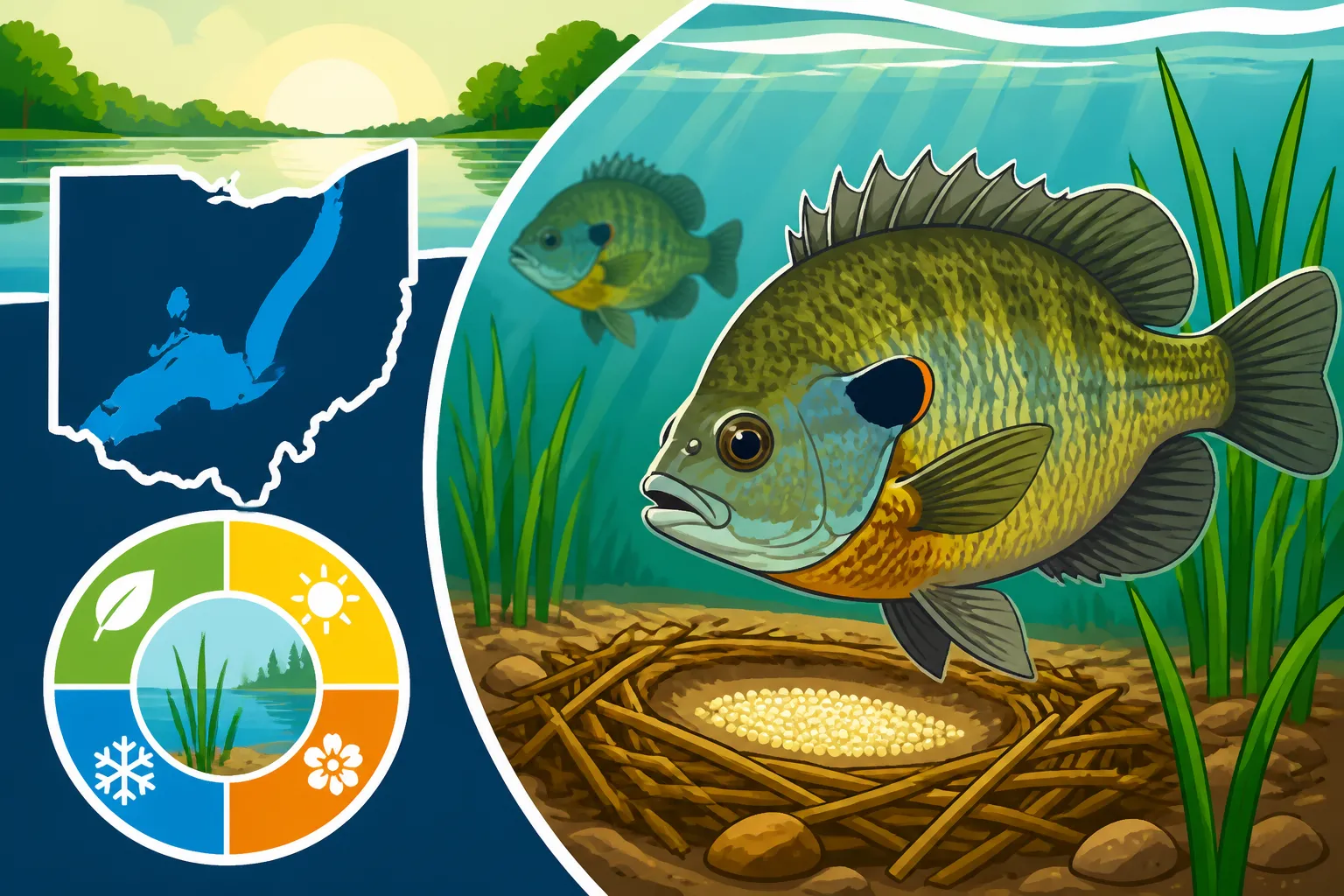
Male bluegill are the primary architects and guardians of the nests. They'll fan out circular depressions on the bottom, typically in areas with firm, sandy, or gravelly substrates. These nests, often just a foot or two in diameter, are usually found in shallow water, ranging from a mere six inches to several feet deep. You can sometimes spot these tell-tale circular patterns from shore if the water is clear enough, looking like a series of small, shallow craters on the bottom.
Often, these nests aren't solitary. Bluegill are colonial spawners, meaning multiple males will create their nests close to one another, forming large "spawning beds" or colonies. Imagine a whole subdivision of bluegill homes! This clustering offers some protection, as many eyes are better than one when it comes to warding off predators. They prefer areas with some cover nearby, such as submerged vegetation, fallen logs, or dock pilings, but they'll keep the actual nest area clear. Best Places to Catch Bluegill in Ohio will often point to areas like these.
Male vs. Female Roles During the Spawn
Once a male constructs a suitable nest, he'll actively defend it and try to entice a female to lay her eggs. The males become incredibly territorial and aggressive during this time, flashing their vibrant breeding colors – often a deep blue or purple on their gill plates, and a golden-orange belly. This heightened aggression is fantastic for anglers, as they're more likely to strike at anything that looks like a threat to their nest, even a small jig or worm.
Females, on the other hand, are focused on depositing their eggs. They visit multiple nests, laying eggs in each, and then leave the male to fertilize and guard them. The male bluegill will diligently protect the eggs from predators, fanning them with his fins to keep them clean and oxygenated. This continues until the fry hatch, which typically takes only a few days to a week, depending on water temperature. If you're looking for a good pair of polarized sunglasses to spot those nests, you can often find a wide selection on Amazon.
How Water Conditions Impact the Bluegill Spawn
It's not just about the water hitting the right temperature; other environmental factors play a significant role in influencing the timing, duration, and success of the bluegill spawn. Understanding these can help you anticipate good fishing days or adjust your strategy when conditions aren't ideal.
Influence of Sunlight and Water Clarity
Bluegill, like many other sunfish, are visual creatures. They prefer areas with good light penetration for spawning, which is why you often find their nests in shallower, more open sections of a lake or pond. Ample sunlight helps warm the shallow water efficiently, bringing it into that ideal temperature range. Clearer water also allows males to better see and defend their nests from potential threats, as well as to spot incoming females.
If a body of water becomes excessively turbid after heavy rains or due to an algal bloom, it can temporarily disrupt spawning activity. While bluegill are adaptable, prolonged periods of very cloudy water can make nest building and defense more challenging, potentially leading to a slightly delayed or less concentrated spawn in those specific areas. This is why a quick check of recent weather and water conditions can be as important as checking your tackle box.
Impact of Weather Patterns and Fronts
Stable, warm weather is a bluegill angler's best friend during the spawn. Consistent sunshine and warm nights allow the water temperatures to remain steady, encouraging continuous spawning activity. However, Ohio weather can be famously fickle, and sudden changes can throw a wrench into things. A strong cold front that brings a sharp drop in air temperature, coupled with high winds, can cause water temperatures to plummet in shallow areas.
When this happens, bluegill may temporarily abandon their nests or cease spawning until conditions stabilize again. This can make fishing tough for a day or two after a cold front passes, as the fish become less active and less aggressive. Conversely, a series of warm, sunny days after a cold snap can kickstart activity rapidly. Monitoring weather forecasts, especially for sudden temperature swings, can give you a significant edge in predicting bluegill behavior. Carrying a portable fishing thermometer, often available on Amazon, can help you verify these critical temperature changes firsthand.
Here's a quick look at ideal bluegill spawning conditions:
| Factor | Ideal Condition | Impact on Spawn Activity |
|---|---|---|
| Water Temp | 68-75°F (20-24°C) | Triggers and sustains spawning |
| Water Depth | 1-3 feet (in most cases) | Preferred depth for nest construction |
| Substrate | Sand, gravel, hard bottom | Essential for stable nest building |
| Weather | Stable, sunny, warm | Promotes continuous spawning & activity |
| Water Clarity | Clear to moderately stained | Aids visual defense and attraction |
| Cover Proximity | Near weeds, docks, fallen timber | Provides shelter and staging areas |
Fishing Strategies During the Bluegill Spawn
Now that we understand the "when" and "why" of bluegill spawning, let's talk about the "how" – how you can effectively target these fish when they're on their nests. This period offers some of the most consistent and exciting panfishing opportunities in Ohio!
Locating Spawning Beds
Your first step is to locate those bluegill spawning beds. As mentioned, look for shallow flats, especially those with a hard bottom, near protective cover like weed lines, lily pads, submerged timber, or even man-made structures like docks and seawalls. In clearer lakes and ponds, you can often spot the circular depressions of the nests directly. A good pair of polarized sunglasses, available from various brands on Amazon, can cut through the glare and make spotting these nests much easier.
Once you find one nest, chances are there are many more nearby. Bluegill are social spawners, so where there's one, there are usually dozens. Approach these areas quietly and keep your shadow off the water. If you can see the fish, they can probably see you, and spooked bluegill won't bite. Ohio Panfish Identification Guide can help you confirm you're seeing bluegill and not another species.
Best Baits and Lures
During the spawn, male bluegill are more concerned with defending their territory than with actively feeding, but their aggressive nature makes them prone to striking at anything that invades their space. This means subtle presentations are often the most effective. Small jigs, typically 1/32 or 1/64 ounce, tipped with a tiny piece of worm, a waxworm, a mealworm, or a soft plastic grub, are deadly. Bright colors like chartreuse, orange, or white often trigger strikes.
Live bait, especially a small piece of nightcrawler or redworm, fished under a tiny bobber, is almost always a winner. The natural scent and subtle movement are irresistible. For artificials, consider micro-spoons or tiny inline spinners. The key is small, subtle, and presented right in the nest or very close to it. Remember, these fish are guarding their nests, not necessarily looking for a meal.
Recommended Gear and Techniques
You don't need heavy-duty tackle for bluegill. A light or ultralight spinning rod and reel combo, spooled with 2-4 pound test monofilament or fluorocarbon line, is perfect. This light line allows for better casting of small baits and prevents spooking wary fish. A small bobber, either a fixed clip-on or a slip bobber, will help you control your depth and detect those light bites.
When you cast, try to land your bait gently on the edge of a visible nest, or just beyond it, and slowly retrieve it through the bed. Pay close attention to your bobber; bluegill bites can be very subtle, often just a slight dip or twitch. If you see a fish on a nest but it's not biting, try a slightly different presentation or bait. Sometimes a small jerk bait or a soft plastic creature bait that mimics an intruder can provoke a strike from a territorial male. Knowing Ohio Fishing Regulations Every Angler Should Know is always important, especially if you're keeping a mess of these tasty panfish!
Good luck out there, and happy bluegill fishing!
Disclaimer
This article is for general informational purposes only and does not constitute professional advice. Laws, prices and regulations vary by location and change over time. Consult a qualified professional for guidance on your specific situation.