How Muskie Coloring Compares Across States
It can be incredibly fascinating, yet sometimes confusing, to observe the subtle (or sometimes not-so-subtle) differences in muskie coloring, not just from fish to fish but across various waters and even state lines. Many anglers wonder why a muskie caught in one Ohio lake might look quite different from one caught just a few hours away, or even more strikingly, from one caught up in Wisconsin or Minnesota. This guide is here to unravel those mysteries, exploring the factors that influence muskie coloration and helping you understand what to expect when you're targeting these elusive giants, especially right here in Ohio.
Understanding Why Muskie Coloring Varies
Muskie, those magnificent apex predators, are truly works of art in their natural environment. Their patterns and hues are not just random; they are intricate adaptations, molded by a complex interplay of environmental factors and genetics. It’s like looking at siblings from the same family who have different hair colors – same family, but unique traits. When you're out on the water, seeing these variations can be a real "aha!" moment, helping you appreciate the delicate balance of their ecosystems.
Habitat and Water Clarity Influence Camouflage
Think about it: a muskie's primary goal, beyond eating, is to not be eaten (when they're smaller) and to ambush prey effectively. Their coloring is their ultimate camouflage. In clearer lakes with rocky bottoms and sparse vegetation, a muskie might exhibit more pronounced bars or spots and a lighter overall tone to blend in with dappled sunlight and rock formations. Conversely, in tannic, stained, or tea-colored waters often found in slow-moving rivers or boggy lakes, you'll often encounter muskie with darker, more muted colors, sometimes almost black or deep olive green, making them nearly invisible against the dark water and submerged logs.
This isn't just theory; it's something you witness firsthand. Imagine fishing a clear northern Ohio reservoir like some parts of the Huron River, versus a more turbid lake like the lower sections of the Scioto River. The muskie you pull from each water body will likely have distinctly different camouflage patterns to match their surroundings. This adaptation is crucial for their survival and hunting success.
Diet and Forage Can Affect Pigmentation
Believe it or not, what a muskie eats can actually play a role in its overall coloration, especially the richness of its tones. While not as dramatic as, say, flamingos getting their pink hue from brine shrimp, a muskie's diet contributes to its health and the vibrancy of its scales. Fish that prey heavily on certain forage species, especially those rich in particular pigments (like carotenoids found in some baitfish, though less directly than in birds), can exhibit slightly different colorations or a more robust, healthier glow.
Beyond direct pigmentation, a well-fed muskie in a thriving ecosystem simply tends to look more vibrant and healthy, with richer, deeper colors, compared to a muskie in a stressed environment. This isn't about changing their spots, but about the overall quality and intensity of their natural patterns. It’s a subtle difference, but one that experienced anglers might notice over time.
Genetic Strains and Stocking Programs Play a Role
Just like different dog breeds have distinct looks, different genetic strains of muskie can possess inherent differences in their base coloration and patterning tendencies. Ohio, for instance, has stocked various muskie strains over the years, including the popular "Ohio strain" or "Leesville strain" muskie, which are known for certain growth rates and characteristics. When fisheries management agencies stock waters, they often choose strains that are well-suited to the local environment, and these strains might carry genetic predispositions for certain color palettes or patterns.
For example, a muskie strain originating from a lake with a history of clear, rocky bottoms might genetically tend towards a "barred" or "spotted" pattern, even if transplanted. While environmental factors will always influence the expression of these genes, the underlying genetic blueprint from generations of muskie in a particular region certainly has an impact. This is why you might hear anglers discussing particular "looks" of muskie from different well-known muskie states. Ohio Muskie Fishing Guide provides more insight into the history of muskie management in the state.
Light and Depth Affect Perceived Color
The way light penetrates the water column can dramatically alter how a muskie's color appears to us. In shallow, sunlit waters, all of a muskie's colors and patterns pop. As you go deeper, or in low-light conditions (dawn, dusk, or heavily overcast days), those same fish might appear much darker or more subdued. Water depth also plays a role; fish residing in deeper, darker parts of a lake will generally have less vibrant, sometimes almost melanistic (darker) coloration as their bodies adapt to absorbing what little light is available.
It's not just about what the muskie is, but also how you see it. The angle of the sun, the presence of clouds, the water's surface chop, and even the type of polarized sunglasses you wear can change your perception of a muskie's exact hue. This is why photos taken of the same fish in different light can look so remarkably varied, even if the fish itself hasn't changed its patterns.
Common Muskie Color Patterns and Markings
When talking about muskie, we often generalize their appearance, but there are actually a few distinct pattern types that describe most of these fish. Understanding these patterns is not just for casual observation; it can help with identification, especially when trying to distinguish them from their close cousins, the Northern Pike. These categories aren't always strict, as many muskie exhibit a blend of characteristics, but they offer a useful framework.
Barred Muskie
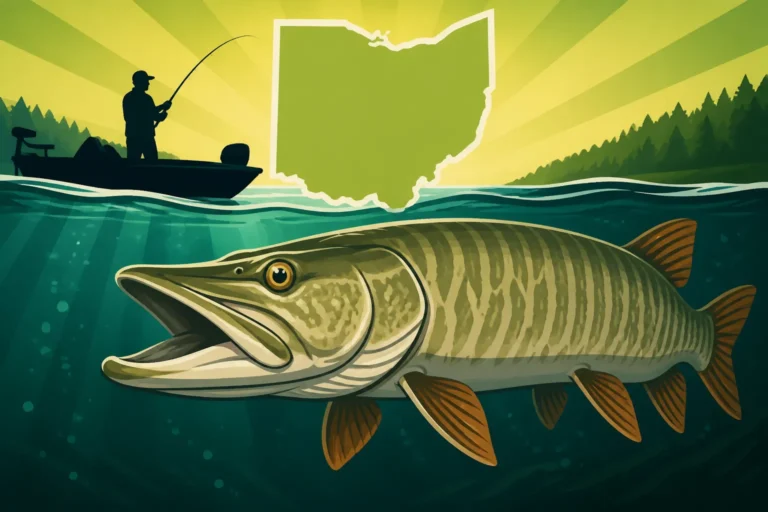
Barred muskie are exactly what they sound like: their flanks are adorned with vertical stripes or bars, usually darker than their lighter background coloration. These bars can range from very prominent and thick to more subtle and broken up. The background color can vary widely, from silvery-green to a golden-brown. Barred muskie are quite common in many muskie fisheries, often found in lakes with good vegetation cover or those that have distinct structural elements like fallen trees, where vertical lines provide excellent camouflage.
You might see these particularly strong in certain strains or bodies of water. For anglers, spotting these distinctive bars is often the first clue to a muskie's identity. The exact shade of the bars and background will, of course, be influenced by the habitat and water clarity we just discussed.
Spotted Muskie
Spotted muskie feature distinct, dark spots scattered across their bodies on a lighter background. These spots can vary in size and density, sometimes appearing almost freckled, other times larger and more widely spaced. This pattern is perhaps the one most often confused with Northern Pike, especially if the muskie is young. However, a key difference (and a good rule of thumb for identification) is that muskie spots are typically darker than their background, whereas Northern Pike often have lighter spots on a darker background.
Spotted muskie are prevalent in many areas and can be incredibly beautiful fish, with their unique constellation-like patterns. Some anglers even feel a certain kinship with the "spotty" muskie, noting their beauty and individuality. This is definitely a good time to remember to check out resources like Ohio Muskie vs Northern Pike Identification if you're ever unsure on the water.
Clear Muskie
"Clear" muskie, also sometimes called "unmarked" or "silver" muskie, are perhaps the most unique in appearance. They lack distinct bars or spots, instead presenting a more uniform body color. This doesn't mean they are completely devoid of any pattern, but rather that any markings are extremely faint, diffuse, or almost non-existent. Their base color might be a shimmering silver, a pale green, or a light bronze.
These muskie are thought to be more prevalent in larger, open water bodies or those with very clear water where a uniform, reflective coloration provides effective camouflage against the open water and bright skies. They are less common than barred or spotted varieties in many systems but are a distinct and striking sight when encountered. Finding a true "clear" muskie can be a rare treat for an angler, especially if you're used to seeing heavily marked fish.
Hybrid Muskie (Tiger Muskie)
While not a pure muskie species, the hybrid muskie, more commonly known as the tiger muskie, is a fascinating and strikingly patterned fish. It’s a sterile cross between a Northern Pike and a muskellunge, and its coloring is perhaps the most instantly recognizable. Tiger muskie possess distinct, irregular vertical bars that often look more like blotches or stripes, resembling the stripes of a tiger (hence the name). These markings are typically very dark against a lighter, often yellowish or greenish, background.
Tiger muskie are often stocked in waters where natural muskie reproduction is limited, providing an exciting fishery for anglers. Their unique coloring makes them nearly impossible to mistake for either pure muskie or pure pike. You can learn more about these interesting hybrids in What a Tiger Muskie Is. They're truly a genetic marvel and a blast to catch.
Here's a quick comparison of common muskie patterns:
| Pattern Type | Description | Typical Markings | Common Background Color | Notes |
|---|---|---|---|---|
| Barred Muskie | Vertical stripes or bars on flanks | Darker bars, can be broken | Silver-green to golden-brown | Good camouflage in vegetated/structured areas |
| Spotted Muskie | Distinct, dark spots scattered on body | Dark spots of varying size/density | Lighter background | Often confused with Northern Pike (pike have light spots) |
| Clear Muskie | Lacks distinct bars or spots, uniform body color | Faint or absent markings | Shimmering silver, pale green | More common in large, clear, open water bodies |
| Tiger Muskie | Hybrid, irregular vertical bars/blotches | Very dark, wavy, tiger-like bars | Yellowish or greenish | Sterile cross, highly recognizable, often stocked |
Ohio Muskie Coloring: What to Expect
Now, let's bring it home to Ohio. Our state is known for some fantastic muskie fishing, and while you might not think of Ohio as having distinct "strains" like some other states, our diverse waterways do produce variations in the muskie you encounter. Anglers here take immense pride in their muskie, and observing their unique colors is part of the experience.
General Ohio Characteristics
Muskie caught in Ohio generally tend towards the barred or spotted patterns, with a strong influence from their habitat. For instance, in many of Ohio's inland reservoirs known for muskie, such as Piedmont Lake or Leesville Lake, you'll often encounter fish with a greenish to brownish-gold background color, adorned with darker bars or spots. These colors allow them to blend seamlessly with submerged timber, weeds, and rocky structures that define these impoundments. The water clarity and general tannin levels in these lakes also contribute to the richness and depth of these hues.
It's common to see fish that might be predominantly barred but have some subtle spotting mixed in, showcasing the blended nature of these patterns. The overall impression is often of a robust, well-camouflaged predator perfectly adapted to its Ohio home. For specific insights into these productive waters, check out Piedmont Lake Muskie Fishing Guide and Leesville Lake Muskie Fishing Guide.
Influence of Ohio's Diverse Waters
Ohio is blessed with a variety of water bodies, from large reservoirs to smaller natural lakes and river systems. Each of these environments contributes to the unique aesthetic of its muskie population.
- Reservoirs: Lakes like Alum Creek Lake or West Branch Reservoir, with their varying depths and structure, might yield muskie with a range from greenish-silver bodies and distinct bars to more mottled, earthy tones. The deeper, clearer sections might produce lighter-colored fish, while the shallower, vegetated coves could hide darker, more camouflaged individuals. Alum Creek Lake Muskie Fishing Tips shares more about this popular muskie destination.
- River Systems: While primary muskie fisheries in Ohio are often reservoirs, some river systems can hold muskie. These fish are usually darker, more streamlined, and adapted to current, often exhibiting a deep olive or almost black coloration to blend with rocky river bottoms and shadowed banks. Their patterns might be more subdued, as a bold pattern could stand out too much in the ever-changing river environment.
- Stocked vs. Wild: Many of Ohio's muskie fisheries are maintained through stocking programs. The genetics of the stocked fish (often the "Ohio strain") combine with the local environment to produce the muskie we see. This means that while environmental adaptation is strong, there's also a consistent genetic foundation influencing their general appearance across many Ohio lakes.
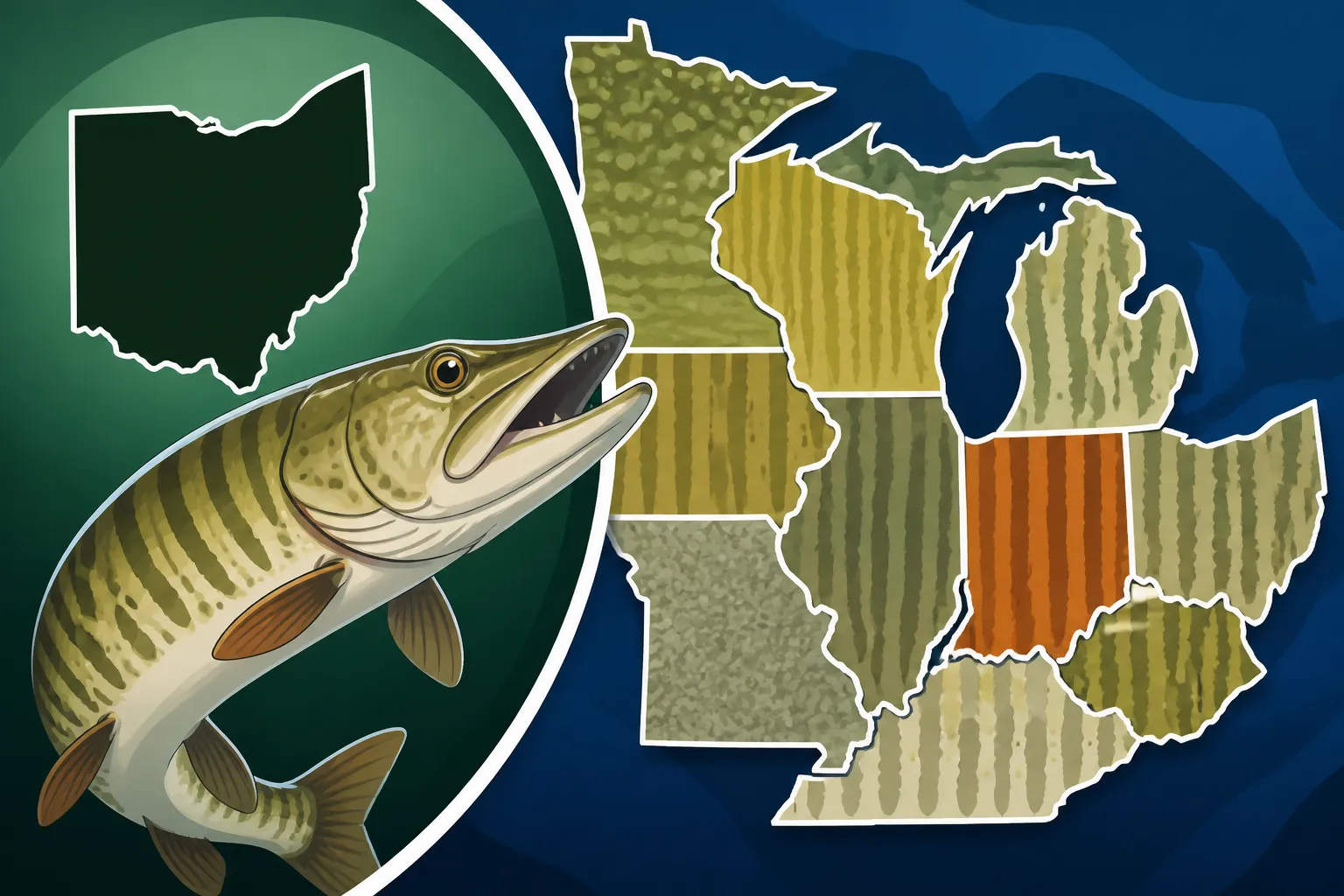
Comparison to Neighboring States (Great Lakes & Beyond)
When you look at muskie from other states, particularly those with vast, ancient lakes or entirely different environments, the distinctions become even clearer.
- Wisconsin/Minnesota: These states, often considered muskie meccas, have many large, clear, cold-water lakes. You might find more prominent "clear" or silvery muskie in the huge, deep waters of the Great Lakes (though Lake Erie muskie are rare on the Ohio side, they do exist further east in the lake's basin), or very distinctly barred muskie in their numerous inland lakes with pristine vegetation. Their muskie often have a vibrant green or bronze sheen.
- Canadian Shield Lakes: Muskellunge from the rugged Canadian Shield lakes are legendary for their dark, often heavily barred or spotted patterns, a perfect match for the deep, clear, yet tannin-stained waters, and vast rocky structures. These fish frequently exhibit a deep, almost purplish-brown hue.
- Southeastern Muskie: In states further south with warmer, sometimes more turbid waters, muskie might show different characteristics, perhaps more muted patterns, or a propensity for certain background colors to match their unique forage base and water conditions.
So, while Ohio muskie certainly hold their own in terms of beauty and fight, a quick look through a muskie fishing magazine or an online forum (perhaps on Amazon, where many fishing books are sold, offering global perspectives on muskie) will quickly show you the incredible diversity in coloration across the continent. How Big Muskie Get in Ohio Lakes provides context for our local giants.
Impact of Color on Fishing and Identification
Understanding muskie coloring isn't just for appreciating their beauty; it has practical implications for anglers, from lure selection to ensuring proper identification for conservation purposes. Every detail matters when you're pursuing the "fish of 10,000 casts."
Angler Perception and Lure Choice
While a muskie's actual body color doesn't change on a whim, an angler's perception of it certainly does. Many muskie anglers will tell you that lure color selection is paramount, and often, it's about matching the forage or mimicking something that stands out in the water conditions. For example, in dark, stained water where muskie are typically darker, bright, flashy, or contrasting lures might be chosen to create visibility. Conversely, in clear water with lighter muskie, more natural, subtle lure patterns might be preferred to mimic local baitfish.
However, it's also about contrast and visibility in the specific water conditions you're fishing. If a muskie's natural coloring blends in, a lure that breaks that mold might be what triggers a strike. This is why you'll see such a wide array of lure colors available for muskie, from natural baitfish patterns to bright, fluorescent designs. Many seasoned anglers carry an arsenal of colors, always trying to "match the hatch" or provide a distinct profile. You can find a vast selection of these specialized muskie lures on platforms like Amazon, from bucktails to jerkbaits, ready for your next outing. Best Lures for Ohio Muskie offers more specific advice.
Identification Challenges: Muskie vs. Northern Pike
One of the most common identification challenges, especially for newer anglers, is distinguishing a muskie from a Northern Pike, particularly when they are smaller. Their body shapes are similar, and both are toothy predators. However, their coloration and patterning are often the easiest and most reliable ways to tell them apart, alongside checking their tail fins and sensory pores.
- Muskie: As we discussed, generally have darker markings (bars, spots) on a lighter background.
- Northern Pike: Typically have lighter, bean-shaped spots or markings on a darker background.
- Tiger Muskie: The distinct wavy, tiger-like stripes are unmistakable.
Beyond patterns, look at the caudal (tail) fin: a muskie's tail typically has pointed tips, while a pike's is more rounded. Also, count the sensory pores under the jaw: a muskie usually has 6-9 pores on each side, while a pike has 5 or fewer. It's really critical to get this right, especially given different regulations for each species. Incorrect identification can lead to violations if you accidentally keep a fish outside of legal limits.
Conservation and Record Keeping
Accurate identification based on coloring and other physical traits is incredibly important for conservation efforts and maintaining accurate fishing records. Fisheries biologists rely on precise species identification to monitor populations, assess health, and set appropriate regulations, such as Ohio Muskie Minimum Length Limit on Inland Lakes or Ohio Muskie Daily Bag Limit. If anglers are misidentifying muskie as pike, or vice versa, it can skew data and impact management decisions.
For anglers pursuing state records, absolute certainty in identification is paramount. Imagine catching a potential state record muskie, only for it to be disqualified because it was misidentified! Moreover, proper handling and release, particularly for muskie, are crucial for the longevity of the species. Knowing what you have in hand is the first step towards respecting and conserving these magnificent fish. Always practice careful catch-and-release, especially for large muskie. Best Way to Handle and Release an Ohio Muskie provides excellent guidance on this.
Disclaimer
This article is for general informational purposes only and does not constitute professional advice. Laws, prices and regulations vary by location and change over time. Consult a qualified professional for guidance on your specific situation.