Difference Between a Saugeye and a Hybrid Walleye
It's an age-old question that leaves many Ohio anglers scratching their heads at the side of the boat: "Is this a saugeye, or some kind of hybrid walleye?" The confusion is real, and frankly, it's understandable. These fish look incredibly similar, and without knowing the key differences, it's easy to misidentify them. This guide is here to clear up that mystery once and for all, helping you confidently tell apart a saugeye from what many mistakenly call a "hybrid walleye," and understand why that distinction truly matters for your fishing adventures in Ohio.
The Saugeye Explained: A Purpose-Bred Ohio Favorite
Let's start by clarifying what a saugeye actually is, because this fish is a genuine star in Ohio's inland fisheries. It's not just a random cross; it's a carefully cultivated hybrid designed to thrive in our specific waters.
What Makes a Saugeye Unique?
A saugeye is a hybrid fish, specifically a cross between a female walleye (Sander vitreus) and a male sauger (Sander canadensis). The Ohio Department of Natural Resources (ODNR) actively produces and stocks saugeye in many of our public reservoirs and lakes across the state. Why go through all this effort? Well, the saugeye inherits some fantastic traits from both parents. From the walleye, it gets its impressive growth rate and good eating quality. From the sauger, it gains a tolerance for warmer, murkier, more turbid waters that might be less ideal for pure walleye. This genetic mashup results in a fish that can grow large, fight hard, and adapt to a wider range of habitats than either of its parent species alone, making it a fantastic sportfish for Ohio anglers. They are literally bred for our lakes!
For many years, the saugeye has been a crucial component of Ohio's inland fisheries management. They provide excellent fishing opportunities closer to home for anglers who might not always make the trip to Lake Erie for its world-renowned walleye fishery. The stocking programs are vital for sustaining healthy populations in places like Alum Creek Lake, Hoover Reservoir, and Indian Lake, ensuring that there are plenty of feisty fish to target year after year. Ohio Saugeye Fishing Guide goes into more detail about how and where to catch these magnificent fish.
Distinctive Physical Traits for Saugeye Identification
While saugeye share many characteristics with their walleye and sauger parents, they also possess a unique blend of features that, once you know what to look for, can help you tell them apart. One of the most telling signs is their coloration and markings. Saugeye often exhibit distinct, irregular blotches or "saddle" markings along their sides, a trait inherited from the sauger. These blotches aren't as pronounced or dark as a sauger's, nor are they as absent as on a typical walleye. It's usually a mottled, camouflaged pattern.
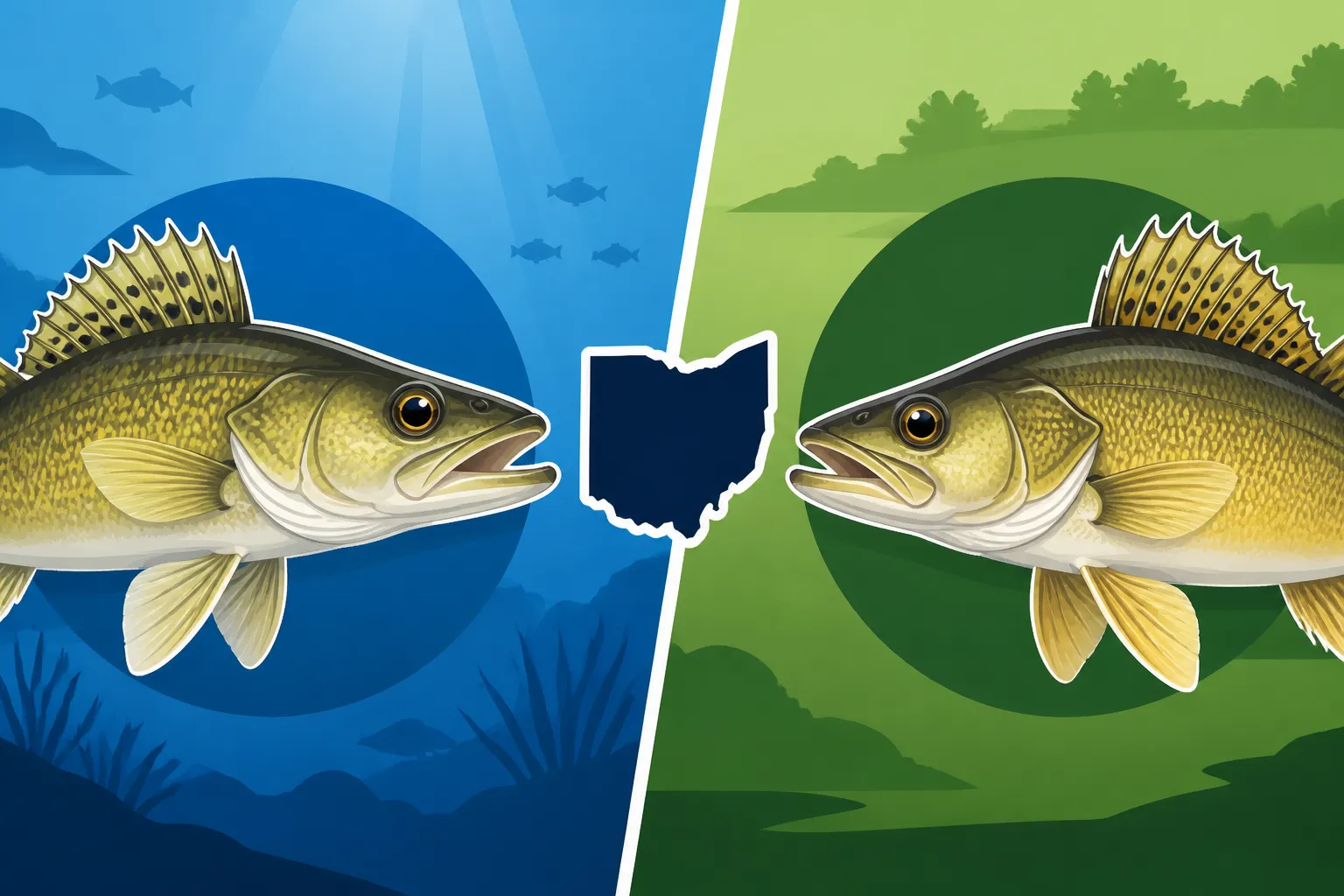
Another key identifier lies in their dorsal fin. Walleye typically have a clear, unspotted first dorsal fin, while sauger have very distinct rows of dark spots. Saugeye, being a mix, will often have spots on their first dorsal fin, but they're usually more scattered or worm-like, rather than forming neat rows. They also usually lack the prominent white tip on the lower lobe of the caudal (tail) fin that is characteristic of a pure walleye, though some saugeye might show a very faint or partial white tip, just to keep things interesting! If you're really getting into the details, you can also check the operculum (gill cover). Walleye generally have smooth cheeks, sauger have rough cheeks with scales, and saugeye will often have a mix – some scales, but perhaps not completely covering the cheek. When you're out on the water, having a detailed fish identification guide, perhaps laminated and purchased from Amazon, can be a real lifesaver.
Favorite Haunts of Ohio's Saugeye
Given their unique genetic makeup, saugeye tend to thrive in environments that might be less favorable for pure walleye. They are highly adaptable and often prefer the murkier, more turbid waters of Ohio's large inland reservoirs and lakes. These are waters that might warm up more in the summer or have more limited visibility, yet saugeye manage to grow to impressive sizes there. You'll find them actively feeding in these systems, often relating to submerged structures, old creek channels, and humps. They're also known for their aggressive feeding habits, making them a popular target for many anglers.
When you're fishing these reservoirs, keep in mind that saugeye will often congregate in deeper basins during the day, moving shallower to feed during low-light conditions, much like walleye. However, their sauger genes allow them to remain active and feed effectively even when water clarity isn't ideal. This means you might find them in spots where pure walleye might shy away. Understanding these habitat preferences is crucial for increasing your chances of success. Our article, Best Ohio Reservoirs for Walleye and Saugeye, offers great insights into specific locations where you can target these fantastic fish.
Deconstructing the Term "Hybrid Walleye"
Now, let's tackle the term that causes so much confusion: "hybrid walleye." For most Ohio anglers, when someone says "hybrid walleye," what they are almost certainly referring to is a saugeye.
Why "Hybrid Walleye" is Often a Misnomer in Ohio
The term "hybrid walleye" is often used colloquially by anglers to describe any fish that looks like a walleye but has some subtle differences, leading them to suspect it's a cross. However, in Ohio, the specific, intentionally stocked hybrid is the saugeye. While technically a saugeye is a hybrid involving a walleye parent, using the generic term "hybrid walleye" can be misleading because it doesn't specify which hybrid. The ODNR manages and stocks saugeye as a distinct species, with its own specific regulations and management goals.
There's no other widely recognized or intentionally stocked "hybrid walleye" in Ohio's public waters that isn't a saugeye. The term often stems from a lack of precise identification knowledge rather than the existence of another distinct hybrid species. So, if you hear someone talking about catching a "hybrid walleye" in an Ohio lake or reservoir, you can be fairly confident they're talking about a saugeye. It's important for anglers to use the correct terminology, not just for clarity, but also for understanding the specific regulations that apply to these fish.
Natural Hybrids: Rare Occurrences vs. Stocked Fish
Could a true walleye and a sauger naturally hybridize in the wild? Yes, it's possible, though much less common than the intentionally created saugeye. In areas where walleye and sauger populations overlap and spawn in close proximity, a natural cross can occur. However, these natural hybrids are typically very rare and do not contribute significantly to the overall fishery. They also tend to be less robust or fertile than the hatchery-produced saugeye, which are specifically bred for success.
The saugeye we catch in Ohio are almost exclusively the result of a dedicated aquaculture program. These are not random occurrences; they are part of a strategic effort to enhance fishing opportunities. This distinction is important because the stocked saugeye are prevalent in certain waters and are managed with specific size and bag limits in mind. A naturally occurring, unmanaged hybrid might exist, but it wouldn't be subject to the same widespread regulatory framework as the stocked saugeye. This is why when you check Ohio Statewide Bag and Size Limits, you'll see specific rules for walleye, sauger, and saugeye, but not for a generic "hybrid walleye."
Common Causes of Confusion Among Anglers
It's completely understandable why anglers get these fish mixed up. Walleye, sauger, and saugeye all belong to the same genus, Sander, and share many physical characteristics. They have that elongated, torpedo-shaped body, the tell-tale golden "walleye" eyes (which are actually light-sensitive, reflecting light), and similar fin structures. To the untrained eye, especially when the fish is flopping around in the bottom of a boat, the subtle differences can be incredibly hard to spot.
Furthermore, fishing reports and local lore can sometimes perpetuate the generic "hybrid walleye" term, making it harder for new anglers to learn the correct identification. The excitement of catching a good fish often overrides the meticulous examination needed for a positive ID. It doesn't help that some saugeye can look very walleye-like, while others lean more towards their sauger heritage, making visual identification a bit of a moving target. Combine that with varying water clarity and lighting conditions, and even experienced anglers can pause for a moment to confirm their catch.
Side-by-Side: Saugeye, Walleye, and Sauger Identification
To truly master the art of telling these fish apart, it helps to look at them side-by-side. It's all about those subtle, yet critical, distinguishing features.
Visual Cues: A Detailed Comparison
Let's break down the key visual differences that will help you identify each of these fantastic game fish. Remember, it's often a combination of features that gives you the most confident identification, rather than relying on just one.
| Feature | Walleye | Sauger | Saugeye |
|---|---|---|---|
| Caudal (Tail) Fin | Distinct white tip on lower lobe | No white tip; often mottled or spotted | Usually no white tip, or a very faint/partial one |
| Dorsal Fin (First) | Generally clear, no spots or markings | Distinct rows of dark spots | Scattered, worm-like, or irregular spots (not in rows) |
| Body Markings | Relatively uniform, golden-olive to brown | Prominent dark, irregular blotches or "saddles" | Faint to moderate irregular blotches/saddles (blend of both) |
| Cheek (Operculum) | Smooth, mostly scaleless | Fully scaled, noticeably rough | Partially scaled or rough, often a mix of smooth and scaled |
| Spines | Sharp spines on dorsal and anal fins | Sharp spines on dorsal and anal fins | Sharp spines on dorsal and anal fins |
When you're holding a fish and trying to figure it out, run your finger over its cheek. Does it feel smooth like a walleye, or rough like a sauger? This can be a very quick and reliable indicator. Then, look at the dorsal fin – are there clear, distinct rows of spots, scattered spots, or none at all? Finally, check that tail fin for the signature white tip of a walleye. Having a ruler, perhaps one attached to a tackle box or bought from Amazon, can help you not only measure but also get a closer look at these features. Ohio Walleye Fishing Guide and Ohio Sauger Identification provide even more detailed descriptions of the parent species.
Behavioral Differences and Habitat Preferences
While physical traits are your primary identifier, understanding the behavioral nuances and preferred habitats of each species can also offer clues.
- Walleye typically prefer cooler, clearer waters. They are often found in large, deep lakes like Lake Erie, or the clearer sections of larger reservoirs. They are very sensitive to light and are most active during low-light conditions – dawn, dusk, cloudy days, or at night.
- Sauger are generally found in warmer, more turbid (cloudy) river systems and large, silty lakes. They are more tolerant of poor water clarity and don't seem to be as light-sensitive as walleye. They often hug the bottom in current.
- Saugeye, as we discussed, are incredibly adaptable. They inherit the sauger's tolerance for warmer, murkier water but also grow large like a walleye. This means you'll often find them thriving in many of Ohio's inland reservoirs that might be too warm or turbid for a large population of pure walleye. They can be found deeper during the day and will move to shallower structures to feed during low light, much like a walleye, but they're not quite as light-shy.
These preferences mean that if you're pulling a fish out of a very turbid, warm inland reservoir, it's much more likely to be a saugeye than a pure walleye, especially if it has mixed characteristics. Conversely, a fish with perfect white tail tips from Lake Erie is almost certainly a walleye.
Practical Identification Tips for Anglers on the Water
Fishing in Ohio can bring you face-to-face with all sorts of incredible fish, and being able to identify your catch correctly is part of the fun – and the responsibility. Here are some practical tips:
- Look for Multiple Traits: Never rely on just one feature. A saugeye might have a hint of a white tail tip, or its dorsal spots might be very faint. Look for the whole package: body markings, dorsal fin spots, cheek scales, and tail fin.
- Carry a Field Guide: A small, laminated fish identification guide specifically for Ohio can be an invaluable tool. Keep it in your tackle box or boat. Even a quick glance can confirm your suspicions. You can find excellent waterproof guides on Amazon that are perfect for this.
- Take a Photo: If you're unsure and plan to release the fish, snap a quick, clear photo. You can then consult your guide or ask experienced anglers later. Just make sure to handle the fish carefully and release it quickly.
- Know Your Waters: Be aware of what species are predominantly stocked or naturally found in the specific body of water you're fishing. If you're on a well-known saugeye reservoir, the odds are higher you'll catch a saugeye.
- When in Doubt, Consult the Regulations: If you absolutely cannot tell the difference and the fish is legal to keep, assume it's the species with the stricter regulations (e.g., smaller bag limit or larger size limit) to avoid any potential issues. This might involve checking Inland Walleye and Saugeye Size Limits or Ohio Fishing Regulations Every Angler Should Know.
The Angler's Responsibility: Why Accurate ID Matters
Beyond satisfying your curiosity, knowing the difference between a saugeye, walleye, and sauger is incredibly important for responsible angling in Ohio. It's not just about bragging rights; it's about following the law and contributing to healthy fisheries.
Navigating Ohio's Regulations with Confidence
The most critical reason for accurate fish identification is to ensure you are complying with Ohio's fishing regulations. Walleye, sauger, and saugeye often have different daily bag limits and minimum size limits, depending on the body of water and the time of year. For instance, Lake Erie walleye regulations can differ significantly from saugeye regulations on inland reservoirs. If you accidentally keep a saugeye that is undersized for a walleye, or exceed the bag limit for a sauger, you could face penalties.
Wildlife officers are trained to identify these fish, and ignorance is generally not considered an excuse. Taking the time to learn these distinctions protects you from potential fines and ensures you're doing your part to conserve fish populations. Always check the current Ohio Fishing Season Dates and Effective Periods and specific regulations for the water you are fishing before you head out. This simple step can save you a lot of headache on the water.
Conservation and Fishery Management in Ohio
The ODNR invests a significant amount of time, effort, and resources into managing Ohio's diverse fisheries. This includes extensive stocking programs for species like saugeye, regular surveys to assess fish populations, and careful setting of regulations to ensure sustainable fishing for generations to come. When anglers accurately identify their catches, it helps the ODNR collect better data from creel surveys and angler reports, which in turn informs their management decisions.
Each species plays a different ecological role and responds differently to fishing pressure. By understanding and respecting the individual regulations for walleye, sauger, and saugeye, anglers actively participate in the conservation efforts that keep Ohio's fishing world-class. It's a partnership between the state and its anglers to maintain healthy, thriving fish populations across all our waters.
Tackle and Techniques for Success
While distinct identification is key for regulations, the good news for your tackle box is that many of the same techniques and lures that work for walleye and sauger will also be effective for saugeye. Saugeye, much like their parents, are ambush predators that respond well to presentations mimicking baitfish.
You'll find success with a variety of lures, including jigs tipped with plastics or live bait, crankbaits, spinner rigs, and even spoons. For example, some of the best lures for walleye, such as Rapalas or Berkley Flicker Shads, can be absolute killers for saugeye too. Often, adapting your presentation to the specific conditions – water depth, clarity, and temperature – will be more crucial than a radically different lure choice. Many anglers rely on a good quality jig, which you can easily find on Amazon, paired with a lively minnow or a scented soft plastic. When you're out there, remember that saugeye often bite with a softer tap than a aggressive walleye, so being sensitive to those subtle takes is key.
Focus on presenting your bait where the fish are, whether that's along submerged structure, over deep humps, or near weed lines. The resilience of the saugeye means they can be targeted effectively in a wider range of conditions than pure walleye, making them a fantastic fish for all seasons in many Ohio lakes. Don't be afraid to experiment with your retrieval speed and depth until you find what's working on any given day.
Disclaimer
This article is for general informational purposes only and does not constitute professional advice. Laws, prices and regulations vary by location and change over time. Consult a qualified professional for guidance on your specific situation.