How to Identify a Flathead Catfish
You've just hooked into something big, and your rod is bent double. As you wrestle the fish closer, a wide, flat head emerges from the murky water. Is it a channel cat? A blue cat? Or have you finally landed that elusive flathead? Identifying the different species of catfish in Ohio waters can sometimes feel like a real puzzle, especially when the fish are thrashing and you're excited. This guide is designed to help you confidently identify a flathead catfish, so you'll never again wonder what magnificent creature is at the end of your line.
The Distinctive Head and Mouth of a Flathead
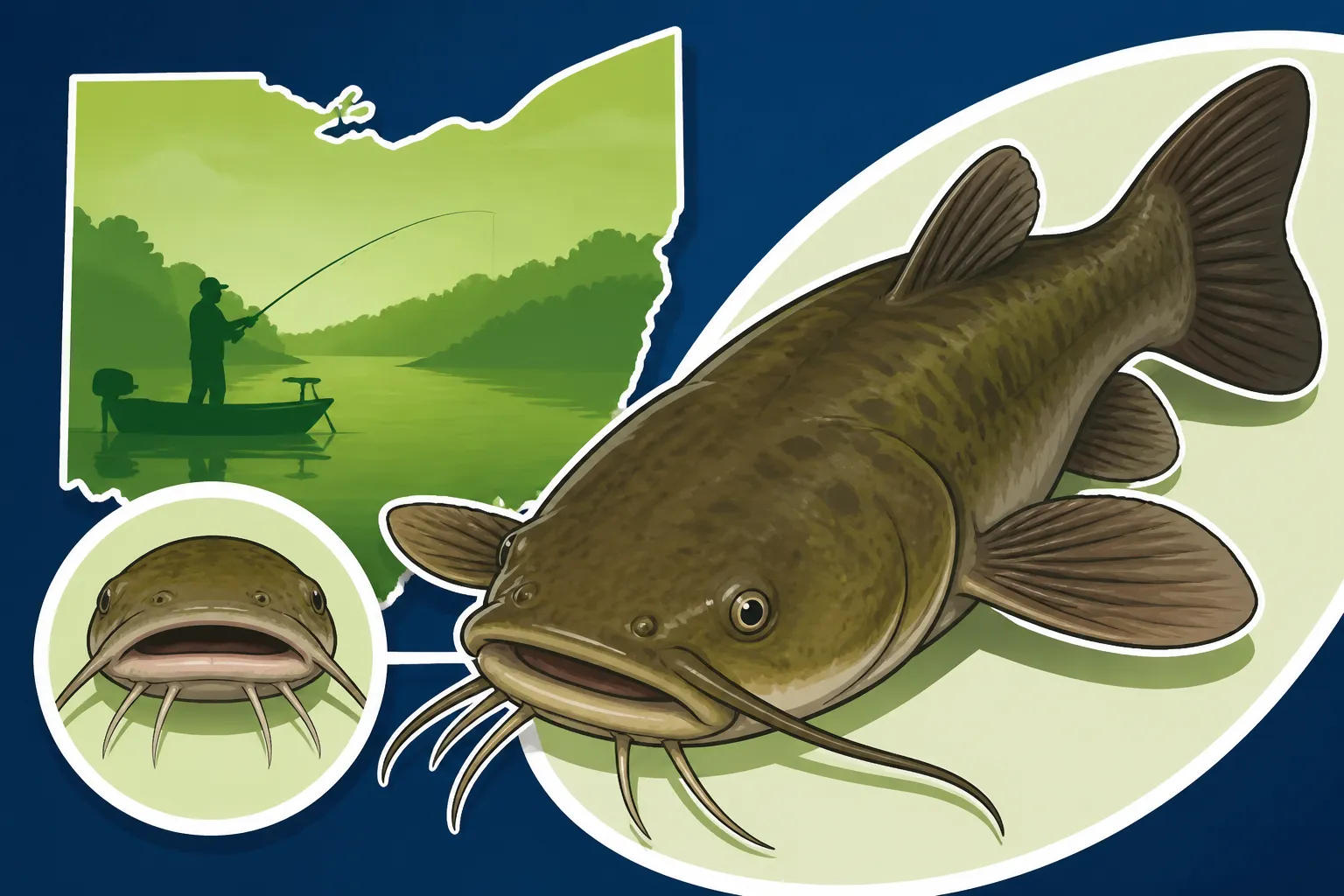
When it comes to flathead catfish, their name truly gives away their most defining characteristic: their head. It's not just "flat" in a vague sense; it's distinctly depressed and broad, almost like it's been squashed from above. This unique cranial structure is your first, best clue, and it sets them apart immediately from their whiskered cousins.
Unmistakable Flat, Wide Head
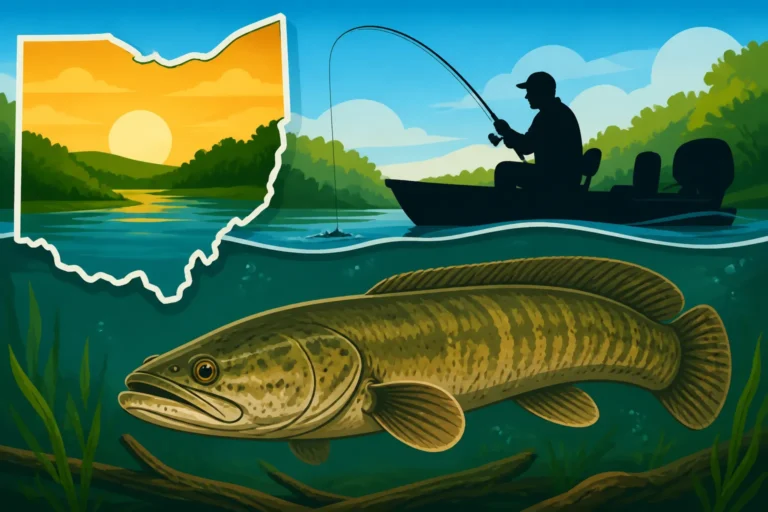
Imagine looking down at the top of the fish's head. For a flathead, it's not rounded or even slightly domed like a channel catfish. Instead, it's remarkably wide and flattened. This characteristic profile makes them look almost prehistoric, a true river monster. This flatness isn't just for aesthetics; it's part of their predatory design, allowing them to lie low and ambush prey on the river bottom or near cover. When you see a catfish with a head that seems disproportionately wide and flattened compared to its body, you're almost certainly looking at a flathead. It’s a feature you can feel, too, if you’re carefully handling a fish on the bank. Run your hand from just behind its eyes towards the snout, and you'll notice that broad, almost table-like surface. This distinctive shape helps them navigate tight spots in logs and debris, which are their preferred hiding places.
The Protruding Lower Jaw
Another dead giveaway for a flathead catfish is their mouth, specifically their lower jaw. Unlike the more even jaws of other catfish species, a flathead's lower jaw clearly extends beyond its upper jaw. This gives them a perpetual "underbite" or "bulldog" appearance. Think of it like a shovel, perfectly adapted for scooping up prey from the bottom or ambushing fish swimming above them. When a flathead opens its mouth, that lower jaw is the first thing you'll notice, jutting out prominently. This feature, combined with their wide, gaping mouth, makes them incredibly efficient predators, able to engulf surprisingly large prey items. Even on smaller flatheads, this underbite is usually quite evident. If you're looking to confirm your catch, gently observe the mouth from the side—that projecting lower jaw is a clear sign you’ve got a flathead. How to Identify a Flathead Catfish delves into this further, but the key is to look for that prominent forward-jutting lower jaw, which is a hallmark of this species.
Coloration and Body Features
Beyond the head and mouth, a flathead catfish exhibits several other key identifying features, particularly in its skin coloration, patterns, and tail shape. These characteristics are often consistent across different sizes and habitats within Ohio, making them reliable indicators.
Mottled Brown and Yellow-Brown Patterns
Flathead catfish are masters of camouflage, and their coloration reflects their preference for heavy cover and turbid waters. Their bodies are typically a mottled mix of browns, yellows, and olive greens, often with darker blotches and spots that break up their outline. This irregular, patchy pattern is unlike the more uniform color of channel catfish or the silvery sheen of blue catfish. The exact shades can vary depending on the water clarity and bottom composition where they live – fish from murky, muddy rivers might appear darker and more subdued, while those from clearer, rocky areas could have more pronounced yellows and browns. However, the mottled aspect remains constant. The underside of a flathead is usually a pale yellow or cream color, providing a stark contrast to its darker back and sides. If you've caught a catfish with a distinct, blotchy, almost camouflaged appearance rather than a solid color, you're on the right track for a flathead. This natural patterning allows them to blend seamlessly with submerged logs, rock piles, and undercut banks where they often lurk.
The Unique Tail Fin
Another significant identifier for the flathead catfish is its tail fin. While other catfish species might have deeply forked tails (like the channel cat) or moderately forked tails (like the blue cat), the flathead's tail is notably different. It's typically square or very slightly notched, giving it a somewhat "blunt" or "paddle-like" appearance. The edges of the tail are often rounded rather than sharply pointed. This less-forked tail is a crucial visual cue. It reinforces their image as a powerful, bottom-oriented predator, designed for short bursts of speed and leverage in dense cover rather than sustained, open-water cruising. When you're holding a catfish and examining its tail, pay close attention: if it's broad and appears straight or just gently curved on the trailing edge, you've likely found yourself a flathead. This sturdy tail is perfectly suited for their ambush hunting style, allowing them to quickly lunge from cover to grab unsuspecting prey.
Key Distinctions from Other Ohio Catfish Species
Ohio is home to several popular catfish species, and it's easy for anglers to confuse them, especially when they're young or caught in similar waters. Understanding the clear differences between flatheads, channel cats, and blue cats is essential for proper identification and adherence to regulations. Knowing these distinctions can also help you target the species you prefer, as their behaviors and preferred habitats vary.
Flathead vs. Channel Catfish
The channel catfish is probably the most commonly encountered catfish in Ohio, known for its widespread presence and aggressive bite. While both are catfish, their differences are quite stark when you know what to look for.
- Head Shape: This is the big one. Channel catfish have a more rounded, streamlined head compared to the flathead's distinctive broad, flattened skull.
- Mouth/Jaw: Channel catfish have an upper jaw that either extends slightly beyond or is even with the lower jaw – no prominent underbite here!
- Coloration: Channel catfish usually have a more uniform, silvery-grey to olive-green body, often with small, dark spots, especially when young. As they age, these spots may fade, and their color can darken, becoming almost black in some environments. Flatheads, as we discussed, are mottled and blotchy with browns and yellows.
- Tail Fin: This is another major differentiator. Channel catfish have a deeply forked tail, a feature that's impossible to mistake once you've seen it. The two lobes of the tail are distinct and separated by a deep "V" shape. The flathead's tail, remember, is square or only slightly notched.
- Size: While both can grow large, the state record for a channel catfish in Ohio is considerably less than that of a flathead, hinting at the true trophy potential of a flathead. Knowing the Ohio Channel Catfish Fishing Guide can help you understand more about this popular species.
- Barbels: Channel cats tend to have longer, more slender barbels (whiskers) than flatheads.
- Body Shape: Channel catfish have a more slender, elongated body profile, whereas flatheads are generally more robust and thick-bodied, especially as they grow larger.
- Habitat: While both can coexist, flatheads prefer areas with heavy structure like log jams and rock piles, often in rivers and larger reservoirs. Channel cats are more adaptable and can be found in a wider range of habitats, including ponds, lakes, and rivers, often tolerating muddier conditions.
Flathead vs. Blue Catfish
Blue catfish are another trophy species in Ohio, particularly in larger river systems like the Ohio River. They can grow to immense sizes, rivaling flatheads, and can sometimes be confused with them due to their large stature. However, key features set them apart.
- Head Shape: Blue catfish have a more rounded, sloping head, not the broad, flat profile of a flathead.
- Mouth/Jaw: Blue catfish typically have an upper jaw that slightly extends beyond the lower jaw, or they are even. They do not have the flathead's prominent underbite.
- Coloration: As their name suggests, blue catfish usually have a distinct silvery-blue or slate-gray coloration, often with a white belly. They do not have the mottled, brown-and-yellow pattern of the flathead. Their color is much more uniform and often vibrant.
- Tail Fin: Blue catfish possess a deeply forked tail, similar to a channel catfish, but often even more pronounced. This is a very clear distinction from the flathead's square tail. You'll find more details on this in Ohio Blue Catfish Identification.
- Anal Fin Rays: This is a more subtle, but highly reliable, scientific distinction. Blue catfish have a very long, straight-edged anal fin with 30-36 rays. Flatheads have a shorter, more rounded anal fin with 14-17 rays. Counting these rays in the field can be tricky, but if you look at the general shape and length of the anal fin, the blue cat's is notably longer and straighter.
- Eyes: Blue catfish tend to have larger eyes relative to their head size compared to flatheads, which have relatively small eyes.
- Habitat: While both are river dwellers, blue catfish are more commonly found in the main channels of large rivers and their major tributaries, often preferring open water and deeper holes. Flatheads, conversely, stick closer to heavy cover and structure.
Here's a quick comparison table to help solidify these differences:
| Feature | Flathead Catfish | Channel Catfish | Blue Catfish |
|---|---|---|---|
| Head Shape | Very broad, flattened, "squashed" | Rounded, more slender, streamlined | Rounded, gently sloping, not flat |
| Lower Jaw | Protrudes beyond upper jaw (underbite) | Even with or slightly shorter than upper jaw | Even with or slightly shorter than upper jaw |
| Coloration | Mottled brown, yellow, olive green; blotchy | Silvery-grey to olive-green; dark spots (young) | Silvery-blue to slate-gray; white belly; uniform |
| Tail Fin | Square or very slightly notched (blunt) | Deeply forked | Deeply forked (often very deep) |
| Anal Fin | Short, rounded, 14-17 rays | Rounded, 24-29 rays | Long, straight-edged, 30-36 rays |
| Barbels | Relatively shorter, often darker | Longer, more slender | Similar to Channel, but often lighter |
| Body Build | Robust, thick-bodied | More slender, streamlined | Robust, very large potential |
| Eyes | Relatively small | Moderate | Relatively large |
| Preferred Habitat | Heavy cover, log jams, rock piles, rivers | Diverse (lakes, rivers, ponds, streams) | Main channels of large rivers, open water |
Habitat and Size Clues
Beyond the physical appearance, where you catch a catfish and how big it is can also provide strong hints about its identity. Flathead catfish have very specific preferences when it comes to their home turf, and their growth potential is truly legendary in Ohio's waters. Understanding these ecological and size factors can further aid your identification.
Where Flatheads Live in Ohio
Flathead catfish are primarily riverine fish, meaning they prefer flowing water environments. In Ohio, you'll find them predominantly in larger rivers like the Ohio River, the Muskingum River, the Scioto River, and their larger tributaries. They also thrive in big reservoirs that mimic riverine conditions, especially those with significant standing timber, rock piles, or old stream beds. Think of places like Clendening Lake, known for its flathead population, or areas in the Ohio River Fishing Guide.
What truly sets them apart, though, is their absolute obsession with heavy cover. Flatheads are ambush predators, and they love to hide out in log jams, undercut banks, deep holes with submerged trees, and large rock crevices. They'll position themselves just out of the main current, waiting for an unsuspecting meal to drift by. If you're pulling a large catfish out of a dense pile of submerged timber or a snarl of branches, chances are much higher it's a flathead than a channel or blue cat, which tend to be more comfortable in open water or along softer bottoms. Their territorial nature means they often stay close to these prime ambush spots. This preference for structure is so strong that experienced anglers targeting flatheads will spend hours mapping out these underwater labyrinths. If you're fishing a spot known for big catfish and you find yourself constantly snagging on wood, you're probably in prime flathead territory. For instance, Where to Catch Flathead Catfish in Ohio will often highlight these exact types of locations.
How Their Size Can Offer a Hint
While size alone isn't a definitive identifier, the sheer potential for growth in flathead catfish is noteworthy and can certainly influence your initial guess, especially when you're talking about truly massive fish. Flatheads are one of the largest freshwater fish in North America, and Ohio's waters consistently produce specimens well into the double digits. It's not uncommon for dedicated flathead anglers to target fish weighing 20, 30, or even 50 pounds or more. The state record How Big Flathead Catfish Get in the Ohio River is a testament to their impressive growth.
If you've just hauled in a catfish that feels like you're fighting a small car, particularly one that's pushing over 20 pounds, it dramatically increases the likelihood that it's a flathead or a blue catfish. While channel catfish can grow large, a channel cat over 15-20 pounds is generally considered a significant trophy. A flathead or blue cat of that size, while still a great catch, is more within the "expected" range for those species. Keep in mind that young flatheads will, of course, be smaller, but they'll still exhibit those characteristic head and tail features. So, while a small catfish might be any of the three, a giant catfish in Ohio, especially one from a river system, is highly likely to be either a flathead or a blue. Always defer to the physical characteristics for definitive identification, but a monster on the end of your line often points towards these two heavyweights of the Ohio catfishing world. Remember to check Ohio Catfish Daily Bag Limit and size regulations, as they can vary by species.
Disclaimer
This article is for general informational purposes only and does not constitute professional advice. Laws, prices and regulations vary by location and change over time. Consult a qualified professional for guidance on your specific situation.