How to Identify a Channel Catfish
Ever hooked into a powerful fish in an Ohio waterway, pulled it to the boat or shore, and then found yourself staring, scratching your head, and wondering, "Is this a channel cat, or something else entirely?" You're not alone! It's a common dilemma for many anglers, especially with some of Ohio's catfish species sharing similar characteristics. This guide is here to clear up that confusion, providing you with the definitive characteristics you need to confidently identify a channel catfish in Ohio, whether you're targeting them specifically or just trying to figure out what you've landed.
The Foundation: Signature Traits of an Ohio Channel Catfish
When you're out on the water, the first few things you notice can often be the most telling. Channel catfish, while sometimes confused with their cousins, have several distinct features that, once you know them, make identification much simpler. It's like learning the unique quirks of a friend – you know them when you see them.
Spotting the Signature Forked Tail
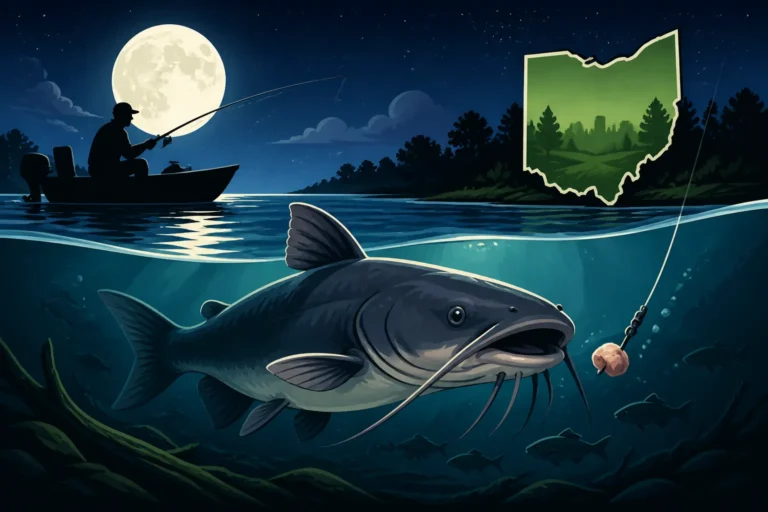
This is probably the single most definitive characteristic of an adult channel catfish, and frankly, it’s often the easiest to spot even from a distance. Unlike some other catfish species that have rounded or slightly notched tails, the channel catfish sports a deeply forked tail, almost like a swallow's tail or a pair of scissors opening up.
Imagine drawing a V-shape into the center of the tail fin – that's what you're looking for. The two lobes of the tail will be distinctly separated and often come to relatively sharp points. This forked tail is not just for looks; it's a hydrodynamic design that helps channel cats navigate and dart through currents and open water with surprising speed. When you're dealing with a larger specimen, that forked tail can give you a real run for your money during the fight! This feature alone can usually rule out a flathead catfish or a bullhead, which have very different tail structures. You'll definitely want to remember this when comparing it to other species.
Counting the Barbels and Their Placement
All catfish have barbels, those whisker-like sensory organs around their mouth, which they use to taste and feel their way around murky water, finding food in low-light conditions. It’s part of what makes them such effective bottom feeders and nocturnal hunters. For channel catfish, you'll always count eight barbels.
These eight barbels are strategically placed: two longer ones extending from the corners of their upper jaw (maxillary barbels), two shorter ones directly underneath their chin, and two more shorter ones on either side of those chin barbels. The key is their arrangement and the fact that they are dark, typically matching the body color. Compare this to the lighter, often pale barbels of a blue catfish or the distinctly different arrangement of a flathead, and you’ll start to see another piece of the puzzle fall into place. They might seem minor, but those whiskers are crucial identifiers!
Coloration and Body Shape
Channel catfish are often described as having a sleek, streamlined body, built for swimming rather than hunkering down in dense cover like a flathead. Their bodies are typically slender and somewhat compressed laterally, especially when compared to the broader, flatter head of a flathead catfish. They have a moderately sized head, not overly large or disproportionate to their body.
When it comes to color, this is where things can get a little tricky and where anglers often get confused. Channel catfish can range quite a bit in their hue, depending on the water clarity, depth, and even their diet. Generally, they tend to be olive-green, gray, or silvery-gray on their backs and upper sides, fading to a creamy or white belly. In clear, rocky rivers, they might be darker, almost black, while in murky, muddy ponds, they can appear lighter and more washed out. The key thing to remember is the potential for variation; don't let a slightly different shade throw you off!
Delving Deeper: Advanced Identification Markers
While the basics will get you far, sometimes you need to dig a little deeper, especially when you're looking at a fish that doesn't quite fit the typical mold or when you want to be absolutely certain. There are some more granular details that really help solidify your identification.
The Tell-Tale Spots (Or Lack Thereof)
Ah, the spots! This is perhaps the most iconic feature of the channel catfish, especially for younger fish. Many anglers know them as the "spotted cat." Younger channel catfish, often up to about 10-15 pounds, typically display distinct, dark, irregular spots scattered along their sides. These spots are usually darker than their body color and can vary in size and intensity. It's a beautiful pattern, almost like a leopard print, that makes them quite striking.
However, and this is where the confusion often comes in, these spots tend to fade and sometimes disappear entirely as the fish grows older and larger. A truly massive, old channel catfish might have very few, faint, or even no visible spots at all, especially if it's a darker fish from a deep, clear lake. This can easily lead someone to mistake it for a blue catfish, which rarely have spots. So, if you see spots, it's almost certainly a channel cat. If you don't see spots, don't immediately rule it out – you'll need to look at other features. This is a common point of frustration for anglers trying to distinguish between species.
Anal Fin Rays: A Crucial Detail
For the serious angler or anyone wanting foolproof identification, counting the rays in the anal fin is your secret weapon. This is perhaps the most reliable way to differentiate a channel catfish from a blue catfish. The anal fin is the single fin located on the underside of the fish, behind the anus and before the tail fin.
To count the rays, you'll need to gently spread the fin and count the individual spines or soft rays. It takes a little practice and sometimes a keen eye, but it's well worth the effort for absolute certainty. A channel catfish will typically have between 24 and 29 rays in its anal fin. This range is pretty consistent and is a key biological indicator. In contrast, a blue catfish will have a much longer anal fin with a straight leading edge, boasting 30 or more rays, often in the mid-30s. A flathead catfish, on the other hand, has a much shorter anal fin with fewer rays, usually under 18. This is where a good field guide, perhaps one you picked up from Amazon, can be invaluable for cross-referencing.
Here’s a quick comparison table for the anal fin rays, which can be a real game-changer in identification:
| Catfish Species | Tail Shape | Anal Fin Ray Count | Head Shape | Typical Spots |
|---|---|---|---|---|
| Channel Catfish | Deeply Forked | 24-29 | Moderately Sized | Present (often fades with age) |
| Blue Catfish | Deeply Forked | 30-36+ | Larger, Broader | Absent |
| Flathead Catfish | Slightly Notched | 14-17 | Flat, Wide | Absent |
| Bullhead Species | Rounded/Square | 17-27 (species-dependent) | Broad, Stubby | Absent |
Head Shape and Mouth Position
While not as immediately obvious as a forked tail or spots, the overall head shape and the position of the mouth can also help distinguish channel catfish. A channel cat generally has a relatively narrow, somewhat pointed head in profile, especially when compared to the broader, flatter head of a flathead catfish. The mouth of a channel catfish is considered "terminal," meaning it's located at the very front of the head, allowing it to feed on a variety of prey both from the bottom and mid-water.
Think of it this way: a channel cat's head flows smoothly into its body, without a significant "bulge" or extreme width. This contrasts sharply with the massive, flattened head and protruding lower jaw of a flathead catfish, or the slightly more pronounced "hump" and broader head of a large blue catfish. Paying attention to these subtle anatomical differences becomes second nature with practice, and soon you'll be able to tell at a glance.
Common Look-Alikes: Avoiding Misidentification in Ohio
Ohio waters are home to several species of catfish, and it's easy to confuse them, especially if you're not intimately familiar with each one. Knowing the key differences from the most common look-alikes will save you a lot of guesswork and help you accurately report your catches, or adhere to specific Ohio Fishing Regulations Every Angler Should Know.
Channel Catfish vs. Blue Catfish
This is perhaps the most frequent point of confusion for anglers, as both species share that distinctive deeply forked tail. However, there are a few critical differences:
- Anal Fin Rays: As discussed, this is your number one differentiator. Blue catfish have a much longer anal fin with a straight leading edge and typically 30-36 or more rays, while channel cats have 24-29. This is the most reliable scientific distinction.
- Coloration and Spots: Blue catfish generally have a silvery-blue or slate-blue coloration, living up to their name. They very rarely, if ever, have the distinct spots found on younger channel catfish. If your fish has spots, it's a channel cat. If it's a uniform blue-gray, you need to count those anal fin rays.
- Head Shape: Blue catfish tend to have a larger, broader head compared to the more streamlined head of a channel cat. The profile of a blue cat's head might appear slightly more "humped" just behind the eyes, and their mouth is often subterminal (meaning the upper jaw slightly overhangs the lower jaw).
- Size: Blue catfish are capable of growing significantly larger than channel catfish in Ohio. If you've landed a monster that truly pushes past 50 pounds, there's a good chance it's a blue cat. Learn more about Ohio Blue Catfish Identification.
Channel Catfish vs. Flathead Catfish
Flathead catfish are another popular target in Ohio, especially in larger rivers like the Ohio River Fishing Guide, but they are quite distinct from channel cats.
- Tail Shape: This is the easiest differentiator. Flatheads have a square or slightly notched tail, never deeply forked like a channel cat. The tail is often described as feeling "flat" or "paddle-like."
- Head Shape and Mouth: The flathead gets its name for a reason – its head is notably broad and flattened, almost duck-bill like. They also have a prominent lower jaw that protrudes beyond the upper jaw, giving them a perpetually grumpy or determined look. Channel cats have a more rounded, terminal mouth.
- Coloration: Flatheads are typically mottled brown, olive, or yellowish-brown, with darker patterns that help them camouflage against logs and rocky bottoms. They lack the distinct spots of a channel cat and often have a pale or yellowish belly.
- Anal Fin Rays: Flatheads have a very short anal fin, usually with only 14-17 rays, significantly fewer than a channel cat.
- Barbel Color: Flathead barbels are often a yellowish or pale color, contrasting with the dark barbels of a channel catfish. Understanding Ohio Flathead Catfish Identification is key to telling these two apart.
Channel Catfish vs. Bullheads
While bullheads are smaller and generally easier to distinguish, they are still catfish, and new anglers might momentarily confuse them.
- Size: Bullheads are significantly smaller than channel catfish, rarely exceeding a few pounds, whereas channel cats can grow much larger.
- Tail Shape: Bullheads have a rounded or only very slightly notched tail, never deeply forked. This is an immediate giveaway.
- Body Shape: Bullheads have a much stockier, chunkier body profile compared to the sleek, streamlined channel cat.
- Mouth: Bullheads have a wider mouth, and their head is often broader relative to their body size than a channel cat's.
- Barbels: While they also have eight barbels, their overall appearance and lack of a forked tail will usually prevent confusion.
Practical Tips for Confident Identification
Being able to quickly and accurately identify your catch adds a whole new layer of enjoyment and responsibility to your fishing experience. Here are some actionable tips to help you become a channel catfish identification expert.
Best Practices for Handling and Observation
When you catch any fish, especially one you're trying to identify, responsible handling is crucial, particularly if you plan on releasing it.
- Wet Hands: Always wet your hands before handling a fish. This helps protect their slime coat, which is their primary defense against disease.
- Minimize Time Out of Water: The less time a fish spends out of its aquatic environment, the better its chances of survival upon release. Snap a quick photo, make your identification, and get it back in the water.
- Use a Net: A rubberized landing net, available on platforms like Amazon, is excellent for securing fish quickly and safely, allowing you to observe them in the net or a designated measuring board without direct hand contact until you're ready to release.
- Support the Body: If you need to lift the fish for a quick photo or closer inspection, support its body horizontally to avoid putting undue stress on its internal organs and jaw. For larger catfish, using two hands or a lip gripper (with caution) is advisable. This is especially important for fish like channel cats that can get quite heavy.
Utilizing Resources for Confirmation
You don't have to be a walking encyclopedia of fish facts. There are plenty of resources at your fingertips to help confirm your identification.
- Field Guides: Investing in a good regional fishing field guide for Ohio is one of the best tools you can have. These books often include detailed illustrations or photos, descriptions of key features, and range maps. You can find excellent options on Amazon. Keep it in your tackle bag or boat!
- Smartphone Apps: Many fishing apps now include fish identification features, allowing you to upload a photo and get potential matches. While not always 100% accurate, they can be a great starting point.
- Online Resources: Reputable state wildlife agencies (like the Ohio Department of Natural Resources, ODNR) and university extension sites often have detailed species information, including photos and identification keys. Just be careful with random forums, as information can sometimes be inaccurate.
- Local Experts: Don't hesitate to ask bait shop owners, experienced local anglers, or even wildlife officers you encounter on the water. Most are happy to share their knowledge and help you learn.
Why Proper Identification Matters
It might seem like a small detail, but knowing exactly what you've caught goes beyond bragging rights.
- Regulations and Bag Limits: Different fish species in Ohio often have different size limits and daily bag limits. For example, Catfish Regulations by Species might vary, and mistakenly identifying a channel cat as a blue cat (or vice versa) could lead to inadvertently violating regulations. Knowing the rules, like Is There a Minimum Size for Channel Catfish in Ohio?, ensures you're a responsible angler.
- Conservation Efforts: Wildlife agencies rely on accurate catch data to monitor fish populations and manage fisheries effectively. Your ability to correctly identify species contributes to better conservation efforts.
- Targeted Fishing: If you're specifically targeting Ohio Channel Catfish Fishing Guide, knowing their unique characteristics helps you understand their behavior, habitat preferences, and what baits or techniques might be most effective. This leads to more successful and enjoyable fishing trips.
- Understanding Ecosystems: Each fish species plays a role in the local aquatic ecosystem. Accurate identification helps you appreciate the biodiversity of Ohio's waters and understand the interconnectedness of different species.
- Personal Growth as an Angler: Ultimately, learning to identify fish makes you a more knowledgeable and skilled angler. It deepens your connection to the sport and the natural world around you. So next time you're wondering, "What channel catfish eat" or trying to master Best Places to Fish in Ohio, you'll have a better handle on the species you're pursuing.
Disclaimer
This article is for general informational purposes only and does not constitute professional advice. Laws, prices and regulations vary by location and change over time. Consult a qualified professional for guidance on your specific situation.