Fish Species Anglers Confuse Most Often in Ohio
It's a familiar scenario for any Ohio angler: you pull a beautiful fish from the water, admire its colors, and then a nagging doubt creeps in. Is it a walleye, or a saugeye? Is that a muskie, or just a really big pike? The truth is, many of Ohio's fantastic game fish bear striking resemblances, leading to understandable confusion that can even impact your adherence to local regulations. This guide is here to untangle those common mix-ups, helping you confidently identify your catch and deepen your appreciation for Ohio's diverse aquatic life.
The Walleye-Saugeye-Sauger Conundrum
This trio probably causes more head-scratching than any other group of fish in Ohio, and for good reason. They are all members of the perch family, sharing similar body shapes and often found in similar environments. But knowing the subtle differences is crucial, especially when it comes to understanding length and bag limits, which often vary significantly between species.
Spotting the Walleye
The walleye, often hailed as the king of Ohio game fish, especially on Lake Erie, is a prized catch known for its delicious fillets and challenging fight. When you're looking at a walleye, one of the first things you'll notice is its generally sleek, elongated body, often olive green to golden brown with darker mottling on its sides. Their large, glassy eyes are characteristic, adapted for low-light feeding.
A key identifier for walleye is the lower lobe of their tail fin – it almost always has a distinct white tip. This white tip is a reliable marker. Their dorsal fin, the spiny one on their back, has no distinct dark spots, though sometimes the webbing between the spines might appear dusky. The walleye also typically lacks the distinct dark saddle markings or blotches that you might see on its close relatives. They are abundant in Lake Erie, but also found in many inland reservoirs. For a deeper dive into these fantastic fish, check out our Ohio Walleye Fishing Guide.
Imagine you're out on Lake Erie, maybe near Port Clinton, and you've just reeled in what feels like a solid fish. As you hoist it aboard, look for that crisp white tip on the tail. Run your hand carefully along its spiny dorsal fin – no prominent dark spots? These are strong indicators you've got a walleye. It's exhilarating when you finally know for sure!
Decoding the Saugeye
Now, if you've caught something that looks like a walleye but something feels "off," it might just be a saugeye. The saugeye is a hybrid fish, a cross between a female walleye and a male sauger, and Ohio fisheries frequently stock them in inland lakes and reservoirs because they grow quickly and are quite tolerant of different water conditions. This hybrid vigor makes them an excellent sport fish for many Ohio anglers.
Saugeye often display a mix of features from both parent species. Their body coloration is usually a bit darker and more mottled than a pure walleye, with distinct dark, wavy vertical bars or blotches along their sides, much like a sauger. This is a big clue! While they might have a slight white patch on the lower tail fin, it's rarely as pronounced or as clean-cut as the walleye's distinct white tip. Instead, it often appears smudged or incomplete.
Perhaps the most definitive way to identify a saugeye is by looking at its dorsal fin. Unlike the walleye, the saugeye will typically have distinct dark spots or streaks on the webbing of its spiny dorsal fin, rather than just being dusky. If you see those prominent spots and some faint barring on the sides, you've likely landed a saugeye. They are often found in places like Alum Creek Lake or Indian Lake. Getting a handle on these often-confused fish can really help you navigate the regulations, so be sure to check out our Ohio Saugeye Fishing Guide for more details.
Identifying the Sauger
The sauger is the third member of this confusing family, and while less common than walleye or saugeye in many Ohio waters, it's still present, particularly in the Ohio River system and some of its larger tributaries. Saugers are generally smaller than walleye or saugeye, with a more slender body.
Their coloration is typically dark bronze to brown on the back, with very pronounced, often saddle-like dark blotches or spots along their sides and back. These markings are usually much more distinct than anything you’d see on a walleye, and even more defined than the saugeye’s bars. The sauger's tail fin almost never has a white tip, which is another crucial difference from the walleye.
The key to identifying a sauger, much like the saugeye, lies in its spiny dorsal fin. Saugers have very clear, dark spots arranged in rows on the membranes between the spines, and often a large, dark blotch at the base of the last few spines. Unlike the saugeye, which might have spots and bars, the sauger's spots are often more prominent and spread across the entire fin. Knowing these unique patterns is key to Ohio Sauger Identification. If you're fishing the Ohio River, especially for sauger, pay close attention to these details.
Here's a quick reference table to help clarify the differences:
| Feature | Walleye | Saugeye | Sauger |
|---|---|---|---|
| Tail Fin | Distinct white tip on lower lobe | Faint/smudged white patch, often absent | No white tip |
| Body Markings | Often mottled, generally uniform | Dark, wavy vertical bars/blotches | Distinct, dark saddle-like blotches |
| Dorsal Fin | Generally clear, no distinct spots | Distinct dark spots on webbing | Prominent dark spots in rows, often blotch at base |
| Size | Typically largest of the three | Medium, grows faster than sauger | Generally smallest and most slender |
| Primary Habitat | Lake Erie, larger inland lakes | Inland reservoirs, larger lakes | Ohio River system, larger tributaries |
Muskie vs. Northern Pike: The Toothiest Mix-Up
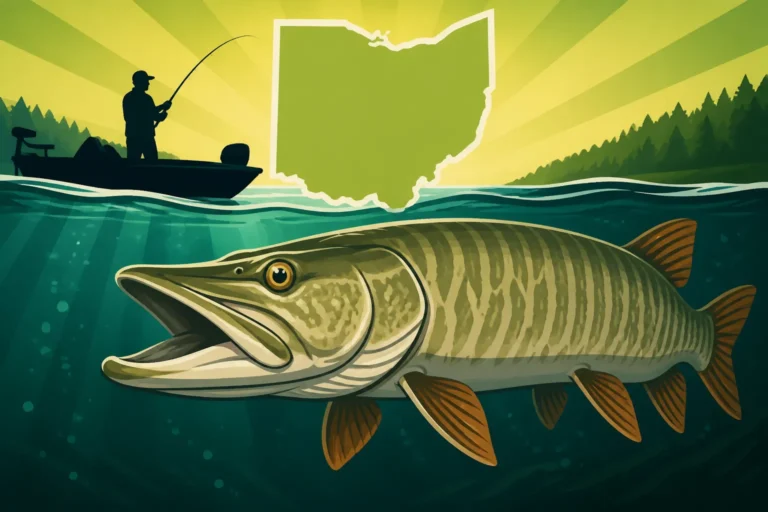
These two toothy predators are often confused, especially when they're young or caught in waters where both might coexist. Both are long, cylindrical fish with duck-bill snouts and rows of formidable teeth. They are ambush predators, often hiding in aquatic vegetation or fallen timber. However, distinguishing between them is critical, as muskie regulations are typically much stricter due to their slower growth rates and trophy status.
The Mighty Muskie
The muskie, or muskellunge, is truly a freshwater apex predator and a bucket-list fish for many anglers in Ohio. These fish are known for their incredible size, strength, and elusive nature. Ohio has several fantastic muskie waters, including Piedmont Lake, Leesville Lake, and Alum Creek Lake. If you're targeting one of these giants, you'll want to be absolutely sure of your identification. Check out our Ohio Muskie Fishing Guide for more on these impressive fish.
Muskies typically have a light background color (green, gray, or brown) with darker markings, which can appear as spots, bars, or even a uniform dusky pattern depending on the specific strain and water body. The key identifying feature, however, isn't just the pattern, but the absence of scales on the lower half of their gill plate and usually their cheek. They also tend to have more pores on the underside of their jaw compared to a northern pike. We'll get to that crucial detail shortly.
A muskie's body shape is generally more streamlined and elongated, appearing somewhat cigar-shaped. Their fins tend to be more pointed, especially the caudal (tail) fin, which is often deeply forked. Catching a muskie is a true feat, and knowing you've landed one makes the experience even more special.
The Nimble Northern Pike
Northern pike, while still formidable predators, generally don't reach the same trophy sizes as muskies in Ohio, although they can still be quite large. They are often found in cooler, weedy waters, and while less common than muskie in many stocked Ohio lakes, they can occasionally show up.
Pike tend to have a darker body color (green to olive) with lighter, bean-shaped or irregular spots along their sides. This "light spots on a dark background" pattern is often the opposite of a muskie's "dark markings on a light background." However, this can be unreliable, especially with variations in water clarity and fish strain.
A more reliable visual cue for pike is their generally broader, more shovel-shaped snout compared to the muskie's slightly more pointed profile. Their tail fin is also typically less deeply forked than a muskie's. But the real clincher comes down to a small, often overlooked anatomical detail. Our Ohio Muskie vs Northern Pike Identification article goes into even more detail on these distinctions.
Counting the Pores: The Key Distinction
The most consistent and reliable way to differentiate between a muskie and a northern pike is to examine the pores on the underside of their jaw and the scaling on their gill plate and cheek. This might sound a little technical, but it's really quite simple once you know what to look for.
On a muskie, the entire upper half of the cheek and gill cover is scaled, but the lower half is scaleless. When you gently flip the fish over and look at the underside of its jaw (the mandibles), a muskie will typically have 6-9 sensory pores on each side.
A northern pike, on the other hand, has its entire cheek fully scaled, but only the upper half of its gill cover is scaled, with the lower half being scaleless. Under the jaw, a northern pike will typically have 5 or fewer sensory pores on each side.
It's a subtle difference, but it's the most foolproof way to tell them apart. If you're ever in doubt, having a good fish identification guide (many of which are available on platforms like Amazon) or a quick reference card can save you a lot of guesswork. This distinction is vital for adhering to fishing regulations, as muskie often have much higher minimum length limits and lower bag limits than pike.
Crappie, Bluegill, and Sunfish: Panfish Puzzles
Ah, panfish! They're often the first fish many of us ever catch, and they're a staple for family fishing trips. But even seasoned anglers can sometimes pause when trying to definitively identify some of the sunfish family members, particularly crappie, bluegill, and the various other sunfish species. While regulations for panfish are usually quite generous, knowing your catch helps in understanding habitat, preferred baits, and even which species might be more desirable for the frying pan.
Black Crappie vs. White Crappie
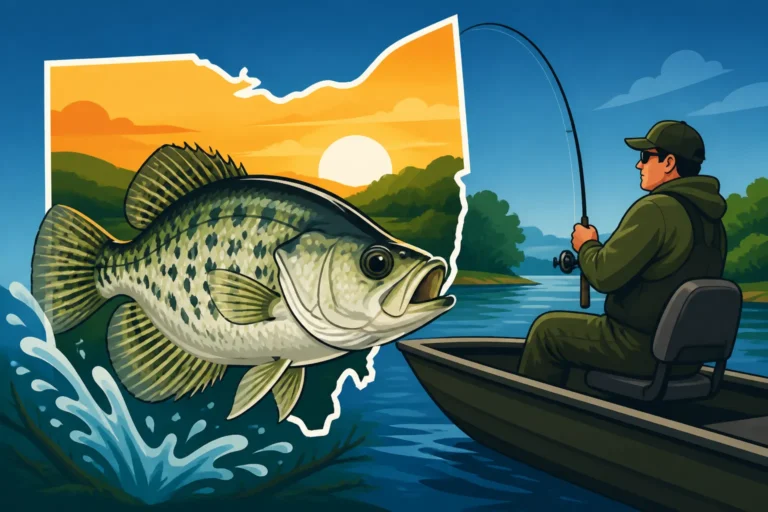
Crappies are fantastic panfish, growing larger than many other sunfish and offering a delicious meal. Ohio boasts both black crappie and white crappie, and while they share many similarities, there are distinct ways to tell them apart. Our Ohio White Crappie vs Black Crappie guide dives deeper into this.
Black Crappie:
- Coloration: Often have a dark, mottled, irregular blotchy pattern on a silvery-olive background, giving them a "peppered" look. The spots don't usually form distinct vertical bars.
- Body Shape: Tend to have a more rounded, deeper body profile.
- Dorsal Spines: The most reliable way to identify them. Count the spines in their dorsal fin – black crappie almost always have 7 or 8 dorsal spines.
- Mouth: Their mouth extends back only to about the middle of the eye.
White Crappie:
- Coloration: Typically have more distinct, dark vertical bars (usually 5-10) on a lighter, silvery body. The pattern is more organized than the black crappie's mottling.
- Body Shape: Generally have a more elongated body, not quite as deep or round as the black crappie.
- Dorsal Spines: Count the spines – white crappie almost always have 5 or 6 dorsal spines.
- Mouth: Their mouth is generally larger, extending back past the middle of the eye.
If you're fishing a brush pile at Mosquito Creek Lake and pulling out slabs, knowing which crappie species you're catching can be a fun bit of trivia and help you understand their habits better.
Bluegill and Other Sunfish Species
Beyond crappie, the sunfish family in Ohio includes bluegill, green sunfish, pumpkinseed, redear sunfish, and more. It's easy to lump them all into "sunfish," but each has unique characteristics. Our Ohio Bluegill and Sunfish Identification post offers even more distinctions.
Bluegill:
- Coloration: Olive to dark blue-green on the back, fading to lighter sides with several vertical bars that are often faint or disappear on larger fish. Their most distinctive feature is a prominent, often dark "ear flap" on the gill cover, without a colored margin. They also have a dark spot at the base of the dorsal fin.
- Pectoral Fin: Their pectoral fin (the one just behind the gills) is typically long and pointed.
- Size: Generally disc-shaped and quite deep-bodied.
Green Sunfish:
- Coloration: Often iridescent green to blue-green, with small, emerald or sky-blue spots on their body. They usually have a dark spot at the base of the dorsal and anal fins, and their ear flap is typically black with a pale orange or yellow margin.
- Mouth: Large mouth, extending back to the middle of the eye.
- Body Shape: More elongated and robust than a bluegill.
Pumpkinseed:
- Coloration: Beautifully colored with iridescent spots, wavy lines, and a distinctive bright red or orange spot on the edge of their black ear flap.
- Pectoral Fin: Short and rounded.
The key is to look for a combination of characteristics: body shape, coloration, fin shape, and most importantly, the features of the gill plate (ear flap) and dorsal fin spines.
Why Panfish Identification Matters
While panfish regulations are often straightforward (like a generous daily limit for "sunfish" species), some specific species might have special regulations, especially in certain lakes or during specific times. Furthermore, understanding the distinct behaviors and habitats of each species can make you a more effective angler. For instance, bluegill might prefer shallower, weedier areas, while crappie often suspend over deeper brush or structure. Knowing what you've caught allows you to refine your techniques and bait choices.
For example, if you're targeting crappie with small jigs from Amazon, knowing if you're in a black crappie-dominant lake might influence your retrieve speed or depth. It’s all about becoming a more informed angler!
Catfish Confusion: Channel, Flathead, and Blue
Ohio offers fantastic catfish angling, with three main species drawing anglers: the channel catfish, flathead catfish, and blue catfish. While many anglers simply target "catfish," distinguishing between these three can be important, especially for size and bag limits, which can sometimes vary by species or water body.
The Everyday Channel Catfish
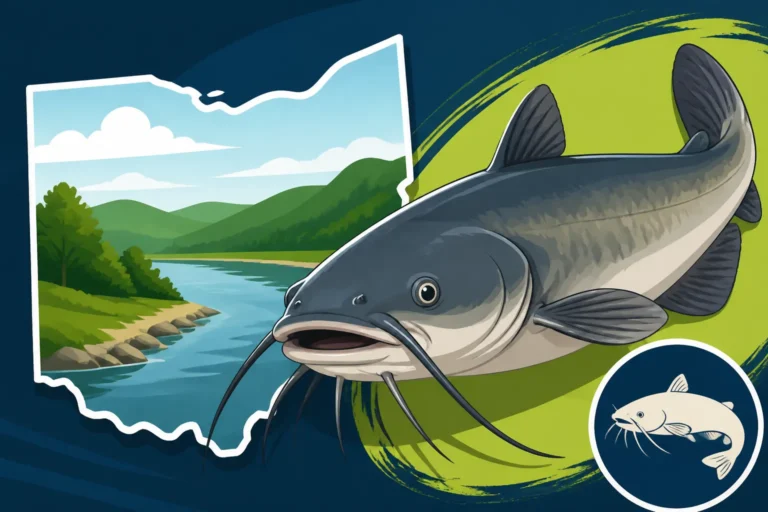
The channel catfish is by far the most widespread and commonly caught catfish in Ohio. They thrive in a huge variety of habitats, from small creeks and ponds to large rivers and reservoirs. If you're out fishing for catfish with stink bait or worms, chances are good you're going to hook a channel cat. Our Ohio Channel Catfish Fishing Guide has tons more information.
Key Identification Features:
- Coloration: Typically olive-brown to slate gray on the back, fading to silvery-white on the belly. Younger channel cats often have distinct dark spots on their sides, which tend to fade as they age.
- Tail: The most distinctive feature is their deeply forked tail, almost like a giant swallow's tail.
- Head: Their head is relatively small and rounded, with barbels (whiskers) that are typically darker than their body.
- Body: They have a sleek, streamlined body shape.
Imagine you're fishing the Scioto River near Columbus, and you pull in a feisty cat. If it's got a clearly forked tail and some faint spots, you've likely got a channel cat. They're a ton of fun on light tackle!
Unraveling the Flathead
Flathead catfish are the giants of Ohio's catfish world, known for their immense size and preference for live bait. They are primarily found in large rivers like the Ohio River and its major tributaries, as well as some larger reservoirs. These fish are powerful, solitary predators. For more on these amazing fish, check out our Ohio Flathead Catfish Identification guide.
Key Identification Features:
- Coloration: Mottled yellow-brown to dark brown or black on the back, with a yellowish or cream-colored belly. They do not have spots like channel catfish.
- Tail: Unlike the channel cat, the flathead has a square or slightly rounded tail, not forked. This is a crucial difference!
- Head: As their name suggests, they have a distinctly flat, broad head. Their lower jaw protrudes beyond the upper jaw, giving them a somewhat grumpy look.
- Eyes: Their eyes are relatively small and set high on their head.
- Body: Very robust and powerful body.
If you're targeting a true river monster, perhaps using a heavy-duty rod and reel combo that you found on Amazon, and you haul in something with a wide, flat head and a square tail, you've achieved a flathead! Be ready for a serious fight.
Recognizing the Blue Catfish
Blue catfish are another potentially massive species, often rivaling flatheads in size. They are less common than channel cats in many Ohio waters but are increasingly present in the Ohio River system and some specific reservoirs. They share some similarities with channel catfish, which can lead to confusion, but they can be distinguished. Our Ohio Blue Catfish Identification article gives more details.
Key Identification Features:
- Coloration: Usually a uniform slate blue or gray on the back, fading to white on the belly. Unlike channel catfish, blue cats rarely, if ever, have spots, even when young.
- Tail: Like the channel catfish, blue catfish have a deeply forked tail. This is where the confusion often arises!
- Head: Their head is distinctively sloped and humped, not flat like a flathead. Their eyes are also relatively small.
- Anal Fin: This is a very reliable distinguishing feature. Blue catfish have a very long, straight-edged anal fin (the fin on their underside, behind the anus) with a high number of rays – typically 30-35. Channel catfish have a shorter, more rounded anal fin with fewer rays (typically 24-29).
- Size: Generally, blue catfish grow much larger than channel catfish, often reaching immense sizes.
If you catch a very large, uniformly blue-gray catfish with a deeply forked tail, count those anal fin rays. If there are 30 or more, you've likely landed a blue cat. These are another incredible sport fish that will test your tackle and your stamina.
Understanding these key differences will not only make you a more knowledgeable angler but also help ensure you're fishing within the current regulations for each specific species. Happy fishing, and may your identification skills be sharp!
Disclaimer
This article is for general informational purposes only and does not constitute professional advice. Laws, prices and regulations vary by location and change over time. Consult a qualified professional for guidance on your specific situation.