Ohio Carp Fishing and Identification
For many anglers in Ohio, the mention of "carp" often brings up mixed feelings. They're sometimes seen as a nuisance, a "trash fish" that muddies the waters. But for a growing number of passionate anglers, carp represent an exciting, challenging, and often overlooked fishing experience right here in our home state. This guide is dedicated to shedding light on the world of Ohio carp fishing, helping you identify these powerful fish and equip you with the knowledge to target them effectively.
The Misunderstood Carp of Ohio: Why They Matter to Anglers
It's true, carp don't always get the same fanfare as a trophy walleye or a hard-fighting steelhead. For decades, they've been categorized by many as a "rough fish," something to be avoided or even culled. But if you've ever hooked into a big common carp, you know that label couldn't be further from the truth. These fish are powerful, intelligent, and offer an incredible fight, making them a fantastic target for sport anglers looking for a serious challenge without having to travel far.
More Than Just a "Rough Fish": The Sporting Side of Carp
Let's be honest, the moment a large carp takes your bait and peels line off your reel, any preconceptions about them being "rough" instantly evaporate. They don't jump like a bass or make lightning runs like a steelhead, but their sheer power and stubborn refusal to give up make for a truly memorable battle. Landing a common carp pushing twenty or thirty pounds, especially on lighter tackle, is a test of skill, patience, and proper drag setting. Many dedicated carp anglers find this sustained fight incredibly rewarding, offering a different kind of thrill than chasing other popular game fish. It's a sport that demands a specific approach, from specialized rigs to stealthy tactics, and the payoff is often a personal best in terms of brute strength.
Beyond the fight itself, carp fishing has a wonderfully meditative quality. Often, it involves setting up your rods with bite alarms, casting out, and patiently waiting, surrounded by nature. This style of fishing, popular in Europe and gaining traction here, builds a connection to the water and its inhabitants that's hard to beat. It’s about understanding the fish's habits, their feeding patterns, and presenting your bait perfectly. Plus, with catch-and-release being the norm for many carp anglers, these magnificent fish continue to grow, offering future battles to those who respect them.
Environmental Role and Management in Ohio
While some species of carp, like certain Asian carp, pose significant invasive threats, the common carp has been present in Ohio waters for a very long time, introduced to North America in the mid-1800s. They've found their niche and are a well-established part of many aquatic ecosystems. Common carp are omnivores and bottom feeders, often rooting around in the substrate for insects, crustaceans, and plant matter. This feeding habit can sometimes stir up sediment, which is part of why they get a "muddy" reputation, but it also plays a role in nutrient cycling within certain water bodies.
The Ohio Division of Wildlife recognizes common carp as a sport fish and manages their populations, though not with the same intensity as highly prized species like walleye or bass. They are incredibly resilient and adaptable, thriving in a wide range of water conditions, from clear lakes to murky rivers. This adaptability is precisely why they are so prevalent across the state, making them accessible to almost any angler looking for a fight. Understanding their place in the environment helps us appreciate them as an integral, if sometimes controversial, component of Ohio's diverse fisheries.
Common Carp Species in Ohio Waters: Identification Guide
Identifying the fish you catch is a fundamental part of responsible angling and helps you understand what you're dealing with. In Ohio, when most anglers talk about "carp," they are almost always referring to the Common Carp. However, it's crucial to understand the distinctions, especially given the presence and concerns surrounding various Asian carp species that could potentially be encountered. Knowing your target helps you comply with regulations and appreciate the specific fight each species offers.
The Mighty Common Carp (Cyprinus carpio)
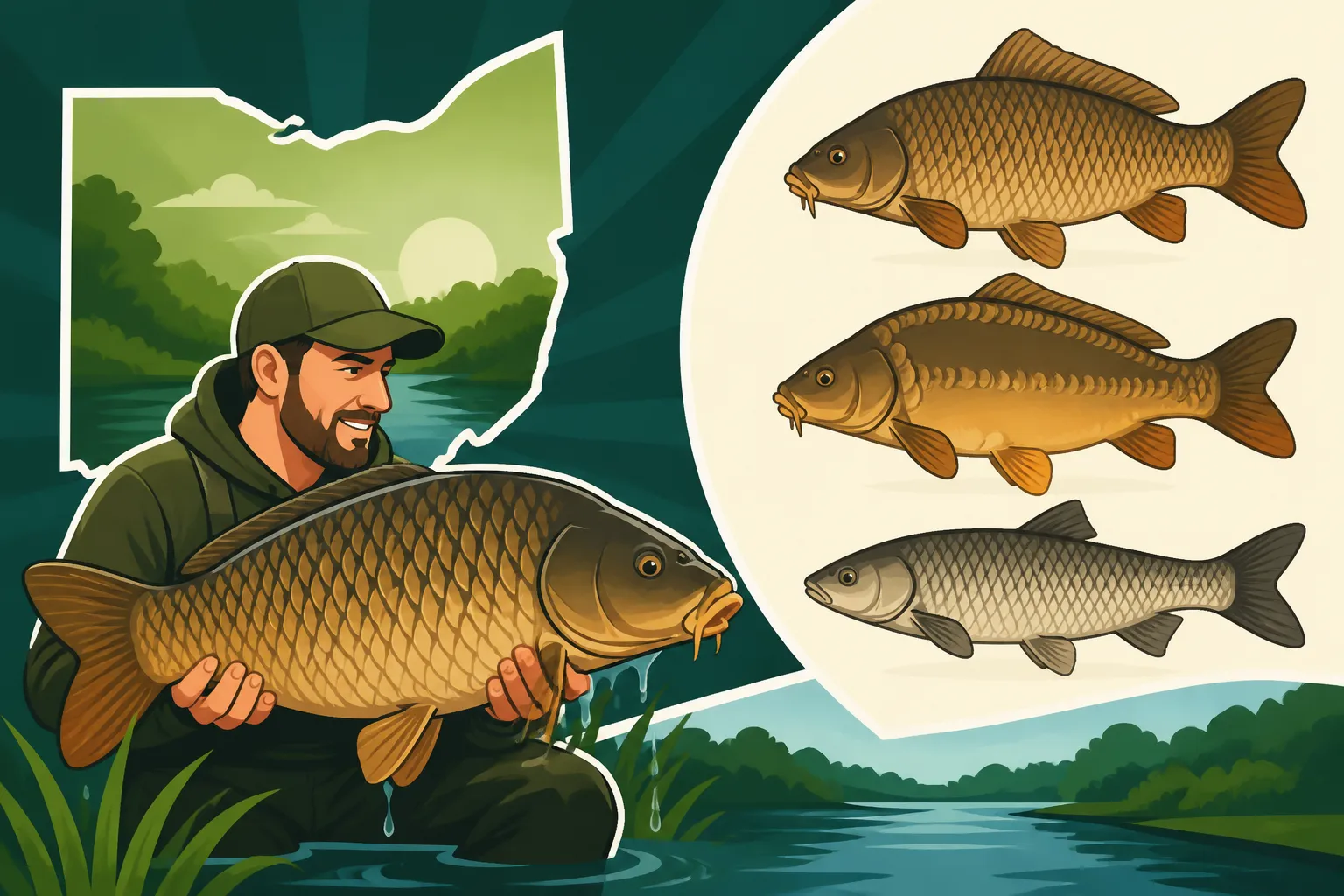
The Common Carp is the king of the carp family in Ohio, a powerful, scale-covered beast that can grow to impressive sizes. You'll recognize them instantly by their distinctive features. First, look for their mouth, which is protrusible and has two pairs of barbels (whiskers) on the upper lip. These barbels are sensory organs that help them root around in the mud for food. Their body shape is generally robust and torpedo-like, with a deep body and large, prominent scales that are typically brassy or olive-brown on the back, fading to golden or yellowish on the belly. The dorsal fin is long and has a serrated, stout spine at the front, a feature shared with the anal fin.
Common carp are incredibly widespread and can be found in nearly every sizable body of water in Ohio, from Lake Erie to the smallest farm pond. They are exceptionally hardy and can tolerate a wide range of water conditions, including those with lower oxygen levels and higher turbidity that might deter other species. While they can be found in clear waters, they truly thrive in slow-moving or stagnant waters with soft, muddy bottoms and plenty of aquatic vegetation. This makes them a prime target in many of Ohio's lakes, reservoirs, and slower river sections. They are true omnivores, feeding on insects, larvae, crustaceans, and plant material, which is why a variety of baits work so well for them.
European vs. Asian Carp: A Crucial Distinction
It's vital for Ohio anglers to understand that the "Common Carp" we've been discussing—the species celebrated for its fighting prowess—is a European carp. This species has been in North America for over a century and is well-established. They are generally not considered invasive in the same way that certain Asian carp species are, though their presence is sometimes debated. The truly problematic "Asian carp" that you hear about in the news, threatening the Great Lakes, are primarily Bighead Carp, Silver Carp, Grass Carp, and Black Carp.
These Asian carp species are distinct in appearance and behavior. Silver Carp and Bighead Carp are filter feeders, lack barbels, and have eyes set low on their heads. Silver Carp are also famous (or infamous) for leaping high out of the water when startled by boat noise, which can be dangerous. Grass Carp are long and cylindrical, resembling a large minnow, with no barbels, and they feed primarily on aquatic vegetation. Black Carp, the rarest of the four in Ohio, are characterized by their dark, almost black scales and very large pharyngeal teeth, which they use to crush mussels and snails. While Common Carp are widely accepted as a sport fish, most Asian carp species are actively managed and are often considered highly undesirable in our waterways due to their potential to outcompete native species for food resources and disrupt aquatic ecosystems. If you believe you've caught an Asian carp, especially one of the problematic filter feeders, it's generally advised to not release it and report your catch to the Ohio Division of Wildlife for monitoring purposes. Knowing the difference is key for all responsible anglers.
Finding Your Carp Hotspots: Where to Target Carp in Ohio
Carp are incredibly adaptable, meaning you can find them in a surprising variety of water bodies across Ohio. You don't always need specialized boats or remote locations to find them; some of the best carp fishing spots are surprisingly close to urban areas. The key is understanding their preferred environment and knowing where to look in those specific waterways.
Preferred Habitats: Lakes, Rivers, and Ponds
Carp love comfort, and "comfort" for a carp often means areas with stable water temperatures, abundant food sources, and protection from strong currents. This makes many of Ohio's larger reservoirs, like Hoover Reservoir near Columbus, Alum Creek Lake, and Mosquito Creek Lake, prime carp territory. Look for bays, coves, and shallower flats that warm up quickly in the spring and have a good amount of submerged vegetation or timber. These areas are rich in the insect larvae, worms, and plant matter that carp forage on. The muddier or silty bottoms found in these locations are also ideal for their bottom-feeding habits.
Rivers like the Ohio River itself, and its larger tributaries like the Muskingum River and Scioto River, also hold enormous carp populations. In rivers, carp tend to congregate in slower-moving sections, such as eddies behind islands or sandbars, oxbow lakes, and quiet backwaters off the main current. They'll often be found near riprap, bridge pilings, or fallen trees, which provide both cover and a buffet of dislodged organisms. Don't overlook smaller, often neglected fishing spots either, such as larger farm ponds or even many Columbus Metroparks lakes. If a pond has a healthy ecosystem with a soft bottom and some vegetation, chances are good you'll find carp lurking there. These smaller waters can often yield surprisingly large fish, providing an exciting challenge for bank anglers. For more information on fishing some of these areas, you might want to check out Fishing Hoover Reservoir Near Columbus or Fishing Mosquito Creek Lake.
Seasonal Movements and Prime Times
Carp, like many other fish, are highly influenced by water temperature and seasonal changes. Spring is an excellent time to target them, especially during the pre-spawn period when they are actively feeding to bulk up. As water temperatures rise into the 50s and 60s Fahrenheit, carp will move into shallower areas, coves, and flats, often visible tailing in the mud or even breaching. Their spawning typically occurs in late spring to early summer, and while they can still be caught during this time, their focus might be elsewhere for a short period.
During the warmer summer months, carp can still be caught, but they might move to slightly deeper water during the hottest parts of the day, seeking cooler temperatures or moving into dense vegetation for shade and food. Early morning and late evening, or even night fishing, can be very productive in summer when the water cools down. As fall approaches and water temperatures begin to drop, carp will again enter a strong feeding phase, packing on weight for the colder months. They might be found deeper during the day but will still move shallower to feed. In winter, while less active, they can still be caught in deeper holes or slow-moving sections of rivers, though specialized ice fishing techniques are sometimes employed, such as those covered in Ohio Ice Fishing Guide. The best time of day often coincides with low-light conditions or periods of stable weather, but hungry carp can bite at any time.
Gear Up for Battle: Essential Carp Fishing Tackle
When it comes to carp fishing, especially for larger specimens, having the right gear is crucial. You're not just casting for panfish; you're preparing for a serious tug-of-war. While you don't need to break the bank, investing in tackle that can withstand the power and stamina of a big carp will greatly improve your success and enjoyment. Many anglers start with general-purpose heavy-action gear, but dedicated carp tackle makes a noticeable difference.
Rods, Reels, and Line for Serious Carp Angling
For Ohio carp, think power and backbone. You'll want a rod that's capable of casting heavy baits and handling a strong, persistent fight. Most carp anglers opt for medium-heavy to heavy power spinning or baitcasting rods, typically in the 7 to 10-foot range. Longer rods offer better casting distance, especially when you're targeting distant features from the bank, and provide more leverage to control a big fish. A slower, more parabolic action (meaning it bends throughout the blank, not just the tip) is often preferred, as it acts as a shock absorber against powerful runs and head shakes, reducing the chance of hooks pulling free.
Matching your rod with a robust reel is equally important. Look for spinning reels in the 4000 to 6000 size range, or baitcasting reels with a strong drag system and ample line capacity. Many carp anglers specifically choose reels with a "baitrunner" or "free spool" feature, which allows the fish to take line with minimal resistance after a bite, preventing your rod from being pulled into the water. Once you engage the reel, it switches back to a preset fighting drag. For line, a strong monofilament in the 12-20 lb test range is a good all-around choice, offering stretch to absorb shock. Braided line, in the 20-50 lb test range, offers superior sensitivity and strength for its diameter, but its lack of stretch means you'll need a rod with a very forgiving action or a short monofilament leader. You can find excellent options for specialized carp rods and baitrunner reels by searching on Amazon. Don't skimp on your main line; it's your direct connection to that trophy fish! For understanding line choices, you might find Choosing the Right Ohio Fishing Line helpful.
Terminal Tackle: Rigs, Hooks, and Sinkers
The business end of your line is where all the magic happens. Carp fishing relies heavily on specific rigs designed to be highly effective and often self-hooking. The "hair rig" is king in modern carp angling. Instead of directly threading the bait onto the hook, the hair rig presents the bait (like a boilie or corn) on a short "hair" that hangs off the back of the hook. This allows the carp to suck in the bait freely without feeling the hook, and when they try to eject the bait, the hook often catches in their lip. Hair rigs can be tied with various components, including swivels, anti-tangle sleeves, and line aligners to optimize hook presentation.
For hooks, choose strong, sharp, wide-gape hooks in sizes ranging from 4 to 8, depending on your bait size. Barbless hooks are also very popular in carp fishing, as they are safer for the fish, making catch-and-release easier and less damaging. Sinkers need to be heavy enough to keep your bait anchored on the bottom, especially in current, and to help set the hook with bolt rigs. Flat-sided lead sinkers or textured grippa leads are excellent choices, typically ranging from 1 to 4 ounces. Swivels, especially quick-change versions, are essential for connecting your rig to your main line and preventing line twist. A selection of quality terminal tackle can be easily purchased online; many reputable brands offer carp-specific gear on Amazon.
Baiting for Success: What Carp Can't Resist
Carp are not particularly picky eaters, but they do have their preferences, and presenting the right bait in the right way can make all the difference between a slow day and a banner day. From readily available household items to specialized, store-bought concoctions, carp baits are diverse and often surprisingly simple.
Classic Baits and How to Prepare Them
When it comes to carp, simplicity often wins. Sweet corn is arguably the most popular and effective bait for common carp. It's cheap, readily available, and carp absolutely love it. You can fish it directly from the can, often using multiple kernels on a hair rig, or mixed with other ingredients to form a paste. Dough balls are another traditional favorite. These can be made from a simple flour-and-water mix, often enhanced with flavors like vanilla, anise, or even garlic. Some anglers get quite creative, adding cornmeal, breadcrumbs, or even Jell-O powder to their dough ball recipes to create a unique texture and scent. The key with dough balls is to make them firm enough to stay on the hook during casting but soft enough for the carp to easily consume.
Boilies are the commercial standard in dedicated carp fishing. These are protein-rich, flavored dough baits that are boiled to give them a firm, durable outer skin, making them resistant to smaller nuisance fish. Boilies come in a vast array of flavors (fruity, spicy, fishy) and sizes, and they are almost exclusively fished on a hair rig. They are designed to be highly attractive and nutritious to carp, and specific brands can be found on Amazon if your local tackle shop doesn't carry a wide selection. Finally, good old-fashioned worms and nightcrawlers will also entice carp, especially smaller ones, and are a reliable option when you're looking for a natural presentation. Experimenting with different baits and presentations is part of the fun and learning process in carp fishing.
Chumming and Pre-Baiting Strategies
One of the most effective ways to consistently catch carp is to attract them to your fishing spot and keep them there. This is where chumming and pre-baiting come into play. Chumming, or "pre-feeding" as it's often called in carp circles, involves introducing a quantity of bait into your fishing area before or during your session. The goal is to create a feeding zone that draws carp in and encourages them to actively search for food. Common chumming ingredients include whole or cracked corn (boiled until soft), flavored breadcrumbs, canned cat food, small pellets, or chopped boilies. You can deploy chum by hand, with a spomb (a rocket-like device cast with your rod), or even a small boat or remote-control bait boat.
Pre-baiting takes chumming a step further. This involves regularly introducing bait to a chosen spot over a period of days or even weeks before you plan to fish. This trains the carp to associate that specific area with a reliable food source, making them more confident and less wary when you finally present your hooked bait. Imagine consistently dropping a bucket of boiled corn at the same spot every evening for a few days. By the time you arrive for your fishing session, the carp might already be accustomed to feeding there, significantly increasing your chances of success. Just be mindful of local regulations regarding chumming quantities and types of bait. For specialized chum mixes and baiting tools, exploring options on Amazon can reveal a treasure trove of carp-specific products.
Techniques for Taming a Carp: Fishing Strategies
Carp fishing isn't just about throwing out a line and waiting. It's a nuanced approach that combines patient observation with strategic bait presentation and skillful fish handling. Once you've got your gear and your bait, understanding how to effectively present it and how to manage the fight is crucial for success.
Bottom Fishing and Indicator Techniques
The most common and effective method for carp fishing in Ohio is bottom fishing. Since carp are primarily bottom feeders, you'll want to present your bait right where they're looking for food. This usually means a Paternoster rig or a simple ledger rig, where your sinker holds the bait in place on the bottom. After casting out, the key is to ensure your line is tight to the lead, which helps to properly "set" a hair rig and provides better bite indication.
Bite detection is paramount, especially when fishing for shy or wary carp. Traditional methods include using a visual indicator, such as a bobbin or "hanger" (a small weight that hangs from your line) or a "swinger" (a hinged arm with a weight), positioned between your reel and the first rod guide. When a carp takes the bait, it will either pull line, causing the indicator to rise, or drop the lead, causing it to fall. For more advanced setups, electronic bite alarms are incredibly popular. These devices clip onto your rod and have a roller that detects line movement, sounding an audible alarm and often illuminating an LED. This allows you to fish multiple rods and even step away briefly, knowing you'll be alerted to a bite. Proper setup and calibration of these indicators are vital to seeing those subtle takes that big carp are known for. For information on using multiple lines, you can check out How Many Fishing Lines You Can Use in Ohio.
Fighting and Landing Large Carp
Hooking a large carp is just the beginning of the battle. These fish are renowned for their powerful, sustained runs and stubborn head shakes. The first rule of fighting a carp is to let your drag do the work. Don't try to winch them in with brute force; instead, apply steady pressure and allow the fish to take line when it runs. A properly set drag will tire the fish without snapping your line. Keep your rod tip up, maintaining a good bend in the rod, which acts as a shock absorber and keeps constant pressure on the fish.
When the carp makes its characteristic powerful runs, avoid panicking and simply let it go, retrieving line only when it pauses. Be prepared for them to make strong surges near the boat or bank, as this is often when they try to make a final escape. Once the fish is tired and close, it's time for the net. A large, deep landing net is absolutely essential for carp fishing. Trying to lift a heavy carp by the line can cause the hook to pull out or damage the fish. Gently guide the fish head-first into the net, then lift it clear of the water. For the fish's safety and yours, never swing a large carp onto the bank. If you plan on taking a quick photo, unhook the fish gently and support its full weight, preferably over a padded unhooking mat if you're practicing catch and release. Releasing them gently, allowing them time to recover, ensures these fantastic fighters can be enjoyed by other anglers. Knowing how to properly handle your catch is a key part of responsible angling, as highlighted in Best Way to Handle and Release an Ohio Muskie.
Disclaimer
This article is for general informational purposes only and does not constitute professional advice. Laws, prices and regulations vary by location and change over time. Consult a qualified professional for guidance on your specific situation.