Best Time to Fish Hoover Reservoir for Crappie
Trying to pin down the best time to catch crappie at a big, diverse reservoir like Hoover Reservoir can feel like solving a complex puzzle. You’ve got all this water, all these coves, and the fish seem to be everywhere and nowhere all at once! But don't worry, you’re not alone in feeling a bit overwhelmed. This guide is going to break down exactly when and how to maximize your crappie fishing success at Hoover, focusing on seasonal patterns, daily conditions, and proven techniques to get those slabs in your livewell.
Understanding Crappie Behavior at Hoover Reservoir
Crappie, both black and white, are a favorite target for many Ohio anglers, and for good reason! They’re fantastic table fare and put up a fun fight on light tackle. But to catch them consistently at Hoover Reservoir, which spans over 3,000 acres, you really need to understand their yearly cycle and how they react to changes in water temperature, light, and forage availability. It's not just about showing up; it's about understanding their habits.
Crappie Spawning Season and Prime Locations
If there’s one time of year when crappie become more predictable, it's during their spawn. This is typically when the water temperature in Hoover Reservoir reaches the sweet spot, usually between 58 to 68 degrees Fahrenheit. For us in Central Ohio, that usually means late April through May, sometimes extending into early June if spring is cool.
During this period, crappie move from their deeper wintering grounds into shallow water, often less than 10 feet deep, to reproduce. They're looking for structure to lay their eggs on or guard their nests. Think about areas with submerged brush piles, fallen trees, stump fields, or even thick aquatic vegetation in quiet coves. The protected coves in the upper reaches of Hoover, especially those with good sun exposure that warm up quickly, become crappie nurseries. You’ll often find them tucked right into the cover, aggressively defending their territory. This is arguably the "best" time for many anglers because the fish are concentrated and actively feeding, though sometimes a bit finicky if they're actively spawning.
Post-Spawn and Summer Crappie Patterns
Once the spawn is over, crappie don't just disappear. They transition out of those super-shallow areas and begin to recuperate and feed heavily to regain their strength. This post-spawn period, typically late May through June, sees them moving to slightly deeper waters adjacent to their spawning grounds, often hanging around the 8-15 foot range. They might suspend over brush piles or along channel edges that offer quick access to both shallow feeding flats and deeper sanctuary.
As summer really kicks in from July through August, the water at Hoover warms up considerably. Crappie become more scattered and often move to deeper, cooler water. You'll find them relating to main lake points, submerged humps, bridge pilings, and old creek channels, often suspending at a comfortable depth over these structures. Sometimes they'll be 15-30 feet deep, but might be suspending only 10 feet down over 25 feet of water. Night fishing can be incredibly productive during the summer months, as crappie move shallower under the cover of darkness to feed on baitfish. Using submersible lights can draw in plankton, which attracts baitfish, and then the crappie follow.
Fall Transition and Pre-Winter Feeding Frenzy
Autumn is another fantastic time for crappie fishing at Hoover Reservoir, right up there with the spring spawn. As water temperatures begin to drop in September and October, crappie sense the coming winter and start an aggressive feeding spree. They're trying to pack on weight, so they'll school up tightly and actively chase baitfish.
During the fall, you’ll often find them along steeper banks, channel edges, and deeper points, typically in the 10-25 foot range. They’ll frequently suspend over these depths. Look for large schools of baitfish on your electronics, as the crappie won't be far behind. This is a time when they are less picky and more willing to strike a variety of offerings. The transition from fall into early winter (November) can still be great, as long as the water hasn't completely turned over and become stagnant. These pre-winter feeding patterns are a prime opportunity to fill your cooler.
Prime Times and Conditions for Hoover Crappie
Beyond the general seasonal patterns, specific daily timings and environmental factors play a huge role in crappie activity. Knowing when to hit the water and what conditions to look for can significantly improve your chances.
Seasonal Breakdown and Specific Months
While crappie can be caught year-round at Hoover, some months are undeniably better than others.
- Spring (Late April – May): The Spawning Bonanza. This is hands-down the most popular time for crappie. The fish are shallow, concentrated, and active. Focus on quiet, sun-warmed coves, especially in the upper Big Walnut Creek arm or near the Sunbury Road bridge. Many anglers find their Ohio Crappie Daily Limit during this period.
- Early Summer (June): Post-Spawn Recovery. Crappie are still relatively shallow but moving out of the very skinny water. They’ll be on the first available cover in 8-15 feet of water, often still near their spawning grounds.
- Mid-Summer (July – August): Deep and Dark. The heat pushes crappie deeper. This is a great time for night fishing or targeting deep structures like the reservoir's original creek channel. Look for suspended fish using your electronics. Remember that the Crappie and Panfish Daily Limits still apply, even when the bite is hot.
- Fall (September – October): The Second Crappie Peak. As mentioned, fall is another incredible time. Crappie are schooling up and feeding aggressively. Look for them along ledges, main lake points, and deeper brush piles in 10-25 feet of water.
- Winter (December – March): Ice Fishing or Deep Jigging. If conditions allow for safe ice, Hoover Reservoir can offer some good ice fishing for crappie, especially in areas like the Sunbury bridge or some of the deeper, protected coves. Otherwise, vertical jigging in deep holes (25-40 feet) can yield results for those willing to brave the cold.
| Season | Best Months | Typical Depth (feet) | Key Locations | Activity Level |
|---|---|---|---|---|
| Spring | Late April – May | 2-10 | Shallow coves, brush, flooded timber | Excellent |
| Early Summer | June | 8-15 | Cove mouths, secondary points, brush piles | Good |
| Mid-Summer | July – August | 15-30+ (suspended) | Main lake points, channel bends, deep structure | Moderate/Good (Night) |
| Fall | September – October | 10-25 (suspended) | Ledges, main lake points, deeper brush | Excellent |
| Winter | December – March | 25-40 | Deep holes, channel breaks (ice fishing too) | Fair |
Daily Timings and Weather Factors
Crappie, like many fish, are creatures of comfort and opportunity. Their feeding windows often coincide with low light conditions or stable weather.
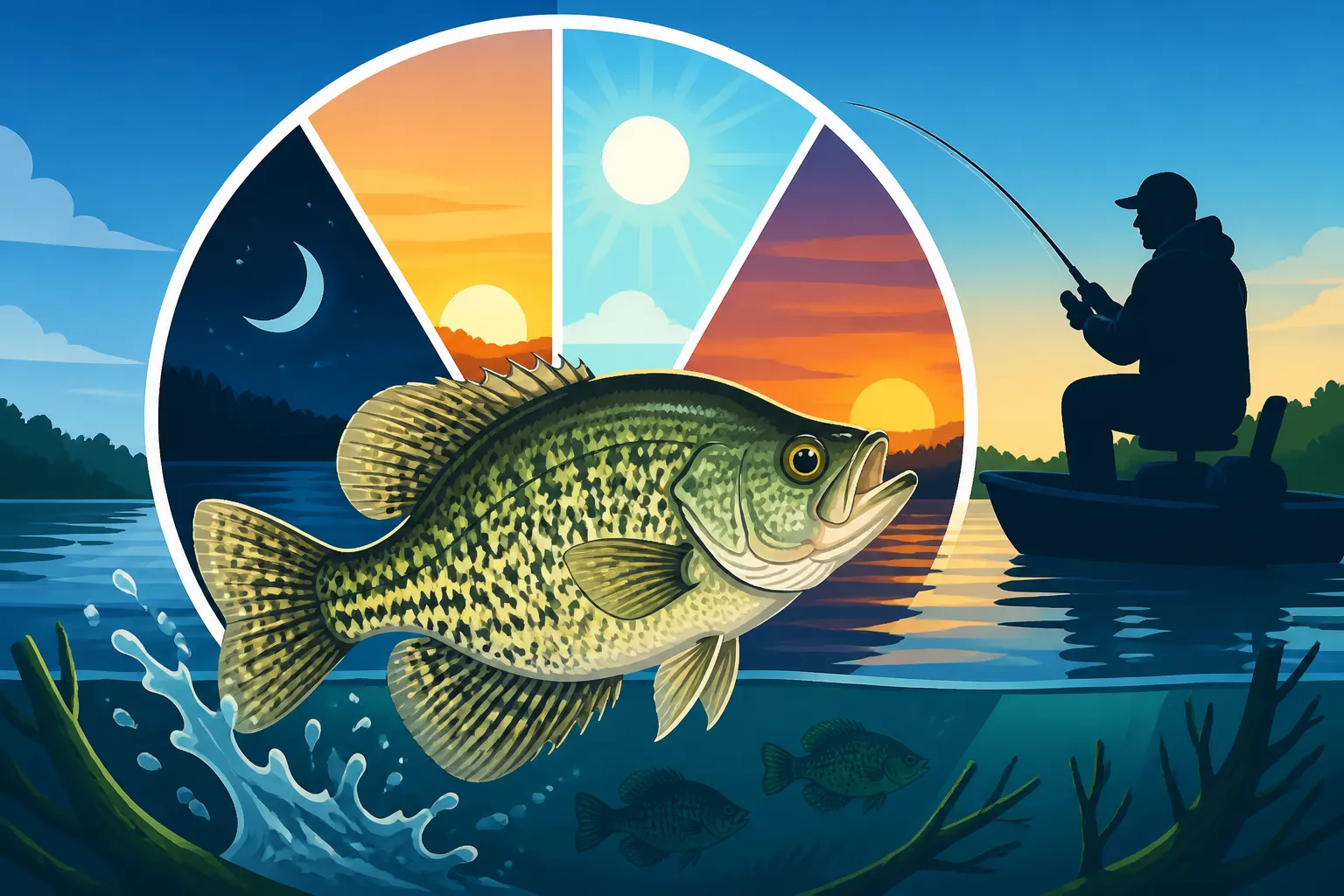
- Low Light: Early morning (dawn for a couple of hours) and late evening (dusk until dark) are almost always prime times for crappie. The reduced light gives them an advantage over their prey and makes them feel more secure moving into shallower areas to feed. On overcast or cloudy days, this low-light condition can extend throughout the day, offering longer periods of active feeding.
- Cloud Cover: Overcast days often mean better crappie fishing. The clouds diffuse sunlight, reducing the penetration into the water and making crappie more comfortable in shallower water or higher in the water column.
- Barometric Pressure: Stable or slowly falling barometric pressure is generally considered ideal. A rapidly dropping barometer, often associated with an approaching storm, can sometimes trigger a pre-front feeding frenzy, but a rapidly rising barometer (after a cold front) usually shuts down the bite as fish become lethargic and move deeper.
- Wind: A light chop on the water can actually be beneficial. It breaks up the surface, making it harder for crappie's prey to see them, and concentrates baitfish. However, too much wind can make boat control and presentation difficult, particularly on a large body of water like Hoover.
Water Temperature and Clarity
These two factors are paramount when targeting crappie. A good understanding of how crappie react to different temperatures and clarity levels will help you locate them.
- Water Temperature: This is the ultimate guide to crappie behavior.
- Below 45°F: Crappie are deep and lethargic. Focus on deep holes and vertical presentations.
- 45-55°F: Crappie start moving up from the deepest wintering spots, often suspending over structure. The bite can be subtle.
- 58-68°F: Spawning temperatures! Crappie are shallow and active. This is the sweet spot for the spring bite.
- 69-75°F: Post-spawn and early summer. Fish transition deeper but are still active.
- Above 75°F: Summer deep-water patterns prevail. Crappie seek cooler water, often suspending over deep cover.
- Water Clarity: Hoover Reservoir can vary in clarity, especially after heavy rains that might bring in muddy runoff.
- Clear Water: In clear water, crappie tend to be more wary and light-sensitive. They'll often hold tighter to cover or be found deeper. Using smaller baits and lighter lines is often effective.
- Stained/Lightly Turbid Water: This is often ideal for crappie. The slight murkiness provides cover, allowing them to be more aggressive and roam more freely. It also often concentrates baitfish.
- Muddy Water: Very muddy water can shut down the bite as fish struggle to see. However, sometimes crappie will concentrate on the edge of muddy water where it meets clearer water, or in pockets of clearer water. Brighter colored baits might be necessary in these conditions.
Essential Techniques and Tackle for Hoover Crappie
Knowing when and where to find crappie is only half the battle. You also need the right tools and strategies to entice them to bite. Hoover Reservoir is expansive, offering diverse fishing scenarios that call for various techniques.
Best Baits and Lures for Each Season
Crappie are opportunists, but they can be particular about their meal depending on the season.
- Spring: During the spawn, live minnows are king. A small lively minnow under a How to Rig a Slip Bobber for Saugeye (which works great for crappie too!) is often irresistible. Small jigs (1/32 to 1/16 ounce) tipped with soft plastic bodies in chartreuse, white, or black-and-chartreuse are also highly effective. Brands like Bobby Garland's "Baby Shad" or Berkley Gulp! Alive! Minnows are popular choices for Best Baits for Ohio Crappie.
- Summer: Live minnows are still great, especially for night fishing. When crappie are suspending deeper, vertical jigging with heavier jigs (1/8 ounce) or even small spoons can work. Tiny crankbaits that dive to the fish's depth can also be very productive, especially when trolling or casting parallel to main lake points.
- Fall: Similar to spring, but crappie are often more aggressive. Jigs tipped with minnows, spider rigging multiple rods with different depths and baits, or casting small spinnerbaits can be very effective as crappie chase baitfish. The Best Jig Color for Ohio Crappie can sometimes be specific to the water clarity, so have a variety.
- Winter: Very small jigs (1/32 or 1/64 ounce) tipped with wax worms, spikes, or small soft plastics are best for vertical presentations through the ice or in deep, open water. A delicate touch is key.
Rigging and Presentation Strategies
Hoover Reservoir’s size means you’ll use a variety of techniques depending on where the crappie are holding.
- Shallow Water (Spring): A simple slip bobber rig with a small jig or minnow is incredibly effective. This allows you to set your depth precisely and cast to brush piles or fallen trees. Pitching small jigs on light line (4-6 lb test) to visible cover is also productive. When thinking about Best Crappie Fishing in Ohio Lakes, Hoover's spring bite is definitely a contender.
- Mid-Depth (Post-Spawn/Fall):
- Spider Rigging: This is a popular tactic where multiple rods are deployed from the front of the boat, spaced out like spider legs, each with a jig or minnow fished at a slightly different depth. You slowly troll or drift, covering a wide swath of water. This is excellent for covering flats or targeting schools suspending along channel edges.
- Drifting: Similar to spider rigging but often without a motor, letting the wind and current move your boat. This is great for covering larger areas when crappie are scattered.
- Deep Water (Summer/Winter):
- Vertical Jigging: Dropping a jig or spoon directly over suspended fish you see on your fish finder. A slow, subtle lift-and-drop retrieve is usually best.
- Trolling: Using small crankbaits or even jig-and-minnow rigs pulled behind the boat at very slow speeds can be effective for covering deep water when crappie are scattered or suspended. Your electronics are absolutely crucial here to find the fish.
Locating Crappie Hotspots at Hoover
Hoover Reservoir offers a ton of structure, and knowing what to look for can save you a lot of time.
- Visible Cover: Fallen trees, standing timber, brush piles, and old stump fields are crappie magnets, especially in spring and fall. These provide ambush points and protection.
- Submerged Structure: Use your fish finder to locate underwater humps, rock piles, old roadbeds, and bridge pilings. The Sunbury Road bridge area, for example, has excellent structure for deep-water crappie. The main creek channel that winds through the reservoir is also a prime highway for crappie as they move between shallow and deep water.
- Coves and Feeder Creeks: The numerous coves and the Big Walnut Creek arm of the reservoir are key areas, particularly during the spawn. They often have shallower, warmer water and plenty of submerged vegetation or woody debris. Accessing information on Fishing Hoover Reservoir Near Columbus can often point you to specific productive coves.
- Contour Lines and Drop-offs: Crappie often relate to changes in depth. Look for sharp drop-offs, ledges, and the edges of the main lake channel. Fish will stage along these contours, moving up to feed and quickly retreating to deeper water when threatened.
Planning Your Hoover Crappie Trip for Success
A successful fishing trip isn't just about what happens on the water; it starts long before you launch your boat. A little planning goes a long way, especially at a large, managed reservoir like Hoover.
Checking Regulations and Forecasts
Before you even tie a knot, make sure you're up to date on the latest rules. Ohio fishing regulations can change, so it's vital to check the current Ohio Department of Natural Resources (ODNR) fishing regulations pamphlet or website. This will tell you about the current crappie bag and size limits, which are important for conservation and legal compliance. You can find detailed information in the Ohio Fishing Regulations Every Angler Should Know guide.
Beyond regulations, pay close attention to the weather forecast. Look for stable conditions, especially regarding wind, temperature, and recent rainfall, which can affect water clarity. Websites and apps dedicated to marine weather can provide specific wind and wave forecasts for large lakes, though Hoover is more protected than Lake Erie. Many anglers also check water temperature reports if available, as this is a huge factor for crappie.
Gear and Preparation
Being prepared ensures a smoother and more enjoyable trip.
- Rods and Reels: For crappie, light action rods (5-7 feet long) paired with small spinning reels spooled with 4-6 lb monofilament or fluorocarbon are ideal. This lighter tackle allows for better sensitivity to detect subtle crappie bites. Check out our guide on Best Rod and Reel Setup for Ohio Crappie for more detailed recommendations.
- Tackle Box Essentials: Jigs in various weights (1/32, 1/16, 1/8 oz) and colors (chartreuse, white, black, pink, natural tones). A variety of soft plastic crappie bodies. An assortment of small hooks for live bait (size 4 or 6 Aberdeen hooks). Split shot weights, slip bobbers, and bobber stops. Small swivels and a selection of tiny crankbaits or spoons for trolling.
- Live Bait: Minnows are often the best live bait for crappie, so plan to pick some up at a local bait shop on your way to the reservoir. Keep them lively with a good aerator.
- Safety Gear: Personal flotation devices (PFDs) for everyone on board, a whistle or horn, navigation lights (if fishing at night or in low light), first-aid kit, and a fully charged cell phone.
- Comfort Items: Sunscreen, hat, polarized sunglasses (crucial for spotting shallow cover), rain gear, appropriate clothing layers, snacks, and plenty of water.
- Electronics: A good fish finder with down imaging or side imaging can be a game-changer for locating crappie and submerged structure, especially when they are suspending in deeper water.
If you're looking for local insights or even considering a guided trip to quickly learn the ropes at Hoover, platforms like FishingBooker can connect you with experienced local guides who specialize in crappie. They know the reservoir intimately and can get you on fish quickly.
Maximizing Your Catch and Enjoying the Experience
Crappie fishing at Hoover Reservoir is rewarding, but remember a few key things to make the most of your time.
- Patience and Persistence: Crappie can be nomadic. If one spot isn't producing, don't be afraid to move and try another. Hoover is big, so cover water strategically until you find them.
- Experimentation: Don't get stuck on one bait or one depth. If crappie aren't biting, try changing jig colors, bait types, or presentation depth. Sometimes a subtle change makes all the difference.
- Respect the Fishery: Practice ethical angling. Observe bag and size limits. If you're catching a lot of small crappie, consider releasing them to grow larger. Handle fish gently, especially if you plan to release them.
- Consider a Guide: Especially if you're new to Hoover, hiring a local guide, perhaps found through services like FishingBooker, can be an excellent investment. They can quickly teach you the best techniques and spots for the current conditions, dramatically shortening your learning curve. Even veteran anglers use FishingBooker to explore new waters.
- Share the Experience: Fishing is often more fun with friends or family. Hoover Reservoir is an excellent place for a family fishing outing, and teaching kids to catch crappie is a fantastic way to introduce them to the sport. Just ensure everyone has their appropriate Ohio Fishing License Guide for Residents and Nonresidents.
Ultimately, the "best" time to fish Hoover Reservoir for crappie is when you can get out there. But by understanding their seasonal movements, paying attention to daily conditions, and using the right techniques, you can significantly increase your odds of a successful and memorable day on the water, no matter what time of year you choose to cast a line.
Disclaimer
The information provided in this guide is for general informational purposes only. Fishing regulations, conditions, and fish behavior can change. Always consult the latest official Ohio Department of Natural Resources (ODNR) regulations before fishing and prioritize safety on the water.