Best Lures for Ohio Muskie
Muskie fishing in Ohio is an electrifying pursuit, often called "the sport of a thousand casts," and for good reason! Many anglers spend countless hours on the water, meticulously covering every inch of their favorite muskie haunts, only to come up short. The frustration is real, and it often boils down to selecting the right tools for the job: the lures. This guide aims to unravel the mystery of muskie lures, helping you choose the best baits to trigger those elusive, heart-stopping strikes in Ohio's diverse waters.
Understanding Muskie Behavior in Ohio Waters
Before we even begin to talk about specific lures, it's crucial to understand the magnificent creature we're chasing. Muskie are apex predators, intelligent and often finicky, and their behavior heavily dictates what lures will be effective on any given day. Ohio's muskie fisheries, whether it's the large reservoirs or smaller lakes, have their own unique characteristics that influence these fish.
Seasonal Movements and Habitat Preferences
Muskie are constantly on the move, responding to changes in water temperature, baitfish migration, and spawning cycles. In spring, after the ice recedes, muskie often stage in shallower bays and coves with warmer water, especially near weed beds or submerged timber where they can ambush unsuspecting prey. This is often when they're completing their spawning rituals or recovering from them. As summer progresses and water temperatures rise, many muskie will transition to deeper, cooler water, often relating to main lake points, sharp breaks, humps, and even suspending over deep water following schools of baitfish. They still utilize cover, but it might be deeper weed lines, rock piles, or sunken brush.
Come fall, as the water cools down again, muskie enter their "feeding frenzy" phase. They know winter is coming, and they need to pack on calories. This is when they become incredibly aggressive and can be found in a wider range of depths, often moving back to shallower flats and edges, particularly those with access to deep water. Understanding these broad movements is your first step to choosing a lure that can reach them where they live. For a deeper dive into the overall patterns, check out our comprehensive Ohio Muskie Fishing Guide.
Foraging Habits and Prey Selection
Muskie are opportunistic hunters, but they do have preferences. Their diet primarily consists of the most abundant baitfish in their environment. In many Ohio lakes, this could mean shad, perch, suckers, ciscoes, or even other panfish like crappie and bluegill. They are also known to eat ducklings, muskrats, and anything else they can get their jaws on. The size of their prey can vary, but generally, muskie prefer larger meals that provide a good caloric return for the energy expended. This is why muskie lures are notoriously large; we're trying to mimic a substantial meal.
They often lurk in cover, using their incredible camouflage to ambush prey with explosive bursts of speed. They might also patrol open water, using their keen eyesight to spot struggling baitfish. Knowing what fish species are prevalent in the lake you're fishing can help you "match the hatch" with your lure choice, selecting colors and profiles that mimic their natural forage.
Water Conditions and Muskie Activity
Water clarity, temperature, and even atmospheric pressure can dramatically impact muskie activity and their willingness to strike. In clear water, muskie can be highly visual, and subtle details in your lure's presentation, color, and finish can make a huge difference. Conversely, in stained or murky water, vibration, sound, and a larger profile become more important as the fish rely more on their lateral line to detect prey.
Temperature plays a massive role. In colder water (early spring, late fall), muskie tend to be more sluggish, requiring slower, more deliberate presentations. Lures with a slower retrieve speed and a wider, more erratic action often shine here. In warmer water (summer), muskie are more active and can chase down faster-moving baits. High-speed retrieves and lures designed for covering a lot of water quickly can be very effective. Even wind and cloud cover can influence their mood, with some anglers swearing by cloudy, windy days for the best muskie bites, as it breaks up the surface and makes it harder for prey to spot them.
Essential Muskie Lure Categories for Ohio Anglers
When you walk into a tackle shop or browse online for muskie lures, the sheer variety can be overwhelming. But fear not! Most muskie lures fall into a few core categories, each designed for specific situations and retrieve styles. Understanding these categories is key to building an effective arsenal for Ohio muskie.
Bucktails and Inline Spinners
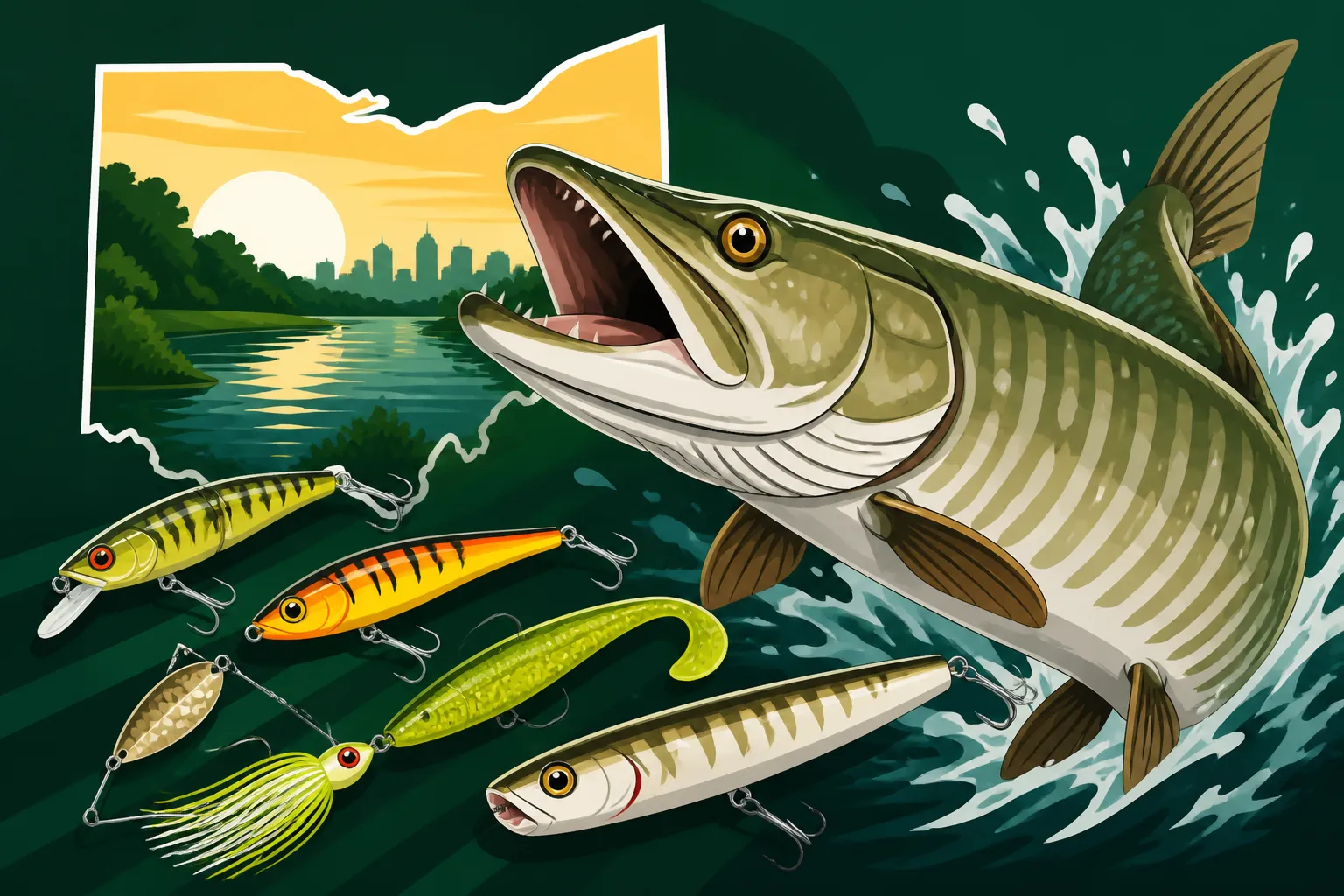
Ah, the classic bucktail. If there's one lure synonymous with muskie fishing, it's probably this one. Bucktails are incredibly versatile and effective, particularly when fish are active or when you need to cover a lot of water. They consist of a wire shaft with one or more spinning blades, a skirt (historically made of deer hair, hence "bucktail," but now often synthetic materials), and one or two treble hooks. Inline spinners are similar but typically lack the full skirt, relying more on flash and vibration.
The key to a bucktail's effectiveness is its flash and vibration. As the blades spin, they create a visual strobe effect and a thump that muskie can feel from a distance, even in stained water. They're excellent for targeting fish holding on weed edges, rock reefs, or open water when muskie are actively chasing bait. Sizes vary wildly, from smaller #5 blades to massive double-bladed "magnum" bucktails. In Ohio, popular bucktail brands often include Mepps, Musky Mayhem Tackle, and Doctor Spoon. Experiment with different blade configurations (single, double, tandem) and sizes to find what the fish prefer on any given day. You can often find a great selection on platforms like Amazon, making it easy to compare options. For more specifics on working these lures, check out How to Fish a Bucktail for Muskie.
Jerkbaits and Glide Baits
Jerkbaits and glide baits are designed to imitate an injured or erratic baitfish, often requiring active manipulation from the angler to give them their enticing action. They are typically lipless or have small diving lips and rely on sharp rod twitches and pauses to create a side-to-side darting motion, or a wide, erratic glide through the water. This erratic action can be absolutely deadly when muskie are finicky or holding tight to cover, as it often provokes an aggressive reaction strike.
Traditional jerkbaits, like the classic Suick Thriller or Grandma, are buoyant or slowly sinking and are worked with short, sharp jerks, allowing them to dive and then suspend or slowly rise. Glide baits, such as the Salmo Slider or Waterwolf, have a flatter profile and a wider, more deliberate side-to-side "walk" when retrieved with a steady pull and pause, or gentle sweeps of the rod. These lures allow for a very methodical presentation, letting you keep the bait in the strike zone longer. They're particularly effective in clearer water where muskie can track their movements visually. Mastering the retrieve can take some practice, but the rewards are well worth it, especially when trying to coax a strike from a neutral fish. Want to learn more about this technique? Dive into How to Work a Jerkbait for Ohio Muskie.
Crankbaits and Trolling Plugs
Crankbaits and trolling plugs are your workhorses for covering vast expanses of water, especially when muskie are suspending in open water or relating to deeper structures. These lures typically have a diving lip that forces them to a specific depth when retrieved or trolled. They come in an enormous array of shapes, sizes, and colors, each designed to mimic different baitfish and reach various depths.
For casting, deep-diving crankbaits are excellent for probing break lines, submerged humps, or the deep edges of weed beds. They produce a consistent wobbling action and often have rattles inside, adding sound attraction. Trolling plugs, on the other hand, are designed to be pulled behind a boat at specific speeds, allowing you to systematically cover large areas of water at precise depths. This is often the preferred method on larger bodies of water like Lake Erie or some of Ohio's larger reservoirs where muskie can be hard to locate. Brands like Bagley, Rapala, and Buchertail offer a wide range of effective crankbaits and trolling plugs. The key is to select a lure that will run at the depth where the muskie are holding and has an action that appeals to them, whether it's a tight wobble or a wide, aggressive swim.
Topwater and Soft Plastic Muskie Lures
Sometimes, the most exciting muskie strikes happen right on the surface. Topwater lures deliver heart-stopping action, while large soft plastics offer a more subtle, yet equally effective, presentation in various water columns.
Surface Baits for Explosive Strikes
There's truly nothing quite like a muskie exploding on a topwater lure. The sheer violence of the strike will make your heart skip a beat, and it's an experience every muskie angler lives for. Topwater lures are designed to float on the surface, creating commotion, gurgles, splashes, or walking actions that draw fish up from below. They are most effective during low-light conditions (dawn, dusk), on cloudy days, or when muskie are actively feeding on the surface, often in shallower water over weed beds or around fallen timber.
Popular types include:
- Prop Baits: Lures with one or two spinning propellers that churn water, creating a commotion. Examples include the Whopper Plopper or the classic Weed Whacker.
- Walk-the-Dog Baits: These lures are retrieved with a rhythmic slack-line twitch, causing them to "walk" from side to side across the surface, mimicking a struggling baitfish.
- Creepers/Fizzers: Designed with wings or blades that make them "crawl" or gurgle across the surface.
Topwater action is often a game of patience, but when a muskie commits, it's an unforgettable moment. These lures are fantastic for targeting fish in shallow bays or over submerged structure, especially in places like Piedmont Lake or West Branch Reservoir, known for their muskie populations.
Large Soft Plastics and Swimbaits
While traditional muskie lures are often hard baits, modern soft plastics have carved out a significant niche, offering a different presentation that can be incredibly effective, especially on pressured fish or in specific conditions. These aren't your typical bass plastics; we're talking about large, sometimes foot-long, realistic imitations of baitfish.
Soft plastics offer a more subtle action and vibration than hard baits. They can be rigged in various ways:
- Weedless: Using a large worm hook or weighted swimbait hook to fish through heavy cover without snagging.
- Weighted: On jig heads for deeper presentations, allowing them to be fished vertically or cast and retrieved with a jigging motion.
- Swimbaits: Many large paddle-tail swimbaits are designed to be fished with a consistent retrieve, offering a lifelike swimming action that can tempt even wary muskie.
The realistic profiles and natural swimming actions of large soft plastics can be irresistible to muskie. They shine in situations where fish are less aggressive and a more natural, lifelike presentation is needed, or when you want to work through dense vegetation where traditional trebles would snag. They also offer a different "feel" in the water, which can be crucial when muskie have seen every hard bait under the sun.
Selecting the Right Lure Size and Color
Choosing the perfect muskie lure isn't just about the type; it's also about dialing in the size and color to match the prevailing conditions and the fish's mood. This often requires a bit of experimentation and observation, but there are some guiding principles that can significantly increase your chances.
Matching the Hatch with Lure Size
The old adage "big bait, big fish" often holds true for muskie, but it's not always about throwing the absolute largest lure you can find. "Matching the hatch" means selecting a lure size that closely mimics the primary forage size in the body of water you're fishing. If muskie in a particular lake are feeding heavily on 6-inch shad, throwing a 12-inch muskie plug might not be the most effective strategy. Conversely, if they're gorging on 10-12 inch suckers, a smaller lure might get overlooked.
Here's a general guideline for lure sizing:
- Early Season/Post-Spawn: Muskie might be recovering and more interested in an easier meal. Smaller to medium-sized bucktails, jerkbaits, or swimbaits (6-8 inches) can be very effective.
- Summer: As metabolism speeds up, muskie are active and aggressive. This is often a great time for larger lures, including bigger bucktails, deep-diving crankbaits, and substantial soft plastics (8-12+ inches).
- Fall: The "feeding frenzy" period. Muskie are packing on weight, and this is prime time for throwing your largest, most attention-grabbing lures. Double-bladed bucktails, large glide baits, and big trolling plugs (10-15+ inches) can all be deadly.
Always observe any baitfish activity you see on the water, and don't be afraid to experiment. Sometimes, a surprisingly small lure can trigger a strike, and other times, only a monstrous bait will get their attention.
Color Theory for Different Water Conditions
Lure color is another critical factor, and it's often debated among muskie anglers. While personal preference plays a role, certain colors tend to perform better in specific water conditions in Ohio.
- Clear Water: In clear lakes or rivers, natural patterns that mimic real baitfish are often highly effective. Think shad, perch, sucker, or cisco patterns. Transparent or semi-transparent lures can also be excellent, allowing light to pass through them naturally. Chartreuse and white can also be good, offering a visual appeal without being overly aggressive.
- Stained/Murky Water: When the water has a significant tint or is downright muddy, muskie rely more on vibration and sound, but color still matters. Bright, high-contrast colors that stand out are key. Chartreuse, firetiger, hot orange, and black are often go-to choices. Black lures can create a strong silhouette against a bright sky, making them visible even in dark water. Reflective finishes, like chrome or gold, can also catch what little light is available. Check out our guide on Best Lure Colors for Muskie in Stained Water for more detailed advice.
- Low Light/Night Fishing: During dawn, dusk, or night, dark colors like black, purple, or dark blue can create a strong silhouette against the lighter sky or moon, making them easier for muskie to track. White or silver can also be effective, especially if there's moonlight or artificial light present, as they reflect what little light is available.
It's wise to have a selection of natural, bright, and dark lures in your tackle box. Don't be afraid to change colors frequently until you find what the muskie are responding to on a given day. Sometimes, a subtle shift in shade can make all the difference.
Ohio Muskie Hotspots and Lure Pairings
Ohio is home to several fantastic muskie fisheries, each with its own character. Knowing which lures tend to perform best in these specific locations can give you a significant advantage.
Notable Muskie Lakes and Their Go-To Lures
Ohio boasts some truly legendary muskie lakes, each offering unique challenges and rewards. Here are a few prominent ones and some lure types that often find success there:
- Piedmont Lake: Known for its clear water and excellent muskie population, Piedmont often responds well to jerkbaits, glide baits, and natural-colored bucktails. Trolling with deep-diving crankbaits can also be very effective for covering water and finding suspended fish. Given the clear conditions, realistic baitfish patterns in silver, black, or perch colors often shine. You can find more targeted advice in our Piedmont Lake Muskie Fishing Guide.
- Alum Creek Lake: This large reservoir offers diverse structure, from submerged timber to deep main lake points. Alum Creek is a fantastic spot for jigging large soft plastics, casting medium to large bucktails, and running deep-diving crankbaits along contours. Topwater action can be phenomenal in the shallows during low light. Consider bolder colors like firetiger or chartreuse, especially when the water has a slight stain. For those looking for local tips, we have an article on Alum Creek Lake Muskie Fishing Tips.
- West Branch Reservoir: Another top-tier muskie lake, West Branch features extensive weed beds and varied depths. Bucktails are a staple here, especially in shallower areas over weeds. Jerkbaits and glide baits are also highly productive, allowing anglers to work specific pockets and edges. Large swimbaits can also be very effective for mimicking the robust baitfish populations.
- Leesville Lake: With its clear waters and abundant forage, Leesville is a muskie haven. Natural-colored bucktails and twitchbaits that imitate common forage are often key. Trolling larger crankbaits can also cover water efficiently, especially in the deeper sections of the lake. The Leesville Lake Muskie Fishing Guide offers more in-depth strategies for this specific lake.
- Salt Fork Lake: This lake offers a good mix of open water and shallower features. Anglers often find success here with a variety of lures, from bucktails to large spoons and trolling plugs, particularly during the active feeding windows.
No matter the lake, always carry a diverse selection and be prepared to adapt your lure choice based on current conditions and muskie behavior.
River Systems and Current-Specific Baits
While reservoirs often dominate the muskie conversation in Ohio, the state also has some incredible river systems that hold impressive muskie, particularly in the tributaries of the Ohio River and some of the larger inland rivers like the Scioto or Muskingum. Fishing rivers for muskie presents a different set of challenges and opportunities, primarily due to current.
- Current Considerations: In river systems, muskie often position themselves in eddies, current seams, and behind structure (like fallen trees or large rocks) to ambush prey flowing downstream. Lures that can be effectively worked in current are essential.
- Bucktails and Inline Spinners: These are excellent choices for rivers as their blades spin effectively even in current, providing strong vibration and flash. They can be cast upstream and retrieved through current seams.
- Jerkbaits and Glide Baits: While requiring more effort to work in strong current, these can be deadly when twitched through slack water pockets or along current breaks.
- Heavy Crankbaits: Deeper-diving, heavier crankbaits can reach muskie holding on the bottom in current. Some anglers also use heavy jigs with large soft plastics, allowing them to fish vertically in deep holes or along steep banks.
- Spoons: Large, heavy spoons can be cast far and flutter enticingly on the retrieve, making them good for covering water in rivers, especially when cast across current.
River muskie are typically lean, mean fighting machines due to their constant battle with current. Lures that mimic natural river forage, such as suckers, chubs, or smaller bass, in natural or high-contrast colors, are often the most productive. Always pay attention to water levels and clarity, as these can change rapidly in river environments.
Advanced Lure Techniques and Presentation Tips
Having the right lure is only half the battle. How you present it, retrieve it, and even interact with it at the boat can make all the difference between a follow and a strike.
Mastering the Figure-Eight Retrieve
This is perhaps the most famous and crucial muskie fishing technique, especially when using casting lures like bucktails, jerkbaits, or topwaters. The figure-eight isn't just a fancy trick; it's often the last chance to coax a strike from a muskie that has followed your lure all the way to the boat but hasn't committed.
Here's how it works:
- Bring the Lure to the Boat: Retrieve your lure all the way to your rod tip.
- Submerge the Rod Tip: Immediately plunge your rod tip into the water, with the lure just a foot or two from the tip.
- Draw a Figure-Eight: Begin sweeping your rod tip in a wide, continuous figure-eight pattern (think of drawing a large "8" in the water). Keep the lure moving smoothly and maintain tension on the line.
- Vary Speed and Depth: Experiment with the size and speed of your figure-eights. Sometimes a wide, slow figure-eight is best, other times a tighter, faster one. Try dipping the lure slightly deeper on one side of the "8" or speeding up when the muskie shows interest.
- Watch the Fish: Keep your eyes glued to the lure and any following muskie. A muskie might dart in from below or out of nowhere to hit the bait in the middle of the figure-eight.
Many trophy muskie are caught right at the boat on a figure-eight. It's a testament to the fact that these fish are often just waiting for that final, erratic movement to trigger their predatory instinct. Don't ever skip it! For more details, refer to our guide on the Figure-Eight Retrieve for Muskie Fishing.
Cadence and Speed Control for Optimal Strikes
Muskie are incredibly sensitive to changes in a lure's presentation. Varying your retrieve cadence and speed is essential to trigger strikes, as a monotonous retrieve can often lead to follows without a commitment.
- Cadence: This refers to the rhythm and pauses in your retrieve. For jerkbaits, it's the timing of your twitches and pauses. For bucktails, it might be speeding up and slowing down. Experiment with long pauses, short pauses, erratic twitches, or steady retrieves. Often, a sudden change in cadence is what triggers a muskie that's been following for a while.
- Speed: As mentioned earlier, water temperature and muskie metabolism play a huge role. In colder water, slower retrieves are generally more effective. Muskie don't want to expend a lot of energy chasing a fast-moving meal. In warmer water, speeding up your retrieve can trigger a reaction strike from an active fish. Don't be afraid to burn bucktails or crankbaits in warmer water, then slow down dramatically.
Always be mindful of how the lure is moving through the water. Is it swimming naturally? Is it diving to the right depth? Are you getting any feedback from the rod that suggests a weed or subtle bite? Pay attention to even the slightest changes in feel. Sometimes, an extra half-second pause or a sudden burst of speed is all it takes to turn a curious muskie into a biting one.
Rigging and Tackle Considerations
Muskie lures are big, heavy, and often expensive, demanding heavy-duty tackle to handle them and the powerful fish they attract. Using the right gear isn't just about landing the fish; it's also crucial for properly presenting your lures and preventing equipment failure.
Here's a quick overview of essential rigging and tackle:
- Rods: Look for heavy or extra-heavy power muskie rods, typically 7'6" to 9'6" long, with fast actions. Longer rods aid in casting heavy lures and performing effective figure-eights.
- Reels: High-quality baitcasting reels with a strong drag system and high line capacity are a must. Reels with a fast gear ratio (e.g., 6.4:1 or higher) are excellent for burning bucktails and quickly taking up slack. You can find many suitable options on Amazon.
- Line: Braided line is the standard for muskie fishing due to its zero-stretch, incredible strength, and small diameter. Typically, 80-100 lb test is used to handle aggressive strikes and heavy lures.
- Leaders: Muskie have razor-sharp teeth that will easily slice through braided line. A heavy-duty leader is non-negotiable. Fluorocarbon leaders (100-200 lb test) or heavy-gauge steel/titanium leaders are common choices. Ensure your leader is long enough (18-36 inches) to prevent a muskie from hitting your main line.
- Snaps and Swivels: Use heavy-duty, rated snaps (e.g., Stay-Lok snaps) and ball-bearing swivels to prevent line twist, especially when using bucktails.
Using appropriate tackle not only ensures that your expensive lures perform as intended but also protects the fish during the fight and release. This becomes even more critical when pursuing true trophy muskie, which can reach impressive sizes in Ohio's waters, sometimes exceeding the Ohio Muskie Minimum Length Limit on Inland Lakes by a significant margin.
Muskie Lure Comparison Table
Here's a quick rundown of some popular muskie lure types, their typical characteristics, and ideal fishing scenarios in Ohio.
| Lure Type | Primary Action | Ideal Conditions | Target Retrieve Style | Key Benefits | Considerations |
|---|---|---|---|---|---|
| Bucktails | Flash & Vibration | Active fish, covering water, weed edges | Steady retrieve, varied speed | High attraction, covers water, many sizes | Can cause line twist without good swivel |
| Jerkbaits/Glide Baits | Erratic Darting/Gliding | Finicky fish, clear water, specific cover | Twitch, pause, sweep, stop | Entices reaction strikes, stays in strike zone | Requires angler input for action, slow presentation |
| Crankbaits | Wobble & Rattle | Trolling, deep structure, open water | Steady retrieve, varied depth | Reaches specific depths, covers vast areas | Less angler input, can snag easily |
| Topwater | Surface Commotion | Low light, shallow cover, aggressive fish | Pop, walk, gurgle, splash | Exciting strikes, draws fish from below | Limited to calm, shallow conditions |
| Soft Plastics | Realistic Swim, Subtle | Pressured fish, heavy cover, natural look | Jig, swim, cast & retrieve | Natural action, weedless options, versatile | Hook setting can be tricky with larger baits |
Disclaimer
Fishing regulations and conditions can change rapidly. Always consult the latest Ohio Department of Natural Resources (ODNR) fishing regulations before heading out. This guide is for informational purposes only and does not replace official state guidelines. Respect the resource, practice catch and release, especially for muskie, and prioritize safety on the water.