How to Match the Hatch on Ohio Trout Streams
There's nothing quite as frustrating for an angler as standing knee-deep in a pristine Ohio trout stream, watching trout rise all around, yet having your fly utterly ignored. It’s a scene many of us have experienced, and it often comes down to one critical element: "matching the hatch." This guide will demystify this essential technique for Ohio's waters, helping you understand what those wily trout are really eating and how you can present the perfect imitation to tempt them onto your line.
What "Matching the Hatch" Really Means on Ohio Trout Streams
For those new to the world of trout fishing, especially fly fishing, the phrase "matching the hatch" might sound like some secret code, but it’s really quite simple in principle, though sometimes complex in practice. At its core, it means identifying the specific insects or food sources that trout are actively feeding on at a given moment and then selecting a fly pattern that closely imitates that food source in size, shape, and color. It's about being a detective on the water, observing what's going on around you, and making an educated guess about what the fish are keying in on.
Understanding the Trout's Perspective
Trout are opportunistic feeders, but they can also be incredibly selective. When a large "hatch" — an emergence of aquatic insects from the water — occurs, trout often become highly focused on that particular food source. Imagine a buffet suddenly appearing, but it only contains one type of dish. The trout will gorge themselves on that one dish, often ignoring anything else. This selective feeding is why throwing a random fly into the water, even if it’s generally good, might not work if it doesn't match the current menu. Their survival depends on efficiency, so they learn to recognize and target the most abundant, easiest-to-catch food available.
When you're fishing a stream that's regularly stocked with trout, like many spots on the Ohio Inland Trout Stocking Schedule, you might find them a little less picky initially, but even stocked fish quickly adapt to natural feeding patterns. Wild trout, especially, are masters of discerning real from fake, making the art of matching the hatch even more crucial.
The Concept of Imitation: Size, Shape, and Color
Matching the hatch isn't just about throwing any "buggy-looking" fly. It requires careful consideration of three main characteristics:
- Size: This is often the most critical factor. An insect might be a size #16, but if your fly is a #12 or a #20, the trout might ignore it. They're looking for a specific morsel, and if yours is too big or too small, it just doesn't look right.
- Shape: Is the insect long and slender like a mayfly nymph, or short and stout like a caddisfly larva? Does it have prominent wings like an adult stonefly, or is it a tiny midge? The overall profile of your fly needs to mimic the natural insect.
- Color: While fish don't see colors exactly as we do, they do perceive shades and tones. A dark olive mayfly will require a dark olive imitation, not a bright tan one. Lighting conditions can also affect how a fly's color appears underwater, adding another layer of complexity. Sometimes, a subtle difference in hue can make all the difference.
Key Insects and Aquatic Life in Ohio Trout Streams
Ohio's diverse waterways host a variety of aquatic insects and other food sources that trout absolutely love. Knowing the main categories and their typical life stages is your first step to becoming a hatch-matching pro.
Mayflies
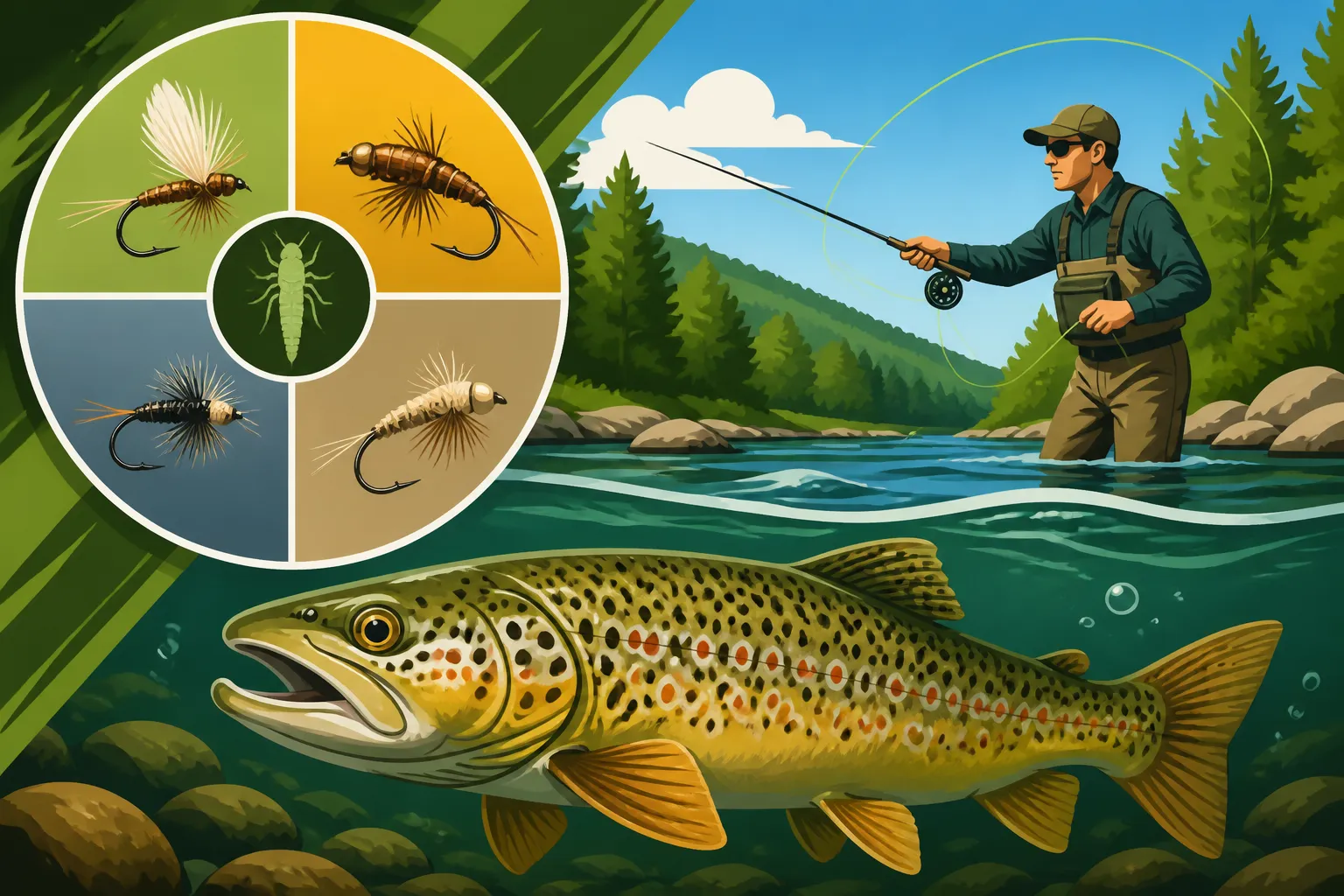
Mayflies are perhaps the quintessential trout food for fly anglers. They have distinct life stages: nymphs (living on the stream bed), emergers (rising to the surface), duns (floating on the surface after shedding their nymphal shuck), and spinners (adults returning to lay eggs). Trout will feed on any of these stages, but often become most focused during the dun and spinner stages when they are visible on the surface.
- Nymphs: Common patterns include the Pheasant Tail, Hare's Ear, and Prince Nymph. These imitate the subsurface stage. Look for them crawling on rocks when you turn them over.
- Duns/Spinners: Popular dry fly patterns like the Adams, Blue-Winged Olive (BWO), and Parachute Adams imitate the adult flying stages. Pay attention to the wing shape and body color of the naturals.
Caddisflies
Caddisflies are another incredibly important food source, often emerging in greater numbers and for longer durations than mayflies. Their lifecycle also includes larvae (some build cases out of gravel or twigs), pupae (active emergers), and adults. Caddis tend to be a bit more frantic in their movements, both as emergers and as adults skating across the water.
- Larvae/Pupae: Patterns like the Green Weenie, Caddis Larva, and various soft-hackles work well for the subsurface stages.
- Adults: The Elk Hair Caddis, Goddard Caddis, and Stimulator are fantastic imitations for the adults, especially when they are skittering across the water's surface.
Stoneflies
While not as universally abundant in every Ohio trout stream as mayflies or caddis, stoneflies can be huge food items in certain rocky, oxygen-rich creeks. Their nymphs are often large and flat, crawling under rocks, and their adults are robust, often found on streamside vegetation.
- Nymphs: Patterns like the Golden Stone Nymph, Pat's Rubber Legs, and Kaufmann's Stone are excellent choices to mimic these larger subsurface meals.
- Adults: Dry fly patterns such as the Yellow Sally or various large Stimulators can imitate the adults, especially during their brief surface activity.
Midges and Terrestrials
Don't overlook the tiny stuff! Midges are often present year-round, even in the coldest months. They are minuscule but can hatch in prodigious numbers, causing trout to feed selectively on them. Terrestrials, on the other hand, are land-based insects like ants, grasshoppers, and beetles that accidentally fall into the water.
- Midges: Zebra Midges, Griffith's Gnats, and tiny dry midge patterns (size #20-28) are crucial for these microscopic meals.
- Terrestrials: Ant patterns, foam hoppers, and beetle imitations are essential for summer and early fall fishing when these insects are active near the banks. You can find a wide array of specialized fly patterns, including terrestrial imitations, on Amazon to fill out your fly box for any situation.
Baitfish and Aquatic Worms
Trout aren't exclusively insectivores. Larger trout, in particular, will readily prey on small baitfish (minnows, sculpins) and aquatic worms, especially after rain events that wash worms into the stream.
- Streamers: Patterns like the Woolly Bugger, Clouser Minnow, and sculpin imitations are designed to mimic small baitfish.
- Worms: San Juan Worms and Squirmy Wormies are surprisingly effective, especially in stained water or after heavy rains.
Practical Steps to Match the Hatch on the Water
Now that you know what to look for, let's talk about how to put that knowledge into action when you're standing next to a beautiful Ohio stream. It's a process of observation, deduction, and selection.
Observation is Key
This is where the detective work truly begins. Before you even tie on a fly, take 10-15 minutes to simply watch the water.
- Look for rising fish: Are they gently sipping bugs off the surface (often indicative of midges, small mayflies, or spinners)? Are they slashing aggressively (might be caddis or even a larger terrestrial)? Note where they are rising and how frequently.
- Examine the water's surface: Are there adult insects floating? Look for spent wings (spinners) or upright wings (duns). Can you see the shucks of nymphs, indicating an emergence? Even a few floating insects can tell you what's hatching.
- Check streamside vegetation: Many adult insects will crawl onto grass, leaves, or rocks after emerging to dry their wings. This can give you clues about the size, shape, and color of the natural.
- Turn over rocks: This is especially important for identifying subsurface activity. Carefully pick up a few rocks from the streambed and examine the underside. You'll likely find nymphs, larvae, and pupae clinging to them. This tells you what trout might be eating before they even make it to the surface.
- Use a seine or net: A small fine-mesh net can be invaluable. Simply hold it downstream and kick or shuffle rocks upstream to dislodge insects. You'll quickly see what's drifting in the current, giving you a perfect idea of what trout are seeing underwater.
Choosing the Right Imitation: Size, Shape, Color
Once you've made your observations, it's time to select your fly. Remember the three critical factors:
- Size First: If you see fish rising to tiny midges, don't throw a size #14 dry fly. Start with the closest size imitation you have. If you're unsure, it's often better to go slightly smaller than slightly larger.
- Shape Second: Is the insect long and slender or short and stout? Does it have a distinct wing profile? Choose a fly whose silhouette most closely resembles the natural. For example, a CDC (Cul de Canard) and Elk Hair Caddis has a very different profile on the water than a Parachute Adams, even if they're the same size.
- Color Third: Try to match the general shade. If you see dark olive mayflies, go with a dark olive imitation. Don't agonize over minute color variations unless trout are being exceptionally selective. Sometimes, a slightly different shade can even trigger a bite if the fish are a bit wary of exact imitations they've seen before.
It’s always a good idea to have a diverse fly box. You can pick up a starter kit or individual fly patterns designed for specific hatches, like those often found on Amazon, to ensure you have a range of options for Best Fly Patterns for Ohio Trout.
Presentation Matters Just as Much
Even with the perfect fly, a poor presentation will likely result in rejection. Trout in clear, flowing water are incredibly sensitive to how a fly behaves.
- Drag-Free Drift: This is paramount for most nymph and dry fly fishing. Your fly needs to drift naturally with the current, as if it were a real insect. Any unnatural drag from your line or leader will immediately signal to the trout that something is amiss. Mending your line (making small adjustments upstream) is a crucial skill here.
- Leader and Tippet: Use a long leader and appropriately sized tippet (the thinnest, strongest section of line attached to your fly). For spooky trout in clear water, lighter tippet (e.g., 5x or 6x) can make a huge difference, making your fly appear more natural and less connected to your line.
- Approach: Trout are easily spooked. Approach the water slowly and quietly. Stay low, especially when fishing small, clear streams. Wear drab clothing that blends into the background. Don't cast a shadow over the water where fish might be feeding. Reading the water effectively is critical, and there are many nuanced strategies for How to Read Water for Trout in Small Ohio Streams.
Beyond the Hatch: Other Factors for Ohio Trout Success
While matching the hatch is a cornerstone of trout fishing, it's not the only thing that matters. Several other environmental factors significantly influence trout behavior and your success.
Water Conditions and Seasonality
Ohio's weather can be fickle, and water conditions in our streams change constantly.
- Water Temperature: Trout are cold-water fish, generally preferring temperatures between 50-65°F. In the heat of summer, they'll seek out cooler, oxygenated water, often in deeper pools or near spring seeps. In winter, they become less active. Knowing how Do Ohio Trout Survive the Summer in Stocked Lakes? can inform your strategy.
- Water Flow: High, muddy water after a heavy rain can make matching the hatch nearly impossible. Trout will often hold closer to the bottom or seek eddies and slower currents. Conversely, very low, clear water makes trout incredibly wary.
- Time of Year: Different insects hatch at different times of the year. Spring and fall often see the most prolific mayfly and caddisfly hatches, while midges are active year-round. Summer brings terrestrials into play. Understanding the general Ohio Fishing Season Dates and Effective Periods for trout and other species can guide your expectations.
Reading the Water
Knowing where trout hold and feed is just as important as knowing what they're eating. Look for:
- Seams: The transition zones between fast and slow water. Trout often sit in the slower current, waiting for food to be swept by in the faster current.
- Riffles and Runs: These oxygen-rich areas are prime feeding lies where insects are dislodged.
- Pools: Deeper, slower areas often hold larger trout, offering shelter and ambush points.
- Structure: Submerged logs, large rocks, undercut banks, and overhanging vegetation all provide cover and potential food sources. These are prime spots to target.
Gear Considerations and Preparation
Having the right gear won't guarantee fish, but it certainly helps.
- Rod and Reel: A lightweight fly rod (3-5 weight) with a matching reel is ideal for most Ohio trout streams. The lighter setup allows for delicate presentations of smaller flies.
- Waders and Boots: Accessing prime spots often means getting in the water. Quality waders and wading boots with good grip are essential for safety and comfort. If you're wondering about specifics, checking out guides on Do You Need Waders for Ohio Steelhead Fishing? can offer transferable insights.
- Fly Box: As mentioned, a well-stocked fly box with various sizes, shapes, and colors of nymphs, dry flies, and streamers for the prevalent insects is critical.
- Accessories: A good pair of polarized sunglasses (you can find excellent options on Amazon) will cut glare and allow you to see deeper into the water, spotting fish and insects. Nippers, forceps (for hook removal), and a landing net are also invaluable.
Remember, fishing for trout in Ohio is a journey of continuous learning and observation. Don't get discouraged if the hatch isn't immediately obvious or if the trout are finicky. Every outing is a chance to learn more about these beautiful fish and the delicate ecosystems they inhabit. Pay attention to local conditions, respect the Ohio Inland Trout Daily Limit and other special regulations, and most importantly, enjoy your time on the water.
Disclaimer
This article is for general informational purposes only and does not constitute professional advice. Laws, prices and regulations vary by location and change over time. Consult a qualified professional for guidance on your specific situation.