Best Techniques for Ohio Largemouth Bass
Few things are as frustrating as knowing there are big, chunky largemouth bass lurking in your favorite Ohio lake, yet you just can't seem to tempt them to bite. It's a common dilemma for anglers, especially with how diverse our waters can be here in the Buckeye State. This comprehensive guide is dedicated to breaking down the most effective techniques, strategies, and gear choices specifically tailored for catching more largemouth bass across Ohio's varied fishing landscapes.
Understanding Ohio Largemouth Bass Behavior and Habitat
Before we even cast a line, it's crucial to get inside the head of an Ohio largemouth bass. Knowing their preferences and patterns is the foundation for any successful fishing trip. These fish aren't just randomly swimming around; they have specific needs for survival, comfort, and hunting, and understanding those dictates where you'll find them and what they'll eat.
Typical Habitats in Ohio Lakes and Ponds
Ohio is blessed with an abundance of fantastic largemouth bass fisheries, from sprawling reservoirs to countless farm ponds and public lakes. The common thread among all these spots is the presence of structure and cover, which are the bass's equivalent of a hunting blind or a safe haven. Think about a dense mat of lily pads in a quiet cove – it provides shade from the summer sun, a perfect ambush point for unsuspecting baitfish, and protection from predators. Fallen trees, brush piles, old dock pilings, and even rip-rap shorelines along causeways are classic bass magnets. Bass will often position themselves on the "sunny" or "shady" side of these structures, depending on the time of day and water temperature, always looking for that prime spot to catch a meal or escape detection. In clearer lakes, submerged vegetation like hydrilla or coontail provides critical cover, while in murkier waters, hard structures like rocks and stumps become even more vital. Larger bodies of water, like Alum Creek Lake or Buckeye Lake, offer extensive points, humps, and coves where bass congregate.
Spawning and Seasonal Movements
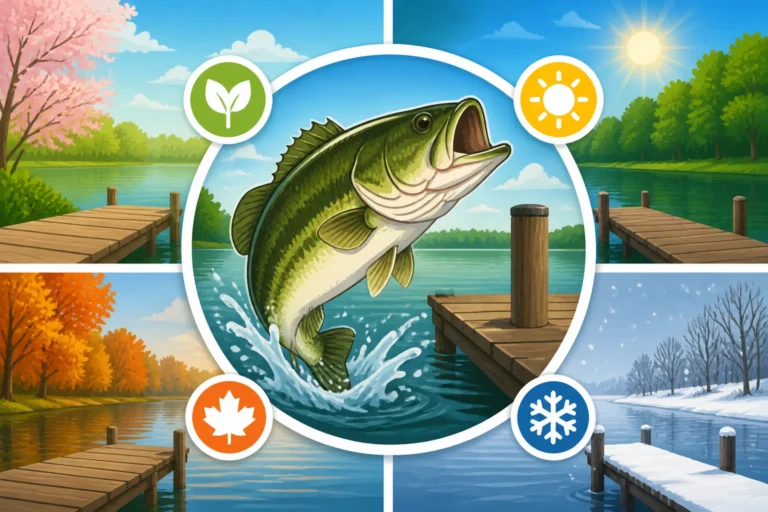
The life of a largemouth bass in Ohio is heavily dictated by the seasons, especially the water temperature. As spring arrives and water temperatures begin to climb, bass move from their deeper wintering holes into shallower, warmer staging areas. This is the pre-spawn period, and bass are often aggressively feeding to build energy for the upcoming spawn. When the water temperatures reach the mid-60s Fahrenheit, typically late April to early June depending on the region, the spawn kicks into full gear. Males will fan out circular nests in shallow, protected bays, diligently guarding eggs and fry. During this time, the bass can be very territorial, making sight fishing an exciting (and sometimes controversial) tactic. For a deeper dive into this critical period, check out our guide on Water Temperature That Triggers Bass Spawning in Ohio. Post-spawn, the fish are often lethargic, recovering from the rigors of reproduction, before gradually transitioning into their summer patterns, which often involve seeking deeper, cooler water during the heat of the day or moving to shaded cover. Fall brings cooler temperatures and a renewed feeding frenzy as bass aggressively fatten up for the leaner winter months.
Largemouth Bass Diet in Ohio Waters
What Ohio largemouth bass eat is a major factor in what lures you should be throwing. These opportunistic predators have a varied diet, making them susceptible to a wide array of artificial baits. Their menu includes a smorgasbord of smaller fish like bluegill, shad, minnows, and shiners. But it doesn't stop there. Crawfish are a huge staple, especially in rocky areas, and bass won't hesitate to munch on frogs, salamanders, and even small rodents or birds unfortunate enough to fall into the water. In a healthy ecosystem, bass thrive on this diverse diet, and replicating these natural food sources with your lures is key. Understanding the local forage in the body of water you're fishing can give you a significant advantage. If a lake is teeming with golden shiners, a chrome-and-blue jerkbait might be deadly. If it's known for its abundant crawfish population, a brown or green jig-and-pig combo could be the ticket. Our detailed guide on What Largemouth Bass Eat in Ohio Lakes provides even more insights into their culinary preferences.
Essential Gear for Ohio Largemouth Bass Fishing
Having the right tools for the job can make all the difference, especially when you're targeting a savvy predator like the largemouth bass. The world of bass fishing gear is vast, but focusing on the essentials will set you up for success on Ohio's waters.
Rod and Reel Setups for Different Techniques
When it comes to rods and reels, bass anglers often differentiate between spinning and baitcasting setups, each with its specific advantages. Spinning gear is generally easier to learn, excels at casting lighter lures, and is often preferred for finesse techniques where a subtle presentation is key. A medium-light to medium power spinning rod with a fast action, paired with a 2500 or 3000 series spinning reel, is a fantastic all-around choice for many Ohio bass scenarios. For those heavier cover situations or when throwing larger, heavier lures, baitcasting gear is the powerhouse option. Baitcasters offer more power, precision, and the ability to handle thicker lines, making them ideal for flipping jigs into dense brush or bombing a big crankbait across a wide flat. You'll want to think about rod power (medium-heavy for most applications, heavy for punching through mats) and action (fast for quick hooksets, moderate-fast for better casting with treble hook baits). Reel gear ratios also play a role; a high-speed reel (7.1:1 or higher) is great for quickly working a worm or taking up slack, while a lower ratio (6.4:1 or lower) provides more torque for winching in deep-diving crankbaits or big fish. You can find a huge selection of quality rods and reels from popular brands like Shimano, Daiwa, and Lew's on Amazon, catering to every budget and technique.
Line Choices and Their Applications
The fishing line you choose is your direct connection to the fish, and selecting the right type for the job is critical. In Ohio bass fishing, you'll primarily be working with three main types: monofilament, fluorocarbon, and braided line.
- Monofilament: Often called "mono," this is a classic for a reason. It's inexpensive, has good knot strength, and offers stretch, which can be a benefit when fishing with treble hook baits (like crankbaits or topwaters) as it helps prevent hooks from tearing out. However, it has more memory and can be more visible in clear water.
- Fluorocarbon: This line type has become a favorite among serious bass anglers. It's virtually invisible underwater, has very little stretch (providing excellent sensitivity), and sinks, which is great for keeping your baits at depth. It's a fantastic choice for Texas rigs, jigs, and drop shots.
- Braided Line: Known for its incredible strength-to-diameter ratio, zero stretch, and exceptional abrasion resistance, braid is a workhorse. It's perfect for punching through heavy vegetation, flipping into dense cover, or when you need maximum sensitivity. Many anglers use braid as their main line and then tie on a fluorocarbon leader for stealth.
Understanding when to use each type is crucial. For example, a heavy braided line (like 50-65 lb test) is ideal for throwing a frog into a lily pad field, while a lighter fluorocarbon (10-15 lb test) might be perfect for working a shaky head on a rock pile. Don't forget to check out our detailed article on Choosing the Right Ohio Fishing Line for a deeper dive into line selection.
Terminal Tackle and Accessories
Beyond rods, reels, and line, a well-stocked tackle box is essential. Terminal tackle includes all the bits and pieces that connect your line to your lure and ultimately, to the fish.
- Hooks: You'll need a variety. Extra Wide Gap (EWG) worm hooks are standard for Texas rigging soft plastics, while straight shank hooks are often preferred for flipping jigs and creature baits into heavy cover due to their greater hooking power. Treble hooks are, of course, on most hard baits.
- Weights: Bullet weights (slip sinkers) are used for Texas rigging, while drop shot weights keep your bait suspended above the bottom. Jig heads come in various shapes and sizes for different soft plastic applications. Tungsten weights are increasingly popular over lead due to their smaller size and increased sensitivity.
- Swivels and Snaps: While not always necessary, quality barrel swivels can prevent line twist, and snaps allow for quick lure changes, especially with crankbaits.
- Pliers and Line Cutters: Essential for safely removing hooks and trimming line. A good pair of long-nose pliers is invaluable.
- Measuring Board and Scale: If you're interested in tournament fishing or just tracking your personal bests, a reliable measuring board (like those from Ketch or Rapala) and a digital scale are must-haves. You can easily find these and many other accessories on Amazon, ensuring you're fully prepared for whatever Ohio's bass might throw at you.
Top Lure and Bait Choices for Largemouth Bass in Ohio
This is where the rubber meets the road! Ohio largemouth bass are known for being aggressive, but they can also be finicky. Having a diverse arsenal of lures and baits, and knowing when to deploy each, is a hallmark of a successful angler.
Soft Plastics for Versatile Presentations
Soft plastics are, without a doubt, a cornerstone of modern bass fishing, and their versatility makes them indispensable for Ohio anglers. They can mimic a vast array of forage – worms, crawfish, minnows – and can be rigged in countless ways to suit different conditions.
- Texas Rig: This weedless setup, typically involving an EWG hook and a bullet weight, is perfect for fishing worms, creature baits, or lizards in and around heavy cover like submerged grass, brush piles, or laydowns. It's a go-to for many Ohio bass anglers. Learn more about it in our guide on How to Fish a Texas Rig in Heavy Cover.
- Carolina Rig: Ideal for covering ground and presenting a soft plastic bait away from your weight, making it look more natural. Great for deeper water, targeting humps, points, and ledges.
- Wacky Rig and Neko Rig: These finesse presentations, often using a stick bait (like a Yamamoto Senko), provide a tantalizing flutter on the fall. Excellent for pressured fish or when bass are feeding subtly around docks or sparse cover.
- Drop Shot: Another finesse staple, the drop shot suspends your soft plastic worm or minnow imitation at a specific depth above a weight, keeping it in the strike zone longer. Highly effective in clear water or when fish are suspended.
- Swimbaits: From small paddletails rigged on a jig head to larger boot-tail swimbaits, these mimic baitfish perfectly and can be incredibly effective when bass are chasing schools of shad.
When choosing colors, consider the water clarity. Natural colors like green pumpkin, watermelon, or black and blue excel in clearer water, while brighter colors like junebug or chartreuse can be great in stained or murky conditions.
Hard Baits for Reaction Strikes
Sometimes, bass need to be provoked into striking, and that's where hard baits shine. These lures are designed to create commotion, flash, and vibration, triggering aggressive reaction bites.
- Crankbaits: These lipped lures dive to various depths depending on the size and angle of their bill. Shallow divers are great for covering flats and submerged grass, medium divers for points and humps, and deep divers can reach bass holding on offshore structure. Lipless crankbaits, like a Rat-L-Trap, are fantastic for covering water quickly and excel around grass beds.
- Jerkbaits: These slender, minnow-shaped lures are designed to be retrieved with a "jerking" or "twitching" motion, followed by a pause. The erratic, dying baitfish action during the pause is often irresistible to bass, especially in cooler water.
- Topwater Lures: There's nothing quite like a bass exploding on a topwater bait! Poppers, walk-the-dog baits (like a Heddon Super Spook), and hollow-body frogs are incredible for fishing over submerged vegetation or around lily pads. They demand attention and can be incredibly exciting. Dive deeper into these thrilling options with our guide on Best Topwater Lures for Ohio Largemouth Bass.
- Spinnerbaits and Chatterbaits (Bladed Jigs): These vibrating lures are excellent for covering water, especially around shallow to medium depth cover. The flash and thumping vibration attract bass from a distance, making them deadly in stained water or on cloudy days.
Experiment with different retrieve speeds and cadences. Sometimes a fast, erratic retrieve works best, while other times a slow, deliberate one is the key.
Jigs and Live Bait Options
Jigs are among the most versatile and effective bass lures ever created, while live bait, though less common for dedicated bass anglers, still has its place.
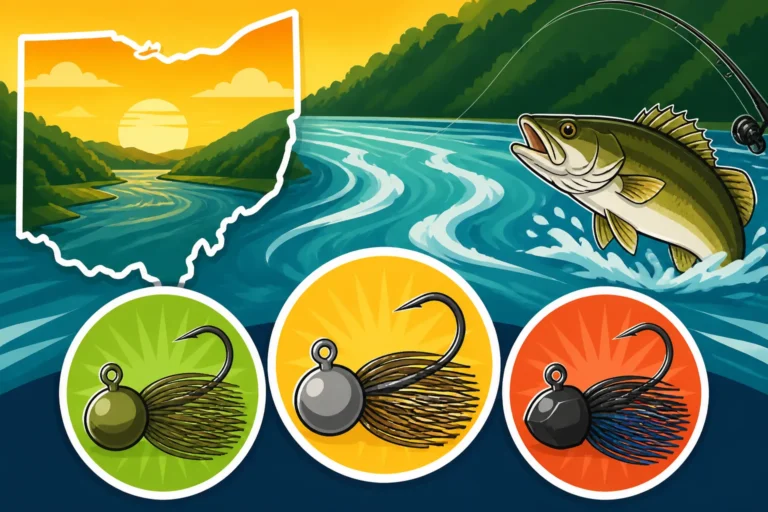
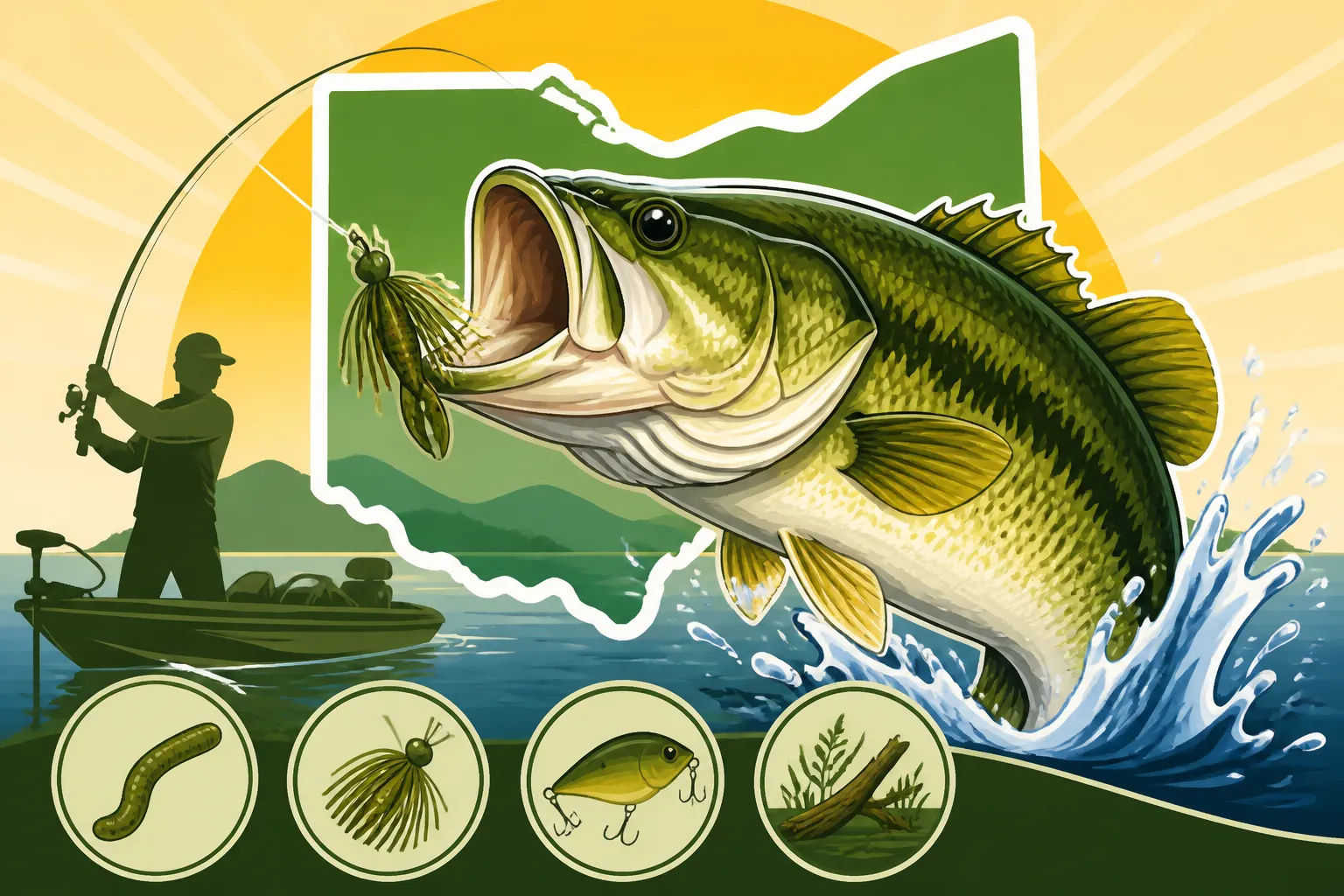
- Jigs: From football jigs designed for rocky bottoms to swim jigs for buzzing through cover, and pitching/flipping jigs for precision presentations, these lures are bass killers. A common setup is a "jig and pig" – a skirted jig paired with a pork or plastic trailer (the "pig") that mimics a crawfish or baitfish. They can be fished slowly and methodically or retrieved with a swimming action. For more on this classic, refer to How to Fish a Jig and Pig for Largemouth Bass.
- Live Bait: While most serious bass anglers prefer artificial lures, live bait can be incredibly effective, especially for beginners or when the bite is exceptionally tough. Live shiners or small minnows fished under a bobber or free-lined can be irresistible. Crawfish, when available, are also highly effective. However, always check Ohio's fishing regulations regarding the use of live bait and baitfish collection.
| Lure Type | Primary Mimicry | Best Conditions/Cover | Retrieve Style | Hook Type |
|---|---|---|---|---|
| Texas Rig (Soft Plastic) | Worms, Crawfish, Creature | Heavy cover, weeds, wood | Drag, hop, shake | EWG Hook |
| Crankbait | Baitfish | Open water, shallow to deep structure | Steady retrieve, pause, erratic | Treble |
| Jerkbait | Dying Baitfish | Cooler water, open water, clear water | Twitch, pause, twitch | Treble |
| Topwater Frog | Frog, Mouse | Heavy lily pads, matted vegetation | Walk-the-dog, pop, twitch | Double/Single |
| Spinnerbait | Baitfish | Stained water, sparse cover, open water | Steady retrieve, slow roll, pump | Single |
| Jig and Pig | Crawfish, Baitfish | Rocks, wood, docks, heavy cover | Hop, drag, swim, pitch, flip | Single |
| Drop Shot | Minnow, Worm | Deep water, clear water, pressured fish | Subtle shake, dead stick | Finesse |
Seasonal Largemouth Bass Techniques in Ohio
Ohio's seasons dictate everything, and largemouth bass are no exception. Adapting your techniques to the time of year is crucial for consistent success. What works in spring won't necessarily be effective in the dog days of summer.
Spring and Pre-Spawn Tactics
As the ice thaws and water temperatures creep into the 40s and 50s, largemouth bass begin to stir from their winter slumber. This pre-spawn period is one of the best times to target big fish. Bass will move from their deeper wintering areas to shallower transition zones, often near points, channel swings, or rock piles that absorb heat. These are staging areas where they feed heavily before committing to the actual spawning beds. Search for the warmest water available, often in the northern coves or protected pockets of a lake. Effective lures include lipless crankbaits, spinnerbaits, and bladed jigs (like a Chatterbait), which allow you to cover water quickly and find active fish. Jerkbaits are also deadly in colder water, as their suspend-and-pause action mimics a struggling baitfish perfectly. Work these lures slowly, allowing for longer pauses. As the water warms into the low 60s, soft plastics like Texas-rigged lizards or creature baits fished around emerging vegetation become highly effective as bass begin to scout for spawning areas. For a more in-depth look at this exciting time of year, check out our guide on Best Spring Fishing Techniques in Ohio.
Summer Patterns and Deep Water Strategies
Once the spawn is over and summer temperatures begin to soar, largemouth bass adapt by seeking cooler, more comfortable water. During the hottest parts of the day, this often means retreating to deeper offshore structure like humps, ledges, or main lake points. They might also bury themselves in dense, overhead cover like thick lily pad fields, matted hydrilla, or deep docks, where they can ambush prey from the shade.
Early mornings and late evenings, or even after dark, are prime times for topwater action in shallower areas, as bass will push up to feed in cooler conditions. Our article on Best Time of Day for Topwater Bass Fishing in Ohio explores this in detail. During the bright, hot midday, focus on fishing deep. Large deep-diving crankbaits can be used to dredge ledges and humps. Carolina rigs are excellent for covering these deep, expansive areas, presenting a subtle bait to wary bass. Football jigs or heavy Texas rigs can be dragged or hopped along the bottom, mimicking crawfish. Flipping and pitching heavy cover with jigs or creature baits is another potent summer tactic; get your bait right into the heart of the thick stuff where bass are hiding. Learning to read your electronics to find these deeper structures and locate thermoclines where fish congregate will significantly boost your summer success.
Fall Feeding Frenzy and Winter Holdovers
As autumn arrives and water temperatures begin to drop, Ohio largemouth bass enter another intense feeding period, often called the "fall frenzy." They know winter is coming and need to pack on calories. This is a fantastic time for aggressive tactics. Bass will often move shallower, following schools of baitfish that are pushed towards the banks. Look for schooling activity of shad or minnows – where there's bait, there are bass. Crankbaits, spinnerbaits, and swimbaits become highly effective for covering water and mimicking these fleeing baitfish. Jerkbaits continue to produce, especially as the water cools further. Pay attention to transition areas where bass can easily move from shallow feeding flats to deeper water for refuge. For more tips on this productive season, refer to Best Fall Fishing Techniques in Ohio.
Once winter truly sets in and water temperatures drop into the 30s and low 40s, bass become much more lethargic. They'll often school up in deep holes, near significant structure, or along deep channel swings. While the bite slows considerably, they can still be caught. Slow, methodical presentations are key. Vertical jigging spoons, blade baits, or small jigs hopped painstakingly slowly along the bottom can elicit strikes. It's a game of patience and precision, but catching a big Ohio largemouth through the ice or in frigid open water is a rewarding challenge.
Advanced Strategies for Challenging Ohio Bass Conditions
Even with the right gear and seasonal understanding, bass fishing can be tough. Sometimes, the fish are just not cooperating. That's when you need to dig deeper into advanced strategies, focusing on precision, stealth, and adapting to specific challenges.
Reading Water and Cover
One of the most valuable skills an experienced angler possesses is the ability to "read the water." This means more than just looking for ripples; it's about interpreting every visual cue and understanding how current, wind, and light affect bass behavior. Start by identifying prime ambush points – any irregularity in the bottom or shoreline that offers a bass a place to hide and wait for prey. This could be the point of a weed bed, the shady side of a dock, a current seam behind a boulder, or the deeper edge of a submerged timber pile. Observe wind direction; wind can push baitfish into certain coves or against a particular bank, and bass will follow. Strong current can position bass behind structure to conserve energy. Light penetration influences where bass position themselves, often preferring shade on bright days. Using quality polarized sunglasses can reveal submerged structure and even fish you might otherwise miss. Furthermore, modern fish finders and electronics are invaluable tools for interpreting what lies beneath the surface. Our comprehensive guide on Reading Ohio Fish Finders and Electronics can help you get the most out of your sonar. Learning to connect these pieces of the puzzle allows you to make educated guesses about where bass are, even when you can't see them.
Finesse Techniques for Pressured Waters
Ohio waters, especially those close to major cities like Columbus or Cleveland, can see significant fishing pressure. When bass are constantly bombarded with lures, they become wary and less likely to strike aggressive presentations. This is where finesse techniques truly shine. Finesse fishing involves using lighter line, smaller baits, and more subtle presentations to coax bites from cautious fish.
- Drop Shot: As mentioned earlier, this is a finesse powerhouse. Use a light fluorocarbon leader (6-10 lb test) and a small, straight-tail worm or minnow imitation.
- Ned Rig: This simple but incredibly effective rig consists of a small mushroom-style jig head and a short, buoyant stickbait. It stands upright on the bottom, mimicking a foraging baitfish or crawfish. It's a secret weapon for tough conditions and can be particularly effective on rocky bottoms. For tips on fishing this rig, especially if you're targeting smaller bass, our guide on How to Fish a Ned Rig for Ohio Smallmouth Bass offers excellent advice that can easily be adapted for largemouth.
- Shaky Head: Similar to a Ned rig but with a slightly larger jig head and a longer worm. It's designed to be fished slowly, shaking the rod tip to impart a subtle, irresistible action.
- Wacky Rig: A simple hook through the middle of a stickbait, allowing both ends to shimmy on the fall. It's an incredibly natural presentation that often fools pressured fish.
The key to finesse fishing is patience and a keen sense of feel. Many bites will be incredibly subtle, feeling like nothing more than a slight tick or spongy resistance. Using a high-quality, sensitive rod and fluorocarbon line is crucial for detecting these light bites.
Night Fishing and Low-Light Tactics
When the summer sun beats down, and the fishing seems to slow to a crawl, many Ohio bass anglers switch to night fishing. Largemouth bass, especially larger ones, are often more active and less wary under the cover of darkness. The cooler water temperatures and reduced boat traffic can make for incredible fishing.
- Dark-Colored Lures: Black, blue, and purple are classic night fishing colors. These create a stronger silhouette against the moonlit sky or faint light, making them easier for bass to see.
- Noisy Topwater Lures: Ploppers, large buzzbaits, and Jitterbugs that create a significant surface disturbance can draw violent strikes from aggressive bass. The noise helps bass locate the lure in the dark.
- Slow-Rolled Spinnerbaits and Jigs: A large spinnerbait with a thumping Colorado blade or a big jig-and-pig combo slowly dragged or hopped along the bottom can be incredibly effective. The vibration helps bass zero in on the bait.
- Focus on Shallow Water: Bass will often move into shallower areas at night to feed, especially around boat docks with lights, seawalls, or shallow points.
- Safety First: Always prioritize safety when fishing at night. Let someone know where you're going, bring a headlamp, and be extra cautious on the water.
Night fishing requires a different mindset and relying more on feel than sight. It's an experience every Ohio bass angler should try, especially when the day bite is slow. Our general guide on Night Fishing Techniques in Ohio offers broader advice applicable to many species.
Disclaimer
Fishing regulations can change frequently. Always consult the latest Ohio Department of Natural Resources (ODNR) fishing regulations booklet or their official website before heading out on the water to ensure you are compliant with all current laws and limits. Stay safe and enjoy your time fishing!