Largemouth Bass Habitat Preferences
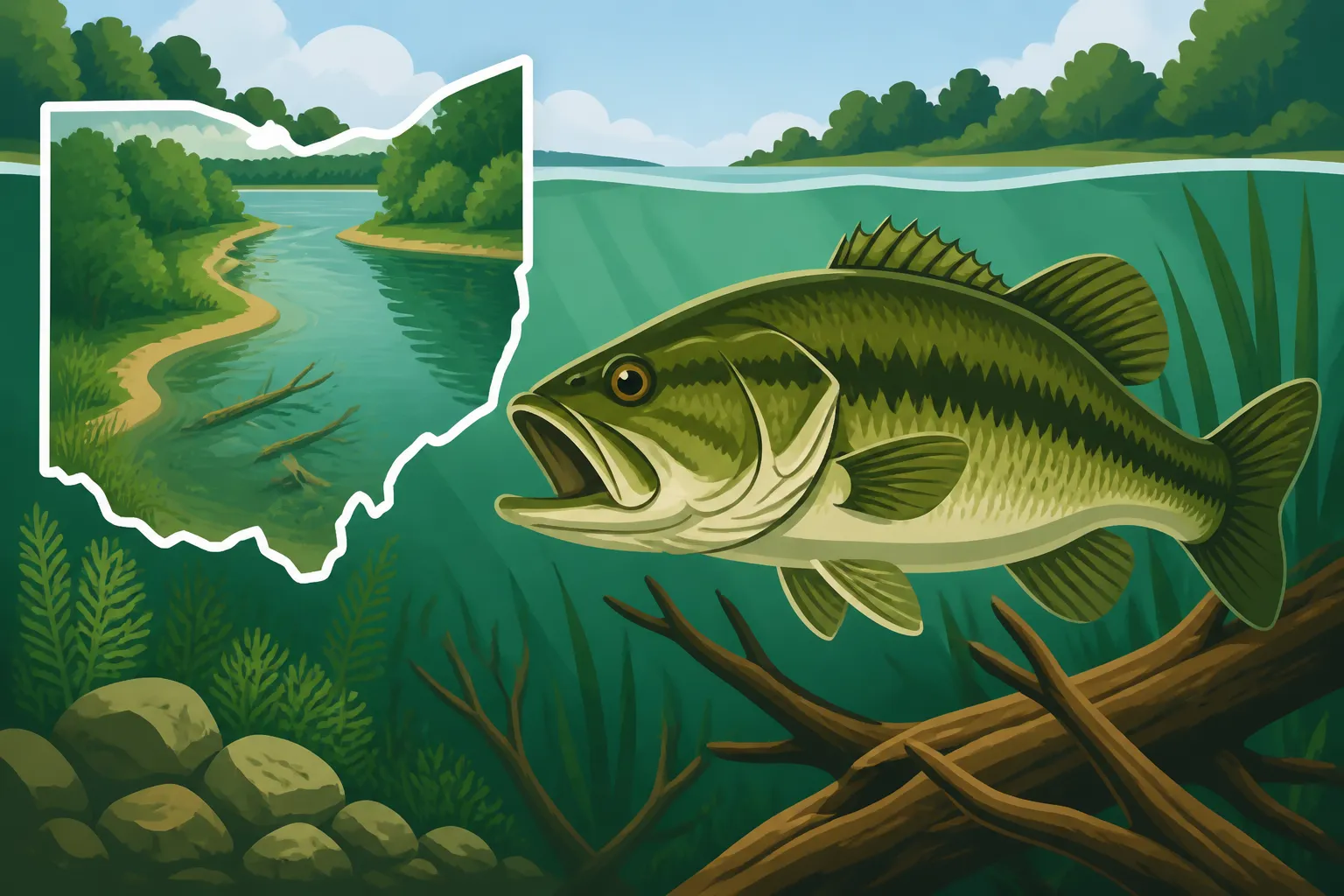
One of the biggest head-scratchers for any angler, especially when you’re targeting a specific species like largemouth bass here in Ohio, is figuring out where the heck they actually live. It’s not just about finding water; it’s about understanding their preferred neighborhoods, their favorite hangouts, and where they feel safest and most likely to ambush a meal. This guide is all about peeling back the layers on where Ohio's largemouth bass prefer to call home, helping you spend less time guessing and more time getting bites.
Understanding Largemouth Bass Basics in Ohio
Before we dive deep into the nitty-gritty of specific hiding spots, it’s important to understand the fundamental nature of a largemouth bass. These fish are apex predators in many of Ohio's freshwater systems, known for their aggressive strikes and powerful fights. They are also masters of camouflage and ambush, which directly influences their habitat choices. They want to be near cover, close to food, and in water that's comfortable for them. Our Ohio waters, from the smallest farm ponds to vast reservoirs, offer a diverse range of these conditions, making it crucial to understand the subtle cues that lead you to a prime bass zone.
Why Habitat Matters for Largemouth Success
Imagine trying to catch a squirrel in an open field versus trying to catch one in a dense oak forest. Where do you think your chances are better? It’s the same principle with largemouth bass. Their habitat isn't just a place to exist; it's their entire ecosystem. It provides protection from predators (including us anglers!), a steady supply of food, and optimal conditions for spawning and resting. If you can understand why they choose a particular type of cover or depth, you’re already halfway to putting a fish in the boat. Without understanding their habitat preferences, you're essentially casting blind, hoping for a lucky break rather than making an educated cast.
General Characteristics of Ohio Largemouth Waters
Ohio offers an incredible variety of waters for largemouth bass, from small, fertile ponds tucked away in rural areas to expansive reservoirs and the backwaters of larger rivers. While Lake Erie certainly gets a lot of attention for its walleye and smallmouth, our inland lakes and ponds are largely largemouth strongholds. Generally, largemouth bass thrive in warmer, often somewhat shallower waters compared to their smallmouth cousins. They appreciate areas with plenty of submerged vegetation, fallen timber, and man-made structures. Think slower currents, muddier bottoms, and lots of places to hide and ambush prey. This isn't to say you won't find them in clearer, rockier environments, but their dominance truly shines in more vegetated or "dirtier" water systems. When you're fishing these types of waters, remember that the largemouth is likely the king of the castle.
Key Environmental Factors Influencing Habitat
The environment plays a huge role in where largemouth bass decide to set up shop. It's not just about having a log to hide behind; it's about water temperature, how clear or cloudy the water is, and even the time of year. These factors are constantly shifting, and a successful bass angler understands how to adapt to them.
Water Temperature and Seasonal Movements
Water temperature is arguably the most critical environmental factor dictating where largemouth bass will be. Bass are cold-blooded, meaning their body temperature matches their surroundings. They have preferred temperature ranges for feeding, resting, and spawning.
- Winter: When water temperatures dip below 45-50 degrees Fahrenheit, largemouth become lethargic. They often move to deeper basins, suspending over structure or hunkering down near the bottom in the warmest available water. Their metabolism slows, and they feed much less frequently. If you're ice fishing for largemouth in Ohio, you'll often find them suspended near these deep structures. Which Ohio Fish Stay Active All Winter Long talks more about fish activity in cold water.
- Spring: As the water warms, usually hitting 50-60 degrees, bass move shallower. This is a pre-spawn phase, and they'll be actively feeding to build energy for spawning. They'll stage near points, channel swings, and the mouths of coves. They're looking for areas that warm up quickly, like north-facing banks or dark bottoms that absorb sunlight.
- Summer: Once the water hits 70-85 degrees, bass are in full swing. They’ll use a mix of shallow cover early and late in the day, but often retreat to deeper, cooler water or dense, shaded cover during the heat of midday. They're constantly seeking that comfortable temperature zone and ambush points.
- Fall: As temperatures drop from their summer highs into the 60s and 50s, bass enter a strong feeding frenzy. They're trying to pack on weight for the upcoming winter. They'll often follow baitfish into shallower pockets and coves, moving deeper as the day progresses or as cold fronts move through.
Understanding these seasonal movements is paramount. You wouldn't look for bass in shallow lily pads in January, just like you wouldn't expect them to be exclusively in 30 feet of water in May.
Water Clarity and Light Penetration
The clarity of the water also significantly impacts largemouth habitat choices.
- Stained or Murky Water: In darker, less clear waters, largemouth bass are often more comfortable in shallower areas. The reduced light penetration acts as a natural "cover," allowing them to hide effectively even without dense physical structure. Think about fishing a muddy pond after a heavy rain; the bass won't be as spooked in shallower water. They'll rely more on their lateral line to detect vibrations from prey, rather than sight.
- Clear Water: In very clear lakes and reservoirs, bass become much more wary of bright light and open spaces. They will typically hold tighter to heavy cover like thick weed beds, dense brush, or deeper drop-offs to avoid detection. In these clear conditions, you'll often find them deeper, especially during bright sunny days. They'll use their excellent eyesight to spot prey, but also need that cover to stay hidden themselves. This is where those deep weed lines or significant submerged structures become absolute magnets.
It's all about comfort and concealment. If the water itself provides good concealment (murky water), they might spread out more. If the water is like glass, they'll hug the densest cover they can find.
The Allure of Structure: Where Bass Hide
When we talk about bass fishing, "structure" and "cover" are terms you hear all the time. While sometimes used interchangeably, it's helpful to think of structure as changes in the lake bottom (like humps, points, drop-offs) and cover as physical objects on or in the water (like weeds, logs, docks). Both are absolutely crucial for largemouth bass, providing ambush points, shade, and protection.
Vegetation: Weed Beds, Lily Pads, and Hydrilla
Ah, vegetation – the ultimate bass haven! If you're fishing for largemouth in Ohio, you'll quickly learn to love the green stuff, even if it sometimes means getting snagged. Thick mats of weeds, expansive lily pad fields, and dense hydrilla beds are like five-star resorts for largemouth.
- Weed Beds: Submerged weed beds offer excellent cover, oxygen, and a buffet of baitfish and insects. Bass will often position themselves on the edges of these beds, waiting to ambush anything that swims by. They also like pockets within the weeds or "holes" in the mat. Think about tossing a frog bait over a thick mat; the bass are often right underneath, waiting for that splash. Spinnerbaits and chatterbaits are also fantastic for working weed lines.
- Lily Pads: Who doesn't love the sight of a vibrant field of lily pads? These provide fantastic shade from the sun and a canopy of cover, making bass feel incredibly secure. Bass will hide under the pads, often near the stems, ready to dart out. Frog lures and soft plastics punched through the pads are classic techniques here. The deeper into the pads you can get your bait, the better your chances sometimes, as this is where the biggest, most confident bass might reside.
- Hydrilla and Milfoil: These invasive, but undeniably bass-attracting, plants create incredibly dense underwater jungles. Bass will burrow deep into these mats, especially during the summer heat, seeking cooler water and dense cover. Flipping and pitching heavy jigs or Texas-rigged plastics into the thickest parts of these mats is a popular and effective strategy. It's tough fishing, but often yields bigger fish.
These vegetated areas are not just hiding spots; they are active feeding grounds. They attract baitfish, frogs, and insects, creating a self-sustaining ecosystem that largemouth bass simply can't resist.
Woody Cover: Laydowns, Stumps, and Submerged Timber
Before the weeds get too thick in early spring, or in lakes where vegetation is sparse, woody cover becomes king. Largemouth bass absolutely adore wood. It provides a solid ambush point, excellent shade, and a physical barrier from predators.
- Laydowns: A fallen tree extending from the bank into the water is a classic bass magnet. Bass will position themselves along the trunk, under the branches, or near the tip where it meets deeper water. Focus your casts on the trunk, where branches meet, and around the root ball. Spinnerbaits, jigs, and Texas-rigged worms are all effective here.
- Stumps and Brush Piles: Individual stumps or intentionally sunken brush piles (often called fish attractors) are prime locations. These offer isolated cover in otherwise featureless areas. Bass will hold tight to these, so accurate casting is essential. A slow-falling jig or a crankbait that deflects off the wood can trigger reaction strikes. Many Ohio lakes benefit from these artificial structures, which are fantastic for concentrating fish.
- Submerged Timber: Entire submerged forests or logging areas, often found in older reservoirs, are incredible but challenging bass habitats. These areas can be snaggy nightmares, but they hold trophy-sized bass. Electronics like a good fish finder (you can find plenty of options on Amazon) become invaluable here to pinpoint the edges of the timber or specific larger logs where bass might be holding. Deep-diving crankbaits or heavy jigs are often used to probe these underwater forests.
Fishing woody cover requires a bit of courage and a willingness to get snagged, but the rewards are often well worth it. These are classic big bass haunts.
Man-Made Structures: Docks, Piers, and Bridges
Humans build a lot of stuff on and around the water, and largemouth bass are excellent at repurposing these structures for their own benefit. Docks, piers, bridge pilings, and even old sunken boats offer fantastic habitat.
- Docks and Piers: These are probably the most common and accessible man-made structures for bass anglers. Docks provide overhead shade, which is critical during sunny days, and the pilings offer vertical cover. Bass will often be found under the darkest parts of the dock, especially in corners or near any submerged brush or tires. Skipping soft plastics or jigs under docks is a highly effective technique. The longer and more complex the dock system, the more potential hiding spots for bass. Best Docks and Piers for Fishing Near Cleveland talks about some great local spots.
- Bridge Pilings: Where bridges cross lakes or rivers, the pilings provide current breaks (if there's flow), shade, and vertical structure. Bass will often position themselves on the current-facing side of the pilings or in the eddies behind them. Cranking around bridge pilings or jigging vertically can be very productive. The deeper the water under the bridge, the more likely bass are to use it as a year-round hangout.
- Seawalls and Riprap: Rock walls and riprap (loose rock shoreline stabilization) also attract bass. These areas provide crevices for crayfish and baitfish, and the rocks absorb and radiate heat, which can be attractive in cooler weather. Bass will cruise these edges, looking for an easy meal. Shallow crankbaits and jigs are excellent choices for working these rocky transitions.
Don't overlook anything man-made; if it's in or on the water, there's a good chance a largemouth bass has found a way to use it.
Depth Preferences and Transitions
Largemouth bass are not static creatures; they move throughout the water column and across different depths depending on the season, time of day, and environmental conditions. Understanding these depth preferences and the "transition zones" is key to consistent success. They rarely stay put in one specific depth for extended periods.
Shallow Water Feeding Zones
For many anglers, shallow water is synonymous with largemouth bass fishing, and for good reason! These areas are often prime feeding grounds, especially during low light conditions (dawn, dusk, cloudy days) and during the spring and fall.
- Bank Lines and Flats: Shallow flats, particularly those with scattered vegetation, stumps, or slight depressions, are excellent spots for bass to cruise for food. They might be hunting bluegill, frogs, or crawfish. Casting spinnerbaits, chatterbaits, or topwater lures along these shallow banks can be incredibly exciting.
- Coves and Pockets: Protected coves and pockets, especially those with dark bottoms, warm up quickly in the spring, making them ideal pre-spawn and spawning areas. Later in the year, they can be great places for baitfish to congregate, drawing bass in for a meal. Look for any available cover within these shallow zones.
- Marinas and Canal Systems: These areas, often overlooked, can be fantastic shallow-water havens. The myriad of docks, moored boats, and bulkhead walls provide constant cover. Marinas can also be surprisingly quiet, offering bass a sense of security. Flipping and pitching into boat slips or under pontoon boats can uncover some true monsters.
The key to shallow water success is often stealth. Bass in shallow water are more aware of their surroundings, so quiet approaches and accurate casts are vital.
Deep Water Sanctuaries and Drop-Offs
While shallow water gets a lot of glory, many big bass spend a significant portion of their lives in deeper water, especially in summer and winter, or during midday heat. These deeper zones provide stable temperatures and a sense of security.
- Ledges and Drop-Offs: Any significant change in depth is a potential bass highway and ambush point. Bass will often position themselves along the edges of these ledges, darting up into shallower water to feed or retreating into deeper water for safety. Jigging spoons, deep-diving crankbaits, and Carolina rigs are excellent for probing these vertical structures. Finding these key transitions with your electronics is crucial.
- Humps and Points: Submerged humps (underwater islands) and points extending into deeper water are classic offshore structures. Bass will relate to the tops, sides, and base of these features, depending on conditions. The baitfish will often school up around these structures, attracting the bass. A good GPS and depth finder are essential for locating and fishing these offshore gems effectively.
- Deep Cover: Don't forget that deep water can also have cover! Submerged timber, rock piles, and even deep weed lines can hold bass. This often requires specialized techniques like dropshotting, or slow-rolling a football jig right along the bottom. Often, these deep-water fish are less pressured and can be larger.
Transition zones – where shallow water meets deep water, or where soft bottom meets hard bottom – are frequently the most productive areas, as they offer the best of both worlds.
Seasonal Migration Routes
Just like deer follow trails, largemouth bass often use consistent "migration routes" as they move between their various seasonal habitats. Understanding these routes can help you intercept them as they travel.
- Channel Swings: In reservoirs, the old creek or river channels are often the deepest parts, and bass will use these as highways. Where these channels swing close to the bank, or intersect with points and humps, they create excellent staging areas for bass moving from deep to shallow or vice-versa.
- Main Lake Points: Main lake points that extend into deep water are crucial staging areas, particularly during pre-spawn and post-spawn movements. Bass will often congregate on these points, waiting for optimal conditions to push into shallower coves or before retreating to deeper main lake areas.
- Shoreline Contours: Even subtle changes in a uniform shoreline – a small indentation, a rocky patch on an otherwise sandy bank, or a single isolated stump – can act as a waystation for bass moving along the bank. These small irregularities offer a temporary hiding spot or an opportunistic feeding point before they continue their journey.
By identifying these common travel corridors, you can effectively "cut off" migrating bass and present your lures to them as they move.
Forage and Prey: The Dinner Table
A largemouth bass is primarily concerned with two things: survival and eating. Knowing what they eat – their "forage" – is a massive piece of the puzzle when it comes to locating them. Bass will always be near their food source. If you find the bait, you'll likely find the bass.
Baitfish and Panfish Concentrations
The primary diet of a largemouth bass consists of other fish. They are opportunistic predators and will gorge themselves on whatever is most abundant and easiest to catch.
- Shad and Minnows: In many Ohio lakes and reservoirs, various species of shad (like gizzard shad) and minnows form the backbone of the bass's diet. These baitfish often school in open water or along contours. Where you find tight schools of baitfish, especially on your fish finder (check out the range available on Amazon), you'll almost certainly find bass lurking nearby. Matching the hatch with crankbaits or swimbaits that imitate these baitfish is a classic strategy.
- Panfish (Bluegill, Crappie, Perch): Bluegill, crappie, and yellow perch are also favorite meals for bigger bass. These panfish often relate tightly to cover themselves – weed beds, docks, brush piles – and the bass will follow. If you're catching a lot of small bluegill in a certain area, there's a very good chance some larger bass are also present, eyeing them up for a snack. Jigs, worms, and creature baits are great for imitating these slower-moving, bottom-dwelling meals. Ohio Crappie Fishing Guide goes into more detail about these popular panfish.
- Crawfish: These crustaceans are a staple for largemouth bass, particularly those living in rocky or hard-bottomed areas. Bass will root around for crawfish, especially when they're shedding their shells and are softer and more vulnerable. Jigs, creature baits, and specific crawfish-imitating crankbaits are deadly when bass are focused on crawfish.
Understanding the forage base of a particular lake or pond is a huge advantage. If you know what they're eating, you can often predict where they'll be and what they'll bite.
Amphibians, Insects, and Other Opportunistic Meals
While fish are the main course, largemouth bass are not picky eaters. They will readily consume a wide variety of other creatures, especially when these items are abundant or easy targets.
- Frogs: There's nothing quite like the explosive strike of a bass on a topwater frog lure. Frogs are a natural meal for bass, especially in shallow, vegetated areas like lily pads or weed mats. Bass actively hunt frogs along the surface, and a well-presented frog bait can trigger incredible bites.
- Insects: Dragonflies, grasshoppers, and various aquatic insects can be part of a bass's diet, particularly for smaller bass or in waters where other forage is scarce. While you're not usually targeting bass with tiny insect imitations, the presence of active insect life on the surface can indicate a healthy ecosystem that supports bass.
- Mice, Snakes, Ducklings: Yes, it sounds a bit wild, but larger largemouth bass are true apex predators and will opportunistically strike at anything that falls into the water or crosses their path. This is less about consistent foraging and more about a reaction strike, but it highlights just how aggressive and dominant these fish can be. Larger topwater lures designed to imitate these creatures certainly exist and can be effective for trophy bass.
The sheer variety of a bass's diet emphasizes their adaptability and their willingness to strike a wide range of lures. If it looks alive and vulnerable, a bass will probably consider eating it.
Spawning Habitat and Nesting Behavior
The urge to reproduce is one of the strongest drivers for largemouth bass, and understanding their spawning habitat is critical for springtime fishing success, and also for appreciating the full cycle of their lives. Ohio's bass follow a predictable pattern when it comes to making more bass.
Ideal Spawning Conditions
Largemouth bass typically spawn when water temperatures consistently reach 60-70 degrees Fahrenheit. This usually occurs from late April through June in Ohio, depending on the specific body of water and yearly weather patterns.
- Shallow, Protected Areas: Bass seek out shallow, protected bays, coves, and pockets for spawning. These areas are often shielded from strong winds and heavy boat traffic. They want calm, stable water where their nests won't be easily disturbed.
- Hard Bottom: While they might be found near some vegetation, bass prefer a hard bottom for building their nests. Gravel, sand, or even small rock bottoms are ideal. The male bass sweeps out a circular depression, usually 1-3 feet in diameter, to create the "redd" or nest.
- Nearby Cover: Even in their nest, bass appreciate some form of nearby cover – a submerged log, a patch of weeds, or a dock piling – to provide a sense of security and a quick escape route if needed. They are fiercely protective of their nests, but they still value proximity to concealment.
During the spawning phase, male bass guard the nest aggressively. While they might strike at a lure to defend their territory, many anglers choose to leave these fish undisturbed during this crucial period to ensure a healthy population for future generations.
Post-Spawn Recovery Areas
Once the spawning ritual is complete, bass enter a "post-spawn" phase where they are often exhausted and vulnerable. They don't immediately move back to their deep summer haunts.
- Nearby Deeper Water: After spawning, both male and female bass will often move to slightly deeper water immediately adjacent to their spawning flats. This might be a nearby creek channel, a main lake point, or the edge of a weed line that's just a bit deeper. They're looking for recovery, less pressure, and potentially cooler water without moving too far.
- Dense Cover: During this recovery period, bass often gravitate towards dense cover to rest and regain their strength. Thick weed mats, submerged brush, or deep docks can be prime spots. They are less focused on active feeding and more on recuperating, though they will still strike at an easy meal that wanders too close.
- Forage Concentrations: As they recover, they'll gradually start to feed again, often near concentrations of baitfish or panfish. These post-spawn bass can be tricky to catch, as they might be lethargic, but targeting the edges of cover near their spawning areas can still be productive.
Understanding these recovery zones is essential for consistent fishing, as it bridges the gap between the spring spawn and the full-blown summer patterns. It’s all about following their life cycle.
| Habitat Type | Preferred Depth | Key Features for Bass | Best Seasons to Target | Common Lure Types |
|---|---|---|---|---|
| Weed Beds | Shallow to Mid (2-15 ft) | Edges, pockets, dense mats, shade, oxygenated water | Spring, Summer, Fall | Frogs, Spinnerbaits, Jigs, Texas-rigs, Swim Jigs |
| Lily Pads | Very Shallow (1-5 ft) | Dense canopy, shade, ambush points, frog habitat | Spring, Summer, Early Fall | Frogs, Soft Plastics (punched), Buzzbaits |
| Laydowns/Timber | Varying (1-30+ ft) | Trunk, branches, root balls, shade, current breaks | Year-round (especially Spring, Fall, Winter in deep wood) | Jigs, Spinnerbaits, Crankbaits, Wacky Worms |
| Docks/Piers | Shallow to Mid (3-20 ft) | Overhead shade, pilings, submerged structure, ambush | Year-round (especially hot Summer & cold Winter) | Skipping Jigs, Soft Plastics, Wacky Worms, Crankbaits |
| Ledges/Drop-offs | Mid to Deep (10-40+ ft) | Depth transition, current breaks, baitfish congregations | Summer, Winter, Transition seasons | Deep Crankbaits, Jigging Spoons, Carolina Rigs, Dropshots |
| Humps/Points | Mid to Deep (5-40+ ft) | Offshore structure, baitfish schools, current breaks | Summer, Fall, Winter | Deep Crankbaits, Football Jigs, Spoons, Swimbait |
| Spawning Flats | Very Shallow (1-5 ft) | Hard bottom, protected bays, nearby cover | Spring (Spawning season) | Sight Fishing (soft plastics, jigs), protecting nests |
Disclaimer
This article is for general informational purposes only and does not constitute professional advice. Laws, prices and regulations vary by location and change over time. Consult a qualified professional for guidance on your specific situation.