Ohio White Crappie vs Black Crappie
Many Ohio anglers have stood by the water, proudly showing off a stringer of 'crappie,' only to wonder if they were all the same. It's a common point of confusion: are you holding a white crappie or a black crappie? While both offer fantastic fishing and delicious table fare, distinct differences can impact where and how you target them. This guide aims to clear up that mystery and boost your crappie fishing success across Ohio.
The Crappie Conundrum: Why Distinguishing Matters
Let's be honest, for many of us, a crappie is a crappie. You catch one, it’s a beautiful panfish, destined for the frying pan or a proud photo. But then someone asks, "Is that a white or a black?" and you might find yourself squinting, trying to remember what you learned years ago, or just shrugging. This isn't just about showing off your fish ID skills; understanding the subtle differences between white crappie and black crappie can genuinely make you a more successful angler in Ohio. These two species, while closely related, often prefer slightly different environments and react differently to various fishing presentations, which means a little knowledge goes a long way.
Initial Frustrations for Anglers
It's completely normal to feel a bit frustrated when trying to tell these two apart. They look so similar at first glance, especially when they're fresh out of the water, flopping around in the bottom of your boat, or even on a stringer. The color variations can be tricky, too, depending on the water clarity, the time of year, and even what they've been eating. One lake's black crappie might look darker than another's, and a white crappie from murky water might not look as "white" as one from a clear reservoir. This variability adds to the challenge, often leading anglers to simply lump them all together. We've all been there, wondering if that slightly darker one was a black crappie or just a white crappie that spent too much time in the sun.
Moreover, the size can sometimes be a red herring. While white crappie generally tend to grow larger on average, you can certainly catch huge black crappie, and small white crappie, blurring that line as well. So, relying solely on a quick glance at color or size is often going to lead to more confusion than clarity, and that's precisely why a deeper dive into their unique features is so helpful.
The Importance of Correct Identification
Why bother with the nuances? Well, beyond satisfying your inner ichthyologist, knowing whether you've hooked a white crappie or a black crappie can inform your fishing strategy. Think of it this way: if you know one species prefers clearer water and more open spaces, and the other likes dense cover and slightly murkier conditions, you can adjust your location. If you’re targeting one specifically, you'll know where to focus your efforts. This fine-tuning can put more fish in your boat or on your bank.
Furthermore, it can even affect your decision-making on tackle and presentation. For instance, if you're in an area known for primarily holding black crappie, you might focus on vertical jigging around tight structure. If white crappie are the dominant species, a slow troll with minnows or jigs through more open water might be more effective. Understanding these subtle preferences allows you to move beyond generic crappie fishing and adopt tactics that are specifically tailored to the species at hand, significantly boosting your chances of a successful outing. It's all about making informed decisions out on the water, turning those frustrations into triumphs.
White Crappie: The Streamlined Slabs
Ah, the white crappie! These are often the stars of many an Ohio angler's fish tale, known for their potentially larger size and eager bite. They are truly a magnificent panfish, offering a fun fight and excellent table fare. But what makes a white crappie distinct from its speckled cousin? It all comes down to a few key physical markers and their preferred hangouts.
Key Physical Characteristics
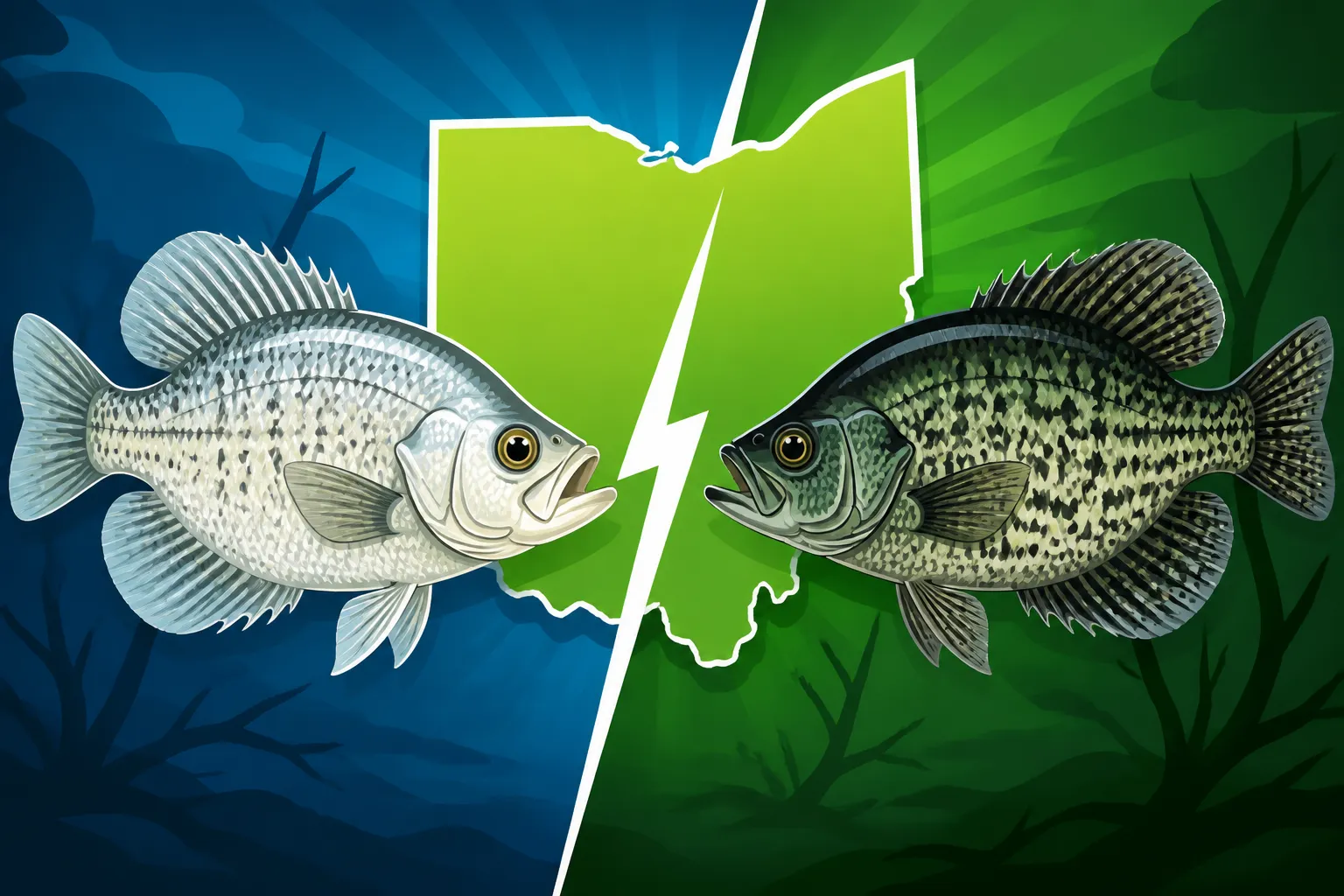
When you first pull a white crappie from the water, you might notice its generally lighter, silvery color, often with faint, vertical bars running down its sides. These bars are usually distinct, but they can fade depending on the fish's health and environment. The real tell-tale sign, however, lies in its dorsal fin. If you carefully count the spines in the dorsal fin (the one on its back), a white crappie will almost always have six spines. This is a reliable indicator that almost never fails, a little secret weapon for identification.
Another feature to observe is their body shape. White crappie tend to have a slightly more elongated, streamlined body compared to the black crappie, giving them a more "slab-sided" appearance. Their mouth is also quite large, extending back past the middle of their eye, which is a common trait among both crappie species, but it's worth noting. The combination of the six dorsal spines and those faint vertical bars are your primary identifiers. They also typically have a relatively deep body, but not quite as rounded as their black crappie counterparts. Learning to quickly count those dorsal fin spines is perhaps the easiest way to feel confident in your identification.
Preferred Habitats and Behaviors
White crappie are often found in larger, more turbid (cloudy) waters, like reservoirs, slow-moving rivers, and larger lakes with a bit more silt or mud. They have a higher tolerance for murkier conditions, which is why you'll frequently find them in places like Indian Lake or various flood control reservoirs after a heavy rain. While they still appreciate structure, they tend to be a little less shy about open water and will often suspend themselves in schools over deeper channels or flats, especially when foraging. They might not hug brush piles as tightly as black crappie, preferring the edges or tops of submerged timber and weed beds, or simply cruising open water to ambush baitfish.
Their schooling behavior is also quite pronounced. White crappie often form large, dense schools, which can be a huge bonus for anglers once you locate them. If you catch one, there's a good chance many more are nearby! They're also known to be more active during daylight hours, making them a popular target for many fair-weather anglers. Understanding these preferences means you might target them by trolling minnow rigs or casting jigs across open water or along contours, rather than strictly focusing on dense, tight cover.
Common Baits and Techniques
Given their preference for slightly more open water and larger schools, white crappie respond well to a variety of techniques. Small jigs, often 1/16 to 1/8 ounce, tipped with minnows or soft plastics, are a classic choice. Slow trolling these setups can be incredibly effective when schools are suspended over open water. You can often find a great selection of these jigs and minnow buckets on Amazon. Look for offerings in chartreuse, white, or black/blue, which tend to be consistent producers.
Live minnows, suspended under a bobber or fished on a crappie rig, are also deadly, especially when fish are less active. When they are holding to structure like submerged trees or brush piles, vertical jigging can entice a bite. For those looking for more general advice, our Ohio Crappie Fishing Guide goes into greater detail on effective techniques. Remember, white crappie are often on the hunt for baitfish, so any presentation that mimics a vulnerable shiner or shad is likely to draw their attention.
Black Crappie: The Speckled Beauties
Now, let's talk about the black crappie, the equally delightful but distinctly different species that graces Ohio's waters. These fish might not always reach the massive sizes that some white crappie do, but what they lack in raw length, they make up for in their striking appearance and feisty nature. They hold a special place in the hearts of many panfish enthusiasts, offering a challenging yet rewarding pursuit.
Key Physical Characteristics
The most immediate visual cue for a black crappie is its overall darker, often brassy or olive-green body, heavily peppered with irregular, dark spots or speckles. These spots are scattered across its sides, unlike the more defined vertical bars of the white crappie. However, as we discussed, color can be deceptive due to water conditions. The definitive identification feature for a black crappie, much like the dorsal fin spines for the white crappie, is also in its dorsal fin. A black crappie will almost always have seven or eight dorsal spines. This is the most reliable way to tell them apart, even when their coloration is confusing.
Their body shape is also generally more rounded and disc-like compared to the white crappie's elongated form. They tend to look a bit "taller" for their length. Just like the white crappie, they possess a large mouth. But again, focus on those dorsal fin spines; seven or eight means you've got a black crappie. Once you get used to counting these spines, distinguishing between the two becomes second nature.
Preferred Habitats and Behaviors
Black crappie typically prefer clearer, cooler waters with abundant submerged vegetation, brush piles, fallen trees, and docks. You'll often find them in lakes, ponds, and slow-moving rivers that have plenty of healthy weeds or timber for cover. They are less tolerant of high turbidity than white crappie and tend to thrive in environments where they can ambush prey from dense cover. Think about those crystal-clear pockets in a reservoir or the undisturbed corners of a pond where lily pads grow thick – that's prime black crappie territory.
They are known for being structure-oriented, hugging tight to cover, whether it's a deep brush pile, a submerged Christmas tree, or the shady side of a dock. They form schools, but these schools can often be tighter-knit and more directly associated with specific pieces of structure. Black crappie are also often more active during dawn, dusk, and even at night, though they can certainly be caught throughout the day, especially if they are holding in deep, shaded cover. This preference for tighter cover means you might need to be more precise with your presentations, often dropping your bait right into the heart of the structure.
Common Baits and Techniques
Because black crappie are so structure-oriented, vertical jigging is often a go-to technique. Small jigs, again in the 1/16 to 1/8 ounce range, tipped with minnows, small tube jigs, or tiny soft plastic grubs, are incredibly effective. You'll need to drop your bait precisely into the cover where they are hiding. Popular jig colors include greens, browns, and dark purples, which can be found in various kits on Amazon for quick delivery.
Live minnows, fished under a bobber right next to a brush pile or dock pilings, are another highly successful method. If you're fishing a clear lake with abundant weed beds, a very slow retrieve or even dead-sticking a jig near the edge of the weeds can entice a bite. For more details on what to use, check out our guide on Best Baits for Ohio Crappie. Understanding their tendency to hide means you might need to be a bit more patient and methodical, working each piece of cover thoroughly to pluck out these speckled gems.
Side-by-Side Comparison: White Crappie vs. Black Crappie
Now that we’ve delved into each species individually, let's put them head-to-head. Sometimes, seeing the differences laid out side-by-side really helps cement the identification in your mind. This isn't just an academic exercise; it's about giving you the tools to adapt your fishing on the fly, making smarter decisions about where to cast and what to use.
Visual Distinctions at a Glance
As anglers, we often need to make quick judgments. Here’s a handy table summarizing the key visual differences that you can use as a quick reference when you're on the water, trying to solve the crappie mystery. Remember, the dorsal fin spine count is your most reliable friend here!
| Feature | White Crappie | Black Crappie |
|---|---|---|
| Dorsal Spines | 6 | 7-8 |
| Body Markings | Faint, vertical bars | Irregular, scattered dark spots/speckles |
| Body Shape | More elongated, streamlined, "slab-sided" | More rounded, disc-like, "taller" for its length |
| Coloration | Generally lighter, silvery, often with green/yellow hues | Generally darker, olive-green to brassy, sometimes bluish |
| Snout Profile | More upturned, giving a slightly dished look | Straight or slightly convex |
Practicing this identification with every crappie you catch will make you an expert in no time. Eventually, you might even be able to tell the difference without counting spines, just by their overall silhouette and pattern!
Habitat and Behavior Differences
The distinct habitat preferences are perhaps the most significant difference for anglers trying to target one species over the other. White crappie are more often found in those slightly murkier, larger impoundments or slow-moving river systems, often suspending in open water or along the edges of structure. They’re comfortable roaming. You might find them in the main lake basin over a deep channel or cruising a shallow flat near a drop-off. For more on where these fish like to hang out, check out our insights on Crappie Schooling Behavior.
Black crappie, on the other hand, are the introverts of the crappie world, preferring the comfort and camouflage of dense cover in clearer waters. They are often tucked deep into brush piles, sunken timber, or thick weed beds. If you're fishing a lake with clear water and lots of submerged vegetation, you're likely in prime black crappie territory. This means your approach needs to be much more focused on precision and getting your bait right into their living room. These behavioral differences are critical for planning your fishing trip and choosing your spots.
Fishing Strategy Adjustments
Knowing which species you're likely to encounter can profoundly impact your fishing strategy. If you're heading to a sprawling, slightly stained reservoir known for its white crappie, you might focus on slow trolling crankbaits or minnow rigs across open flats or along channel edges. You might use your fish finder to locate those suspended schools and then drop jigs on them. Our article on Best Time of Year for Ohio Crappie Fishing can provide seasonal context for these tactics.
Conversely, if you're targeting black crappie in a clear, vegetated lake, your approach will shift. You'd likely spend more time vertical jigging small plastics or live minnows into tight brush piles, probing every piece of cover thoroughly. You might focus on docks, fallen trees, or the edges of dense lily pad fields. You could even be fishing during low-light conditions, as black crappie are known to be more active at dawn, dusk, and through the night. Having a good, sturdy rod that can handle pulling fish out of thick cover, perhaps even one you picked up from a reliable online vendor, can make all the difference.
Beyond Identification: Crappie Fishing Tips in Ohio
So, you've mastered the art of telling your white crappie from your black crappie – congratulations! But knowing what you've caught is only half the battle. The other half is knowing how to consistently catch them, and even how to ensure future generations of these fantastic fish. Ohio offers incredible crappie fishing opportunities across the state, and a few universal tips can help you capitalize on them, no matter which species you're chasing.
Seasonal Movements and Patterns
Crappie, both white and black, are highly influenced by water temperature and the changing seasons. Spring is often the most anticipated time for crappie anglers in Ohio, as warming waters trigger their movement into shallow spawning areas. You'll find them concentrating in bays, coves, and around emergent vegetation, making them easier to locate. Our piece on Do Crappie Move Shallow in Spring in Ohio? has even more insights on this exciting period. After spawning, they'll typically retreat to deeper water, often suspending over structure or in deeper channels during the summer heat.
As fall approaches and water temperatures cool again, crappie will often move back to shallower depths, feeding aggressively before winter sets in. Winter fishing, particularly ice fishing on Ohio's frozen lakes, can also be productive if you know where to find them suspending over deeper basins or near submerged structures. Keeping an eye on the Ohio Fishing Season Calendar and understanding these seasonal shifts is paramount to consistent crappie success throughout the year.
Essential Gear for Ohio Crappie Fishing
You don't need a boatload of expensive gear to catch crappie, but having the right tools definitely helps. A light to ultra-light action spinning rod, typically 5 to 7 feet long, paired with a small spinning reel spooled with 4-6 pound test monofilament or fluorocarbon line, is a perfect all-around setup. This sensitive setup allows you to feel those subtle crappie bites, which can sometimes be incredibly light.
When it comes to terminal tackle, a good selection of small jigs (1/32 to 1/8 ounce) in various colors is indispensable. White, chartreuse, black, and pink are often solid choices. Soft plastic bodies like tube jigs, grubs, and tiny minnow imitations are fantastic, and don't forget live minnows – they're often irresistible to crappie. Small bobbers, split shot weights, and a selection of hooks (sizes 4 to 8) for live bait rigging complete your basic kit. Many anglers find great deals on these essential items on Amazon, ensuring they're well-stocked before hitting the water. For a more comprehensive look at what to bring, consult our Best Ohio Fishing Gear and Tackle Guide.
Crappie Conservation and Management
As passionate anglers, we all have a role to play in protecting Ohio's crappie populations. Understanding and adhering to fishing regulations is crucial. Ohio has specific bag limits and sometimes even size limits for crappie and other panfish. For instance, knowing the Crappie and Panfish Daily Limits for the waters you're fishing is non-negotiable. These regulations are in place to ensure healthy fish populations for future generations to enjoy.
Practicing catch and release, especially for larger breeding-size fish, can also help sustain robust crappie fisheries. If you are keeping fish for the table, only keep what you plan to eat and handle them carefully to minimize stress. Proper handling, quick hook removal, and releasing fish gently back into the water contribute to their survival. Supporting local conservation efforts and being mindful of your impact on the environment will ensure that the joy of crappie fishing remains a cherished Ohio tradition for years to come.
Disclaimer
This article is for general informational purposes only and does not constitute professional advice. Laws, prices and regulations vary by location and change over time. Consult a qualified professional for guidance on your specific situation.