How Deep Alum Creek Lake Is
One of the most common questions I hear from fellow anglers, especially those new to central Ohio’s fantastic fishing scene, is about how deep certain lakes really are. It’s not just idle curiosity; knowing the depths of a water body like Alum Creek Lake isn't just a fun fact – it's absolutely critical for understanding fish behavior, selecting the right techniques, and ultimately, having a successful day on the water. This guide will dive deep into Alum Creek’s varying depths and explain why this knowledge is your secret weapon.
The Diverse Depth Profile of Alum Creek Lake
Alum Creek Lake isn't just a big puddle; it's a sprawling, man-made reservoir with a complex underwater topography that directly influences where fish live and feed. Understanding this landscape is the first step to unlocking its fishing potential.
Average Depth and Overall Structure
When someone asks "How deep is Alum Creek Lake?", the simplest answer is that its average depth hovers around 20-25 feet. But let's be realistic – averages can be deceiving. Alum Creek is a reservoir built on the former Alum Creek bed, which means it inherited a diverse underwater landscape, including old creek channels, flooded timber, agricultural fields, and rolling hills. This isn't a uniformly deep or shallow lake; it's a mix.
The northern sections, particularly above the Cheshire Road causeway, tend to be shallower, with expansive flats and areas of standing timber that rarely drop below 10-15 feet. This is classic shallow-water cover, perfect for largemouth bass and various panfish, especially during warmer months. As you move south towards the dam, the lake deepens considerably, carving out significant drop-offs and main lake basins. Imagine fishing a lake that transitions from a gently sloping parkland into a steep canyon – that's a bit what Alum Creek can feel like. This varied structure provides a wide range of habitats, supporting everything from shallow-water ambush predators to deep-dwelling species.
Maximum Depths and Key Basins
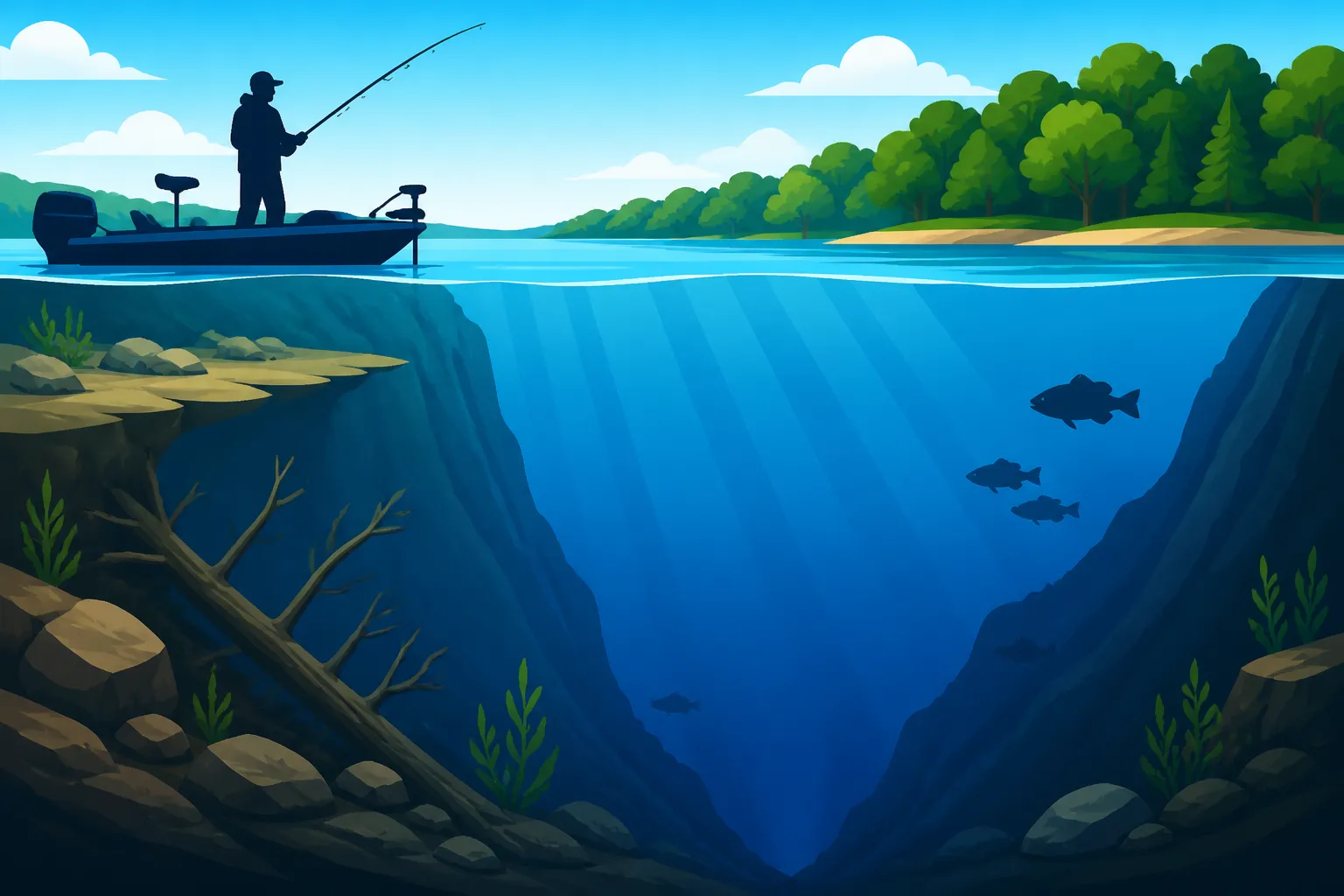
While the average is around 20-25 feet, the maximum depth in Alum Creek Lake plunges to approximately 60-70 feet. These deep pockets are primarily found near the dam, particularly in the old creek channel that runs through that section of the lake. These deeper basins are crucial fish-holding areas, especially during periods of extreme weather, like the scorching heat of summer or the biting cold of winter.
These deep zones offer thermal refuge and stable conditions when the shallower waters become uncomfortable for fish. You'll often find schools of walleye, saugeye, and even large muskie suspended in or patrolling the edges of these deep channels. The transition points, where the old creek channel meets humps, points, or submerged timber, are particularly productive. These underwater highways concentrate baitfish, which in turn attracts predators. If you're new to exploring these depths, considering a local guide found on a platform like FishingBooker can give you an invaluable head start, as they'll have intimate knowledge of these specific deep-water hotspots.
To give you a better idea of how Alum Creek compares to some other notable Ohio reservoirs in terms of depth, here's a quick overview:
| Lake Name | County | Primary Water Source | Average Depth (Approx.) | Maximum Depth (Approx.) | Key Features Related to Depth |
|---|---|---|---|---|---|
| Alum Creek Lake | Delaware | Alum Creek | 20-25 feet | 60-70 feet | Old creek channels, flooded timber, steep drops near dam |
| Hoover Reservoir | Delaware | Big Walnut Creek | 15-20 feet | 35-40 feet | Submerged stumps, rocky ledges, open water |
| Caesar Creek Lake | Warren | Caesar Creek | 20-25 feet | 100-110 feet | Deepest lake in SW Ohio, clear water, steep cliffs |
| Mosquito Creek Lake | Trumbull | Mosquito Creek | 6-10 feet | 25-30 feet | Very shallow, extensive stumps, marshy areas |
| Lake Erie (Ohio) | Various | Great Lakes system | 25-30 feet | 210 feet (Eastern Basin) | Varies greatly by basin, deep shipping channels, reefs |
As you can see, Alum Creek sits comfortably in the middle range for depth among Ohio's larger inland reservoirs, offering a good balance of shallow and deep water opportunities.
How Alum Creek's Depth Influences Fishing Opportunities
The diverse depths of Alum Creek Lake aren't just numbers on a map; they are the fundamental drivers of fish behavior and, consequently, how you should approach your fishing.
Seasonal Depth Movements of Fish
Fish are creatures of comfort, and their "comfort zone" often comes down to water temperature and available oxygen, both of which are heavily influenced by depth. Understanding these seasonal movements is crucial for consistent success.
- Spring: As ice recedes and water temperatures slowly climb, fish like largemouth and smallmouth bass, crappie, and walleye begin to move shallower. They're seeking warmer water for spawning and feeding on baitfish that are also moving into the shallows. You'll find them in bays, coves, and along shallow points, often in less than 15 feet of water, sometimes as shallow as 2-5 feet. They use the sun-warmed dark bottoms and submerged cover. This is a prime time for sight-fishing for bedding bass or targeting crappie suspended around flooded timber.
- Summer: When the Ohio sun beats down, surface waters can become quite warm, and oxygen levels can drop in the very shallowest areas. Many species, especially walleye, saugeye, and larger bass, will retreat to deeper water to find cooler, more oxygenated conditions. They might hold on humps, ledges, or along the deeper creek channels in 20-40 feet of water. Muskie, while often found in shallower cover, will also use deeper structure and open water, frequently suspending over baitfish schools in 25-35 feet. However, don't write off the shallows entirely; early mornings and late evenings can still bring active feeding fish into shallower depths, especially around dense cover. For a more comprehensive look at "Best Summer Fishing Techniques in Ohio", you'll find plenty of valuable tips.
- Fall: As temperatures begin to cool, fish become highly active, often referred to as the "fall feed." They move back into shallower to mid-depth ranges, aggressively feeding to build up fat reserves for winter. Depths of 10-25 feet become key, with fish chasing baitfish schools that are pushed towards shorelines or concentrated over main lake points. Muskie can be particularly active in shallower waters during this period.
- Winter/Ice Fishing: Once ice forms, fish activity generally slows, but they still need to feed. Many species, particularly walleye and crappie, will gravitate towards the deeper basins and old creek channels. Here, they seek stable water temperatures just above freezing. For ice fishing, targeting the deepest holes, main lake points that drop into deep water, and channel edges in 20-50 feet can be very productive. Safety on the ice is paramount, but for those who brave it, the deeper zones offer consistent action for certain species.
Fishing Techniques Tailored to Depth
Matching your fishing technique to the depth you're targeting is non-negotiable at Alum Creek. Trying to catch deep-water walleye with a shallow crankbait is a recipe for frustration.
- Shallow Water (0-15 feet): For bass and crappie in spring and fall, techniques like flipping jigs or Texas-rigged plastics into flooded timber, casting spinnerbaits or shallow crankbaits along weed lines, or using slip bobbers with live minnows for crappie are highly effective. Topwater lures can be thrilling during low light conditions. If you're targeting bass specifically, knowing the "Best Ohio Lakes for Bass Fishing" can help inform your strategy across different bodies of water.
- Mid-Depths (15-30 feet): This is a versatile range. Deep-diving crankbaits that reach these depths are excellent for covering water and finding active walleye or bass. Jigging spoons, blade baits, or heavy Ned Rigs can be worked along ledges and humps for smallmouth and saugeye. For muskie, larger bucktails, glide baits, or soft plastics can be cast along breaks or retrieved over submerged structures.
- Deep Water (30+ feet): When fish retreat to these depths, especially in summer or winter, you'll need specialized approaches. Vertical jigging with heavy spoons or blade baits is effective for walleye and saugeye. Drop-shot rigs allow you to present a bait precisely at a specific depth off the bottom. Trolling with downriggers or leadcore line with deep-diving crankbaits or crawler harnesses can reach fish suspended in the open water of the deep basins. This is often where you'll find the biggest walleye and saugeye. For a full breakdown of "Ohio Walleye Fishing Guide" and its associated techniques, check out our dedicated article.
Understanding Structure and Contour
Fish don't just randomly swim at certain depths; they relate to structure at those depths. In Alum Creek, this means understanding the remnants of the pre-impoundment landscape.
- Old Creek Channels: These are highways for fish. They often hold baitfish and provide a natural travel route, especially in the deeper southern sections. Fishing the edges of these channels, where the depth changes abruptly, is often more productive than fishing directly in the deepest part.
- Flooded Timber: Particularly prevalent in the northern and central parts of the lake, these standing trees offer incredible cover for bass, crappie, and muskie. The depth of the timber can vary wildly, from just a few feet to over 20 feet. Fish will hold tight to these vertical structures.
- Humps and Points: Submerged humps (underwater hills) and points extending from shore into deeper water are classic fish magnets. Fish will stage on these structures, especially during feeding periods. The depth at which fish hold on these features will change seasonally.
- Ledges and Drop-offs: Any abrupt change in depth creates a "fish highway." Ledges where a flat drops sharply into a channel or basin are prime locations, as fish can quickly move up and down the water column to feed or retreat.
Familiarizing yourself with a good contour map of Alum Creek Lake, whether on your boat's electronics or a mobile app, is invaluable. It helps you identify these crucial underwater features that dictate where fish will be found at different depths. For serious anglers looking to hire a guide who truly understands these nuances, FishingBooker offers a platform to connect with local experts specializing in Alum Creek's unique features.
Navigating Alum Creek's Varied Depths for Success
Having a theoretical understanding of Alum Creek's depth is one thing; putting it into practice on the water is another. Modern technology and thoughtful preparation can make all the difference.
Using Sonar and Mapping for Depth Intelligence
In today's fishing world, electronics are no longer a luxury, but a necessity, especially on a lake with such varied depths as Alum Creek.
- Fish Finders (Sonar): A quality fish finder allows you to "see" the bottom contour, identify drop-offs, humps, and the old creek channel. More importantly, it helps you locate schools of baitfish and target species in the water column. You can see if fish are holding tight to the bottom, suspending at a specific depth, or relating to submerged cover. Learning "Reading Ohio Fish Finders and Electronics" is a skill that will dramatically improve your success on any body of water, including Alum Creek.
- GPS and Mapping (Chartplotters): Combining sonar with GPS mapping on a chartplotter is a game-changer. You can mark waypoints on productive spots, follow contour lines, and understand exactly where you are in relation to underwater structure. Many modern units come pre-loaded with detailed lake maps, or you can purchase aftermarket chips that provide incredibly accurate bathymetric data for lakes like Alum Creek. This allows you to identify those 60-70 foot deep holes, trace the old riverbed, and navigate flooded timber with confidence.
- Side Imaging and Down Imaging: These advanced sonar technologies give you a photographic-like view of the underwater world to the sides and directly below your boat. This is incredibly useful for finding subtle depth changes, isolated pieces of cover like a lone stump, or even schools of fish holding off to the side of your boat that traditional 2D sonar might miss.
Investing in and learning to use these tools effectively will pay dividends, transforming your fishing from guesswork to precision.
Safety Considerations in Deep Water
Fishing deep water isn't just about finding fish; it's also about staying safe, especially on a large reservoir like Alum Creek.
- Boating Safety: Deeper sections of Alum Creek, particularly in the wider, more open areas near the dam, can be subject to strong winds, leading to significant waves. Always check the weather forecast before heading out. Ensure your boat is properly equipped with all required safety gear, including life jackets for everyone on board. If you're navigating the old creek channels, be mindful of submerged timber that can be present even in deeper areas, though it's less dense than in the shallow northern regions.
- Cold Water Hazards: While not as deep as Lake Erie, the 60-70 foot depths of Alum Creek can hold very cold water, even in summer. If someone were to fall overboard in these conditions, hypothermia can set in quickly. This is especially true during spring and fall, and critical during winter ice fishing. Always dress in layers, have dry clothes readily available, and use the buddy system. For specific insights into "Ohio Ice Fishing Guide", our guide offers essential safety information.
- Anchoring and Mooring: When fishing deeper water, especially in current (which can be present in the old creek channels after heavy rains), make sure you have an adequate anchor system. A deeper water anchor will need more rode (rope or chain) to ensure it holds properly. Never anchor from the stern of your boat in moving water, as this can lead to swamping.
Being prepared and respecting the power of the water, regardless of depth, is key to a safe and enjoyable fishing trip. If you're ever in doubt about navigating the lake or fishing certain depths, consider a guided trip with a seasoned captain. Many experienced Alum Creek guides list their services on platforms like FishingBooker, providing an excellent way to learn the ropes safely and efficiently.
Disclaimer
Please note that fishing regulations, conditions, and fish populations can change. Always consult the latest Ohio Department of Natural Resources (ODNR) fishing regulations before heading out. This guide provides general information and recommendations. Tight lines and stay safe out there!