Best Rig for Yellow Perch on Lake Erie
There's nothing quite like the thrill of yellow perch fishing on Lake Erie, but if you've spent hours out on the water, watching other boats pull in fish while your lines come up empty, you know the frustration. It's easy to second-guess your bait, your spot, or even your luck, but often, the secret to a successful perch trip lies in your rig. This comprehensive guide will strip away the guesswork, diving deep into the most effective rigs for targeting yellow perch on Lake Erie, ensuring your next outing is filled with consistent bites and a cooler full of delicious fillets.
Why Your Rig Choice is Paramount for Lake Erie Yellow Perch
When it comes to yellow perch in Lake Erie, they aren't just swimming around waiting to bite anything. These fish are masters of their environment, often schooling tightly and feeding selectively, especially when the water gets clear or pressure is high. Understanding their behavior is crucial, and that understanding directly translates into how you should rig your lines. Many anglers get caught up in finding the "perfect spot," but even the best location won't produce if your presentation isn't on point.
The Behavior and Habitat of Lake Erie Yellow Perch
Lake Erie yellow perch are schooling fish, meaning they typically move and feed in groups. They are primarily bottom dwellers, preferring cooler, deeper waters during warmer months and moving shallower during spring and fall. Their diet consists largely of insect larvae, small crustaceans, and tiny baitfish, like emerald shiners. Because they often feed close to the bottom, your rig needs to get your bait down to them efficiently and present it naturally. These fish can be surprisingly finicky, and a presentation that doesn't mimic their natural prey or is too clumsy can easily be ignored. For more detailed insights into these fascinating fish, you might want to check out our guide on Yellow Perch Identification and Habits.
The Impact of Water Conditions on Rig Performance
Lake Erie's conditions can change on a dime. Wind, currents, and even boat traffic can affect how your bait behaves in the water. A heavy current, for example, might make a lighter rig drift too far off the bottom or tangle easily. Conversely, in calm waters, a rig that's too heavy might seem unnatural, plunking down and spooking the school. Your rig needs to be versatile enough to handle varying conditions or, at the very least, you need to know which rig to swap to when the lake decides to throw you a curveball. The right rig ensures your bait stays in the strike zone, regardless of what Mother Erie is doing around you.
The Undisputed Champion: The Perch Spreader Rig
When you ask seasoned Lake Erie perch anglers about their go-to rig, nine times out of ten, they'll tell you about the perch spreader rig. This isn't just a preference; it's a testament to its proven effectiveness in consistently putting yellow perch in the boat. It's designed specifically for these schooling, bottom-feeding fish and truly shines in Lake Erie's vast, often featureless, expanses where perch might be spread out.
Anatomy of a Classic Perch Spreader Rig
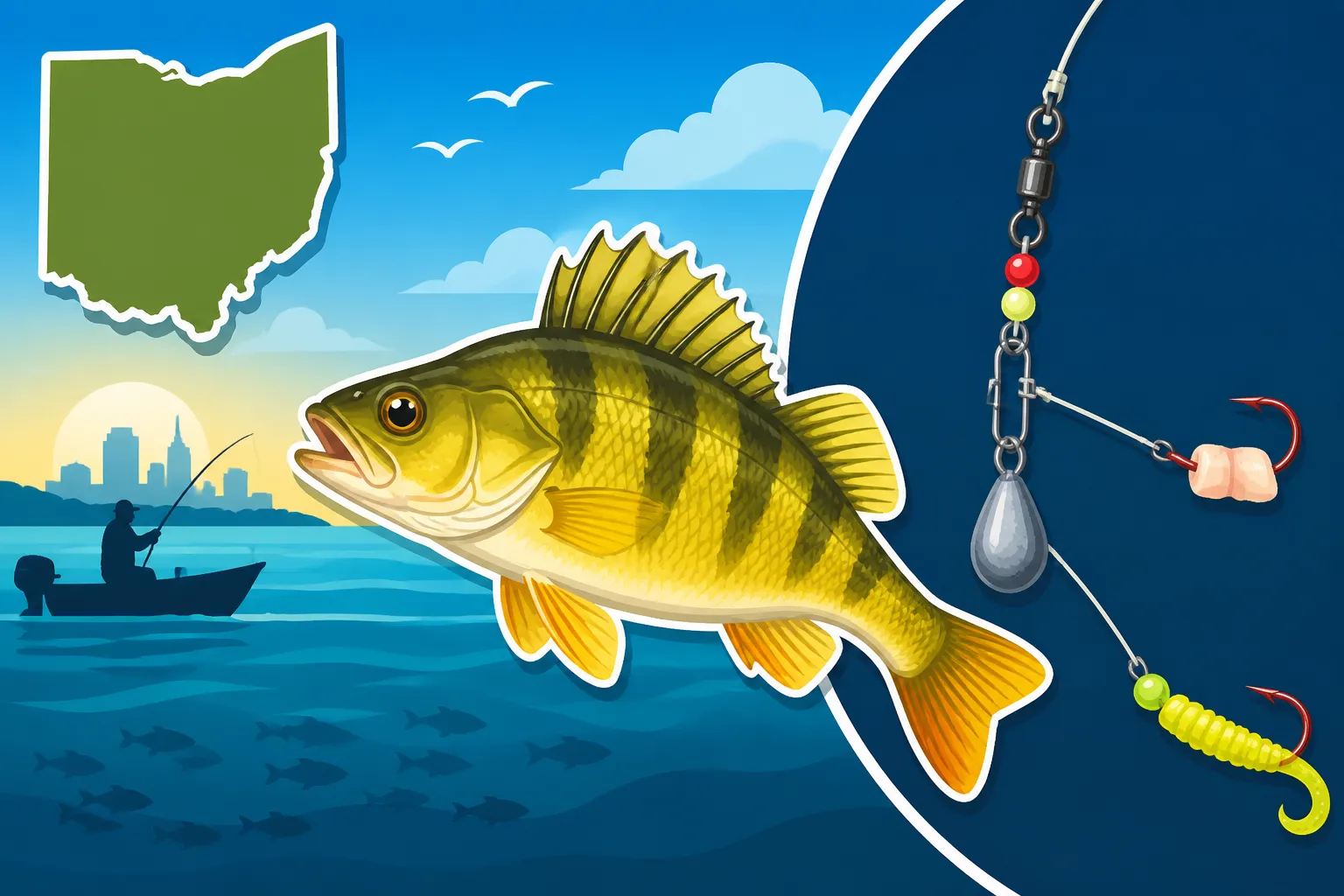
The perch spreader rig is deceptively simple yet incredibly effective. It typically consists of a main line tied to a two-arm wire spreader (sometimes called a "perch tree"). Each arm of the spreader has a short leader, usually 6-12 inches long, ending in a small hook. Below the spreader, a weight (often a bell sinker or pyramid sinker) is attached, heavy enough to get your rig to the bottom and keep it there.
Here's a breakdown of the key components:
- The Spreader: This is the heart of the rig. It's usually a stiff wire with two arms extending out, keeping your baited hooks separated to prevent tangles. You can find these readily available at bait shops around Lake Erie, or online through retailers like Amazon.
- Leaders: Short lengths of monofilament or fluorocarbon line (4-8 lb test is common) are tied to each arm. Keeping them relatively short helps prevent tangles while still allowing the bait to flutter enticingly.
- Hooks: Small, sharp hooks are crucial. Size 6 or 8 Aberdeen or Kahle hooks are popular choices. Aberdeen hooks, with their thin wire, are less likely to tear a perch's delicate mouth and are easy to remove.
- Sinker: A bell or pyramid sinker, typically between 1/2 ounce and 2 ounces, depending on depth and current. You want just enough weight to hold bottom without being so heavy that you can't feel subtle bites.
Tying and Deploying Your Perch Spreader Rig
Tying this rig is straightforward, which is another reason for its popularity. You simply tie your main line (or a snap swivel if you prefer quick changes) to the loop at the top of the spreader. Then, attach your leaders with hooks to the arms. Finally, clip your chosen sinker to the bottom loop. It’s that easy.
When it comes to deployment, drift fishing is the name of the game for Lake Erie yellow perch. You’ll motor upwind or upcurrent of a suspected perch school, then cut the engine and let the boat slowly drift. As you drift, keep your rig near the bottom. The spreader keeps your two baits suspended just above the lakebed, dancing enticingly as the boat moves. This covers a lot of water and allows you to present multiple baits simultaneously, increasing your chances of finding and enticing a school. Maintaining constant contact with the bottom, occasionally lifting and dropping your weight, is key. If you're struggling to keep your minnows lively on a hot day, our guide on Best Way to Keep Minnows Alive While Perch Fishing might offer some great tips.
Alternative Rigs for Varied Perch Fishing Scenarios
While the perch spreader rig is king, there are other effective rigs that shine in specific situations or cater to different angling styles. Having a few alternative setups in your tackle box means you're prepared for whatever Lake Erie throws your way.
The Basic Drop Shot Rig for Finesse Fishing
The drop shot rig isn't just for bass; it can be incredibly effective for finicky yellow perch, especially in clearer water or when they're less aggressive. This rig excels at presenting a bait precisely at a specific depth, which can be a game-changer when perch are suspended slightly off the bottom or holding tight to structure.
The drop shot features a hook tied directly to your main line, leaving a long tag end (12-36 inches) where a specialized drop shot weight is attached. The hook stands out horizontally from the line, allowing your bait (often a small soft plastic minnow imitation or a live minnow nose-hooked) to hover naturally. You can gently shake your rod tip to impart subtle action without moving the weight from the bottom. This finesse approach can often coax bites from perch that ignore more aggressive presentations. You can find a wide variety of drop shot weights and hooks on Amazon to experiment with.
Utilizing Crappie Rigs for Perch
It's no secret that crappie and yellow perch share similar habitat preferences and feeding habits, especially when it comes to panfish and crappie daily limits. Many rigs designed for crappie fishing translate perfectly to perch. One common crappie rig is a simple two-hook setup: two hooks tied in series (sometimes using snelled hooks) with a sinker at the bottom. This is essentially a simplified version of the perch spreader, often used for more static fishing like anchoring over a known perch hot spot or fishing from a pier.
Another effective crappie-style rig that works for perch is a slip bobber setup. This is particularly useful when perch are suspended off the bottom, or you're fishing near weed lines or other submerged cover. The slip bobber allows you to cast your rig and then have your bait descend to a predetermined depth, keeping it suspended precisely where the fish are. While not ideal for covering vast stretches of water via drifting, it's excellent for pinpoint presentations.
| Rig Type | Best Use Cases | Key Components | Pros | Cons |
|---|---|---|---|---|
| Perch Spreader | Drift fishing, covering wide areas, bottom feeding | Wire spreader, 2 short leaders, small hooks (size 6-8), bell/pyramid sinker | Highly effective, prevents tangles, covers ground | Can snag in heavy cover, less "finesse" |
| Drop Shot | Finesse fishing, clear water, suspended perch | Main line, hook tied direct, long tag end, drop shot weight | Precise depth control, subtle presentation | More prone to tangles if not tied correctly, single bait |
| Crappie Rig | Anchored fishing, static presentations, suspended | 2 hooks in series (or slip bobber), bottom sinker | Simple, versatile, good for known spots | Can tangle more easily than a spreader, less active presentation |
Maximizing Your Yellow Perch Haul: Tips Beyond the Rig
Having the right rig is a huge step, but it's just one piece of the puzzle. To truly excel at Lake Erie yellow perch fishing, you need to consider other factors, from your bait to your technique and understanding the lake itself. A well-tied rig with the wrong bait or in the wrong spot won't do you much good.
The Importance of Bait Selection and Presentation
Yellow perch are primarily visual feeders, but scent and movement play a significant role. Live bait is almost always king for perch. Emerald shiners, small fathead minnows, or even pieces of nightcrawler are highly effective. The key is to keep your bait lively and present it naturally. A wriggling minnow on a perch spreader rig is irresistible. When considering bait, remember that the goal is to mimic what they naturally eat.
Presentation isn't just about the rig; it's about how you work it. When drift fishing, occasionally lifting and dropping your rod tip can impart a subtle jigging action to your bait, making it appear injured or more active, which can trigger a strike. If you're not getting bites, try varying your retrieve speed or the amount of slack in your line. Sometimes, a subtle change is all it takes to turn a slow day into a hot bite. For specific insights into the best times to fish, our article on Best Month to Catch Yellow Perch on Lake Erie offers great seasonal advice.
Locating Perch and Reading Lake Erie
You can have the best rig in the world, but if you're not where the fish are, you won't catch anything. Yellow perch on Lake Erie often congregate in specific areas, influenced by factors like water temperature, depth, and available forage. Look for areas with slight changes in bottom contour, submerged structures, or even schools of baitfish indicated on your fish finder. Drifting over these areas is often the most effective way to find them.
Pay attention to what other successful anglers are doing. If you see boats consistently pulling in fish in a particular depth or area, it’s a good clue. Also, understanding the lake's broader patterns, like Lake Erie Yellow Perch Zone Limits and how they relate to the seasons, will help you predict where the fish might be. The beauty of Lake Erie is its vastness, but that also means you need to be strategic in your search. Don't be afraid to move if you're not finding fish; perch are often found in tight schools, so once you find one, you'll likely find many! For general information on navigating Lake Erie's angling opportunities, our Lake Erie Fishing Guide for Ohio Anglers is an excellent resource.
Gear and Tackle Considerations
Beyond the rig itself, having the right rod, reel, and line can significantly enhance your perch fishing experience. A sensitive rod with a fast action will allow you to feel the often subtle bites of yellow perch. A light to medium-light spinning rod, paired with a small spinning reel spooled with 6-10 lb monofilament or fluorocarbon (or even braided line with a fluorocarbon leader for added sensitivity), is ideal. Thinner lines offer less resistance in the water, allowing for a more natural bait presentation and easier detection of bites.
Don't forget the small details, like having a good pair of pliers for hook removal and a cooler full of ice to keep your catch fresh. Organization is key in a small boat or while shore fishing, so consider a tackle box or bag that keeps your various hooks, weights, and pre-tied leaders easily accessible. Many anglers find durable, affordable tackle organizers on Amazon. And, of course, always be mindful of Ohio Fishing Regulations Every Angler Should Know before heading out.
Disclaimer
This article is for general informational purposes only and does not constitute professional advice. Laws, prices and regulations vary by location and change over time. Consult a qualified professional for guidance on your specific situation.