How to Fish for Perch Near the Bottom
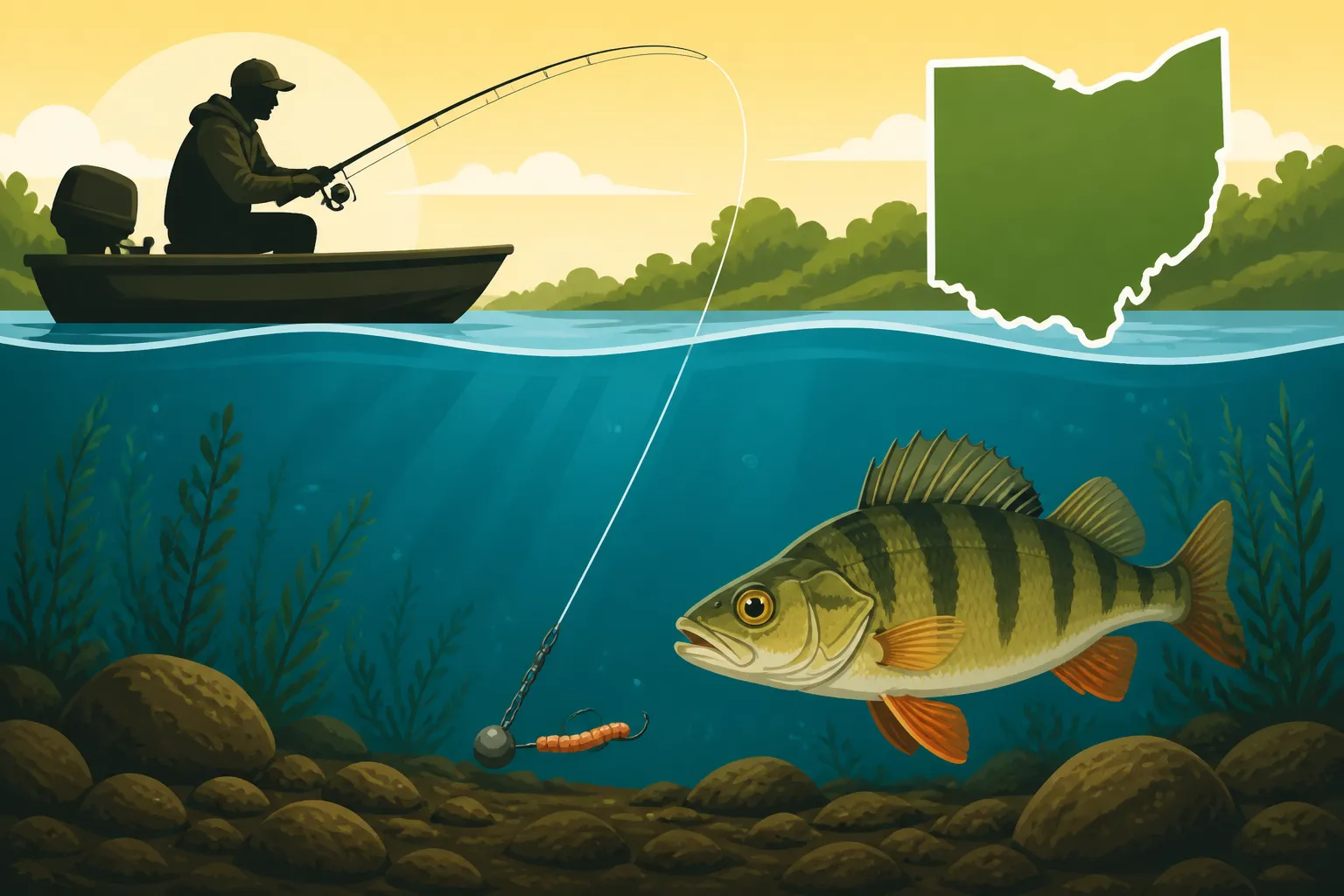
There's nothing quite as frustrating as heading out for a day of perch fishing, only to find the schools aren't suspended where you expect them. Sometimes, those tasty yellow perch decide to hug the bottom, making them a challenge to locate and entice. This guide is all about equipping you with the knowledge and techniques to effectively fish for perch near the bottom, ensuring you can still fill your cooler even when they're playing hard to get down deep in Ohio's lakes and reservoirs.
Understanding Yellow Perch Behavior Near the Bottom
Yellow perch are fascinating creatures, and their behavior can change dramatically based on a number of environmental factors. While often thought of as schooling fish that can be found suspended at various depths, they frequently retreat to the bottom, especially when conditions aren't ideal higher in the water column. Understanding why they do this is the first step to successfully catching them.
Why Perch Go Deep
Think about it from a perch's perspective. There are several compelling reasons for them to seek the comfort and relative safety of the lakebed. One major factor is temperature. During colder months, or even in deeper sections during summer, the bottom water can offer a more stable and sometimes warmer (in winter) or cooler (in summer) environment than the fluctuating temperatures above. If the surface water is too warm, they'll often drop down to escape the heat, just like we'd head for the shade on a hot day.
Another big driver is light penetration. Perch are sight feeders, but they can be sensitive to bright sunlight, especially in clear water. When the sun is high and bright, they might move deeper to find dimmer conditions where they feel more secure and less visible to predators from above. Conversely, in low light conditions like dawn, dusk, or overcast days, they might be more willing to move shallower. Predation is also a huge concern. Larger fish like walleye and pike love to snack on perch. Staying close to structure on the bottom provides them with cover, making them harder targets for bigger hungry fish patrolling above. Finally, food sources can also dictate their depth. Many small invertebrates and larval insects, a key part of the perch diet, reside on or near the bottom, drawing the perch down to them.
Ideal Bottom Structures for Perch
When perch are on the bottom, they're not usually just scattered randomly across a featureless plain. They're often associated with specific types of structure that provide food, cover, or both. Think about what would attract baitfish and invertebrates – those are often the same things that will draw in the perch.
Weed beds and submerged vegetation are prime real estate. Even if the weeds aren't super tall, the bases of weed lines provide incredible cover and harbor countless small organisms that perch feast on. Look for edges where the weeds meet open water or where different types of weeds merge. Rock piles, rubble, and gravel beds are also fantastic. These irregular surfaces break up current, create ambush points, and are home to crayfish, insect larvae, and other bottom-dwelling prey. Think about how many times you've snagged a hook on a hidden rock pile – that's often where the fish are hiding!
Finally, humps, ledges, and drop-offs are classic perch haunts. A hump rising from a flat bottom creates a distinct feature that concentrates baitfish and offers perch a strategic position to ambush prey. Ledges and drop-offs provide easy access to different depths, allowing perch to move up and down with changing conditions without expending much energy. Imagine a sudden depth change from 15 to 25 feet; perch will often sit right on that edge, waiting for food to drift by. Knowing these preferred habitats is key to success when you're targeting perch near the bottom.
Essential Gear for Bottom Perch Fishing
Having the right tackle can make all the difference between a frustrating day and a successful one when those perch are glued to the lakebed. You're looking for sensitivity to detect those often subtle bites and enough backbone to handle a good-sized perch, or even a bonus walleye or bass that might hit your offering.
Rod, Reel, and Line Selection
For bottom perch fishing, light to medium-light action spinning rods are generally your best friend. A rod in the 6 to 7-foot range with a fast or extra-fast tip will give you the sensitivity to feel the lightest tap, yet enough power to set the hook and fight a feisty perch. Carbon fiber blanks are excellent for transmitting those subtle vibrations from the bottom right to your hand. You don't need a heavy-duty bass rod here; finesse is the name of the game.
Pair your rod with a small, lightweight spinning reel (think 1000 to 2500 series). A smooth drag system is important, as perch can make surprisingly strong runs, especially bigger ones. You want a reel that balances well with your rod, preventing fatigue during a long day of fishing.
When it comes to fishing line, many anglers prefer a thin, low-stretch line for maximum feel. Braided line in the 4 to 8-pound test range is fantastic because it has almost no stretch, meaning every little bump and bite is telegraphed directly to your rod tip. However, braid can be more visible in clear water, so many anglers will tie on a 3 to 6-foot leader of 4 to 8-pound fluorocarbon. Fluorocarbon is nearly invisible underwater and offers excellent abrasion resistance against those rocky bottoms. Monofilament line in a similar pound test can also work, especially if you prefer its stretch for a bit more forgiveness, but you'll sacrifice some sensitivity. Choosing the right fishing line is crucial for any successful outing.
Terminal Tackle Must-Haves
Now let's talk about the business end of your line – the terminal tackle. These small components are critical for presenting your bait effectively and securing your catch.
First up are weights or sinkers. You'll need an assortment of sizes to match different depths, currents, and wind conditions. Split shot, bell sinkers, and egg sinkers are all common choices. For finesse presentations, particularly with lighter lines, small bullet weights or drop-shot weights are ideal. The goal is to use just enough weight to get your bait to the bottom and keep it there, but not so much that it spooks the fish or dulls your feel. You might find a good selection of various sinker styles on Amazon if you're looking to stock up before your next trip.
Next, hooks. Small, sharp hooks are essential for perch. Octopus hooks in sizes #6 to #10 are very popular because their design allows for a good hook-set even with light bites. J-hooks can also work, especially if you're using live bait like minnows. Always ensure your hooks are sharp; a dull hook will lead to missed bites, which is just heartbreaking when you know the fish are down there.
Finally, a few swivels and snaps can be incredibly useful. Barrel swivels help prevent line twist, especially when using rigs that might spin in the water. A small snap swivel can make it quicker and easier to change out your weights or even your entire rig, saving you valuable fishing time. Don't underestimate the importance of these small pieces of hardware for a smooth and efficient fishing experience.
Tried-and-True Bottom Rigs for Yellow Perch
When perch are near the bottom, you need rigs specifically designed to present your bait right in their strike zone without getting constantly snagged. These are some of the most effective setups.
The Classic Carolina Rig (or "Slip Sinker" Rig)
The Carolina rig, sometimes called a slip-sinker rig, is a perennial favorite for bottom fishing, and it’s not just for bass! It excels at presenting bait naturally on the bottom while keeping your weight separate, which helps with sensitivity and reduces snags.
Here’s how to set it up:
- Main Line: Start by sliding a slip sinker (an egg sinker or bullet weight works well) onto your main line. The weight can vary, but typically 1/8 to 1/2 ounce is good for perch, depending on depth and current.
- Bead (Optional but Recommended): Next, slide a small plastic or glass bead onto your line. This protects your knot from the sinker rubbing against it.
- Swivel: Tie on a small barrel swivel to the end of your main line. This is a critical component as it separates your weight from your hook and allows the bait to move freely.
- Leader: To the other end of the swivel, tie a fluorocarbon leader. The length can vary, but generally 12 to 36 inches is a good starting point. A longer leader allows the bait to drift more naturally, while a shorter one keeps it closer to the weight.
- Hook: Finally, tie your perch hook (size #6-#10 octopus or J-hook) to the end of the leader.
How it works: When cast, the weight settles on the bottom, but your bait on the leader can float or drift just above it, making it look very natural. The slip sinker means you can feel a bite without the fish feeling the resistance of the weight immediately, giving them more time to commit. This rig is fantastic for fishing over relatively clean bottoms or areas with scattered cover, as the separated weight helps reduce snags. It's a reliable choice for targeting perch hunkered down in their feeding zones.
The Drop Shot Rig
The drop shot rig is a finesse technique that’s become incredibly popular, and for good reason: it’s incredibly effective for presenting a bait at a precise depth, which makes it perfect for targeting perch that are slightly off the bottom but still hugging structure.
Setting it up:
- Main Line: Tie your hook directly to your main line using a Palomar knot, but leave a long tag end after tying the knot.
- Hook Orientation: After tying the knot, push the tag end back through the eye of the hook from the point side. This makes the hook stand out horizontally, which is ideal for presentation.
- Weight: To the very end of that long tag end, attach a drop shot weight. These weights are designed with a line clip or swivel eye that allows you to quickly change depths by sliding the weight up or down the tag end without re-tying.
Advantages: The beauty of the drop shot is its versatility. You can hold your bait perfectly still just above the bottom, shake it subtly, or drag it slowly. The weight stays on the bottom, keeping your bait in the strike zone, while the hook and bait are suspended. This is excellent for spots with snaggy bottoms, as your bait is usually above the worst of the cover. It’s also incredibly sensitive, allowing you to feel even the slightest nibble. If you know the perch are holding a foot or two off a specific piece of structure, the drop shot lets you place your bait right in front of them with surgical precision.
The Perch Spreader Rig (or "Crappie Rig")
If you want to maximize your chances by presenting multiple baits at once, or you're just looking for a simple, effective bottom rig, the perch spreader rig (often interchangeably called a crappie rig) is a great option. These rigs are designed to fish two hooks at different levels.
Setting it up:
- Pre-made or DIY: You can buy pre-tied perch spreader rigs which often feature two wire arms that spread out, each with a hook, and a loop at the top for your main line and a clip at the bottom for your weight.
- DIY: If making your own, tie a loop in your main line, then tie two dropper loops (small loops off the main line) above it, spaced about 6-12 inches apart. Attach small hooks to these dropper loops. At the very bottom of your main line, tie a snap swivel for your weight.
Advantages: The main advantage is that you can present two different baits or two of the same bait at slightly different depths simultaneously. This helps you figure out what the perch are biting on and at exactly what height above the bottom. The spreader arms keep your lines from tangling, which is a common issue with multi-hook rigs. They’re excellent for drift fishing or vertical jigging, allowing you to cover more water and increase your chances of a bite. These rigs are especially popular for those situations where you know there's a good school of perch, and you want to get a few into the boat quickly.
The Simple Live Bait Rig
Sometimes, the simplest approach is the most effective. When targeting bottom-dwelling perch, a basic live bait rig can be incredibly deadly, especially if the fish are finicky or the water is clear. This rig focuses on natural presentation.
Setting it up:
- Main Line: Tie a small hook (like a #8 or #10 Aberdeen or octopus hook) directly to your main line.
- Weight: About 6-12 inches above your hook, pinch on a few small split shot weights. Use just enough weight to get your bait to the bottom and keep it there in the current.
Advantages: This rig offers minimal resistance to the fish. When a perch picks up your bait, they feel very little weight, making them more likely to hold onto it longer. It's incredibly natural, allowing your live bait (like a minnow or worm) to swim or squirm freely, attracting attention. This is a fantastic rig for casting out, letting it settle, and then retrieving very slowly or allowing it to drift with the boat. It works best in areas with clean bottoms, as the exposed hook and minimal weight can be prone to snags in heavy cover. Don't overlook the power of simplicity when the perch are being shy.
Best Baits and Lures for Bottom-Dwelling Perch
When perch are focused on the bottom, what you put on your hook matters immensely. They're often keyed in on specific food sources found down there, so matching the hatch (or at least providing something irresistible) is key.
Live Bait Powerhouses
It's hard to beat live bait when targeting perch, especially those near the bottom. The natural movement and scent are often irresistible.
- Minnows: Small shiner or fathead minnows are perhaps the number one choice for yellow perch. Hook them lightly through the lips or just behind the dorsal fin (if using a larger minnow for a drop-shot or carolina rig) to keep them lively. Their natural swimming action is a huge draw. If you're fishing with a perch spreader rig, a minnow on each hook can double your chances!
- Worms: Nightcrawlers or red worms are classic panfish baits. You don't need a whole nightcrawler; a piece about 1-2 inches long threaded onto a small hook is often perfect. The scent trail they put out is incredibly attractive, and their wiggling action mimics many bottom-dwelling invertebrates.
- Maggots and Wax Worms: These small larvae are absolute perch candy, especially in colder water or when perch are finicky. Their small size makes them perfect for smaller hooks, and they stay on the hook well. A cluster of 2-3 maggots or a single wax worm is often all it takes to get a bite. They're particularly effective on those subtle presentations used with a drop-shot rig.
Always try to keep your live bait fresh and lively. A lively minnow or a wiggling worm will always outperform a dead or sluggish one. You can find convenient live bait containers, often equipped with aeration, on Amazon to keep your bait in top condition throughout your fishing trip.
Artificial Options for the Bottom
While live bait is often king, artificial lures can be incredibly effective, especially if you want to cover more water or prefer not to deal with live bait. The key is to choose small lures that mimic bottom-dwelling prey.
- Small Jigs: A lightweight jig head (1/16 to 1/8 ounce) tipped with a small soft plastic grub, tube, or curly tail is a perch killer. Colors like chartreuse, white, pumpkinseed, or motor oil are often very effective. The action comes from your rod tip, gently lifting and dropping the jig to mimic a feeding creature on the bottom. You can also tip these jigs with a small piece of live bait (like a wax worm or a minnow head) for added scent and appeal.
- Soft Plastics: Tiny soft plastic baits, often designed for crappie or panfish, work wonders for bottom perch. Think micro-grubs, small worms, or creature baits. Rig them on a tiny jig head or even on a drop-shot rig. The subtle action of these plastics, combined with their realistic profiles, can entice bites when other lures fail. The key is a slow, deliberate retrieve or subtle jigging motion to keep them in the strike zone.
- Spoons: Small jigging spoons (1/8 to 1/4 ounce) can also be effective, especially in deeper water where you need to get down quickly. Cast them out, let them sink to the bottom, and then lift and drop, letting them flutter back down. The flash and vibration can trigger aggressive strikes from curious perch. Silver, gold, or glow-in-the-dark spoons are popular choices. This technique is often more active and allows you to locate schools faster if they're moving.
Experiment with both live and artificial baits, and don't be afraid to combine them (e.g., a jig tipped with a minnow) to find what the perch are keying in on that particular day.
Techniques for Presenting Your Bait Effectively
Getting your bait to the bottom is one thing, but presenting it in a way that entices a bite from a wary perch is another entirely. Effective technique makes all the difference.
Drift Fishing and Anchoring Strategies
When targeting bottom-dwelling perch, your approach to boat control is paramount. You need to either stay on top of the school or systematically cover ground where they might be hiding.
Drift Fishing: This is an excellent method for covering large areas and finding scattered schools of perch. Instead of anchoring, you let your boat drift with the wind or current, dragging your bait along the bottom. This allows your bait to cover a lot of territory and present itself to more fish. To control your drift speed, you can use a drift sock (sea anchor) off the bow or stern. For example, if you're exploring a large flat on Hoover Reservoir, a slow drift with multiple lines (if regulations allow – always check the Ohio fishing regulations every angler should know) can quickly help you locate productive zones. With multiple lines out, each angler can experiment with different rigs, such as an Ohio River Sauger Regulations-style three-way rig, or baits until a pattern emerges.
Anchoring: Once you've located a productive area, perhaps through a drift, anchoring directly over it can be incredibly effective. This allows you to thoroughly work a specific spot, repeatedly dropping your bait into the strike zone. If you've found a small rock pile or a concentrated school on your fish finder, anchoring ensures you stay put. When anchoring, try to approach the spot quietly and position your boat so that your lines are vertical or slightly down-current from the structure you're targeting. Using two anchors (one off the bow, one off the stern) can help you orient your boat precisely, especially in windy conditions.
Subtle Jigging and Slack Line Detection
Perch bites, especially when they're cold or finicky on the bottom, can be incredibly subtle – often feeling like just a slight tap, a little extra weight, or even just the line going slack. This is where your sensitive rod and line really shine.
Subtle Jigging: When your bait is on the bottom, don't just let it sit there. Instead, engage in a gentle, rhythmic jigging motion. Lift your rod tip just a few inches, then slowly drop it back down, letting your bait flutter or settle back to the bottom. Sometimes, a tiny shake of the rod tip is all it takes to make a soft plastic or live minnow look irresistible. The idea is to mimic a struggling baitfish or an insect scurrying along the bottom. The cadence might change throughout the day, so experiment with faster or slower lifts, and shorter or longer pauses.
Slack Line Detection: This is a crucial skill for bottom perch fishing. Often, a perch won't give you a hard "thump." Instead, they might pick up your bait and swim towards you, creating slack in your line. If your line suddenly goes limp or behaves unnaturally, set the hook! It takes practice, but learning to "read" your line for these subtle changes is what separates good perch anglers from great ones. Keep a slight bend in your rod and watch your line where it enters the water for any twitch or movement. Remember, the best time to fish for perch near the bottom is often when they are less active and more prone to these light bites.
Chumming for Attraction
Chumming isn't just for saltwater fishing! It can be a highly effective tactic for attracting and concentrating yellow perch on the bottom, especially when they're scattered or the bite is slow.
How to Chum: The goal of chumming is to create an attractive scent and food trail that draws perch to your fishing area without feeding them so much that they get full. Common chumming materials include:
- Crushed minnows: Take a handful of minnows and crush them lightly or cut them into small pieces. The scent of distressed baitfish is a powerful attractant.
- Bread crumbs or oats: These create a cloud that slowly sinks, dispersing scent and fine food particles.
- Commercial chum mixes: Many tackle shops sell specially formulated chum for panfish.
Deployment: You can deploy chum in a few ways. You can simply toss small handfuls overboard periodically. Another effective method is to use a chum bag or a perforated can tied to a rope. Fill it with your chum, and lower it to the bottom near where you are fishing. This allows the scent and small particles to disperse slowly, creating a continuous feeding zone without overfeeding the fish. Be mindful of local regulations regarding chumming, and always chum responsibly, using biodegradable materials and avoiding excessive amounts that could negatively impact water quality. Learning how to chum for yellow perch can significantly increase your catch rate.
Reading the Water and Finding Those Bottom Perch
You can have the best gear and the perfect bait, but if you're not fishing where the perch are, you won't catch anything. Knowing how to read the water, both with and without electronics, is crucial for success.
Using Electronics (Fish Finders)
In today's fishing world, a good fish finder is an invaluable tool for locating bottom-dwelling perch. It takes a lot of the guesswork out of finding those hidden gems on the lakebed.
Interpreting Bottom Structure: Your fish finder isn't just for seeing fish; it's also for mapping the bottom. Look for changes in depth, contours, and bottom hardness. A good fish finder will show you hard bottoms (like rock or gravel) as a thicker, more intense return, while soft bottoms (like mud or silt) will appear thinner. Perch often relate to these changes. Humps, submerged points, ledges, and channels will be clearly visible. Spend time idling over an area, studying your screen to understand the topography beneath your boat. This is the foundation for finding where the fish might be holding.
Identifying Fish Signals: Once you understand the structure, look for the fish. Perch will often appear as arches or blobs on your screen, sometimes tightly schooled right on the bottom contour, or in small groups nestled into cover. If you see a large, dense cloud of baitfish, perch (and other predators) are likely nearby. Some advanced fish finders offer side imaging or down imaging, which give even clearer, photographic-like views of structure and fish to the sides and directly beneath your boat, making it easier to pinpoint specific rock piles or weed lines where perch might be hiding. Learning how to read a fish finder for suspended walleye or perch is a skill that will pay dividends.
Identifying Productive Areas Without Electronics
Not everyone has a fancy boat with state-of-the-art electronics, and that's perfectly fine! You can still find bottom-hugging perch by paying close attention to your surroundings and understanding common fish behavior.
Shoreline Clues: Look for clues on the shoreline that extend underwater. A rocky shoreline often means rocky bottom extends out into the lake. A point of land jutting out often means a submerged point or drop-off exists underwater. Areas where streams or rivers flow into the lake can deposit nutrients and create current breaks, which attract baitfish and, subsequently, perch. Even the type of vegetation on shore can sometimes give you a hint about what's growing beneath the surface.
Depth Changes and Current Breaks: If you're fishing from shore or a small boat without electronics, use a simple depth finder (even a weighted line with a marked float) to map out changes in depth. Cast into shallower water and slowly retrieve, noting when your weight hits deeper water. Look for eddies or slower water behind points or larger structures, as these "current breaks" are often holding areas for fish. Pay attention to changes in water color or current speed, which can indicate transitions in habitat. Remember that even small details, like the best shore fishing spots for Lake Erie perch, can lead to big catches. Observing your environment and trusting your instincts can often lead you to those hidden perch hotspots.
Here's a quick comparison of the bottom rigs we discussed:
| Rig Type | Best for | Key Advantage | Typical Bait/Lure | Snag Resistance |
|---|---|---|---|---|
| Carolina Rig | Covering ground, slightly snaggy bottoms | Bait moves naturally, less weight resistance | Live minnows, worms, soft plastics | Moderate |
| Drop Shot Rig | Precise depth presentation, very snaggy spots | Bait suspended above snags, high sensitivity | Small soft plastics, live maggots/wax worms | High |
| Perch Spreader Rig | Maximizing baits, finding fish quickly | Two baits at once, good for active schools | Live minnows, worms | Low-Moderate |
| Simple Live Bait Rig | Finicky fish, clear water, clean bottom | Most natural presentation, minimal resistance | Live minnows, worms, maggots, wax worms | Low |
Disclaimer
This article is for general informational purposes only and does not constitute professional advice. Laws, prices and regulations vary by location and change over time. Consult a qualified professional for guidance on your specific situation.