How to Fish a Spinnerbait in Muddy Water
There's nothing quite as frustrating as showing up at your favorite Ohio fishing spot, full of anticipation, only to find the water churned up and muddy. That beautiful clear water you dreamt of is now a murky mess, and it can feel like your chances of catching anything just evaporated. But don't despair! Muddy water doesn't mean you have to pack up and go home, especially if you know the magic a spinnerbait can work. This guide will walk you through exactly how to effectively fish a spinnerbait in those challenging, low-visibility conditions.
Understanding Why Muddy Water is a Challenge and an Opportunity
When the waters of your favorite lake or river, like perhaps the Scioto River after a heavy rain or a pond in a Columbus Metropark, turn muddy, it's easy to feel defeated. But it's crucial to understand that murky water isn't always a negative. In fact, it can present some fantastic opportunities for anglers who adapt their approach.
How Muddy Water Impacts Fish Behavior
Fish, especially predators like bass and pike, rely heavily on their eyesight to hunt. When the water turns muddy, their visibility drops dramatically, sometimes to just a few inches. This forces them to adjust their behavior. They often become less aggressive sight feeders and more reliant on their other senses: lateral line (which detects vibration), hearing, and smell.
Furthermore, fish tend to move to specific areas in muddy water. They might seek out shallower water where sunlight can penetrate more easily, providing slightly better visibility. They also hug tighter to cover like submerged logs, rock piles, and weed lines, using these structures as ambush points since they can’t see prey from a distance. The edges of current breaks, where murky water meets clearer water, can also be hotspots. Understanding these shifts in behavior is your first step to success.
The Unique Advantage of Spinnerbaits in Low Visibility
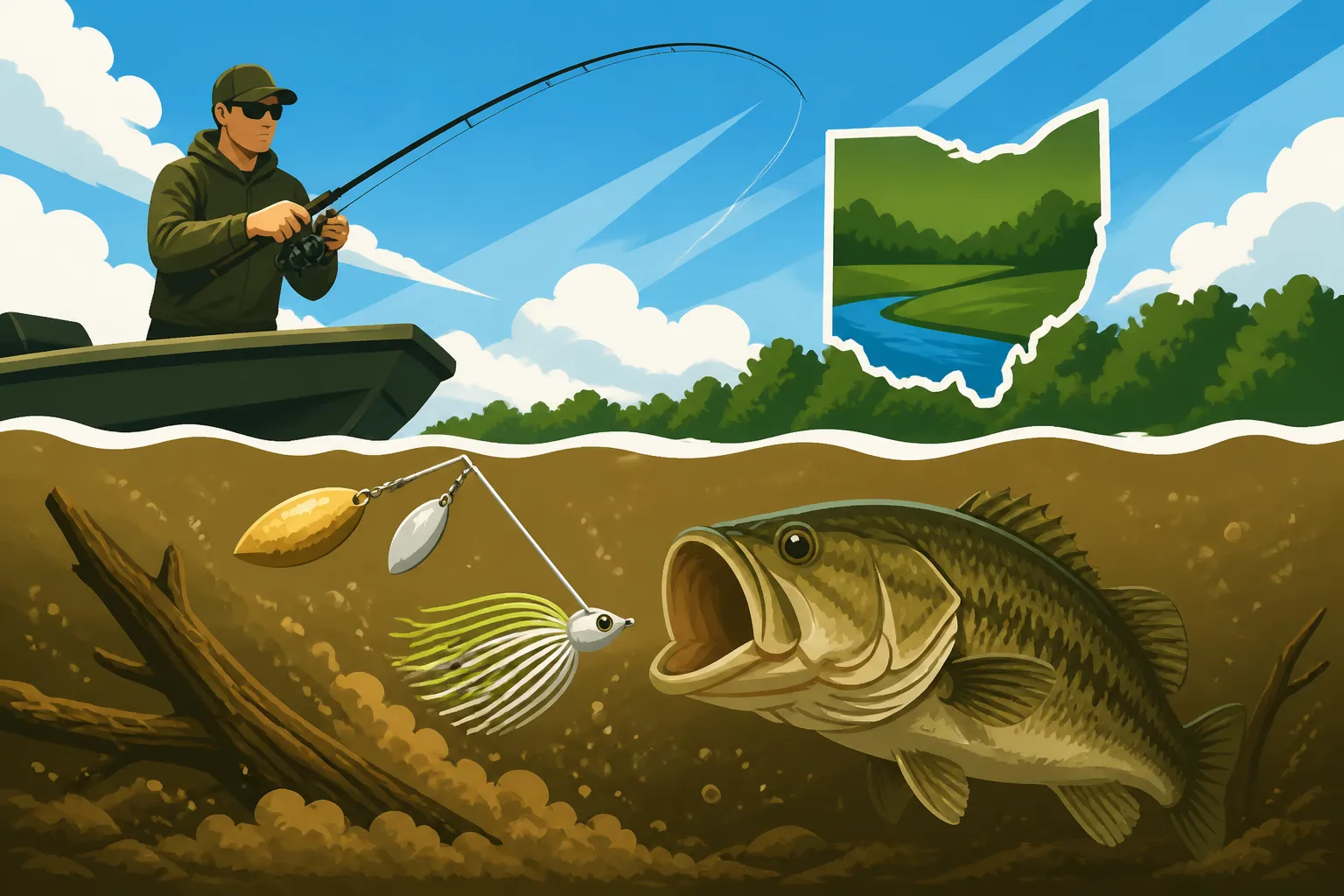
This is where the humble spinnerbait truly shines. Unlike lures that rely solely on visual appeal, a spinnerbait is a multi-sensory attack system perfectly suited for murky conditions. Its key advantages are:
- Vibration: The spinning blades create significant underwater thumping and displacement that fish can detect with their lateral line from a good distance, even if they can't see the lure. This is a huge advantage when sight is compromised.
- Flash: While visibility is low, the reflective flash of the blades, even if only seen for a split second, can trigger a reaction strike from curious or irritated fish.
- Profile: The overall profile of the spinnerbait, with its skirt and potential trailer, presents a substantial target. This makes it easier for fish to home in on, especially when they're relying on feel and sound.
Many anglers might reach for a crankbait or a jig, but the constant, throbbing vibration and flash of a spinnerbait often outperform other options when the water resembles chocolate milk.
Choosing the Right Spinnerbait for Muddy Ohio Waters
Selecting the correct spinnerbait is paramount when facing muddy conditions. It's not just about grabbing any old spinnerbait from your tackle box; a strategic choice can make all the difference. You want a lure that maximizes disturbance, visual appeal, and presentation in low visibility. When you're looking for new gear, checking out options on Amazon can give you a good idea of the vast array of choices available, from different blade types to skirt colors.
Blade Selection: Flash vs. Vibration
The blades are the heart of the spinnerbait, dictating its action, vibration, and flash. For muddy water, the focus shifts heavily towards maximizing vibration.
- Colorado Blades: These are round, cupped blades that create the most vibration and "thump" underwater. They also spin at slower retrieve speeds and provide a good amount of lift, allowing you to fish shallower or slowly roll the bait near the bottom without snagging as much. Colorado blades are often considered the best choice for muddy water. They move a lot of water and emit a strong signal that fish can pick up.
- Indiana Blades: A hybrid between Colorado and willow leaf, Indiana blades offer a good balance of vibration and flash. They’re a versatile choice if the water is slightly stained but not completely opaque.
- Willow Leaf Blades: These long, slender blades create maximum flash but less vibration. They're excellent for clearer water or when you need to burn the bait quickly through the water column. While they can still catch fish in murky water, they generally aren't the top choice compared to Colorado or Indiana blades.
For true muddy water, I almost exclusively reach for spinnerbaits with at least one Colorado blade, often a tandem setup with two Colorado blades or a Colorado upfront with an Indiana blade behind it. The combination of intense vibration and a decent flash is unbeatable.
Color and Skirt Considerations
This is where things get a little counterintuitive for some anglers. While bright colors might seem like the obvious choice for low visibility, both bright and dark, contrasting colors have their place.
- Bright & Fluorescent Colors: Chartreuse, white, and bright orange are fantastic in muddy water because they stand out. They reflect what little light is available and provide a stark contrast against the dark water, making them easier for fish to see, even if only as a silhouette. Chartreuse, especially, is a proven producer.
- Dark & Contrasting Colors: Black, blue, or combinations like black and blue can also be incredibly effective. Why? Because in extremely low light, a dark color creates a strong, distinct silhouette against the slightly lighter water. Fish can perceive this dark shape more easily. A black and blue spinnerbait in dirty water is a classic for a reason.
- Contrasting Patterns: Don't be afraid of skirts that combine two distinct colors, such as black and chartreuse, or white and blue. This contrast further enhances visibility and profile.
When in doubt, a chartreuse skirt or a black and blue skirt with bright Colorado blades is a great starting point for targeting bass in muddy Ohio waters. You can find many different color combinations and blade styles on Amazon to fit your needs.
Weight and Size for Muddy Conditions
The weight and size of your spinnerbait also play a significant role.
- Weight: In muddy water, fish often move shallower, but sometimes current (especially in rivers like the Ohio River or its tributaries after rain) can be a factor. A heavier spinnerbait (3/8 oz to 3/4 oz, and even 1 oz if the current is strong) allows for better casting distance, helps the bait sink quickly to the strike zone, and maintains depth control in current. It also provides a stronger 'feel' for you, the angler, helping you detect bites or cover.
- Size: A larger profile spinnerbait can be beneficial. It presents a bigger target for fish to detect in low visibility. Don't be shy about throwing a 1/2 oz or 3/4 oz spinnerbait, even if you normally prefer lighter baits in clearer water. The increased bulk, combined with those throbbing Colorado blades, creates a presence that’s hard for a fish to ignore.
Master Your Retrieve: Techniques for Muddy Water Spinnerbait Fishing
Having the right spinnerbait is only half the battle. How you present it in muddy water is just as critical, perhaps even more so. You want to give the fish every opportunity to locate and react to your lure. Many of the techniques for Best Ohio Bass Fishing Techniques can be adapted, but here we'll focus on the specific nuances for murky conditions.
Slow Rolling and Contact
This is probably the most effective technique for spinnerbaits in muddy water.
- Slow Retrieve: Imagine trying to find something in a dark room. You move slowly, feeling your way around. Fish do the same in muddy water. A slow, steady retrieve allows the spinnerbait's blades to create maximum vibration for the longest possible time in the strike zone. It gives the fish more time to home in on the lure using their lateral line.
- Bottom Contact: Often, bass will hug the bottom or structure in muddy conditions. Slow roll your spinnerbait just above or on the bottom, occasionally ticking it off rocks, logs, or brush piles. This "bumping" action can trigger a reaction strike, as it simulates a struggling baitfish or crawfish. Remember to lift your rod tip to clear snags if you feel it dragging too much.
- Targeting Shallow Cover: Fish will often push into shallower, warmer water with cover during muddy conditions. Cast your spinnerbait right up to the bank, laydowns, stumps, or emergent vegetation. A slow roll through these zones can be incredibly effective.
Varying Depth and Speed
While slow rolling is key, don't be afraid to experiment. Sometimes a subtle change can unlock the bite.
- Yo-Yo Retrieve: This involves letting the spinnerbait sink, then quickly reeling it up a few feet, then letting it fall again. This erratic action can mimic a distressed baitfish and often draws strikes as the lure changes direction.
- Stop-and-Go: Reel the spinnerbait a few feet, then pause for a second or two, letting it flutter down slightly. This pause can sometimes be just enough to get a reluctant fish to commit.
- Short, Erratic Bursts: Instead of a constant retrieve, try short, quick bursts of reeling followed by a brief slowdown. This can imitate a baitfish trying to escape.
The key is to keep the bait in the strike zone for as long as possible and to introduce just enough variation to make it look vulnerable without making it impossible for a fish to track.
Targeting Key Structure in Murky Conditions
Fish don't just swim aimlessly in muddy water; they relate strongly to structure. Understanding this is vital for success.
- Laydowns and Submerged Timber: These are absolute magnets for bass in dirty water. The wood provides cover and a current break. Cast your spinnerbait to the thickest part of the laydown and slow roll it right through the branches, bumping off the wood.
- Rock Piles and Riprap: Rocky areas, especially those on points or along dam faces, are excellent ambush points. The irregular surfaces provide hiding spots, and crawfish (a common bass forage) often live in these areas. Work your spinnerbait slowly over and around the rocks.
- Docks and Piers: The shade and cover offered by docks, particularly those with brush or tires underneath, make them prime targets. Pitch your spinnerbait under and around the dock pilings.
- Weed Lines and Grass Beds: Even in muddy water, if there are distinct weed lines or submerged grass beds, bass will orient to them. Fish the edges of these beds, where clearer water might meet the murkier stuff, or run your spinnerbait right over the top of submerged grass.
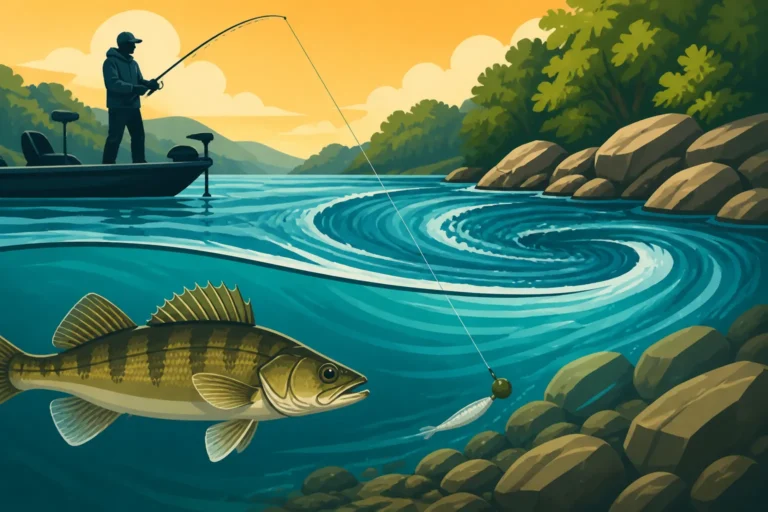
- Seams and Current Breaks: In rivers or areas with current, fish will hold in seams where faster water meets slower water, or behind objects that break the current. These areas are easier to navigate and can concentrate baitfish. Pay close attention to these current breaks when fishing rivers like the Maumee or Sandusky. For tips on how various weather patterns can affect fish, check out Reading Weather Patterns for Ohio Fishing.
Essential Gear and Tips for Muddy Water Success
Beyond the spinnerbait itself, having the right supporting gear and a few extra tricks up your sleeve will significantly boost your muddy water fishing success. After all, the Best Lures for Ohio Fishing still needs the right delivery system!
Rod, Reel, and Line for Spinnerbait Fishing
Your tackle setup needs to be robust enough to handle the spinnerbait and the powerful strikes it often provokes.
- Rod: A medium-heavy to heavy power baitcasting rod, typically 6'6" to 7'6" in length, with a fast or moderate-fast action, is ideal. This provides enough backbone to cast heavier spinnerbaits, drive hooks home, and muscle fish out of heavy cover. If you typically fish with lighter gear, you'll feel under-gunned.
- Reel: A baitcasting reel with a gear ratio between 6.4:1 and 7.1:1 is a good all-around choice. This allows for both slow retrieves and quick pickups of slack line. Ensure it's a quality reel with smooth drag.
- Line: For muddy water spinnerbait fishing, fluorocarbon or braided line are excellent choices.
- Fluorocarbon (15-20 lb test): It's nearly invisible underwater, which is less crucial in muddy water but still a benefit, and has excellent sensitivity. It also sinks, which can help keep your spinnerbait down.
- Braided Line (30-50 lb test): Braid has zero stretch, offering maximum sensitivity to detect subtle bites in low visibility and incredible strength for pulling fish out of thick cover. Its visibility isn't an issue in muddy water. Some anglers might add a short fluorocarbon leader for abrasion resistance, but often, straight braid works fine. For more on line choices, consider reading Choosing the Right Ohio Fishing Line.
Trailer Hooks and Soft Plastic Trailers
These additions can significantly increase your hook-up ratio and enhance the lure's profile.
- Trailer Hooks: Bass often short-strike spinnerbaits, especially in murky water where they're not seeing the lure clearly. A trailer hook, which is a small, single hook slid onto the main hook, hangs just behind the skirt and dramatically improves your chances of hooking those short-striking fish. Always use them, especially when you feel tentative bumps.
- Soft Plastic Trailers: Adding a soft plastic trailer to your spinnerbait's main hook can serve multiple purposes.
- Increased Profile: A paddle tail swimbait, grub, or split-tail trailer adds bulk and a larger silhouette, making the spinnerbait more noticeable.
- Enhanced Action: Many trailers have their own action, like a flapping paddle tail, which adds extra vibration and movement.
- Color Contrast: You can use a contrasting color trailer to add another visual cue to your spinnerbait, for instance, a chartreuse trailer on a white spinnerbait.
- Scent Carrier: Soft plastic trailers are perfect for holding fish attractants.
The Importance of Scent and Sound
In muddy water, you need to use every trick in the book to draw a fish's attention.
- Scent Attractants: Fish rely heavily on smell and taste in low visibility. Apply a strong, fish-attracting scent gel or spray to your spinnerbait's skirt and any soft plastic trailer you're using. Brands like Fishbites, Pro-Cure, or Berkley PowerBait scents are readily available and can make a noticeable difference. Reapply frequently, as the scent washes off.
- Rattles: Some spinnerbaits come with built-in rattles, or you can add a small rattle chamber to the wire shaft or even slip one into a hollow soft plastic trailer. The added sound can be a powerful attractant in dark water, giving fish yet another sensory cue to home in on. Think of it as ringing a dinner bell in the dark!
By combining the right spinnerbait, strategic retrieve techniques, and essential gear, you'll turn those frustrating muddy water days into productive fishing adventures across Ohio. For example, if you're trying to figure out When the White Bass Run Happens on Lake Erie Tributaries, and the rivers are blown out with mud, these spinnerbait tactics can still help you locate fish in the calmer pockets.
Spinnerbait Blade Selection for Muddy Water
Here's a quick comparison of blade types and their effectiveness in murky conditions:
| Blade Type | Primary Characteristic | Muddy Water Effectiveness | Best Use Cases | Notes |
|---|---|---|---|---|
| Colorado | Maximum Vibration, Slow Spin | Excellent | Slow rolling, deep water, low light, heavy cover, strong current | Creates powerful thumping, good lift. Ideal for dirty water. |
| Indiana | Balanced Vibration & Flash | Good | Moderate visibility, versatile retrieve speeds | Good all-rounder if water is stained but not completely opaque. |
| Willow Leaf | Maximum Flash, Fast Spin | Fair | Clearer water, fast retrieves, schooling fish | Less vibration; generally not preferred for very muddy conditions. |
| Tandem (Colorado/Willow) | High Vibration, Good Flash | Excellent | Versatile, combines best of both worlds, often preferred for bass | Popular setup, with Colorado leading for vibration. |
For general insights into the best overall fishing opportunities throughout the year, refer to the Ohio Fishing Season Calendar. And if you're ever in doubt about what to expect on your local waterways, a quick look at Ohio Fishing Regulations Every Angler Should Know is always a good idea before hitting the water. If you want to dive deeper into specific gear, you might even find useful information when looking at Best Rod and Reel Setup for Lake Erie Walleye, as the principles of robust tackle can apply broadly.
Disclaimer
Fishing conditions and regulations in Ohio can change. Always consult the latest Ohio Department of Natural Resources (ODNR) regulations before heading out. This guide provides general advice and recommendations.