How to Fish Deep Structure for Summer Walleye
Summer in Ohio means longer days, warmer water, and for many walleye anglers, a frustrating change of pace. Those familiar shallow haunts that produced so well in spring can suddenly feel barren, leaving you scratching your head and wondering where the fish went. The truth is, as the surface waters heat up, walleye often retreat to deeper, cooler, and more oxygenated pockets of the lake or reservoir, holding tight to underwater structures. This comprehensive guide is designed to demystify how to effectively locate and catch these elusive deep-water walleye, turning your summer fishing frustrations into productive outings.
Understanding Summer Walleye Behavior in Deep Water
Catching walleye in the heat of summer isn't about luck; it's about understanding their habits and adapting your approach. When the sun beats down, walleye change their routine drastically, moving from their springtime feeding binges in shallow waters to deeper, more comfortable environments.
Why Walleye Go Deep in Summer
Think about it from a walleye's perspective. They’re cold-blooded creatures, and while they can tolerate a range of temperatures, they thrive in cooler water, usually between the upper 50s and low 70s Fahrenheit. As summer progresses, the surface water warms considerably, becoming less hospitable and often less oxygenated, especially in shallower areas. This forces walleye to seek out thermal refuges. These deeper zones not only offer cooler temperatures but also more stable oxygen levels, which are crucial for their metabolism and overall well-being. They're not just looking for a cool place to hang out; they're looking for survival.
This shift means the fish you were catching in 10-15 feet of water in May might now be holding at 30, 40, or even 50 feet, depending on the body of water. They become less active and often concentrate in specific areas, making them harder to find but, once located, potentially easier to target in numbers. Understanding this fundamental behavioral change is the first step to success.
Identifying Key Deepwater Structures
Walleye don't just scatter randomly in the deep; they associate with specific underwater structures that offer cover, ambush points, and access to food. These are their summer homes and hunting grounds. Think about what would attract baitfish and provide safety, and you'll often find walleye nearby.
Common deepwater structures include:
- Humps and Submerged Islands: These are elevated areas on the lake bottom that don't break the surface. Walleye will often sit on top of these humps or along their edges, waiting to ambush baitfish that swim over them.
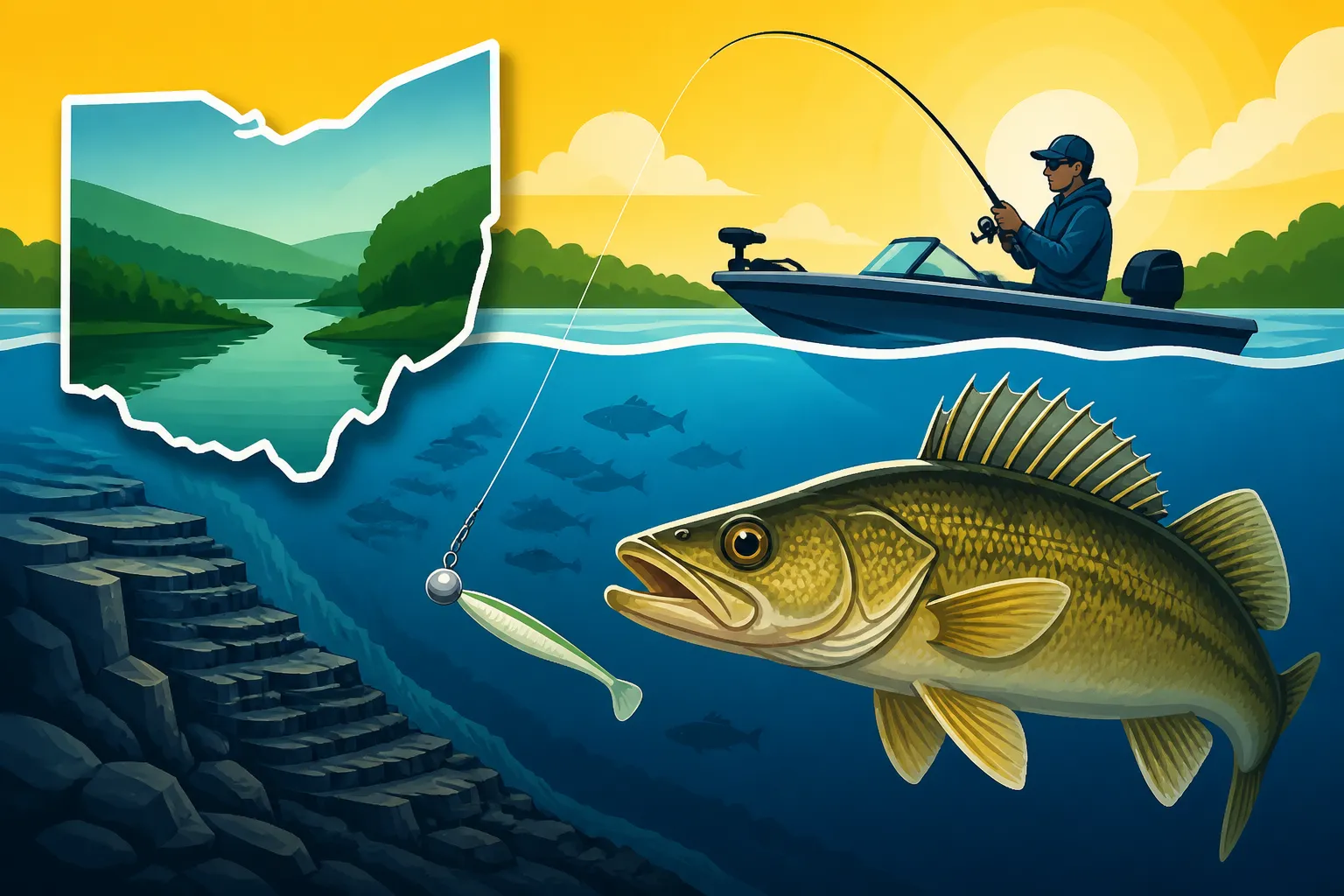
- Ledges and Drop-offs: Where the bottom abruptly changes depth, forming a "wall" or steep slope. Walleye will position themselves along these edges, using the change in depth as cover. They can move up and down the ledge to follow bait or adjust to changing conditions.
- Deep Reefs and Rock Piles: These provide excellent cover and habitat for baitfish, which in turn attract walleye. The crevices and irregular surfaces offer ideal ambush points.
- Channel Edges: In rivers and some reservoirs, the old river channels often have distinct edges that act as highways for walleye, especially where they intersect with other structures.
- Timber and Brush Piles: Submerged trees, stumps, and brush can create fantastic cover in deep water, attracting both baitfish and predatory walleye. These can be tricky to fish without getting snagged, but they often hold big fish.
Learning to identify these structures using your electronics is paramount. It’s like searching for a needle in a haystack, but with a good map and compass, you dramatically increase your chances. For more on finding these spots, check out our guide on Reading Ohio Fish Finders and Electronics.
The Role of Water Temperature and Oxygen
While structure provides the address, water temperature and dissolved oxygen are the ultimate determinants of where walleye will actually be holding on or around that structure. This creates a "sweet spot" within the deep water.
Lakes and reservoirs often stratify in summer, meaning layers of water form with different temperatures and oxygen levels. The uppermost layer (epilimnion) is warm and oxygen-rich. Below that is the thermocline, a transitional layer where temperature drops rapidly. Below the thermocline is the hypolimnion, which is cold but can become oxygen-depleted over time, especially in shallower or highly productive lakes. Walleye will typically be found at or just above the thermocline, where the water is cool enough for their comfort, but there's still ample oxygen. If the hypolimnion becomes anoxic (lacks oxygen), walleye simply won't use it, no matter how cool it is.
A good fish finder with temperature and depth readings is indispensable for pinpointing this crucial zone. You might see a dense band on your sonar marking the thermocline. Walleye will often be suspended within this band or directly on structure within that ideal temperature and oxygen range. Ignoring these factors means you could be fishing perfectly good structure that, for the fish, is essentially a barren wasteland. Understanding the best water temperature for walleye is a game-changer.
Essential Gear for Deep Structure Walleye Fishing
Just as you wouldn't go deer hunting with a slingshot, you wouldn't tackle deep-water walleye with gear meant for panfish. Success here demands specialized equipment that can handle the depths, detect subtle bites, and bring in strong, deep-dwelling fish. This isn't just about making it easier; it's about making it possible.
Rods, Reels, and Line Choices
Your rod, reel, and line are your direct connection to the fish, and when fishing deep, every component needs to be up to the task.
For deep trolling, you'll want a medium-heavy to heavy power rod, typically 7 to 9 feet long, with a moderate or moderate-fast action. This gives you the backbone to handle heavy weights, deep-diving crankbaits, or planer boards, while still having enough flex to absorb the shock of a strike and keep the fish pinned. Paired with this, a line-counter reel is an absolute must. These reels allow you to precisely deploy your lure at the exact depth and distance you need, which is critical for replicating successful presentations. You can find a wide array of reliable line-counter reels on Amazon, making it easy to compare features and read reviews before you buy. For more details on choosing the right setup, refer to our Best Rod and Reel Setup for Lake Erie Walleye guide.
When it comes to line, braid is often the preferred choice for deep-water techniques due to its zero stretch and incredible sensitivity. This allows you to feel those subtle walleye bites, even in 40+ feet of water. Use a high-visibility braid (like 10-20 lb test) as your main line, and then tie on a fluorocarbon leader (8-15 lb test) for invisibility and abrasion resistance. The low stretch of braid also helps with solid hooksets at depth. For vertical jigging or drop shotting, a slightly lighter braid or even a low-stretch fluorocarbon can work, paired with a sensitive, faster action spinning rod, typically 6'6" to 7'6" in length.
Electronics: Your Eyes Underwater
In the world of deep-water walleye, your electronics aren't just an accessory; they're your most critical piece of equipment. Without them, you're literally fishing blind.
A quality fish finder with GPS and mapping capabilities is non-negotiable. Look for units with high-frequency CHIRP sonar, Down Imaging (or DownScan), and Side Imaging (or SideScan).
- CHIRP Sonar: Provides incredibly clear target separation, allowing you to distinguish individual fish from baitballs and bottom structure. You'll be able to see those faint arches that indicate walleye hugging the bottom or suspended over deep humps.
- Down Imaging: Gives you a photographic-like view directly beneath your boat, making it easier to identify specific structures like rock piles, timber, or subtle depth changes.
- Side Imaging: This is the real game-changer for finding deep structure. It allows you to scan wide areas (hundreds of feet to either side of your boat), revealing humps, ledges, and schools of fish that you might otherwise troll right over. Imagine spotting a school of walleye off to your left, far from your direct path, and being able to mark them and turn back.
GPS with detailed lake mapping is equally vital. It allows you to mark waypoints on key structures, track your trolling passes, and navigate precisely. Many modern units come pre-loaded with highly detailed contours, or you can download custom maps. Regularly checking for contour changes, submerged points, and humps on your map is the first step before even dropping a line. Learn more about maximizing your electronics in our detailed article on Reading Ohio Fish Finders and Electronics.
Lures and Baits for Deep Walleye
The type of lures and baits you choose will depend heavily on the technique you're employing, but the common thread is that they need to get down to where the fish are effectively.
- Deep-Diving Crankbaits: These lures are designed with large bills that allow them to dive quickly and reach significant depths when trolled. Brands like Rapala, Reef Runner, and Berkley offer a wide range of colors and dive curves. Experiment with different models to match the depth and speed you need. Colors can vary, but natural baitfish patterns, greens, blues, and chartreuses are often popular on Lake Erie and other Ohio waters.
- Crawler Harnesses: These are incredibly effective, especially when paired with live nightcrawlers (or even artificial Gulp! worms). They typically consist of a weight (like a bottom bouncer), a swivel, and a snell with two or three hooks, often adorned with beads or small spinner blades. The spinner adds flash and vibration, while the nightcrawler provides scent and natural movement. They can be trolled, drifted, or slowly retrieved. Amazon carries many options for pre-tied harnesses, or you can buy components to tie your own.
- Jigs: Heavy jigs (1/2 oz to 1 oz or more) tipped with live minnows, shiners, or soft plastic trailers (like Berkley Gulp! or Z-Man ElaZtech baits) are excellent for vertical jigging directly over schools of fish on deep structure. The added bulk and scent can make a big difference when fish are lethargic.
- Drop Shot Rigs: While often associated with bass, drop shotting is a stealthy and effective technique for deep-water walleye, especially when they are finicky. It allows you to present a small bait (like a minnow, leech, or small soft plastic) suspended off the bottom, directly in the walleye's strike zone, without the weight interfering with the bait's action.
The key is to have a variety of options and be willing to experiment. Walleye can be incredibly finicky, and what works one day might not the next.
Techniques for Targeting Deep Structure Walleye
Once you've identified the deep structures and equipped yourself, it's time to put those tools to use. There are several highly effective techniques for targeting walleye in their summer deep-water haunts, each with its own advantages.
Trolling Deep Diving Crankbaits
Trolling is perhaps the most popular and efficient method for covering large expanses of water and finding actively feeding walleye that are suspended or cruising deep structure. The goal is to present your lure at the precise depth where the walleye are holding.
Start by observing your electronics. Are the fish holding tight to the bottom of a hump, or are they suspended 5-10 feet above a deep ledge? Your choice of crankbait and trolling speed will dictate how deep your lure runs. Many crankbaits have dive charts available online, but practical experience will teach you a lot. Let out more line, and the lure dives deeper; speed up your boat, and it might dive a little shallower or run differently. Using a line-counter reel helps immensely, allowing you to replicate successful depths with precision. For instance, if you get a bite at 80 feet of line out, you can repeat that pass with confidence. This method is particularly deadly on large bodies of water like Lake Erie. You can find more specific advice in our article, Trolling for Lake Erie Walleye.
Vary your trolling speed, typically between 1.5 to 2.5 mph, and experiment with S-turns. These turns cause your inside lures to slow down and drop, while outside lures speed up and rise, often triggering strikes from hesitant fish. Pay close attention to your rod tips for subtle bites – deep trolling can sometimes feel like you’re dragging weeds until you see a solid bend in the rod.
Bottom Bouncing with Crawler Harnesses
When walleye are hugging the bottom, especially on expansive flats or along deep breaks, bottom bouncing with crawler harnesses becomes an incredibly effective strategy. This technique allows you to keep your bait tantalizingly close to the bottom where the fish are without constantly snagging.
A bottom bouncer is a lead weight with a wire arm designed to hop and "bounce" along the lakebed, keeping your leader and bait just above the snags. Pair it with a crawler harness, which features a spinner blade and typically two or three hooks for a nightcrawler. The spinner creates flash and vibration, while the nightcrawler's natural scent and action are irresistible to walleye. For tips on how to effectively rig and use these, check out How to Fish a Crawler Harness for Walleye.
You can drift or slowly troll (0.8-1.5 mph) bottom bouncers. The key is to maintain a 45-degree angle with your line entering the water. If your line is too vertical, you're going too slow or not using enough weight; if it's too horizontal, you're going too fast or using too little weight. A common setup might be a 1 to 2-ounce bottom bouncer in depths of 25-40 feet, but adjust based on current and speed. When you feel a bite, don't set the hook immediately like you would with a jig. Instead, drop your rod tip back slightly, allowing the walleye to fully take the bait, then slowly lift the rod to feel the weight of the fish and set the hook with a smooth, firm sweep. This can be a devastating technique for summertime walleye.
Vertical Jigging and Drop Shotting
When walleye are tightly schooled on a specific piece of deep structure, or when they're particularly finicky, vertical jigging and drop shotting can be surgical in their precision. These methods allow you to present your bait exactly where the fish are, with minimal disturbance.
Vertical Jigging: This technique involves positioning your boat directly over a school of fish or a hot spot you've identified on your sonar, then dropping a heavy jig straight down. Use jigs ranging from 1/2 ounce to 1.5 ounces, tipped with a live minnow, leech, or a scented soft plastic. The action is usually a lift-drop motion, imparting a darting or fluttering action to the bait. Pay close attention to your electronics, making sure your jig is presenting right in the fish's strike zone. Strikes often occur on the fall, so feeling the "thunk" or sudden slack in your line is critical. This is a very hands-on, engaging way to fish, and when you're on top of them, it can be incredibly rewarding.
Drop Shotting: A more subtle approach, drop shotting is fantastic for inactive walleye holding tight to structure. The setup involves tying a hook directly to your main line (often with a Palomar knot), leaving a tag end of line below it. To this tag end, you attach a weight. This allows your bait to suspend at a specific height off the bottom, directly in the fish's face, while your weight maintains contact with the bottom. Use small, subtle baits like Gulp! Minnows, small plastic worms, or live leeches. The beauty of the drop shot is that you can impart action to your bait by lightly shaking your rod tip, without moving the weight from the bottom. The bait dances enticingly, often triggering bites from hesitant walleye who won't chase a moving lure. This technique offers incredible sensitivity, allowing you to detect the softest bites.
Reading the Lake and Adapting Your Approach
Deep water fishing for walleye isn't just about deploying a certain lure; it's about constant observation and adaptation. The lake is a dynamic environment, and the most successful anglers are those who can read its subtle cues and adjust their tactics accordingly.
Interpreting Sonar and Mapping Data
Your electronics are not just tools to show you fish; they are storytelling devices, painting a picture of the underwater world. Learning to interpret that story is paramount.
When you're scanning a deep hump, don't just look for fish arches. Pay attention to the contour lines on your GPS map – how steep is the drop-off? Are there subtle fingers or points extending off the main structure? On your sonar, look for baitfish schools, which will often appear as clouds or masses of smaller dots. Walleye will usually be located just below or on the edges of these baitfish schools. Identify the thermocline (often appearing as a dense, blurry band) and focus your efforts at or just above it. If you see fish arches scattered or suspended above the thermocline, they might be actively feeding. If they're hugging the bottom contour, they might be less active or using the structure for cover.
Keep a mental log, or even better, mark waypoints on your GPS for every fish you see or catch. This helps you identify patterns. Are they on the north side of the hump? Are they in a specific depth range? Are they relating to rock, sand, or timber? Over time, you'll develop a strong intuition for where to find them. Remember, the fish finder shows you where the fish are now, but your mapping can show you where they're likely to be.
Adjusting for Weather and Current
The weather above and the currents below can have a significant impact on deep-water walleye behavior, often dictating how aggressive they are and where they position themselves on structure.
- Weather: Overcast days or low-light conditions (early morning, late evening) often bring walleye higher in the water column or make them more active on top of deep structures. Bright, sunny days might push them tighter to the bottom or deeper into dense cover. Frontal systems, especially cold fronts, can make walleye lethargic and less willing to chase, requiring slower presentations or more subtle baits like a drop shot. Conversely, approaching low-pressure systems can trigger a feeding frenzy.
- Current: In large reservoirs or Lake Erie, even deep water can have subtle currents. Walleye are ambush predators and will often orient themselves into the current, waiting for bait to drift past. This means if you're trolling or drifting, you want your presentation to come with the current, allowing the walleye to face it and see your bait easily. Adjust your boat speed or drift socks to match the current, keeping your lures in the strike zone longer. If you're vertical jigging, the current will dictate how much weight you need to stay directly over the fish. Stronger currents require heavier jigs or weights to maintain verticality.
Always be mindful of how these factors might be affecting the fish. A slight change in boat speed, lure depth, or even color can make all the difference on a tough day.
Mastering Boat Control Over Structure
Effective boat control is the secret weapon for consistently catching deep-water walleye. It's about precision – keeping your lures in the strike zone, especially when targeting small, specific pieces of structure.
When you've found a promising deep hump or ledge, the challenge is to stay on it. This is where your GPS and mapping become invaluable. Plot a course that allows you to repeatedly pass over the productive area. If you're trolling, use your electric trolling motor, especially a bow-mount, to subtly steer and maintain your course. Modern Minn Kota or Garmin trolling motors with GPS anchoring (Spot-Lock or Anchor Mode) are incredibly effective, allowing you to essentially "anchor" your boat digitally over a hotspot, even in wind or current, freeing you to focus on jigging or drop shotting. These smart motors can be a fantastic investment, and you can explore various models and features available on Amazon.
For drift fishing with bottom bouncers, use a drift sock (or two, deployed off the bow and stern) to slow your drift speed and maintain a more controlled presentation, especially on windy days. Adjusting the size and placement of your drift socks allows you to fine-tune your speed and angle. For vertical jigging or drop shotting, precise boat positioning directly over the fish is crucial. A bow-mount electric motor makes this infinitely easier, allowing you to make small adjustments to stay on top of the school. Without solid boat control, even the best lures and techniques will struggle to find their mark.
By putting these techniques into practice and continually learning from your experiences, you'll find that summer walleye fishing, while challenging, can be incredibly rewarding. The deep waters hold some truly impressive fish, and with the right approach, you’ll be bringing them to the boat.
Deep-Water Walleye Techniques Comparison
| Technique | Ideal Depth Range | Primary Lure/Bait | Best Conditions | Advantages | Considerations |
|---|---|---|---|---|---|
| Trolling Deep Diving Crankbaits | 20-50+ feet | Large-billed crankbaits | Searching vast areas, active fish | Covers lots of water, good for suspended walleye | Requires boat speed control, can be lure-specific |
| Bottom Bouncing w/ Harnesses | 15-40 feet | Crawler harness with live bait | Bottom-oriented walleye, subtle bites | Excellent for tight-lipped fish, natural presentation | Slower presentation, can snag in heavy cover |
| Vertical Jigging | 20-60+ feet (direct over fish) | Heavy jigs w/ plastics or live bait | Fish tightly schooled on structure | Precise bait placement, good for aggressive bites | Requires precise boat control, small strike zone |
| Drop Shotting | 20-60+ feet (direct over fish) | Small plastics, minnows, leeches | Finicky, inactive walleye | Highly sensitive, natural bait action, weedless | Slower fishing, often for individual fish |
Disclaimer
This article is for general informational purposes only and does not constitute professional advice. Laws, prices and regulations vary by location and change over time. Consult a qualified professional for guidance on your specific situation.