How to Fish a Ned Rig for Ohio Smallmouth Bass
Trying to entice those feisty Ohio smallmouth bass can sometimes feel like you're talking to a brick wall. They're notorious for being finicky, especially when fishing pressure is high or conditions aren't ideal. But what if I told you there's a ridiculously simple yet incredibly effective technique that often turns those tough days around? This guide is all about mastering the Ned Rig, a subtle presentation that consistently puts smallmouth in the net across Ohio's diverse waters.
Understanding the Ned Rig for Ohio Smallmouth
The Ned Rig, often affectionately called the "half-a-worm rig," has exploded in popularity, and for good reason. It’s incredibly effective, especially for wary smallmouth bass. If you've ever felt frustrated by bass that follow your bait but won't commit, or if you’re fishing clear, pressured waters, this little rig might just become your new best friend. It capitalizes on the smallmouth's predatory instincts without overwhelming them with a big, flashy meal.
What Makes the Ned Rig So Effective for Smallmouth?
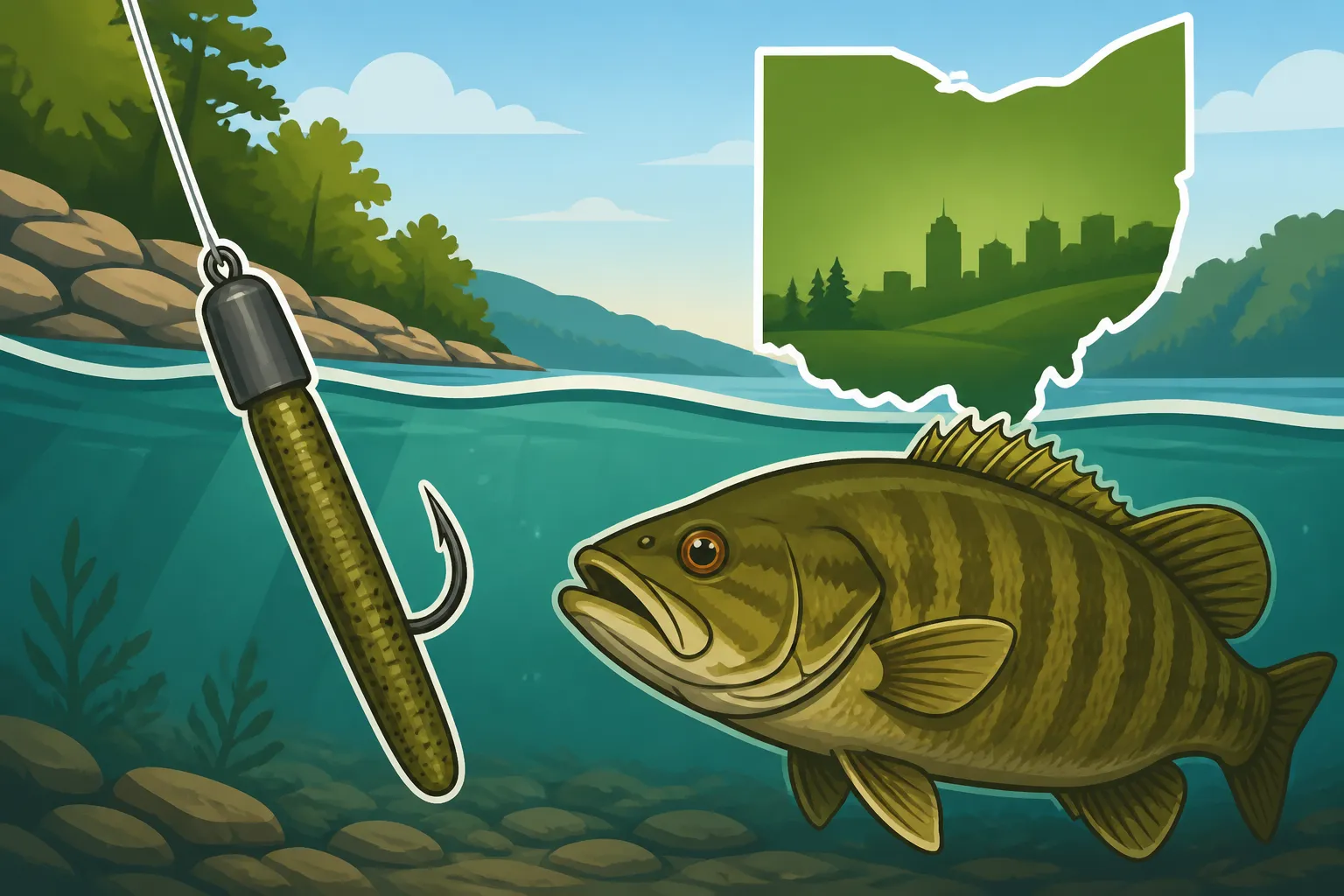
At its core, the Ned Rig is all about subtlety and a natural presentation. It typically uses a small, buoyant soft plastic bait, usually 2.5 to 3 inches long, paired with a lightweight mushroom-shaped jig head. This combination creates a unique action in the water that's hard for smallmouth to resist.
First, the buoyancy of the soft plastic causes the tail end of the bait to stand upright off the bottom when at rest. Imagine a tiny baitfish or a crayfish poking its head out from the substrate – that’s exactly the impression it gives. This "standing" posture looks incredibly natural and triggers strikes from bass that might ignore other baits. It just screams "easy meal" without being too flashy or intimidating. Smallmouth bass are notorious for keying in on subtle movements, and the Ned Rig delivers this perfectly.
Second, its small profile makes it less threatening to pressured fish. In many of Ohio's popular smallmouth fisheries, like Lake Erie or the larger rivers, bass see a lot of lures. A large crankbait or a big jig might scare them off, but the unassuming Ned Rig slips right into their comfort zone. It's an ideal choice when the bite is tough, or when the fish are in a negative mood due to weather changes, clear water, or heavy boat traffic. It’s a confidence booster when nothing else seems to work, proving that sometimes, less truly is more in fishing.
Essential Components of a Ned Rig Setup
Building a successful Ned Rig setup isn't complicated, but choosing the right components makes a world of difference. It's about finding that delicate balance between feel and finesse. You want to be able to detect the lightest bite, which is crucial when fish are just "mouthing" the bait.
Let’s start with the jig heads. The most common Ned Rig jig heads are mushroom-shaped, which helps them stand up straight on the bottom. Weights typically range from 1/16 oz to 1/8 oz, though you might go as light as 1/32 oz in very shallow, calm water or up to 1/5 oz in strong currents or deeper scenarios. Brands like Z-Man’s Finesse ShroomZ are practically synonymous with the Ned Rig, offering excellent sharpness and keeper bars to hold your soft plastic in place. You can find a good selection of these on reputable online retailers like Amazon, making it easy to stock up before your next trip.
For soft plastics, durability and buoyancy are key. Z-Man's ElaZtech material is a game-changer here, as it's incredibly tough and floats, which is essential for that upright presentation. Popular bait styles include small stickbaits (like the Finesse TRD), small worms, or even tiny creature baits. Colors can vary, but natural shades like green pumpkin, brown, and black often excel in clearer Ohio waters, mimicking crawfish or gobies. On darker, more stained days, don't be afraid to experiment with brighter colors like chartreuse or brighter greens. Always have a few options on hand to match the forage and water conditions you encounter.
Finally, your rod, reel, and line setup should lean towards finesse. A light to medium-light spinning rod, typically 6'6" to 7'2" in length, with a fast action tip, will give you the sensitivity to feel subtle bites and the backbone to handle fighting smallmouth. Pair this with a small, smooth spinning reel (2000-2500 size) spooled with 6-10 lb braided line. To this, tie a 6-10 lb fluorocarbon leader (4-6 feet long) using an FG knot or similar strong knot. The braid provides extreme sensitivity and casting distance, while the fluorocarbon leader offers invisibility in clear water and abrasion resistance against rocks and other structure. This whole setup allows for precise casting and maximum feel, making those light smallmouth bites much easier to detect.
Where to Find Ohio Smallmouth Bass
Ohio boasts an impressive array of smallmouth bass fisheries, from the vast expanse of Lake Erie to countless inland lakes and winding rivers. Knowing where to focus your efforts is just as important as knowing how to present your bait. Smallmouth are structure-oriented fish, always looking for ambush points or cover from predators and current.
Prime Smallmouth Habitats in Ohio Waters
Lake Erie, without a doubt, is a premier destination for smallmouth bass. The rocky western basin and the deeper, more varied central and eastern basins hold incredible numbers of trophy smallmouth. Look for them around rocky reefs, shoals, islands (like the Lake Erie Islands), and drop-offs. Areas with clean, hard bottom, often littered with zebra mussels and small rocks, are smallmouth magnets. You might find some excellent opportunities for Lake Erie smallmouth bass fishing around these structures. In the spring and fall, smallmouth can be found relatively shallow, but as summer progresses, they'll often move to deeper structures, sometimes 20-40 feet down, following cooler water and baitfish.
Beyond Lake Erie, many of Ohio's larger inland lakes and reservoirs offer fantastic smallmouth fishing. Lakes like Alum Creek Lake, Hoover Reservoir, and Caesar Creek Lake are known for their healthy smallmouth populations. In these lakes, focus on areas with rock piles, submerged timber, roadbeds, old foundations, and steep drop-offs. Points and humps that extend into deeper water are also prime real estate. The clear waters of these reservoirs make the Ned Rig particularly effective, as smallmouth can be quite spooky.
Don't overlook Ohio's rivers either! The Ohio River, for example, along with its major tributaries like the Scioto River, Muskingum River, and the Maumee River (especially upriver from the famous walleye run sections), can be phenomenal for smallmouth. In rivers, smallmouth gravitate towards current breaks: eddies behind boulders, fallen trees, bridge pilings, and riffles where the current churns. Look for deeper pools adjacent to faster water, and don't ignore undercut banks where they can hide and ambush prey. The Ned Rig's subtle presentation works wonders when drifting through these riverine habitats.
Reading the Water for Smallmouth Indicators
Becoming a successful smallmouth angler means learning to "read the water" – identifying potential holding areas and understanding fish behavior based on environmental cues. It's like solving a puzzle, and each piece of information helps you get closer to the fish.
First, pay close attention to structure. Smallmouth bass are rarely found in vast, featureless expanses. They relate to anything that provides cover, current breaks, or ambush points. On Lake Erie, this means focusing on your electronics to locate rocky ledges, humps, and isolated rock piles that rise off the bottom. If you're fishing a river, look for visible rocks, fallen trees, and changes in the riverbed that create calmer pockets in the current. Even subtle changes in bottom composition, like a transition from mud to gravel, can be a magnet for smallmouth. Smallmouth Bass Habitat Preferences can offer some fantastic insights into specific structural elements to target.
Second, understand the importance of current. Smallmouth love current, but they don't like to fight it constantly. Instead, they position themselves just out of the main flow, in a "current seam" or "eddy," where they can dart out to grab passing food without expending too much energy. In rivers, these are obvious, but even in lakes, wind-driven currents can create similar situations around points and reefs. When fishing current, cast your Ned Rig upstream and allow it to drift naturally into these holding zones, maintaining just enough tension to feel the bottom.
Finally, keep an eye out for baitfish and insect activity. Smallmouth are opportunistic predators, and if you see schools of shad, minnows, or even surface-feeding insects, you can bet that smallmouth won't be far behind. Birds diving, baitfish flickering on the surface, or subtle swirls can all indicate the presence of forage, which in turn suggests that smallmouth might be actively feeding. While the Ned Rig isn't a power fishing bait, presenting it effectively near these feeding frenzies can sometimes trigger aggressive strikes from otherwise cautious fish. Pay attention to water clarity too; clearer water often means a more subtle presentation like the Ned Rig will outperform flashier, louder baits.
Master the Ned Rig Presentation for Ohio Smallmouth Bass
The beauty of the Ned Rig lies in its simplicity, but don't mistake simplicity for a lack of technique. How you work this bait is absolutely crucial to triggering bites from smallmouth. It's all about natural, subtle movements that mimic what smallmouth are already feeding on.
Basic Retrieve Techniques for Success
The most common and often most effective way to fish a Ned Rig is a slow, methodical drag-and-pause retrieve. Cast your bait out, let it sink to the bottom on a semi-slack line (watching for line jumps that indicate a bite on the fall), and then simply drag it along. Use your rod tip to pull the bait a few inches or a foot, then pause. During the pause, the buoyant soft plastic stands up, enticing curious bass. Most bites will occur as the bait settles or just as you begin to move it again after a pause. The key here is patience; smallmouth will often follow the bait for a while before deciding to strike.
Another effective technique is a gentle hop or lift-and-drop. Instead of dragging, lift your rod tip a few inches, allowing the jig to "hop" off the bottom, then let it fall back down on a controlled slack line. Again, pay close attention during the fall and as it settles, as these are prime strike times. This method is excellent for covering ground more quickly than a slow drag, and it can create a slightly more erratic action that mimics a struggling baitfish or a crayfish trying to escape. Experiment with the height of your hops – sometimes a short, sharp hop is best, while other times a longer, slower lift is more effective.
Finally, don't forget the power of the subtle shake. Once your Ned Rig is on the bottom, you can impart very small twitches with your rod tip, without actually moving the bait forward. This causes the buoyant tail to quiver and dance, even when the jig head is stationary. This is particularly deadly when smallmouth are lethargic or highly pressured. It provides movement and attraction without appearing aggressive or unnatural. Combine this with long pauses, and you’ll find that even the most finicky smallmouth might not be able to resist. Remember, it's about making the bait look alive but easy to catch.
Advanced Tips for Tricky Situations
While the basic retrieves are often enough, there are always those days when smallmouth are extra stubborn. This is when a few advanced tactics can make all the difference, turning a slow day into a memorable one.
One critical aspect is bait color and scent. While natural colors like green pumpkin and watermelon are usually go-tos, don't be afraid to experiment. On cloudy days or in stained water, brighter colors like chartreuse, white, or even bubblegum pink can sometimes elicit a reaction strike. Similarly, when the water is crystal clear, consider more muted, transparent colors. Adding a fish attractant scent can also be a game-changer, especially for smallmouth that are "short-striking" or simply nudging the bait without fully committing. Brands like Berkley Gulp! or garlic-infused sprays can give bass that extra incentive to hold onto the bait longer. Ohio Smallmouth Bass Fishing Guide provides insights into various types of lures and their effectiveness in different conditions, which can further guide your color choices.
Targeting specific cover and structure with precision is another advanced tip. Instead of just casting generally, try to pinpoint individual rocks, submerged logs, or distinct current seams. Make multiple casts to these specific spots from different angles. Sometimes, a smallmouth might ignore your bait on one pass but hit it aggressively when it approaches from a slightly different direction or angle. This is where your fluorocarbon leader's invisibility really shines, allowing you to present the bait without spooking wary fish. In areas with dense rock or wood, you might consider slightly heavier jig heads (e.g., 1/8 oz or 3/16 oz) to help maintain bottom contact and reduce snagging.
Finally, adjusting your retrieve speed and pause duration based on water temperature and fish mood is crucial. In colder water (early spring or late fall), smallmouth are often lethargic, requiring extremely slow drags and longer pauses – sometimes 10-20 seconds or more between movements. As the water warms up in summer, you can often pick up the pace a bit, using quicker hops and shorter pauses to cover water more efficiently and capitalize on more active fish. Paying attention to these subtle environmental cues and adjusting your Ned Rig presentation accordingly will drastically increase your hook-up ratio and help you land more of those feisty Ohio smallmouth bass.
Seasonal Considerations for Ned Rigging in Ohio
Understanding how smallmouth bass behavior changes with the seasons is key to maximizing your Ned Rig success. What works in spring might not be as effective in late summer or fall. Ohio’s distinct seasons mean adapting your approach is a must.
Spring and Early Summer Tactics
Spring is a fantastic time for Ned Rig fishing in Ohio, especially as water temperatures begin to rise and smallmouth move shallow for the spawn. In early spring, as ice melts and water temperatures hover in the 40s and low 50s, smallmouth will often be found in transitional areas – the first available deep water adjacent to shallow spawning flats, or on sunny rock banks. They’re still a bit sluggish, so a super slow drag-and-pause retrieve with minimal action is paramount. Focus on points, channel swings, and any structure that provides a slight warmth advantage.
As the water warms into the mid-50s and 60s (late spring, pre-spawn), smallmouth become more active and begin feeding heavily in preparation for spawning. They'll move closer to shore, particularly in rocky areas or on gravel flats. This is when you can become a bit more aggressive with your Ned Rig, using longer drags or gentle hops to cover water. Look for them around spawning beds in shallow bays and coves, especially in clear water lakes like Lake Erie or Alum Creek. While they may not feed heavily on the beds, they’ll be close by. Post-spawn smallmouth can be found recuperating in slightly deeper water nearby, often still relating to the same rocky structures. A slow Ned Rig presentation is excellent for these recuperating fish, as it’s an easy meal. This time of year, many anglers target post-spawn bass because of their active feeding behavior, and smallmouth are no different!
Summer and Fall Strategies
By summer, Ohio's waters are warm, and smallmouth bass have usually transitioned to their deeper, offshore haunts, especially in larger lakes and reservoirs. On Lake Erie, this means they'll often be found suspended over deeper rocky reefs or congregating on humps and ledges in 20-40 feet of water. Here, a slightly heavier Ned Rig jig head (1/8 oz to 1/5 oz) can be beneficial to get the bait down quickly and maintain bottom contact in deeper water or stronger currents. The drag-and-pause technique remains effective, but you might need to cover more ground or use your electronics to pinpoint schools of fish. Focus on finding those thermocline breaks and baitfish schools, as smallmouth will be nearby.
As fall approaches and water temperatures begin to cool, smallmouth embark on a "fall feed," gorging themselves in preparation for winter. This is another prime time for Ned Rigging. Smallmouth will often move shallower again, similar to spring, congregating on rocky points, steep drop-offs, and channel edges near deeper water. They become very aggressive, so you might find success with slightly faster retrieves and more pronounced hops. Look for them around bluff walls, rock slides, and creek channel bends in your favorite lakes. The key is to find that transition zone where they're moving between their summer deep-water hideouts and their wintering holes. This is also an excellent time to target smallmouth as they become more active with the cooling temperatures.
| Ned Rig Component | Typical Use Case (Ohio Smallmouth) | Key Considerations | Where to Find |
|---|---|---|---|
| Jig Heads | Mushroom-shaped, 1/16 oz – 1/8 oz | Sharp hook, wire keeper | Amazon, local tackle shops |
| Soft Plastics | ElaZtech (floating), 2.5-3 inches | Durable, buoyant, natural colors | Amazon, specialty fishing stores |
| Rod | 6'6" – 7'2" Light/Med-Light Spinning | Fast action tip for sensitivity | Sporting goods stores |
| Reel | 2000-2500 Series Spinning | Smooth drag, lightweight | Sporting goods stores |
| Main Line | 6-10 lb Braided Line | High sensitivity, long casting | Amazon, tackle shops |
| Leader | 6-10 lb Fluorocarbon (4-6 ft) | Low visibility, abrasion resistant | Tackle shops |
Disclaimer
Fishing conditions and regulations in Ohio can change. Always consult the latest Ohio Department of Natural Resources (ODNR) fishing regulations before heading out. This guide is for informational purposes only and does not constitute legal advice.