How to Cast a Spoon for Steelhead
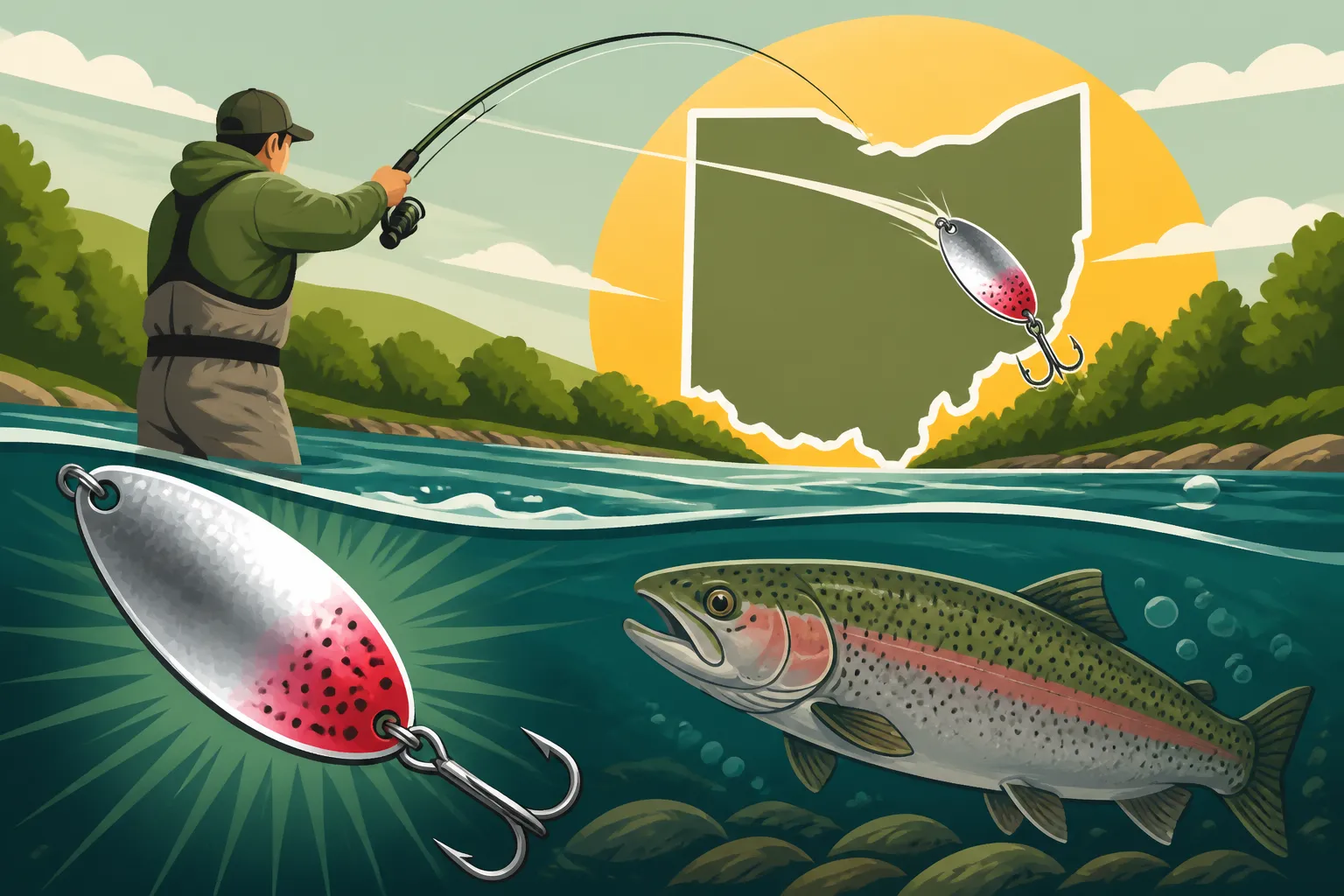
Steelhead fishing in Ohio's tributary rivers can be one of the most exhilarating experiences for an angler, but it also comes with its fair share of challenges. One common hurdle many face is effectively presenting a spoon in often swift, cold, and clear water, especially when these powerful fish can be incredibly finicky. This comprehensive guide will walk you through everything you need to know about casting a spoon for steelhead, from understanding their habitat to mastering your retrieve, helping you put more chrome in your net.
Understanding Steelhead Behavior and Habitat for Spoon Casting
Before you even think about tying on a spoon, it’s absolutely vital to understand where these magnificent fish like to hang out and when they're most likely to bite. Steelhead aren't just swimming around aimlessly; they're strategically positioned for feeding, resting, or moving upstream to spawn. Knowing their playbook will significantly increase your chances of success.
Where Steelhead Hold in Ohio Rivers
Ohio's steelhead rivers, like the Rocky, Grand, Chagrin, and Vermilion, offer a diverse array of holding water. These migratory rainbow trout, born in hatcheries and stocked in Lake Erie tributaries, return to these rivers when the conditions are right. They seek out specific features for safety, current breaks, and feeding opportunities.
Think of a river as a series of distinct rooms. There are deep pools where fish can rest and escape strong currents, especially after a long journey upstream. Riffles, those shallower, faster-moving sections, are often productive as they oxygenate the water and dislodge insects and baitfish, creating a feeding lane. Runs, which are essentially long stretches of moderate current and depth, are highways for steelhead moving through the system, but they'll also hold up in specific spots along these runs. Look for current seams where fast water meets slower water – these are prime ambush points. Log jams, undercut banks, large boulders, and deep bends in the river all provide crucial cover. Steelhead are often found right on the edge of these structures, out of the main current but ready to dart out for a meal. Understanding How to Read Steelhead Holding Water is paramount to placing your spoon effectively.
When you approach a stretch of river, take a moment to observe. Where is the deepest water? Are there any obvious current breaks created by rocks or fallen trees? Is there a noticeable "seam" where the flow changes speed? These are the locations where you should focus your casting efforts. Casting a spoon into the middle of a fast, featureless current is often a waste of effort, as the fish rarely expend energy to sit there. Instead, you want to get your lure into the fish's immediate strike zone, enticing a reaction strike as it wobbles past.
When Steelhead are Most Active for Spoon Presentation
Timing isn't just about showing up; it's about understanding the subtle cues that indicate when steelhead are more likely to strike. While spoons can be effective year-round during the steelhead run, certain conditions really make them shine.
Steelhead runs in Ohio typically kick off in the fall, intensify through winter if rivers remain open, and peak in spring. Understanding When Ohio Steelhead Runs Start can help you plan your trips. Water temperature plays a huge role in their activity levels. In colder water (think low 40s Fahrenheit and below), steelhead are often sluggish. Your spoon presentation needs to be slower and more deliberate. As water temperatures rise into the high 40s and 50s, especially in the spring, steelhead become much more aggressive. This is when faster retrieves and more erratic movements can really trigger strikes. Overcast days, or those with light rain, are often fantastic for spoon fishing, as the diffused light can make steelhead feel more secure and less wary of shadows or direct sunlight. Bright, sunny days might push them into deeper, darker holes, requiring a more precise, slower presentation.
The time of day also matters. Early mornings and late afternoons, when light levels are lower, are often prime times. However, after a fresh rain that brings up water levels and adds a bit of stain, steelhead can bite all day long. Conversely, if the river is too muddy, you might want to rethink your approach entirely, as visibility will be so low that a spoon's flash won't be as effective. Knowing How to Tell If a River Is Too Muddy for Steelhead can save you a lot of frustration. Ultimately, successful spoon casting for steelhead is a constant dance between observing conditions and adapting your presentation to match the fish's mood.
Essential Gear for Spoon Casting Steelhead in Ohio
Alright, now that we know where and when to target these beauties, let's talk about the tools of the trade. Having the right gear isn't about being fancy; it's about having the functionality to cast accurately, control your spoon, feel subtle bites, and most importantly, successfully land a powerful steelhead in often challenging river conditions. Skimping on tackle can lead to heartbreak, so invest wisely.
Choosing the Right Rod and Reel
For casting spoons to steelhead, you need a setup that offers a balance of sensitivity, casting distance, and backbone to handle strong fish. A medium-light to medium power spinning rod, typically between 7 feet 6 inches and 9 feet in length, is ideal. The extra length helps with longer casts, mending line in current, and absorbing the shocks of a head-shaking steelhead. Look for a rod with a fast action, meaning the tip bends easily but the rest of the blank remains stiff. This allows for excellent bite detection and quick, powerful hook sets. Brands like St. Croix, Fenwick, or Ugly Stik (for a more budget-friendly but durable option) offer excellent choices. You can find a wide selection of these rods on Amazon, often with customer reviews that can help guide your decision. For more detailed information, check out our guide on the Best Rod and Reel Setup for Ohio Steelhead.
Pair your rod with a reliable spinning reel in the 2500 to 3000 size range. A smooth, consistent drag system is non-negotiable. Steelhead make powerful runs, and a sticky or jerky drag will lead to snapped lines and lost fish. Shimano and Daiwa are popular choices known for their quality. Ensure the reel has a good line capacity for your chosen line type. For most river fishing scenarios with spoons, a spinning setup is preferred over baitcasting because it excels at casting lighter lures and managing line twist, which can be a real issue when spoon fishing.
Selecting the Best Spoons for Ohio Steelhead
Spoons are classic steelhead lures for a reason: their erratic wobble, flash, and vibration mimic injured baitfish, which steelhead absolutely cannot resist. The market is flooded with options, but a few stand out as consistent performers in Ohio's rivers.
Key Spoon Types and Characteristics:
- Little Cleos: These are probably the most iconic steelhead spoons. Their unique "S" shape provides a fantastic erratic wobble on the retrieve and an enticing flutter on the fall. They come in various sizes and weights, but 1/4 oz to 1/2 oz are typically most effective. Popular colors include nickel (silver), brass (gold), and combinations with fluorescent orange or chartreuse.
- Acme Kastmasters: While often associated with saltwater, Kastmasters are also deadly for steelhead. Their solid construction allows for long casts, and their unique design gives them a fluttering action. Again, 1/4 oz to 3/8 oz are good starting points, with silver, gold, and blue/silver being top producers.
- K.O. Wobblers (Luhr Jensen): Similar to the Little Cleo, these spoons offer a strong, fish-attracting wobble. They're excellent in varying current speeds and depths.
- R&B Lures: A lesser-known but highly effective spoon, especially for those in the know. They often have a slightly different profile and action, sometimes excelling when more common spoons are ignored.
When choosing a spoon, consider the water conditions. In clear water, natural colors like silver, gold, or brass often work best. If the water has a bit of stain or turbidity, brighter colors like fluorescent orange, chartreuse, or pink can increase visibility and trigger strikes. Heavier spoons (like 1/2 oz) are better for faster, deeper currents or when you need maximum casting distance, while lighter spoons (1/4 oz) excel in shallower, slower water. It's always a good idea to have a variety of sizes and colors in your tackle box, which you can easily stock up on through Amazon or your local tackle shop. Remember, sometimes a slight change in size or color is all it takes to turn a slow day into a memorable one.
Line Choices and Terminal Tackle
Your line is the crucial connection between you and the fish, so don't overlook its importance. For steelhead, you generally want a main line that offers strength, sensitivity, and casting performance, paired with a fluorocarbon leader for stealth.
Mainline Options:
- Braided Line (e.g., PowerPro, Sufix 832): This is a popular choice for its incredible strength-to-diameter ratio, zero stretch (meaning extreme sensitivity for detecting subtle bites), and long casting distance. Use 10-20 lb test braid. The lack of stretch can be a double-edged sword, however, as it offers little forgiveness during powerful runs and head shakes, potentially leading to pulled hooks or snapped lines if your drag isn't set perfectly.
- Monofilament Line (e.g., Trilene XL, Stren): Mono offers good knot strength, a bit of stretch (which acts as a shock absorber), and is generally more forgiving. However, it's less sensitive and can suffer from memory and line twist more easily than braid. Use 8-12 lb test.
- Fluorocarbon Line (e.g., Seaguar InvizX, Berkley Vanish): While excellent as a leader, some anglers use straight fluorocarbon as a mainline. It's nearly invisible underwater and very sensitive, but it can be stiffer and more prone to memory than mono, and it’s generally more expensive.
Regardless of your mainline choice, always tie on a fluorocarbon leader. Fluorocarbon is less visible underwater than mono or braid, which is a huge advantage when targeting wary steelhead in clear rivers. A good starting point is 6-8 lb test fluorocarbon leader, about 2-3 feet long. Connect your mainline to your leader using a strong knot like a double uni knot or an Albright knot.
For terminal tackle, a high-quality barrel swivel or snap swivel is essential. Spoons are notorious for twisting your line, and a swivel will help prevent this. Using a small snap (like a size 0 or 1) allows for quick changes of spoons without having to re-tie. Ensure your hooks are sharp; many spoons come with decent hooks, but upgrading to a super-sharp single hook (barbless, often required in Ohio's steelhead streams) can improve your hook-up ratio and minimize harm to released fish.
Step-by-Step Guide to Casting and Retrieving Spoons for Steelhead
Okay, you've got your gear dialed in and you know where the fish should be. Now comes the exciting part: putting your spoon in the water and enticing a strike. Casting and retrieving spoons for steelhead is an art form that blends precision, patience, and adaptability. It’s not just about flinging it out there; it's about making your lure dance in a way that triggers an aggressive reaction.
Mastering Your Casting Technique
Accuracy is paramount when casting spoons for steelhead. These fish are often holding in very specific spots – behind a boulder, in a current seam, or on the edge of a log jam. A poorly placed cast that lands too far from the target or spooks the fish can ruin the spot.
- Overhead Cast: This is your bread and butter for distance and accuracy in open areas. Keep your elbow close to your body, bring the rod back to about 1 o'clock, and then snap it forward to 10 o'clock, releasing the line at the height of the forward motion. Practice this to develop a smooth, controlled cast.
- Sidearm Cast: Useful when there are overhanging trees or obstructions behind you. It keeps the lure low to the water, often a good idea for stealth. The motion is similar to an overhead cast, but horizontal.
- Roll Cast: Indispensable in tight quarters where there's no room for a backcast. This cast uses the weight of the line and lure to create a loop forward, launching the lure with minimal rod movement. It’s a bit tricky to master but incredibly effective when wading under brushy banks.
Once your cast lands, immediately close your bail and take up any slack line. You want to be in direct contact with your spoon as it sinks. The depth and speed of the current will dictate how long you let it fall before starting your retrieve. Often, a spoon will get hit on the initial fall, so stay alert! For more general casting tips, our guide on Casting Techniques for Steelhead might be helpful.
Effective Retrieve Methods
This is where the magic happens. The retrieve gives your spoon its enticing action and is crucial for provoking a strike. There isn't one "right" way; rather, it’s about experimenting and finding what the fish want on a given day.
- The Constant Retrieve: This is the simplest and often most effective method. Cast your spoon slightly upstream and across the current, letting it sink to the desired depth. Then, begin a steady, moderate retrieve, allowing the spoon to wobble and flash as it swings through the current. The speed should be just fast enough to make the spoon work without spinning or blowing out of the water. Steelhead often ambush these baits as they "swing" across their holding lies.
- Stop-and-Go Retrieve: This technique introduces pauses and changes in speed that can be irresistible. Cast as usual, retrieve a few cranks, then pause for a second or two, letting the spoon flutter downward. Then resume your retrieve. This erratic action mimics a wounded baitfish struggling in the current.
- Lift-and-Drop (Jigging) Retrieve: Best in deeper pools or slower currents. Cast out, let the spoon sink to the bottom (or just above it), then lift your rod tip sharply to make the spoon dart upwards, letting it fall back down on a semi-slack line. Watch your line closely during the fall – many strikes occur as the spoon flutters down. This is akin to a jigging motion and can be incredibly effective when fish are holding tight to the bottom.
Always aim your casts to allow your spoon to swing through the prime holding water. If you're fishing a deep pool, cast upstream of the pool and let the current carry your spoon down and through it, maintaining tension to feel the bite. When fishing current seams, try to cast parallel to the seam, letting the spoon ride that invisible highway.
Reading the Water and Adapting Your Approach
Being able to effectively cast a spoon isn't just about mechanics; it's about being a river detective. Every cast is a new piece of information. Did it snag? Did it hit the current just right? Did it get a follow?
When you’re on the river, observe the flow. Are there any visible current seams where faster water meets slower water? These are prime ambush points. What about eddies behind boulders or log jams? These slower water pockets offer resting spots where steelhead will dart out to grab passing food. Your goal is to make your spoon pass directly through these high-probability zones. Adjust your cast angle and retrieve speed based on what the water is telling you. If the current is ripping, a heavier spoon and a slightly faster retrieve might be necessary to keep it from washing out. If it’s slower, a lighter spoon and a slower, more deliberate retrieve could be the ticket.
Dealing with snags is an unfortunate reality of river fishing, especially when trying to get your lure into tight cover. If you feel your spoon hang up, don't just yank. Try to shake your rod tip, or if possible, walk upstream to change the angle of your pull. Sometimes, a gentle release is all it takes. Be prepared to lose some spoons, and always have backups. Remember, adaptability is key. If one retrieve isn't working, try another. If one color isn't getting attention, switch it up. Steelhead are notoriously fickle, and persistence, combined with intelligent adaptation, will pay off.
Tips for Maximizing Your Steelhead Spoon Success
Landing a steelhead on a spoon is a thrilling experience, but it requires more than just casting and retrieving. It demands attention to detail, a readiness to adjust, and an understanding of the entire fishing process, from hook set to release. These additional tips will help you fine-tune your approach and increase your chances of success.
The Importance of a Good Hook Set and Fight
You've felt that thump – that unmistakable sign of a steelhead striking your spoon. Now what? Your next move is critical. First, ensure your hooks are razor-sharp. Many spoons come with adequate hooks, but you might consider upgrading to premium, barbless single hooks (often required in Ohio's steelhead streams) for better penetration and easier release.
When you feel the strike, resist the urge to rear back with a massive, overhead hook set like you might with a bass. Steelhead often hit spoons with incredible force, but also sometimes with a more subtle "thump" or just added weight. Instead, perform a long, sweeping hook set, pulling the rod tip sideways and downstream with steady pressure. This ensures the hook digs in firmly without tearing a large hole or pulling the lure clean out of their mouth. Once the hook is set, immediately bring the rod tip up and maintain constant pressure. Steelhead are powerful fighters and will often make blistering runs, jump clear out of the water, and try to wrap your line around any submerged structure. Keep your rod tip high to absorb shocks and steer the fish away from snags. Let your drag do its job during those runs – never try to muscle a steelhead. For a deeper dive into setting the hook, you might find our article on How to Set the Hook on a Soft-Biting Walleye to offer some transferable principles.
When to Switch Spoons or Tactics
Sometimes, you’ve been casting your favorite silver Little Cleo for an hour without a sniff. Don't be afraid to change things up! Steelhead can be incredibly particular about color, size, and even the action of a spoon on any given day.
If the bite is slow, try these adjustments:
- Color Change: If silver isn't working, switch to gold, brass, or a spoon with fluorescent accents like orange, chartreuse, or pink. Sometimes a bright color is exactly what's needed to trigger a reaction strike, especially in slightly stained water. In very clear water, a more subdued, natural finish might be better.
- Size Adjustment: If you're using a 1/2 oz spoon, try dropping down to a 1/4 oz or vice-versa. A smaller profile might entice a wary fish, while a larger one could stand out more in a busy environment.
- Retrieve Speed: Speed is a big one. If fish aren't responding to a constant retrieve, try the stop-and-go or lift-and-drop. Make your spoon dance differently.
- Location: If you've thoroughly worked a spot with no success, don't be afraid to move. Steelhead are often concentrated in specific areas, and a hundred yards upstream or downstream might hold a completely different story.
- Consider Other Lures: While this guide focuses on spoons, there are days when other presentations might be more effective. Don't be too stubborn. Steelhead will also hit jigs, beads, or small crankbaits. Our guide on the Best Lures for Ohio Steelhead can offer more alternative options if spoons aren't cutting it.
Safety and Etiquette on Steelhead Rivers
Steelhead fishing, particularly during peak runs, can be a social activity on Ohio's rivers. Practicing good etiquette and prioritizing safety ensures an enjoyable experience for everyone.
Wading Safety: Ohio's steelhead rivers can be swift, cold, and have slippery, uneven bottoms. Always wear appropriate wading gear, including studded or felt-soled boots for traction. A wading staff is not optional; it’s a lifesaver, helping you maintain balance and probe unknown depths. Do You Need Waders for Ohio Steelhead Fishing? Absolutely, yes. Go slow, shuffle your feet, and never wade in water that's too deep or swift for your comfort level. Tell someone where you're going and when you expect to return.
River Etiquette:
- Respect Space: Give other anglers ample room. A general rule of thumb is to allow at least 50 feet between anglers, or more if the spot allows for longer casts. Don't crowd someone's fishing hole.
- Work Your Way Downstream: When wading, it's generally good practice to start upstream and slowly work your way downstream, giving anglers below you time to fish their spots.
- Ask Before Crossing: If you need to cross a run where someone is fishing, politely ask if it's okay and try to cross quickly and quietly, well out of their casting zone if possible.
- Clean Up: Pack out everything you pack in. Don't leave trash or discarded line on the riverbanks.
- Practice Catch and Release: Many steelhead are caught multiple times in a season. Handle fish gently with wet hands, minimize their time out of the water, and use barbless hooks for easy release. Steelhead are a precious resource, and responsible angling ensures future generations can enjoy them too.
By following these guidelines, you not only improve your own chances of success but also contribute to a positive and sustainable fishing environment for all anglers.
| Spoon Type | Weight Range (oz) | Common Colors | Best Conditions | Retrieve Tips |
|---|---|---|---|---|
| Little Cleo | 1/4 – 1/2 | Silver, Gold, Orange, Chartreuse | Versatile; good in clear to moderately stained water | Steady retrieve, stop-and-go |
| Acme Kastmaster | 1/4 – 3/8 | Silver, Gold, Blue/Silver | Faster currents, deeper water, long casts | Fast retrieve, lift-and-drop |
| K.O. Wobbler | 1/4 – 1/2 | Silver, Gold, Brass, Fire Tiger | Moderate currents, varying depths | Steady retrieve, flutter on the fall |
| R&B Lures | 1/4 – 3/8 | Silver, Gold, Pink, Green | Fussy fish, lighter presentation | Erratic, subtle wobble, slower retrieves |
Disclaimer
Fishing conditions and regulations in Ohio can change. Always consult the latest Ohio Department of Natural Resources (ODNR) fishing regulations before heading out. This guide is for informational purposes only and does not supersede official regulations. Practice safe angling and respect local laws and private property.