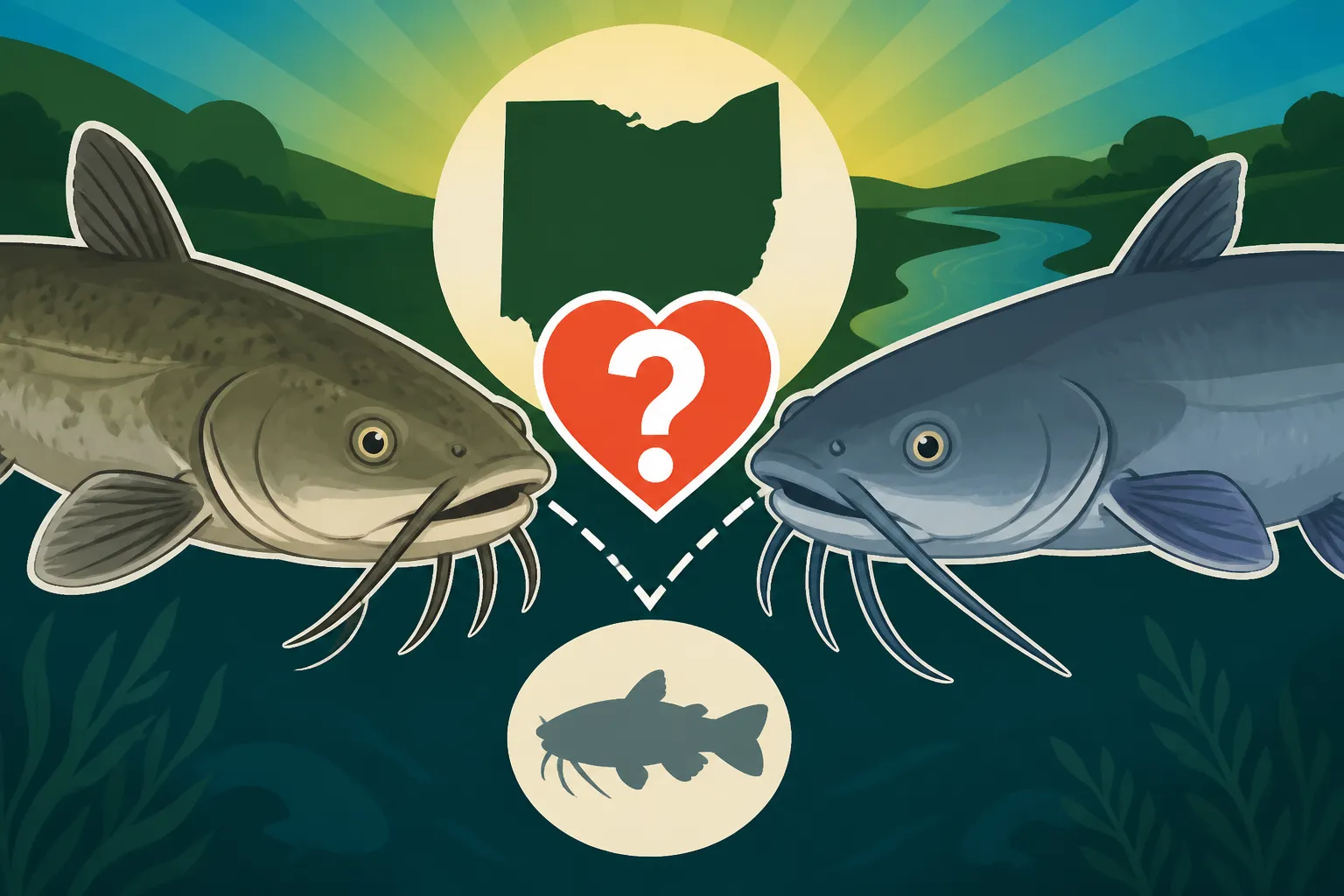
Do Channel Catfish and Blue Catfish Interbreed?
You know, there’s nothing quite like pulling a good catfish out of the murky depths of an Ohio river or lake. But every now and then, you might hook into something that makes you scratch your head a little. It’s got some features of a Channel Catfish, but then it’s got a hint of a Blue Catfish, and suddenly you’re left wondering: "What exactly is this thing? Did these two species get together and make a baby?" It’s a common question, and one that has real implications for identifying your catch and understanding Ohio's diverse aquatic life. This guide is here to clear up that confusion, diving deep into whether Channel and Blue Catfish actually interbreed and what that means for your next fishing trip.
The Catfish Family in Ohio: A Quick Refresher on the Parents
Before we dive into the fascinating world of hybrids, let’s quickly remind ourselves of the two main players we’re talking about: the Channel Catfish and the Blue Catfish. They're both iconic in Ohio waters, providing thrilling fights and delicious meals, but they do have their distinct characteristics. Understanding these "parent" traits is the first step in spotting their potential offspring.
Channel Catfish Characteristics
The Channel Catfish is probably the most widely recognized catfish species in Ohio, and for good reason. They're found almost everywhere, from small ponds to mighty rivers. When you picture a classic catfish, you're likely thinking of a Channel Cat.
They typically have a deeply forked tail, a sleek body, and often, though not always, scattered black spots along their sides, especially when they're younger. As they mature, these spots can fade significantly, which sometimes adds to the identification puzzle. A key identifying feature is their anal fin, which is somewhat rounded and has between 24 and 29 rays. Their color can vary greatly depending on the water they live in, from a greenish-gray to almost black. Channels are opportunistic feeders, often found near cover like submerged logs, rock piles, or undercut banks, and they aren’t afraid to cruise open water. If you’re targeting them, you’ll find that Ohio Channel Catfish Fishing Guide provides a wealth of information on their habits and how to catch them.
Blue Catfish Characteristics
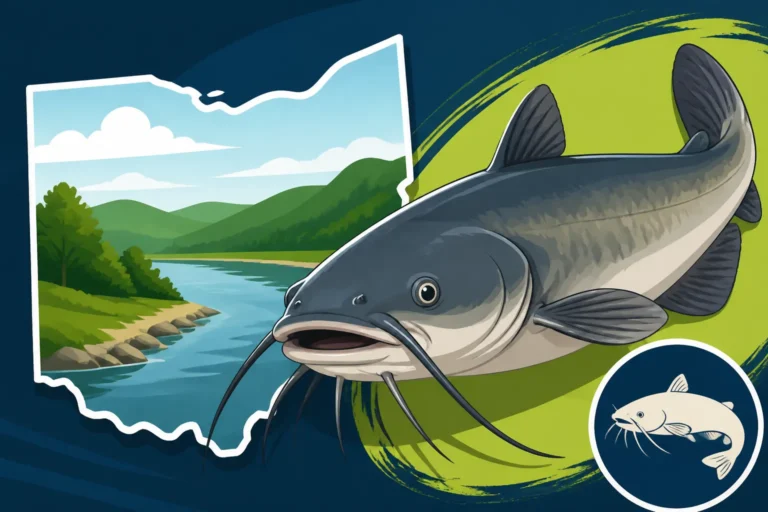
Blue Catfish are the true giants of Ohio’s catfish world, especially in larger river systems like the Ohio River. They have a reputation for growing absolutely massive, making them a favorite target for trophy anglers. Unlike the Channel Catfish, Blues typically do not have spots. Their body coloration is usually a steely blue or gray, fading to white on their belly.
But the most reliable way to identify a Blue Catfish is by its anal fin. It has a much straighter, longer edge and a higher ray count, typically between 30 and 36 rays. Their tail is also deeply forked, often even more so than a Channel Catfish. Blues prefer large, deep rivers with strong currents and are often found in main channels, scour holes, and around submerged structures. They're truly powerful fish, and a proper identification is key, not just for bragging rights, but for adhering to regulations. More details can be found in Ohio Blue Catfish Identification.
Why Identification Matters
Beyond the simple curiosity, knowing exactly what kind of catfish you've caught can be crucial. Different species, even within the same genus, can have varying regulations regarding size limits, bag limits, and even consumption advisories. Imagine reeling in what you think is a Channel Cat, only to find out it's a Blue Cat with a different minimum length! Plus, understanding their distinct characteristics helps you become a better angler, tailoring your baits and techniques to their specific preferences. For a comprehensive overview of rules, check out Ohio Fishing Regulations Every Angler Should Know.
The Surprising Truth: Yes, They Can and Do Interbreed!
Okay, let's get right to it: the answer to whether Channel Catfish and Blue Catfish interbreed is a resounding yes! It might surprise some folks, but these two species are close enough genetically that they can produce fertile offspring. This isn't just a rare anomaly; it's a recognized occurrence in many waters where their populations overlap.
Natural Occurrences vs. Stocking Programs
While interbreeding can happen naturally in large river systems where both species coexist and spawn in similar conditions, it's often exacerbated by human intervention, specifically through stocking programs. In an effort to enhance fishing opportunities or develop faster-growing, hardier catfish for aquaculture, fisheries managers and private hatcheries have sometimes intentionally crossed Channel Catfish with Blue Catfish.
These "hybrid catfish" can sometimes exhibit what's called "hybrid vigor," meaning they might grow faster or be more resistant to certain diseases than their parent species. So, whether you're fishing a sprawling reservoir that's been stocked with various catfish strains or a massive river like the Ohio River where both species thrive, encountering a hybrid is a real possibility. When you're out on the Ohio River Fishing Guide trip, for instance, you're fishing prime territory for such encounters.
The Science of Hybridization in Catfish
Biologically speaking, Channel Catfish (Ictalurus punctatus) and Blue Catfish (Ictalurus furcatus) both belong to the same genus, Ictalurus. This close genetic relationship is what allows them to successfully interbreed. When different species within the same genus produce offspring, those offspring are called hybrids. It's a bit like a horse and a donkey producing a mule, but with an important distinction we'll get to shortly.
The fascinating part about the Channel Catfish x Blue Catfish hybrid is that the offspring are often fertile. This isn't always the case with hybrids; mules, for example, are sterile. But these catfish hybrids can reproduce, which means the genetic lines can continue to mix in the wild, leading to a truly diverse, and sometimes confusing, catfish population.
The "Hybrid Vigor" Phenomenon
As mentioned, one of the reasons these hybrids are sometimes produced intentionally in aquaculture is for "hybrid vigor." This term describes the tendency of a crossbred individual to show qualities superior to those of both parents. For catfish, this often translates to faster growth rates, larger size potential, or increased hardiness against environmental stresses. For anglers, this can mean a fantastic fight and more meat on the table! It's a win-win, even if it adds a layer of mystery to your fish identification.
Identifying the Elusive Hybrid Catfish
So, you've got a fish on the line, and you're thinking, "Is this a purebred, or did two different species decide to have a party?" Identifying a hybrid catfish can be a bit tricky because they often display a mix of characteristics from both parent species. They're like that kid who looks a lot like Mom but has Dad's nose. However, there are some key markers you can look for that will help you solve the mystery.
Key Identification Markers
When trying to figure out if you've landed a hybrid, you'll need to pay close attention to the features we discussed earlier for both Channel and Blue Catfish. The hybrid will typically fall somewhere in between.
-
Anal Fin Ray Count: This is, hands down, the most reliable characteristic for distinguishing between Channel, Blue, and their hybrids.
- Channel Catfish: 24-29 rays, with a rounded edge.
- Blue Catfish: 30-36 rays, with a straight edge.
- Hybrid Catfish: Often, a hybrid will have an anal fin ray count somewhere in the middle, perhaps 28-32 rays. The shape might also be intermediate, not quite as rounded as a Channel, but not as perfectly straight-edged as a Blue. Counting these fin rays can be a tedious task, but it’s the definitive method. You can gently spread the fin and count the individual spines and rays. A good, waterproof Amazon fish identification guide can be incredibly helpful for visual comparisons and counting techniques.
-
Body Shape and Coloration: These traits are less definitive but can offer clues. A hybrid might have a body shape that's bulkier than a typical Channel but not as robust as a large Blue. Its coloration might be a duller gray than a Blue, but without the distinct spots often found on younger Channels. Sometimes they retain faint spotting, even into maturity, unlike pure Blues.
-
Tail Shape: While both species have forked tails, the depth of the fork can sometimes be an indicator. Hybrids might have a fork that isn't quite as deep as a Blue, but more pronounced than some Channels.
A Hypothetical Scenario
Imagine you’re fishing the lower Scioto River, a tributary to the mighty Ohio. You hook into a solid catfish. As you bring it to the boat, you notice its coloration is generally silvery-gray, with no clear spots, which makes you think "Blue." But then you look at its anal fin – it's definitely longer than a typical Channel, but the edge isn't perfectly straight; it has a slight curve. You take a moment to count the rays, and you get 30. That number falls right in the overlap zone, suggesting a strong possibility of a hybrid. Its tail is deeply forked, but maybe not quite as sharply pointed as the biggest Blues you've seen. These subtle differences, taken together, point strongly to a hybrid.
Tools for Identification
To truly master catfish identification, especially when hybrids are involved, investing in a good fish identification guide for Ohio is invaluable. You can find excellent waterproof versions that you can keep right in your tackle box or boat on Amazon. These guides often have detailed illustrations and descriptions, sometimes even specific notes on hybrid characteristics. Consulting experienced local anglers or wildlife officers can also provide real-world insights, as they’ve seen countless fish come out of local waters.
Why Hybrid Catfish Matter to Ohio Anglers
So, you've identified a hybrid catfish. What's the big deal? Well, beyond the scientific curiosity, there are a few practical reasons why understanding these interbred fish is important for us anglers in Ohio.
Regulations and Bag Limits
This is probably the most crucial point. In many cases, state fishing regulations don't specifically differentiate between pure Channel Catfish, Blue Catfish, or their hybrids. Often, they are simply grouped under "catfish" with a general statewide daily bag limit and sometimes a minimum size limit. For example, Ohio Catfish Daily Bag Limit usually applies across the board for these species. However, always double-check the latest regulations booklet or the Ohio Department of Natural Resources (ODNR) website. Special regulations might exist for specific bodies of water, or for certain size ranges, particularly for trophy-sized Blue Catfish. If you catch a fish that looks like a hybrid and you're unsure, treating it as the more restrictive parent species (e.g., if Blue Catfish have a stricter limit) is always the safest bet.
Fishing Strategies
Do hybrid catfish behave like a Channel or a Blue? From an angling perspective, they tend to exhibit traits of both. They are often aggressive feeders, similar to their Channel Catfish parents, and can be caught using a wide variety of baits, from cut bait to stink baits, and even some artificial lures. Given their potential for hybrid vigor, they might also grow to impressive sizes, making them a formidable opponent on the line, much like a Blue Cat. This means that if you're fishing a spot where both Channels and Blues (and thus hybrids) are present, you'll want a versatile setup. Consider baits that appeal to both, such as fresh cut shad or skipjack, which can entice both species. A sturdy rod and reel setup designed for Best Baits for Ohio Catfish will serve you well.
Culinary Considerations
The good news here is that hybrid catfish are generally considered excellent table fare. They taste very similar to their parent species, offering firm, white, mild-flavored meat. Just like purebred Channel and Blue Catfish, the quality of the meat can depend on the water quality and the fish's diet. Generally, smaller to medium-sized catfish are preferred for eating, as larger fish can sometimes develop a stronger, more "muddy" flavor, though this is highly subjective. So, if you've landed a legal hybrid, you can certainly look forward to a delicious meal!
The Future of Ohio's Catfish Populations and Hybrids
The existence of fertile hybrids between Channel and Blue Catfish isn't just a curious anomaly; it speaks to the dynamic nature of fish populations and the ongoing interplay between species, whether natural or influenced by stocking efforts.
Fertile Hybrids: What Does It Mean?
As we discussed, one of the most interesting aspects of the Channel Catfish x Blue Catfish hybrid is their fertility. Unlike many other interspecies crosses in the animal kingdom, these catfish hybrids are often capable of reproducing themselves. This means that if two hybrids mate, or a hybrid mates with a purebred Channel or Blue Catfish, they can produce more offspring. This ongoing genetic exchange contributes to the complexity of identifying catfish in certain waters.
For now, this hasn't generally been seen as a significant ecological problem in Ohio. The populations of both Channel and Blue Catfish remain strong, and the hybrids simply add another layer of diversity to the fishery. It's a testament to the adaptability of these fish species.
Ecological Impact (Minimal for Now)
While hybridization in other species can sometimes lead to concerns about "genetic swamping" (where a native species' genes become diluted by a more dominant or introduced species), this isn't currently a major concern for Ohio's Channel and Blue Catfish populations. Both species are robust, and the hybrids seem to integrate well into the existing ecosystem. They fill similar ecological niches and contribute to the overall biomass of the fishery.
The Angler's Role
As anglers, our role is to be informed and responsible stewards of Ohio’s aquatic resources. This means:
- Staying Informed: Keep up-to-date with the latest fishing regulations from the ODNR. Changes can occur, and it's our responsibility to know them.
- Accurate Identification (as best we can): While it's tough to be 100% certain with every hybrid, understanding the key identifiers helps you accurately record your catch (if you participate in citizen science programs) and ensures you're following all rules.
- Practicing Responsible Fishing: Whether it's a purebred or a hybrid, always handle fish carefully, especially if you plan to release them. Use appropriate gear to minimize stress and ensure a strong release. Learning How to Handle and Release an Ohio Muskie might be overkill for a catfish, but the principles of careful handling apply to all fish.
Ultimately, the fact that Channel Catfish and Blue Catfish interbreed adds a fascinating wrinkle to the rich tapestry of Ohio fishing. It reminds us that nature is always full of surprises and that our waters are teeming with dynamic life. So, the next time you reel in a catfish that looks a little "different," you'll have a better understanding of why, and how to appreciate this unique contribution to our fishing heritage. Get out there, explore those waters, and enjoy the mystery!
Disclaimer
This article is for general informational purposes only and does not constitute professional advice. Laws, prices and regulations vary by location and change over time. Consult a qualified professional for guidance on your specific situation.