What Counts as a Jumbo Perch on Lake Erie
There's nothing quite like the excitement of a Lake Erie yellow perch fishing trip, but sometimes, when folks talk about landing a "jumbo perch," it can leave you scratching your head. What exactly qualifies as a jumbo? Is there some secret angler's code or an official rulebook? This guide is here to clear up that mystery, giving you a realistic understanding of what seasoned Ohio anglers consider a truly massive yellow perch from the Walleye Capital of the World.
The Angler's Code: Defining a "Jumbo Perch" on Lake Erie
When you hear someone bragging about a "jumbo perch" on Lake Erie, they're not usually referring to an official designation by the Ohio Department of Natural Resources (ODNR). The ODNR sets daily bag limits and sometimes length restrictions for certain species, but "jumbo" is more of a term of endearment, a badge of honor among anglers. It speaks to a certain size and girth that goes beyond your everyday keeper.
Why "Jumbo" Isn't an Official Legal Term
Unlike some other species that might have strict minimum length limits to protect juvenile fish or promote trophy management, yellow perch on Lake Erie typically don't have a minimum size limit. The focus is usually on daily bag limits to ensure sustainable populations. This means that a "jumbo" isn't legally defined; you won't find it printed in your Ohio Fishing Regulations Every Angler Should Know booklet. It's a qualitative assessment, born from years of experience on the water and the collective understanding of what a truly impressive perch looks and feels like when you pull it from the deep.
The lack of a formal definition can sometimes be a source of good-natured debate at the dock or around the fish cleaning station. One angler's "nice perch" might be another's "just barely a keeper." But when a real jumbo hits the deck, there's usually a unanimous nod of approval. It's about recognizing that exceptional specimen that stands out from the rest of the school.
The Unofficial Consensus: Length and Weight Expectations
So, if there’s no official rule, what do anglers generally agree on? Most Lake Erie veterans would tell you that a true "jumbo perch" starts when the fish hits 10 inches in length. But it's not just about length; it's also about girth and weight. A perch that's 10 inches long but skinny might be a nice fish, but a jumbo has that deep, wide-bodied profile, often weighing in at a pound or more. Many true jumbos will push past 12 inches, sometimes even hitting 14 inches or more, and can weigh 1.5 to over 2 pounds. That's a substantial amount of fish!
It’s the combination of impressive length and significant weight that truly makes a perch a "jumbo." Imagine a fish with shoulders like a small football, a belly full of Lake Erie's bounty, and a vibrant color that just screams health and age. That's the kind of yellow perch that makes an angler's heart skip a beat. When you're cleaning a cooler full of perch and you pull out one that makes you pause and say "wow," that's a jumbo. For more on typical sizes, check out How Big Yellow Perch Get on Lake Erie.
The Thrill of the "Trophy" Perch
Catching a jumbo perch isn't just about the size; it's about the challenge and the rarity. While Lake Erie is renowned for its incredible yellow perch fishery, pulling out a true jumbo is a special event. These older, larger fish are often warier and can be a bit more elusive. They represent the apex of their species in the local ecosystem.
The fight they put up is also distinctly different. While smaller perch offer a fun, quick tug, a jumbo will give you a solid, sustained pull. You'll feel the weight, the head shakes, and sometimes a surprising burst of energy, especially in deeper water. It’s a moment that can make your entire fishing trip, and many anglers specifically target these larger specimens, even if it means fewer fish in the cooler overall. It’s a testament to the health of Lake Erie's fishery that these magnificent fish are still caught with regularity.
What Makes a Perch a Jumbo on Lake Erie? Factors Influencing Size
Lake Erie is a powerhouse when it comes to producing large fish, and yellow perch are no exception. Several factors contribute to why certain perch grow to such impressive "jumbo" proportions in these waters. It's a combination of environment, food, and simply the passage of time.
The Abundance of Lake Erie's Pantry
One of the primary reasons Lake Erie perch can reach jumbo sizes is the sheer abundance of food. The lake's western and central basins, in particular, are incredibly fertile, providing a rich smorgasbord for yellow perch. Their diet is quite varied, including insect larvae, small crustaceans, shiners, emerald shiners, and unfortunately, the invasive round goby. While gobies are a nuisance, they also provide a high-protein food source that helps perch pack on the pounds quickly.
A thriving ecosystem means constant access to nutrient-rich meals, allowing perch to grow faster and larger than they might in less productive waters. Think of it like a buffet for fish – when the food is plentiful and nutritious, the diners grow big and strong. This consistent food supply throughout their lives directly contributes to their ability to achieve that impressive jumbo status.
Optimal Habitat and Water Quality
Despite its industrial history, Lake Erie has seen significant improvements in water quality over the decades, creating a healthier environment for its fish populations. Yellow perch thrive in diverse habitats, and Lake Erie offers plenty of options, from shallow, weedy bays to deeper, open-water structure. The lake's depth, particularly in the central basin, provides cooler water during the hot summer months, allowing larger, older perch to retreat to comfortable temperatures while still having access to food.
The vastness of Lake Erie also means less competition for resources compared to smaller, confined bodies of water. Perch can roam and find optimal feeding grounds, whether they are Drift Fishing for Lake Erie Yellow Perch in the open water or hugging bottom structure. Healthy habitat means healthy fish, and healthy fish have the potential to grow to jumbo proportions. Different zones, like the ones discussed in Lake Erie Yellow Perch Zone Limits, often have varying habitat features that can influence perch growth.
Age and Genetics: The Time Factor
Simply put, a jumbo perch is an old perch. It takes several years for a yellow perch to reach the 10-inch, 1-pound mark, let alone the 12-14 inch giants. These fish have successfully navigated predators, angling pressure, and environmental challenges for many seasons. The average lifespan of a yellow perch can be 6-10 years, and it's these older, more experienced fish that typically reach the coveted jumbo size.
Genetics also play a role. Just like in any species, some individual perch are predisposed to grow larger and faster than others. These genetically superior fish, combined with ideal environmental conditions and an abundant food supply, are the ones most likely to become true Lake Erie jumbos. So, when you catch one, you're not just catching a big fish; you're catching a survivor, a testament to its resilience and the lake's vitality.
Spotting and Successfully Landing These Lake Erie Giants
Catching a jumbo perch often comes down to recognizing the signs and adjusting your approach. While many anglers are happy to catch any keeper-sized perch, specifically targeting the larger ones can sometimes mean a slight tweak to your strategy and gear.
Visual Cues and the Thrill of the Net
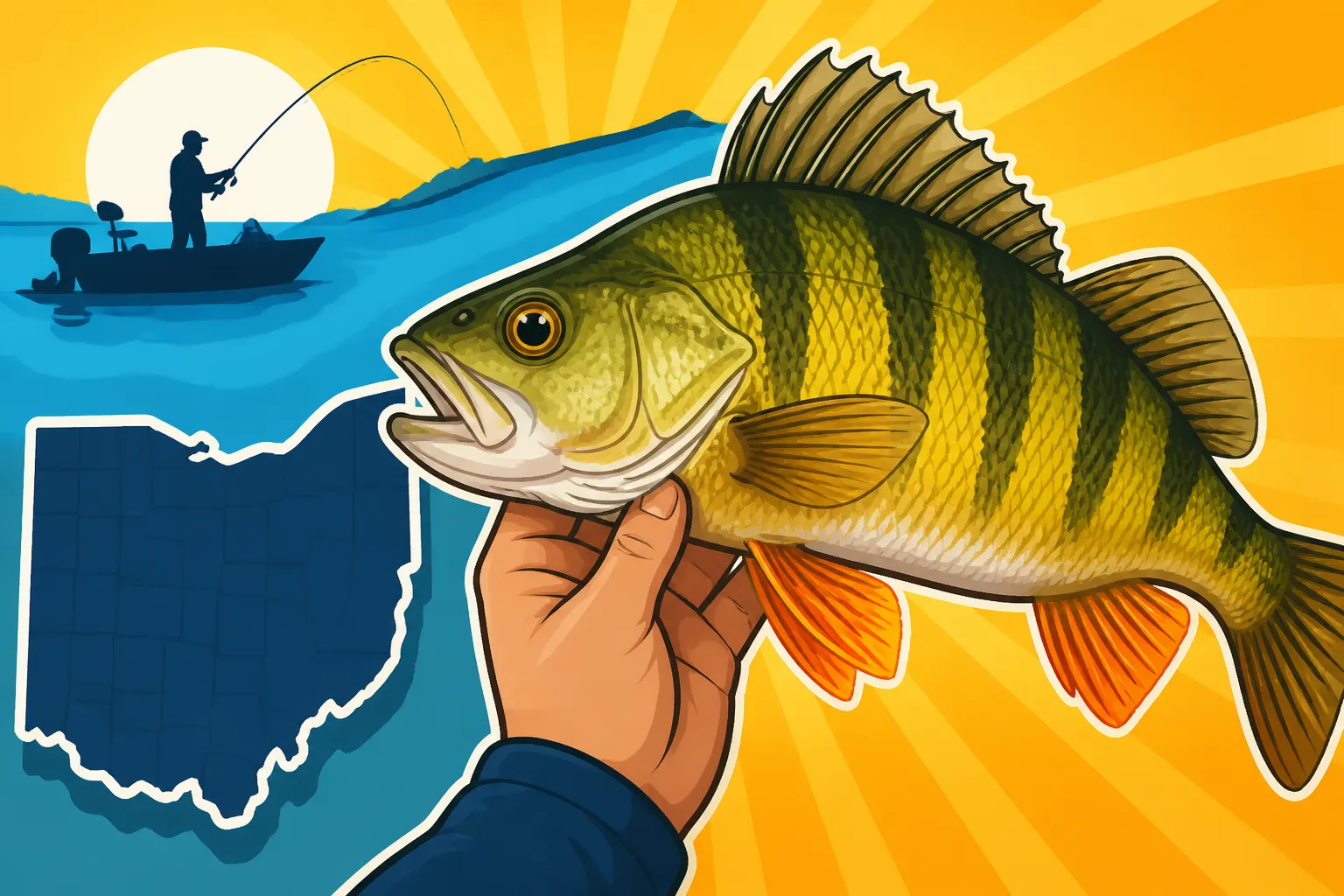
You'll know a jumbo when you see it. It's not just a long fish; it's a thick fish. Look for a deep body, broad shoulders, and a head that seems proportional to a much larger fish than you might expect. The colors can often be more vibrant, with pronounced olive green banding and bright orange fins. When you're pulling a stringer of perch, the jumbo will undeniably stand out, almost looking like a different species compared to its smaller brethren.
The fight is often the first clue. A consistent, heavy throb on the line as you reel it up from 30-50 feet of water usually signals something substantial. When it finally breaks the surface, there's an immediate recognition. Often, it's those few extra inches in length combined with the sheer bulk that defines it. Getting it into the net safely is crucial, as their weight can make them prone to flopping off the hook right at the boat.
Targeting Jumbo Perch with the Right Gear and Approach
While regular perch gear will certainly catch jumbos, if you're seriously hunting for the biggest, you might consider stepping up your tackle slightly. A medium-light to medium action rod with a bit more backbone can help you handle the heavier fight and potentially larger weights you're bringing up. Using a quality reel spooled with 6-8 pound test monofilament or braid will provide the sensitivity and strength needed.
When it comes to bait, live emerald shiners are often king, but sometimes a larger minnow or even a small piece of cut bait can entice the bigger, more opportunistic jumbos. Standard perch rigs, like spreaders, are effective, but consider using slightly larger hooks to accommodate bigger baits and ensure a solid hookset on a thicker mouth. Many experienced anglers will even search Amazon for specialized perch rigs or larger minnow buckets to keep their bait lively. For more on effective setups, check out Best Rig for Yellow Perch on Lake Erie.
Where the Big Ones Hide on Lake Erie
While yellow perch are schooling fish, the largest jumbos often hang out in slightly different areas or depths than the smaller ones. They might be found in deeper water, sometimes away from the main schools of smaller fish, seeking out larger forage and less competition. Look for areas with subtle changes in bottom contour, rocky reefs, or transition zones between different bottom types.
The western and central basins of Lake Erie are historically known for producing excellent perch fishing. In the Western Basin, you might find them around the island areas or deeper channels, while in the Central Basin, they often relate to the "mud flats" or deeper breaks. Pay attention to your fish finder; sometimes, you'll see large, isolated arcs that could indicate a small pod of bigger fish. Weather patterns and water temperature also play a role; learning Best Month to Catch Yellow Perch on Lake Erie can help you time your trips for optimal jumbo potential. Always consult your chart for current Ohio's Lake Erie Yellow Perch Grounds.
Here's a quick look at what most anglers consider the difference:
| Characteristic | Standard Lake Erie Yellow Perch | Jumbo Lake Erie Yellow Perch |
|---|---|---|
| Length | 7-9 inches | 10+ inches (often 12-14+) |
| Weight | 0.25 – 0.75 lbs | 1 lb+ (often 1.5 – 2 lbs+) |
| Girth | Slender to moderately full | Deep, wide-bodied, thick |
| Fight | Good, but often quick | Strong, sustained pull |
| Age | 3-5 years | 6+ years |
| Rarity | Common | Less common, highly prized |
The Unforgettable Experience of Landing a Jumbo
Catching a jumbo perch is more than just adding a few inches to your cooler; it's an experience that leaves a lasting impression. From the moment you feel that distinct pull to enjoying the fruits of your labor, these fish provide a special kind of satisfaction.
The Adrenaline Rush of the Fight
Imagine you're out on Lake Erie, maybe How to Fish for Perch Near the Bottom on a spreader rig with live minnows, and suddenly, your rod tip doubles over with a solid throb. This isn't the usual light tap-tap-tap of smaller perch. This is a deliberate, heavy pull. As you reel, the fish fights with a surprising power, head-shaking and diving. You carefully work it up from the depths, feeling every inch of its struggle. The anticipation builds as it gets closer to the surface. Is it a double? A stray walleye? No, it's that tell-tale broad flash of gold and green, and you realize you've hooked into a genuine Lake Erie jumbo. The adrenaline kicks in, and the net makes a satisfying sweep, securing your prize.
This moment, the sustained fight of a truly large perch, is what keeps many anglers coming back. It’s a testament to the fish’s strength and the thrill of the chase. You feel a real connection to the powerful ecosystem that is Lake Erie.
Culinary Delights: A Feast for the Palate
Beyond the fight, a jumbo perch offers an exceptional culinary experience. The firm, flaky white meat of Lake Erie yellow perch is legendary, often considered one of the best-tasting freshwater fish. A jumbo perch provides a much larger fillet, making for a truly substantial and satisfying meal. Whether pan-fried, baked, or broiled, the flavor is sweet and mild, perfect for any seafood lover. There's nothing quite like preparing and sharing a meal made from fish you've caught yourself, especially when it includes a few impressive jumbos.
The larger fillets from a jumbo also make cleaning a bit easier and more rewarding, giving you more meat for your efforts. Many anglers specifically seek out these larger fish for their superior table fare. Having a few jumbos mixed in with your limit of smaller keepers from Ohio Yellow Perch Fishing Guide makes for a truly epic fish fry. You might even look for specialized fillet knives on Amazon to handle these thicker fish.
Respecting the Resource: Conservation for Future Jumbos
While it's exciting to catch a jumbo perch, it's also important to remember their role in the fishery. These larger, older fish are often the most productive spawners, contributing significantly to future generations of perch. Practicing selective harvesting – keeping a few jumbos for the table but releasing some, especially during peak spawning times – can help ensure that Lake Erie continues to produce these incredible fish for years to come.
Understanding Yellow Perch Identification and Habits can help you make informed decisions. Good catch-and-release practices, like minimizing handling time and using appropriate landing nets, help ensure that any released fish have the best chance of survival. The goal is always to enjoy the resource responsibly, so that every angler can experience the thrill of catching a true Lake Erie jumbo.
Disclaimer
This article is for general informational purposes only and does not constitute professional advice. Laws, prices and regulations vary by location and change over time. Consult a qualified professional for guidance on your specific situation.