Do Ohio Lakes Have Spotted Bass?
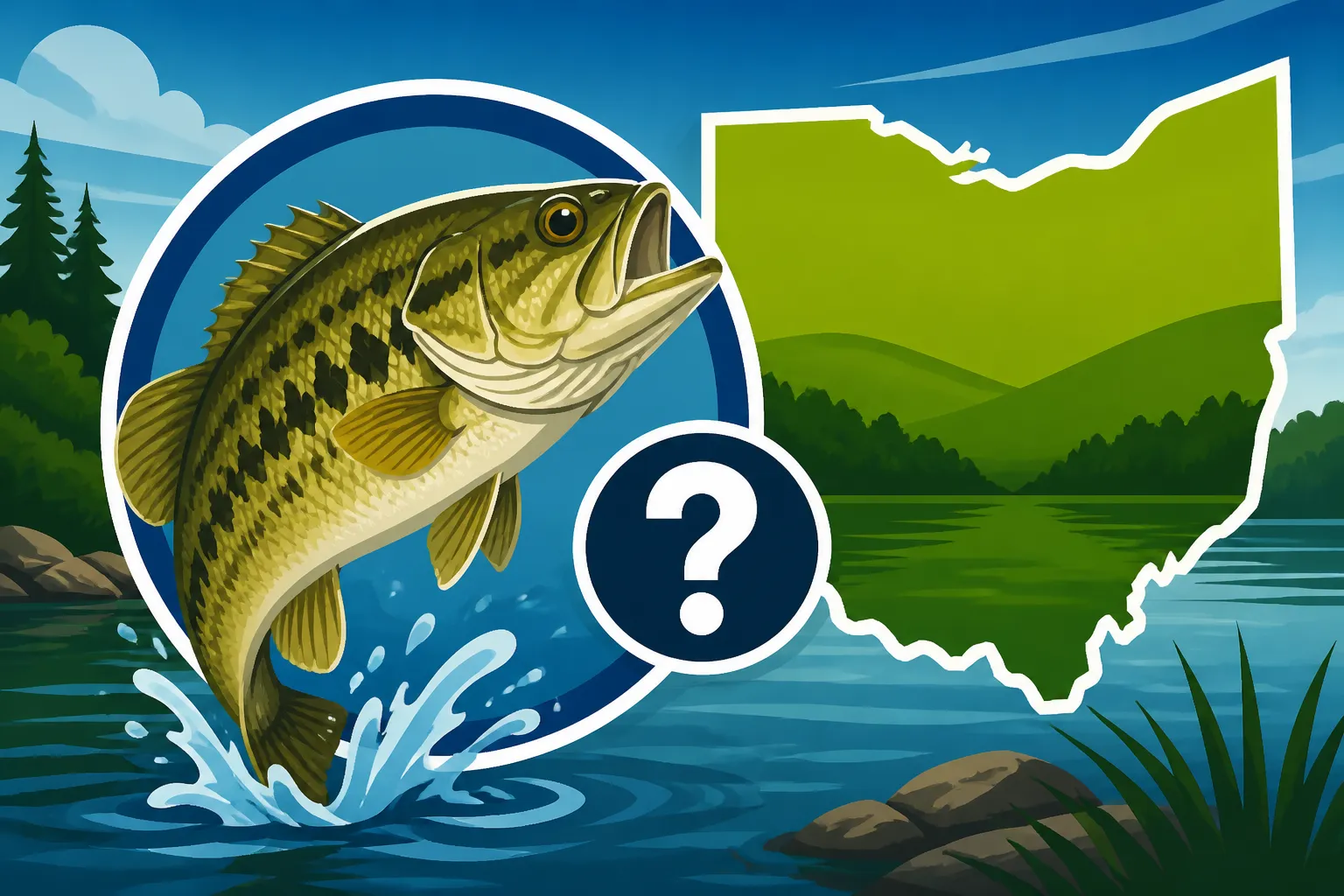
It's a common question that pops up in conversations among Ohio anglers: "Do Ohio lakes have spotted bass?" There's a persistent rumor, a whisper among fishing buddies, or maybe you saw a picture online that looked suspiciously like a spotted bass caught right here in the Buckeye State. It’s frustrating when you're trying to identify your catch or understand the local fishery, and the lines get blurry between similar-looking species. This guide is here to cut through the confusion and give you the definitive lowdown on spotted bass in Ohio, helping you understand what you're truly reeling in and where to focus your efforts for Ohio's fantastic black bass fishing.
Understanding Ohio's Black Bass Landscape
Ohio is a state rich in angling opportunities, and when it comes to black bass, most anglers immediately think of largemouth and smallmouth bass. These two species dominate our lakes, rivers, and even the mighty Lake Erie, providing countless hours of thrilling fishing. But sometimes, a fish comes to the boat, and it just doesn't quite fit the typical largemouth or smallmouth mold, leading to the "spotted bass" question.
The Elusive Nature of Spotted Bass in Ohio
Let's get right to it: the short answer is that Spotted Bass are not considered a naturally established, reproducing population in Ohio lakes. While there might be anecdotal reports or the rare, accidental stocking from a private pond, the Ohio Department of Natural Resources (ODNR) does not recognize a significant, fishable population of spotted bass within Ohio's public waterways. This can be a bit of a letdown if you were hoping to add another species to your Ohio catch list, but understanding why this confusion exists is key.
Often, what anglers think might be a spotted bass is actually a largemouth or smallmouth bass with slightly unusual markings, or perhaps a hybrid. It's easy to make an honest mistake, especially when you're excited about a catch and the fish isn't perfectly displaying all its textbook characteristics. Environmental factors, water clarity, and even diet can subtly alter a fish's appearance, making identification a fun, albeit sometimes challenging, part of the sport.
Why the Confusion? Identifying Common Bass Species
The confusion surrounding spotted bass often stems from their physical similarities to both largemouth and smallmouth bass. All three are part of the Micropterus genus, often called "black bass" due to their generally darker coloration compared to other sunfish. They share similar body shapes and habitat preferences, especially when they are juveniles.
For instance, both spotted bass and largemouth bass have a prominent dark lateral line running down their sides. Spotted bass also have rows of spots below this line, which can sometimes appear on largemouths, especially younger ones, causing misidentification. Smallmouth bass, with their vertical barring and bronze hue, generally look quite different, but in certain conditions or certain bodies of water, even they can exhibit markings that might lead an angler to pause. The key is to look at a combination of features, not just one, which we'll dive into shortly. Remember, accurate identification helps us understand our fisheries better and ensures we're following the right Ohio Fishing Regulations Every Angler Should Know.
Separating Fact from Fiction: Are Spotted Bass Really Here?
It's natural to wonder, especially when you encounter a fish that just looks a little "off" compared to what you usually catch. Anglers are always looking for something new, something different, and the idea of a less common species like the spotted bass popping up in Ohio waters is definitely exciting. However, the scientific and biological reality needs to be considered.
The Official Stance from Ohio Wildlife Resources
The Ohio Department of Natural Resources (ODNR) Division of Wildlife maintains detailed records and conducts extensive surveys on fish populations across the state. Their official stance has consistently been that spotted bass are not an established species in Ohio. This isn't to say that a single, rogue spotted bass has never been caught. It's possible for individuals to be illegally introduced from other states, or perhaps escape from private ponds that were stocked with them. However, for a species to be "established," it needs to be reproducing consistently, maintaining a population, and contributing to the local ecosystem on a broader scale.
Think of it this way: if a single dandelion seed blows into a pristine rose garden, you might see one dandelion pop up. But that doesn't mean the dandelion is established in the rose garden unless it starts spreading, growing in numbers, and truly becoming a part of the landscape. The same principle applies to fish species. For Ohio, largemouth and smallmouth bass are firmly established and thriving, offering fantastic fishing opportunities. If you're looking for guidance on catching these, our Ohio Largemouth Bass Fishing Guide and Ohio Smallmouth Bass Fishing Guide have you covered.
Anecdotal Sightings and Misidentifications
Many of the reports of spotted bass in Ohio are, understandably, cases of misidentification. There are a few key reasons for this:
- Regional Differences: Anglers who have fished in states further south, where spotted bass are prevalent (like Kentucky, Tennessee, or Alabama), might mistakenly identify a uniquely marked Ohio bass as a spotted bass based on their experience.
- Subtle Variations: Individual bass can have natural variations in their coloration and spotting patterns. A largemouth bass might have a more broken lateral line, or distinct spots below it, especially when young or in certain water conditions, leading to confusion.
- Environmental Factors: The clarity of the water, the type of forage available, and even the substrate of the lake bottom can influence a fish's coloration. A largemouth from a clear, rocky lake might look quite different from one caught in a murky, vegetated pond.
- Young Fish: Juvenile largemouth and smallmouth bass can sometimes have markings that closely resemble those of juvenile spotted bass, making identification even trickier for the untrained eye.
It's a classic case of looking for what you expect to find. If you've heard whispers of spotted bass in a certain lake, your brain might be more inclined to identify a fish with similar features as such, even if it's technically a different species. This is why having a clear understanding of the definitive identification characteristics is so important.
What to Look For: Key Identification Features
So, if you catch a bass in Ohio and it doesn't quite look like your typical largemouth or smallmouth, how can you be sure? It comes down to a few critical anatomical features. Don't just rely on one; look for a combination of these traits.
Discerning Spotted Bass from Largemouth Bass
The most common mix-up is between spotted bass and largemouth bass. Here's how to tell them apart:
- Jaw Line: This is often the easiest and most reliable indicator. For a largemouth bass, when its mouth is closed, the corner of its jaw (maxillary) extends beyond the rear edge of its eye. For a spotted bass, the corner of its jaw extends to or only slightly beyond the rear edge of the eye, similar to a smallmouth.
- Lateral Line and Spots: Both have a dark lateral line. However, a spotted bass will typically have distinct rows of black spots below the lateral line, giving it a "spotted" belly appearance. While largemouths can have some mottling or a few spots, they usually don't have these distinct, organized rows.
- Tongue Patch: This is a definitive, but harder to check, feature. Spotted bass usually have a rough patch of teeth on the center of their tongue. Largemouth bass almost never do. You'd need to carefully open the fish's mouth and feel its tongue.
- Pyloric Caeca (Internal): This is a biological feature you'd only see during cleaning. Spotted bass have unbranched pyloric caeca (finger-like projections from the stomach), whereas largemouths have branched ones. Clearly, not a field identification method!
When you're out on the water, checking the jaw line is usually the quickest way to make a solid guess. Keep a ruler or tape measure handy, as you might need it for Ohio Largemouth and Smallmouth Bass Minimum Length Limit checks anyway.
How to Differentiate from Smallmouth Bass
Distinguishing spotted bass from smallmouth bass is also important, though typically less frequent in Ohio, as smallmouth have a more distinct appearance.
- Jaw Line: As mentioned, a smallmouth bass has a jaw line that extends to or only slightly beyond the rear edge of the eye, much like a spotted bass. So, this feature won't help you differentiate between these two.
- Coloration: Smallmouth bass typically have a bronze, brown, or golden-green coloration with distinct vertical bars or blotches along their sides, rather than a solid lateral stripe. Spotted bass have a prominent lateral line and the distinct spots below it.
- Dorsal Fins: The spiny and soft-rayed dorsal fins of a smallmouth bass are clearly connected, with little to no indentation. Spotted bass have a more pronounced, but still connected, dip between their dorsal fins, similar to a largemouth but not as deep.
- Fins and Scales: Smallmouth bass typically have a more uniform, smaller scale pattern and less prominent markings on their fins compared to the distinct spotting you might see on a spotted bass's tail or dorsal fin.
Equipment to Aid in Identification
Having the right tools can make all the difference when you're trying to identify a tricky catch.
- High-Quality Camera: A good photo allows you to examine the fish's features closely after release, or share it with experienced anglers for their input. Make sure to get clear shots of the head, body, and especially the jaw line with the mouth closed.
- Fish Identification Guide: A waterproof, laminated field guide specific to Ohio or the Great Lakes region can be invaluable. These guides often highlight the key differences with clear illustrations or photos. You can find excellent options on platforms like Amazon.
- Measuring Device: A standard tape measure or a bump board can help confirm length, which is crucial for regulation adherence and can sometimes give clues about species (though not usually for identification between these three bass types).
| Feature | Largemouth Bass | Smallmouth Bass | Spotted Bass (Generally Not in Ohio) |
|---|---|---|---|
| Jaw Line | Extends beyond the eye | Ends at or slightly before the eye | Ends at or slightly beyond the eye |
| Body Color | Dark green back, pale belly, distinct dark lateral line | Bronze to brownish green, vertical bars/blotches | Dark green back, pale belly, distinct dark lateral line, rows of spots below lateral line |
| Tongue | Smooth | Smooth | Rough patch of teeth (sometimes absent) |
| Dorsal Fins | Deep notch between spiny and soft fins | Connected, shallow notch | Connected, moderate notch |
| Body Shape | Typically more elongated, deeper body | More compact, football-shaped | Similar to largemouth but often stockier |
This table provides a quick reference, but always remember to observe multiple characteristics.
Fishing for Bass in Ohio: Focus on What You Know
Since spotted bass are not a common target in Ohio, your efforts are best spent understanding and pursuing the state's abundant and fantastic populations of largemouth and smallmouth bass. Ohio offers diverse habitats for both, promising exciting action whether you prefer quiet ponds or the vastness of Lake Erie.
Targeting Largemouth Bass in Ohio's Lakes
Ohio's largemouth bass fishery is incredibly robust. From small farm ponds to large reservoirs like Alum Creek Lake or Hoover Reservoir, largemouths thrive in areas with abundant cover. They love submerged vegetation, fallen trees, docks, and lily pads – anything that provides ambush points for their prey.
If you're targeting largemouths, focus on these types of structures. Popular techniques include:
- Pitching and Flipping: Using jigs, Texas-rigged worms, or creature baits into heavy cover.
- Crankbaits and Spinnerbaits: Covering water along weed lines and drop-offs.
- Topwater Lures: During low-light conditions or over shallow cover, nothing beats the explosive strike of a largemouth on a frog, popper, or buzzbait.
- Soft Plastics: Wacky rigs, Ned rigs, and senkos are incredibly effective when fished slowly around structure.
Many anglers find success using a medium-heavy baitcasting rod and reel, spooled with 12-17 lb fluorocarbon or monofilament line, especially when fishing around heavy cover. For lighter presentations, a spinning setup with 6-10 lb line is ideal. You can find a huge variety of these essential items on Amazon, from rods and reels to a wide array of lures. Best Ohio Bass Fishing Techniques offers more in-depth strategies for landing these green machines.
The Thrill of Smallmouth Bass in Rivers and Lake Erie
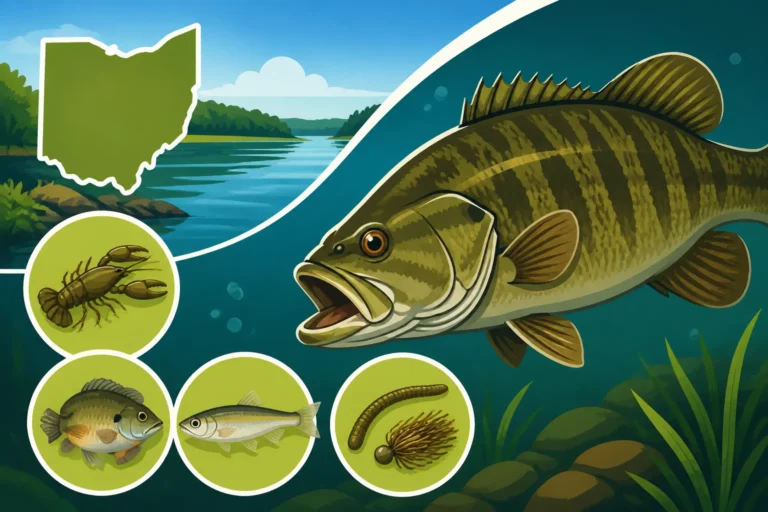
Smallmouth bass are often called "bronzebacks" for a reason – their fight is legendary, pound for pound. Ohio offers world-class smallmouth fishing, particularly in the tributaries of Lake Erie, the main body of Lake Erie itself, and many of our clear, rocky rivers.
Smallmouth prefer cooler, clearer water with rocky bottoms, gravel, and current. They are less tolerant of murky, warm water than largemouths. Key spots include:
- Lake Erie: The rocky reefs and islands of Lake Erie, especially the Western and Central Basins, are renowned for their trophy smallmouth. Does Lake Erie Have Good Smallmouth Bass Fishing? The battle with a big Lake Erie smallmouth is something every angler should experience.
- Ohio River and Tributaries: Many sections of the Ohio River and its feeder streams offer excellent smallmouth opportunities, particularly where rocky current breaks and eddies are found.
- Inland Lakes: Clear, deep, rocky inland lakes can also hold impressive smallmouth populations, though often less common than largemouths.
Techniques for smallmouth often involve finesse presentations, although they'll readily strike aggressive baits too:
- Tube Jigs: Imitating crayfish, a favorite smallmouth meal, tube jigs are incredibly effective on rocky bottoms.
- Drop Shot Rigs: Presenting small soft plastics precisely to suspended fish or those holding tight to structure.
- Ned Rigs: A subtle presentation that can entice even wary smallmouth.
- Spinnerbaits and Crankbaits: Covering water in rivers or along lake edges.
- Topwater: Smallmouth can be incredibly aggressive on topwater baits, especially during low light or when baitfish are active.
A medium-light to medium power spinning rod is often preferred for smallmouth, allowing for longer casts with lighter lures and better feel for subtle bites. Pair it with 6-10 lb fluorocarbon line for sensitivity and abrasion resistance against rocks. For more details on where to find them, check out Smallmouth Bass Habitat Preferences.
Respecting Ohio's Bass Regulations
Regardless of which bass species you're targeting, always be sure to know and follow current Ohio fishing regulations. Bag limits, size restrictions, and specific rules can vary by water body and change periodically. It’s crucial to consult the Ohio Fishing Regulations Every Angler Should Know booklet or the ODNR website before each fishing trip. Being a responsible angler means understanding the fish you catch and adhering to the rules designed to protect and enhance Ohio's valuable fisheries for generations to come.
Remember, while the spotted bass might remain an elusive ghost in Ohio's public waters, the state offers incredible opportunities to pursue its abundant and feisty largemouth and smallmouth bass. Focus on refining your techniques for these known species, and you'll undoubtedly have a fantastic time on the water.
Disclaimer
This article is for general informational purposes only and does not constitute professional advice. Laws, prices and regulations vary by location and change over time. Consult a qualified professional for guidance on your specific situation.