Why Lake Erie Produces Such Fast-Growing Walleye
It’s a question every angler who’s ever cast a line into Lake Erie has probably asked themselves, or at least pondered while battling a hefty walleye: "Why are these fish so big, and why do they grow so fast here?" It’s not just angler’s lore; Lake Erie truly is a powerhouse for walleye growth, consistently churning out some of the largest, healthiest fish you’ll find anywhere. This guide will dive deep into the unique conditions and factors that make Lake Erie the walleye capital of the world, exploring everything from its abundant food sources to its ideal habitat and smart management practices that keep the population thriving.
A Walleye Buffet: The Abundant Food Supply
One of the biggest secrets to Lake Erie's monster walleye is undeniably the sheer volume and quality of food available. Imagine a sprawling, all-you-can-eat buffet that never closes – that’s essentially what Lake Erie offers its walleye population. This isn't just about having some food; it's about having a diverse, protein-rich diet that allows these fish to pack on weight at an incredible rate.
Rich Forage Base of Small Fish
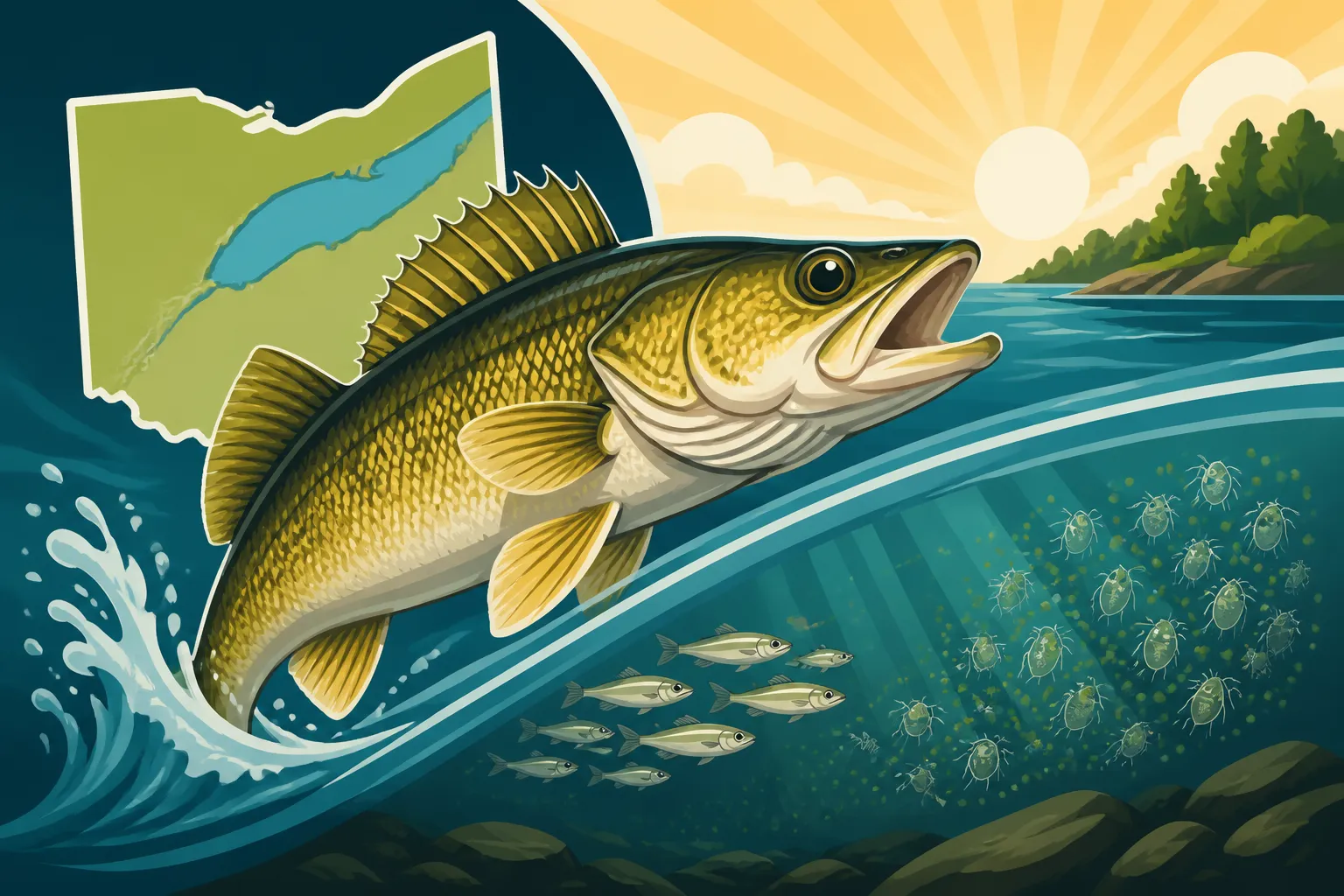
Walleye are opportunistic predators, and in Lake Erie, their primary diet consists of a variety of smaller, soft-rayed fish that are abundant throughout the lake. These baitfish are essentially growth fuel. For generations, the emerald shiner was king, providing a huge calorie boost for walleye, especially in the western basin. While shiner populations fluctuate, other species have stepped up to fill the void, ensuring the walleye never go hungry.
Gizzard shad, for instance, are prolific breeders and provide a readily available food source, particularly for juvenile walleye, allowing them to grow quickly right from the start. Alewives, though more common in the deeper central and eastern basins, also contribute to the menu, offering another high-protein option. This diversity means that even if one baitfish population dips, others are there to sustain the walleye. This rich forage base is a critical reason why you see such impressive Walleye Size and Age Growth Rates on Lake Erie.
The Role of Round Gobies in Walleye Growth
Now, here's a twist that might surprise some: even an invasive species has inadvertently contributed to the walleye's robust growth. Round gobies, originally from the Black and Caspian Seas, found their way into the Great Lakes and quickly established massive populations. While they initially raised concerns for their impact on native species, walleye, being the adaptable predators they are, learned to exploit this new food source.
Gobies are relatively slow, easy for walleye to catch, and provide a good caloric punch. Many anglers have cleaned walleye and found their stomachs packed with these bottom-dwelling invaders. While we certainly don't celebrate invasive species, the fact remains that the round goby has become a significant and consistent part of the walleye diet, especially in areas where they are dense. This added food source has undoubtedly contributed to the overall health and rapid growth of Lake Erie walleye, showcasing the walleye's incredible adaptability within the ecosystem. It's a complex dynamic, but one that undeniably plays a role in the lake's famed productivity. To learn more about other non-native species, you might be interested in our guide on Ohio Invasive Fish Species to Know.
Ideal Habitat and Water Quality
Beyond the endless buffet, Lake Erie itself is a near-perfect home for walleye, offering a combination of favorable geography, nutrient levels, and improving water quality that supports their entire life cycle. It's a delicate balance, but when conditions are right, as they often are in Erie, the walleye thrive.
A Shallow, Productive Western Basin
The western basin of Lake Erie is often cited as the "Walleye Capital of the World," and for good reason. It's incredibly shallow compared to the other Great Lakes, with an average depth of only about 24 feet. This shallow nature means it warms up quickly in the spring, stimulating plankton growth which forms the base of the food chain for baitfish. These baitfish then become food for walleye, creating a highly efficient ecosystem. The western basin is also relatively turbid, or cloudy, which walleye absolutely love. They have excellent low-light vision, giving them a distinct advantage over their prey in these conditions. This turbidity also provides a sense of security from predators above, allowing them to roam and feed more freely.
The rich, fertile bottom of the western basin, fed by rivers like the Maumee and Sandusky, is another key factor. These rivers carry nutrients that fuel the entire ecosystem, from microscopic organisms to the large schools of baitfish, creating a highly productive environment. This fertile ground also provides ideal areas for Walleye Spawning Behavior in Ohio, particularly on the reefs and shoal areas.
Nutrient-Rich Waters and Oxygen Levels
Lake Erie, particularly its western and central basins, is naturally more eutrophic than the other Great Lakes. This means it has higher levels of nutrients like phosphorus and nitrogen, which are the building blocks for aquatic life. While too many nutrients can lead to harmful algal blooms (which is a separate and ongoing management challenge), a healthy level of these nutrients is essential for a robust food web. This natural richness means more plant life, more invertebrates, more baitfish, and ultimately, more and bigger walleye.
Maintaining good oxygen levels, especially in the deeper central basin, is crucial. Historically, oxygen depletion (hypoxia) in the central basin's bottom waters was a major concern during summer. However, ongoing efforts to reduce nutrient runoff and improve water quality have shown positive trends. Healthy oxygen levels mean walleye can access all parts of the lake, including deeper, cooler waters during warm months, which is vital for their comfort and continued growth. When oxygen levels are robust, walleye can efficiently utilize the entire lake's resources, further contributing to their rapid development.
Optimal Water Temperature Ranges
Walleye are coldwater fish, but they thrive within specific temperature ranges. Lake Erie provides this perfectly, with distinct thermal stratification that allows walleye to find their preferred temperatures year-round. In spring and fall, the entire lake might be within their comfort zone, allowing them to spread out and feed aggressively. During the hot summer months, walleye can retreat to the cooler, deeper waters of the central and eastern basins, avoiding the heat stress that might limit growth in shallower, less thermally stratified lakes.
The shallow western basin, while warming quickly in spring, also cools efficiently in the fall, triggering intense feeding frenzies as walleye bulk up for winter. This constant availability of optimal temperatures allows walleye to maintain a high metabolism and feed actively for longer periods throughout the year, converting more of that abundant food into muscle and growth. Understanding the Water Temperature That Triggers Walleye Spawning is also key to appreciating how the lake’s thermal dynamics support a healthy reproductive cycle.
Robust Spawning Success and Management Efforts
Lake Erie doesn't just grow big walleye; it also has a phenomenal ability to produce vast numbers of them year after year. This isn't accidental; it's a testament to critical spawning habitats and decades of dedicated, science-based fisheries management.
Key Spawning Grounds and Natural Reproduction
The western basin of Lake Erie is home to some of the most critical walleye spawning grounds in North America. Reefs and shoals, particularly around the Bass Islands and the Maumee Bay area, provide the perfect substrate – rocky bottoms with good current – for walleye to lay their sticky eggs. Unlike many other species that rely heavily on river spawning, a significant portion of Lake Erie's walleye population spawns directly in the lake on these shallow, rocky structures.
The Maumee River also plays a vital role as a major tributary spawning ground, drawing hundreds of thousands of walleye upstream each spring for one of the largest walleye runs anywhere. This combination of both lake and river spawning sites creates a resilient reproductive system. If conditions are poor on the reefs one year, the river might compensate, or vice versa. This natural reproduction is the backbone of the entire fishery, ensuring a constant supply of new walleye to grow into the giants we all love to catch. These natural processes are detailed further in our Ohio Walleye Fishing Guide.
Science-Based Fisheries Management
Behind every thriving fishery is a team of dedicated scientists and managers, and Lake Erie is no exception. The Ohio Department of Natural Resources (ODNR), in cooperation with other state and federal agencies and neighboring jurisdictions (like Michigan, Pennsylvania, New York, and Ontario), has implemented robust, science-based management strategies for decades. These strategies are crucial because walleye populations, like any other, can fluctuate due to environmental factors or fishing pressure.
This management includes extensive population monitoring through netting surveys, creel censuses, and tagging programs. By understanding the health of the population, including the number of fish, their size, and recruitment (how many young fish survive to adulthood), managers can make informed decisions. This data directly influences regulations like daily bag limits and minimum size limits. For instance, specific regulations like Ohio Lake Erie Walleye Daily Bag Limit and Ohio Lake Erie Walleye Minimum Length Limit are carefully set to protect spawning stock and ensure enough walleye survive to reproduce and contribute to future generations of fast-growing fish. These regulations are not arbitrary; they are the result of careful analysis designed to maintain the lake's incredible productivity.
Stocking Programs as a Complement
While Lake Erie's walleye population is largely self-sustaining through natural reproduction, stocking programs can sometimes play a complementary role, especially in years with weaker natural hatches or in specific areas where populations might need a boost. These efforts are typically focused on enhancing the natural system, not replacing it. The ODNR works hard to ensure that any stocked fish are genetically appropriate and contribute positively to the overall health of the fishery.
These programs demonstrate a holistic approach to managing the walleye. It's about protecting the natural processes that make Lake Erie so unique while also providing a helping hand when needed. The combination of prolific natural reproduction, informed management, and, at times, strategic stocking, means that the lake can consistently produce the abundant, fast-growing walleye that make it such a legendary fishing destination. If you're looking to gear up for a Lake Erie walleye trip, you can find a huge selection of trolling gear, crankbaits, and even specialized walleye nets on Amazon to help you land those beauties.
How Lake Erie's Walleye Growth Impacts Anglers
So, what does all this mean for you, the angler? It means better fishing, plain and simple. When walleye grow faster and larger, it creates a more exciting and rewarding fishery. You're not just catching fish; you're catching substantial fish that put up a real fight.
More Trophy-Sized Fish
The rapid growth rate directly translates to more trophy-sized walleye being available in the lake. Anglers consistently pull fish weighing 8 to 12 pounds, and even larger, from Lake Erie's waters. This is a significant draw for local and out-of-state anglers alike, making Lake Erie a premier destination for those looking to land a true wall-hanger. The excitement of potentially hooking into a true monster walleye is a big part of the allure. For the latest gear that can handle these big fish, check out tackle options on Amazon.
Consistent Fishing Opportunities
Because of the robust spawning success and abundant food, Lake Erie tends to have very consistent year classes of walleye. While some years are stronger than others, there's rarely a complete bust. This consistency means that anglers can almost always find good fishing, whether they're targeting younger, eater-sized fish or bigger, older trophies. It makes planning a trip much more reliable, knowing that the walleye population is generally strong and healthy. Whether you're drift fishing with a worm harness or trolling with crankbaits, the odds are often in your favor. If you're planning a trip, exploring Best Time of Year to Fish Lake Erie for Walleye can help you maximize your success.
Economic Impact and Local Culture
The reputation of Lake Erie's fast-growing walleye has a massive economic impact on the surrounding communities. From charter boat captains in Port Clinton and Sandusky to tackle shops, restaurants, and hotels, the walleye fishery supports countless businesses. It creates a vibrant fishing culture along the lake's shores, where the excitement for the spring walleye run or a productive summer bite is palpable. Fishing for Ohio Lake Erie Walleye isn't just a pastime; for many, it's a way of life and a significant part of Ohio's identity. Finding quality equipment, from rain gear to specialized electronics, often starts with a quick search on Amazon for many savvy anglers.
The Future of Lake Erie Walleye
While Lake Erie's walleye fishery is a phenomenal success story, it's important to remember that it's a dynamic ecosystem that requires ongoing attention. Challenges like invasive species, nutrient runoff, and climate change are always present. However, the dedication to scientific management, combined with the lake's natural productivity and the adaptability of the walleye themselves, bodes well for the future.
Anglers play a crucial role too, by adhering to regulations, practicing responsible catch and release (especially for larger, older spawning females), and supporting conservation efforts. By working together, we can ensure that Lake Erie continues to be a world-class walleye fishery, producing fast-growing, healthy fish for generations to come. Understanding How Big Walleye Get on Lake Erie is just the start of appreciating this incredible natural resource.
| Factor | Impact on Walleye Growth |
|---|---|
| Abundant Forage | Diverse and plentiful baitfish (shad, shiners, gobies) provide high-calorie diet. |
| Shallow Western Basin | Warms quickly, fostering plankton and baitfish blooms; low light favors walleye. |
| Nutrient-Rich Waters | Fuels entire food web, from plankton to larger baitfish. |
| Optimal Temperatures | Lake stratification allows walleye to find preferred temps year-round for active feeding. |
| Spawning Grounds | Extensive reefs and river runs ensure successful natural reproduction. |
| Fisheries Management | Science-based regulations and monitoring sustain healthy populations. |
Disclaimer
This article is for general informational purposes only and does not constitute professional advice. Laws, prices and regulations vary by location and change over time. Consult a qualified professional for guidance on your specific situation.