Inland Walleye and Saugeye Size Limits
There's nothing quite as frustrating as heading out to your favorite Ohio inland lake, brimming with excitement for a day of walleye or saugeye fishing, only to realize you're unsure about the specific size and bag limits for that particular body of water. Ohio's fishing regulations, especially for these prized catches, can sometimes feel like a labyrinth, with statewide rules and then a whole host of special exceptions for individual lakes. This guide is here to untangle that confusion, providing clear, in-depth information on inland walleye and saugeye size limits so you can fish with confidence and stay on the right side of the law.
Why Inland Walleye and Saugeye Limits Matter for Ohio Anglers
When you're out on the water, the last thing you want to worry about is whether the fish you just reeled in is a keeper or needs to go back. But beyond just avoiding a potential citation, understanding the nuances of walleye and saugeye regulations for Ohio's inland waters is crucial for the health of these fisheries and the future of our sport. It’s not just about rules; it’s about responsible angling.
Understanding ODNR's Management Goals
The Ohio Department of Natural Resources (ODNR) doesn't just pull these numbers out of a hat. Every regulation, every size limit, and every bag limit is a carefully considered decision based on extensive scientific research and population surveys. For inland walleye and saugeye, these limits are designed to achieve several critical goals. First and foremost, they aim to ensure sustainable populations. This means allowing enough fish to reach maturity and spawn, which is essential for natural reproduction and keeping the fishery robust year after year.
Secondly, regulations often strive to create a diverse age and size structure within the fish population. Some lakes might have "no minimum length limit" to encourage anglers to harvest smaller, more abundant fish, thereby reducing competition and allowing the remaining fish to grow larger. Other lakes might have higher minimum length limits to protect juvenile fish and allow them to grow into trophy sizes, catering to anglers seeking that once-in-a-lifetime catch. These management strategies are tailored to the unique characteristics of each body of water, taking into account factors like forage availability, water quality, and angling pressure. It's a complex balancing act, and our adherence to these rules plays a direct role in their success.
The Importance of Sustainable Harvesting
Think of it this way: every fish you keep or release contributes to the overall health of the ecosystem. Sustainable harvesting isn't just a fancy term; it's the practice of taking only what the fishery can replenish, ensuring that there will be plenty of fish for future generations of anglers. If everyone ignored size and bag limits, even for a short period, the consequences for the walleye and saugeye populations in our inland lakes could be severe. Overharvesting can deplete fish stocks, alter age structures, and even lead to a decline in genetic diversity, making the population less resilient to environmental changes.
For the serious angler, understanding and respecting these limits is a badge of honor. It shows a commitment to conservation and a deep appreciation for the natural resources we all enjoy. When you release an undersized fish, you're not just following a rule; you're investing in tomorrow's fishing success. It's a testament to the belief that the joy of fishing comes not just from the catch, but from the entire experience and the knowledge that these opportunities will continue.
General Statewide Regulations for Walleye and Saugeye
Let’s start with the baseline, the standard rules that apply to most inland waters unless specifically noted otherwise. It's like the default setting on your phone; it's what you assume unless you've changed it. Getting this foundational knowledge down is the first step to confidently navigating Ohio's diverse fishing opportunities.
Default Daily Bag and Size Limits
For the vast majority of Ohio's inland lakes, rivers, and streams, the statewide regulation for walleye and saugeye is pretty straightforward. You're looking at a 15-inch minimum length limit and a daily bag limit of 6 fish in any combination of walleye and saugeye. This means if you catch a walleye that measures 14.5 inches, it needs to go back into the water, no questions asked. If you catch six saugeye that are all 15 inches or longer, you've reached your limit for the day.
It's important to remember that this "statewide" rule covers a huge portion of Ohio's fantastic fishing spots. Lakes like Hoover Reservoir, Deer Creek Lake, Indian Lake, Caesar Creek Lake, and many others fall under these general guidelines. Always assume these are the rules unless you see a specific sign posted at the access point or have confirmed a different regulation from the official ODNR fishing guide. These general rules are designed to protect the juvenile fish, giving them a chance to grow into a size that contributes more significantly to the population's spawning efforts before they're harvested. Knowing the Ohio Statewide Bag and Size Limits is paramount before your lines hit the water.
Identifying Your Catch: Walleye vs. Saugeye
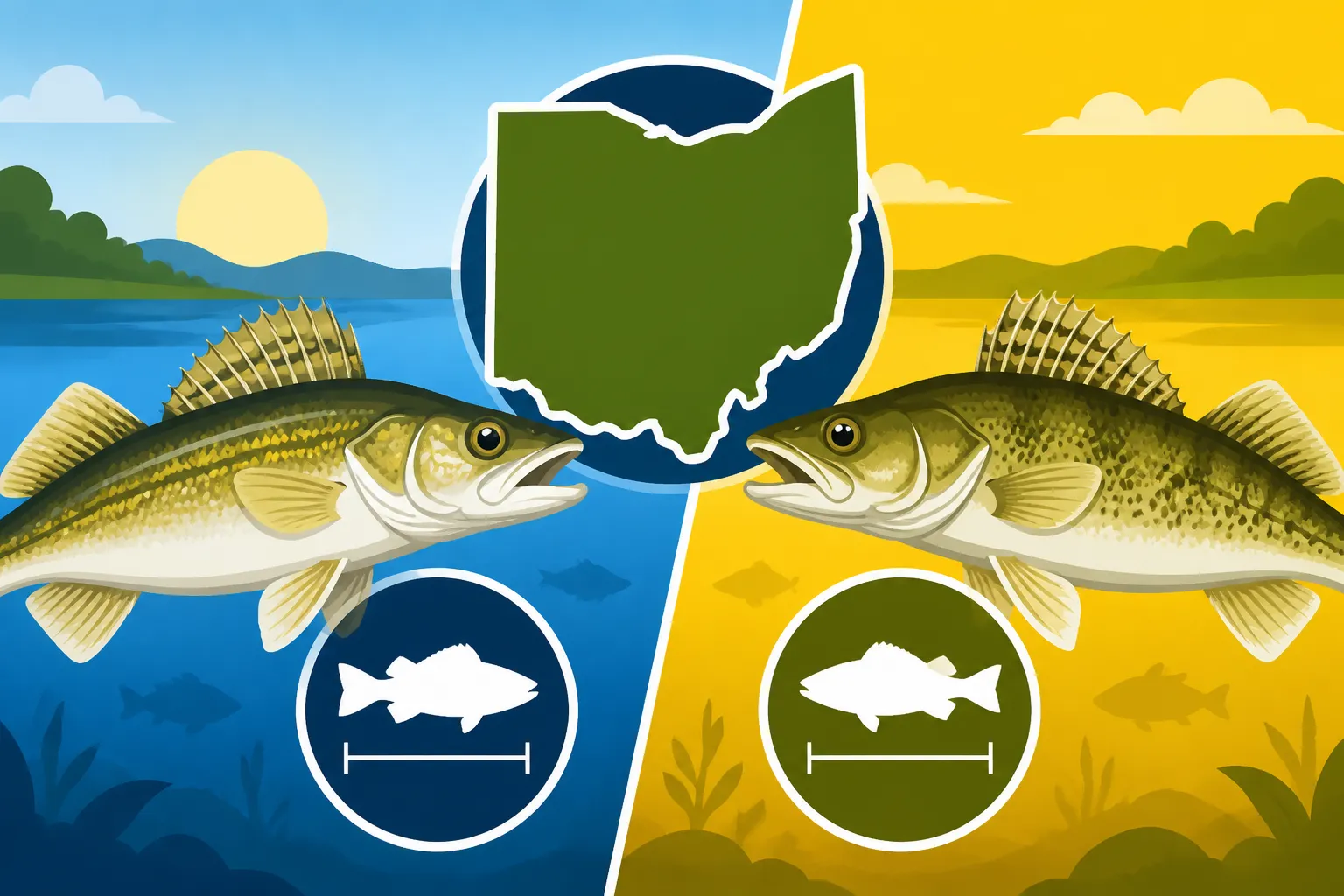
This is where things can get a little tricky, especially for newer anglers or those who don't frequently target these species. Walleye and saugeye, while closely related and often found in the same waters, have distinct characteristics that allow you to tell them apart. Why does this matter? Because while the statewide limits are often the same for both, there might be specific exceptions where distinguishing them becomes critical. Also, knowing what you're catching helps you understand the health of the fishery and what lures might be most effective.
- Walleye: Generally have a more uniform golden-olive to brown coloring. A key identifier is the absence of spots on their dorsal fin, which is typically dark or striped. They also have a distinct white tip on the lower lobe of their tail fin. Their body is usually smoother, with fewer blotches.
- Saugeye: These are a hybrid cross between a female walleye and a male sauger. They tend to have more mottled or blotchy sides, giving them a "tiger stripe" appearance. Their dorsal fin will usually have distinct dark spots or bars, which is a big giveaway. They often lack the prominent white tip on the lower tail fin, or it's much fainter than on a true walleye.
It's worth noting that sauger, a third related species, can also be present, particularly in larger river systems like the Ohio River. While rare in most inland lakes, they have even more distinct spotting and a much more streamlined body. Getting familiar with these differences, perhaps by reviewing guides on Saugeye vs Walleye Identification or even Sauger vs Walleye Identification, can save you a headache later. If you're ever in doubt, it's always best to err on the side of caution and release the fish, or at least double-check your identification against a reliable source.
Specific Lake-By-Lake Exceptions and Special Regulations
Now, here's where the plot thickens! Ohio is a state that takes its fishery management seriously, and that means tailoring regulations to the specific needs of individual lakes. What works for one reservoir might not be ideal for another. Ignoring these specific, often localized rules is a common mistake that can lead to disappointment or, worse, a fine.
Lakes with No Minimum Length Limit
One of the most notable exceptions to the statewide 15-inch minimum for walleye and saugeye occurs in a few key inland lakes. These lakes have a "no minimum length limit" policy, meaning you can keep walleye or saugeye of any size, as long as you adhere to the daily bag limit (which is usually still 6 fish). This can be a game-changer for anglers, allowing them to harvest smaller fish that might otherwise be released elsewhere.
The prominent lakes in Ohio that fall under this "no minimum" rule for walleye and saugeye include:
- Alum Creek Lake (Delaware County): Known for its robust saugeye population.
- Mosquito Creek Lake (Trumbull County): Another fantastic saugeye fishery.
- LaDue Reservoir (Geauga County): A great spot for both walleye and saugeye.
The reasoning behind these "no minimum" limits is often rooted in population dynamics. These particular lakes might have incredibly productive saugeye or walleye fisheries, leading to a high density of fish. By removing the minimum size restriction, the ODNR encourages anglers to harvest more fish, especially the smaller ones. This helps to reduce competition for food among the remaining fish, potentially leading to faster growth rates and larger average sizes for those that survive. It's a management strategy aimed at preventing overpopulation of smaller fish and promoting a healthier, more balanced ecosystem. So, if you're fishing Does Alum Creek Lake Have a Walleye Size Limit?, Mosquito Creek Lake Walleye and Saugeye Size Limit, or LaDue Reservoir Walleye and Saugeye Size Limit, remember you can keep them smaller, but still stick to that 6-fish daily bag!
Lakes with Unique Size or Bag Limits
While the "no minimum" lakes are the most common deviation, there are occasionally other specific lakes or bodies of water that have their own unique set of rules for walleye or saugeye. These might involve different minimum length limits, different daily bag limits, or even seasonal restrictions that don't apply statewide.
A prime example is Pymatuning Reservoir, which straddles the Ohio and Pennsylvania border. Because it's an interstate water, it's managed under a reciprocal agreement between the ODNR and the Pennsylvania Fish and Boat Commission. For walleye, Pymatuning Reservoir typically has a 15-inch minimum length limit and a 6-fish daily bag limit, aligning with Ohio's statewide rules. However, it's always critical to consult the specific Pymatuning regulations, as interstate waters can sometimes have nuances that differ from standard state rules. These unique regulations are put in place to accommodate diverse biological factors, historical fishing pressure, or even agreements with neighboring states, all with the goal of optimizing the fishery.
The takeaway here is that while the statewide rules provide a good foundation, always, and I mean always, check for specific regulations for the particular body of water you plan to fish. Local signage at boat ramps, official ODNR publications, and the online fishing guide are your best friends in this regard. You don't want to get caught off guard!
Practical Tips for Staying Compliant on the Water
Fishing should be relaxing, not stressful. Knowing you’re prepared and compliant can really enhance your day on the water. A little bit of preparation goes a long way, especially when it comes to adhering to fishing regulations.
Essential Gear for Measuring and Handling Fish
To accurately determine if your walleye or saugeye is a keeper, you need the right tools. Eyeballing it just won't cut it, and frankly, it's a recipe for accidentally breaking the law. A reliable measuring device is non-negotiable for any angler targeting regulated species.
- Measuring Board or Tape: A bump board (a rigid measuring device with an end-stop to butt the fish's nose against) is ideal for accurate measurements. They're often made of plastic or aluminum and have clear markings. If you don't have a bump board, a flexible, waterproof measuring tape works too, but be careful to lay the fish flat and straight for an accurate reading. When measuring, the fish should be laid flat on its side, with its mouth closed and touching the end-stop (or the zero mark on your tape). The measurement is taken to the end of the tail, with the tail compressed. You can find excellent options on online retailers like Amazon, from simple stick rulers to more elaborate foldable measuring devices.
- Camera (Optional but Recommended): While not for measuring, a camera allows you to quickly snap a photo of a fish before release if you want to remember it. Just make sure you're releasing the fish quickly and safely, minimizing its time out of the water.
- Fishing Pliers or Hemostats: These are crucial for quickly and safely removing hooks, especially from toothy fish like walleye and saugeye. Reducing handling time is vital for fish survival, particularly for those you intend to release.
Remember, the goal is to get an accurate measurement and, if the fish is undersized, to get it back into the water as quickly and unharmed as possible. Keeping a measuring device easily accessible on your boat, kayak, or in your tackle box means you won't be fumbling around when that trophy walleye comes aboard.
Double-Checking Regulations Before You Go
This cannot be stressed enough: regulations can change! What was true last year might not be true this year, or even last month. The absolute best practice is to confirm the regulations for your specific body of water every time you plan a trip, or at least at the beginning of each new fishing season.
- Official ODNR Website: The Ohio Department of Natural Resources (ODNR) Division of Wildlife website is your authoritative source. They provide up-to-date fishing regulations, often broken down by district or specific water body.
- Ohio Fishing Regulations Booklet: The printed booklet is available at most bait shops, sporting goods stores, and ODNR offices. It's a handy resource to keep in your tackle box or glove compartment. Knowing Where to Find the Ohio Fishing Regulations Booklet can be a lifesaver.
- PDF Online: The entire Ohio Fishing Regulations PDF Online is also available for download, which you can save to your phone or tablet for quick reference while on the water.
Pay close attention to the effective dates of the regulations. The Ohio fishing season typically runs from March 1st to the end of February the following year. However, specific rules, especially for certain species or waters, can have different start or end dates. Familiarizing yourself with the Ohio Fishing Season Dates and Effective Periods will ensure you're always operating with the most current information. A quick 5-minute check before you head out can save you a lot of grief and ensure you have a truly enjoyable, worry-free day of fishing.
Common Mistakes and How to Avoid Them
Even experienced anglers can sometimes fall victim to simple errors, especially when regulations are varied. Being aware of these common pitfalls can help you avoid them and maintain a clean record while enjoying Ohio's fantastic walleye and saugeye fishing.
Misidentifying Fish Species
As we discussed earlier, distinguishing between walleye, saugeye, and sometimes even sauger, is absolutely crucial. While the statewide inland limits often lump walleye and saugeye together, there could be instances where specific waters have unique rules for one species over the other, or where a sauger (which has its own set of rules, particularly in the Ohio River) might be confused with a saugeye.
The consequences of misidentification aren't just academic. If you keep an undersized walleye thinking it's a legal-sized saugeye, you're still in violation. Wildlife officers are trained to identify these species accurately, and ignorance of the law is rarely an acceptable defense. Take the time to study the distinguishing characteristics. Look for the white tip on the walleye's tail, the spots on the saugeye's dorsal fin, and the overall body shape and coloration. When in doubt, take a picture, release the fish, and consult your regulation guide or a knowledgeable friend. It's always better to be safe than sorry, especially when you consider potential fines.
Overlooking Local Signs and Updates
Another common mistake is relying solely on general knowledge or last year's regulations. While the ODNR does a fantastic job of publishing comprehensive guides, local conditions or specific management needs can lead to immediate, on-the-ground changes or clarifications. These are often communicated through signs posted prominently at boat ramps, fishing piers, or wildlife area entrances.
Imagine pulling into your favorite fishing spot, bypassing the bulletin board at the ramp, and heading straight to the water. Unbeknownst to you, an emergency regulation was just enacted, perhaps changing the bag limit due to an unexpected spawn or a population decline. By overlooking those local signs, you could inadvertently break the law. Make it a habit to glance at any posted notices when you arrive at a new fishing destination. Additionally, keep an eye on ODNR's social media channels or sign up for their email updates, as they often announce significant changes quickly. This vigilance ensures you're always working with the most current information. Failure to do so can result in significant penalties, and remember, What Happens If You Fish Without a License in Ohio is serious, but so are violations of size and bag limits, which can also incur a hefty Ohio Fine for Fishing Without a License or other infractions.
Ohio Inland Walleye and Saugeye Regulations Overview
To help visualize and quickly reference some of the key inland walleye and saugeye regulations in Ohio, here's a table summarizing the general rules and major exceptions. This is a snapshot and should always be cross-referenced with the most current ODNR regulations.
| Water Body Type / Specific Lake | Minimum Length Limit (Walleye/Saugeye) | Daily Bag Limit (Walleye/Saugeye) | Notes |
|---|---|---|---|
| Most Inland Waters (Statewide Default) | 15 inches | 6 fish (in combination) | Applies to Hoover, Deer Creek, Indian Lake, Caesar Creek, etc. |
| Alum Creek Lake | No Minimum Length Limit | 6 fish (in combination) | Specific management for this reservoir's population. |
| Mosquito Creek Lake | No Minimum Length Limit | 6 fish (in combination) | Specific management for this reservoir's population. |
| LaDue Reservoir | No Minimum Length Limit | 6 fish (in combination) | Specific management for this reservoir's population. |
| Pymatuning Reservoir (OH/PA) | 15 inches | 6 fish (in combination) | Interstate water, subject to OH/PA reciprocal agreement. |
| Ohio River | 15 inches (for Walleye/Saugeye) | 6 fish (Walleye/Saugeye in combination) | Sauger also present, with a 10-fish bag limit and no minimum length limit. Separate rules for the Ohio River! |
Disclaimer
Please note that fishing regulations are subject to change. While every effort has been made to provide accurate and up-to-date information in this guide, it is ultimately the angler's responsibility to consult the most current Ohio Department of Natural Resources (ODNR) fishing regulations before engaging in any fishing activity. Always refer to the official ODNR Division of Wildlife website or their annual fishing regulation booklet for the definitive rules and any emergency updates.