Ohio Catfish Fishing Techniques
One of the most common frustrations for anglers in Ohio, whether they're seasoned veterans or just starting out, is feeling like they're missing out on the incredible catfish action our state offers. You might be consistently catching smaller fish, or perhaps you're struggling to land those legendary Ohio River monsters, not quite sure if your techniques are matching the fish you're after. This comprehensive guide is designed to cut through that confusion, equipping you with the specific knowledge and strategies to consistently hook into channel, flathead, and blue catfish across Ohio's diverse waterways.
Understanding Ohio's Catfish Species and Their Habits
Ohio is blessed with three primary species of catfish that captivate anglers: the ubiquitous channel cat, the elusive and powerful flathead, and the colossal blue catfish, primarily found in the Ohio River. Each of these species has distinct habits, preferred habitats, and feeding tendencies, which means a one-size-fits-all approach just won't cut it if you want consistent success. Understanding these nuances is the first step to becoming a true catfishing expert in the Buckeye State.
Channel Catfish: The Widespread Opportunist
Channel catfish are arguably the most popular and widespread cat in Ohio. You’ll find them in nearly every decent-sized lake, reservoir, river, and even many larger ponds across the state. They're recognized by their olive-brown to slate-gray bodies, often adorned with dark spots, particularly when they're younger. Their deeply forked tails are another telltale sign. What makes channel cats so appealing to anglers is their sheer abundance and their willingness to bite a wide variety of baits. They are true opportunistic feeders, scavenging for nearly anything edible.
These fish thrive in warmer waters, often preferring slow-moving or stagnant areas during the heat of summer. In lakes, they'll congregate around weed beds, submerged timber, creek channels, and the mouths of feeder streams. Rivers see them holding in slower current breaks, deeper holes, and around fallen trees or bridge pilings. Their diet is incredibly varied; they'll eat insects, crustaceans, small fish, decaying organic matter, and even fruits and berries that fall into the water. This broad diet makes them susceptible to many baits, which we'll delve into shortly. Understanding their preference for warmth and structure, especially in low-light conditions or at night, is key to consistent catches. For more details on identification, check out our guide on Ohio Channel Catfish Identification.
Flathead Catfish: The Ambush Predator
If you're looking for a genuine battle, the flathead catfish is your target. These beasts are built for power, recognized by their flat, broad heads, small eyes, and speckled brown-to-yellowish bodies without any spots. Unlike channel cats, their tail is squared or slightly rounded, not deeply forked. Flatheads are solitary, territorial predators, primarily found in larger rivers and reservoirs, though they can be present in some bigger lakes. The Ohio River is a prime flathead haven, but big ones can be found in the Muskingum, Scioto, and Maumee Rivers, as well as reservoirs like Piedmont and Clendening.
Flatheads are ambush predators, preferring to hide in heavy cover and wait for unsuspecting prey to swim by. Their prime real estate includes log jams, rock piles, submerged trees, undercut banks, and deep holes with strong current. They are almost exclusively piscivorous, meaning they prefer live fish as their primary diet. This makes them a more challenging species to target, as your bait selection and presentation need to be spot-on. They are largely nocturnal, becoming most active after sunset when they venture out from their daytime lairs to hunt. Anglers often pursue them at night, presenting live baits near their known cover. Their immense power once hooked demands robust tackle, which we'll discuss in the gear section. If you want to know more about these behemoths, you can read our comprehensive guide on How Big Flathead Catfish Get in the Ohio River.
Blue Catfish: The Ohio River Giant
The blue catfish is the true heavyweight champion of Ohio's catfishing scene, though its distribution is much more limited than the other two species. While scattered populations exist in some larger reservoirs, the vast majority of Ohio’s blue cats are found in the mighty Ohio River. These magnificent fish are sleek, silvery-blue to slate-gray, lacking the spots of a channel cat and featuring a distinctly humped back in front of their dorsal fin. Their tail is deeply forked, similar to a channel cat, but their sheer size is what sets them apart. Ohio’s state record blue cat can top 100 pounds!
Blue catfish are schooling fish, often found in deep, open water, particularly in strong currents. They prefer the main channels of large rivers, congregating in deep holes, scour marks, and around large structural features like bridge abutments, submerged islands, and deep current seams. Like flatheads, they are primarily piscivorous, but unlike flatheads, they aren't as strictly ambush predators. They will actively hunt schools of baitfish, and also readily consume cut bait, making them a target for both live and prepared offerings. Their immense size and powerful runs require specialized heavy-duty gear and a well-thought-out strategy. Targeting blue cats is often a full-day commitment, focusing on precise boat positioning and robust rigging to contend with strong currents and truly massive fish. To dive deeper into identifying these giants, check out Ohio Blue Catfish Identification.
Essential Gear for Ohio Catfish Anglers
Having the right equipment is paramount for success when targeting Ohio catfish. While you don't need to break the bank to start, investing in reliable gear that can handle the power of these fish, especially the larger flatheads and blues, will significantly improve your experience and your catch rates. From rods to terminal tackle, each component plays a crucial role.
Rods, Reels, and Line Selection
Choosing the right rod and reel setup depends largely on the species you're targeting and the water you're fishing. For general channel catfishing in smaller lakes or rivers, a medium to medium-heavy spinning or baitcasting rod, typically 6 to 7.5 feet long, with a fast to moderate action, is a great all-around choice. This setup offers enough backbone to fight respectable channel cats while maintaining sensitivity for detecting subtle bites. Pair this with a reliable spinning reel in the 3000-5000 size range, or a baitcaster with a smooth drag system.
When you step up to flatheads and blue cats, especially in larger rivers like the Ohio, you'll need significantly more power. Heavy to extra-heavy action rods, 7.5 to 10 feet long, are often preferred. These longer rods help with casting heavy weights and provide better leverage during a prolonged fight. Look for rods specifically designed for catfishing, often labeled "catfish rods," which feature durable blanks and guides. Matching this with a robust baitcasting reel is essential. Reels like the Abu Garcia Ambassadeur or comparable models with a high line capacity and a powerful, smooth drag system are ideal. These reels are built to withstand the tremendous pressure exerted by trophy-sized cats.
Line selection is equally critical. For channel cats, 15 to 30-pound monofilament or braided line is usually sufficient. Monofilament offers good stretch, which can be forgiving on aggressive strikes, and is relatively inexpensive. Braided line, while more costly, offers superior strength-to-diameter ratio, zero stretch for increased sensitivity, and excellent abrasion resistance. For flatheads and blue cats, especially in snag-infested waters or strong currents, braided line in the 50 to 80-pound test range is highly recommended. The low stretch of braid helps with hook sets at long distances and its incredible strength provides confidence when battling a giant near heavy cover. If you prefer monofilament for bigger cats, opt for heavy-duty options in the 40 to 60-pound test range. Remember to regularly check your line for nicks and abrasions, especially after fishing around rocks or timber.
Hooks, Sinkers, and Terminal Tackle
The "business end" of your catfishing setup needs to be tough and reliable. Your choice of hook will depend on your bait and target species. For channel cats using smaller cut baits, worms, or dough baits, a sturdy circle hook in sizes 2/0 to 6/0 is an excellent choice. Circle hooks are designed to hook fish in the corner of the mouth, reducing gut-hooking and making for easier, safer releases. They are especially useful for beginners or when fishing with multiple rods. Kahle hooks or J-hooks can also be effective, typically in sizes 3/0 to 7/0, particularly if you prefer a more aggressive hook set.
For targeting larger flatheads and blue cats with big live baits or substantial chunks of cut bait, you'll want to scale up your hooks. Heavy-duty circle hooks from 8/0 up to 12/0 are common. Brands like Gamakatsu and Owner make excellent, super-sharp, and strong circle hooks built for these bruisers.
Sinkers are necessary to keep your bait on the bottom or in the desired strike zone, especially in current. The weight and style of sinker will vary. In still water or light current, a bank sinker or pyramid sinker from 1/2 oz to 2 oz might suffice for channel cats. In heavier currents, particularly on the Ohio River, you might need 3 oz, 6 oz, or even 10 oz or more of lead to hold bottom effectively. Flat, no-roll sinkers or specialized disc sinkers are great for strong currents as they are less likely to tumble and move your bait. Make sure your sinker is heavy enough to hold your bait in place without being overly cumbersome.
Other essential terminal tackle includes heavy-duty swivels, typically barrel swivels or ball-bearing swivels in sizes 1/0 to 3/0, to prevent line twist, especially when using live baits that might spin. Leader material is also important. For smaller cats, 20-30 lb monofilament or fluorocarbon leader will work. For trophy flatheads and blue cats, consider using 50-80 lb fluorocarbon leader for its abrasion resistance and relative invisibility, or even heavy monofilament leaders. Some anglers even use short wire leaders when fishing around sharp rocks or for exceptionally toothy fish, though this is less common for pure catfishing.
Essential Accessories for Catfish Angling
Beyond your rod and reel, a few key accessories can make your Ohio catfishing trips much more productive and enjoyable.
- Rod Holders: When bait fishing, especially with multiple rods, sturdy rod holders are invaluable. Bank anglers can use spike-style holders that push into the ground, while boat anglers need robust rail-mount or flush-mount holders that can withstand a powerful bite. Investing in quality rod holders is a must; you don't want a trophy catfish pulling your rod into the water! Many popular brands are available on Amazon.
- Net or Gripper: A large, sturdy landing net with a deep, rubberized mesh is essential for safely landing and handling big catfish. The rubberized mesh protects the fish's slime coat and prevents hooks from tangling. Alternatively, heavy-duty lip grippers can be useful for controlling larger fish, especially when coupled with a glove for handling the fish's body.
- Pliers/Hook Remover: Catfish can be tough to unhook, especially if they swallow the bait. Long-nose pliers or specialized hook removers are crucial for safe and efficient hook extraction.
- Cutting Board and Knife: If you're using cut bait, a small cutting board and a sharp knife are indispensable.
- Cooler/Livewell: For keeping bait alive or for storing your catch, a cooler with ice or a functioning livewell is necessary.
- Headlamp/Lantern: When fishing at night, good lighting is non-negotiable. A hands-free headlamp is perfect for rigging, baiting, and unhooking, while a lantern can illuminate your general fishing area.
- First-Aid Kit: Catfish fins have sharp spines that can inflict painful punctures. Always have a basic first-aid kit on hand for minor injuries.
- Camera: Don't forget a camera to capture those memorable catches!
Having these accessories thoughtfully packed and ready to go will ensure you're prepared for whatever Ohio's catfish waters throw at you.
Top Baits for Ohio Catfish: Matching the Menu
Choosing the right bait is a critical decision in catfishing, and it often depends on the species you’re targeting, the water conditions, and even the time of year. What works wonders for a channel cat might not even get a sniff from a flathead. Let’s break down the most effective baits for Ohio’s catfish. You can also explore our article on Best Baits for Ohio Catfish for more detailed insights.
Natural Baits: The Tried and True
Natural baits are the cornerstone of catfishing, and for good reason—they mimic what catfish naturally eat.
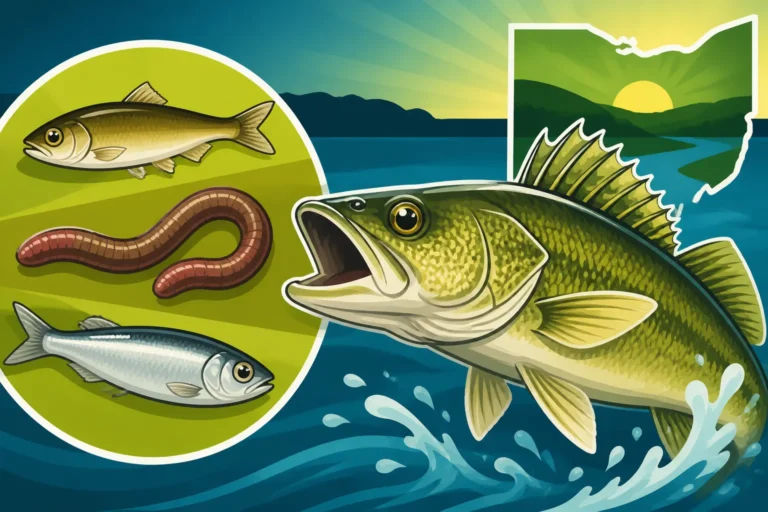
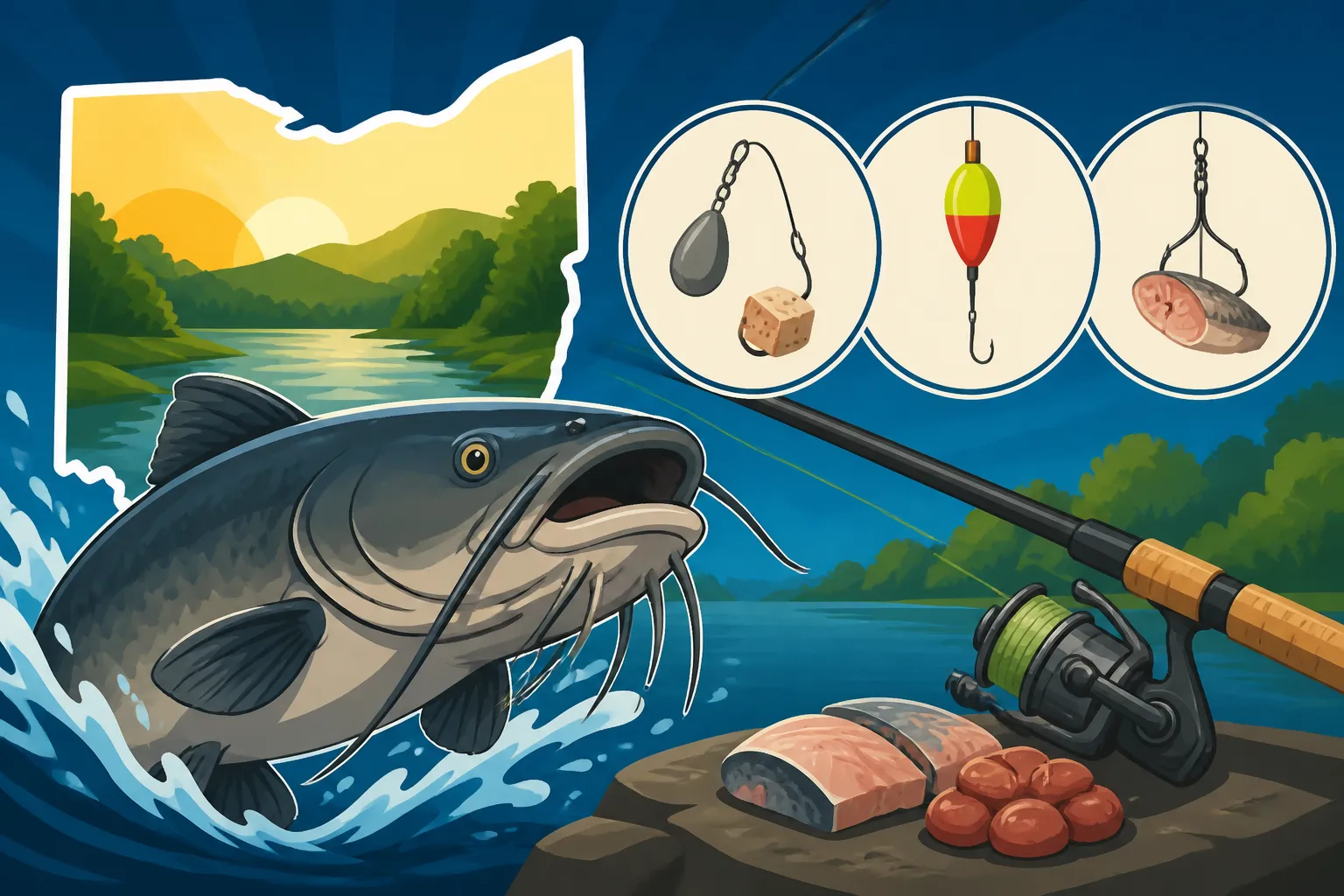
- Cut Bait: This is a universal catfish killer, particularly effective for channel cats and blue cats. Any oily, strong-smelling fish can be cut into chunks, strips, or steaks. Common choices in Ohio include shad, skipjack herring (often found in the Ohio River), suckers, carp, and even panfish like bluegill (check local regulations to ensure legality of using game fish as bait). The key is freshness and a good amount of blood and oil to create a scent trail. For channel cats, smaller pieces (1-2 inches) are fine. For big blue cats, especially in the Ohio River, anglers might use larger chunks, even whole heads or sections of large baitfish.
- Worms: Nightcrawlers, red wigglers, and other earthworms are classic channel cat bait. While not typically effective for trophy flatheads or blues, they are fantastic for smaller channel cats and can be readily found or purchased. Rig them in a ball to create a tempting target.
- Chicken Liver: This is a notoriously stinky and effective bait for channel cats. Its soft texture means it needs to be hooked carefully, often threaded onto the hook or secured with a small piece of nylon stocking or bait thread. The strong scent is a powerful attractant, especially in warmer water.
- Shrimp: Raw, peeled shrimp, especially those that have been allowed to sit out and get a little "ripe," can be surprisingly effective for channel cats. The natural scent is appealing, and the meat is firm enough to stay on the hook.
- Clams/Mussels: In some river systems, if readily available and legal to collect, clams or mussels can be excellent natural baits for channel cats, mimicking a food source they might naturally encounter.
Prepared Baits: Stink Baits and Punch Baits
For channel catfish, few things are as consistently effective as prepared baits, often generically called "stink baits" or "dough baits." These baits are formulated with powerful scents and ingredients designed to attract channel cats from a distance.
- Stink Baits: These come in various forms—dips, pastes, and solids. Dip baits, like those from Catfish Charlie or Sonny's, are typically used with a special bait holder or sponge hook designed to absorb and slowly release the pungent scent. Punch baits, such as Sudden Impact or Rippin' Lips, have a unique dough-like consistency that's pushed onto a treble hook with a stick (hence "punch bait"). They adhere well and slowly dissolve, creating a potent scent cloud. Both types are fantastic for attracting channel cats, especially in lakes and slower river sections. The key is to find a scent profile that the fish in your local waters prefer.
- Dough Balls: While less common for store-bought options, many anglers have their own secret dough ball recipes, often involving cheese, garlic, and other strong-smelling ingredients mixed with a binding agent like flour or cornmeal. These can be molded around a hook and offer a custom alternative to commercial options.
The beauty of prepared baits is their convenience and powerful attraction for channel cats. They’re less messy than some natural options and can be stored easily.
Live Baits: Enticing Flatheads and Big Blues
If your goal is a trophy flathead or a monster blue cat, live bait is often your best bet. These predatory species prefer fresh, struggling prey.
- Live Fish: The absolute king of flathead bait is live fish. Species like bluegill, suckers, shad, creek chubs, and goldfish are all excellent choices. The key is to use healthy, lively baitfish that are appropriate in size for the hook and the target fish. For flatheads, a baitfish between 4 and 8 inches is common, but don't be afraid to go larger (up to 12-14 inches) for truly massive fish. Hook your live bait through the back, just above the lateral line and behind the dorsal fin, being careful not to hit the spine, or through the lips. This allows the fish to swim naturally and entice a strike.
- Live Shad/Herring: For blue catfish in the Ohio River, live shad or skipjack herring are phenomenal baits. Their oily nature and lively action are irresistible to blues. You'll often need a cast net to catch these baits fresh, as they are hard to keep alive for long periods without proper aeration.
- Large Worms/Leeches: While not fish, jumbo nightcrawlers or large leeches can sometimes entice smaller flatheads or very active channel cats, but they are not the primary choice for trophy fish.
When fishing live bait, presentation is key. You want the bait to be active and struggling, signaling an easy meal to a lurking predator. Always check local regulations regarding the use of live bait, especially if using game fish. For specific guidance on catching these big fish, read our Ohio River Fishing Guide.
Mastering Catfish Rigs and Presentations
The best bait in the world won't do you much good if it's not presented effectively. Catfish rigs are generally simple, but understanding how to adapt them to different environments and target species is crucial. The goal is always to get your bait into the strike zone and keep it there in an enticing manner.
Basic Bottom Rigs for Still and Flowing Water
Most catfishing involves presenting bait on or near the bottom, where catfish spend a lot of their time feeding.
- Carolina Rig (Slip Sinker Rig): This is perhaps the most versatile and popular bottom rig for catfishing. It consists of a sliding sinker (typically a no-roll, egg, or bullet sinker) above a swivel, followed by a leader, and then the hook. The beauty of the Carolina rig is that the line can "slip" through the sinker, allowing the fish to pick up the bait and run a short distance without feeling the full weight of the sinker. This provides a more natural presentation and reduces the chance of fish dropping the bait due to resistance. It's excellent for fishing both still waters and moderate currents. For still water, a 1/2 to 1 oz sinker is often sufficient. In rivers with a noticeable current, you might need to go heavier, up to 3-4 oz or more, to keep your bait pinned. The leader length can vary from 12 inches to 3 feet, depending on how far you want your bait to drift from the sinker.
- Three-Way Swivel Rig: Also known as a "drift rig" or "bottom bouncer," this rig is particularly effective in rivers with strong currents or when you want to keep your bait elevated slightly off the bottom. It uses a three-way swivel: one eye is tied to your main line, another to a dropline with a sinker (often a pyramid or bell sinker), and the third to a leader with your hook. The length of the dropline (usually 6-18 inches) determines how high your bait floats off the bottom, while the leader to the hook can be anywhere from 1 to 3 feet. This rig minimizes snags on the bottom while allowing your bait to drift tantalizingly in the current, making it great for flatheads and blue cats.
- Simple Bottom Rig (Fixed Sinker): For calmer waters or when fishing with heavier baits, a simpler rig with a fixed sinker can be used. This usually involves tying a sinker (like a bank sinker or pyramid sinker) directly to the end of your main line, and then tying a leader with your hook a foot or two above the sinker via a dropper loop or snelled hook. This rig keeps the bait firmly on the bottom but offers more resistance when a fish bites, which can sometimes lead to dropped baits.
Suspended Baits and Drifting Techniques
While many catfish are bottom feeders, they will also rise in the water column to feed, especially when actively hunting baitfish or in deeper areas where thermoclines exist.
- Float Fishing (Slip Bobber): Don't underestimate the power of a slip bobber for catfish, especially channel cats in lakes and ponds, or even for targeting suspended blue cats. A slip bobber rig allows you to easily adjust the depth of your bait. You thread your main line through the bobber, then tie on a bobber stop at your desired depth. Below the bobber, you add a small weight (split shot or small egg sinker) to cock the bobber, and then your leader and hook. This technique is fantastic for presenting baits just above submerged structure, over weed beds, or at a specific depth where you're marking fish on your sonar. It allows your bait to drift naturally with the current or wind, covering more water.
- Controlled Drifting: This technique is especially effective for flatheads and blue cats in large river systems like the Ohio River. Instead of anchoring, you allow your boat to slowly drift downstream, presenting your bait along current seams, deep bends, or over submerged structure. This requires careful boat control, often using a trolling motor to adjust your speed and direction. You'll typically use a heavy bottom rig (Carolina or three-way swivel) to keep your bait on the bottom while drifting. The key is to match your sinker weight to the current speed so your bait is presented naturally without dragging too quickly or getting swept up. This method allows you to cover large areas of prime catfish habitat and find active fish. For more on this, check out How to Anchor for Catfish on the Ohio River.
- Balloon/Controlled Float: For covering large areas with live bait for flatheads in wide, slow-moving rivers or lakes, a balloon can be used as a large float. Attach your live bait rig (with a small weight to keep the bait down) to your main line, and then attach a balloon a set distance up the line. The wind will carry the balloon and your bait across the water, covering vast expanses while keeping your bait in the upper water column or at a desired depth. This is a highly visual and exciting way to fish, as the balloon's movement signals a bite.
Reading Weather and Water Conditions
Catfish, like all fish, are influenced by environmental factors. Understanding how weather and water conditions affect their behavior can help you adjust your techniques and increase your success.
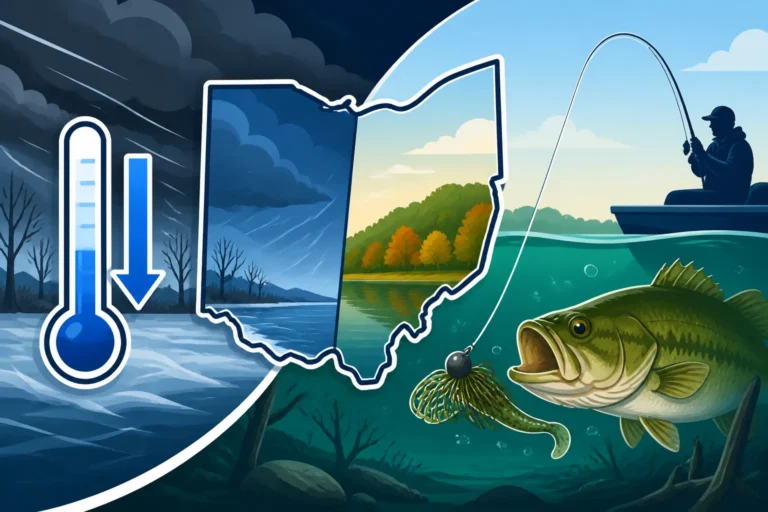
- Temperature: Catfish are generally warm-water fish. Channel cats are most active in water temperatures between 70-85°F. Flatheads prefer slightly cooler water than channel cats but are still warm-water species, becoming very active as temperatures rise. Blue cats can tolerate a wider range, but are also most active in warmer conditions. During colder months, their metabolism slows, and they become less active, often retreating to deep holes or thermal refuges.
- Rain and Runoff: A good rain can be a mixed blessing. Light, steady rain often improves catfishing, as it washes terrestrial insects and nutrients into the water, stimulating feeding. However, heavy rains can cause rapid rises in water levels, muddy water, and strong currents, making fishing difficult. In muddy water, catfish rely more on scent, making stink baits and cut baits even more effective. Fish often move to the edges of the main current or into calmer eddies during floods.
- Barometric Pressure: A falling barometer (indicating an approaching storm) often triggers increased feeding activity in catfish. A stable, high barometer usually means consistent fishing, while a rapidly rising barometer (after a cold front) can shut down the bite as fish become sluggish.
- Water Clarity: Catfish, especially channel cats, are often more active in stained or murky water. Their keen sense of smell and barbels allow them to hunt effectively in low visibility. Flatheads and blue cats, while primarily sight predators, can adapt. In clear water, fishing during low-light conditions (dawn, dusk, night) becomes even more critical, and natural presentations are paramount.
- Current: In river systems, current is a major factor. Catfish use current breaks to ambush prey and conserve energy. Look for them behind log jams, bridge pilings, rock piles, and in the calmer water of eddies. Understanding how to present your bait in or just out of the main current is crucial.
- Cloud Cover and Light: Catfish are often more active in low-light conditions. Cloudy days can extend their feeding windows, but dawn, dusk, and especially night are prime times. On bright, sunny days, catfish often retreat to deeper, shadier areas. Understanding Catfish Feeding Patterns at Night is extremely valuable.
By paying attention to these factors and adjusting your bait, rig, and location accordingly, you can significantly improve your catfishing success throughout the year.
Locating Ohio Catfish: Reading the Water
Finding catfish is often the biggest challenge for anglers. While they're widespread, knowing where to concentrate your efforts based on the specific species and water body will drastically increase your chances. Reading the water means understanding how current, structure, and depth influence catfish behavior.
River Systems: Current Seams, Holes, and Structure
Rivers are dynamic environments, and catfish, especially flatheads and blue cats, are masters at using the current to their advantage.
- Current Seams: These are the lines where faster current meets slower current, or where an eddy forms. Catfish will often sit just inside the slower water, waiting for food to be swept past them in the faster current. Look for these seams around points, islands, and obstructions.
- Deep Holes and Scour Marks: The main channel of a river will often have deeper holes carved out by the current, especially on the outside bends. These depressions are prime resting and feeding areas for all three species, particularly large flatheads and blue cats. Scour marks around bridge pilings or wing dams also create deep, current-protected areas.
- Submerged Structure: Fallen trees (snags, log jams), rock piles, and old bridge abutments provide essential cover and ambush points. Flatheads, in particular, will relate tightly to heavy wood cover. Fishing directly into or adjacent to these areas, if safely possible, can be highly productive.
- Feeder Creeks and Confluences: Where a smaller creek or tributary meets a larger river, it creates a unique environment. This confluence often brings in new food sources, creates current breaks, and can concentrate baitfish, making it a hotspot for catfish.
- Channel Swings: As a river channel meanders, it creates inside and outside bends. The outside bends are often deeper with stronger current and more cover, making them prime catfish territory.
When fishing rivers, it's crucial to consider the speed of the current. You'll need enough weight to hold your bait in the desired zone without it tumbling away. Drift fishing can be very effective in covering river stretches, allowing your bait to naturally move through potential holding areas.
Lakes and Reservoirs: Flats, Humps, and Channels
Stillwater bodies like lakes and reservoirs present a different set of challenges and opportunities for catfish anglers. While flatheads and blues are less common in smaller lakes, channel cats thrive here.
- Main Lake Channels and Old Riverbeds: Many reservoirs are formed by damming rivers, leaving the old river channel submerged. These channels often provide deeper water, current breaks (from inflowing creeks), and hard-bottom areas that attract catfish.
- Humps and Points: Submerged humps (underwater hills) and points extending from the shoreline can be catfish magnets. Fish will often stage on the sides or tops of these structures, particularly during feeding periods.
- Flats and Drop-offs: Large, shallow flats adjacent to deep water can be productive, especially during low-light conditions when channel cats move up to feed. The edges where these flats drop into deeper water are transition zones that often hold fish.
- Submerged Timber and Brush Piles: Like in rivers, sunken trees, standing timber, and intentionally placed brush piles provide essential cover for catfish, offering shade, protection, and ambush points. Electronics can be invaluable for locating these hidden treasures.
- Inflow and Outflow Areas: The areas where creeks flow into a lake (inflow) and near the dam (outflow) often create current and concentrate baitfish and nutrients, attracting catfish.
- Weed Edges: During warmer months, channel cats will often patrol the edges of weed lines, particularly where they meet open water or deeper channels, hunting for prey hiding in the vegetation.
For those looking for an adventure, consider hiring a guide. There are many excellent Ohio River Catfish Guide Services that can put you on big fish.
Seasonal Movements and Prime Fishing Times
Catfish behavior changes significantly with the seasons, and understanding these patterns can make a huge difference in your success.
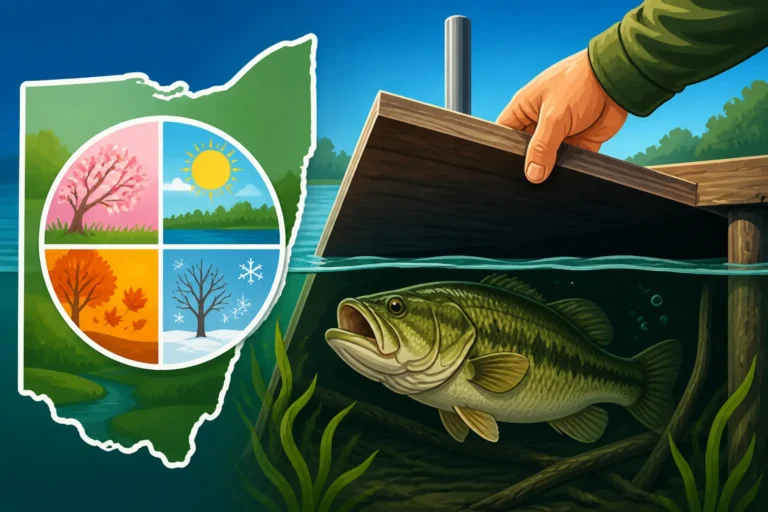
- Spring (Pre-spawn): As water temperatures begin to rise in early spring (late March-April), catfish become more active after their winter sluggishness. They'll start moving into shallower areas, especially mud flats and creek mouths warmed by the sun, seeking food to fuel up for the upcoming spawn. This is a great time for channel cats using cut bait or stink bait in shallower bays.
- Late Spring/Early Summer (Spawn): Catfish typically spawn when water temperatures reach the upper 60s to low 70s (May-July, depending on the species and location). During the spawn, they become more aggressive and territorial. Channel cats often seek out dark, secluded spots like hollow logs, undercut banks, or rock crevices to lay their eggs. Fishing near these spawning areas, often in relatively shallow water, can be very productive. Flatheads might become less active during their spawn, focusing on nest protection.
- Summer (Post-spawn/Active Feeding): This is prime time for all three species! As water temperatures peak (July-August), catfish are highly active and feeding aggressively to recover from the spawn. Channel cats will be found in their typical haunts—weed lines, channels, and humps. Flatheads and blue cats will be actively hunting in their river and reservoir strongholds. Night fishing is especially productive during the summer, as fish move into shallower water to feed under the cover of darkness. Don't forget to check out Best Time of Day to Catch Catfish in Ohio.
- Fall (Pre-winter Feed): As water temperatures start to drop (September-November), catfish engage in a major feeding spree to build up fat reserves for winter. They will often migrate to deeper channels, holes, and structure. This can be an excellent time to target trophy fish as they become very aggressive feeders, often stacking up in concentrated areas.
- Winter: Catfishing slows down considerably in winter (December-March). Fish become lethargic and congregate in deep, stable-temperature holes or around thermal discharges. The bite can be very subtle, requiring sensitive tackle and a patient approach. However, if you can locate these wintering holes, you can sometimes have incredible days, particularly for blue cats.
Advanced Catfish Techniques and Strategies
Beyond the basic rigs and locations, there are several advanced techniques and strategies that serious catfishermen employ to target bigger fish and increase their overall success, especially when conditions are challenging.
Night Fishing for Active Catfish
Night fishing is not just a preference for catfish anglers; it's often a necessity, especially for larger flatheads and blue cats. These species are primarily nocturnal, meaning they become most active and move into shallower feeding areas after the sun sets. The cover of darkness provides them with a sense of security and often aligns with baitfish movements.
- Enhanced Sensory Perception: Catfish rely heavily on their senses of smell, touch (via their barbels), and hearing to locate food. These senses are often more effective than sight in low-light conditions, giving them an advantage over prey.
- Reduced Pressure: Many other anglers pack up at dusk, leaving the prime spots open for nocturnal pursuits. The reduced boat traffic and human activity can make catfish bolder and more willing to feed.
- Targeting Shallower Water: At night, large catfish that hold in deep cover during the day will often venture into shallower flats, creek mouths, or along structure to hunt. This makes them more accessible to bank anglers and offers exciting action.
When night fishing, safety is paramount. Always have reliable headlamps or lanterns, be aware of your surroundings, and ideally fish with a buddy. Use glow sticks on your rod tips or lighted bobbers to detect bites. Cast your baits near known structure, current seams, or where you've seen baitfish activity during the day. The same baits and rigs apply, but the timing is everything.
Jugging and Noodling
These are two specialized and often highly regulated catfishing techniques that deserve a mention, though they are not for every angler.
- Jugging: This technique involves setting out multiple baited lines attached to floating "jugs" (often repurposed milk jugs, PVC floats, or pool noodles). The jugs are allowed to drift freely, covering large areas. When a fish bites, the jug will move erratically or disappear, signaling a catch. Jugging is primarily used for channel catfish and sometimes blue catfish in open water. It's important to note that jugging is typically done from a boat, and specific regulations regarding the number of jugs, bait restrictions, and marking requirements vary by state. In Ohio, you must abide by specific rules, including marking each jug with your name and address or customer ID number. This method allows you to cover vast amounts of water and can be incredibly effective when catfish are scattered.
- Noodling (Hand Fishing): Noodling is the most extreme form of catfishing, where anglers catch fish with their bare hands. It involves locating catfish (typically flatheads or large channel cats) in their spawning holes, undercut banks, or submerged logs, and coaxing them into biting your hand, then pulling them out. Noodling is a physically demanding and potentially dangerous technique. It is illegal in Ohio and many other states. Always check your local regulations before attempting any non-traditional fishing methods. Even if legal elsewhere, it requires significant experience and caution.
Reading Weather and Water Conditions
We touched on this briefly, but let's dive a bit deeper into how anglers use these to their advantage for catfish.
- Post-Front Conditions: After a strong cold front passes, fishing often slows down dramatically. Catfish become lethargic. Savvy anglers might target deeper water, use smaller baits, or slow down their presentation considerably. Sometimes, waiting a day or two for the fish to adjust is the best strategy.
- Rising Water: In rivers, rising water can sometimes trigger a feeding frenzy, especially if the rise is gradual and brings in fresh food. Catfish often move to the flooded edges and calmer backwaters. However, a rapid, muddy rise can shut things down temporarily.
- Falling Water: As floodwaters recede, catfish will often congregate in predictable areas—at the mouths of receding feeder creeks, in deep eddies, or behind any structure that breaks the current. This can create "bottleneck" areas where fish are highly concentrated.
- Wind: Wind can be your friend! A consistent breeze pushes warmer surface water and baitfish into certain areas, concentrating catfish. It also creates a "chop" on the water's surface, which can make fish less wary and more willing to bite. When fishing lakes, pay attention to which banks the wind has been blowing into for a prolonged period.
- Turbidity (Water Clarity): As mentioned, catfish thrive in stained or murky water. If you have a choice between a clear lake and a slightly turbid one, the turbid one might offer better catfishing opportunities. If water is exceptionally clear, focus on low-light periods.
By keenly observing the weather, water levels, and clarity, you can predict catfish movements and adapt your tactics, often outperforming anglers who stick to the same approach regardless of conditions. This strategic approach to the elements is often what separates consistently successful anglers from those who rely on luck.
Safety, Regulations, and Conservation
Catfishing can be an incredibly rewarding pursuit, but it’s essential to approach it with safety in mind, respect Ohio’s fishing regulations, and practice responsible conservation to ensure healthy fish populations for the future.
Essential Safety Tips for Catfish Anglers
Catfishing, especially for larger species in big rivers, comes with inherent risks. Being prepared can prevent accidents and ensure a fun, safe trip.
- Know Your Water: If you're fishing a new body of water, especially a river, understand the currents, submerged hazards, and access points. River currents can be deceptively strong.
- Wear a Life Vest: If fishing from a boat or near strong currents, always wear a U.S. Coast Guard-approved life vest. Unexpected falls can happen quickly.
- Handle Fish Safely: Catfish possess sharp, serrated spines on their dorsal and pectoral fins, which can inflict painful punctures. Always handle them carefully. Use a lip gripper or a large net, and avoid grabbing them by the body in a way that allows them to flex their fins into your hand. Even smaller channel cats can give a nasty poke.
- Be Prepared for Night Fishing: If fishing after dark, always bring multiple light sources (headlamps, lanterns), ensure your boat has proper navigation lights, and tell someone where you're going and when you expect to return. Be extra cautious when navigating or moving around the boat or shoreline in the dark.
- Check Weather Forecasts: High winds and thunderstorms can turn calm waters dangerous very quickly, especially on large lakes or rivers. Always check the forecast before heading out and be prepared to cut your trip short if conditions worsen.
- First-Aid Kit: Keep a well-stocked first-aid kit readily accessible for minor cuts, punctures, or other injuries.
- Hydration and Sun Protection: During warmer months, stay hydrated and use sunscreen, hats, and protective clothing to guard against sun exposure.
Ohio Catfish Regulations: Size and Bag Limits
Ohio has specific regulations for catfish, designed to protect populations and ensure sustainable fishing. These regulations can vary by water body, so always consult the most current Ohio Fishing Regulations booklet or the Ohio Department of Natural Resources (ODNR) website before you go fishing.
- General Statewide Limits: For channel catfish and flathead catfish, there are often no statewide minimum size limits, but there is typically a daily bag limit (e.g., 10 per day combined). For blue catfish, especially in the Ohio River, there might be specific size limits (e.g., only one fish over 35 inches) and a reduced bag limit, reflecting their trophy status and slower growth rates. These specific regulations are designed to manage harvest and protect larger breeding fish. Our article on Ohio Catfish Daily Bag Limit delves into these details.
- Ohio River Regulations: The Ohio River is unique, as it’s a border water shared with Kentucky and West Virginia. Anglers fishing the Ohio River must adhere to either Ohio's regulations or those of the adjacent state, but not a mix. It's crucial to understand these nuances. The ODNR website provides clear guidance for Ohio River anglers.
- Bait Restrictions: Always verify if any bait restrictions apply. For example, using certain game fish as cut bait might be prohibited in some areas or require them to be legally harvested first.
- License Requirements: A valid Ohio fishing license is required for all anglers 16 years of age and older. Non-residents also need a license. Ensure your license is current. You can learn more in our Ohio Fishing License Guide for Residents and Nonresidents.
- Special Regulations: Be aware of any special regulations for specific lakes, reservoirs, or river sections. These might include reduced bag limits, no-take zones, or seasonal closures.
It’s your responsibility as an angler to know and follow these rules. Wildlife officers regularly patrol Ohio waters, and violations can result in significant fines and penalties.
Practicing Responsible Catch and Release
While many catfish are excellent table fare, practicing responsible catch and release, especially for trophy-sized fish and breeding females, is crucial for maintaining healthy populations.
- Minimize Fight Time: Bring the fish in as quickly as possible without overstressing it. A prolonged fight can exhaust the fish, reducing its chances of survival after release.
- Handle with Care:
- Keep them wet: Avoid laying fish on dry, hot surfaces. If you must handle the fish outside of the water, do so quickly and gently.
- Support their weight: When lifting large fish for a photo, always support their body horizontally with two hands (one under the head, one under the tail/belly) to protect their internal organs and spine. Avoid holding them vertically by the jaw for extended periods, as this can damage their jaw and internal structure, especially for heavy fish.
- Avoid excessive handling: The fish's slime coat protects it from disease. Try to minimize contact with its body.
- Proper Hook Removal: Use pliers or a de-hooking tool to quickly and cleanly remove hooks. If a fish is deeply gut-hooked and you can't easily remove the hook without causing further damage, it's often best to cut the line as close to the hook as possible. Circle hooks are excellent for preventing gut-hooking.
- Revive the Fish: If the fish seems stressed or lethargic, hold it gently in the water, facing into the current (if in a river) or moving it back and forth to force water over its gills. Only release it when it can swim away strongly on its own.
- Take Quick Photos: If you want a photo, get it quickly and efficiently, then get the fish back in the water.
By following these safety, regulatory, and conservation guidelines, you can ensure that Ohio's fantastic catfishing opportunities remain vibrant for generations of anglers to come.
Disclaimer
The information provided in this guide is for general informational purposes only and is not a substitute for checking current official Ohio fishing regulations. Fishing regulations, license requirements, and safety guidelines can change. Always consult the latest Ohio Department of Natural Resources (ODNR) official publications or website before engaging in any fishing activities. The author and publisher are not responsible for any incidents that may occur while following the advice in this guide.