Trolling for Lake Erie Walleye
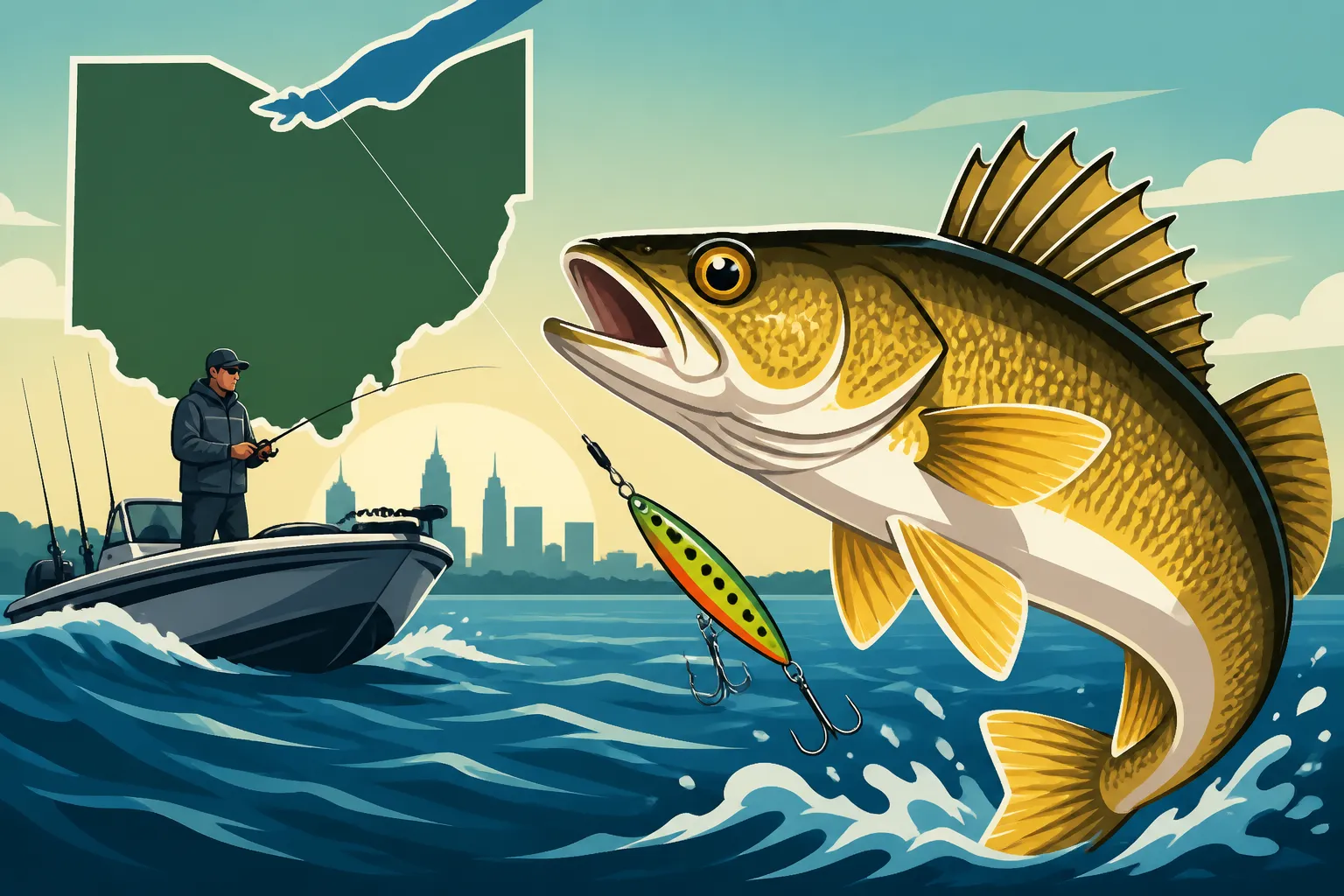
Lake Erie walleye fishing can be incredibly rewarding, but the sheer vastness of the lake and the migratory nature of these prized fish can make locating them feel like searching for a needle in a haystack. This comprehensive guide will walk you through the ins and outs of trolling for Lake Erie walleye, helping you unlock the secrets to consistent success on one of the world's best walleye fisheries.
Understanding Lake Erie Walleye Behavior for Trolling Success
To truly excel at trolling for walleye on Lake Erie, you need to understand what makes these fish tick. They're not just random wanderers; their movements are dictated by a few key factors that, once understood, can dramatically improve your catch rates. It’s all about putting your bait in front of them when and where they're most likely to bite.
Seasonal Movements and Depths
Walleye are highly migratory, and their location on Lake Erie changes significantly with the seasons. In the spring, after the spawn, walleye in the Western Basin tend to disperse, often moving towards deeper, cooler waters as the surface temperature rises. You'll find them concentrating around areas where forage is abundant, or they might be making their way east into the Central Basin. During this period, they can be found anywhere from 15 to 30 feet deep, often suspended in the water column or relating to subtle changes in bottom contour. As summer progresses, the lake stratifies, creating a thermocline. Walleye will often hug this cooler water layer, typically 25 to 50 feet down, sometimes even deeper, especially in the central and eastern basins, but they can still be found shallower in low-light conditions.
Come fall, as water temperatures begin to drop again, walleye activity often increases. They start feeding aggressively, preparing for winter, and can be found in a wider range of depths. You might find them shallower early in the morning or late in the evening, moving into deeper water during the brighter parts of the day. Understanding these general patterns is crucial. For instance, if you’re fishing the Western Basin in July, you’re often looking for fish holding in deeper water (though "deeper" here might still be 25-30 feet due to the basin's shallower nature), while the Central Basin might require targeting 40-60 feet. Always pay attention to recent fishing reports and conditions, as walleye can be notoriously unpredictable, but these seasonal guidelines provide a fantastic starting point. For more detailed insights, check out our guide on the Best Time of Year to Fish Lake Erie for Walleye.
Walleye Forage and Preferred Structures
Walleye are opportunistic predators, and their diet on Lake Erie primarily consists of smaller baitfish like emerald shiners, gizzard shad, yellow perch, and smelt. The presence and movement of these forage species heavily influence where walleye will be found. If you can locate the baitfish, you're usually one step closer to locating the walleye. This is where your electronics become invaluable. Watching for schools of baitfish on your fish finder, often appearing as dense clouds or arcs, is a primary strategy. Walleye will often be lurking just beneath or to the sides of these schools, ambushing their prey.
Beyond baitfish, walleye also relate to structure, though Lake Erie is not known for a lot of sharp, dramatic underwater topography like some inland lakes. Instead, "structure" on Lake Erie often means subtle changes. This could be a rocky reef (like the famously productive reefs in the Western Basin), a breakline where the bottom depth changes by even just a few feet, or even a soft bottom transition from mud to sand. Sometimes, current breaks or areas where river plumes mix with lake water can concentrate bait and, subsequently, walleye. In the Central Basin, vast stretches of relatively flat bottom are common, and in these areas, walleye might be more spread out, making covering water with trolling techniques even more critical. Think of targeting subtle humps, long underwater points, or even just areas with slightly different bottom compositions that might hold invertebrate life, which in turn attracts baitfish.
Essential Gear for Trolling Lake Erie Walleye
Trolling for Lake Erie walleye isn't just about putting a lure in the water; it requires specialized gear that can withstand the rigors of big water and help you present your baits effectively. Investing in the right equipment can make a significant difference in your success and enjoyment on the water.
Rods, Reels, and Line Selection
When it comes to rods, durability and sensitivity are key. For trolling with planer boards and crankbaits, you’ll want medium-heavy to heavy power rods, typically 7 to 9 feet long, with a moderate fast action. These rods need enough backbone to handle large crankbaits, stout enough to fight strong Lake Erie walleye, and absorb the shock of waves while trolling. Many anglers opt for fiberglass or composite rods for their forgiving action. Brands like Daiwa and Shakespeare offer excellent options that you can often find on Amazon. For line counters, which are crucial for repeatable depth control, you'll need reels designed for trolling. These are typically baitcasting reels equipped with a line counter feature. Shimano Tekota or Daiwa Accudepth are popular choices. Ensure they have a smooth drag system, as even walleye can make powerful runs.
Line selection is paramount. For trolling, many anglers prefer monofilament or fluorocarbon main lines in the 10-17 pound test range, with braid becoming increasingly popular for its sensitivity and thin diameter. If using braid (often 20-30 pound test), a fluorocarbon leader (10-17 pound test) is almost always recommended for its invisibility and abrasion resistance. The thin diameter of braid, however, can make it challenging to use with some planer board releases, and it has less stretch, meaning you need a rod with more give to cushion head shakes. For precise depth control, especially with crankbaits, using a consistent line diameter is vital, as different lines will achieve different diving depths with the same lure and lead length. For a deeper dive into optimal setups, consider reviewing our article on the Best Rod and Reel Setup for Lake Erie Walleye.
Planer Boards: Types and Setup
Planer boards are indispensable tools for trolling on Lake Erie. They allow you to spread out multiple lines from your boat, covering a much wider swath of water than you could by simply running lines directly behind the boat. This broadens your presentation, increases your chances of encountering fish, and helps prevent tangles. There are two main types: in-line boards and mast systems. In-line boards, like those from Off Shore Tackle or Church Tackle, attach directly to your fishing line. They pull away from the boat, carrying your lure with them, and once a fish strikes, the board can either slide down to a swivel or be removed from the line. These are popular for smaller boats or when fewer lines are being run.
Mast systems, on the other hand, involve a large central mast mounted on your boat, from which multiple lines are run to larger planer boards that are deployed via a separate tow line. This allows for even wider spreads and the ability to run many lines simultaneously, which is common on dedicated charter boats. Regardless of the type, proper setup is key. Ensure your releases are set to hold your line securely but release when a fish strikes or when you pull back to clear a weed. It's an art form learning to clip them on, deploy them without tangling, and reel them in smoothly. For those looking to master the technique, an internal guide on How to Set Up Planer Boards for Lake Erie Walleye offers fantastic step-by-step advice.
GPS, Fish Finders, and Marine Electronics
In the vast expanse of Lake Erie, your marine electronics are your eyes and ears beneath the surface. A reliable GPS unit, often integrated into a modern fish finder, is non-negotiable. It allows you to mark waypoints for productive areas, track your trolling passes, and most importantly, navigate safely. When you hit a productive patch of water, marking a waypoint instantly allows you to make subsequent passes through that exact zone, maximizing your chances.
A high-quality fish finder is equally critical. Look for units with clear, high-resolution screens and CHIRP sonar capabilities, which provide much better target separation and clarity. You'll use it to identify baitfish schools, locate walleye, and map bottom contours and structure. Some advanced units also offer side imaging or down imaging, giving you an even more comprehensive view of the underwater world around your boat. This helps you identify subtle changes in structure, locate suspended fish, or even spot individual walleye tucked away near drop-offs. Being able to read your fish finder for suspended walleye or identify thermoclines will dramatically improve your trolling game. These days, many reputable brands like Humminbird and Garmin offer excellent integrated units that combine GPS, sonar, and charting capabilities, often available through retailers like Amazon.
Mastering Trolling Techniques and Strategies
Trolling might seem simple—just dragging a lure behind a boat—but there's a real art and science to doing it effectively, especially when targeting finicky walleye on Lake Erie. Small adjustments can make a world of difference.
The Art of Speed and Direction Control
Trolling speed is one of the most critical factors in walleye fishing, yet it's often overlooked or not precisely controlled. Different lures have optimal speeds at which they perform best, and walleye themselves can be particular about lure speed based on water temperature, clarity, and their feeding mood. Generally, for Lake Erie walleye, trolling speeds typically range from 1.0 to 2.5 miles per hour. Crankbaits often perform best at higher speeds (1.5-2.5 mph), while crawler harnesses might be more effective at slower speeds (1.0-1.8 mph). However, these are just starting points. The most successful anglers constantly experiment, varying their speed by 0.1 to 0.2 mph increments until they find what the fish prefer on that particular day.
Direction control is equally important. When you make a turn, the lures on the inside of the turn slow down and drop, while those on the outside speed up and rise. This change in action can often trigger strikes from following fish. Don't be afraid to make slight S-curves or zig-zags as you troll. This subtle change in speed and depth presentation can be the key to getting a bite, especially when fish are lethargic. Also, considering the Does Wind Direction Matter for Lake Erie Walleye Fishing? article, pay attention to how wind and current affect your boat speed and drift. Trolling with or against the current will require different engine RPMs to maintain your target speed over ground, which is what truly matters for lure presentation.
Crankbait Trolling: Lure Selection and Diving Depths
Crankbaits are a staple for Lake Erie walleye, offering a wide range of sizes, colors, and diving depths. The key to success is matching the hatch (or at least the general size and profile of the baitfish) and presenting the lure at the correct depth where the walleye are holding. Popular crankbait brands include Bandit, Berkley (especially their Flicker Shad and Walleye Diver lines), and Rapala. When selecting lures, consider water clarity and light conditions. Brighter, fluorescent colors often work well in stained or cloudy water, while more natural patterns might be better in clear conditions. Don't underestimate the power of contrast, either.
Understanding the diving capabilities of your crankbaits is crucial. Many lures have published depth charts, but these are often based on specific line types, speeds, and lead lengths. For precise depth control, particularly with crankbaits, you'll need to experiment or use tools like dive curves. Line counters on your reels are indispensable here. Once you find a depth that's producing, you can easily replicate it with other lines. For a more in-depth discussion on optimal depths, our article How Deep to Troll for Walleye in Early Summer might provide some excellent insights relevant to crankbait performance. Remember to occasionally check your lures for debris, as even a small weed can significantly alter a crankbait's action.
Crawler Harness Trolling: Baits and Rigging
Crawler harnesses are another incredibly effective presentation for Lake Erie walleye, particularly when fish are feeding on bottom or suspended just above it. A crawler harness typically consists of a series of beads, a clevis with a spinner blade, and two or three hooks, all threaded on fluorocarbon line. The most common bait used is a live nightcrawler, although artificial worms or segments of nightcrawlers can also be effective. The spinner blade provides flash and vibration, attracting walleye from a distance. Different blade styles (Colorado, Indiana, Willowleaf) and sizes offer varying degrees of flash and vibration, allowing you to fine-tune your presentation.
For rigging, ensure your nightcrawler is threaded naturally onto the hooks, allowing it to wiggle enticingly in the water. Use enough weight, typically a bottom bouncer or an in-line sinker, to get your harness down to the desired depth. Bottom bouncers are excellent for fishing near the bottom as they minimize snags, while in-line weights (like Guppy weights or Snap Weights) are great for suspended fish when used in conjunction with planer boards. Again, line counters are essential for consistently hitting the desired depth. Varying blade colors and sizes, as well as bead patterns, can often make a difference. Some days, a bright chartreuse blade might be hot; other days, a subtle silver or gold might be preferred. It's all about experimentation!
Optimizing Your Trolling Spread
Once you have your gear and techniques dialed in, the next step is to optimize your trolling spread. This means strategically deploying multiple lines to cover a wide area and target different depths simultaneously, increasing your chances of finding actively feeding walleye.
Managing Multiple Lines with Planer Boards
Running multiple lines with planer boards is the cornerstone of effective Lake Erie walleye trolling. A typical spread might involve 3 to 6 lines per side of the boat, sometimes more depending on boat size and regulations. The key to success is organization and careful deployment. Start with your furthest lines out first, slowly letting out line while the planer board pulls away from the boat. Once you've reached your desired lead length, clip on your next board, which will run closer to the boat, and repeat the process. Always ensure there's enough distance between your boards to prevent tangles during turns or when reeling in a fish.
A common strategy is to run your longest lines (farthest from the boat) with shallower diving baits or lighter weights, and your shorter lines (closer to the boat) with deeper diving baits or heavier weights. This creates a natural depth and lateral separation. When a fish strikes, always reel in the fish as quickly and smoothly as possible, keeping your rod tip up to keep the fish away from other lines. It's also a good practice to turn the boat slightly away from the side where the fish struck to help clear the other lines. Communication with your crew is crucial for smooth operation.
Staggering Lures and Depths
The beauty of a multi-line trolling spread is the ability to present a variety of lures at different depths simultaneously. This allows you to quickly pinpoint what the walleye are responding to on any given day. A common approach is to have a mix of crankbaits and crawler harnesses in your spread. You might run a few crankbaits at various depths (e.g., one diving to 20 feet, another to 30 feet, and a third to 40 feet using different lead lengths or weights). Alongside these, you could run a couple of crawler harnesses, perhaps closer to the bottom with bottom bouncers, or suspended at specific depths with in-line weights.
Color and action variation are also important. If you have five lines out, avoid running five identical lures. Try different color patterns, different blade types on your harnesses, or different crankbait wiggles. If one particular lure or depth starts producing fish, then you can adjust more of your lines to match that successful pattern. This constant experimentation is what makes trolling so engaging and effective. Keeping a log of what works (lure, color, depth, speed, and location) is an invaluable practice that will pay dividends on future trips.
| Lure Type | Recommended Trolling Speed (MPH) | Typical Depth Range (Feet) | Best Conditions | Notes |
|---|---|---|---|---|
| Crankbaits | 1.8 – 2.5 | 10 – 50+ | Active fish, clear to stained water | Vary sizes/colors; use dive curves for accuracy |
| Crawler Harness | 1.0 – 1.8 | 15 – 40 | Neutral to active fish, near bottom or suspended | Different blade types (Colorado, Indiana, Willow) |
| Spoons | 2.0 – 3.0 | 20 – 60+ (with lead core/dipsy) | Aggressive fish, deep, open water | Good for covering ground, often target larger fish |
Troubleshooting Common Trolling Challenges
Even with the best gear and preparation, Lake Erie can throw curveballs. Weather, fish mood, and gear malfunctions are all part of the game. Knowing how to troubleshoot these common challenges will keep your lines in the water and your spirits high.
Adjusting to Changing Conditions
Lake Erie's conditions can change rapidly. A calm morning can quickly turn into a windy, choppy afternoon, and these changes directly impact walleye behavior and your trolling effectiveness. If a cold front rolls through, walleye might become less active, move deeper, or hug tighter to structure. In such cases, slowing down your trolling speed, downsizing your lures, or switching to more subtle presentations like crawler harnesses can often trigger bites. Conversely, if the wind picks up and the water gets choppy, the increased surface disturbance can sometimes make walleye more aggressive, prompting them to move shallower. You might find success by speeding up slightly or using brighter, more attention-grabbing lures.
Water clarity is another big factor. After heavy rains, rivers can dump muddy water into the lake, creating large turbid plumes. Walleye often avoid extremely muddy water, but they might congregate on the edges of these plumes where the clearer and muddier water mix. In stained water, fluorescent or high-contrast colors tend to stand out better. Always be prepared to make adjustments. Don't be afraid to change your speed, depth, lure color, or even the type of lure entirely if the fish aren't biting. The most successful anglers are those who can quickly adapt to what the lake is telling them.
Dealing with Fouled Lines and Snags
One of the most frustrating aspects of trolling is dealing with fouled lines or snags. A fouled line occurs when a lure picks up weeds, debris, or a small gob of zebra mussels, which completely kills its action. It's impossible to catch fish on a fouled lure. To minimize this, use weed-guards on your hooks if fishing near heavy cover, and periodically check your lures, especially if you haven't had a bite in a while. In-line planer boards can sometimes get tangled if not deployed carefully or if a sharp turn is made, so always give them enough spacing.
Snags, while less common in the open water of Lake Erie than in rocky inland lakes, can still happen, especially if you're bottom bouncing or trolling over specific reefs and humps. If you feel a snag, immediately put your boat in neutral or turn the boat back towards the snag to reduce tension on the line. Sometimes, backing up directly over the snag can free the lure. If a lure is truly stuck, you may have to sacrifice it. To prevent snags, pay close attention to your fish finder for bottom contours and adjust your depth accordingly. If you're consistently snagging, it's a clear sign you're running too deep for the area.
Safety and Best Practices on Lake Erie
Lake Erie is a magnificent fishery, but it's also a large, powerful body of water that demands respect. Prioritizing safety and adhering to regulations ensures a positive experience for everyone on the water.
Weather Awareness and Navigation
The weather on Lake Erie can turn on a dime. A clear, calm morning can quickly give way to strong winds and dangerous waves, especially in the wider, deeper central and eastern basins. Always check the marine forecast before heading out, and keep an eye on weather apps and NOAA weather radio while on the water. Even with a good forecast, watch the sky and the water for signs of changing conditions. Dark clouds, sudden wind shifts, or increasing wave heights are all reasons to consider heading back to port. Your safety and the safety of your crew should always be your top priority.
Proper navigation is also paramount. Carry up-to-date nautical charts (physical or electronic) and know how to read them. Be aware of shipping lanes, restricted areas, and navigational hazards. Make sure you have all required safety equipment on board, including life jackets for everyone, a whistle or horn, visual distress signals, a fire extinguisher, and a first-aid kit. A reliable VHF radio is also a must for communicating with other vessels and emergency services. Even on seemingly calm days, being prepared for the unexpected is simply smart boating. For those new to boating on large bodies of water, understanding Ohio Boater Education Requirements for Anglers is a good place to start.
Ohio Regulations and Ethical Angling
Fishing on Lake Erie requires adherence to specific Ohio fishing regulations. These regulations are in place to ensure the sustainability of the walleye population and other species. Always make sure you have a valid Ohio Fishing License Guide for Residents and Nonresidents before you cast a line. Familiarize yourself with the current Lake Erie Walleye Bag Limits and size limits, which can sometimes change seasonally based on the health of the fishery. These regulations are crucial for maintaining the long-term health of our beloved walleye populations, and ignorance is no excuse for non-compliance. You can find the most up-to-date rules on the Ohio Department of Natural Resources (ODNR) website.
Beyond regulations, ethical angling practices are important for preserving the sport. Practice catch and release responsibly for any fish you don't intend to keep, minimizing stress and injury to the fish. Handle fish gently with wet hands, avoid dragging them on rough surfaces, and use appropriate landing nets. Dispose of all trash properly, leaving no trace behind. Respect other anglers' space, especially when trolling; always maintain a safe distance from other boats and avoid cutting off someone's trolling path. By following regulations and practicing ethical angling, we all contribute to a thriving Lake Erie fishery for generations to come.
Disclaimer
Please note that fishing conditions, regulations, and fish behavior are subject to change. Always consult the most current Ohio Department of Natural Resources (ODNR) fishing regulations before your trip. This guide is for informational purposes only and should not replace official sources.