How Deep to Troll for Walleye in Early Summer
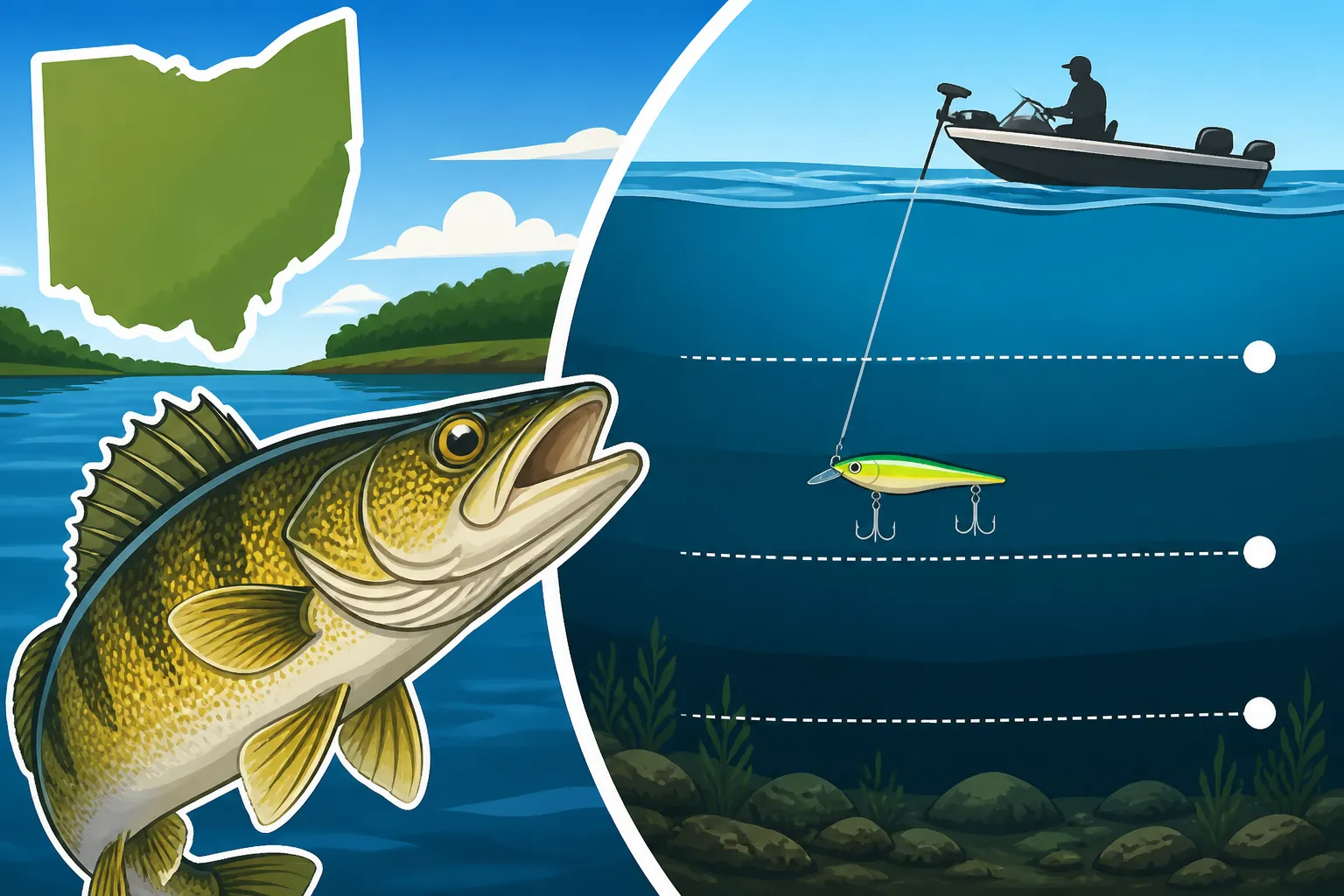
Early summer can be a real head-scratcher for walleye anglers in Ohio. Just when you think you've got them figured out from their spring patterns, the water warms up, the baitfish scatter, and those elusive walleye seem to vanish into thin air, leaving many of us wondering exactly how deep we should be trolling to find them. This guide is dedicated to demystifying walleye depth in early summer, helping you understand their movements and the precise techniques to put your baits in the strike zone.
Understanding Early Summer Walleye Behavior
As the warmth of late spring gives way to the heat of early summer, usually from late May through July, walleye undergo significant behavioral changes. They’re no longer focused solely on the immediate post-spawn recovery in shallower waters. Instead, they begin to spread out, often moving to deeper, cooler areas, but not always in predictable patterns. This transition period is exciting but requires a keen understanding of what drives these magnificent fish.
The Post-Spawn Shift: Where Walleye Go
Right after the hectic spawning period, typically in April and early May, walleye are often found in relatively shallow areas, recovering and feeding aggressively. They might be in bays, around river mouths, or along shallow reefs. However, as water temperatures steadily climb into the 60s and 70s Fahrenheit, that comfort zone shifts dramatically. The shiners, perch, and shad, which are the walleye's primary forage, also move, seeking out their own preferred temperatures and food sources, and the walleye follow suit.
Many walleye will begin to migrate towards main lake basins, deeper humps, ledges, and channels where the water remains cooler and more oxygenated. This doesn't mean they'll be on the bottom in 60 feet of water all the time. Instead, they might be suspended over deeper water, chasing schools of baitfish. Think of it like a game of hide-and-seek where the "hiding" spots constantly change based on conditions. For instance, on a massive body of water like Lake Erie, especially in the central basin, this movement offshore can be profound. They'll transition from the shallow spawning grounds of the western basin to deeper, cooler waters, setting up for the summer bite. You can learn more about their movements in our comprehensive Ohio Walleye Fishing Guide.
Key Factors Influencing Walleye Depth in Early Summer
Several environmental factors dictate just how deep walleye will hold during early summer, and being able to read these cues is crucial for successful trolling. It’s rarely a static depth; rather, it’s a dynamic interplay of elements.
Firstly, water temperature is paramount. Walleye prefer a temperature range between 60 and 70 degrees Fahrenheit, with their ideal comfort zone often being closer to the mid-60s. If the surface water gets too warm, say consistently above 72 degrees, they will absolutely seek out deeper, cooler water. This could mean hugging the thermocline (the layer where water temperature changes rapidly) or dropping to the bottom if that's where the cooler temps are. You’ll find them at whatever depth offers that comfortable band, even if it's 20 feet below the surface in 50 feet of water.
Secondly, light penetration plays a huge role. Walleye have excellent low-light vision, which is why they are often most active at dawn, dusk, and even at night. On bright, sunny days, they tend to move deeper to escape the intense sunlight. Cloudy days, on the other hand, might see them move shallower, especially if the water is a bit stained. Even the presence of boat shadows or the clarity of the water can influence how deep they position themselves. Thirdly, baitfish location is perhaps the most significant determinant. Walleye are predators, and they will always be where the food is. If schools of shad or shiners are suspended at 25 feet over a 40-foot basin, that’s exactly where the walleye will be. Using your fish finder to locate bait schools is often more important than blindly searching for walleye. Finally, oxygen levels and current can also factor in, particularly in reservoirs or rivers. Walleye will avoid areas with low oxygen, and subtle currents can position them in predictable ambush points.
Essential Gear and Setup for Early Summer Trolling
Successfully targeting walleye at precise depths during early summer trolling demands the right tackle and a thoughtful approach to your setup. It's not just about throwing a lure in the water; it's about control, precision, and efficiency. Trying to make do with suboptimal gear can lead to frustration and missed opportunities, especially when walleye are spread out or finicky.
Rods, Reels, and Line Choices
When it comes to trolling for walleye, you're not looking for your ultralight panfish setup. You need gear that can handle the constant strain of pulling diving baits, planer boards, or even downriggers, while still having enough sensitivity to detect subtle walleye bites. A medium to medium-heavy power rod, typically 7 to 9 feet in length, with a moderate to fast action, is ideal. Longer rods help spread out lines when running multiple setups, and the moderate action provides forgiveness, absorbing the shock of a big walleye strike without pulling the hooks. Specific models from brands like Daiwa or Okuma, available on platforms like Amazon, are popular choices among serious walleye anglers for their durability and performance.
For reels, a line-counter reel is an absolute non-negotiable for trolling. These reels, often baitcasters, allow you to precisely replicate your trolling depth once you find it. Whether you're running 50 feet of line out or 150 feet, the line counter gives you the exact measurement, ensuring consistency. Matching the reel to the rod in terms of balance is important for comfort during long days on the water. As for line, many anglers opt for monofilament (10-12 lb test) for its stretch, which acts as an additional shock absorber. However, super lines like braided line (10-20 lb test) are increasingly popular for their zero stretch, which provides superior sensitivity and helps diving lures run deeper with less line out. If using braid, a fluorocarbon leader (10-15 lb test) is often tied on for its invisibility in clear water and abrasion resistance. A great place to explore different line options and compare prices is on Amazon, where you can find detailed reviews.
Diving Devices and Lures for Specific Depths
To reach those crucial early summer walleye depths, you'll rely heavily on a combination of diving lures and specialized diving devices. No single lure will do it all, so having a diverse arsenal is key.
Crankbaits: These are arguably the most popular lures for trolling walleye. Different crankbaits are designed to dive to various depths based on their lip size, body shape, and buoyancy. Shallow-diving crankbaits might run 5-10 feet deep, medium divers 10-20 feet, and deep divers can reach 25-35 feet or even more on their own. Brands like Rapala, Berkley, and Bandit offer a huge range of crankbaits, each with specific dive curves. For early summer, having a selection that covers depths from 10 to 30 feet is a good starting point. Color choice can be critical, with natural baitfish patterns often effective in clear water, and brighter, more aggressive colors working well in stained water or low light. Our guide on Best Lures for Ohio Fishing delves deeper into specific lure choices.
Planer Boards: These devices allow you to spread out multiple lines away from the boat, covering a wider swath of water and presenting lures to fish that might be spooked by the boat’s presence. Planer boards themselves don't add depth, but they are crucial for running multiple lines simultaneously and effectively covering water at the desired depth achieved by your lures or other diving aids. For example, if you're pulling a crankbait that dives 20 feet, the planer board just moves that 20-foot diving lure to the side. Planer boards are incredibly effective on large bodies of water like Lake Erie.
Diving Planers/Discs: Tools like Dipsy Divers or Jet Divers are designed to take your lure down to a specific depth. These devices attach to your main line, and then a leader (usually 6-10 feet) with your bait or a spoon is attached to the other end. By adjusting the setting on the diver and the amount of line out, you can control the depth. For instance, a Dipsy Diver set to "0" will run straight back, while a "1" or "2" setting will make it run out to the side, covering more water. These are invaluable for getting spoons or spinner rigs down deep without heavy weights.
Lead Core Line: This specialized line has a lead core wrapped in a braided sheath, causing it to sink. Each color segment (typically 10 yards) of lead core sinks to a fairly consistent depth at a given trolling speed. By letting out a certain number of colors, you can achieve specific depths. For example, in typical early summer conditions and speeds, one color might get you down 5-7 feet, so letting out five colors could put your bait around 25-35 feet. It’s an effective way to precisely control depth, particularly for presenting lighter lures or spinner rigs.
Downriggers: While more common for salmon or trout fishing, downriggers are also used by some walleye anglers, particularly when fish are holding at very specific, deeper depths, often over deep structure or suspended over open water. A heavy ball (6-12 lbs) is lowered to the desired depth, and your fishing line is attached to a release clip on the downrigger cable. When a fish strikes, the line releases from the clip, allowing you to fight the fish directly. Downriggers offer the most precise depth control but are a more significant investment in gear.
Mastering Trolling Techniques for Early Summer Walleye
Once you have your gear ready, the real art of early summer walleye trolling comes down to technique. It’s about more than just driving in a straight line; it’s about reading the water, adjusting your presentation, and constantly adapting to what the walleye are telling you.
Reading Your Electronics and Water Conditions
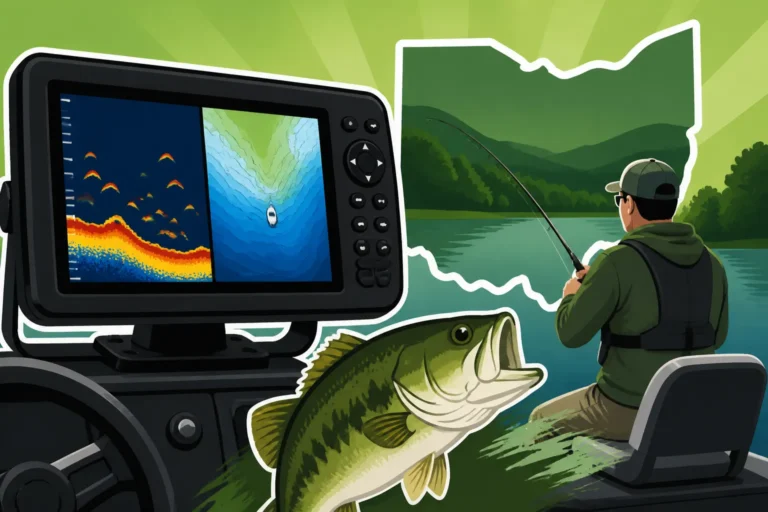
Your fish finder is your best friend when trolling for early summer walleye. It's not just for marking fish; it's for understanding the entire underwater environment. Start by looking for the thermocline, if present. This temperature break is a prime holding area for walleye as it offers cooler water and often concentrates baitfish. Your fish finder may show it as a distinct layer. Walleye will often be just above, in, or just below this layer.
Next, focus on baitfish schools. Walleye are rarely far from their food source. If you see clouds of baitfish suspended at 20 feet over a 40-foot bottom, you can bet there will be walleye in that vicinity. Adjust your trolling depth to match where the bait is. Don't be afraid to experiment with different depths around the bait, as walleye might be lurking just beneath or to the sides, ambushing stragglers. You can improve your skills by reading our guide on Reading Ohio Fish Finders and Electronics.
Beyond your electronics, pay attention to the surface conditions. Wind direction and speed, cloud cover, and even recent rain can influence walleye behavior and their preferred depth. On bright, sunny days, push your lures a bit deeper. On overcast days or during low light, walleye might move up shallower. Strong winds can create current and concentrate baitfish, leading to productive trolling lanes. Always keep an eye on your water temperature gauge; a slight change of a degree or two can make a big difference in walleye activity.
Adjusting Your Presentation for Optimal Depth
Once you've identified a potential depth zone, fine-tuning your presentation is critical. It's a game of constant adjustment until you start getting bites. The goal is to put your lure exactly where the walleye are, not just generally close.
Vary Your Speed: Trolling speed dramatically affects the depth of your lures and their action. Slower speeds (around 1.0-1.5 mph) will generally make your crankbaits run shallower and have a more subtle wiggle. Faster speeds (2.0-2.8 mph) will make them dive deeper and have a more aggressive wobble. Experiment with speed changes, as different speeds can trigger strikes even at the same depth. Sometimes, a subtle turn of the boat or a brief acceleration can be all it takes to entice a following fish.
Adjust Your Line Out: This is where your line-counter reels earn their keep. Knowing how much line you have out allows you to precisely control your lure's depth. If your crankbait dives 15 feet with 100 feet of line out at 2.0 mph, and you mark fish at 18 feet, try letting out an extra 10-20 feet of line to get your lure a bit deeper. Conversely, if you're hitting the bottom too often, reel in a little. Remember that the diameter of your fishing line also affects dive depth; thinner lines cut through the water better and allow lures to dive deeper.
Utilize Multiple Depths: Don't just run all your lines at the same depth. Especially when you're searching, run a spread of different depths using different lures, diving devices, or line amounts. For example, you might have one crankbait running at 15 feet, another with a Dipsy Diver taking it to 25 feet, and a lead core setup targeting 30-35 feet. This shotgun approach helps you quickly pinpoint the active depth. Once you get a bite on a particular setup, replicate that depth and presentation on your other lines. For in-depth strategies specific to Lake Erie, our Ohio Trolling Techniques for Lake Erie guide offers valuable insights.
Depth Charts and Practical Trolling Strategies
Getting a handle on the nuances of trolling depth is often a matter of combining general guidelines with on-the-water experience and adaptability. There's no magic number that always works, but understanding typical depths and how to respond to challenges will put you ahead.
General Depth Guidelines for Ohio Lakes
While every lake and every day is different, there are some general depth ranges that can serve as a starting point for early summer walleye in Ohio. These are approximate and highly dependent on the factors we discussed earlier, like water temperature, light, and bait location.
Here’s a rough breakdown you can use as a guide:
| Water Type/Condition | Typical Early Summer Walleye Depth Range | Notes |
|---|---|---|
| Lake Erie Western Basin | 10-25 feet | Walleye often relate to bait schools suspended over deeper flats or channels. Can be shallower on cloudy days. |
| Lake Erie Central/Eastern Basin | 20-40 feet, often suspended over deeper water | Walleye follow bait to deeper, cooler water. Often found near the thermocline. Deeper in bright sun. |
| Inland Reservoirs (e.g., Mosquito Creek, Alum Creek) | 15-35 feet, relating to submerged structure, humps, or main lake channels | Look for old creek beds, humps, and points. May go shallower during low light. Consider Best Ohio Reservoirs for Walleye and Saugeye. |
| Stained/Murky Water | 8-20 feet | Reduced light penetration allows walleye to remain shallower even during the day. |
| Clear Water/Bright Sun | 25-45 feet+ (often deeper) | Walleye dive deep to escape light. Focus on the thermocline or bottom in deeper sections. |
| Dawn/Dusk/Night | 8-25 feet | Walleye are more active in low light and may move up shallower to feed aggressively. Night trolling can be incredibly effective. |
Always start with a spread of depths around these ranges and let the fish tell you where they are. If you’re not getting bites, adjust by 5-10 feet in either direction, change speeds, or switch lures. The goal is to cover the water column methodically. Knowing How Deep Lake Erie Is Where Anglers Fish for Walleye can help you visualize the environment.
Troubleshooting Common Trolling Challenges
Even seasoned anglers face challenges when trolling. The key is to know how to diagnose the problem and make effective adjustments.
Problem 1: Not Getting Bites (No Fish Marked)
- Diagnosis: You're either not in the right area or your lure isn't at the right depth.
- Solution: Check your electronics for baitfish and structure. If you see nothing, move to a new area. If you see bait, systematically try different depths (as per the table above) until you hit the fish. Vary your speed significantly. Ensure your lures are running true – sometimes a lure can be out of tune and not diving correctly.
Problem 2: Marking Fish but No Bites
- Diagnosis: You're in the right general area, but your presentation isn't enticing them.
- Solution: This is where fine-tuning comes in. First, verify your depth. Are you passing through the fish or just above/below them? Adjust your line out by 5-10 feet increments. Change lure colors or styles. Sometimes, a subtle change in action or vibration makes all the difference. Try slowing down or speeding up, or even making a few S-turns with the boat to vary the lure's path and speed through the water. Remember, walleye are sometimes finicky and a slight change can trigger a bite.
Problem 3: Tangled Lines
- Diagnosis: Often caused by incorrect line spacing, varying trolling speeds too quickly, or lures running erratically.
- Solution: Use planer boards to spread lines out horizontally. Stagger your lure depths vertically so they're not all trying to run at the same exact level. Use different diving devices (e.g., Dipsy Diver on one side, crankbait on the other). Avoid sharp turns when trolling, especially with many lines out. Ensure your lures are properly tuned and not darting erratically, which can cross lines. A small investment in a good quality planer board setup can save you a lot of headaches.
Problem 4: Hitting Bottom Too Much
- Diagnosis: Your lures are running too deep for the terrain, or you’re in shallower water than intended.
- Solution: Reel in some line or switch to a shallower-diving lure. If using lead core or divers, reduce the amount of line out. Pay close attention to your depth finder to anticipate rising bottom contours and reel up accordingly. Conversely, if you're not hitting bottom where you expect to, your lures might be running too shallow. Remember to also check the Ohio Fishing Season Dates and Effective Periods to make sure you're compliant with any specific regulations for the time of year.
By understanding walleye behavior, equipping yourself with the right gear (much of which is readily available on Amazon), and mastering these trolling techniques and troubleshooting tips, you'll be much better prepared to consistently put early summer walleye in your net. Good luck out there!
Disclaimer
Fishing conditions and regulations in Ohio can change. Always consult the latest Ohio Department of Natural Resources (ODNR) fishing regulations booklet or website before heading out on the water. This guide is for informational purposes only and does not supersede official regulations.