Best Month to Catch Walleye on Lake Erie
It's a question every angler who dreams of a cooler full of golden walleye asks: "When is the absolute best month to catch walleye on Lake Erie?" You've heard the legends, seen the pictures, and maybe even tried your luck only to come up short. It's frustrating to invest time and effort without knowing when the odds are truly in your favor. This guide is here to cut through the guesswork, diving deep into the seasonal patterns and prime windows that make Lake Erie the Walleye Capital of the World, so you can plan your trips for maximum success.
The Undisputed Peak: Late Spring and Early Summer Explosion
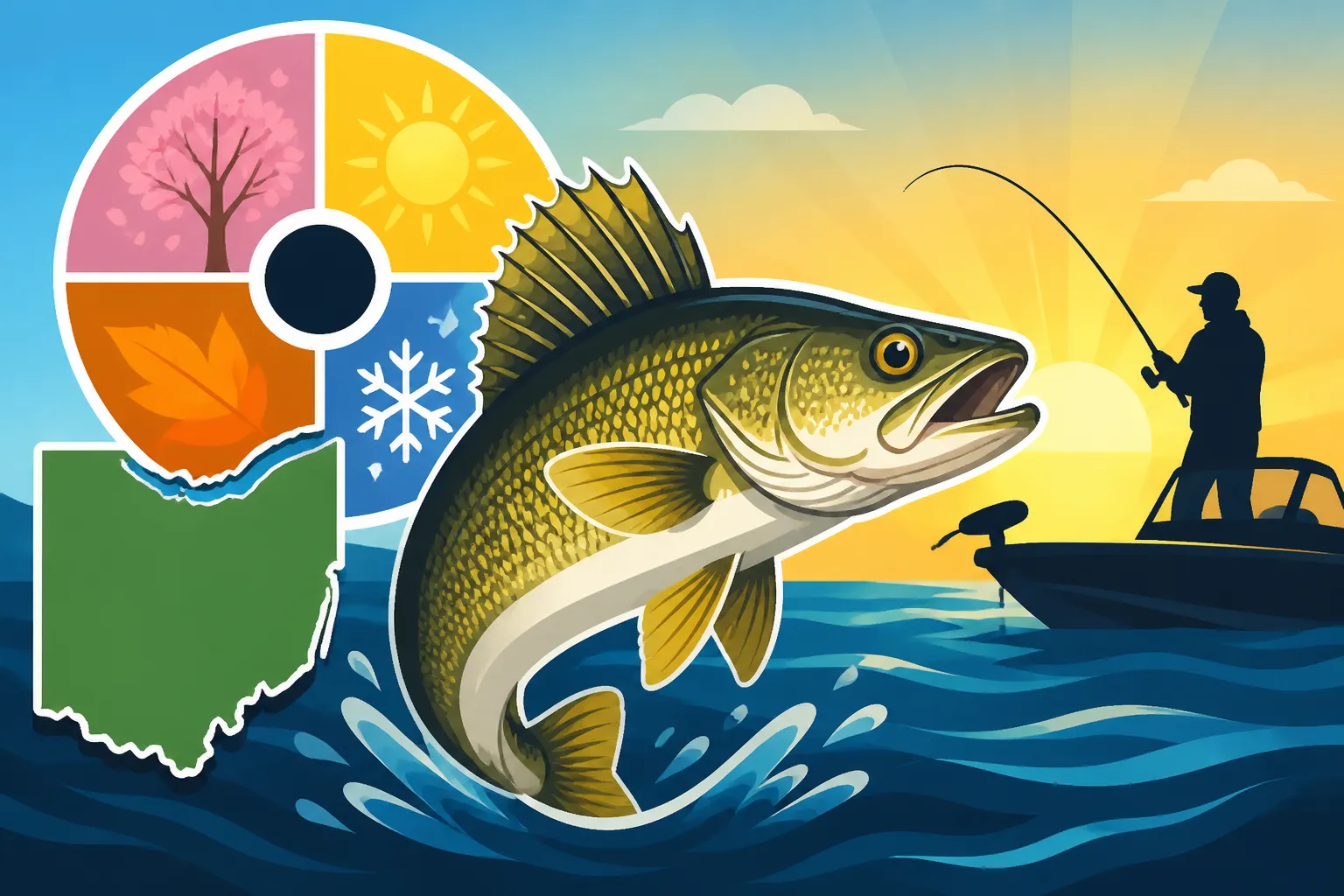
If you ask seasoned Lake Erie walleye anglers, most will agree that late spring and early summer—specifically the months of May and June—offer the most consistent and often most prolific walleye fishing. This isn't just hearsay; it's backed by biological patterns and angler success stories that define the peak season on the big lake.
Why May and June Reign Supreme for Walleye
The reason May and June are so exceptional boils down to a few key biological and environmental factors. First, walleye have typically completed their spawning rituals by mid to late April, especially in the shallower, warmer waters of the Western Basin. After the exhaustive process of spawning, these fish are incredibly hungry and focused on replenishing their energy reserves. They move into shallower feeding areas, often in huge schools, making them more accessible and aggressive. This post-spawn feeding frenzy is a golden opportunity for anglers.
Secondly, the water temperatures are just right. As the lake warms from its chilly winter state into the comfortable 50s and 60s Fahrenheit, walleye become more active and their metabolism speeds up. This is their comfort zone, driving them to chase baitfish with vigor. The abundance of baitfish, like emerald shiners and gizzard shad, also increases dramatically during this period, providing an endless buffet for hungry walleye. You'll find yourself reaching for tried-and-true lures or even experimenting with new ones you might have picked up from online retailers like Amazon to match what the walleye are feeding on.
Prime Locations and Techniques During the Peak
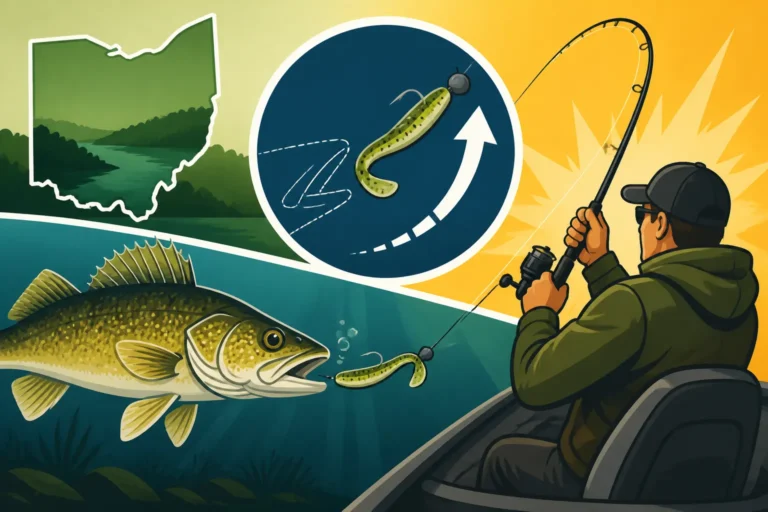
During May and June, the Western Basin of Lake Erie is often the epicenter of the walleye action. Areas around Port Clinton, Catawba Island, and the famous reefs are teeming with fish. Anglers here often employ a variety of techniques. Trolling with crankbaits is incredibly effective, especially when covering large expanses of water to locate scattered schools. Long, shallow-diving crankbaits in bright colors work wonders in the stained waters.
Another highly productive method is using Ohio Trolling Techniques for Lake Erie with crawler harnesses. These harnesses, typically tipped with a nightcrawler, can be trolled behind planer boards or weighted inline systems to present bait at various depths. The subtle action of a wobbling blade and the natural scent of a crawler are irresistible to post-spawn walleye. Don't forget jigging, especially earlier in May when walleye might still be staging near rocky structures. You can explore more about effective methods in our guide on Best Ohio Walleye Fishing Techniques.
Understanding Walleye Behavior Through the Seasons
While May and June might be the peak, Lake Erie offers incredible walleye fishing opportunities throughout much of the year if you understand their seasonal movements and adjust your tactics accordingly. Walleye are creatures of habit, driven by water temperature, food availability, and spawning instincts.
Spring: The Pre-Spawn and Spawn Rush (March – April)
Before the May/June explosion, there's an earlier bite that draws a dedicated crowd. In March and April, walleye begin their migration towards their spawning grounds. For many, this means heading towards river mouths and shallow reef areas. The Maumee River, for example, experiences an epic walleye run, attracting thousands of anglers looking to catch pre-spawn and spawning fish.
During this time, walleye are still relatively sluggish in the cold water, but they are driven by instinct. Jigging with lead head jigs tipped with plastics or minnows is a go-to technique in these riverine environments. As the lake itself slowly warms, the earliest open-water walleye action typically starts in the Western Basin's shallower zones. These fish are staging and can be caught before they move onto the spawning beds. Remember that specific Ohio Fishing Season Dates and Effective Periods can vary slightly, so always check the latest regulations.
Summer: Deep Water and Open Lake Tactics (July – August)
As the calendar flips to July and August, the surface water of Lake Erie heats up considerably, especially in the Western Basin. Many walleye move to deeper, cooler waters, often congregating around the thermocline in the central and eastern basins. This is where the game changes from shallower trolling to targeting fish suspended over open water.
Anglers targeting summer walleye often embark on longer runs, sometimes 20-30 miles offshore from ports like Cleveland or Ashtabula, into the Central Basin or even the deep waters of the Eastern Basin. Trolling becomes even more specialized, with downriggers, Dipsy Divers, and heavier inline weights used to get baits down to specific depths. Large spoons and deep-diving crankbaits are popular choices. A reliable fish finder, often a popular purchase on Amazon, becomes absolutely essential for locating schools of suspended walleye and identifying the thermocline. For more on the specifics of this fishery, our comprehensive Ohio Walleye Fishing Guide has all the details.
Fall: The Second Wind (September – October)
Just when you thought the season was winding down, Lake Erie often delivers a fantastic fall walleye bite. As water temperatures begin to cool in September and October, walleye once again become more active, feeding heavily in preparation for winter. This "second wind" for walleye can be incredibly rewarding, often producing some of the largest fish of the year.
Walleye tend to consolidate into large schools during the fall, and they might move back into shallower areas, mirroring some of their spring behaviors. Trolling remains a primary tactic, with crankbaits and crawler harnesses still being very effective. However, jigging can also pick up significantly, especially when fish are found grouped up on structure or along channel edges. The bite can be less consistent than the May/June peak, but when you find them, the action can be furious. These fish are putting on weight, making for some truly impressive catches. For further insight into these fish, check out our guide on Walleye Spawning Behavior in Ohio.
Winter: Ice Fishing Opportunities (December – February)
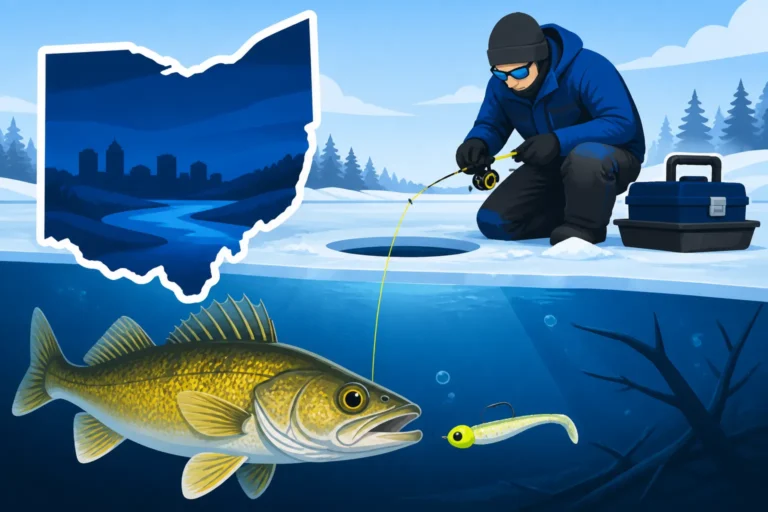
For the truly dedicated, winter on Lake Erie offers a unique walleye experience through the ice. While not as widespread or accessible as open-water fishing, certain areas, particularly the shallower Western Basin, can freeze over sufficiently to allow for ice fishing. This is a very specialized pursuit and requires extreme caution due to the unpredictable nature of lake ice.
Walleye caught through the ice are often active feeders, responding well to jigging spoons, blade baits, and minnows under tip-ups. Safety is paramount when ice fishing, and anglers should always check local ice conditions and forecasts. Our detailed Ohio Ice Fishing Guide provides crucial safety information and techniques for those brave enough to venture out onto the frozen lake.
Strategies and Hotspots by Month
Let's break down some of the specific nuances and prime opportunities month by month on Lake Erie for walleye, giving you a clearer picture of when and where to focus your efforts.
March and April: River Runs and Early Stagers
In March, the focus for many walleye fanatics shifts to the tributaries that feed into Lake Erie, most notably the Maumee River and the Sandusky River. This is when the famous walleye runs occur, as hundreds of thousands of walleye push upstream to spawn. Shore fishing and wading dominate during this period, with anglers casting jigs tipped with curly-tail grubs or hair jigs.
By April, as the river runs wind down, the earliest open-water action begins in the extreme Western Basin of Lake Erie. Walleye are still somewhat lethargic from the cold water but are actively feeding near major river mouths and reef complexes like those off Port Clinton. Small crankbaits trolled slowly or vertical jigging over structure can be incredibly effective. Remember to check local Ohio Fishing Regulations Every Angler Should Know as specific areas might have unique rules during the spawning period.
May and June: The Western Basin Blow-Up
This is it – the prime time. In May, especially mid to late May, the Western Basin comes alive. Walleye are dispersed over shallow reef areas and vast mudflats, voraciously feeding after the spawn. Trolling is king here. Anglers use planer boards to spread out lines, presenting crankbaits or crawler harnesses at various depths from 10 to 25 feet. Favorite crankbait brands like Bandit and Rapala are commonly seen, and many anglers stock up on these or similar options from online retailers like Amazon.
As June progresses, the walleye action remains strong in the Western Basin but starts to transition. Some fish will begin to move slightly deeper or spread out further into the open lake. This is a great time to experiment with different trolling speeds and depths. The sheer volume of fish available makes these months an almost guaranteed success if you put in the time and adjust to conditions. The areas surrounding Port Clinton Ohio Fishing Charters and Sandusky are particularly popular launch points.
July and August: Central Basin Deep Divers
The summer heat really kicks in during July and August, pushing the main walleye schools further east into the deeper, cooler waters of the Central Basin. The waters off Cleveland, Ashtabula, and Conneaut become the hotspots. This is a deep-water trolling game. You'll need equipment capable of getting your lures down 30, 40, or even 60 feet, such as downriggers or heavy divers.
The walleye are often suspended over deep water, following baitfish that are also seeking cooler temperatures. Spoons, like those from Michigan Stinger or Silver Streak, trolled at various depths, are deadly. You’ll be looking for baitfish on your electronics and setting your lures just above them. This is often when you can catch some truly large, football-shaped walleye that have been gorging on protein all summer. Fishing offshore demands a reliable vessel and keen attention to Lake Erie Fishing Regulations in Ohio which might differ in different zones.
| Month | Typical Walleye Activity | Primary Fishing Techniques | Key Locations (Ohio) |
|---|---|---|---|
| March | Pre-spawn staging, river runs | Jigging (rivers), slow trolling (lake) | Maumee River, Sandusky River, Western Basin near rivers |
| April | Peak river runs, early lake staging, post-spawn | Jigging, casting, slow trolling with crankbaits | Maumee River, Sandusky Bay, Western Basin reefs |
| May | Post-spawn feeding frenzy, aggressive | Trolling crankbaits & crawler harnesses, jigging | Western Basin (Port Clinton, Sandusky, island areas) |
| June | Continued aggressive feeding, spreading out | Trolling crankbaits & crawler harnesses | Western Basin, early Central Basin transition |
| July | Moving deeper, suspended over open water | Deep trolling with spoons, divers, downriggers | Central Basin (Cleveland, Ashtabula) |
| August | Deep water, targeting thermocline | Deep trolling with spoons, divers, downriggers | Central and Eastern Basins |
| September | Fall feeding binge, consolidating schools | Trolling crankbaits & crawler harnesses, jigging | Central Basin, moving back into Western Basin for some fish |
| October | Strong fall bite, concentrated feeding | Trolling, jigging | Western & Central Basins, near major structure |
| November | Late fall feeding, weather dependent | Trolling deep-diving crankbaits | Deeper Western & Central Basins |
| December – February | Ice fishing (if safe ice), very limited open water | Jigging through ice, tip-ups | Western Basin (near shore, bays, if frozen) |
Maximizing Your Success Beyond the Calendar
While knowing the best months is a huge advantage, truly successful Lake Erie walleye fishing isn't just about the calendar date. Several other factors play a crucial role in whether you fill your cooler or go home empty-handed. Paying attention to these details can turn an average day into an epic one, regardless of the month.
Water Temperature is Key
Walleye are cold-blooded creatures, and their activity levels are directly tied to water temperature. While May and June typically offer ideal temperatures, understanding the precise Best Water Temperature for Ohio Walleye can help you pinpoint exactly where they’ll be congregating at any given time. For instance, in spring, if a cold front drops surface temps, walleye might retreat to slightly deeper water or become less active. Conversely, during a prolonged hot spell in summer, they’ll dive even deeper to find their preferred cool zone.
Using a boat's electronics, including a temperature gauge, is invaluable. Knowing the thermocline's depth in summer, for example, allows you to present your lures right in the strike zone. You might even want to invest in a portable temperature gauge, easily found on Amazon, for those days when you're exploring different areas.
Weather Patterns and Their Influence
Don't underestimate the power of the weather. Reading Weather Patterns for Ohio Fishing can significantly impact your walleye success. Stable weather patterns, especially a few days of consistent conditions, often lead to predictable fishing. On the other hand, sudden cold fronts, strong winds, or rapidly changing barometric pressure can shut down the bite or push fish into different areas.
Heavy winds, particularly out of the west or southwest, can create large waves on Lake Erie, making it unsafe or uncomfortable to fish. Wind direction also affects water clarity and current, which in turn influences walleye behavior. Always check the marine forecast before heading out, and be prepared to adjust your plans. Sometimes, a protected bay or a different side of a reef might be calmer and more productive after a strong blow.
Current Fishing Reports and Local Knowledge
The beauty of Lake Erie is its dynamic nature, but this also means conditions can change rapidly. Relying solely on historical averages can sometimes lead you astray. The most successful anglers are always tapping into current fishing reports and local knowledge. Check online forums, local bait shops, and even social media groups for real-time updates on where fish are being caught, what depths they're at, and what lures are working.
Talking to bait shop owners in places like Port Clinton or Sandusky is invaluable. They hear reports from dozens of anglers daily and can offer insights that you won't find anywhere else. If you're considering a guided trip, a reputable Ohio Fishing Charter Guide or Port Clinton Ohio Fishing Charters can provide not only the experience but also the most up-to-date intel, drastically improving your chances of a successful outing. They live and breathe Lake Erie walleye, and their expertise is worth its weight in gold.
Disclaimer
Fishing conditions and regulations in Ohio can change. Always consult the latest Ohio Department of Natural Resources (ODNR) fishing regulations before heading out. This guide is for informational purposes only and does not supersede official regulations.