Best Topwater Lures for Ohio Largemouth Bass
There's nothing quite like the heart-stopping explosion of a largemouth bass blowing up on a topwater lure. It's exhilarating, it's visual, and it often leads to some of the most memorable catches. However, many Ohio anglers struggle with choosing the right topwater and presenting it effectively, leading to frustrating misses or no strikes at all. This guide is here to eliminate that guesswork, diving deep into the best topwater lures for Ohio largemouth bass and how to use them to entice those explosive strikes.
Why Topwater for Ohio Largemouth Bass?
For many bass anglers, topwater fishing isn't just a technique; it's an addiction. The visual aspect of seeing a fish track, stalk, and then violently strike your lure on the surface is unparalleled. It engages a different part of your brain than feeling a subtle bite on a jig or crankbait. In Ohio's diverse lakes and ponds, from the lily pad-choked waters of Buckeye Lake to the timber-laden depths of Piedmont Lake, topwater lures can be incredibly effective, especially when conditions are right.
The Thrill of the Strike
Let's be real, we all love the anticipation. You cast your lure, it lands with a soft plop, and then you begin your retrieve. Every twitch, every gurgle, every splash is an invitation for a hungry largemouth. Your eyes are glued to that lure, scanning for any ripple or disturbance that might signal an impending strike. When it happens, it's not a gentle tug; it's a sudden, often violent eruption of water, a pure adrenaline rush that makes you feel connected to the wildness beneath the surface. This visceral experience is why so many of us keep coming back to topwater, even when other techniques might be producing more fish. It's about the spectacle, the chase, and the sheer excitement of it all.
When Topwater Shines
Topwater lures truly come alive during specific windows and conditions. Generally, they are most effective when the water temperatures are warm, typically from late spring through early fall. The warmer water energizes the bass, pushing them into shallower areas to feed. Low light conditions, such as early morning, late evening, or overcast days, are often prime times. The reduced light makes bass less wary of surface presentations and they're more likely to hunt actively.
Think about those still, calm mornings when the lake is like glass – that's topwater heaven. However, don't discount a choppy surface on a windy day, especially when using noisy lures like buzzbaits or poppers, as the disturbance can cut through the chop and still draw attention. The presence of cover like lily pads, weed mats, submerged timber, or even docks also creates ideal ambush points where bass will readily attack a surface lure. If you're looking for the prime window, consider "Best Time of Day for Topwater Bass Fishing in Ohio" for more specific insights.
The Best Topwater Lures for Ohio Largemouth Bass
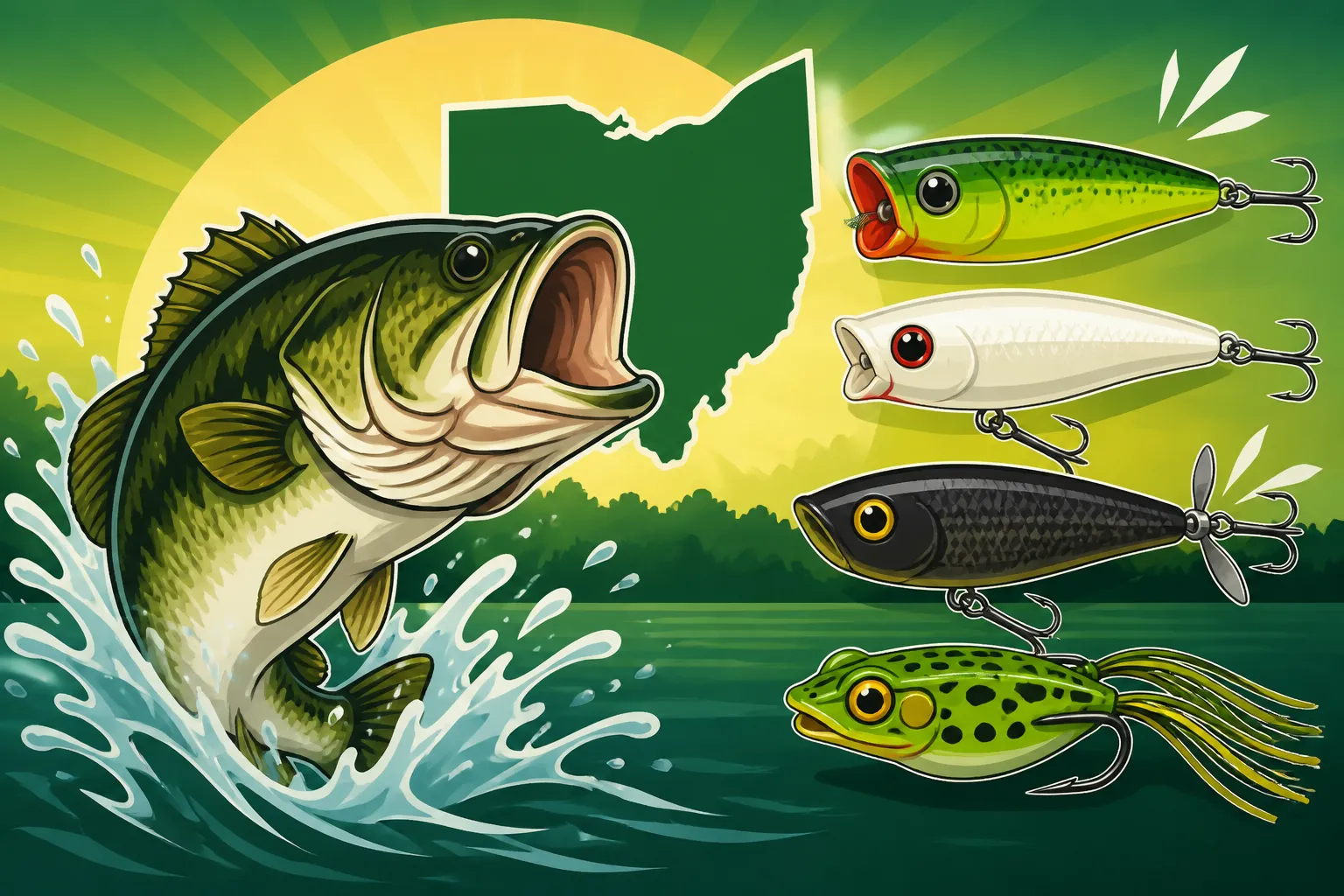
Ohio's largemouth bass respond well to a variety of topwater presentations. Each lure has its unique action and excels in different situations. Understanding these nuances is key to selecting the right tool for the job. You'll find a wide selection of these lures readily available on platforms like Amazon, offering a convenient way to build out your tackle box.
Frogs
Soft plastic frogs are arguably the kings of heavy cover. They're designed to be weedless, meaning they can be retrieved directly over dense lily pads, thick mats of vegetation, and fallen timber without snagging. This allows you to present a bait where traditional treble-hooked lures would get hopelessly stuck, giving you access to bass that might otherwise be unreachable.
- Technique: Cast your frog onto or beyond the cover. Let it sit for a moment, mimicking a frog that just landed. Then, begin a retrieve that involves short twitches and pauses, making the frog "walk" or "hop" across the surface. Don't be afraid to let it sit in open pockets within the cover for extended periods. When a bass strikes, resist the urge to set the hook immediately. Wait until you feel the weight of the fish and then set with a powerful, sweeping motion to drive the hook home through the plastic.
- When to Use: Ideal for fishing in heavy vegetation, dense lily pads, matted grass, and thick slop found in many Ohio lakes. Brands like Spro and Livetarget make excellent frog lures that hold up to the abuse of heavy cover fishing.
- Why They're Effective: Frogs imitate a natural prey item that bass are accustomed to eating, and their weedless design allows for presentations in otherwise unfishable areas, drawing out monster bass from their lairs.
Poppers
Poppers are classic topwater lures known for their distinctive "popping" or "chugging" sound and splash created by their cupped face. This commotion mimics a struggling baitfish or a creature falling into the water, grabbing the attention of nearby bass.
- Technique: Cast your popper to likely bass holding areas like dock pilings, rock piles, or along weed lines. Allow it to sit for a few seconds. Then, use a sharp downward snap of the rod tip to make the popper "pop" and splash water. Follow this with a pause, sometimes a long one, before repeating the action. Vary your retrieve – sometimes a series of quick pops, other times a single pop followed by a long pause.
- Best Scenarios: Excellent for targeting bass around visible cover such as boat docks, laydowns, and sparse weed lines. They are particularly effective when bass are somewhat lethargic but can be enticed by a loud, easy meal.
- Retrieve Styles: Experiment with the rhythm. A "pop-pop-pause" is common, but a single forceful "pop" followed by a 10-second pause can often trigger strikes from wary bass.
Walk-the-Dog Baits (Spooks)
Often referred to as "spooks" after the famous Heddon Zara Spook, these cigar-shaped lures don't have a lip or propeller. Their magic lies in the angler's ability to make them "walk the dog," a side-to-side gliding motion across the surface. This serpentine action is incredibly enticing and mimics a wounded baitfish darting erratically.
- Technique: This takes practice but is incredibly rewarding. Cast out, let the ripples dissipate, then use a rhythmic twitch-twitch-pause retrieve with slack in your line. As you twitch the rod tip down towards the water, reel in a small amount of slack, then repeat. The key is to keep a little slack so the lure can swing freely from side to side.
- Fish Reaction: The unique action can drive bass crazy, often causing them to strike aggressively as the lure zig-zags across their territory.
- Variations: Lures like the Rapala Skitter Walk and the Berkley Choppo offer variations in size and sound, allowing you to match the lure to the mood of the fish. These are fantastic for "Best Techniques for Ohio Largemouth Bass" in open water situations.
Buzzbaits
Buzzbaits are all about noise and disturbance. A large propeller blade at the front churns the water, creating a distinct "gurgling" or "squeaking" sound that calls bass from surprisingly far distances. They are meant to be retrieved quickly and continuously across the surface.
- Technique: Cast your buzzbait and immediately begin reeling as soon as it hits the water to get the blade spinning. Maintain a steady retrieve speed that keeps the lure just on top of the water, creating maximum commotion. Don't pause; buzzbaits are designed for a continuous retrieve.
- Sound and Speed: The unique sound and constant movement are the main attractants. Sometimes a faster retrieve is better, other times a slower crawl that just barely keeps the blade turning will draw strikes.
- Scenarios: Excellent for covering a lot of water quickly, especially along long weed lines, across shallow flats, or around sparse submerged timber. They are particularly effective in slightly stained or turbid water where the noise helps bass locate the lure.
Prop Baits
Prop baits, as their name suggests, feature one or more small propellers (props) at either the front, back, or both ends of the lure. These props spin and churn water, creating a sputtering, splashing commotion that mimics a struggling baitfish.
- Technique: Similar to poppers, prop baits are often fished with a "pull and pause" retrieve. Cast, let the ripples settle, then give a sharp pull with the rod tip to get the props spinning and creating a splash. Pause, allowing the lure to sit momentarily, before repeating the action. The length of your pause and the force of your pull can be varied to see what the bass prefer on a given day.
- Disturbance: The amount of splash and gurgle can be adjusted by the speed and intensity of your retrieve. Some models, like those from Lucky Craft, have two props for even more agitation.
- Ideal Conditions: Work well in areas where bass are looking up for an easy meal, especially around sparse cover or open water edges. They are less effective in super heavy cover than frogs due to exposed treble hooks, but can be deadly along the edges of weed beds or near drop-offs.
Matching Lures to Ohio Conditions and Cover
Understanding which topwater lure to throw isn't just about what looks good; it's about what makes sense for the specific environment you're fishing in and the mood of the bass. Ohio offers a wide variety of fishing habitats, from shallow, weedy ponds to deep, clear reservoirs like Deer Creek Lake, and each demands a slightly different approach.
Targeting Heavy Cover
When you're faced with thick vegetation, lily pad fields, or dense fallen timber, your lure choice becomes critical. This is where the weedless advantage truly shines.
- Weed Mats and Lily Pads: This is prime frog territory. A soft plastic frog with a double-hook riding flush against its body can be dragged directly over these obstacles. The bass beneath these mats are often big and aggressive, waiting for anything to fall through. Don't be afraid to let your frog sit on top of a pad for an extended period, mimicking a real frog resting. When you retrieve it, make subtle twitches to create small movements, then pull it off the pad into open water before pausing. For heavier mats, consider a slightly heavier frog or one with a wider profile for better visibility.
- Timber and Brush Piles: While frogs work here, too, if the timber isn't too dense, a buzzbait can be fantastic for drawing fish out. The constant noise and vibration will make them investigate. Cast your buzzbait close to the wood, ensuring it starts "buzzing" as soon as it touches down. Keep it moving, as pauses in timber often lead to snags. For more direct targets, a popper can be pitched into small pockets in the timber, where its splash and pause action can entice strikes from bass hiding within the branches. For similar techniques in these spots, consider "How to Fish a Texas Rig in Heavy Cover" for subsurface options.
Open Water and Sparse Cover
When the cover is less dense, or you're fishing open water expanses with isolated targets, you can expand your topwater arsenal.
- Docks and Pontoons: These structures are bass magnets, offering shade, cover, and ambush points. Poppers and walk-the-dog baits are excellent choices here. Skip a popper far under a dock and work it out with pauses and pops. For walk-the-dog baits, cast parallel to the dock or along its edges, letting the lure's erratic motion draw fish out. The accuracy of your cast is paramount here. Learn more about effective strategies for these areas by reading "How to Fish Docks for Largemouth Bass".
- Shorelines and Main Lake Points: If the shoreline has sparse cover like scattered weeds, small rocks, or a gradual taper, a buzzbait can be great for covering ground. Cast it along the bank and retrieve, looking for aggressive bass cruising for a meal. Walk-the-dog baits are also fantastic on points, especially if there's a slight breeze or chop. Their side-to-side action is highly visible and can trigger strikes from bass that are actively feeding. You might also find this useful: "Best Ohio Lakes for Bass Fishing" for identifying prime locations.
Water Clarity and Weather Considerations
Water conditions and weather patterns significantly impact topwater effectiveness.
- Clear Water: In clear water, bass rely heavily on sight. Opt for more realistic colors in your frogs and walk-the-dog baits. A more subtle retrieve with longer pauses can be key, as bass have more time to inspect the lure. A popper with a natural baitfish pattern, retrieved with delicate pops, can be incredibly effective. Sometimes, on clear days, even a buzzbait retrieved just fast enough to create a small wake, rather than a huge splash, can be the ticket.
- Stained or Muddy Water: When the water is stained or murky, bass depend more on sound and vibration. This is where noisy lures like buzzbaits and prop baits truly shine. Their commotion helps bass pinpoint the lure in low visibility. Bright or contrasting colors, like black, chartreuse, or white, can also improve visibility against a dark background. In these conditions, don't be afraid to make a little extra noise. You might also find some parallels with strategies in "How to Fish a Spinnerbait in Muddy Water".
- Windy Conditions: A light chop can actually be beneficial, breaking up the surface and making bass less suspicious. Noisy lures like buzzbaits and prop baits can cut through the chop effectively. In strong winds, it can be tough to fish topwater effectively as it's hard to control the lure's action and feel strikes. However, if bass are still active, focus on the calmer, leeward banks where baitfish might be pushed by the wind.
- Overcast Skies: Overcast days often prolong prime topwater conditions. The low light can keep bass actively feeding on the surface for longer periods. This is a great time to experiment with all types of topwater, from subtle poppers to aggressive buzzbaits.
Essential Gear for Topwater Success
Having the right gear makes a huge difference in your ability to cast, retrieve, and land bass on topwater. It's not just about the lure; it's about the whole system working together. Quality rods, reels, and lines are crucial, many of which are easily found on platforms like Amazon.
Rod and Reel Setups
Choosing the right rod and reel can maximize your casting distance, improve lure action, and give you the leverage needed to pull a big bass out of heavy cover.
- Rods: For most topwater applications, a medium-heavy to heavy power rod is preferred. The extra backbone is essential for driving those larger hooks home and for wrenching bass out of thick vegetation. The action of the rod is also important; a fast action tip allows for precise lure manipulation (like walking a dog or popping), while the stiffer backbone provides power. A 7-foot to 7-foot-6 inch rod is a versatile length, offering good casting distance and control.
- Reels: A baitcasting reel is almost always the go-to for topwater. For buzzbaits and prop baits that require continuous retrieve, a reel with a higher gear ratio (7.1:1 or 8.1:1) is excellent for taking up slack quickly and keeping the lure moving. For poppers and walk-the-dog baits where pauses and precise movements are key, a medium gear ratio (6.4:1) can offer more control. Ultimately, choose a smooth, reliable reel from a brand like Shimano or Daiwa.
Line Choices
Your fishing line choice impacts casting, sensitivity, and how the lure behaves on the surface.
- Braided Line: For fishing frogs and buzzbaits in heavy cover, braided line is king. Its zero stretch means incredible sensitivity, allowing you to feel even the slightest tap, and more importantly, it provides immense power to rip bass out of cover and make solid hooksets. A 30 to 65-pound test braid is common. The braid also floats, which helps keep topwater lures riding high.
- Monofilament Line: For poppers and walk-the-dog baits, many anglers prefer monofilament line. Mono also floats, but its slight stretch can be beneficial. It allows the lure to sit slightly deeper in the water, which can enhance the walking action of a spook. The stretch can also act as a shock absorber for those violent topwater strikes, preventing hooks from tearing out of a bass's mouth. A 12 to 20-pound test mono is usually sufficient.
Topwater Lure Comparison Table
To help you quickly decide which topwater lure might be best for your next Ohio largemouth bass adventure, here’s a quick comparison:
| Lure Type | Key Action | Ideal Conditions | Pros | Cons |
|---|---|---|---|---|
| Frogs | Hopping, walking, gliding | Heavy vegetation, lily pads, slop, timber | Weedless, targets unfishable areas, natural | Hookset timing can be tricky |
| Poppers | Popping, chugging, splashing | Docks, sparse cover, open water, calm conditions | Loud, attracts attention, easy to work | Exposed treble hooks snag in heavy cover |
| Walk-the-Dog | Side-to-side gliding | Open water, sparse cover, clear to stained water | Highly erratic, calls fish from afar | Requires practice to master retrieve |
| Buzzbaits | Sputtering, gurgling | Covering water, stained water, low light | Noisy, covers ground fast, triggers reaction | Can be tough to fish slowly, exposed hook |
| Prop Baits | Sputtering, splashing | Open water, calm to light chop, sparse cover | Good splash and gurgle, varied retrieve | Exposed treble hooks, less weedless than frogs |
Remember, no matter the lure, practice and experimentation are key. Pay attention to how the bass react to different retrieves and colors on any given day. Ohio's diverse fishing spots, from the big water of Lake Erie to countless smaller lakes and ponds, offer endless opportunities to master these exciting techniques. For anglers new to the state's fishing scene, checking out the "Ohio Fishing License Guide for Residents and Nonresidents" is always a good first step to ensure you're fishing legally. You'll also want to familiarize yourself with the "Ohio Fishing Regulations Every Angler Should Know" before hitting the water.
Disclaimer
The information provided in this guide is for general informational purposes only. Fishing regulations, conditions, and fish behavior can change. Always consult the latest Ohio Department of Natural Resources (ODNR) fishing regulations before heading out. Fishing involves inherent risks; please exercise caution and prioritize safety on the water.