Best Rig for Channel Catfish in Still Water
You've set your sights on channel catfish in that tranquil, seemingly motionless lake, pond, or slow-moving river, only to find them frustratingly elusive. Unlike fishing in current where the water does a lot of the work for you, still water fishing for these whiskered beauties demands a different approach. It's easy to feel like your bait just sits there, ignored, wasting away without reaching the hungry mouths below. But don't worry, understanding the best rig for channel catfish in still water can transform those quiet days into exciting battles, and this guide is here to walk you through it.
The Challenge of Still Water Catfish and Their Hangouts
Fishing for channel catfish in still water presents a unique set of puzzles compared to their river-dwelling cousins. Without the constant flow to carry scent or naturally present bait, you've got to be more strategic. It's less about finding the fast currents and more about decoding where these fish feel most comfortable and secure when the water barely ripples.
The Still Water Difference for Catfish
In moving water, the current is your friend. It disperses the potent scent of your bait downstream, acting like a giant, invisible highway sign pointing catfish right to your hook. It also naturally tumbles your bait, giving it a lifelike presentation. In still water, however, that dynamic is absent. Scent disperses much slower, relying on diffusion or the subtle movements of the water itself. This means your bait presentation becomes paramount. If your bait is buried in muck, hidden in weeds, or simply sitting in a dead zone, it's far less likely to be detected.
Channel catfish in still environments tend to rely even more heavily on their incredibly sensitive barbels, which are packed with chemoreceptors, to detect food. Their lateral line system also plays a huge role, picking up vibrations from prey. Therefore, a rig that keeps your bait visible, accessible, and allows its scent to freely radiate slightly off the bottom can make all the difference. If you're struggling to understand the nuances, remember that catfish are opportunistic feeders, so making your bait easy to find is key. For more on their behavior, you might find our guide on Catfish Feeding Patterns at Night helpful, as still water often lends itself to night fishing.
Where Channel Cats Hide in Calm Waters
When the water isn't moving, channel catfish aren't just swimming around aimlessly. They seek out specific features that offer comfort, cover, and food opportunities. Knowing these spots is half the battle, as even the best rig won't help if there are no fish around.
- Deep Holes and Drop-offs: These are classic catfish magnets. Deeper water offers cooler temperatures, which catfish appreciate during hot spells, and a sense of security. Drop-offs provide ambush points where catfish can lurk in deeper water and dart up to grab unsuspecting prey or scavenge food washing down the slope.
- Submerged Structure: Think about old tree limbs, brush piles, rock formations, and even man-made debris like sunken tires or culverts. This structure provides cover from predators, shade from the sun, and often harbors baitfish and insects—all things that attract channel cats.
- Weed Lines and Edges: The transition zones between open water and thick vegetation are incredibly productive. Weeds host a plethora of insect life and small baitfish, and catfish will patrol these edges looking for an easy meal. Your bait needs to be presented just outside or above these weeds to avoid getting snagged.
- Points and Humps: Any underwater point or hump that extends into deeper water can act as a natural feeding highway or congregation point for catfish. These topographical features disrupt the otherwise featureless bottom, attracting both bait and predators.
- Inflows and Outflows: Even in generally still lakes or ponds, any small stream, culvert, or drain pipe that feeds into or out of the body of water can concentrate nutrients and baitfish, making it an attractive spot for catfish.
Understanding these preferred habitats helps you place your rig exactly where it needs to be. For a broader look at where to find these fish, check out Best Places to Catch Channel Catfish in Ohio.
The Versatile Santee Cooper Rig: Your Still Water Secret Weapon
If you're serious about catching channel catfish in lakes, ponds, or slow-moving rivers, the Santee Cooper Rig is an absolute game-changer. It's ingenious in its simplicity and incredibly effective at presenting bait just where a still water cat wants to find it: slightly off the bottom, visible, and with its scent unhindered by mud or weeds.
Breaking Down the Santee Cooper Rig
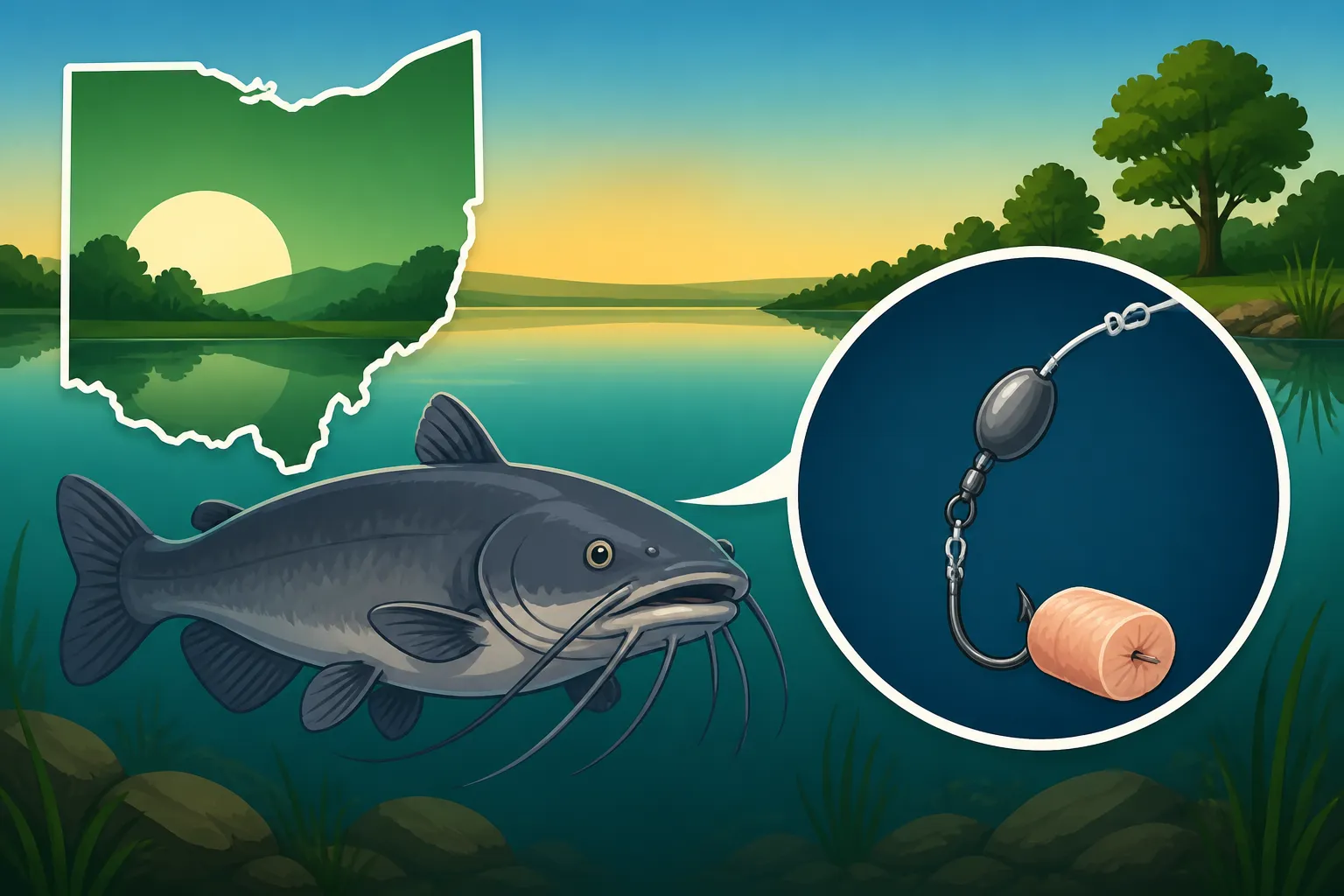
The Santee Cooper Rig is essentially a modified Carolina rig, but with a crucial addition: a small, peg-style float on the leader. This float elevates your bait above the bottom, keeping it out of the muck and making it more visible to cruising catfish. Let's look at its components:
- Main Line: This is the line coming directly from your reel. It should be strong enough to handle a decent catfish, generally 15-30 lb test monofilament or braided line.
- Sliding Sinker: Typically an egg sinker or a no-roll sinker. This weight slides freely on your main line (or on a leader above your swivel) and is crucial for getting your bait down to the desired depth. For still water, a lighter sinker might be sufficient, perhaps 1/2 oz to 1 oz, depending on depth and casting distance.
- Swivel: A heavy-duty barrel swivel connects your main line to your leader. Its primary job is to prevent line twist, especially important when using cut bait that might spin. It also acts as a stop for your sliding sinker.
- Leader: This is a shorter length of line (usually 12-24 inches) tied to one end of the swivel. It should be strong, often slightly lighter than your main line in case of a snag, but robust enough to withstand sharp catfish teeth and rough bottom structures.
- Peg Float: This is the defining feature of the Santee Cooper Rig. It's a small, cylindrical, or oval float that's pegged or crimped onto your leader, a few inches above your hook. It can be made of foam or cork. Its buoyancy lifts your bait off the bottom. Some versions even have rattles inside to add auditory attraction. You can find excellent peg floats, often called 'catfish bobbers', easily on Amazon.
- Hook: A strong, sharp hook is essential. Circle hooks are highly recommended for catfish as they typically hook the fish in the corner of the mouth, reducing gut-hooking and making catch-and-release much easier. Sizes 4/0 to 8/0 are common, depending on your bait size and target fish.
Rigging It Up, Step-by-Step
Putting together a Santee Cooper Rig is straightforward once you get the hang of it. Here’s a detailed walkthrough:
- Thread Your Main Line: Start by threading your main line through your sliding sinker. The sinker should move freely up and down the line.
- Tie on Your Swivel: After the sinker, tie a heavy-duty barrel swivel to the end of your main line using a strong knot like a Palomar knot or an improved clinch knot. Ensure the knot is secure and neat.
- Prepare Your Leader: Cut a length of monofilament or fluorocarbon leader material, typically between 12 and 24 inches. The length can vary based on how high you want your bait off the bottom and how clear the water is (longer leaders for clearer water).
- Add the Peg Float: Slide your chosen peg float onto your leader. Position it roughly 4 to 8 inches above where your hook will be. Secure it in place by inserting a small toothpick or specialized peg into the float, or by crimping it gently if it's a crimp-on style. This float's position determines how high your bait will sit.
- Tie on Your Hook: Tie your circle hook or J-hook to the end of your leader using a strong knot. Again, a Palomar or improved clinch is excellent here.
- Connect Leader to Swivel: Finally, tie the other end of your leader (the end without the hook and float) to the remaining eye of your barrel swivel.
And there you have it! Your Santee Cooper Rig is ready to go. This entire setup, from sinkers to swivels and hooks, is readily available through various retailers, including Amazon, making it easy to gather your components.
Why This Rig Shines for Still Water Catfish
The beauty of the Santee Cooper Rig in still water comes down to a few critical advantages:
- Elevated Bait Presentation: This is the primary benefit. The peg float lifts your bait several inches, or even a foot or more, off the lake or pond bottom. This means your bait isn't buried in soft mud, hidden by aquatic vegetation, or snagged on small debris. It's presented cleanly in the water column where channel catfish are actively cruising and feeding.
- Enhanced Scent Dispersion: By keeping the bait off the bottom, the water can flow around it more freely, allowing the irresistible scent of your bait to disperse much more effectively. In still water, this slow, steady release of scent is crucial for attracting fish from a distance.
- Reduced Snags: Still water often has submerged obstacles like branches, stumps, and dense weeds. With your bait floating above these potential hazards, you drastically reduce the chances of getting hung up, which is a common frustration when targeting bottom-dwelling fish.
- Improved Visibility: An elevated bait is simply easier for a catfish to see, especially if the water has some clarity. The float can also add a visual attractor, particularly if it's a brightly colored or rattling float.
- Natural Bait Movement: Even in still water, subtle currents or disturbances can gently move the floating bait, giving it a more natural, lifelike appearance that can trigger a strike.
When you think about the natural habitat of channel catfish, they often feed both on the bottom and suspended in the water column, especially when foraging. The Santee Cooper Rig caters perfectly to this versatile feeding habit, making it an indispensable rig for still water situations.
Tailoring Your Approach: Other Effective Rigs and Terminal Tackle
While the Santee Cooper Rig is a superstar for still water channel cats, it's not the only option. Different scenarios might call for slight variations or even entirely different rigs. Understanding these alternatives and making smart terminal tackle choices will make you a more versatile and successful angler.
When a Carolina Rig or Slip Bobber Might Be Better
Sometimes, the situation dictates a different approach:
- The Basic Carolina Rig for Specific Bottom Conditions: If you are absolutely certain the bottom is clean, hard, and free of snags, a standard Carolina Rig (sliding sinker, swivel, leader, hook, no float) can still be effective. This rig keeps your bait directly on the bottom, which is where catfish might be grubbing for food in certain spots. For instance, if you're fishing a sandy or gravelly flat known to hold baitfish, a Carolina rig might be perfect. It’s also simpler to tie, which can be a plus for beginners. Just remember the risk of snagging is higher. For general Ohio Fishing Techniques for Beginners, the Carolina rig is often a good starting point for bottom fishing.
- Slip Bobber Rigs for Precision and Structure: A slip bobber rig is fantastic for suspending live bait or even cut bait at a precise depth, especially when you're fishing over very specific submerged structure, like a lone stump, a brush pile, or a distinct weed line. The beauty of a slip bobber is that it allows you to cast a long distance and then have the bobber stop the line at a predetermined depth, allowing your bait to hang right where the fish are. This is particularly useful in shallower waters (say, 5-15 feet) where precise depth control is more critical. Many popular brands offer robust slip bobbers, easily found on Amazon, that can handle the weight of larger catfish baits.
Choosing the Right Hooks, Weights, and Line
Your terminal tackle isn't just an afterthought; it's the critical connection between you and the fish.
- Hooks:
- Circle Hooks: As mentioned, these are highly recommended for channel catfish. When a fish bites, simply let it swim away with the bait, and the hook will set itself in the corner of its mouth. Resist the urge to "set the hook" like you would with a J-hook. Sizes 4/0 to 8/0 are standard.
- J-Hooks: If you prefer a more traditional hook set, a sturdy J-hook (like an Octopus hook) can work. Just be mindful of potential gut-hooking, especially if the fish swallows the bait deeply.
- Weights:
- Egg Sinkers: These are oval-shaped and slide freely on the line, offering less resistance when a fish picks up the bait. They're excellent for the Santee Cooper and Carolina rigs.
- No-Roll Sinkers: These are flat-sided and designed to prevent rolling in slight current or on uneven bottoms, which can be helpful if there's any subtle water movement or if you're fishing a slope.
- Pyramid Sinkers: While primarily used in surf fishing or strong currents, a lighter pyramid sinker can be useful in still water if you need maximum holding power on a soft or muddy bottom to prevent your bait from sinking too deep.
- Swivels: Stick with quality barrel swivels or ball-bearing swivels to prevent line twist. For added attraction, some anglers use "scented" swivels, though their effectiveness is debated, it doesn't hurt!
- Leader Material:
- Monofilament (Mono): It's cost-effective, has good knot strength, and a bit of stretch, which can be forgiving with a hard-fighting catfish. Many anglers prefer 20-40 lb test for leaders.
- Fluorocarbon (Fluoro): Less visible underwater than mono and very abrasion resistant, making it great around submerged cover. It has less stretch and is generally more expensive.
- Braided Line: While very strong and sensitive, it can be prone to tangles as a leader and isn't ideal for the abrasion resistance needed against rough structures and catfish teeth. It's usually better as a main line. For general advice on selecting line, refer to Choosing the Right Ohio Fishing Line.
Baiting Up for Still Water Success
The best rig in the world is useless without the right bait. In still water, scent is king, so choose baits with a strong aroma.
- Cut Bait: Hands down one of the best. Fresh cut bait from oily fish like shad, skipjack, or even bigger panfish (check regulations!) releases a powerful scent trail. A small chunk of cut bait on a Santee Cooper rig is deadly.
- Chicken Livers: A classic for a reason. They're messy but highly effective due to their strong scent and soft texture. Just make sure to hook them securely, perhaps even "netting" them in a small piece of pantyhose to keep them on the hook longer.
- Stink Baits/Prepared Baits: These come in various forms (dips, dough balls, pellets) and are engineered to release powerful odors. They often work best with specialized bait holders or treble hooks designed to keep them on. Brands like Sonny's or Catfish Charlie offer popular options, often available on Amazon.
- Worms: Nightcrawlers or large pieces of earthworms can always catch catfish, though they might also attract smaller panfish.
- Hot Dogs/Shrimp: Believe it or not, these grocery store staples, especially if marinated in garlic or other attractants, can be surprisingly effective.
When baiting, make sure your hook point is exposed for a good hook set, particularly with circle hooks. For even more bait ideas, check out Best Baits for Ohio Catfish.
Practical Still Water Fishing Tips
Even with the perfect rig, success often comes down to the details of how you fish it. Here are some pointers for maximizing your chances in still water.
Casting and Presentation
- Gentle Casting: With soft baits like chicken livers or chunks of cut bait, a forceful cast can send your bait flying off the hook. Use a smooth, lobbing cast to gently propel your rig.
- Fan Casting: Don't just cast to the same spot repeatedly. Try fan casting, spreading your casts out in a wide arc. This allows you to cover more water and locate where the catfish are holding.
- Give it Time: Unlike active lure fishing, catfish angling is often a waiting game. Once your rig is cast, let the scent work its magic. Resist the urge to reel in and recast too frequently unless you suspect your bait has been stolen or is in a bad spot.
- Subtle Movement: Every 10-15 minutes, give your rod tip a very slight twitch. This can sometimes re-disperse scent or give the bait just enough movement to attract attention without moving it too far from the strike zone.
Reading the Water and Adjusting Your Rig
Fishing is all about adapting. Pay attention to what the fish are telling you.
- Observe Your Surroundings: Look for signs of baitfish activity, diving birds, or even catfish rolling on the surface at dawn or dusk. These can indicate active feeding areas.
- Vary Depth: If you're not getting bites with your Santee Cooper rig set at, say, 6 inches off the bottom, try adjusting the peg float to lift it higher (12-18 inches) or lower (2-3 inches). Catfish might be holding slightly higher or tighter to the bottom on a given day.
- Experiment with Bait: If one bait isn't producing, don't be afraid to try another. Have a variety of options ready. For example, if cut bait isn't working, switch to a prepared bait or vice versa. This often involves having multiple rods rigged differently.
- Time of Day: In still water, early morning and late evening (and into the night) are often the most productive times, as catfish feel more secure feeding under low light conditions. You can read more about this in Best Techniques for Catching Channel Catfish at Night.
The table below offers a quick comparison of the three primary rigs discussed for still water channel catfish.
| Rig Type | Key Components | Still Water Application | Pros | Cons |
|---|---|---|---|---|
| Santee Cooper | Sliding Sinker, Swivel, Leader, Peg Float, Hook | All-around best for still water; keeps bait off bottom/snags. | Elevated bait, excellent scent dispersion, reduced snags. | More components to tie, peg float can sometimes slip if not secured. |
| Carolina Rig | Sliding Sinker, Swivel, Leader, Hook | Clean, hard bottoms; when fish are strictly bottom-feeding. | Simple to tie, sensitive to bites, minimal resistance to fish. | High risk of snags in cover, bait can get buried in soft mud. |
| Slip Bobber Rig | Bobber Stop, Bead, Slip Bobber, Weight, Hook | Precise depth control over structure or in shallower areas. | Excellent for specific depth targeting, easy to adjust depth. | Can be affected by wind (drift), not ideal for deep, open water. |
Ultimately, becoming a successful still water channel catfish angler means combining the right rigging with a keen understanding of fish behavior and a willingness to adapt. The Santee Cooper Rig provides an excellent foundation, allowing your bait to stand out and call to those hungry catfish lurking below.
Disclaimer
This article is for general informational purposes only and does not constitute professional advice. Laws, prices and regulations vary by location and change over time. Consult a qualified professional for guidance on your specific situation.