Best Retrieve Speed for a Ned Rig
Let's be honest, the Ned Rig burst onto the Ohio fishing scene and quickly became one of those "secret weapons" everyone started using. But here's the kicker: just having the right lure isn't enough. Many anglers find themselves wondering if they're actually working it correctly, especially when it comes to the retrieve speed. If you've ever felt like your Ned Rig isn't quite living up to its legendary fish-catching reputation, chances are your retrieve speed might be the missing piece of the puzzle. This guide is going to break down exactly how fast – or, more often, how slow – you should be retrieving your Ned Rig to unlock its full potential in Ohio's diverse waters.
Understanding the Ned Rig's Appeal
Before we dive into the nitty-gritty of retrieve speeds, it's crucial to understand why the Ned Rig is such a phenomenal presentation. It’s not just another jig; it's a finesse system designed to appeal to finicky fish when other offerings fail. When you grasp its core design, the optimal retrieve speed starts to make a lot more sense.
A Finesse Presentation That Works
The Ned Rig is, at its heart, a finesse technique. This means it excels when fish are pressured, the bite is tough, or they're just not actively chasing down aggressive baits. Think about those glassy, calm days on your favorite Ohio lake, or when fishing clear water after a cold front. These are the prime conditions where an in-your-face crankbait might get ignored, but a subtle Ned Rig can still coax a bite. Its small profile and unobtrusive action mimic a variety of natural forage, from tiny baitfish to crawfish or even aquatic insects, making it incredibly versatile. It's designed to be tempting, not intimidating, which is a key factor in its retrieve. When bass are being picky, or maybe those stubborn saugeye are just nudging baits instead of inhaling them, the Ned Rig’s understated nature is often the ticket.
The 'Mushroom Head' and Buoyant Plastic
The magic of the Ned Rig lies in its two main components: the specific jig head and the unique soft plastic. The jig head typically features a flat or "mushroom" shaped bottom. This flat surface allows the jig to stand straight up on the bottom when paused, presenting the soft plastic worm or creature bait vertically. This "standing" action is incredibly enticing and mimics a foraging baitfish or a crawfish in a defensive posture.
Paired with this, the soft plastic itself is usually made from a highly buoyant material. Brands like Z-Man, with their ElaZtech material, are famous for this. This buoyancy means that when the jig head is resting on the bottom, the plastic stands up, quivering with the slightest current or rod tip twitch. This sustained vertical presentation is what makes the Ned Rig so different from other jigs that lay flat. This inherent action of the bait is precisely why you don't need a fast or aggressive retrieve. The bait does a lot of the work for you, even when it's just sitting there. You can find a wide range of these specialized jig heads and buoyant plastics on Amazon, making it easy to experiment with different sizes and colors.
The Core Principle: Slow is Gold (But Not Always)
If there’s one golden rule for Ned Rig retrieve speed, it's this: go slow. Most of the time, slower is better. But "slow" isn't just one speed; it's a spectrum, and understanding where to land on that spectrum makes all the difference.
The Ultra-Slow Drag
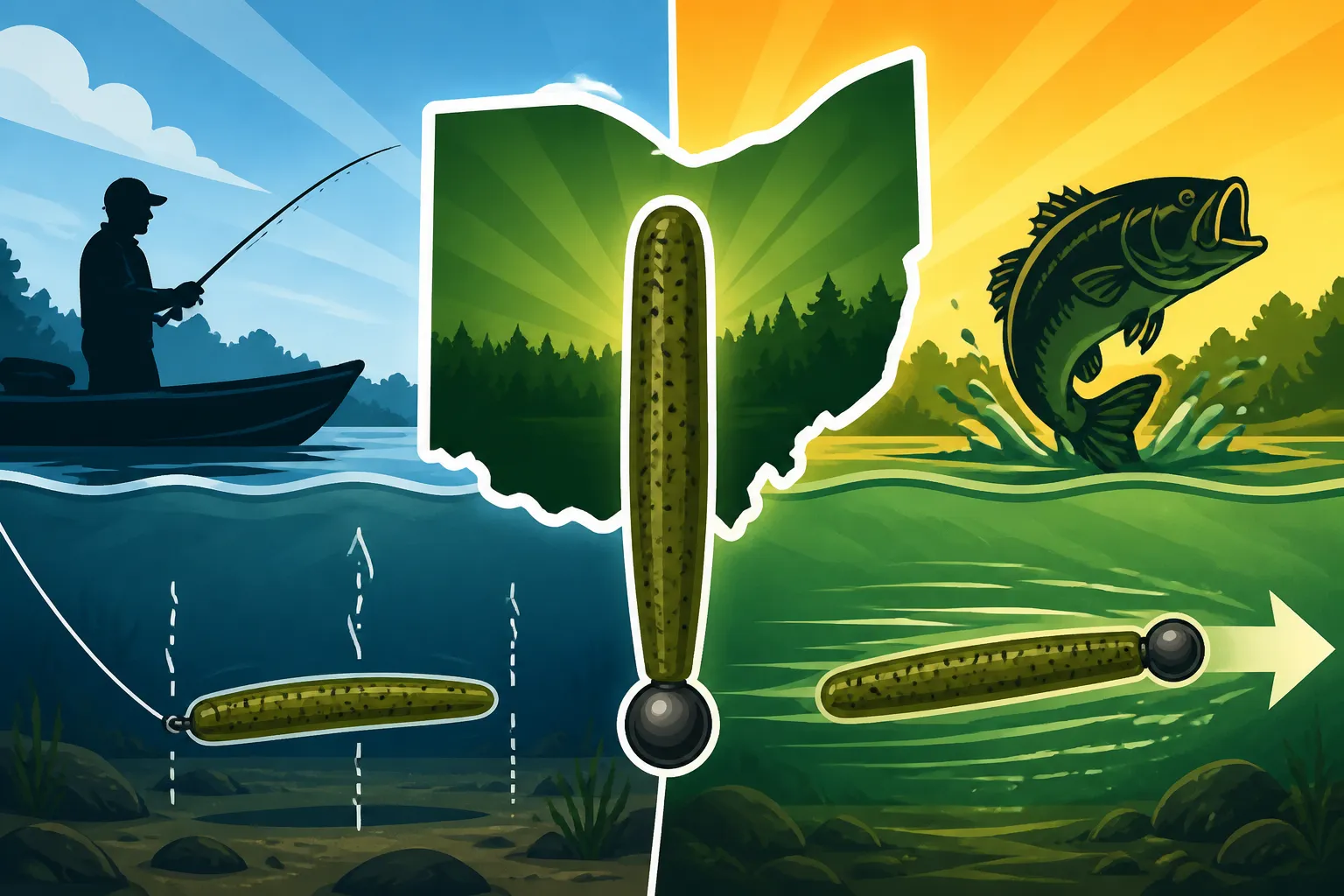
The most common and often most effective retrieve for a Ned Rig is the ultra-slow drag. Imagine you’re trying to move a very small, delicate object across a dusty floor without disturbing anything. That's the kind of subtle movement you're aiming for. Cast your Ned Rig out, let it sink to the bottom (you'll feel a slight slack in your line or see your line stop moving). Once it's on the bottom, simply lower your rod tip to about the 9 o'clock position, and slowly, slowly sweep your rod sideways to about the 11 or 12 o'clock position. Then, reel up the slack, drop your rod tip back down, and repeat.
The key here is to maintain constant, light bottom contact. You're not hopping the bait; you're dragging it, allowing the mushroom head to shuffle along the bottom, kicking up puffs of sediment. The buoyant plastic, meanwhile, is standing upright, quivering, and enticing any nearby fish. This retrieve is particularly deadly when fishing over hard bottoms, gravel, rocky points, or even sparse grass. It perfectly mimics a crawfish scuttling away or a small baitfish rooting for food. This technique is fantastic for bass, but don't be surprised if you pick up a stray walleye or saugeye on it in the right conditions. This really exemplifies why the Ned Rig is one of the Best Ohio Fishing Techniques for Beginners.
Short Hops and Subtle Twitches
While the drag is king, there are times when a slight variation with short hops or subtle twitches can trigger a bite. Instead of a continuous drag, after letting the bait settle, lift your rod tip a few inches – just enough to make the jig head "hop" slightly off the bottom – then let it fall back down on a semi-slack line. The fall is crucial, as that's often when a fish strikes. Reel up the slack and repeat. These hops should be short, maybe only a foot or two forward.
Subtle twitches are even more minimal. While dragging or after a short pause, just gently quiver your rod tip, causing the buoyant plastic to pulsate without moving the jig head significantly forward. This can simulate an injured baitfish or a crawfish wiggling its antennae. Both these variations are excellent for working around isolated cover like submerged stumps, rock piles, or docks where you want the bait to stay in a small strike zone longer. When targeting specific cover, knowing How to Fish a Ned Rig Through Rocks can make a huge difference, and these subtle movements are essential.
Adapting Retrieve Speed to Conditions and Fish Behavior
No single retrieve speed works all the time. The most successful anglers are those who can read the conditions and adjust their presentation accordingly. Ohio's weather and water conditions can change rapidly, and your Ned Rig retrieve needs to be just as adaptable.
Cold Water and Lethargic Fish
When water temperatures drop – think late fall, winter, or early spring – fish, particularly bass, become much less active. Their metabolism slows down, and they're not going to expend a lot of energy chasing a fast-moving meal. This is when the slowest possible retrieve becomes paramount. We’re talking about an almost agonizingly slow drag, with extended pauses. Sometimes, letting the Ned Rig sit completely still for 10-15 seconds after a short drag is what it takes.
During these colder periods, fish often hug the bottom or relate tightly to structure. A super-slow drag keeps your bait in their strike zone longer, giving them ample time to decide to bite. If you're out trying Ohio Winter Fishing and Ice Safety and find open water, remember this principle. Even a slight increase in speed can be enough to turn a curious fish away. Focus on feeling every pebble and twig on the bottom, almost like your bait is a blind creature slowly navigating its environment.
Warmer Water and Active Fish
Conversely, when Ohio’s waters warm up in late spring and summer, fish activity levels soar. Their metabolism is high, and they're more willing to chase. While the Ned Rig is still a finesse bait, you can often get away with, and sometimes even benefit from, a slightly more aggressive retrieve. This doesn't mean burning it back to the boat, but rather increasing the speed of your drag or the height and frequency of your hops.
Instead of a 10-second pause, maybe it’s 2-3 seconds. Instead of a foot-long drag, perhaps it's a two-foot sweep. The goal is still to keep the bait near the bottom and make it look natural, but with enough movement to trigger a more active fish. This is particularly true when you’re targeting smallmouth bass in current on rivers like the Great Miami or the Maumee, where a slightly faster presentation might be needed to maintain control and attract attention. You might find this slight uptick in speed useful when trying out Best Summer Fishing Techniques in Ohio.
High Pressure and Clear Water
These conditions scream "finesse!" When the sun is high, the skies are clear, and there hasn't been a ripple on the water for hours, fish can become incredibly wary. They have ample time to inspect your lure and are quick to detect anything unnatural. In these scenarios, revert to the ultra-slow drag with minimal hops and generous pauses. The more subtle, the better.
Clear water also means fish have a wider field of vision. A fast-moving bait might spook them. A slowly crawling Ned Rig, however, appears less threatening and more like an easy meal. This is where you might employ line colors that blend in with the water or use a fluorocarbon leader for invisibility. Remember, the fish are in full "look, but don't touch" mode, and your job is to make the "touch" irresistible.
Stained Water and Increased Aggression
When Ohio's lakes and rivers become stained or muddy after heavy rains, visibility drops significantly. Fish rely more on their lateral line (which detects vibrations) and scent. In these conditions, you might need to slightly increase your retrieve speed or add more erratic movements to help fish locate your bait. The "slow is gold" rule still applies, but you can dial it up a notch compared to gin-clear water.
A faster drag or more pronounced hops will displace more water, creating vibrations that fish can detect. Shorter, sharper twitches can also grab their attention. Don't be afraid to experiment with brighter colored plastics like chartreuse or orange, as these can be more visible in lower light or stained conditions. While walleye are often targeted in stained water, bass can also be found in similar conditions and might respond to these adjustments. This kind of adaptability is part of mastering Ohio Bass Fishing Techniques.
Practical Tips for Mastering Your Ned Rig Retrieve
Learning the theory is one thing, but putting it into practice often requires a few tricks of the trade. Here are some pointers to help you refine your Ned Rig game.
Feel the Bottom
The effectiveness of the Ned Rig hinges on maintaining contact with the bottom. This isn't always easy, especially for beginners. The type of fishing line you use plays a significant role here. Many anglers prefer a braided main line with a fluorocarbon leader. Braided line has almost no stretch, which transmits even the slightest bump or tic from the bottom directly to your hand. Fluorocarbon, while having some stretch, is less visible underwater and more abrasion-resistant, making it a good choice for the leader.
When you're dragging your Ned Rig, pay close attention to the feel. You want to feel the texture of the bottom – the gritty resistance of gravel, the soft give of mud, the subtle thud of a rock. If you're not feeling anything, you're either reeling too fast, or your weight is too light for the depth or current. Adjust your retrieve speed and jig head weight until you can consistently feel the bottom. This tactile feedback is your direct link to what's happening underwater and will tell you if your retrieve is truly optimized.
Experimentation is Key
No two days on the water are exactly alike, and no two fish respond identically. What worked yesterday might not work today. This is why experimentation is absolutely critical. Start with the ultra-slow drag, as it's the most consistent producer. But if you're not getting bites after 15-20 minutes, don't be afraid to change things up.
Try varying your retrieve speed slightly. Speed up the drag, slow it down even further, add longer pauses, or introduce more aggressive hops. Pay attention to any subtle changes in your line or rod tip that might indicate a fish is interested. Sometimes, even the most minute adjustment can turn a slow day into a stellar one. Keep a mental note (or even a physical one in a fishing journal) of what worked, where it worked, and under what conditions. This adaptive mindset is a hallmark of truly skilled anglers. Understanding the Ohio Fishing Season Calendar and how fish behavior changes throughout the year can also guide your experiments.
Reading Your Line and Rod Tip
With a finesse presentation like the Ned Rig, bites can be incredibly subtle. You won't always feel a violent thump or a rod-bending strike. Often, a bite will manifest as a slight tick, a sudden feeling of "mush" or weightlessness, or even just your line twitching sideways as it enters the water.
This is why it's so important to watch your line where it enters the water, especially if you’re using braided line which floats. Any unnatural movement – a sudden stop, a twitch, or a slight tightening – could indicate a bite. When you suspect a bite, don't rear back for a monstrous hookset. Instead, reel up the slack until you feel pressure and then sweep your rod sideways to set the hook. A powerful overhead hookset can often pull the small jig right out of a fish's mouth. Patience and vigilance are your best friends when fishing the Ned Rig. For more insights on detecting subtle bites, particularly with finesse presentations, check out guides on Reading Ohio Fish Finders and Electronics to understand where fish might be holding and how they're reacting.
Ned Rig Retrieve Speed Guide by Conditions
Here's a handy table to summarize recommended retrieve speeds and actions based on common fishing conditions in Ohio. Remember, these are starting points – always let the fish tell you what they want!
| Condition | Water Temperature | Water Clarity | Recommended Retrieve Speed & Action | Key Characteristics |
|---|---|---|---|---|
| Tough/Finicky Bite | Cold – Moderate | Clear – Stained | Ultra-slow drag, extended pauses (10-15 seconds), minimal subtle twitches. | Fish lethargic, pressured, or not actively feeding. |
| Normal Activity | Moderate – Warm | Clear – Stained | Slow drag, short pauses (3-5 seconds), occasional short hops. | General conditions, fish moderately active. |
| Active/Aggressive Bite | Warm | Stained | Moderate drag speed, more frequent hops (1-2 ft), shorter pauses (1-2 seconds), some erratic twitches. | Fish actively chasing bait, might need more vibration to locate in stained water. |
| Post-Cold Front | Dropping | Clear | Extremely slow drag, long pauses, barely perceptible movement. | Fish shut down, hugging bottom, unwilling to chase. |
| Windy Conditions | Any | Any | Slightly heavier jig head, slow drag to maintain bottom contact, minimize slack line. | Wind makes line management difficult; heavier jig helps maintain feel and control. |
| Heavy Cover | Any | Any | Short hops, vertical drops, shake in place, then retrieve slowly away. | Target specific spots; keep bait in strike zone longer, minimize snagging. |
Ultimately, the Ned Rig is a tool of patience and precision. While it might seem counterintuitive to slow down in a world of power fishing, mastering the retrieve speed – particularly the art of the ultra-slow, deliberate presentation – will undoubtedly put more Ohio fish in your net. It's a technique that rewards observation, feel, and a willingness to adapt, making it one of the most rewarding and effective ways to catch bass, saugeye, and even a surprise panfish or two across our great state. If you’re looking to stock up on different Ned Rig components, from jig heads to a variety of buoyant plastics, places like Amazon offer a massive selection to ensure you’re ready for any situation Ohio throws at you.
Disclaimer
This article is for general informational purposes only and does not constitute professional advice. Laws, prices and regulations vary by location and change over time. Consult a qualified professional for guidance on your specific situation.