Ohio Sauger Identification
Oh, the sauger! There are few fish in Ohio that cause as much head-scratching and friendly, or sometimes not-so-friendly, debates on the riverbank or boat ramp as the elusive sauger. Many an angler has confidently held up their catch, only to be met with a seasoned eye raising an eyebrow and murmuring, "Are you sure that's not a walleye… or a saugeye?" It's a genuinely tricky identification, especially when you're excited about a bite, and the distinctions can be subtle yet absolutely critical for adhering to regulations and truly knowing what you've caught. This guide is here to cut through the confusion, offering a deep dive into the specific features that define an Ohio sauger, helping you confidently distinguish it from its close cousins in our diverse waterways.
What Exactly Is an Ohio Sauger? Unpacking the Walleye's Smaller Cousin
Let's start with the basics, because understanding what a sauger is can help you appreciate why it's so often mistaken for other fish. The sauger (Sander canadensis) is a fascinating freshwater fish native to North America, and it's a close relative of the walleye, belonging to the same genus. They share many similarities, which is precisely why identification can be such a challenge, but they also possess distinct characteristics that, once learned, are unmistakable. Think of them as family members with similar genes but different personalities and distinguishing marks.
General Characteristics and Habitat Preferences
Sauger typically run smaller than walleye, though a big sauger can certainly turn heads. They are generally more slender in body profile compared to the deeper-bodied walleye. Their overall coloration tends to be more mottled and brassy, blending seamlessly with the turbid, often silty, environments they prefer. Unlike walleye, which can thrive in a wide range of water clarities from muddy rivers to clear lakes, sauger have a strong preference for riverine habitats with moderate to swift currents and a fair amount of turbidity. You're not going to find many sauger lounging in the clear, rocky depths of a pristine inland lake. They're river dwellers through and through, especially prevalent in larger systems like the Ohio River and its major tributaries. This preference for murkier, flowing water is a key ecological difference that often influences where you'll encounter them.
Why Sauger Are So Easily Confused in Ohio Waters
The main reason sauger cause so much confusion among Ohio anglers is their striking resemblance to walleye (Sander vitreus) and the hybrid saugeye (Sander canadensis x Sander vitreus), which is a cross between a female walleye and a male sauger. These three species often inhabit the same general areas, especially in places like the Ohio River or impoundments that connect to river systems. Imagine trying to tell apart three siblings who all have similar hair color and eye color, but one has a few more freckles, another a slightly different nose, and the third a combination of both. When you’re focused on the fight, the thrill of the catch, and getting that lure back in the water, those subtle differences can easily be overlooked. Compounding the issue is that some individuals within each species can have variations, making hard-and-fast rules feel less reliable sometimes. But don't despair; there are indeed reliable markers.
The Definitive Sauger Identification Marks: Spotting the True Specimen
When you pull a fish from the water and suspect it might be a sauger, you need to know exactly where to look. While the overall "feel" of the fish might give you a clue, there are a few tell-tale signs that scream "sauger!" once you know what to check. These aren't just subtle hints; they're definitive features that set them apart from walleye and saugeye.
The Distinctive Dorsal Fin Pattern
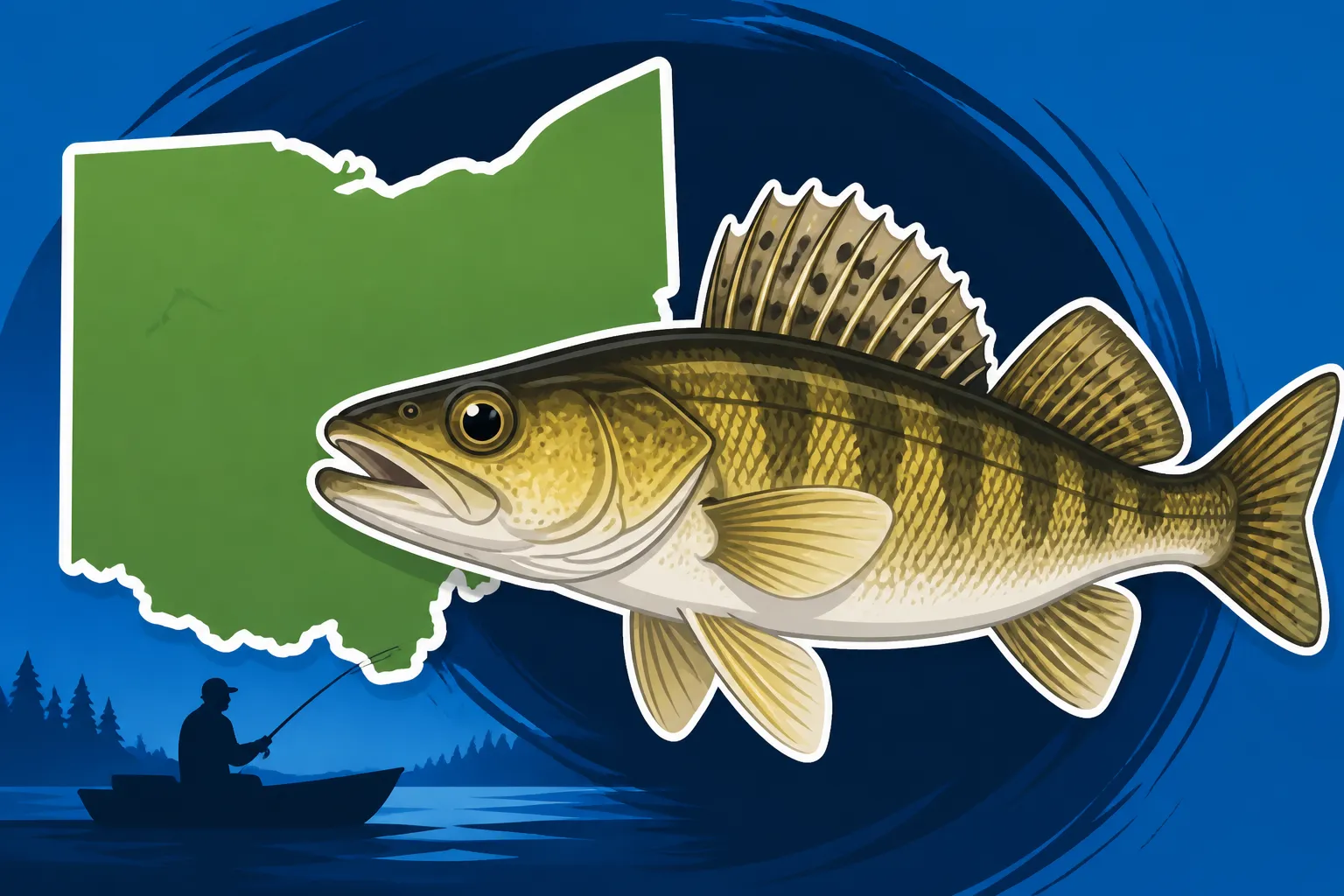
This is often the first and most reliable characteristic to examine. A sauger's spiny dorsal fin (the one closer to the head) will have very obvious, distinct rows of small, dark spots. These spots are usually arranged in a banded pattern, almost like stripes or rows of tiny polka dots across the webbing of the fin. It’s not just a few random spots; it's a consistent, well-defined pattern that really stands out. Now, here's the kicker: walleye will not have these distinct spots on their spiny dorsal fin. Instead, a walleye's dorsal fin will typically be clear or have some faint, irregular blotches, but never those prominent rows of spots. The spotted dorsal fin is your number one go-to for positive sauger identification. Sauger vs Walleye Identification goes into this in more detail.
Body Markings and Coloration
Beyond the dorsal fin, take a good look at the fish's body. Sauger generally exhibit a much more mottled, brassy, or olive-brown coloration, often with distinct dark blotches or saddle markings along their sides and back. These blotches help them camouflage perfectly in the stained, turbulent waters they prefer. They often appear almost camouflaged, with irregular blotches and a somewhat worm-like pattern on their flanks. This contrasts sharply with the walleye, which usually has a more uniform golden-olive to brownish coloration, sometimes with faint vertical bars but rarely the distinct mottled blotches of a sauger. The sauger's pattern is designed for hiding in rocky, silty river bottoms, making them a true master of disguise in their natural environment.
Caudal Fin and Cheek Scales
While the dorsal fin and body markings are primary identifiers, there are a couple of other clues to keep in mind. The sauger's caudal fin (tail fin) often has a series of dark bands or spots, similar to its dorsal fin, and crucially, it lacks the prominent white tip on the lower lobe that is characteristic of a walleye. This white tip is another critical distinction we'll discuss more when comparing the two. As for the cheek scales, this requires a closer look. Sauger typically have fully scaled cheeks, meaning the entire cheek area behind the eye is covered in scales. Walleye, on the other hand, often have cheeks that are sparsely scaled or even completely devoid of scales on the lower half. This might seem like a minor detail, but it's a consistent anatomical difference that helps solidify an identification. Remember, you might need to feel the cheek area carefully to confirm this, as visual inspection alone can sometimes be tricky depending on light and angle.
Sauger vs. Walleye: The Great Confusion Settled
This is where most of the identification debates begin and end. Walleye are arguably Ohio's most famous game fish, especially up on Lake Erie, and their close cousins, the sauger, often get lumped in. However, knowing the subtle yet significant differences between them is key for any serious angler. Not only does it help you accurately record your catch, but it's also important for respecting species-specific regulations.
Key Differences in Dorsal Fin and Tail
As we touched on, the dorsal fin is your best friend here. A walleye’s spiny dorsal fin is mostly clear or has a single dark blotch at the very rear base, near the body, but it will never have the distinct, evenly spaced rows of black spots that are the hallmark of a sauger. This is the single most reliable visual cue. If you see clear rows of spots, it's a sauger. No spots? It's a walleye (or possibly a saugeye, which we'll cover next).
Beyond the dorsal fin, move your eyes to the tail. A walleye will almost always have a noticeable, bright white tip on the lower lobe of its caudal (tail) fin. This is a very prominent, easy-to-spot feature. The sauger, conversely, will lack this white tip entirely. Its tail fin might have some darker bands or spots, but it won't have that striking white patch. If you see those dorsal fin spots and no white tip on the tail, you’re looking at a sauger. If you see a mostly clear dorsal fin and a bright white tail tip, you've got a walleye. It's almost like a secret handshake for these two fish.
Body Shape, Coloration, and Cheek Scales
When comparing the overall physique, walleye tend to be a bit more robust and deeper-bodied than sauger, which often appear more slender and elongated. Their coloration, too, differs significantly. Walleye typically boast a more uniform golden-olive to brassy green, sometimes with subtle vertical bars that fade into their flanks. Sauger, on the other hand, are often adorned with those distinct, dark, mottled blotches or saddle patterns across their sides and back, giving them a much more camouflaged appearance.
Finally, that detail about the cheek scales comes into play again. Walleye commonly have a noticeable patch on their cheeks that is either devoid of scales or has very few, giving it a smoother appearance. The sauger’s cheeks, by contrast, are fully scaled. Run your finger across the cheek area — a rough, scaled feel suggests sauger, while a smoother area might point to a walleye. These combined features create a distinct profile for each species.
Sauger vs. Saugeye: The Hybrid Challenge
This is arguably the trickiest part of the identification game in Ohio, because a saugeye is literally a mix of the two! The saugeye is a sterile hybrid, intentionally stocked in many Ohio inland lakes and reservoirs because it combines the fast growth of a walleye with the hardiness and riverine tolerance of a sauger. They are incredibly popular, but they inherit characteristics from both parents, making them true chameleons of the fish world. Saugeye vs Walleye Identification offers even more specific comparison points.
Identifying Saugeye: A Blended Appearance
A saugeye often presents a blend of characteristics. On its spiny dorsal fin, you’ll typically see some spots, but they won't be as distinct or as neatly arranged in rows as on a pure sauger. Think of them as more scattered, smudged, or irregular blotches rather than crisp, clean rows. It's like a diluted version of the sauger's spots.
On the tail fin, the saugeye usually has a white tip on the lower lobe, just like a walleye, but it's often much less pronounced or vibrant than the bright white tip you'd see on a pure walleye. It might appear duller, smaller, or less sharply defined. So, if you see some spots on the dorsal fin and a faint white tip on the tail, you’re almost certainly looking at a saugeye. This combination of "some spots" and "faint white tip" is the signature of the hybrid.
Cheek Scales and Body Patterns on the Hybrid
The cheek scale situation on a saugeye can also be a mixed bag, sometimes showing partial scaling or irregular patches, falling somewhere between the fully scaled sauger and the often bare-cheeked walleye. This is why relying on multiple identification points is crucial when dealing with saugeye.
Their body patterns also tend to be a mix. Saugeye will often have some mottled patterns or faint vertical bars, but usually not as pronounced or "wormy" as a sauger's, nor as uniformly golden as a walleye's. They'll have a generally brownish or olive hue with irregular dark blotches or saddle marks, often mimicking their sauger parent but with a touch more of the walleye's golden sheen. When in doubt, mentally go through your checklist: dorsal spots, tail tip, cheek scales, and overall body pattern. The combination will reveal the true identity.
Where to Find Ohio's Sauger: Their Preferred Haunts
Knowing what a sauger looks like is only half the battle; knowing where to find them is the other! Sauger have very specific habitat preferences that largely dictate their distribution throughout the state. If you’re fishing clear, calm, deep lakes, you’re probably not going to encounter many sauger.
The Mighty Ohio River and Its Tributaries
The undisputed king of sauger fishing in Ohio is, without a doubt, the Ohio River. This vast waterway, with its constant flow, numerous locks and dams, and naturally turbid waters, provides the perfect environment for sauger to thrive. They prefer the currents, often positioning themselves behind current breaks, in eddies, or along riprap walls where the current brings food but they can expend less energy. The deep pools and channels formed by the river's structure are ideal sauger territory. Ohio River Fishing Guide can help you find excellent spots.
You'll find sauger congregated around navigation dams, spillways, and the mouths of tributaries that feed into the Ohio River. These areas offer oxygenated water, abundant forage, and structural elements that sauger love. Anglers often target them during cooler months, as sauger tend to be more active in colder water, making them a fantastic winter and early spring target on the Ohio River. The key is to think "river fish" – strong currents, turbid water, and structural hiding spots.
Other Notable River Systems and Conditions
While the Ohio River is paramount, sauger can also be found, albeit in smaller numbers, in the lower stretches of some of its larger tributaries, such as the Muskingum River, especially near its confluence with the Ohio. Any major river system in Ohio that maintains consistent flow and some degree of turbidity could potentially hold sauger, particularly where dams or other structures create current breaks and deeper pools.
Successful sauger fishing often involves fishing near the bottom, where these fish hunt. They are primarily piscivorous, feeding on smaller baitfish like shad and minnows. Look for them in areas with current, near channel edges, deep holes, or around submerged structures. If you're struggling to identify your catch and you're in one of these riverine environments, there's a higher probability it could be a sauger or a saugeye rather than a pure walleye, which generally prefers calmer, sometimes clearer, waters. Consider looking up Special Fishing Regulations on the Ohio River before you head out.
Why Proper Sauger Identification Matters: Beyond Bragging Rights
At first glance, you might think, "What's the big deal? It's just a fish!" But for responsible anglers, knowing your sauger from your walleye or saugeye is far more important than just settling a debate. It has real-world implications that affect conservation, legal compliance, and your own success on the water.
Adhering to Ohio's Fishing Regulations
This is probably the most critical reason for accurate identification. Ohio has specific daily bag limits and minimum length limits for walleye, sauger, and saugeye. These regulations are often different for each species and can vary depending on the water body (e.g., Lake Erie vs. inland rivers). If you mistakenly keep a sauger that's under the legal length limit, believing it's a walleye, you could face fines and penalties. Conversely, if you release a perfectly legal sauger, thinking it's an undersized walleye, you've missed out on a delicious meal!
For instance, the Ohio River often has unique regulations for sauger, sometimes allowing a smaller minimum length than walleye in other parts of the state. Knowing these nuances is vital. Always consult the current Ohio fishing regulations booklet before you head out, and if you're ever in doubt about a fish's identity, it’s always best to err on the side of caution and release it, or measure it carefully and re-examine those key identifying features. Understanding Ohio Statewide Bag and Size Limits is part of being a responsible angler.
Conservation and Species Management
Beyond legal compliance, accurate identification contributes to better fisheries management. Wildlife agencies rely on creel surveys and angler reports to monitor fish populations. If anglers are consistently misidentifying sauger as walleye (or vice-versa), it skews the data, making it harder for biologists to assess the health of sauger populations and implement effective conservation strategies. By correctly identifying and reporting your catches, you're directly contributing to the long-term sustainability of Ohio's diverse fish species. It's about being a good steward of our natural resources, ensuring that future generations can enjoy the same fantastic fishing opportunities we have today.
Enhanced Angling Skills and Knowledge
Finally, and perhaps most enjoyable for the passionate angler, proper identification sharpens your skills and deepens your understanding of the aquatic world. When you can confidently distinguish a sauger, you start to understand its specific behaviors, preferred baits, and ideal habitats. This knowledge can make you a more effective and successful angler. Perhaps you discover that a certain type of jig on Amazon is particularly effective for sauger in a specific current, or that they bite better on cloudy days in the river. Each correctly identified fish becomes a small victory, adding to your overall expertise and enjoyment of Ohio fishing. It's a journey of continuous learning, and mastering sauger identification is a significant step on that path.
Here's a quick comparison table to help you keep these three straight:
| Feature | Sauger | Walleye | Saugeye (Hybrid) |
|---|---|---|---|
| Dorsal Fin | Distinct rows of dark spots on spiny fin | Spiny fin clear, no distinct spots | Scattered, irregular spots/blotches on spiny fin |
| Caudal Fin | No white tip on lower lobe | Prominent white tip on lower lobe | Faint or dull white tip on lower lobe |
| Body Markings | Pronounced dark mottled blotches/saddles | More uniform golden-olive, faint bars | Mix of mottled patterns and faint bars |
| Cheek Scales | Fully scaled cheeks | Sparsely scaled or unscaled lower cheek | Variable, often partially scaled |
| Body Shape | More slender, elongated | Deeper-bodied, more robust | Intermediate, can vary |
| Preferred Habitat | Turbid, flowing rivers (Ohio River) | Clearer lakes, large open water (Lake Erie) | Rivers and inland reservoirs |
Disclaimer
This article is for general informational purposes only and does not constitute professional advice. Laws, prices and regulations vary by location and change over time. Consult a qualified professional for guidance on your specific situation.