Difference Between Bluegill and Sunfish
Oh, the age-old question that has stumped countless anglers, from seasoned veterans to excited kids with their first rod: "Is this a bluegill, or just some other kind of sunfish?" It’s a common point of confusion, and frankly, it can be frustrating when you’re trying to understand the rules or just brag about your catch to friends. This guide is here to untangle that mystery, giving you a clear picture of the differences between bluegill and their many colorful cousins swimming in Ohio's waters, so you'll know exactly what you've reeled in every time.
Understanding the Sunfish Family in Ohio
Before we dive into the nitty-gritty of individual species, let's talk about the bigger picture. When someone says "sunfish," they're often talking about a whole family of fish, not just one specific type. It’s like saying "dog" – it could be a golden retriever, a poodle, or a bulldog, but they're all dogs.
The Broad "Sunfish" Umbrella
In Ohio, the term "sunfish" generally refers to members of the Centrarchidae family, which is quite a diverse group! This family includes not only your classic panfish like bluegill and crappie but also larger, more sought-after species like largemouth and smallmouth bass. So, when your grandpa talks about catching "sunfish," he might actually be referring to any number of these smaller, disc-shaped fish.
This broad definition is precisely why there's so much confusion. Many anglers simply lump all the smaller, brightly colored fish with similar body shapes into the generic "sunfish" category, not realizing there are distinct species with their own unique traits and even different habits. In Ohio, beyond the ubiquitous bluegill, you'll commonly encounter pumpkinseed sunfish, green sunfish, longear sunfish, and even the less common redear sunfish. Each of these has its own quirks, and recognizing them can really enhance your fishing experience. Knowing the family tree can really help you understand Ohio Panfish Identification Guide for all your catches.
Why Identification Matters for Anglers
You might be thinking, "Who cares? They all taste good!" And while that's often true, knowing the exact species you've caught goes beyond just bragging rights. Proper fish identification is crucial for a few practical reasons:
First, regulations often vary by species. While many panfish in Ohio fall under general regulations, some species might have specific size or daily bag limits that differ from others. Imagine you're fishing a lake with a specific rule for one type of sunfish that doesn't apply to another. Mistaking one for the other could inadvertently lead to a violation. It’s always a good idea to consult the Ohio Fishing Regulations Every Angler Should Know before heading out.
Second, understanding habitat and behavior can make you a more successful angler. Different sunfish species, while often coexisting, have slight preferences in terms of structure, depth, and even what they eat. If you're consistently catching one type, but want to target another, knowing the distinctions can help you adjust your approach. For example, some sunfish are more structure-oriented, while others might prefer open water or heavy vegetation.
Finally, there's the pure satisfaction of knowledge. There's a certain joy in being able to confidently identify your catch, understanding its place in the ecosystem, and appreciating the subtle beauty of each unique species. It turns fishing into more than just catching; it becomes an outdoor classroom.
Bluegill: The Ohio Panfish Favorite
Ah, the bluegill! This is arguably the most recognized and beloved panfish across Ohio, and for good reason. They’re abundant, aggressive biters, and a fantastic fighting fish for their size, making them a perfect target for anglers of all ages and skill levels. Often, when people refer to "sunfish," what they really mean is a bluegill.
Key Physical Characteristics of Bluegill
So, what makes a bluegill a bluegill? Let's break down their defining features:
The most prominent feature, and often the easiest to spot, is the dark, sometimes black, spot on the posterior (rear) edge of their gill flap, or operculum. This spot is usually solid black, without any distinct lighter margin or colorful trim around it. It’s often referred to as the "ear tab."
Next, take a look at their mouth. Bluegill have a relatively small mouth. If you can imagine putting your pinky finger into its mouth, it would be a snug fit. This small mouth generally doesn't extend back past the front of their eye. This is a key differentiator from some of their more aggressive cousins.
Their body shape is typically deep-bodied and compressed laterally, meaning they are tall from back to belly but thin from side to side. Think of a small dinner plate. Their coloration can vary wildly depending on the water clarity and their diet. In clear, weedy waters, they might have vibrant olive-green backs, yellowish-orange bellies, and often display 5-9 faint, vertical dark bars along their sides. In murkier water, they might appear more uniformly dark or faded. During spawning season, males can get incredibly vibrant, with bright orange bellies and deep blue heads – hence the "bluegill" name!
Generally, bluegill are not huge fish. While trophy bluegill can certainly grow larger, most you'll catch in Ohio will be in the 6 to 10-inch range. A 10-inch bluegill is considered an excellent catch and will offer a delicious fillet.
Bluegill Habitat and Behavior in Ohio
One of the reasons bluegill are so popular is their widespread availability and predictable behavior. You can find them in virtually any suitable body of water across Ohio, from massive reservoirs to small farm ponds. If you're looking for Best Places to Catch Bluegill in Ohio, you won't have to look far!
Bluegill absolutely love structure and cover. Think about those fallen trees along the shore, thick weed beds, submerged brush piles, old docks, or even bridges. These areas provide them with protection from predators like bass and pike, as well as ambush points for their own meals. They tend to congregate in these areas, making them prime targets for anglers. They're not usually found in fast-moving currents but prefer calm, slow-moving or still waters. This makes them ideal for Ohio State Park Fishing Rules where many parks have ponds and lakes.
Behaviorally, bluegill are quite social. They often school together, sometimes in large numbers, which means if you catch one, there are likely many more nearby. They are also notoriously aggressive eaters, especially when they're in a feeding frenzy. They'll readily strike at small baits, worms, crickets, and tiny artificial lures, making them perfect for beginners.
Their spawning habits are also quite distinctive. Bluegill are colonial nesters, meaning many males will create their nests in close proximity, often in shallow, sandy, or gravelly areas. They fan out circular depressions with their tails, guarding the eggs and fry with fierce determination. This usually happens when water temperatures reach the upper 60s to low 70s Fahrenheit, often from late spring through early summer in Ohio.
Other Common Ohio Sunfish Species
While bluegill might be the most famous, Ohio's waters are home to a variety of other sunfish species, each with its own unique charm and identifying marks. Knowing these can help you better appreciate the diversity of your catch.
Pumpkinseed Sunfish: The Colorful Cousins
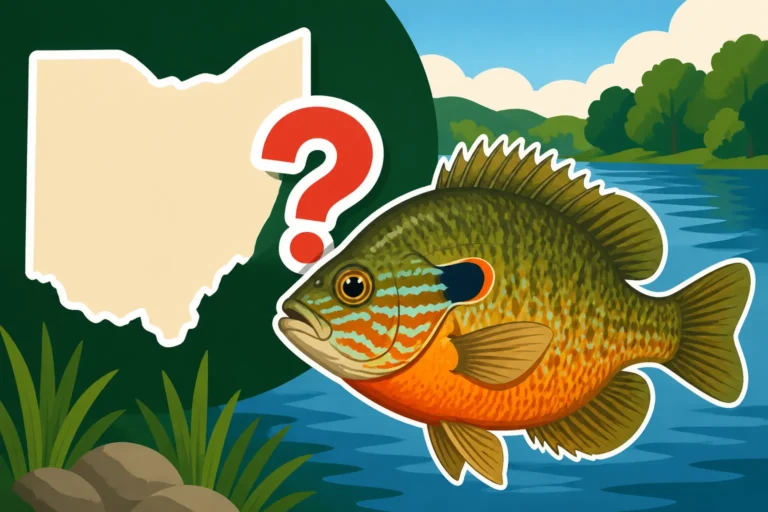
The pumpkinseed sunfish is perhaps the most visually striking of the sunfish family, often described as a living jewel. They share a similar body shape with bluegill but have some key differences.
The most obvious distinguishing feature is the bright red or orange spot on the posterior tip of their gill flap, contrasted by a light-colored, often yellowish, margin around the rest of the flap. This spot is like a little dab of paint. They also typically have wavy, iridescent blue or turquoise lines on their cheeks and gill covers. Their body coloration is often a kaleidoscope of greens, yellows, and oranges, with speckles of various colors. They tend to be a bit more elongated than a bluegill, though still deep-bodied.
Pumpkinseeds often inhabit similar environments to bluegill, favoring clear, shallow waters with abundant aquatic vegetation, submerged logs, and rocky areas. You'll often find them cruising the edges of weed beds in Ohio's quieter lakes and ponds. They’re a bit pickier than bluegill, often preferring small insects and snails, which their specialized teeth are adapted to crush. They are smaller on average than bluegill, rarely exceeding 8-9 inches.
Green Sunfish: The Aggressive Nibblers
Green sunfish are often overlooked, mistaken for bluegill, but they possess a distinctive, somewhat tougher look and an incredibly adaptable nature.
The most crucial identifying feature of a green sunfish is its mouth size. Unlike the bluegill, the green sunfish has a relatively large mouth that extends back to at least the middle of the eye, if not beyond it. Their bodies are typically stout, more torpedo-shaped than the disc-like bluegill, though still compressed. Their coloration is usually a drab olive-green to greenish-brown, often with hints of blue or iridescent spots on their sides. They have a prominent dark spot on their gill flap, similar to a bluegill, but it usually has a distinct light yellow or orange margin around it. Their pectoral fins are noticeably rounder and shorter than a bluegill's.
What makes green sunfish truly stand out is their incredible hardiness. They can be found almost anywhere in Ohio, from pristine lakes to stagnant ditches, small streams, and muddy farm ponds. They tolerate poor water quality better than most other sunfish. Their aggressive nature means they'll often outcompete other panfish for food, readily striking at anything from worms to small lures, and even other small fish. They're often seen as a "nuisance" fish by anglers targeting larger species because they'll nibble at baits meant for bigger catches, but they put up a surprisingly strong fight for their size! You might even find them in urban park ponds.
Longear Sunfish: The "Long Ear" Distinguisher
The longear sunfish is another strikingly beautiful member of the sunfish family, named for its most distinctive characteristic.
As the name suggests, the longear sunfish possesses an exceptionally long, flexible opercular flap (the "ear") that is typically longer than that of other sunfish species. This flap is usually outlined in a lighter color. Their bodies are vibrant, often displaying brilliant blues, oranges, and reds, with wavy blue lines on their cheeks and gill plates, similar to a pumpkinseed but often more pronounced. They have a slightly more elongated body than a bluegill, though still deep.
Longear sunfish prefer clear, rocky, or vegetated streams and small to medium-sized rivers with moderate currents, though they can also be found in some clear lakes. They are generally smaller than bluegill and pumpkinseed, rarely exceeding 7-8 inches, but their vibrant colors make them a joy to catch. They feed primarily on aquatic insects and small crustaceans.
Redear Sunfish: The Snail Eaters
The redear sunfish, sometimes called the "shellcracker" due to its habit of eating snails, is another distinct sunfish species, though less common in many parts of Ohio compared to bluegill.
Their key identifying feature is a distinctive red or orange margin (or "ear tab") on the opercular flap, usually without the wavy lines on the cheek that pumpkinseeds possess. The rest of their body is typically a duller olive-green to yellowish color, often with faint dark spots or mottled patterns. They have a deep, compressed body, very similar in shape to a bluegill, but often appear a bit more robust. Their mouth is also relatively small.
Redear sunfish prefer clear, warm water with abundant vegetation and a firm, often mucky or sandy, bottom. They are found in many of Ohio's larger lakes and reservoirs, particularly in the southern parts of the state. As their "shellcracker" nickname implies, they have pharyngeal teeth (located in the throat) adapted to crush the shells of snails, clams, and other mollusks, making these a primary food source. They can grow larger than other panfish, with some reaching impressive sizes. They can be a bit more challenging to catch than bluegill, often requiring baits like worms or crickets fished close to the bottom.
Practical Identification Tips for Anglers
Alright, you've got the descriptions. Now, let's put it all together into some practical tips for when you're out on the water, trying to tell that little finned friend exactly what it is.
Side-by-Side Comparison
Sometimes, seeing the key differences laid out can be incredibly helpful. Here’s a quick table to compare the common sunfish you’ll encounter in Ohio:
| Feature | Bluegill | Pumpkinseed Sunfish | Green Sunfish | Longear Sunfish | Redear Sunfish |
|---|---|---|---|---|---|
| Gill Flap (Ear) | Solid dark/black spot; no colorful trim. | Dark spot with a distinct red/orange tip and lighter margin. | Dark spot with a distinct light yellow/orange margin. | Very long, flexible flap, often outlined in white/orange. | Dark spot with a distinct red/orange margin, no wavy lines. |
| Mouth Size | Small, not extending past front of eye. | Small, not extending past front of eye. | Large, extends to middle or past eye. | Small, similar to bluegill. | Small, similar to bluegill. |
| Cheeks | Plain or faintly mottled. | Wavy blue/turquoise lines. | Plain or iridescent spots. | Prominent wavy blue/orange lines. | Plain, often mottled. |
| Body Shape | Deep-bodied, compressed (plate-like). | Deep-bodied, slightly elongated. | Stout, more torpedo-shaped. | Deep-bodied, slightly elongated. | Deep-bodied, robust (similar to bluegill). |
| Coloration | Olive green/yellow, faint vertical bars (often present). | Vibrant greens, yellows, oranges; speckles. | Drab olive-green, iridescent spots. | Brilliant blues, oranges, reds. | Olive-green/yellow, often mottled. |
| Average Size | 6-10 inches | 4-8 inches | 4-7 inches | 4-7 inches | 6-12+ inches |
| Diet Preference | Insects, worms, small crustaceans. | Insects, snails, small crustaceans. | Insects, worms, small fish. | Aquatic insects, small crustaceans. | Snails, clams, aquatic insects. |
What to Look for On the Water
When you pull a fish out of the water, don't just admire its fight – take a moment to really look at it.
- Examine the Gill Flap: This is often the quickest and most reliable indicator. Is the "ear tab" solid black? Does it have a red tip? A light margin? Is it unusually long? This one feature can narrow down your options significantly.
- Check the Mouth Size: Gently open the fish's mouth. Does it extend past the front of its eye? If so, you're likely looking at a green sunfish. If it's small and tidy, it's more likely a bluegill, pumpkinseed, or redear.
- Observe Body Shape and Coloration: While variable, the general silhouette can help. Is it very round and flat, or more football-shaped? Look for any prominent patterns like vertical bars or wavy lines on the face.
- Consider the Habitat: Where did you catch it? A tiny muddy creek might point more towards a green sunfish, while a clear, weedy lake could yield any of the others.
Many anglers find it helpful to carry a small, waterproof fish identification guide, or even use a fishing app on their phone, when they're learning. You can find some excellent pocket-sized guides on Amazon that are perfect for quick reference. Having something tangible in hand makes it much easier to compare your catch to clear illustrations. Don't forget, practicing catch and release is a great way to hone your identification skills without impacting the fish population.
When in Doubt: Practice and Observation
Learning to identify fish correctly takes time and practice. Don't get discouraged if you can't immediately name every single sunfish you pull from the water. Even experienced anglers sometimes have to pause and double-check, especially with hybrid species that can occur when different sunfish interbreed.
The more time you spend fishing, observing your catches, and even taking pictures to review later, the better you'll become. Each fish you hold is an opportunity to learn something new. Eventually, you'll be able to quickly distinguish a vibrant pumpkinseed from a feisty bluegill with just a glance. And that, my friend, is part of the true joy of fishing: continually learning about the amazing aquatic world beneath the surface. Knowing what you've caught can help you understand Crappie and Panfish Daily Limits and other species specific rules. For those just starting out, check out Ohio Lakes for Family-Friendly Fishing for some great spots to practice your ID skills!
Disclaimer
This article is for general informational purposes only and does not constitute professional advice. Laws, prices and regulations vary by location and change over time. Consult a qualified professional for guidance on your specific situation.