What Crappie Eat in Ohio Lakes
One of the biggest head-scratchers for any angler, especially when you're targeting those elusive crappie in Ohio, is figuring out what exactly they're munching on. It can feel like you're throwing everything but the kitchen sink at them, only to come up empty-handed because you're not speaking their language, or rather, not offering them the right meal. This guide is here to unravel the mystery of the crappie diet in Ohio lakes, helping you understand their menu preferences so you can fill your cooler more often and enjoy your time on the water even more.
The Crappie Diet: More Than Just Minnows (Though Minnows Are Great!)
When most of us think about crappie fishing, our minds immediately jump to minnows. And honestly, that's not wrong! Minnows are indeed a cornerstone of the crappie diet, a highly effective bait, and often the first thing experienced anglers reach for. But to truly understand crappie and consistently catch them across different seasons and conditions in Ohio, we need to dig a little deeper than just a bucket of shiners. Their diet is far more varied and opportunistic than many realize, adapting to what's available in their specific aquatic environment.
The Primary Forage: A Tiny World of Sustenance
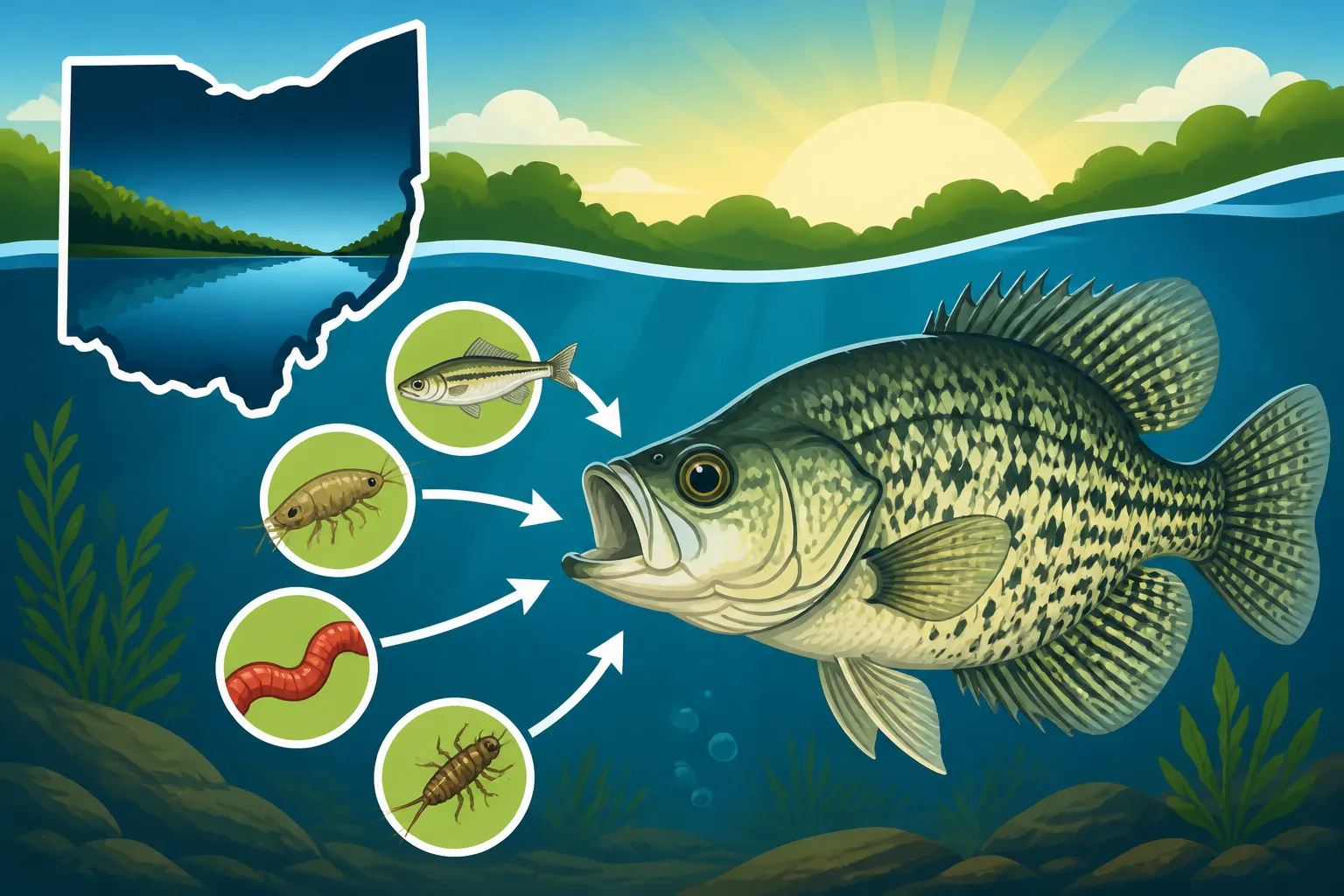
At the very base of the crappie food chain, especially for smaller, juvenile fish, lies a world of microscopic organisms. We're talking about zooplankton – those tiny aquatic crustaceans and rotifers that drift in the water column. Think of them as the crappie's baby food. As crappie grow, their diet naturally expands. They'll start targeting insect larvae, like those from mayflies, midges, and dragonflies, which are abundant in the silty bottoms and vegetation of many Ohio lakes. Worms and other small invertebrates also make their way onto the menu.
But the real game-changer, the diet staple that allows crappie to grow into those coveted slabs, is other small fish. This is where those minnows come in. Crappie are voracious predators of smaller baitfish such as shad, shiners, and juvenile sunfish. Their large, upward-facing mouths are perfectly designed to suck in these unsuspecting snacks. The availability of this primary forage dictates a lot about the health and size of a crappie population in any given Ohio lake. If a lake has a healthy population of shad or other small forage fish, you can bet the crappie will be thriving and growing quickly. This is crucial for understanding why certain lakes consistently produce bigger crappie. You can learn more about these fascinating fish in our Ohio Crappie Fishing Guide.
Seasonal Shifts and Opportunistic Eating
Crappie aren't picky eaters in the sense that they'll pass up an easy meal. They are highly opportunistic, meaning they'll eat whatever is most readily available and easiest to catch at any given time. This makes their diet incredibly dynamic and tied directly to the seasons.
- Spring: As water temperatures rise in early spring, crappie become much more active. This is often when they'll move into shallower waters for spawning, and their metabolism kicks into high gear. They'll aggressively feed on minnows, young-of-the-year shad, and emerging insect hatches. This is a prime time for anglers to target them, as they're often concentrated and hungry. Understanding When Bluegill Spawn in Ohio can even give you clues about potential crappie feeding patterns, as young sunfish become a food source.
- Summer: During the heat of summer, crappie often retreat to deeper, cooler waters or seek refuge in dense cover. Their feeding might become more sporadic during the hottest parts of the day, but they'll still actively pursue baitfish and larger insect larvae during dawn, dusk, and even at night. They'll also feed heavily on any small crustaceans or aquatic insects they find in their deeper haunts.
- Fall: As temperatures begin to drop in the autumn, crappie go on a feeding frenzy to bulk up for the winter ahead. This is another fantastic time for crappie fishing in Ohio. They'll aggressively chase schools of baitfish, often moving to channel edges, deep weed lines, or main lake points. They're trying to pack on as many calories as possible, making them less finicky.
- Winter (Ice Fishing): Even under the ice, crappie continue to feed, though their metabolism slows down considerably. Their diet during winter largely consists of zooplankton, small insect larvae, and very small minnows. They conserve energy, so they're looking for easy, high-protein meals. If you're out ice fishing, knowing what tiny morsels they prefer can make all the difference. For more winter insights, check out our Ohio Ice Fishing Guide.
The key takeaway here is flexibility. What worked last week might not work this week if there's been a significant temperature change, a major rain event, or a new hatch has emerged.
Understanding Crappie Feeding Behavior for Better Catches
Knowing what crappie eat is only half the battle; understanding how and where they prefer to eat it is equally vital. Crappie aren't simply swimming around randomly; their feeding behavior is highly influenced by their senses, their environment, and their innate survival instincts. If you can anticipate these patterns, you'll be well on your way to more consistent success.
Crappie as Visual Hunters
Crappie are primarily visual predators. This means they rely heavily on their eyesight to locate and strike at their prey. Their large eyes are designed to detect movement and contrast, especially in low light conditions or stained water. This is why lure color, flash, and action are so important when targeting crappie.
- Sightlines and Ambush Points: Crappie love structure. They use fallen trees, brush piles, submerged stumps, dock pilings, and even weed lines as ambush points. They'll hold near these structures, often slightly above or to the side of them, waiting for an unsuspecting minnow or insect to swim by. This gives them cover from larger predators and allows them to dart out quickly for a meal. Understanding Crappie Schooling Behavior can help you pinpoint these ambush points, as schools will often hold tight to structure.
- Low Light Advantage: Because of their excellent low-light vision, crappie are often most active during dawn, dusk, and on cloudy days. Many anglers also have great success fishing for crappie at night, especially under lights which attract zooplankton and baitfish, creating a miniature feeding frenzy for crappie. On bright, sunny days, they'll typically retreat to deeper, shadier cover.
The Importance of Water Clarity and Structure
The conditions of the water you're fishing in, specifically its clarity, and the amount of structure available, directly impact crappie feeding habits.
- Clear Water: In very clear water, crappie can be warier. They'll often hold tighter to cover and may prefer more subtle presentations. They can see your line, your sinker, and every detail of your bait. In these conditions, natural colors, lighter lines, and a stealthy approach are often more effective. They're still visual feeders, but they're also more easily spooked.
- Stained or Murky Water: In stained or murky water, crappie might rely more on their lateral line system (which detects vibrations) and scent, but visual cues are still very important. Brighter, more contrasting colors (like chartreuse, orange, or white) can be highly effective because they stand out more. Baits with more vibration or a scent additive can also help crappie locate your offering in reduced visibility.
- Structure and Cover: As mentioned, structure is paramount. Crappie use cover for protection, for ambush, and often for shade. If you find good structure, you've likely found crappie. This could be anything from a deep weed bed in Indian Lake to submerged timber in Alum Creek Lake. They especially love "edge" habitat – the transition zones where one type of cover meets another, or where shallow water drops off into deeper areas. Think about fishing the edges of lily pads, the outer reaches of a brush pile, or along a creek channel in a reservoir. These are prime feeding lanes.
Understanding these behavioral nuances means you're not just casting blindly; you're placing your bait where a crappie expects to find food, presented in a way that appeals to its senses.
Matching the Hatch: Best Baits and Lures for Ohio Crappie
Now that we understand what crappie eat and how they feed, it's time to translate that knowledge into actual fishing strategies. Choosing the right bait or lure is about mimicking their natural food sources as closely as possible, both in appearance and action. This is where the fun begins and where you can really start to see your efforts pay off.
Live Bait Favorites: Imitating Nature's Menu
Nothing beats live bait for many crappie anglers, and for good reason: it's what crappie eat naturally. The movement, scent, and realistic appearance are hard to beat.
- Minnows: The undisputed king of crappie baits. Small shiner minnows, fathead minnows, or even rosy reds are incredibly effective. You can fish them suspended under a bobber near structure, slow-troll them, or even vertical jig them. The natural struggle of a live minnow is often irresistible to a hungry crappie. When selecting minnows, consider the size of the crappie you're targeting; smaller minnows for smaller crappie, slightly larger ones for those trophy slabs. Learn How to Rig a Live Minnow for Crappie for optimal presentation.
- Worms and Larvae: Although less common than minnows, small pieces of nightcrawler or waxworms can also be effective, especially for crappie that are feeding heavily on insect larvae. These baits are particularly good when the crappie are being finicky or when fishing through the ice. Their natural scent and subtle movements can entice a bite when other things fail.
- Small Crayfish: While not a primary diet staple, crappie will occasionally munch on very small, soft-shelled crayfish if they are present and vulnerable. This is more of an opportunistic meal, but it's something to keep in mind, especially in lakes with rocky bottoms.
Live bait often requires a slightly slower presentation, allowing the bait's natural movements to do the work. It's a fantastic option for beginners and seasoned pros alike, consistently putting fish in the boat or on the bank. You can find all sorts of bait containers and aerators on platforms like Amazon to keep your minnows lively.
Artificial Baits: The Angler's Ingenuity
Artificial lures offer incredible versatility and can often outperform live bait when presented correctly. They allow for different depths, speeds, and actions that live bait simply can't achieve.
- Jigs (Soft Plastics): This is where artificial crappie fishing really shines. Small jigs, typically 1/32 to 1/8 ounce, tipped with soft plastic bodies are incredibly effective.
- Tubes and Grubs: These are probably the most popular. Tube jigs create a subtle pulsing action, while grub tails (like curly tail grubs) offer continuous vibration. They come in an endless array of colors and sizes.
- Paddle Tails and Minnow Imitations: These mimic small baitfish, often with a more aggressive swimming action. They are great when crappie are actively chasing minnows.
- Spider Grubs and Critter Baits: These plastics have multiple appendages that create lots of subtle movement, appealing to crappie feeding on insects or smaller invertebrates.
Choosing the right size and Best Jig Color for Ohio Crappie can be critical. Brighter colors like chartreuse, pink, and white often work well in stained water, while more natural colors like smoke, clear with glitter, or black can be deadly in clear water.
- Blade Baits: Small blade baits, like the Johnson Thinfisher or similar models, offer a lot of flash and vibration. They are excellent for vertical jigging or casting and retrieving, especially when crappie are holding deep or in current.
- Tiny Crankbaits: Micro crankbaits, designed for panfish, can be deadly for active crappie. These lures dive to specific depths and have a built-in wobbling action that can imitate a fleeing baitfish. They are particularly effective when crappie are suspended or chasing schools of baitfish in open water.
- Spinners and Spinnerbaits: Small inline spinners or tiny spinnerbaits can also attract crappie, especially in stained water where the flash and vibration help fish locate the lure. These are often fished with a slow, steady retrieve.
When using artificials, experiment with your retrieve speed and jigging action. Sometimes a slow, steady retrieve is best, while other times, sharp jerks and pauses will trigger a strike.
Considering Scent and Presentation
Beyond the look and action, don't underestimate the power of scent. Crappie, while visual hunters, also use their sense of smell. Adding a crappie-specific scent attractant to your artificial lures can make a significant difference, especially in murky water or when fish are lethargic. You can find these handy attractants at most tackle shops or on Amazon.
Your presentation is also key. Are you casting and retrieving? Vertical jigging over a brush pile? Drifting with the current? Each technique offers a different way to present your chosen bait or lure, and matching the presentation to the crappie's current mood and location is paramount. For example, if you're fishing a specific piece of structure, a slow, deliberate vertical presentation might be better than a quick cast and retrieve. Always aim for a natural, enticing action that looks like an easy meal. Many anglers find their Best Rod and Reel Setup for Ohio Muskie is far too heavy for crappie, so having lighter gear is important for feeling those subtle bites.
Adapting to Different Ohio Lake Environments
Ohio offers a diverse range of fishing environments, from the vast expanses of Lake Erie to countless smaller inland lakes, reservoirs, and private ponds. Crappie thrive in many of these, but their diet and how they feed will inevitably be influenced by the specific characteristics of their home waters. Understanding these environmental differences is key to becoming a truly adaptable and successful crappie angler.
Crappie in Clear vs. Murky Waters
The clarity of the water is one of the most significant factors influencing a crappie's diet and how it hunts.
- Clear Water Strategies: In lakes with high water clarity, such as some of Ohio's deeper reservoirs like Caesar Creek Lake or some of the smaller, spring-fed lakes, crappie can be more discerning. They have excellent vision, so they can easily spot your line, your hook, and any unnatural aspects of your presentation.
- Diet: In clear water, their diet might lean more towards visually hunting small, translucent zooplankton, very small minnows, and larvae that blend in with their surroundings.
- Bait & Lure Choice: Opt for more natural colors in your soft plastics – clear with glitter, smoke, or even shades of brown and green. Your line choice becomes more critical here; lighter fluorocarbon or monofilament leaders can make your bait appear more natural. A very subtle approach, with minimal weight and a slow fall, is often best. Crappie will often be deeper or tighter to heavy cover during daylight hours to avoid predators and bright light.
- Murky Water Strategies: On the flip side, many Ohio lakes and rivers, especially after heavy rains or in shallower, fertile impoundments, can have stained or murky water. Here, crappie still rely on sight, but other senses play a larger role.
- Diet: While still eating minnows, they might key in more on larger, easier-to-detect prey items or anything that creates strong vibrations or scents.
- Bait & Lure Choice: This is where brighter, high-contrast colors shine: chartreuse, electric chicken, bright pink, or firetiger patterns. Lures with more built-in vibration, like paddle-tail grubs or small spinnerbaits, can help crappie locate your offering. Scented baits or adding scent attractants to your artificials can also give you a significant edge. Because visibility is reduced, crappie might hold closer to the surface or higher in the water column, making them more accessible. Don't be afraid to fish closer to shore or shallower structure when the water is stained.
How Depth and Cover Influence Feeding
Crappie are masters of using their environment to their advantage, and their feeding patterns are inextricably linked to depth and available cover.
- Shallow Water Feeding (Spring/Fall): During the spring spawn and again in the fall as they fatten up, crappie will move into shallower waters. Here, they'll often feed aggressively on newly hatched fry, terrestrial insects that fall into the water, and small baitfish that are also moving shallow. In these situations, they might be found around docks, lily pads, submerged brush, or even standing timber. Your presentation needs to be shallow, perhaps using a slip bobber rig or casting lightweight jigs. Do Crappie Move Shallow in Spring in Ohio? is a common question, and the answer is a resounding yes, making them easier to target.
- Deep Water Feeding (Summer/Winter): In the heat of summer or the cold of winter, crappie often retreat to deeper, more stable thermal zones. They'll relate to deep-water structure like channel edges, submerged humps, bridge pilings, or deep brush piles. Their diet here will consist of what's available in these deeper zones: suspended baitfish, zooplankton that congregate in cooler water, and bottom-dwelling insect larvae.
- Techniques: Vertical jigging with jigs or minnows is often the most effective method in deep water, allowing you to precisely target suspended schools of fish or specific pieces of structure. Using a fish finder becomes invaluable in these situations to locate both the crappie and the structure they're holding to. Consider adding heavier jigs or sinkers if you're battling current or need to get down quickly. You can often find great deals on electronics and specialized deep-water crappie tackle on Amazon.
- Relating to Cover: Regardless of depth, crappie almost always relate to some form of cover. This could be thick weeds, submerged trees, rock piles, or artificial structures like fish cribs. They use this cover for safety from predators and as ambush points for their prey. When you find good cover, you're likely to find crappie waiting to eat. The type of cover available dictates the type of food present. For instance, a dense weed bed will hold more insects and smaller fish than an open, sandy flat.
By constantly observing your environment, adjusting your tackle, and adapting your techniques to water clarity, depth, and cover, you'll be able to unlock the crappie's diet secrets in any Ohio lake you fish. Remember, while there are general patterns, every day on the water is a new puzzle to solve, and that's part of the fun of Ohio Fishing Regulations Every Angler Should Know and the entire sport.
It's clear that crappie in Ohio lakes aren't just one-trick ponies when it comes to their diet. While minnows are undoubtedly a go-to, understanding the broader spectrum of their natural forage – from microscopic zooplankton to insect larvae and juvenile baitfish – allows us to become far more effective anglers. Their feeding habits are dynamic, shifting with the seasons and the specific characteristics of the water, whether it's crystal clear or murky. By focusing on mimicking their natural prey with the right live baits or artificial lures, and adapting our presentation to the crappie's visual hunting style and their preferred habitats of depth and cover, we can unlock consistent success. So next time you're heading out to your favorite Ohio lake, remember the diverse menu crappie enjoy and fish accordingly!
| Crappie Food Source Type | Common Examples in Ohio Lakes | Best Bait/Lure Imitations | When Most Effective |
|---|---|---|---|
| Zooplankton | Daphnia, Copepods | Tiny jigs (1/32 oz or smaller), Micro plastics | Winter (ice fishing), deep summer, for juvenile crappie |
| Insect Larvae | Mayfly nymphs, Midge larvae, Caddisfly larvae | Waxworms, small pieces of nightcrawler, tiny tube jigs, spider grubs | Spring, Fall, Year-round in vegetation, under ice |
| Small Fish | Shad, Shiners, Young Sunfish | Live minnows, soft plastic minnow imitations, small crankbaits, paddle-tail grubs | Spring, Summer, Fall (active feeding periods) |
| Crustaceans | Very small crayfish (opportunistic) | Jig and plastic combos that mimic craws (less common) | Rarely, mostly opportunistic in rocky areas |
Disclaimer
This article is for general informational purposes only and does not constitute professional advice. Laws, prices and regulations vary by location and change over time. Consult a qualified professional for guidance on your specific situation.