Jigging Techniques for Lake Erie Walleye
It can be incredibly frustrating when you're out on Lake Erie, the sonar is lit up with arches, but the walleye just aren't hitting the trolled crankbaits or crawler harnesses. You know they're there, but getting them to commit can feel like a puzzle. This guide is all about equipping you with the specialized jigging techniques that can turn those frustrating days into successful ones, helping you entice even the most finicky Lake Erie walleye to bite.
Understanding Lake Erie Walleye Behavior for Jigging
To really nail jigging on Lake Erie, you've got to think like a walleye. These fish are masters of their environment, and their behavior changes constantly based on factors like water temperature, light conditions, and the availability of baitfish. Knowing where they prefer to hang out and what might trigger a bite is half the battle won when you're relying on a more interactive technique like jigging.
Walleye Habitat and Structure Preference
Lake Erie walleye aren't just swimming around aimlessly; they gravitate towards specific types of cover and structure. In the Western Basin, you'll often find them relating to the vast, relatively shallow reefs and rocky bottoms. These areas provide excellent ambush points and foraging grounds. Think about spots like the dumping grounds, or the edges of the big reefs off of Port Clinton or Sandusky. In the Central and Eastern Basins, as the lake gets deeper, walleye will often relate to humps, ledges, and transition zones where soft mud meets harder bottom. They're also notorious for suspending over deep water, often following schools of baitfish like emerald shiners or gizzard shad. When you're jigging, you're trying to put your bait right in their face, so understanding these key holding areas is paramount. Your fish finder isn't just for seeing fish; it's for finding the habitat that holds fish.
When walleye are on the bottom, they might be tucked into crevices, behind boulders, or along the subtle contours of a flat. These locations offer them protection from current and bright sunlight, making them feel secure while they wait to ambush prey. If you're marking fish tight to the bottom, that's a prime scenario for vertical jigging. Conversely, if you see baitfish schools suspended, you can bet walleye aren't far behind, actively shadowing them. Being able to interpret these subtle cues on your electronics is a game-changer for jigging success. Pay close attention to baitfish schools and isolated large marks, as these are often indicators of hungry walleye on the prowl.
Reading Walleye Feeding Habits and Moods
Walleye can be incredibly moody, and their feeding habits can shift from aggressive strikes to subtle nibbles in a matter of hours. When they're aggressive, they'll often chase down fast-moving baits, and a snappy jigging retrieve can trigger a reaction strike. You'll feel that satisfying thump as they crush your jig. However, when they're in a neutral or negative mood, perhaps due to a recent cold front or heavy fishing pressure, they become much pickier. These are the days when a subtle lift-and-drop, or even just letting your jig sit for an extended period, might be the only way to get a bite.
It's crucial to experiment with your retrieve speed and jigging cadence. Start aggressive, but don't be afraid to slow things down considerably if you're not getting bit. Sometimes, the fish just want a meal that looks easy to catch, rather than something zipping by. Factors like time of day also play a role; walleye are often more active feeders during low light conditions like dawn and dusk, but with enough cloud cover or deep water, they can feed all day long. Observing the aggressiveness of the bites you do get can also tell you a lot about their mood. A solid thud means they're on, while a light tap might indicate a more hesitant fish requiring a softer touch.
Impact of Water Temperature and Clarity
Water temperature is one of the most significant drivers of walleye behavior. In spring, as water temperatures rise into the low 40s and 50s Fahrenheit, walleye move shallower to spawn, and jigging can be incredibly effective around reefs and rocky areas. As temperatures climb into the 60s and 70s in summer, walleye often head to deeper, cooler waters or seek out thermoclines where baitfish congregate. This is when deepwater vertical jigging really shines. As autumn approaches and waters cool, walleye again become more active, feeding heavily in preparation for winter, making fall an excellent time for aggressive jigging. To truly excel at Lake Erie walleye fishing, it helps to understand the Ohio Fishing Season Calendar and how walleye behave throughout the year.
Water clarity also plays a huge role. In clearer water, walleye tend to be more light-sensitive and might hold deeper or be more active during low light. You might need to use more natural bait colors and sizes. In stained or turbid water, brighter colors and baits that displace more water can be more effective as they rely more on scent and vibration. Lake Erie can have varying clarity across its basins, from the often turbid Western Basin to the clearer Eastern Basin. Always check the current conditions before heading out and adjust your approach accordingly. High wind days can also churn up the bottom, reducing clarity and sometimes pushing walleye into shallower, dirtier water where they feel safer from predators and sunlight.
Essential Jigging Gear and Tackle for Lake Erie
Jigging for Lake Erie walleye isn't just about dropping a jig and hoping for the best. Having the right setup makes a world of difference, not just in feeling those subtle bites, but also in effectively presenting your lure and confidently landing those big fish. You don't need to break the bank, but investing in quality gear tailored for this technique will pay dividends.
Rod, Reel, and Line Selection for Jigging
When it comes to jigging for walleye on Lake Erie, your rod is your primary sensor. A good jigging rod should be sensitive enough to detect the slightest tap, yet powerful enough to set the hook and fight a strong walleye. Look for a fast or extra-fast action rod, typically in the 6'6" to 7'6" range, with a medium-light to medium power rating. Graphite rods excel here due to their exceptional sensitivity. Brands like St. Croix, Fenwick, and Shimano offer excellent options that are popular among serious walleye anglers. If you're just starting, there are also plenty of great entry-level rods available on Amazon that offer good performance without the premium price tag.
Pair that sensitive rod with a smooth spinning reel in the 2500 to 3000 size. A good drag system is non-negotiable, as Lake Erie walleye can make powerful runs. For line, many jig anglers swear by braided line, and for good reason. Its near-zero stretch provides incredible sensitivity, allowing you to feel everything that's happening at the end of your line, from subtle bottom changes to those finicky bites. A 10-20 lb braided line is a solid choice, and you'll want to tie a 4-8 foot fluorocarbon leader (8-12 lb test) to the end of your braid. Fluorocarbon is nearly invisible in water and provides excellent abrasion resistance, which is key when fishing around rocky structure. Remember to learn some reliable Ohio Fishing Knots to Know for connecting your leader to your main line and your lure.
Choosing the Right Jigs and Soft Plastics
This is where the art of jigging really comes into play! The variety of jigs and soft plastics available is astounding, but for Lake Erie walleye, a few categories consistently outperform the rest. When walleye are holding tight to the bottom, a traditional lead head jig, ranging from 1/2 ounce to 1 ounce (sometimes heavier in strong current or deep water), paired with a soft plastic swimbait or grub is deadly. Colors like chartreuse, white, perch, and purple tend to be perennial favorites. Berkley Gulp! Alive! swimbaits are a popular choice due to their scent dispersion, often triggering bites when other plastics fail.
For targeting suspended walleye or when you want more flash and vibration, blade baits like the Silver Buddy or Vibrato, or lipless crankbaits like the Rapala Rippin' Rap, are excellent. These lures sink quickly and emit a strong vibration on the retrieve, mimicking fleeing baitfish. Hair jigs, especially custom-tied ones, also have a dedicated following for their subtle action and natural presentation. Don't be afraid to experiment with different sizes, shapes, and colors based on water clarity and the predominant baitfish in the area. Keeping a diverse selection of Best Lures for Ohio Fishing in your tackle box is always a smart move.
Terminal Tackle and Accessories
Beyond your rod, reel, and line, a few other pieces of terminal tackle and accessories are crucial for successful walleye jigging on Lake Erie. A good quality set of split ring pliers and snips is invaluable for changing out lures quickly or cutting tangled line. Having a selection of high-quality, sharp snap swivels or duolock snaps will allow you to quickly change jigs without having to re-tie every time. When selecting snaps, opt for those with low visibility and sufficient strength to handle aggressive strikes.
Consider bringing a large, rubberized landing net. This not only makes it easier to land those feisty walleye, but the rubberized mesh is also gentler on the fish's slime coat if you plan on releasing them. A good pair of polarized sunglasses will help you spot subtle changes in the water, and possibly even see a fish follow your jig in clearer conditions. Lastly, don't forget a well-stocked tackle box or bag specifically organized for jigging, allowing you easy access to your go-to lures and replacements. A robust tackle storage system you can find on Amazon will make your time on the water much more efficient.
Core Jigging Techniques for Lake Erie Walleye
Jigging isn't a one-size-fits-all approach. There's an art to it, and mastering different techniques will dramatically increase your chances of success on Lake Erie. The key is to understand when and where to apply each method, adapting to what the walleye are telling you.
Vertical Jigging in Deeper Water
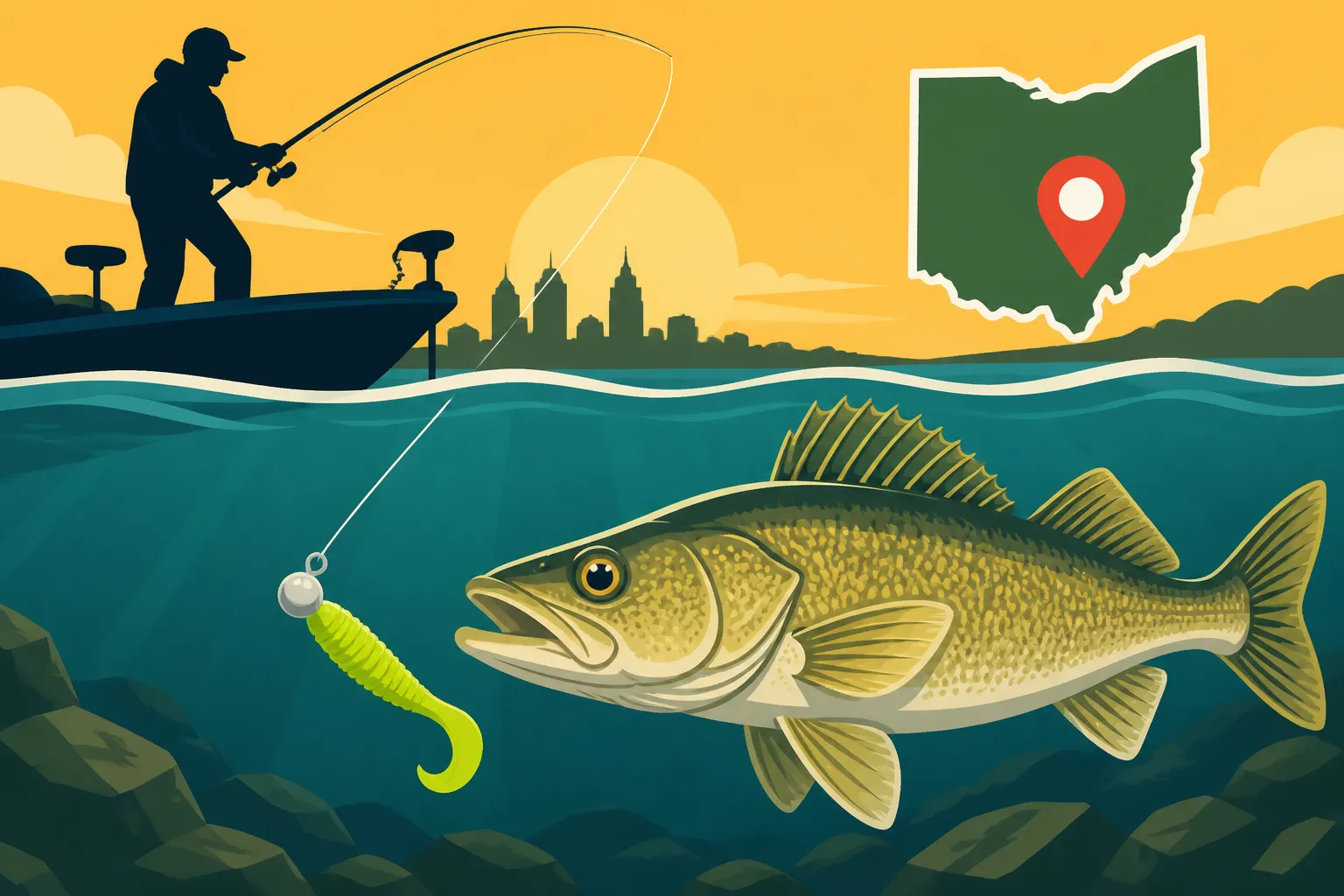
Vertical jigging is perhaps the most fundamental and widely used jigging technique for Lake Erie walleye, especially when fish are holding tight to bottom structure or suspended in deeper water. The concept is simple: you position your boat directly over the fish (often identified with your fish finder) and drop your jig straight down. The goal is to keep your line as vertical as possible, minimizing slack and maximizing feel. This is crucial when fishing deeper water, sometimes 30 feet or more, where even a slight current can make a jig "swing" away from the target zone.
Once your jig reaches the desired depth (usually just above or on the bottom, or at the depth of suspended fish), the retrieve begins. A common cadence involves lifting the rod tip sharply 1-2 feet, then letting the jig fall back down on a semi-slack line. Many bites occur on the fall, so watching your line for any twitch or hesitation is vital. Experiment with the height of your lift and the speed of your fall. Sometimes a hard snap is needed, other times a slow, gentle lift and drop is the ticket. When walleye are particularly lethargic, you might even just gently bounce the jig on the bottom, letting it rest for a few seconds before moving it again. This is a highly effective method when you're looking to target specific marks you're seeing on your electronics, offering a precise presentation.
Snap Jigging and Rip Jigging
While vertical jigging focuses on a more controlled, often slower presentation, snap jigging and rip jigging are all about aggression and triggering reaction strikes. These techniques involve more forceful and erratic movements of the rod, making the jig dart and flash like a panicked baitfish. This can be incredibly effective when walleye are actively feeding or when you need to provoke a strike from a neutral fish that might not respond to subtle presentations.
Snap jigging typically involves a quicker, shorter snap of the rod tip, often accompanied by a rapid reel crank to take up slack as the jig falls. The idea is to make the jig shoot upwards quickly, then flutter enticingly on the way back down. Rip jigging is an even more aggressive version, with longer, harder rips of the rod, causing the jig to move significant distances vertically or horizontally before crashing back down. Both techniques are excellent for covering water quickly when drifting, or for calling fish in from a wider area. When fish are chasing baitfish like crazy, these aggressive presentations often get the job done. This technique pairs well with larger jigs or blade baits that create a lot of vibration.
Dragging and Drifting Jigs
Sometimes, the walleye on Lake Erie prefer a more subtle, constant motion, or you need to cover a lot of ground without constantly motoring around. This is where dragging or drifting jigs comes into play. Instead of actively working the jig with constant rod movements, you let the boat's drift or slow troll move the jig for you. This technique is especially potent when walleye are spread out over flats or when they're feeding on the bottom in a less aggressive manner.
For dragging, you'll typically use heavier jigs, often 3/4 ounce to 1.5 ounces, to maintain bottom contact, and let out a long line. As your boat drifts or moves slowly, the jig bounces and scrapes along the bottom, kicking up puffs of sediment and mimicking a crawling crayfish or an injured baitfish. You'll often feel a constant ticking sensation as the jig bounces over rocks and rubble. When you feel that distinct thump or suddenly feel weight, reel down and set the hook. This can be done with traditional lead head jigs, but also with specialized "bottom bouncer" jigs that are designed to ride over snags more easily. Drifting allows your jig to cover a wider path, increasing your chances of encountering active fish, particularly when you're drifting along contours or over known structure.
Advanced Jigging Strategies and Situational Adaptations
Once you've got the core jigging techniques down, it's time to refine your approach and adapt to the ever-changing conditions on Lake Erie. Walleye can be incredibly challenging, and sometimes it takes a little extra finesse or a clever adjustment to get them to bite.
Targeting Suspended Walleye
One of the most common scenarios on Lake Erie, especially in the central and eastern basins, is finding walleye suspended over open water, often miles from any discernible structure. These fish are usually following schools of baitfish, and conventional bottom-fishing techniques won't cut it. Targeting suspended walleye requires a keen eye on your electronics and a precise presentation. Your fish finder is your best friend here; look for arches or distinct blobs of baitfish, and identify the depth at which the walleye are holding.
Once you've identified the depth, you need to get your jig to that exact level and keep it there. Blade baits and lipless crankbaits, which sink quickly and have a tight wobbling action, are excellent choices. Vertically drop your lure to the desired depth, then use a snap or rip jigging retrieve to make it dart erratically within the walleye's strike zone. Sometimes a slower, more deliberate lift and fall is better, mimicking a struggling baitfish. The key is to constantly monitor your sonar to ensure you're staying on the fish. If your boat drifts too quickly, you might need to use your trolling motor to "hover" over the school. Understanding How to Read a Fish Finder for Suspended Walleye can be immensely helpful in these situations.
Jigging in Current and Wind
Lake Erie is a dynamic body of water, and you'll frequently encounter current, strong winds, or a combination of both. These factors significantly impact your jigging presentation and require adjustments. Current, whether natural lake currents or those induced by wind, can make it difficult to maintain a vertical presentation or keep your jig at the desired depth. You'll often need to increase your jig weight considerably to combat the drag. If you typically use a 3/4-ounce jig, you might need to bump up to a 1-ounce or even 1.5-ounce jig to maintain bottom contact in a strong current.
Wind can cause your boat to drift too quickly, pulling your jig horizontally away from the fish or making it difficult to feel bites. To counteract this, you can use a drift sock or sea anchor to slow your boat's drift. Another tactic is to use your electric trolling motor to "steer" against the wind, maintaining a slower, more controlled drift or even holding your position over a specific spot. When the wind is really howling and creating chop, those subtle bites can be even harder to detect, so pay extra attention to your line and any unusual resistance. Knowing Best Weather Conditions for Lake Erie Walleye Fishing can help you plan your trips around these variables.
Pairing Jigs with Live Bait
While many anglers swear by artificials for jigging, sometimes the walleye just want the real thing. Pairing your jigs with live bait can be an absolute game-changer, especially when the fish are finicky or the water is cold. The scent and natural action of live bait can entice hesitant walleye that might ignore a plain plastic. Minnows, shiners, and nightcrawlers are all classic walleye baits that can be deadly when presented on a jig.
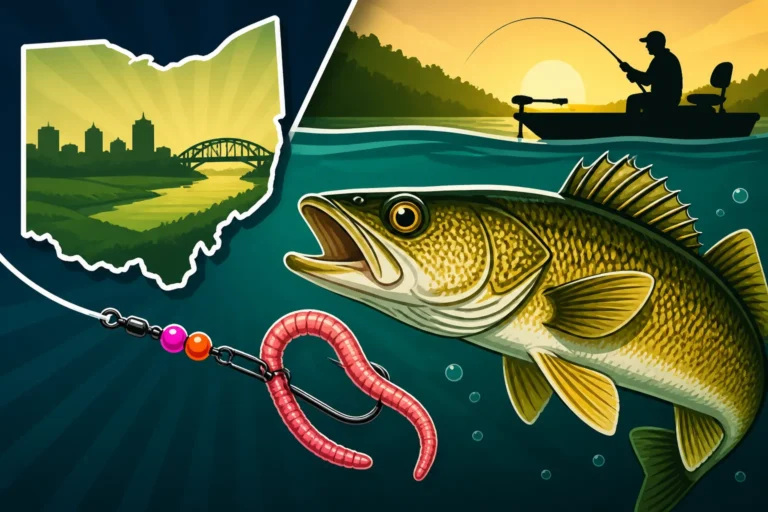
A common setup is to tip a lead head jig with a live minnow, hooking it lightly through the lips or dorsal fin. The jig provides the weight for casting or vertical presentation, while the minnow adds scent and a subtle, natural swimming action. This combination is particularly effective when vertical jigging over structure or when drifting slowly. For nightcrawlers, you can thread a piece onto a jig or use a "half crawler" to keep the presentation compact. The wiggling action and scent trail can be irresistible. Experiment with different jig colors and sizes when tipping with live bait. Sometimes a bright jig with a natural bait is the perfect contrast to trigger a strike.
Seasonal Jigging Approaches for Lake Erie Walleye
Lake Erie's walleye population behaves differently throughout the year, primarily driven by spawning cycles and water temperature fluctuations. Adapting your jigging techniques to the season will dramatically improve your success rate. What works in spring won't necessarily be effective in the dog days of summer.
Spring Walleye Jigging Tactics
Spring is an exhilarating time to target walleye on Lake Erie, especially during and after the spawn. As the ice recedes and water temperatures begin to climb into the 40s and 50s, walleye migrate to their traditional spawning grounds on shallow reefs and rocky shoals, particularly in the Western Basin. This makes them highly accessible to jig anglers. During this time, the walleye are often concentrated, and an aggressive jigging approach can yield incredible results. To maximize your chances, familiarize yourself with When Ohio's Walleye Season Peaks on Lake Erie.
Focus your efforts around the edges of reefs, rocky drop-offs, and current breaks. Heavier jigs, from 3/4 ounce to 1.5 ounces, are often favored to maintain bottom contact in the strong currents found in these areas. Blade baits and hair jigs are also extremely effective, as their flash and vibration can mimic baitfish struggling in the current. A sharp, aggressive snap or rip jigging retrieve often triggers reaction strikes from post-spawn walleye looking to replenish their energy reserves. Don't be afraid to fish shallow – sometimes walleye will be found in as little as 5-10 feet of water if the conditions are right.
Summer Deepwater Jigging
As Lake Erie fully warms up in the summer months, with water temperatures often reaching into the 70s, many walleye retreat to deeper, cooler waters, particularly in the Central and Eastern Basins. This is when summer deepwater jigging becomes a dominant strategy. Walleye will often suspend in the thermocline or hold near deeper structures like humps, shipwrecks, or channel edges, following schools of baitfish. Knowing How Deep Lake Erie Is Where Anglers Fish for Walleye can give you an edge in locating these deeper zones.
The challenge in summer is not only finding the fish in the vast expanse of deep water but also effectively presenting your jig to them. Your electronics are absolutely essential for locating schools of baitfish and the larger walleye marks underneath them. Once located, vertical jigging is key. Use enough weight (often 1 ounce or more) to get your jig down quickly and keep it vertical. Slow, methodical lifts and drops are often more effective than aggressive snaps, as the walleye might be less inclined to chase fast-moving baits in warmer water. Tipping jigs with a piece of nightcrawler or a minnow can also add irresistible scent and natural appeal. For those who typically troll, adding some jigging rods can be a great way to capitalize on fish found off the main trolling passes.
Fall Transition and Aggressive Jigging
Autumn on Lake Erie is a phenomenal time for walleye jigging, as the cooling water temperatures trigger a major feeding frenzy. Walleye are actively bulking up for the lean winter months, making them highly aggressive and willing to chase down fast-moving baits. This feeding binge typically begins as water temperatures drop into the 60s and intensifies as they fall into the 50s. If you're wondering when to hit the water, knowing the Best Time of Year to Fish Lake Erie for Walleye often points to this dynamic season.
During the fall transition, walleye can be found in a variety of locations, from shallower reefs and points to deeper channels and open water. They're often on the move, chasing baitfish schools. This is a prime time for aggressive jigging techniques like snap jigging and rip jigging with blade baits, lipless crankbaits, or heavy jigging spoons. The erratic action and strong vibrations of these lures can draw strikes from a distance. Don't be afraid to experiment with retrieve speed and color; sometimes a fast, bright presentation is exactly what triggers a bite from a hungry fall walleye. As the season progresses and waters continue to cool, the fish may move deeper, making vertical jigging over structure and suspended fish a solid bet.
Troubleshooting Common Jigging Challenges
Even the most experienced anglers face challenges when jigging for Lake Erie walleye. From finicky bites to frustrating snags, these hurdles can test your patience. Knowing how to troubleshoot and adapt on the fly is a hallmark of a successful jig angler.
Dealing with Finicky Biters
We've all been there: you're marking fish, you know they're walleye, but they just won't commit. They might tap the jig, follow it, but never inhale it. This is the classic "finicky biter" scenario, and it's incredibly common on Lake Erie, especially after a cold front or heavy fishing pressure. When walleye are this hesitant, it's time to slow down, lighten up, and offer a more enticing presentation.
First, try downsizing your jig and soft plastic. A smaller profile can often be less intimidating to a wary walleye. Switch from a 1-ounce jig to a 1/2-ounce, or even a 3/8-ounce if conditions allow. Next, experiment with retrieve speed and cadence. Instead of aggressive snaps, try a much softer lift and drop, letting the jig flutter slowly on the fall. Sometimes, just letting the jig rest on the bottom for 5-10 seconds before a gentle lift is what it takes. Don't underestimate the power of scent; tipping your jig with a small piece of live minnow or a scented soft plastic, like a Berkley Gulp! minnow, can often provide that extra enticement. Lastly, consider your leader. If you're fishing in clear water, a longer, lighter fluorocarbon leader can make a big difference in presentation visibility. When you're dealing with these tough conditions, it's about making your offering as irresistible and natural as possible.
Avoiding Snags and Hang-ups
Jigging around structure is where the big walleye often live, but it's also where you're most likely to get snagged. Lost lures are frustrating and costly, but with a few adjustments, you can minimize hang-ups. When fishing rocky bottoms or areas with lots of debris, the first step is to manage your line. Try to keep your line as vertical as possible, especially when vertical jigging. A more vertical line reduces the chance of your jig getting wedged horizontally between rocks.
When you feel your jig touch the bottom, immediately lift it a few inches. You want to maintain bottom contact, but not let your jig sit there long enough to get hopelessly stuck. If you're dragging jigs, using a "bottom bouncer" style jig or a jig with an upward-facing hook can help it ride over snags more effectively. When you do feel a snag, don't just yank hard. Try giving a bit of slack, then a sharp, upward pop. Sometimes, the jig will dislodge itself. If that doesn't work, slowly reel down, putting pressure directly above the snag, and then a strong, quick pull. This can often free the lure or, at worst, break your line at the leader knot, saving your main line. Remember, losing a jig is better than losing a fight with a trophy walleye because your line is frayed. For those who typically focus on trolling, learning specific Trolling for Lake Erie Walleye strategies can sometimes bypass the snagging issue altogether, but it limits your direct interaction with the bottom.
Maximizing Hook-ups and Landing Fish
Feeling a bite is one thing, but consistently setting the hook and landing that walleye is another. Many jigging bites, especially from finicky fish, can be subtle – a light tap, a feeling of "mush," or simply added weight. Learning to discern these subtle takes is crucial. When you feel anything out of the ordinary, even if it's just a slight hesitation in the fall, set the hook! Don't delay. Walleye are notorious for spitting jigs quickly.
Your hook set should be swift and firm, but not a wild swing. A solid, upward sweep of the rod, followed by cranking down on the reel, is generally effective. Make sure your drag is set properly – tight enough to set the hook but loose enough to allow the fish to take line during a run. During the fight, keep constant pressure on the fish. Avoid pumping the rod too aggressively, which can create slack and give the walleye a chance to throw the hook. Keep the rod tip up and let the rod do the work. When the fish gets close to the boat, use a large, rubberized net to scoop it headfirst. Don't try to horse a big walleye into the boat, especially if it's hooked lightly. Patience and smooth movements are key to successfully landing those prized Lake Erie walleye.
| Jigging Technique | Ideal Scenario | Preferred Lure Types | Retrieve Description | Key Advantage |
|---|---|---|---|---|
| Vertical Jigging | Walleye on bottom, suspended over deep water | Lead head jigs, blade baits, spoons | Position boat over fish. Drop jig to depth, lift rod tip 1-2 ft, let fall on semi-slack line. Bites often occur on the fall. Vary height and speed. | Pinpoint accuracy on specific marks |
| Snap Jigging | Actively feeding walleye, covering water | Blade baits, lipless cranks, heavier jigs | Quicker, shorter snaps of rod tip (6-12 inches), accompanied by rapid reel crank to take up slack. Creates erratic, darting action. | Triggers reaction strikes, covers more area while drifting |
| Rip Jigging | Highly aggressive walleye, provoking strikes | Heavier blade baits, lipless cranks | Longer, harder rips of the rod (2-3 ft), causing jig to shoot aggressively upwards then crash back down. Max flash and vibration. | Most aggressive presentation, calls fish from distance |
| Dragging/Drifting | Walleye spread out on flats, less active fish | Heavy lead head jigs, bottom bouncers | Let boat's drift or slow troll move the jig along the bottom. Maintain line contact with bottom, feeling for bounces and subtle weight changes. Minimal rod movement. | Covers broad areas, appeals to neutral fish, natural presentation |
Disclaimer
Fishing regulations, license requirements, and local conditions can change. Always consult the latest Ohio Department of Natural Resources (ODNR) fishing regulations booklet or website before heading out on the water. This guide is for informational purposes only and does not constitute professional advice.