Drift Fishing for Lake Erie Yellow Perch
There's nothing quite like the thrill of a school of feisty yellow perch hammering your line on Lake Erie, but trying to pin them down in such a vast body of water can feel like searching for a needle in a haystack. Many anglers get frustrated trying to anchor up or repeatedly casting into empty water. This comprehensive guide is here to demystify drift fishing, showing you exactly how to cover water efficiently and consistently put more of those delicious Lake Erie yellow perch in your cooler.
The Allure of Lake Erie Yellow Perch and Their Habits
Lake Erie is often hailed as a premier fishing destination, and for good reason. While walleye get a lot of the spotlight, the yellow perch fishery is equally legendary, offering consistent action and a fantastic meal. These striped beauties are schooling fish, which means when you find one, you're likely to find many more. But that also means if you're not where the school is, you're not catching. That's where understanding their habits truly shines and makes drift fishing such an effective strategy.
Understanding Perch Behavior and Habitat
Yellow perch are fascinating fish, and their behavior dictates how and where we target them. Unlike some solitary predators, perch are constantly on the move in large groups, sometimes numbering in the hundreds or even thousands. They tend to stick to specific depths and structures, often preferring areas with softer bottoms like mud or sand, especially if there's some submerged vegetation or rubble for cover and food sources.
During the warmer months, you'll typically find them in cooler, deeper water, often in depths ranging from 20 to 50 feet, though they can certainly be shallower or deeper depending on conditions. They're particularly fond of transition areas – think where a flat meets a drop-off, or where a hard bottom gives way to mud. These spots act like highways and feeding grounds. In spring and fall, they might move closer to shore, sometimes in as little as 10-15 feet of water, especially during feeding frenzies or when water temperatures are more comfortable for them. Knowing these general tendencies helps immensely in narrowing down your search before you even drop a line.
What Yellow Perch Eat and Why it Matters
Yellow perch are opportunistic feeders, and their diet consists of a variety of aquatic invertebrates, insect larvae, small crustaceans, and even tiny baitfish. Their preferred meals often include shiners, emerald shiners being a local favorite on Lake Erie, as well as various insect larvae and small gobies (an invasive but abundant food source). Understanding their diet is critical because it directly influences your bait selection.
If perch are gorging on emerald shiners, a minnow imitation or live shiner will be irresistible. If they're rooting around in the mud for insect larvae, a small piece of worm or a soft plastic grub might be more effective. The key is to present something that looks and acts like their natural food. This also means paying attention to what's in the water when you clean your catch. If you see tiny crustaceans, perhaps a small jig tipped with a Berkley Gulp! Alive! grub, which you can easily find on Amazon, will work wonders. Having a variety of baits at your disposal, from live minnows to different soft plastics and even small jigs, is crucial for adapting to the day's bite.
Locating Perch in the Vastness of Lake Erie
Finding schools of yellow perch in a lake as massive as Lake Erie is often the biggest hurdle for anglers. It's not like fishing a small pond where you can see every weed bed. On Lake Erie, you're dealing with miles of open water, and while perch are schooling fish, those schools can be highly mobile. They might be here today and a mile away tomorrow, following baitfish or reacting to changes in water temperature, clarity, or current.
This is where your boat's electronics, particularly a good fish finder, become your best friend. Look for dense schools of fish that show up as "clouds" or "balls" on your screen, often suspended near the bottom. Sometimes, you'll see them slightly off the bottom, especially if they're actively feeding. Pay attention to structure too – subtle bumps, ledges, or changes in bottom composition can hold fish. Don't be afraid to motor around for a bit, crisscrossing potential areas, until you mark significant activity. It's better to spend time locating them than to fish over barren water for hours. Remember, even a small school on your screen could mean a productive drift.
Why Drift Fishing Excels for Lake Erie Yellow Perch
When it comes to putting yellow perch in the cooler on Lake Erie, drift fishing is widely regarded as the most effective method, especially for those who want to consistently find and catch these popular panfish. It’s a dynamic and active way to fish that significantly increases your chances compared to stationary methods.
The Advantages of Covering Water
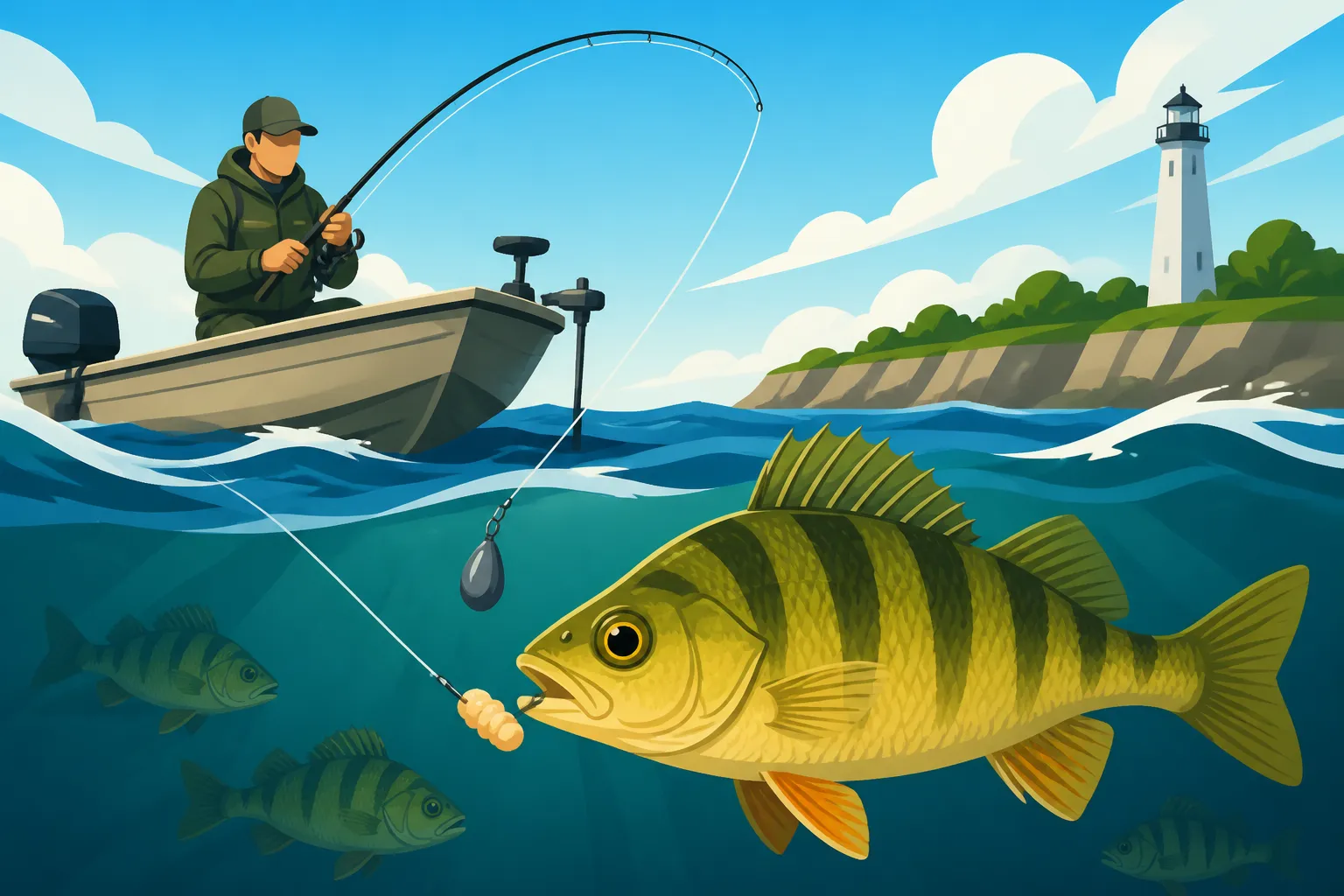
The sheer size of Lake Erie makes simply anchoring up and hoping for the best a low-percentage strategy for perch. As we discussed, yellow perch are schooling fish that are often on the move. When you drift, your boat acts like a giant, slow-moving net, dragging your baits through vast stretches of water. This dramatically increases the chances of encountering a moving school of perch, or even bumping into several smaller, scattered groups.
Instead of waiting for the fish to come to you, you're actively seeking them out. This method is particularly effective when the fish are spread out or when their location isn't precisely known. It allows you to prospect large areas, identify productive zones, and then make repeated drifts over those hot spots. Imagine trying to find a dime in a football field by standing still versus walking slowly across it with your eyes on the ground; drift fishing is that slow, methodical walk, constantly searching for that elusive dime. It also allows you to adjust to the wind and current, which are ever-present forces on Lake Erie, presenting your bait naturally as it sweeps through the water column.
When Drift Fishing Outperforms Anchoring
While anchoring has its place for certain species or in very specific situations, for Lake Erie yellow perch, drift fishing almost always comes out on top. Anchoring works best when fish are tightly concentrated in a very small area, like a prominent rock pile or a distinct structural feature. However, perch on Lake Erie often roam over large, relatively featureless flats, making an anchored boat a static target in a dynamic environment.
Think about it: if you anchor and the perch school moves 50 yards away, you're now fishing in dead water. With drift fishing, you're constantly following potential movements or encountering new schools. Anchoring can also be a real pain in deeper water or strong currents, requiring heavy anchors and a lot of effort to set and retrieve. Drift fishing, on the other hand, allows you to maintain a much more natural presentation of your bait. A minnow struggling to swim with the current looks far more appealing than one dangling lifelessly next to a stationary boat. This method is especially effective for covering the vast mud and sand flats where perch are known to feed, often following the movements of their preferred forage like emerald shiners.
Adapting to Lake Erie's Dynamic Conditions
One of the biggest challenges of fishing Lake Erie is its constantly changing conditions. Wind direction and speed can shift rapidly, currents can be unpredictable, and water clarity can vary from one basin to another. Trying to stay anchored or precisely motor-troll in these conditions can be a nightmare. Drift fishing, however, is inherently designed to adapt to these variables.
When the wind picks up, your drift speed increases, covering more water. If the current changes, your boat naturally reorients itself to the flow. You're not fighting the elements as much as you're working with them. This adaptability is key to consistent success. By using drift socks or buckets, you can precisely control your speed and direction, slowing down a fast drift to keep your baits in the strike zone longer or maintaining a specific angle to cover a prime area more thoroughly. This flexibility allows you to fine-tune your approach regardless of whether you're fishing the Western Basin vs Central Basin Lake Erie Fishing or dealing with a sudden shift in the weather. It means less time re-positioning and more time with your lines in the water, which ultimately leads to more fish.
Assembling Your Drift Fishing Arsenal
Before you hit the big water of Lake Erie for yellow perch, having the right gear is absolutely essential. You don't need the most expensive equipment on the market, but you do need gear that is reliable, sensitive, and suited for the task. The wrong setup can lead to missed bites, broken lines, and a whole lot of frustration, which nobody wants when those perch are biting.
Rods, Reels, and Line: The Foundation
For Lake Erie yellow perch, sensitivity is paramount. Those perch bites can be incredibly subtle, sometimes feeling like nothing more than a slight tick or added weight on your line. A light to medium-light action spinning rod, typically 6 to 7 feet in length, is ideal. Look for a fast or extra-fast tip that allows you to feel those delicate bites while still having enough backbone to handle a double header of decent-sized perch and put a good hook set on them. Brands like Ugly Stik or St. Croix offer great options that you can often find on Amazon.
Pair that rod with a small, lightweight spinning reel (sizes 1000 to 2500). The key here is a smooth drag system and comfortable retrieve. For line, 6 to 8 lb monofilament or fluorocarbon is a popular choice for its manageability and stretch, which can act as a shock absorber. However, many experienced perch anglers opt for 6-10 lb braided line with a 2-4 foot fluorocarbon leader (6-8 lb test). Braid offers incredible sensitivity and no stretch, allowing you to feel every bump and nibble, even in deeper water. The fluorocarbon leader is virtually invisible underwater and provides abrasion resistance. Choosing the right Choosing the Right Ohio Fishing Line can make a huge difference in your success.
Essential Terminal Tackle and Rigs
The terminal tackle you use for drift fishing yellow perch needs to be simple, effective, and readily available. You'll primarily be using variations of a dropper rig. Here’s a breakdown of what you'll need:
- Sinkers: You'll need a variety of weights to account for different drift speeds and depths. Pyramid, bell, or inline sinkers are common. Start with ½ oz to ¾ oz, but have some 1 oz and even 1.5 oz on hand for stronger winds or currents. The goal is to keep your bait near the bottom without dragging excessively.
- Hooks: Small, sharp hooks are crucial. Aberdeen hooks (sizes 6 to 10) are popular because they're lightweight, have a wide gap for bait, and tend to straighten out if snagged, saving your rig. Circle hooks of similar size are also great for perch, especially if you want to minimize gut hooking.
- Swivels: Small barrel or three-way swivels (size 10-14) are essential for preventing line twist and connecting your leader and sinker.
- Beads: Small colored beads (glow-in-the-dark or bright colors) can be placed above the hook to add attraction, especially in stained water.
- Leader Material: 6-8 lb fluorocarbon for leaders.
A common and highly effective rig is the "double-dropper rig" or "crappie rig." This involves tying a leader to your main line, then tying two short droppers (4-6 inches) off the leader at 12-18 inch intervals, with a sinker at the very bottom. This allows you to present two baits at slightly different depths, increasing your chances. You can also buy pre-tied perch rigs, which are super convenient and often available at local bait shops or through Amazon. For a detailed guide on setups, check out Best Rig for Yellow Perch on Lake Erie.
Choosing the Right Baits for Consistent Success
When it comes to bait for yellow perch, fresh and lively are the golden rules. While many different baits can catch perch, some are consistently better than others on Lake Erie:
- Live Minnows: Hands down, live minnows are often the top choice. Emerald shiners are king on Lake Erie, but fathead minnows or golden shiners will also work. Keep them lively! A good bait cooler with an aerator, easily found on Amazon, is a must. Knowing Best Way to Keep Minnows Alive While Perch Fishing will save you a lot of hassle.
- Worms: Nightcrawlers or smaller pieces of nightcrawlers (often called "perch worms") are a classic bait and highly effective. They're easy to manage and universally appealing.
- Soft Plastics: Small soft plastic grubs, tubes, or minnow imitations can be incredibly effective, especially when tipped with a small piece of minnow or worm for scent. Popular choices include Berkley Gulp! Alive! minnows or crappie nibblers. They're durable and can save you money on live bait.
- Fish Eyes: Believe it or not, a fresh fish eye from a previously caught perch can be a fantastic bait, especially for larger perch. It's a natural offering and readily available once you've caught a few.
The key is to experiment. If the bite slows down on minnows, try a piece of worm. If you're marking fish but not getting bites, switch up your bait. Often, a combination of bait and presentation is what seals the deal.
Mastering the Art of the Drift
Drift fishing isn't just about letting your boat go where the wind takes it. There's a real art to it, especially on a lake as dynamic as Erie. Mastering boat control, understanding drift patterns, and utilizing your electronics effectively will dramatically improve your catch rate.
Boat Control and Reading the Wind/Current
The cornerstone of successful drift fishing is boat control. Your goal is to achieve a consistent, slow drift that allows your baits to present naturally and stay in the strike zone. On Lake Erie, wind is usually the primary driver of your drift, but currents can also play a significant role, sometimes even pushing against the wind.
- Drift Socks/Buckets: These are invaluable tools. A drift sock (also known as a sea anchor) is a parachute-like device deployed from the bow or stern of your boat to slow down your drift. For most perch fishing, deploying one off the bow is common, allowing your boat to orient itself into the wind and providing a more stable drift. If the wind is light, you might not need one, but on a breezy day, a drift sock is essential for achieving the optimal drift speed (usually 0.5 to 1.5 mph). If you don't have a dedicated drift sock, even a 5-gallon bucket tied off with a rope can serve as a makeshift option.
- Engine Control: Even with drift socks, sometimes you'll need to use your main engine or a kicker motor for subtle adjustments. This could be to slightly speed up a drift, slow it down further, or most importantly, to steer your boat parallel to a depth contour or structure you've identified as holding fish. Don't be afraid to bump the engine in and out of gear to maintain your desired track.
- Reading the Water: Pay attention to how your boat is moving relative to landmarks on shore (if visible) or your GPS track. Is your speed consistent? Are you drifting over the areas you want to target? Observing wave patterns and feeling the pull on your line can also give you clues about how the wind and current are affecting your drift.
Effective Drifting Patterns and Speeds
Once you've located a school of perch or a promising area, your goal is to make repeated, effective drifts over that spot. This often involves a pattern of drifting, returning, and drifting again.
- Initial Scouting Drift: Start with a longer drift over a broader area where you suspect perch might be. This helps you identify the "edges" of the school or the most active zones.
- Targeted Drifts: Once you get bites, mark the exact location on your GPS. Then, motor back upwind (or upcurrent, depending on what's driving your drift) and start a new drift that passes directly over or slightly to the side of your productive mark. Aim to stay parallel to your previous drift, creating a "grid" pattern over the area.
- Adjusting Speed: The ideal drift speed allows your baits to stay near the bottom without snagging too often or being dragged too fast that fish can't catch them. If you're snagging constantly, you might be drifting too slowly or using too light of a sinker. If you're not getting bites and your line is too far behind the boat, you might be drifting too fast or using too heavy a sinker. It’s a constant balancing act. Typically, a drift of 0.5 to 1.5 mph is a good starting point for Lake Erie perch. Use your GPS to monitor your ground speed.
Interpreting Your Electronics for Perch Schools
Your fish finder is an indispensable tool for drift fishing. It's not just for finding fish; it's for understanding the bottom, tracking your depth, and monitoring your bait.
- Identifying Perch: Perch often appear as dense "clouds" or "arcs" near the bottom, sometimes even stacked up a few feet off the bottom. If you see a lot of small, tight marks, especially if they are moving with your boat, those are likely perch. Don't confuse them with bottom clutter or isolated baitfish.
- Bottom Composition: Pay attention to the bottom contour and composition. Your fish finder can show you changes from hard bottom to soft mud, which are often key transition areas for perch. Many units even have side-imaging or down-imaging that gives you a much clearer picture of the bottom.
- Bait Presentation: A good fish finder can even show you your actual sinker and sometimes even your hooks, especially in shallower water or with a high-resolution unit. This allows you to visually confirm your bait is presenting effectively right where the fish are. If you see fish below your bait, you know you need to adjust your line length or drift speed. For more on using your electronics effectively, you might find tips in How to Read a Fish Finder for Suspended Walleye, even though it's for walleye, the principles are similar.
- Auto-Charting: Many modern fish finders can create detailed maps of the bottom as you drift, highlighting contours and structure. This can be invaluable for identifying new perch hot spots over time. Brands like Humminbird and Lowrance offer excellent fish finders, and you can compare models and features on Amazon.
Seasonal Strategies for Lake Erie Perch Drifting
Yellow perch on Lake Erie are active year-round, but their behavior and preferred locations change significantly with the seasons. Understanding these shifts is key to maximizing your drift fishing success throughout the year.
Spring and Early Summer: The Shallow Bite
As the ice recedes and water temperatures begin to rise in spring, yellow perch will start to move shallower, often congregating in depths of 10 to 25 feet. This is their spawning period, usually from late April through May. After spawning, they remain relatively shallow, feeding aggressively to regain energy.
- Location: Look for them in shallow bays, near river mouths, or over expansive flats with some remnant vegetation or rocky areas. The Western Basin of Lake Erie, with its shallower, warmer waters, is particularly productive during this time.
- Bait: Live emerald shiners or fathead minnows are often irresistible during this feeding frenzy. Smaller pieces of nightcrawler can also be very effective.
- Drift Strategy: Drifts can be shorter and more focused in shallower areas. Pay close attention to subtle depth changes or isolated patches of cover. Don't be afraid to experiment with slightly faster drifts as perch can be quite aggressive in the spring. This is an excellent time for consistent action, making it a favorite for many anglers.
Mid-Summer to Fall: Deeper Water Tactics
As summer progresses and surface water temperatures climb, yellow perch will retreat to deeper, cooler waters. This period, typically from July through September, sees them often holding in depths of 30 to 50 feet, sometimes even deeper in the Central and Eastern Basins.
- Location: Target areas where deeper water meets gradual slopes, or over large mud flats where they can find an abundance of invertebrates and baitfish like gobies. Offshore humps and subtle structural elements in deeper water become prime targets.
- Bait: Live minnows (emerald shiners are still king), but don't discount small pieces of nightcrawlers. The perch might be less aggressive, requiring a more subtle presentation.
- Drift Strategy: Longer drifts are often necessary to locate scattered schools. You'll need heavier sinkers (¾ oz to 1.5 oz) to keep your baits near the bottom in these greater depths and to counter any stronger thermocline currents. Watch your electronics closely for those dense schools, and once you find them, make repetitive drifts. This period can offer some of the largest perch of the year, as they've had months to feed and grow. If you're targeting specific zones, understanding Where the Lake Erie Yellow Perch Central Zone Starts and Ends can be particularly helpful.
Late Fall and Early Winter: The Transition Bites
As autumn leaves fall and water temperatures begin their descent, perch will once again undergo a transition. They often move shallower again in late fall, taking advantage of cooling near-shore waters before retreating to their deeper winter haunts. This is a shorter window, typically October into early December (before ice formation), but can be incredibly productive.
- Location: Look for them in similar areas to spring, but often slightly deeper – 20 to 40 feet – on flats or near drop-offs where baitfish are congregating. They'll also follow baitfish into deeper channels or along the edge of major structural breaks.
- Bait: Live minnows are still the top producer, as perch are trying to fatten up for winter. Small jigs tipped with plastics or a piece of minnow can also work well.
- Drift Strategy: Drifts should be slow and methodical. Perch might be less active in the colder water, requiring a more patient approach. Pay attention to changes in bottom composition and slight depth variations. This period can offer fantastic fishing for jumbo perch, but you have to be persistent. If you’re looking for the best overall time to catch them, check out Best Time of Year to Catch Yellow Perch on Lake Erie.
Navigating Regulations and Ensuring Safety on Lake Erie
Fishing on Lake Erie offers incredible opportunities, but it's a big lake with ever-changing conditions and important regulations that every angler must respect. Understanding the rules and prioritizing safety are just as crucial as having the right gear and techniques.
Key Regulations for Yellow Perch in Ohio
Ohio's fishing regulations are designed to protect fish populations and ensure sustainable fishing for future generations. For yellow perch on Lake Erie, there are specific rules you absolutely must know:
- Fishing License: First and foremost, you need a valid Ohio fishing license. There are various options, from annual to multi-year licenses. You can learn more about the requirements in the Ohio Fishing License Guide for Residents and Nonresidents.
- Bag and Size Limits: Yellow perch on Lake Erie have specific daily bag limits. What makes it a bit tricky is that these limits can vary depending on which "zone" of Lake Erie you are fishing in. The lake is divided into Western, Central, and Eastern Zones, each with potentially different daily limits. For instance, you might encounter a Lake Erie Yellow Perch Daily Limit in the West Zone or need to know the Lake Erie Yellow Perch Daily Limit in the Central Zone. It’s vital to check the current regulations every year, as they can change. The Ohio Department of Natural Resources (ODNR) provides an annual fishing regulations booklet which can be found online or at bait shops. This helps explain Why Lake Erie Yellow Perch Has Three Different Bag Limits.
- No Size Limit: Currently, there is no minimum size limit for yellow perch caught in Lake Erie in Ohio waters. However, responsible anglers often practice selective harvest, keeping only what they'll eat and releasing smaller fish to grow.
- Two-Pole Limit: In Ohio, anglers are generally permitted to use up to two poles and lines at once. This is perfect for drift fishing, allowing you to cover more water and experiment with different baits or depths simultaneously.
Always carry a copy of the current Ohio fishing regulations (physical or digital) with you. It's your responsibility to know and abide by these rules. Ignoring them can lead to fines and penalties. For a broader understanding of all fishing rules, a look at Ohio Fishing Regulations Every Angler Should Know is highly recommended.
Essential Safety Practices for Big Water Drifting
Lake Erie is a powerful body of water, and while it offers fantastic fishing, it demands respect. Safety should always be your number one priority, especially when drift fishing.
- Weather Monitoring: The weather on Lake Erie can change in a heartbeat. Always check the forecast before heading out, and continue to monitor marine weather reports throughout the day. Be aware of wind advisories, small craft advisories, and sudden shifts in wind direction or speed. If conditions look questionable, it's always better to stay home.
- Life Jackets: Ensure everyone on board has a properly fitting, readily accessible life jacket. Children 10 years of age and younger are required to wear a life jacket while on any vessel under 18 feet in length when underway. On big water, many experienced anglers wear their life jackets at all times.
- Vessel Maintenance: Before every trip, check your boat's engine, fuel, battery, lights, and bilge pump. Make sure all safety equipment is on board and in good working order, including a fire extinguisher, horn/whistle, distress signals (flares), and throwable flotation device.
- Communication: Have multiple ways to communicate, such as a fully charged cell phone (in a waterproof bag), a VHF marine radio, and tell someone on shore your float plan – where you're going and when you expect to return.
- First Aid: Carry a well-stocked first aid kit for minor injuries.
- Sun Protection: Even on cloudy days, the sun's UV rays reflecting off the water can cause severe sunburn. Wear sunscreen, a wide-brimmed hat, and polarized sunglasses.
- Hydration and Food: Bring plenty of water and snacks to stay hydrated and energized throughout your day on the water.
- Know Your Limits: Never push the limits of your boat or your experience level. If the waves are getting too big or you feel uncomfortable, don't hesitate to head back to shore. There will always be another day to fish.
By being prepared and practicing responsible boating and fishing habits, you can enjoy all the bounty that Lake Erie's yellow perch fishery has to offer, safely and legally.
Disclaimer
The information provided in this guide is for informational purposes only and is subject to change. Fishing regulations, season dates, and limits are determined by the Ohio Department of Natural Resources (ODNR) and can be updated annually. Always consult the most current official Ohio fishing regulations booklet or the ODNR website before planning your fishing trip. Safety on the water is paramount; always prioritize personal safety and adhere to all boating regulations.