Ice Fishing Techniques for Ohio Crappie
There’s nothing quite like the crisp, cold air of an Ohio winter day, especially when you’re out on the ice, hoping to connect with some feisty crappie. However, if you've ever spent hours staring down a hole, shivering, with nothing but silence on the end of your line, you know how frustrating ice fishing for these panfish can be. This guide is here to shed light on why crappie can be so elusive under the ice and arm you with the knowledge and proven techniques to consistently find and catch them on Ohio’s frozen waters.
Understanding Ohio Crappie Behavior Under the Ice
Crappie are masters of adaptation, and their behavior changes significantly once the water cools and ice forms. Knowing their typical patterns is your first step to success. It’s not just about drilling a hole; it’s about drilling the right hole.
Winter Crappie Habitat and Movements
As temperatures plummet and lakes begin to freeze, crappie transition from their warmer-weather haunts. They tend to become less active and school up, often in deeper water than you might find them during open water seasons. This isn't always a hard and fast rule, but it's a great starting point for your search. Many anglers, myself included, have spent frustrating hours shallow, only to find the crappie suspended over a deep basin.
Think about classic crappie structure. Brush piles, submerged timber, weed lines, and even old creek channels are still attractive to crappie in winter, but they’ll often relate to these structures at different depths. For example, a brush pile that held crappie in 10 feet of water in the summer might be holding fish suspended over 25 feet of water, 5 feet off the bottom, directly above that same brush pile. They often seek out areas with stable temperatures and protection from predators, which deeper water can provide. Understanding these shifts is crucial. When you're looking at a lake map, don't just mark the summer brush piles; consider the deeper breaks and channels nearby. They'll also follow baitfish, and minnows often seek out these stable, protected environments. Keep an eye out for how Crappie Schooling Behavior changes in winter.
Crappie Feeding Patterns and Preferences in Cold Water
Cold water metabolism means crappie don't need to eat as much, and they certainly don't chase down food with the same aggression they show in spring. Their bites become incredibly subtle, often feeling like nothing more than a slight pressure or the line going slack. This is where patience and observation become paramount. Don't expect a hard thud on your line; you're often looking for a twitch, a pause, or simply a feeling of "heaviness."
Their diet also shifts, though minnows and small insects remain staples. Presentations need to be slower, more deliberate, and often smaller. A tiny jig barely dancing in the water column can be irresistible, while a larger, more aggressive presentation might spook them. It’s a delicate dance, coaxing a bite out of a lethargic crappie. Many anglers swear by the natural scent and action of a live minnow during these cold periods, especially when crappie are particularly finicky. When you're choosing your bait, think small and subtle. Tiny jigs tipped with a grub or a single wax worm can be incredibly effective. Consider looking into Best Bait for Ice Fishing Crappie in Ohio for more specific recommendations.
Essential Gear for Successful Ice Crappie Angling
Having the right tools for the job can make or break your ice crappie adventure. From sensitive rods to advanced electronics, each piece plays a vital role.
Rods, Reels, and Line for Finicky Bites
Forget your heavy-duty open-water bass rods; ice crappie demand finesse. A proper ice fishing rod for crappie is typically ultralight, very short (24-30 inches), and has an incredibly sensitive tip. This sensitive tip is what allows you to detect those almost imperceptible bites. If you're using a stiff rod, you'll miss most of them. Many anglers prefer a spring bobber or a specialized "noodle" rod with an ultra-soft tip that visibly bends with even the lightest touch.
When it comes to reels, a small spinning reel in the 500 to 1000 size range is perfect. It should have a smooth drag and comfortable handle, as you'll be holding it for extended periods. The line choice is equally critical. Two to four-pound test monofilament or fluorocarbon is generally ideal. Fluorocarbon offers lower stretch and greater sensitivity, which is a huge advantage when bites are light. It's also nearly invisible underwater, a plus for wary crappie. Monofilament, being more forgiving with a bit of stretch, can still be a good choice for beginners or in situations where the fish are a little more aggressive. You can find excellent options for all of these on platforms like Amazon.
| Gear Type | Key Features for Crappie | Why it Matters |
|---|---|---|
| Rod | Ultralight, sensitive tip (24-30") | Detects subtle bites, provides necessary finesse. |
| Reel | Small spinning (500-1000 size) | Light, smooth drag for light lines, comfortable. |
| Line | 2-4 lb test (mono/fluoro) | Low visibility, high sensitivity for light bites. |
| Jigs | Small (1/64-1/16 oz), glow, plastic | Mimics small bait, attracts in low light, subtle action. |
| Live Bait | Small minnows, wax worms, spikes | Natural scent and movement, often irresistible. |
| Electronics | Flasher/Panoptix/LiveScope | Locates fish, shows depth, tracks lure movement. |
| Auger | Electric or propane | Drills holes efficiently, reduces fatigue. |
| Shelter | Portable, insulated pop-up | Protection from elements, warmth, enhances comfort. |
Ice Augers, Shelters, and Electronics
These items are not just conveniences; they're essential tools for safety and efficiency, especially during a long day of chasing crappie. First, an ice auger. You need a reliable way to make holes. Many anglers are upgrading to electric or propane augers, which are faster, quieter, and don't require pre-mixing fuel like gas models. Brands like Strikemaster and Eskimo offer fantastic electric options. Having a good auger means you can drill multiple holes quickly, covering more ice to find those schooling crappie. This is especially important when crappie are on the move. Best Auger for Ohio Ice Fishing can help you make an informed choice.
Next, a good shelter. Ohio winters can be brutal, and an insulated pop-up or flip-over shelter makes the experience infinitely more enjoyable. It blocks the wind, holds in heat from a small heater, and provides a comfortable base camp. Being warm and comfortable helps you stay focused and observant, which is key to detecting those light crappie bites. Many models even have dark interiors to help you see your line better against the ice.
Finally, electronics. While not strictly required, a good flasher or a modern live-scanning sonar unit is a game-changer for ice crappie. These units allow you to see your jig, the fish, and their reactions in real-time. You can tell if fish are rising to your bait, falling away, or completely ignoring it, allowing you to adjust your presentation on the fly. Knowing Reading Ohio Fish Finders and Electronics is an invaluable skill that will drastically improve your crappie catch rates. You can monitor the depth crappie are holding, how they react to your bait, and even discern individual fish in a school. Top brands like Humminbird, Vexilar, and Lowrance offer excellent ice fishing specific models, many of which are readily available on Amazon.
Top Ice Fishing Techniques for Ohio Crappie
Once you're geared up, it's time to put those tools to work with effective techniques designed specifically for cold-water crappie. Remember, patience and subtle movements are often rewarded.
Jigging Strategies and Presentation
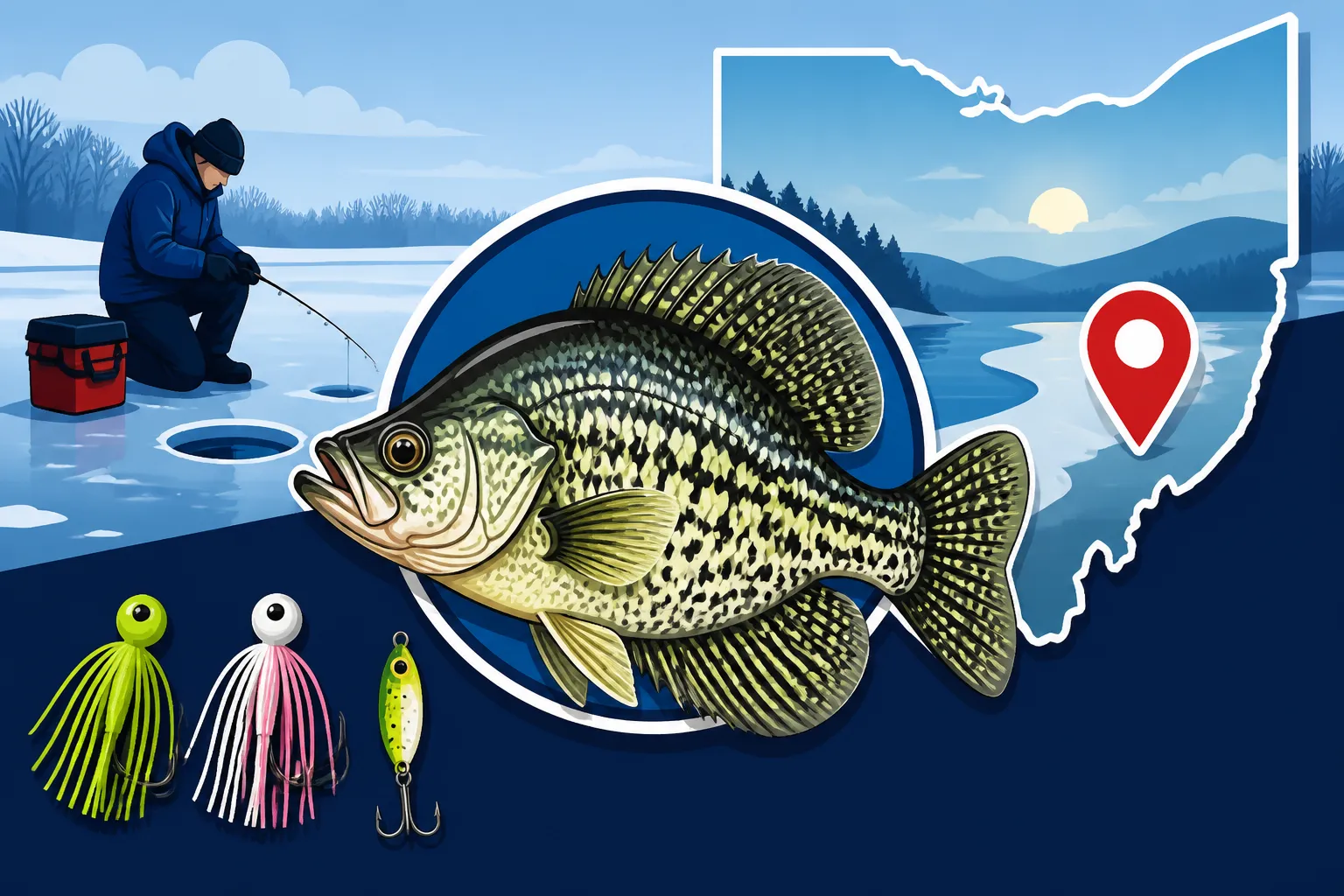
Jigging for crappie under the ice is an art form. The key is often a slow, methodical presentation. Tiny jigs, usually 1/64 to 1/16 ounce, are the standard. They can be tipped with a small plastic grub, a single wax worm, or a couple of spikes. The color can sometimes make a difference; glow-in-the-dark jigs, chartreuse, white, and black are common favorites.
Start by lowering your jig to the depth where you're seeing fish on your electronics, or if fishing blind, start just off the bottom and work your way up. The movement should be subtle. Think tiny twitches, a slow lift, or just holding the jig perfectly still. A common mistake is jigging too aggressively. Crappie in cold water rarely chase; they prefer an easy meal. Sometimes, the deadliest presentation is barely moving the jig at all, letting it hang enticingly. If fish appear on your flasher but aren't biting, try slowing down even further or changing to a different jig color or size. Varying your jigging action is crucial. Experiment with pauses, slow lifts, and gentle quivers. Sometimes, after a long pause, a tiny quiver of the rod tip is all it takes to trigger a strike.
Live Bait Rigs and Deadsticking
While jigging is effective, sometimes crappie prefer the natural movement and scent of live bait. Small minnows (shiners or fatheads are excellent choices), wax worms, or spikes are the go-to options. Many anglers use a small plain hook (size 8 or 10) or a tiny jig head, tipped with a minnow or a cluster of wax worms.
Deadsticking is a technique where you set up a second rod, often on a stand or tip-up, with a live minnow suspended at a specific depth and left almost entirely still. This is especially effective when crappie are extremely finicky. The minnow’s natural movements are often enough to draw strikes from lethargic fish that won’t commit to an actively jigged lure. You might be actively jigging with one rod, and suddenly your deadstick rod will get a bite. Remember, Ohio allows you to fish with Two-Pole and Line Limit Rules in Ohio, which is perfect for combining jigging and deadsticking strategies. It's an excellent way to cover two different presentations or depths simultaneously. Just make sure to regularly check your minnows for liveliness, as a dead minnow won't be nearly as effective.
The Art of the Crappie "Flick"
This is a subtle, yet incredibly effective technique, especially when crappie are suspended and wary. Instead of a strong jigging motion, the "flick" involves minimal movement. Lower your tiny jig to the crappie's depth, then gently, almost imperceptibly, twitch the rod tip. It's not a jig, it's more like shaking the bait in place, making it shimmer or slightly change position without much upward or downward travel.
The idea is to imitate a barely alive, struggling insect or minnow that's an easy meal. The line itself should be nearly invisible, allowing the lure to present as naturally as possible. Many ice anglers will even sight-fish using this technique in clear water, watching the crappie approach and then gently flicking the bait just as they get close. It takes practice to get the feel for it, but once mastered, the crappie flick can trigger bites when nothing else will. This technique truly highlights the importance of an ultralight, sensitive rod tip.
Locating Crappie Hotspots on Ohio's Frozen Lakes
Finding crappie under a sheet of ice can feel like looking for a needle in a haystack. But with a bit of knowledge and the right tools, you can narrow down your search considerably.
Reading Lake Maps and Structure
Before you even step foot on the ice, take the time to study a detailed bathymetric map of the lake you plan to fish. Look for key structures that crappie are known to favor: points, humps, sharp drop-offs, submerged creek channels, and areas with standing timber or brush piles. In winter, crappie often relate to the deeper edges of these structures. A contour map can reveal subtle changes in depth that act as highways and holding areas for crappie.
For instance, if you find a large flat area that drops into a deep basin, crappie might be suspended over the deepest part of that basin, especially if there's a submerged old river channel running through it. Or they might be holding tightly to the deep edge of a significant weed line. Marking these potential spots on your map will give you a strategic starting point for drilling holes. Don't be afraid to drill a grid pattern around a promising piece of structure until you locate the school. This is where a Best Ohio Lakes for Ice Fishing guide can give you a head start on promising locations.
Using Electronics to Pinpoint Schools
Once you’re on the ice and have drilled some test holes based on your map study, this is where your fish finder or flasher really shines. Drop your transducer into the hole, and watch for fish arches or signals. Crappie often suspend in schools, sometimes several feet off the bottom, sometimes right under the ice, and sometimes in the middle of the water column.
A flasher will show you real-time activity: your jig going down, fish coming up to it, and their movements around it. If you see fish at a certain depth but they're not biting, adjust your jigging depth or presentation. With more advanced live-scanning sonar units, like Garmin's LiveScope or Humminbird's Mega Live, you can actually see fish swimming horizontally around your hole, allowing you to strategically place your lure right in front of them. This is a huge advantage, especially when chasing actively moving schools. It significantly reduces the guesswork and allows you to be much more efficient in locating and staying on top of fish. If you're serious about ice fishing, learning to effectively use these electronics, as discussed in Reading Ohio Fish Finders and Electronics, is a must.
Maximizing Your Catch and Ensuring Safety
Beyond techniques and gear, success in ice fishing for crappie hinges on understanding environmental factors and, most importantly, prioritizing safety.
Best Time of Day and Weather Considerations
Crappie, like many fish, often have feeding windows, even under the ice. While there are exceptions, early morning and late afternoon/dusk often prove to be the most productive times. During these periods, light levels are lower, and crappie might be more inclined to feed. However, crappie can also surprise you, sometimes biting aggressively midday if conditions are right, such as during a consistent barometric pressure system.
Overcast days are often better than bright, sunny ones for crappie. The subdued light can make crappie feel more comfortable moving and feeding higher in the water column. Sudden changes in barometric pressure, especially dropping pressure before a storm, can sometimes trigger a feeding frenzy, but extreme cold fronts typically shut fish down. Pay attention to stable weather patterns, as these tend to offer more consistent fishing. If the fish are active, they might not be as picky about your Ice Fishing Techniques for Ohio Walleye (though crappie are often more finicky). Also, keep an eye on official Ohio Fishing Season Dates and Effective Periods to ensure you're fishing legally.
Ice Safety and Responsible Angling Practices
Safety should always be your number one concern when ice fishing. Never venture onto ice that you are unsure about. A minimum of four inches of clear, solid ice is generally recommended for foot travel, but always exercise caution, especially on larger bodies of water, near inlets, outlets, or areas with current. Always check ice thickness as you go, and ideally, go with a buddy.
Carrying safety gear like ice picks, a spud bar (to test ice ahead of you), a throw rope, and wearing a float suit are all crucial precautions. Let someone know where you're going and when you expect to return. Be aware of How Thick Ice Should Be Before Fishing in Ohio and other Ice Fishing Rules on Ohio Lakes.
Beyond safety, practice responsible angling. Know the Ohio Crappie Daily Limit and Crappie and Panfish Daily Limits for the waters you're fishing. Harvest what you'll eat and release the rest responsibly. Handling fish with wet hands, especially in freezing temperatures, can protect their slime coat, which is vital for their health. By following these guidelines, you not only ensure your own safety but also contribute to the health and sustainability of Ohio's ice fishing resources for years to come. Remember to respect private property and always pack out everything you pack in, leaving no trace behind.
Disclaimer
Please note that fishing regulations can change. Always consult the latest Ohio Department of Natural Resources (ODNR) fishing regulations booklet or their official website before heading out. This guide is for informational purposes only and does not supersede official state regulations.