What Flow Is Too High to Fish Ohio Steelhead Rivers?
You’ve driven for hours, gear packed, anticipation buzzing, only to arrive at your favorite Ohio steelhead river and see a raging, muddy torrent. It's a gut punch, right? That feeling of disappointment when conditions aren't right is something every angler knows. This guide is here to help you understand what river flow is too high for effective and safe steelhead fishing in Ohio, so you can make informed decisions and save yourself a wasted trip.
The Dynamics of River Flow and Steelhead Behavior
When heavy rains hit or snow melts quickly, Ohio's steelhead rivers can swell rapidly, transforming from inviting runs to intimidating, turbulent waterways. Understanding how these changes affect the fish and your ability to catch them is key. It's not just about the water level; it's about the current, clarity, and overall environment for both you and the fish.
How High Water Impacts Steelhead
Steelhead, those magnificent migratory rainbow trout, are incredibly resilient, but even they have limits to what they'll tolerate in terms of river conditions. When the water rises significantly, several things happen that directly impact their behavior and accessibility for anglers.
Firstly, the increased current can make it incredibly difficult for steelhead to hold their preferred positions. They naturally seek out areas of reduced flow, often behind boulders, in deeper pools, or along seams where faster water meets slower water. When the river is raging, these 'holding lies' become either too turbulent to maintain or are completely scoured out by the sheer force of the water. They might be forced into less ideal spots, often closer to the banks or in very shallow margins, or they might simply drop back into the lake or deeper, slower pools where they can conserve energy. This means they're not where you'd typically expect them to be, making them harder to locate.
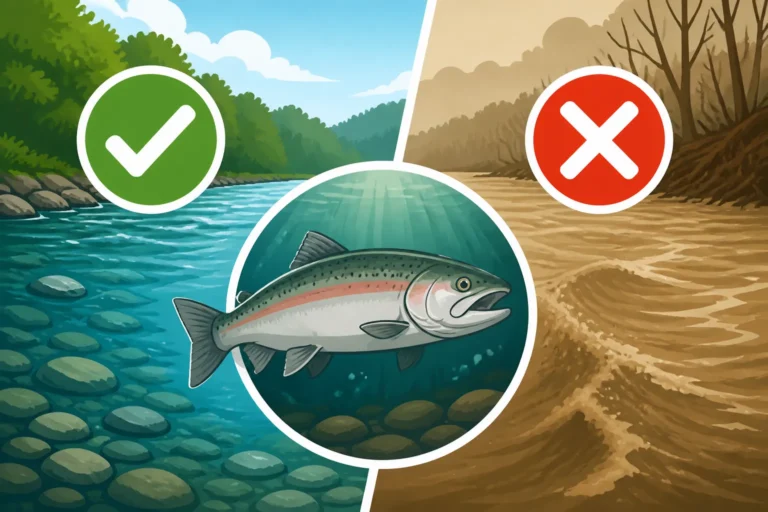
Secondly, high water almost always brings with it a drastic reduction in water clarity. The powerful currents pick up sediment, silt, leaves, and other debris from the riverbed and banks, turning the water into what anglers often affectionately (or not-so-affectionately) call "chocolate milk." Steelhead are sight feeders to a large extent, especially when targeting smaller baitfish or insect larvae. When the water is opaque, their ability to see your offerings is severely hampered. Even if your bait or lure is right in front of them, they might not detect it. This lack of visibility affects their feeding patterns, making them less likely to strike.
Thirdly, the sheer volume of water can make it harder for fish to navigate upstream effectively. While they are built for powerful swims, extreme flows require immense energy. They might hold in slower pockets, waiting for the flow to subside before continuing their migration. All of these factors combine to make high-water conditions challenging – not just for catching fish, but for even finding them.
Visual Cues of Unfishable Water
You don't always need a fancy gauge to tell if the river is too high. Sometimes, your eyes are all you need. Learning to "read" the river visually can save you a lot of time and effort, especially if you're driving a long distance.
The most obvious sign of unfishable high water is the color. If the river looks like coffee with cream, or straight-up muddy chocolate milk, it's generally too high and turbid to fish effectively. This dark, opaque color indicates a heavy sediment load, drastically reducing visibility for both fish and angler. You simply won't be able to see to wade safely, and the fish won't be able to see your presentation. Forget subtle nymphing or even aggressive streamer fishing; they likely won't even know your bait is there.
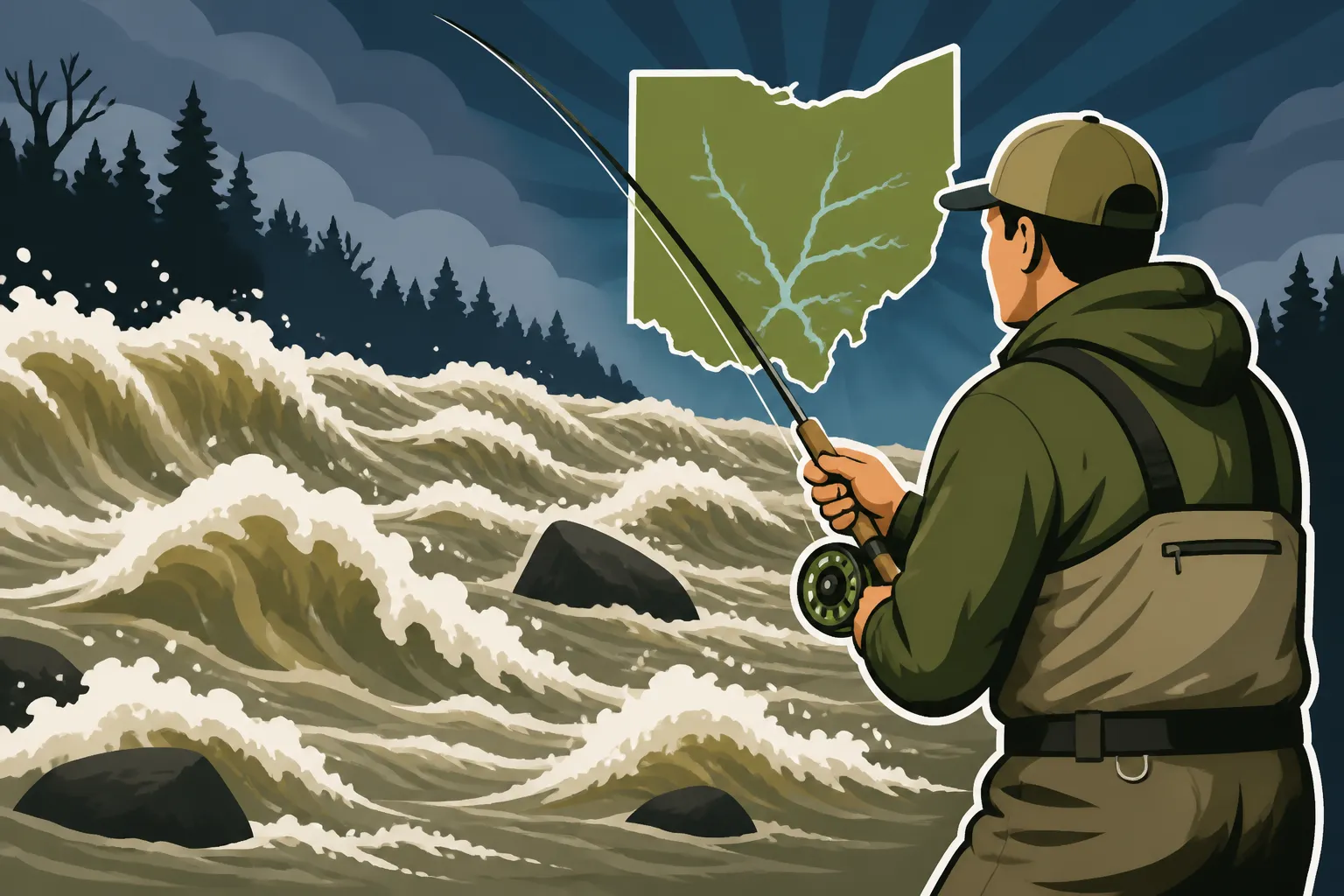
Beyond color, pay attention to the speed and power of the current. Are there large boils and eddies forming in places that are usually calm? Are submerged rocks now creating massive standing waves or white water? If small branches and significant debris are constantly rushing downstream, it's a huge red flag. A fast, powerful current can rip your line out, make it impossible to get a proper drift, and, most importantly, create dangerous wading conditions. Even from the bank, trying to cast into a raging river can be a fruitless and frustrating endeavor.
Finally, look at the banks themselves. Is the water level significantly higher than the normal waterline? Are usually dry areas now submerged? Are the banks actively eroding, with chunks of dirt and grass falling into the river? These are all indicators of extreme flow. If you see these visual cues, it’s a pretty safe bet that the river is either completely unfishable or borderline dangerous. It’s a good time to pack up, check a different spot, or perhaps wait until conditions improve.
Understanding Flow Data for Ohio Steelhead Rivers
While visual cues are great for on-the-spot assessment, having a handle on real-time flow data before you even leave the house is a game-changer. The U.S. Geological Survey (USGS) provides invaluable information that can help you predict and understand river conditions. It's like having a crystal ball for your fishing trip.
Deciphering USGS Streamflow Gauges
The USGS operates a network of streamflow gauges across the country, including all the major steelhead rivers in Ohio. These gauges measure and transmit data on discharge (flow rate, typically in cubic feet per second, or cfs) and gauge height (water level in feet). Learning to interpret this data is crucial for planning your trips.
You can find this data on the USGS website or through various fishing apps that integrate it. When you look at a river's gauge page, you'll see a graph showing the flow over the past few days or weeks. What you're looking for is consistency and a downward trend after a rain event. A rapidly rising graph indicates heavy rain or snowmelt, and that the river is blowing out. A slowly falling graph means the river is "dropping and clearing," which is often when conditions become ideal.
Most experienced steelhead anglers have a mental (or written) log of ideal flow ranges for their favorite spots. For example, on the Rocky River at the Berea gauge, a flow of 150-400 cfs might be considered excellent, while anything over 1000 cfs is likely getting too high and muddy. On the Grand River at Painesville, optimal flows could be 500-1500 cfs, but 3000 cfs or more would indicate a blown-out river. These numbers are approximations, and what's "fishable" can vary greatly depending on the specific stretch of river, the time of year, and even the angler's experience level. The key is to check the trend: is the river rising, falling, or stable? A river that's still rising, even if technically within a "fishable" range, might become unfishable within hours.
General Flow Thresholds for Key Ohio Rivers
While it's tough to give exact, universal numbers because conditions can vary, there are general guidelines for what constitutes "too high" on Ohio's premier steelhead streams. These are based on observations from seasoned anglers and can help you gauge if your trip is worth making.
Let's look at some of the popular rivers:
- Rocky River (Berea Gauge): This river can handle a decent amount of flow, but once it consistently gets above 800-1000 cfs, wading becomes treacherous and clarity drops significantly. Over 1200 cfs and it's generally considered blown out for all but the most desperate bank anglers. Ideal fishing is often found between 150-500 cfs after a rain.
- Grand River (Painesville Gauge): The Grand is a bigger river and can take more water. While a strong flow is good for attracting steelhead, anything consistently above 2,500-3,000 cfs at the Painesville gauge typically means muddy water and difficult fishing conditions, especially for wading. Below 1,500 cfs, it's often more manageable.
- Chagrin River (Willoughby Gauge): A bit smaller than the Grand, the Chagrin tends to blow out faster and clear slower. Flows above 1,000 cfs at the Willoughby gauge usually mean it's too high and muddy. Optimal fishing often occurs between 200-600 cfs.
- Vermilion River (Vermilion Gauge): Similar in size and characteristics to the Chagrin, the Vermilion also has a lower tolerance for high flows. Over 800-1000 cfs here typically means difficult, unsafe, and largely unproductive fishing.
- Conneaut Creek (Conneaut Gauge): Being the easternmost major steelhead stream, Conneaut Creek is also known for its swift changes. Once flows consistently hit above 800 cfs, it's often too high and muddy for quality fishing.
It's important to note that these are general guidelines. A river that's 900 cfs and slowly dropping after a major rain might be perfectly fishable in a day or two, whereas a river that's 900 cfs and still rising means you should absolutely stay home. Always check the trend, not just the absolute number.
Here's a quick reference table for common "too high" thresholds:
| Ohio Steelhead River | USGS Gauge Location | Generally Too High Flow (cfs) |
|---|---|---|
| Rocky River | Berea | > 1000 cfs |
| Grand River | Painesville | > 3000 cfs |
| Chagrin River | Willoughby | > 1000 cfs |
| Vermilion River | Vermilion | > 1000 cfs |
| Conneaut Creek | Conneaut | > 800 cfs |
Remember, these are starting points. Local knowledge and experience are invaluable. Don't be afraid to ask anglers who live near the rivers, or check online forums and local tackle shop reports before heading out. Sometimes, a river might be technically "high," but if the water clarity is decent, you might still find success. However, safety should always be your top priority.
Safety First: Dangers of High Water Fishing
Let's be brutally honest: no fish is worth your life or a trip to the emergency room. High water conditions present significant risks that many anglers, especially those new to steelhead fishing, might underestimate. It's not just about comfort or catching fish; it's about genuine danger.
Wading Safety in Elevated Flows
Wading in a river that’s experiencing elevated flows is inherently more dangerous than wading in normal conditions. The current can be surprisingly powerful, even in what appears to be a shallow section. A few inches of fast-moving water can knock you off your feet, and once you're in that current, it's incredibly difficult to regain control.
The major risks include being swept downstream, hitting submerged objects, or falling and getting pinned against debris. The bottoms of these rivers are often covered in slippery, moss-covered rocks, and high water masks their uneven nature. A solid footing can quickly become unstable. Even with a sturdy wading staff, which is absolutely essential in all but the calmest conditions, high flows can overwhelm your balance. A good quality wading staff, often available on Amazon, acts as a third point of contact and can be a lifesaver.
Beyond the immediate danger of being swept away, there's the insidious threat of hypothermia. Even in relatively mild air temperatures, falling into cold river water can quickly lead to a dangerous drop in body temperature, impairing your judgment and motor skills. Always wear your waders correctly, with a wading belt cinched tight, to minimize water entry if you take a spill. Never wade alone in high water, and always let someone know where you're going and when you expect to be back. It sounds overly cautious, but these are fast-moving, cold rivers, and an accident can happen in an instant.
Bank Fishing in High Water
"Well, if I can't wade, I'll just fish from the bank!" This is a common thought, and while it's certainly safer than wading in a raging river, bank fishing in high water still comes with its own set of dangers and frustrations.
Firstly, elevated water levels often mean that many of your usual bank access points are completely submerged or inaccessible. Trails might be underwater, making it hard to even get to the river's edge. What appears to be solid ground might actually be undercut by the swift current, leading to unstable banks that can crumble beneath your feet. A sudden slip can send you tumbling into the very waters you're trying to avoid. Always approach the bank cautiously, looking for signs of erosion or instability.
Secondly, the fast current and abundance of debris can make casting and retrieving a nightmare. Your lure or bait will be swept downstream rapidly, making it hard to achieve a natural drift. Snags on branches, leaves, and other junk being carried by the current become far more frequent, leading to lost tackle and endless frustration. It's incredibly disheartening to spend more time untangling your line or retying knots than actually fishing.
Lastly, even if you find a safe spot to cast, the chances of actually catching a fish are significantly reduced in extreme high-water conditions. As discussed, the fish are struggling with the current and visibility, and they're often not in their usual feeding zones. So while bank fishing eliminates some wading risks, it introduces other safety concerns and often leads to a disappointing fishing experience. It's often wiser to check Ohio's Free Fishing Days or consult an Ohio Fishing Season Calendar for better conditions, or consider going another day entirely.
When the River Rises: Alternative Strategies and Gear
So, you've checked the flow, you've seen the muddy water, and you know it's too high. What now? Don't despair! A blown-out river isn't necessarily the end of your fishing day. Smart anglers have alternative plans and gear that help them adapt to challenging conditions.
Waiting it Out or Finding Alternatives
Patience is a virtue in steelhead fishing, especially when dealing with volatile river conditions. Sometimes, the best strategy is simply to wait it out. Rivers can drop and clear surprisingly quickly, especially smaller ones. If you're staying overnight or have multiple days to fish, a blown-out river on day one might be perfect by day three. Keep monitoring those USGS gauges; often, a river that has peaked and is on a steady downward trend can become fishable within 24-48 hours. The period when the river is "dropping and clearing" is often some of the best fishing, as fresh fish move in and the water becomes more inviting.
If waiting isn't an option, consider exploring alternative spots. Smaller tributaries or creeks, especially those with less agricultural runoff, might clear faster than the main river. These can sometimes hold resident trout or even early-season steelhead taking refuge from the main river's torrent. However, remember to check local regulations, as not all smaller streams are open to steelhead fishing or have fish present.
Another excellent alternative, if you're near Lake Erie, is to hit the lake shorelines, especially near the river mouths. When rivers are blown out, steelhead often stack up at the river mouths, waiting for the water to drop and clear before entering. Casting spoons, minnow imitations, or even floating spawn bags from piers, break walls, or accessible shorelines can be incredibly productive. Places like the piers in Fairport Harbor, Huron, or even along the rocky sections of Lake Erie's shoreline can offer fantastic action when the rivers are raging. You might also want to look into Lake Erie Fishing Regulations in Ohio to ensure you're compliant with any specific rules.
Gear for Monitoring and Adapting
Being prepared with the right gear can make all the difference when dealing with unpredictable river conditions. It starts with information and extends to personal safety and comfort.
First and foremost, invest in a reliable way to monitor river flows and weather. There are several excellent smartphone apps, like RiverApp or Fishbrain, that aggregate USGS data and provide real-time updates. You can also bookmark the specific USGS gauge pages for your favorite rivers. Checking these consistently before and during your trip is paramount. A good quality portable weather radio or a reliable weather app (again, many great options on Amazon) can also give you a heads-up on incoming rain that might blow out the rivers.
For personal safety, as mentioned earlier, a sturdy wading staff is non-negotiable when conditions are anything less than perfectly calm. Look for one that collapses for easy transport and has a comfortable grip. Always wear a good quality wading belt and be mindful of your footing. Your waders themselves should be in good condition, as a leak in cold water is not just uncomfortable but can be dangerous. Consider getting some insulated layers, like fleece or Merino wool, which retain warmth even when damp.
Finally, having a versatile tackle box can help you adapt. When the water is high and still a bit murky, bright, contrasting lure colors often work best. Chartreuse, orange, and fire tiger patterns on crankbaits or spoons can be more visible to steelhead than subtle natural colors. Heavier jigs and sinkers might also be necessary to get your presentation down through the swift current. For those who prefer bait, a larger, bolder spawn bag might be more easily detected. Always have a variety of options ready for when the conditions demand a change in strategy, and make sure you've chosen the Right Ohio Fishing Line to handle bigger fish and strong currents. You might also find it helpful to look into Ohio Steelhead Fishing Techniques for more guidance.
Having these tools and strategies in your arsenal means that even when the river looks like a chocolate torrent, you're not completely out of options. You're empowered to make safer, more effective decisions, and perhaps even salvage a challenging day on the water.
Disclaimer
Please note that fishing conditions, regulations, and access can change rapidly. Always consult the official Ohio Department of Natural Resources (ODNR) website for the most current fishing regulations, license requirements, and safety advisories before heading out on the water. This guide is for informational purposes only and should not be considered legal or professional advice.