How to Tell If a River Is Too Muddy for Steelhead
There’s nothing quite as deflating as waking up early, packing all your gear, driving to your favorite Ohio steelhead river, and seeing nothing but a churning, brown torrent. We’ve all been there, standing on the bank, watching what looks like liquid chocolate rush by and realizing our fishing plans are utterly sunk. It’s a common frustration for anglers who chase these elusive chrome beauties, especially after heavy rains or snowmelt. This comprehensive guide will walk you through exactly how to determine if an Ohio river is too muddy for steelhead, helping you make informed decisions before you even leave home.
Understanding Steelhead Behavior in Muddy Water
Steelhead, those magnificent migratory rainbow trout, are creatures of instinct, and their behavior is heavily influenced by water conditions. When the rivers swell and turn murky, it drastically impacts their ability to feed and navigate, and consequently, your chances of catching them.
Why Clear Water is Preferred for Steelhead
Steelhead are primarily sight feeders, especially in the clear, cold waters of Ohio's tributary streams. They rely on their keen eyesight to spot nymphs, egg patterns, small baitfish, and lures drifting past them. In clearer water, they have a distinct advantage in detecting prey, and likewise, your presentation stands a much better chance of being seen. Think about it: if you're trying to spot a small fly or jig in perfectly clear water, it's easy. Now imagine doing that in a glass of murky pond water – it becomes nearly impossible.
This preference for clear water extends beyond just feeding. Steelhead often hold in specific runs, pools, and current seams where they feel secure and can ambush food. When the water is clear, these holding spots are well-defined, and the fish can maintain their position without expending excessive energy. The subtle shifts in current that create these lies are also more stable in clear conditions. A sudden influx of muddy water disrupts this entire ecosystem, changing the currents, reducing visibility, and making the fish feel vulnerable.
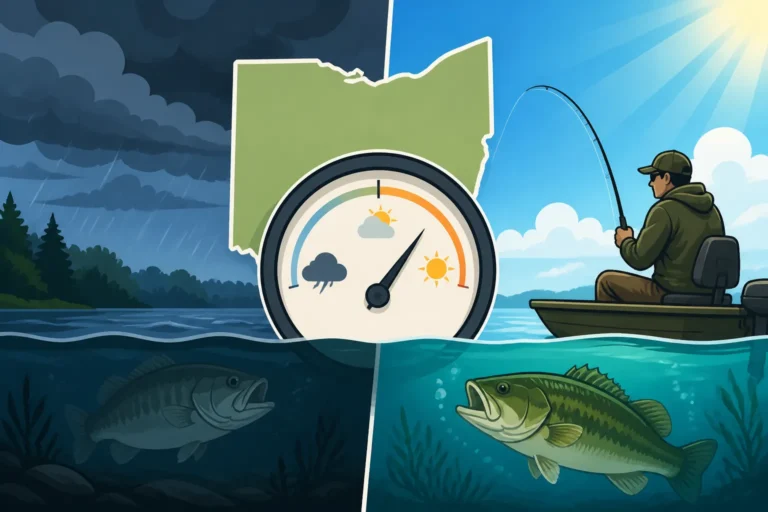
How Steelhead React to High, Murky Flows
When an Ohio river turns into a muddy mess, steelhead don't just disappear; they react in predictable ways. Their primary instinct is often to seek refuge from the violent currents and lack of visibility. This usually means moving out of the main, fast-flowing current and into slower, calmer pockets of water. They might tuck themselves behind large rocks, fallen trees, or scour holes, essentially finding any break in the current where they can conserve energy and find some semblance of stability.
In extreme conditions, where the water is exceptionally high and muddy, steelhead can completely shut down their feeding activity. Their natural predators might also have a harder time spotting them, but their ability to find food is equally compromised. They become much more difficult to entice with a fly or lure, and even if they do strike, it’s often out of aggression or irritation rather than an active feeding response. Furthermore, sustained high and muddy flows can cause them to drop back into Lake Erie or push further upstream into smaller, clearer tributaries if available, essentially relocating to find more favorable conditions until the river begins to drop and clear.
Visual Cues: Reading the River's Clarity and Flow
When you arrive at the river, your eyes are your first and most important tool for assessing conditions. Learning to "read the water" is a skill that takes time, but there are some clear visual indicators that can tell you if a river is fishable or if you should just head back home for a cup of coffee.
The "Coffee with Cream" Test – Ideal vs. Unfishable
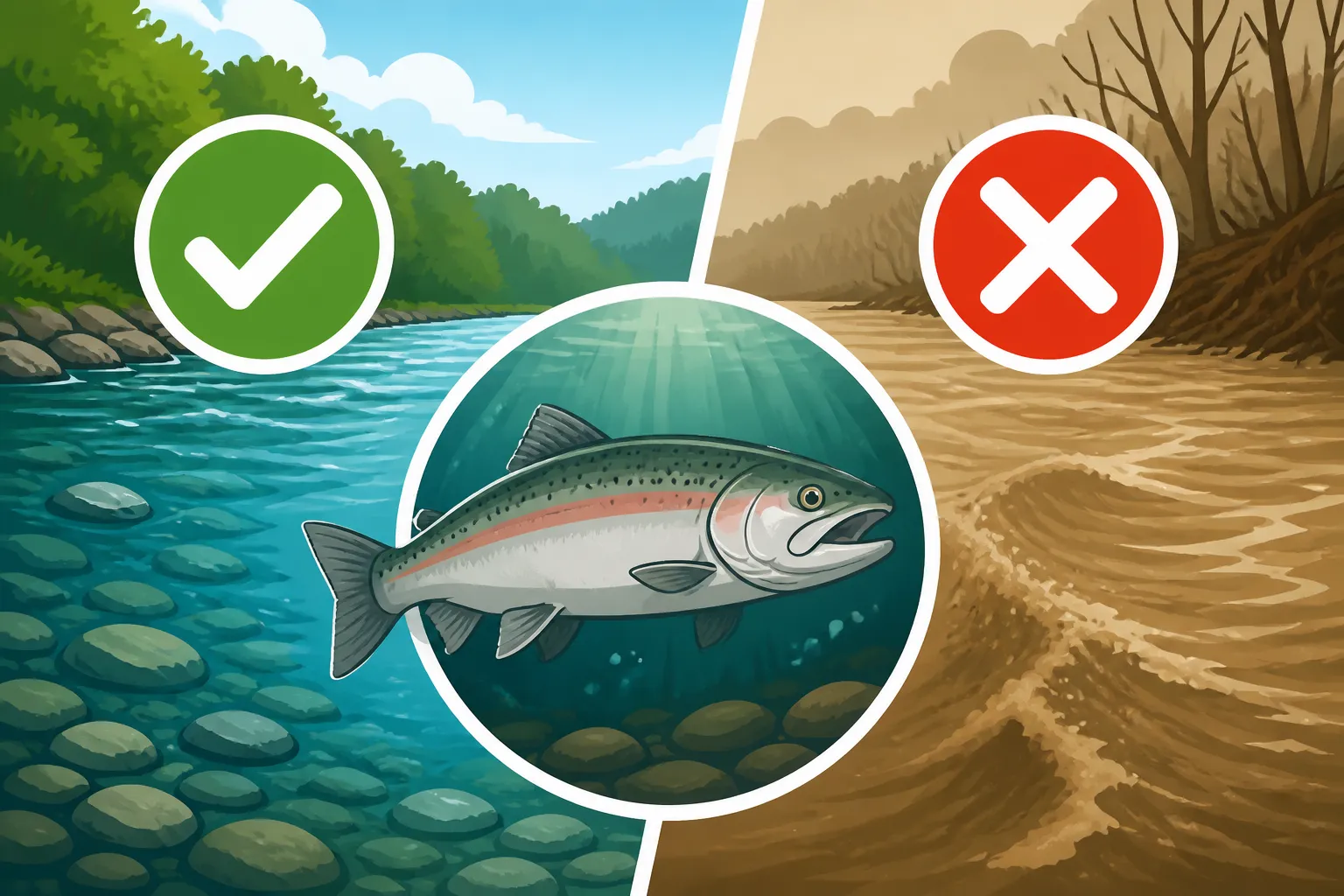
The "coffee with cream" analogy is a classic way to describe ideal steelhead water. Imagine a cup of coffee with just a splash of cream – it's still dark, but there's a slight, translucent tint to it. This light, stained appearance is often perfect for steelhead fishing because it offers the fish a sense of security from overhead predators (like eagles or ospreys) while still providing enough visibility for them to see your presentation. Many anglers refer to this as "steelhead green" or a "light tea stain." In these conditions, the fish are often more aggressive and less wary.
However, when the river looks like a cup of pure, unfiltered espresso, or worse, a milkshake made from chocolate ice cream, you're likely in trouble. If you can't see the river bottom in water that's only a foot or two deep, or if the water is so opaque that you can't even make out your boot in six inches of depth, it's generally too muddy. This heavy turbidity indicates that there's a massive amount of suspended sediment, which chokes the gills of fish, clogs their lateral lines, and makes it impossible for them to see. Rivers like the Rocky River or the Grand River in Ohio are particularly susceptible to this after significant rainfall. What happens if you try to fish in such conditions? Usually, nothing. You’ll be casting blindly into a soup where fish can't see, and quite frankly, don't want to be.
Observing Debris and Flow Speed
Beyond just color, the amount of floating debris and the sheer speed of the current are huge indicators. If you see large amounts of leaves, twigs, branches, or even entire logs floating downstream, it's a strong sign that the river is running high and fast. This isn't just an aesthetic problem; this debris can foul your lines, tangle your lures, and make fishing virtually impossible. More importantly, it signals an incredibly powerful current that fish struggle to hold in.
When the river is roaring, the force of the water can be dangerous for anglers who wade, and it makes it extremely difficult for steelhead to hold in their usual lies. They're expending too much energy just to stay put, let alone chase after a lure. A good rule of thumb is that if the current looks like it could easily sweep you off your feet, it's definitely too fast for productive steelhead fishing. Even if you're not wading, a current that's pushing big debris is likely too chaotic for fish to settle into any kind of feeding pattern. Always prioritize safety; Do You Need Waders for Ohio Steelhead Fishing? should include a big section on safety in high flows.
Leveraging Technology and Local Expertise for Pre-Trip Planning
Before you even think about putting air in your tires, there are incredibly useful resources available to help you assess river conditions from the comfort of your home. Taking advantage of these tools can save you a lot of wasted time and frustration.
Checking River Gauges and Online Reports
One of the most critical tools in a steelhead angler's arsenal is the USGS stream gauge data. These gauges, often found on websites like the USGS Water Resources site, provide real-time information on river height (stage) and flow rate (cubic feet per second, or CFS). Most major steelhead rivers in Ohio, such as the Grand River, Chagrin River, and Vermilion River, have gauges that you can monitor. The trick is to learn what constitutes a "fishable" flow and height for your particular river. Many experienced anglers keep a log or simply remember the ideal ranges.
For example, a river might be perfect at 400 CFS, but completely blown out at 2,000 CFS. By checking the current readings and comparing them to what you know about the river's historical fishable levels, you can get a good idea of what to expect. A sudden spike in CFS after rain indicates rising, muddy water. Watching the trend (is it still rising, cresting, or dropping?) is key. Beyond official gauges, many local fishing forums, Facebook groups, and even dedicated fishing report websites offer community-generated updates on river conditions. These can be incredibly valuable for real-time clarity reports and anecdotal observations from anglers who are currently on the water or have just left.
Tapping into Local Bait Shops and Guides
Don't underestimate the power of local knowledge! The folks who run bait and tackle shops near the steelhead rivers are often the unsung heroes of the fishing community. They live and breathe these rivers, talking to dozens of anglers every day, and often have the most up-to-the-minute information on water levels, clarity, and even what flies or lures are currently working. A quick phone call before you leave home can provide invaluable insights into current conditions. They'll tell you straight if the river is "blown out" or "just starting to drop and clear."
Similarly, professional guide services that specialize in Ohio Steelhead Fishing Techniques are another fantastic resource. While you might not be booking a trip every time, many guides maintain blogs, social media pages, or even offer public reports on river conditions. They have a vested interest in knowing the rivers intimately, and their livelihoods depend on understanding the nuances of water clarity and fish behavior. They can often provide specific details about certain sections of a river – perhaps the main stem is muddy, but a specific tributary might be clearing faster. Always be respectful of their time and knowledge, as they're often busy, but a polite inquiry can yield great information.
On-Site Assessment, Adaptation, and Seasonal Nuances
Sometimes, despite all your pre-trip planning, you just have to see the river for yourself. When you're standing on the bank, there are a few final checks you can make, and even if the conditions aren't perfect, there might still be ways to adapt your approach.
The "Wade Test" and Safe Assessment
If you've driven all the way to the river and the online reports were ambiguous, or perhaps conditions changed since you checked, a simple "wade test" can often provide the final answer. Assuming it's safe to do so (and safety should always be your number one priority when rivers are high), cautiously enter the shallow edge of the water. Look down at your waders or boots. If you can see your feet or the bottom clearly in 10-12 inches of water, the clarity might be good enough. If your boots disappear in only 4-6 inches, the water is likely too muddy for effective sight-feeding steelhead. Always be mindful of the current strength; if it's pushing hard against your legs in shallow water, it's not worth risking deeper sections. This is particularly true in places like the Rocky River Steelhead Fishing Access Points where currents can be surprisingly strong.
Another method is to bring a white object, like a white jig head or a small piece of PVC pipe, and slowly lower it into the water at the river's edge. Note the depth at which it disappears from view. This simple visual cue gives you a tangible measurement of visibility. Remember, while a slight stain is good, a dense, opaque murk is almost always a deal-breaker for steelhead, which rely so heavily on vision. If you find yourself needing to replace some gear after a miscalculation, you can find a wide selection of fishing necessities on Amazon.
Considering Alternative Spots and Techniques
So, you've arrived, and your primary spot is a chocolate milk factory. Don't despair immediately! Steelhead anglers are a resilient bunch, and there are often ways to salvage a day, or at least learn something. First, consider if there are any nearby alternative spots. Sometimes, a smaller tributary might clear faster than the main stem of a larger river. For instance, if the Vermilion River is blown out, a smaller feeder creek might be coming into shape. Or, if you're fishing near the mouth, the influence of Lake Erie might mean clearer water closer to the lake, creating a "clean water line" that holds fish.
If the water is just stained (that "coffee with cream" color) rather than completely muddy, you might need to adapt your techniques. This is where Ohio Steelhead Fishing Techniques really come into play. Brighter, more visible lures and baits often become more effective. Think chartreuse, orange, or hot pink jig heads tipped with wax worms or emerald shiners. Scent can also play a much larger role; adding some bait scent to your offerings can help fish locate your presentation even with reduced visibility. For fly anglers, larger, darker patterns or those with high-contrast colors can sometimes get noticed. You might also need to use heavier line and a sturdier rod and reel setup for current, which can be found readily on Amazon.
Impact of Water Temperature and Seasonal Timing
The time of year and prevailing water temperatures significantly affect how quickly a river will clear after a rain event. In early spring, during the peak of When Ohio Steelhead Runs Start or late fall, when water temperatures are colder, rivers tend to hold their murkiness longer. Colder water reduces the activity of microorganisms that help break down suspended particles, and the slower metabolic rate of cold-blooded fish means they are less active in seeking food in poor conditions. Heavy snowmelt can also introduce significant amounts of silt and cold water, making conditions challenging for extended periods.
Conversely, in warmer periods (late spring/early summer), rivers might clear more quickly as higher temperatures promote faster settling of sediment and increased biological activity. However, warmer water also brings its own set of challenges, as steelhead prefer cooler temperatures. The ideal scenario is often a warm rain in cooler months that causes a spike but then allows the river to drop and clear within a day or two. This is often the prime window for catching steelhead, where the fish are active and the water has that perfect "steelhead green" tint. Knowing Best Time to Fish for Steelhead After Rain can drastically improve your success.
River Clarity Guide for Steelhead Anglers
Here's a quick reference to help you decide if the river is worth fishing:
| Clarity Description | Visual Cues | Steelhead Visibility | Fish Activity | Recommended Action |
|---|---|---|---|---|
| Crystal Clear | Can see bottom in 3+ feet of water. | Excellent | Wary, easily spooked. | Light line, subtle presentations. Target low-light conditions. |
| Slightly Stained ("Steelhead Green") | Can see bottom in 1-2 feet of water. | Good | Active, aggressive, feels secure. | Ideal conditions! Use natural or bright colors. Try Best Lures for Ohio Fishing that have some flash. |
| Moderate Stain ("Coffee with Cream") | Can see bottom in 6-12 inches of water. | Fair | More active, less sight-dependent. | Brighter lures/flies, add scent. Fish slower, deeper pockets. |
| Heavy Stain / Murky | Can barely see anything in 3-6 inches of water. | Poor | Seeking refuge, minimal feeding. | Consider trying larger, high-contrast baits or fishing closer to the lake. Your chances are significantly reduced. |
| Completely Muddy ("Chocolate Milk") | Cannot see anything in less than 3 inches. | None | Shut down, holding tight, or relocated. | Pack up, head home, or find another activity. Wait 1-3 days for conditions to improve. This is definitely What Flow Is Too High to Fish Ohio Steelhead Rivers?. |
Fishing for Ohio steelhead is an amazing experience, but it requires patience and a good understanding of river dynamics. By using online tools, consulting local experts, and making careful on-site assessments, you can greatly improve your chances of hitting the river when conditions are just right. Whether you’re employing Fly Fishing Techniques for Ohio Steelhead or casting spoons, knowing when the water is too muddy will save you a lot of disappointment and help you enjoy your time on Ohio's beautiful waterways.
Disclaimer
This article is for general informational purposes only and does not constitute professional advice. Laws, prices and regulations vary by location and change over time. Consult a qualified professional for guidance on your specific situation.