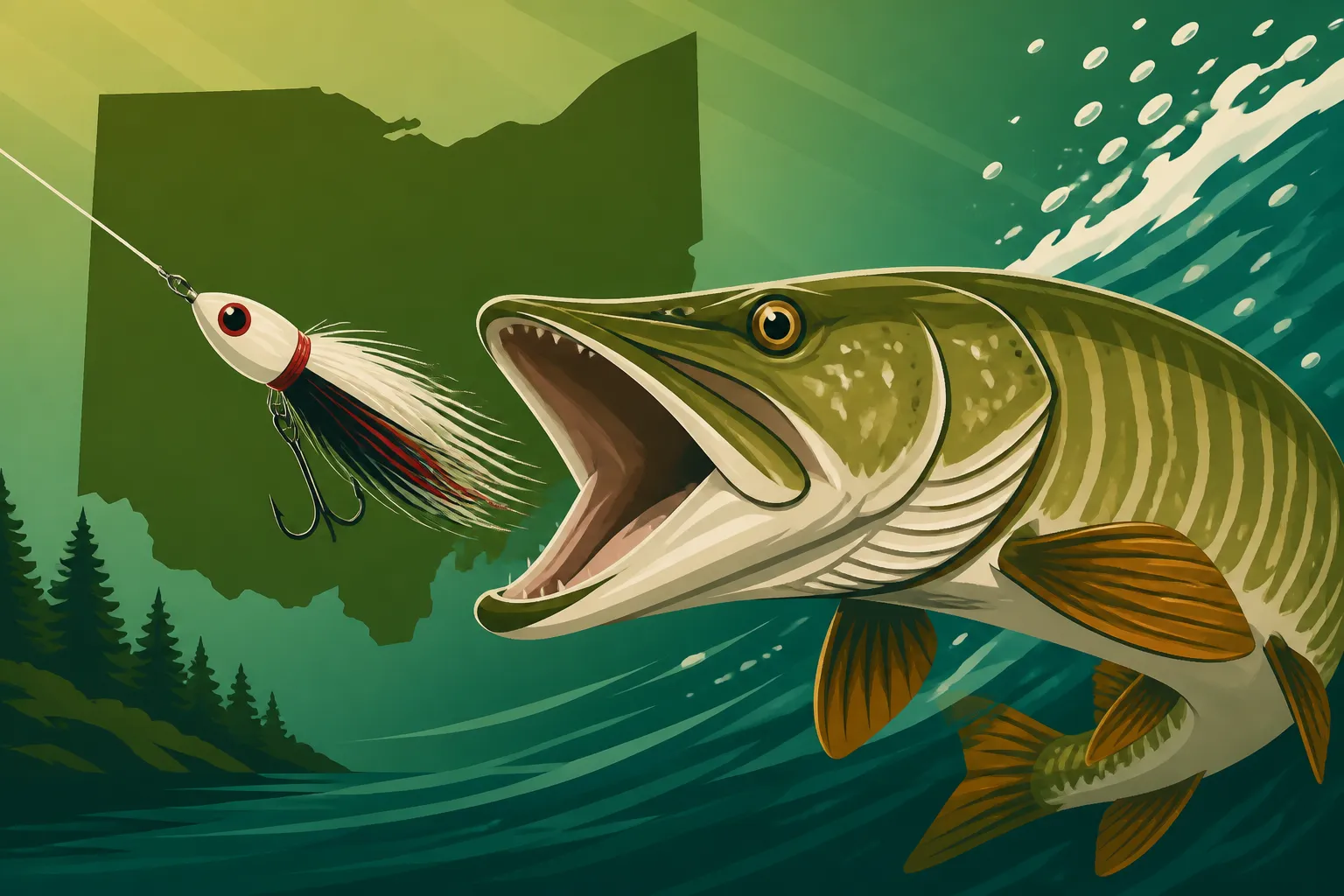
How to Fish a Bucktail for Muskie
It's no secret that muskie fishing can be a real grind. You spend hours, sometimes days, casting and retrieving, pouring your heart into every single twitch of the rod, only to often come up empty-handed. But there's a reason so many of us are obsessed with these "fish of 10,000 casts" – the sheer thrill when one finally hits is absolutely electric. If you're looking to put more muskie in the net, especially on Ohio's fantastic waters, then mastering the art of fishing a bucktail is an absolute game-changer. This guide is all about helping you understand, choose, and retrieve bucktails effectively, turning those frustrating follows into heart-stopping strikes.
Understanding the Bucktail: Why It's a Muskie Magnet
When you’re talking muskie fishing, the bucktail isn't just another lure in the tackle box; it's practically a religion for many anglers. It's a classic for a reason, consistently fooling some of the largest, most elusive predators in our Ohio lakes and reservoirs. But what is it about this seemingly simple lure that makes it so incredibly effective? It comes down to a perfect storm of attributes that tap directly into a muskie's predatory instincts.
Anatomy of a Bucktail and What Makes It Effective
At its core, a bucktail is designed to imitate a fleeing baitfish, or perhaps a small animal thrashing through the water. It typically consists of a wire shaft, one or more spinning blades, and a skirt made of bucktail hair (or sometimes synthetic materials) that conceals one or more hooks. Each component plays a vital role in its fish-catching prowess. The blades, often a combination of large Colorado, Indiana, or willowleaf shapes, spin rapidly when retrieved, creating a powerful flash and vibration that muskie can detect from a significant distance, even in murky water. This rhythmic thumping and shimmering is a loud dinner bell for these apex predators.
The skirt, usually made from deer hair, flares and pulsates in the water, giving the lure a larger profile and a lifelike, breathing action. This natural material breathes and undulates, creating a visual illusion that's hard for a muskie to ignore. When combined with the flash and vibration of the blades, it presents a compelling target that looks both vulnerable and worth chasing. The whole package works together to create a disturbance and an optical illusion that says, "Here's an easy meal!" to any lurking muskie.
Think about it from a muskie's perspective. They’re ambush predators, and they're always looking for the easiest meal possible. A bucktail, especially when retrieved correctly, screams "injured or confused prey" – something that requires minimal effort to subdue. This combination of visual appeal, sound, and hydrodynamic disturbance makes it an irresistible offering in a muskie's hunting grounds.
Choosing the Right Bucktail for Ohio Waters
Alright, so you know why they work, but how do you pick the right one? The sheer variety of bucktails out there can be overwhelming, from tiny "buck-ettes" to massive custom creations. For Ohio waters, which can range from clear impoundments like Alum Creek Lake to more stained environments, your choice often comes down to size, blade configuration, and color.
Generally, larger bucktails, often sporting twin #8 or #10 blades, are a go-to for aggressive muskie in active moods, especially during warmer water periods in summer and early fall. These bigger baits push more water and create a stronger vibration, really calling out to fish. However, don't underestimate smaller bucktails (single #7 or #8 blades) when the water is colder, or when fish are pressured and less willing to commit to a monster lure. Sometimes, a subtle approach is key. You can find a vast selection of these on Amazon, making it easy to compare and stock up.
Blade types also make a huge difference. Colorado blades create maximum thump and lift, good for slower retrieves or when you want the lure to run shallower. Willowleaf blades offer less resistance, allowing for faster retrieves and deeper runs, and their flash is more akin to a baitfish's side. Indiana blades are a good middle-ground. Often, bucktails will combine different blade types, like a large Colorado followed by a smaller willowleaf, to blend flash, vibration, and retrieve speed. Color is another crucial factor: natural patterns like black, brown, white, or silver are excellent in clear water or sunny conditions, mimicking common forage. For stained water, overcast days, or low light, brighter and more contrasting colors like chartreuse, orange, or firetiger can be absolute dynamite, standing out in the murk. For more insights on general lure selection, check out our guide on Best Lures for Ohio Muskie.
Mastering the Retrieve: Techniques for Enticing Ohio Muskie
You can have the fanciest, most expensive bucktail on the market, but if you're not retrieving it with purpose, it's just a pretty piece of hardware. Muskie fishing isn't just about casting; it's about making that lure dance in a way that triggers a strike. This takes practice, focus, and a willingness to experiment. The goal is always to make your bucktail look like an easy target, but one that's just a little bit out of reach, pushing the muskie's chase instinct.
The Straight Retrieve: Simple Yet Deadly
Don't let anyone tell you that muskie fishing has to be complicated. Sometimes, the simplest approach is the most effective. The straight retrieve with a bucktail is exactly what it sounds like: cast it out, and reel it back in at a consistent pace. But "consistent" doesn't mean "mindless." You need to maintain a speed that keeps your blades spinning and your skirt pulsating effectively. This retrieve is deadly when muskie are active and aggressive, often during prime feeding windows or in areas where they're known to hunt open water.
When implementing the straight retrieve, focus on covering water efficiently. Fan cast across flats, along weed edges, or over submerged structures, making sure your lure passes through potential ambush points. Vary your retrieve speed subtly – sometimes a little faster, sometimes a little slower – until you find what the fish prefer on that particular day. The key is to present a continuous, enticing target that doesn't give the muskie too much time to think. It's about triggering a reaction strike from a fish that sees an easy meal getting away.
Many experienced anglers start with a brisk straight retrieve to locate active fish. If a muskie follows but doesn't commit, that's your cue to switch things up. But for a fish that's truly on the prowl, a well-presented bucktail with a steady retrieve can be all it takes to elicit that violent strike we all live for. The consistency can be hypnotizing to a muskie, drawing them in closer and closer until they decide to hit.
The "Figure Eight" and Other Crucial Follow-Up Maneuvers
This is arguably the most critical technique in all of muskie fishing, and if you don't know it, you're missing out on a significant percentage of potential strikes. We've all been there: a monster muskie follows your bucktail right to the boat, its eyes locked on the lure, but it just won't commit. This is where the figure eight comes in. Instead of lifting your lure out of the water, smoothly guide your rod tip into the water and perform a wide, sweeping figure-eight motion right beside the boat.
The sudden change in direction and speed often triggers a follow-up strike from a hesitant muskie. The figure eight mimics a baitfish that's suddenly disoriented or trying to escape, presenting a new, urgent opportunity for the muskie. Make your loops as wide as your rod length allows, keeping the lure in the water and maintaining the blade spin. Vary the depth of your figure eight – sometimes shallow, sometimes a little deeper – to see what gets their attention. Always keep your eyes on the lure and be prepared for a strike at any moment; these fish can explode right at your feet!
Beyond the classic figure eight, other close-quarters maneuvers like the "L-turn" or "J-turn" can also be effective. These involve sharp, sudden changes in the lure's direction as it approaches the boat, simulating a panicked escape. The main idea is to provoke a reaction from a following fish. Always wear polarized sunglasses to better see follows, and never give up on a retrieve until the bucktail is completely out of the water and you've thoroughly checked for any lurking shadows. Many trophy muskie are caught just inches from the boat due to these last-ditch efforts.
Incorporating Pauses, Twitches, and Speed Changes
While the straight retrieve is foundational, adding some erratic flair can be the secret sauce, especially when muskie are finicky or the bite is tough. Muskie are opportunistic predators, and an erratic movement can often seal the deal when a consistent retrieve simply leads to follows. Think about a baitfish that's struggling or injured – it doesn't swim in a perfectly straight line.
One effective technique is the "stop and go" retrieve. Reel a few cranks, pause for a second, then resume. The sudden halt can cause the bucktail to flutter or drop slightly, and the restart can make it dart forward, often mimicking a baitfish panicking. This sudden change in cadence can be just enough to trigger a strike from a muskie that was leisurely following. Another approach is the "burn and kill," where you reel as fast as you can for a short burst, then let the lure helicopter down on a slack line for a moment, before resuming the burn. This extreme speed change can be incredibly effective when fish are highly aggressive.
Don't forget the power of rod tip twitches. A subtle flick of the wrist can make your bucktail dart sideways or up and down without significantly altering your retrieve speed. These small, sudden movements can mimic a wounded baitfish or one trying to change direction. Experiment with these variations until you find the rhythm that the muskie are responding to on a given day. Sometimes, it’s about making the lure look panicked, while other times, it's about making it look like it's almost getting away. For more on seasonal changes in muskie behavior, consider checking our guide on When Muskie Fishing Peaks in Ohio.
Gear and Conditions: Optimizing Your Bucktail Success
Fishing for muskie isn't like panfishing; it demands specialized gear that can handle these massive, powerful fish and the heavy lures you'll be throwing. Having the right tools for the job not only makes your day more productive but also significantly increases your chances of landing that fish of a lifetime once it bites.
The Right Rod, Reel, and Line Setup
When you're throwing heavy bucktails, sometimes weighing several ounces, your conventional bass gear simply won't cut it. You need a setup built for power and endurance. For the rod, think heavy power with a fast or extra-fast action. Lengths typically range from 8'6" to 9'6" (and sometimes even longer), providing the leverage needed for long casts, powerful hook sets, and maneuvering large fish. Brands like St. Croix, G. Loomis, or Shimano offer excellent muskie-specific rods. You can often find a great selection of these specialized rods on Amazon.
For the reel, a heavy-duty, low-profile baitcaster or a round baitcasting reel with a high gear ratio (think 6.4:1 or higher) is essential. A high gear ratio allows you to pick up line quickly, which is crucial for maintaining contact with a fast-moving muskie, executing those figure eights, and quickly setting the hook. Look for models with strong drags and durable components. When it comes to line, braided line is the only real choice for bucktails. Opt for 80- to 100-pound test braid. Its no-stretch properties provide incredible sensitivity for detecting subtle bites and delivering solid hook sets. It also offers superior abrasion resistance, vital when fighting a muskie around heavy cover or dealing with their razor-sharp gill plates. Always tie a heavy fluorocarbon or steel leader (100-150 lb test) to the end of your braid to prevent bite-offs. Getting the right setup is crucial, and you can delve deeper into this with our article on Best Rod and Reel Setup for Ohio Muskie.
Best Times and Locations for Bucktail Fishing in Ohio
Ohio has some phenomenal muskie fisheries, and knowing when and where to cast your bucktail can dramatically improve your odds. While muskie can be caught year-round, the prime time for bucktail fishing in Ohio generally heats up in the summer and extends through the fall. As water temperatures rise in summer, muskie become more active, feeding aggressively. Fall, however, is often considered the trophy season, as muskie pack on weight for winter, making them incredibly vulnerable to large offerings like bucktails.
Focus your efforts on areas with good structure. Weed lines, especially those forming points or inside turns, are classic muskie holding spots. Submerged timber, rock reefs, humps, and abrupt drop-offs can also be incredibly productive. On lakes like Alum Creek Lake or West Branch Reservoir, these areas often concentrate baitfish, and therefore, muskie. Also, don't ignore open water areas near structure, as muskie will often cruise these zones looking for suspended prey. On some of Ohio's top muskie waters like Leesville Lake, Piedmont Lake, or Salt Fork Lake, focusing on these types of areas will pay dividends. Understanding the Ohio Muskie Minimum Length Limit on Inland Lakes is also crucial for responsible fishing.
Weather and time of day play a significant role too. Overcast days, especially with some chop on the water, are often ideal as the low light conditions encourage muskie to be more active. Early mornings and late evenings, or even night fishing, can be incredibly productive, particularly during the hot summer months. Pay attention to changes in barometric pressure; stable or rising pressure often correlates with more active feeding periods.
Handling Muskie Safely Catch & Release Focus
Muskie are magnificent creatures, and because of their relatively slow growth rates and the dedication it takes to catch them, nearly all muskie fishing is (and should be) catch and release. Proper handling is absolutely paramount to ensure these fish survive to fight another day. It’s not just about getting the hook out; it’s about minimizing stress, air exposure, and physical damage.
Before you even make your first cast, make sure you have the right release tools readily accessible. This includes a sturdy, long-handled net designed for muskie, a pair of long-nose pliers or hook cutters to quickly remove hooks, and a jaw spreader if you use one (though many prefer not to, as they can cause damage if not used correctly). You can find all these essential tools on Amazon. When you land a muskie, keep it in the water as much as possible. If you need a photo, get your camera ready before lifting the fish.
Support the fish horizontally with one hand under the gill plate (not in the gills themselves!) and the other under its belly. Avoid holding them vertically by the jaw as this can cause severe internal damage. Get your quick photo, then gently release the fish, often cradling it in the water until it swims away under its own power. Sometimes, especially after a long fight, a muskie might need a little revival, which involves holding it gently in the water, facing into the current, until it regains its strength. This commitment to proper handling helps sustain Ohio’s incredible muskie populations for generations to come. For more on this vital topic, check out our detailed guide on How to Revive a Muskie Before Release.
| Bucktail Blade Type | Primary Characteristics | Ideal Retrieve Speed | Best Conditions/Applications |
|---|---|---|---|
| Colorado Blades | Rounded, cupped, maximum vibration, strong lift | Slow to Moderate | Stained water, low light, deep water, subtle action |
| Indiana Blades | Oval, medium vibration, good flash, moderate lift | Moderate to Fast | General purpose, versatile, good flash & thump |
| Willowleaf Blades | Long, slender, maximum flash, minimal vibration, low lift | Fast to Very Fast | Clear water, active fish, shallow water, cutting through cover |
| Tandem Blades | Multiple blades (often different types/sizes) on one shaft | Variable | Increased flash & vibration, larger profile, attracting active fish |
Disclaimer
The information provided in this guide is for general informational purposes only. Fishing regulations in Ohio, including bag limits, size limits, and licensing requirements, can change. Always consult the latest official regulations from the Ohio Department of Natural Resources (ODNR) before heading out on the water. Fishing inherently carries risks, and safety precautions should always be observed.