How to Fish a Ned Rig Through Rocks
It's incredibly frustrating when you're out on the water, you've got a fantastic feeling about a spot, and your lure keeps getting hopelessly snagged on the bottom. We've all been there, especially when fishing those tempting rocky areas that just scream "big bass" or "hungry walleye." This guide is all about helping you conquer those snag-filled rocky bottoms using one of the most effective, yet often misunderstood, techniques: fishing a Ned rig.
The Ned Rig Advantage for Rocky Cover
The Ned rig has absolutely exploded in popularity over the last few years, and for good reason. It’s simple, effective, and catches just about everything that swims. But when it comes to navigating rocky terrain, many anglers shy away, thinking it’s a guaranteed snag-fest. I'm here to tell you that with the right approach, the Ned rig can be your secret weapon for pulling fish out of those boulder-strewn honey holes in Ohio.
What Makes a Ned Rig So Effective?
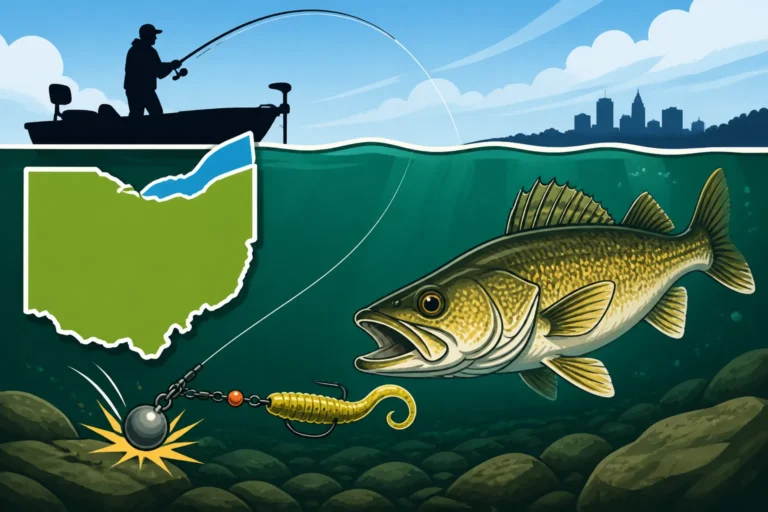
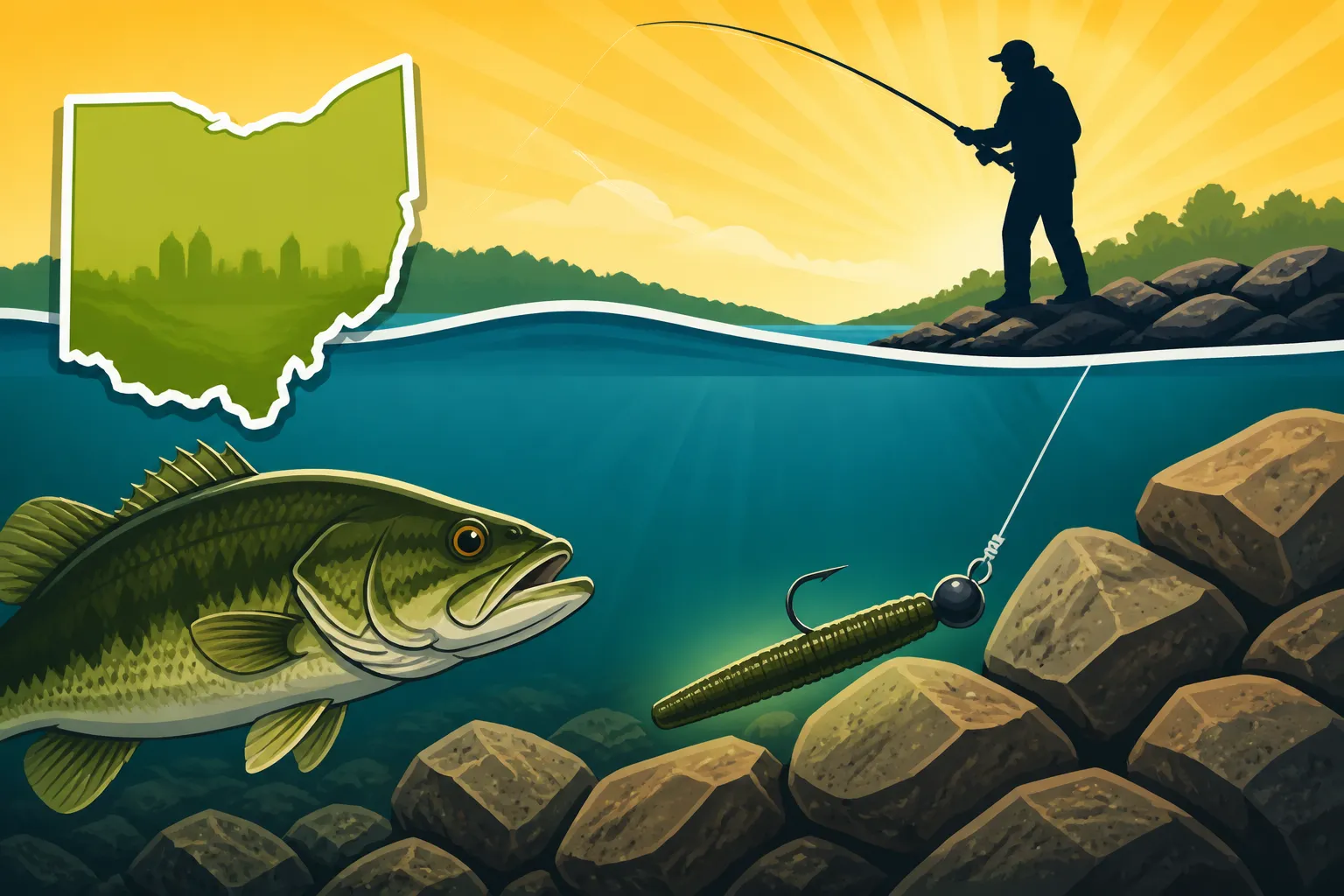
At its heart, a Ned rig is incredibly minimalist. It typically consists of a small mushroom-shaped jig head and a short, buoyant soft plastic bait, usually between 2 and 3 inches long. The magic really happens because the bait is designed to float up off the bottom when at rest, presenting a natural, almost defiant posture to curious fish. This isn't some aggressive, flashy presentation; it's subtle, unassuming, and incredibly enticing, especially to finicky fish or those pressured by heavier tactics. Its compact size means it can slip through tighter spaces, and the buoyancy helps it to "stand up" on the bottom, keeping the hook point elevated and reducing snags.
Think about it: when your traditional jig hits a rock, it often falls over, exposing the hook to crevices. A Ned rig, particularly with a weedless jig head, is designed to minimize that exposure. The buoyancy of the plastic also means that when you pause your retrieve, the bait doesn't just lay flat, begging to get stuck; it stands tall, waving provocatively, almost daring a fish to bite. This subtle action is often exactly what's needed to trigger a strike when fish are hunkered down in rocky cover.
Why Rocks are Prime Ned Rig Territory in Ohio
Ohio's diverse waters, from the vast expanses of Lake Erie to countless inland reservoirs and rivers like the Ohio River and the Scioto, are full of rocky bottom structures. These rocks aren't just obstacles; they're fish magnets. Rocks provide ambush points, shade, current breaks, and prime foraging grounds for crayfish and other invertebrates that make up a significant portion of a fish's diet. Smallmouth bass absolutely adore rocky points and shoals, while walleye and saugeye will often relate to rock piles and rubble in deeper water. Even largemouth bass will often use isolated rock formations in otherwise soft-bottomed lakes.
When you learn to present a Ned rig correctly through these areas, you're tapping into a high-percentage fishing scenario. The fish are there because the rocks offer everything they need. Your challenge is simply to get your bait to them without constantly getting stuck. With a bit of practice, you’ll find that pitching a Ned rig to these rock-infested areas can be incredibly productive, often out-fishing other techniques that are too prone to snagging or too aggressive for fish holding tight to cover. If you’re looking to specifically target these hard-fighting fish, take a look at our guide on the Ohio Smallmouth Bass Fishing Guide or the Ohio Walleye Fishing Guide for more insights on their habits.
Gearing Up: Selecting Your Ned Rig Components for Rocky Terrain
Choosing the right Ned rig components is paramount when you're planning to fish through rocks. It's not just about having a Ned rig; it's about having a rock-friendly Ned rig. The subtle modifications you make to your jig head, plastic, and even your fishing line can drastically reduce snags and increase your catch rate.
Jig Heads That Defy Snags
The jig head is the foundation of your Ned rig, and when fishing rocks, not all jig heads are created equal. You want something that will navigate bumps and crevices rather than getting wedged in them.
- Mushroom Head with a Wire Guard: This is the most common and often the best choice. The mushroom shape allows the jig to stand upright, and the wire weed guard deflects snags from the hook point. Look for models with a single, sturdy wire guard or a dual wire guard, which provides even more protection. The heavier the cover, the beefier the weed guard you'll want. You'll find a huge selection of Ned rig jigs and plastics on Amazon from various brands, making it easy to stock up.
- Bullet or Football Head: While not traditional Ned rig heads, some anglers find success with lighter bullet or football heads, especially in areas with fewer sharp snags but more scattered rock. Their more streamlined profile can sometimes slip through tighter spots. However, they are generally less snag-resistant than a dedicated weedless mushroom head.
- Weight Matters: The weight of your jig head is crucial for maintaining bottom contact without constantly getting hung up. Generally, 1/16 oz, 1/8 oz, and 3/16 oz are the sweet spots for most Ned rig applications. In current or deeper water, you might go up to 1/4 oz, but be mindful that heavier jigs tend to snag more easily. The key is to use the lightest possible weight that still allows you to feel the bottom and maintain control of your bait. For understanding how different weights impact your presentation, our Best Ohio Fishing Gear and Tackle Guide offers more insights.
Durable and Buoyant Soft Plastics
The plastic bait for your Ned rig also plays a significant role in its rock-avoiding prowess. You need something that’s not only enticing but also resilient.
- Elastic and Buoyant Materials: Brands like Z-Man, with their proprietary ElaZtech material, are practically synonymous with Ned rigs for a reason. This material is incredibly durable, resisting tears from fish teeth and, more importantly, from scraping against rocks. Its natural buoyancy is also a game-changer, helping the bait stand upright and keeping the hook point away from snags. Other brands offer similar buoyant, stretchy plastics that perform well.
- Shape and Profile: The classic stick bait profile, like a Z-Man Finesse TRD, is hard to beat. Its slender body and flat tail offer minimal resistance, allowing it to slip through rocks. Other profiles, like small creature baits or curly tail grubs, can also be effective, but always prioritize a compact design that won't easily wedge itself into crevices. When picking out your jig heads and soft plastics, look for brands readily available on Amazon that specifically design their products for the Ned rig technique.
- Color Selection: While not directly related to snag resistance, color is still vital. Natural colors like green pumpkin, black and blue, or junebug are fantastic all-around choices. In clear water, subtle shades work best, while in stained water, brighter colors like chartreuse or white can grab attention. Match the hatch to what the fish are feeding on; if there are lots of crawfish, go with browns and oranges.
Line and Rod Setup for Maximum Feel
Your rod, reel, and line setup are your direct connection to the Ned rig, and feeling those subtle bumps versus a snag is crucial.
- Sensitive Rod: A medium-light to medium power spinning rod, typically 6'6" to 7'2" in length, with a fast action tip is ideal. The fast action provides the sensitivity needed to detect those light bites and the quick hook-setting power. A graphite blank will transmit every tick and rock scrape directly to your hand.
- Braided Line with Fluorocarbon Leader: This combination is almost non-negotiable for rock fishing. Braided line, like a 10-15 lb test, has zero stretch, providing incredible sensitivity to feel what your lure is doing on the bottom. It also has excellent abrasion resistance, which is important when constantly grinding against rocks. Because braid is visible, you'll want to tie a 6-10 lb test fluorocarbon leader, usually 3-5 feet long. Fluorocarbon is nearly invisible in water and, crucially, is much more abrasion-resistant than mono, offering an extra layer of protection against cuts from sharp rocks. Many anglers find a good braided line on Amazon to be invaluable for its sensitivity and strength. For more detailed information on choosing the right line, check out our guide on Choosing the Right Ohio Fishing Line.
| Jig Head Type | Snag Resistance (Rocks) | Best Application | Notes |
|---|---|---|---|
| Mushroom (Wire Guard) | High | Scattered rocks, moderate crevices, heavy cover | Excellent for standing up, deflects snags. Look for robust wire guards. |
| Mushroom (Exposed Hook) | Low | Smooth bottoms near rocks, lighter rock fields | Best for open areas; will snag easily in heavy cover. |
| Bullet Jig Head | Medium | Less dense rocky areas, areas with some current | Streamlined, can slip through, but hook is more exposed than wire guard. |
| Football Jig Head | Medium | Deeper rock piles, strong current | Good feel, less likely to roll, but can wedge easily. |
Mastering the Retrieve: Techniques for Fishing a Ned Rig Through Rocks
Successfully fishing a Ned rig through rocks isn't just about the gear; it's an art form that combines touch, patience, and understanding fish behavior. The goal is to mimic a foraging baitfish or crayfish without getting perpetually hung up.
The Art of the Drag and Hop
The most common and effective retrieve for a Ned rig in rocky areas is a slow drag, often punctuated by subtle hops.
- The Slow Drag: Cast your Ned rig to your target area, let it sink to the bottom on a semi-slack line (watching for any line jumps that indicate a bite on the fall), and then simply begin a slow, continuous drag with your rod tip low. You're not reeling in fast; you're just slowly sweeping your rod to move the bait a foot or two, then reeling up the slack as you return your rod to the starting position. This motion causes the buoyant plastic to nose down, scrape along the bottom, and then stand up when you pause, mimicking a creature rooting around or a baitfish feeding.
- Subtle Hops and Pauses: Interspersed with your drags, try short, upward flicks of your rod tip to make the jig hop a few inches off the bottom. Let it settle again. The key word here is subtle. Aggressive hops will often result in snags. When the jig falls back, let it sit for a few seconds. This pause is critical, allowing the buoyant plastic to stand up and often triggers a strike from a fish that has been following. Pay close attention to your line during these pauses; a slight twitch, jump, or simply a feeling of "weight" when you go to move it again could be a bite. This technique is especially potent when fishing for Ohio Saugeye Fishing Guide in reservoirs known for rocky bottoms.
Reading the Bottom and Detecting Bites
This is where the sensitivity of your rod and line truly shines. Every bump, grind, and stoppage tells a story.
- Understanding the "Feel": When your Ned rig is dragging across the bottom, you'll feel different sensations. A gritty, continuous vibration might be sand or small gravel. A harder thump-thump as your jig moves might be larger rocks or shell beds. A sudden, solid thunk that stops your lure could be a bigger boulder, or it could be a fish. The more you fish the Ned rig, the better you'll become at differentiating these feels.
- The Nuance of a Strike: Bites on a Ned rig are often incredibly subtle. It's rarely a violent jerk. Instead, you might feel a slight pressure, a spongy resistance, a tiny tick, or your line might just suddenly go slack. Sometimes, you'll simply feel like your lure has "stopped" on something soft, or like you’re dragging a piece of moss – that’s often a fish. When you detect anything out of the ordinary, set the hook! A quick, firm sweep of the rod rather than a massive heave is usually all it takes due to the light wire hooks typically found on Ned rig jigs. This finesse approach is detailed further in our Best Ohio Fishing Techniques for Beginners guide.
Line Management and Current Considerations
Proper line management is essential for feel and for avoiding snags, especially when fishing in rivers or wind.
- Minimize Slack: While you want a semi-slack line on the fall, you want to maintain as much direct contact as possible during your retrieve. Too much slack line makes it difficult to feel subtle bites or the bottom, and also makes it harder to detect and avoid snags. Keep your rod tip slightly elevated, but not so high that you're pulling the bait too far off the bottom.
- Fishing in Current: When fishing rocky rivers like sections of the Ohio River Fishing Guide or the larger tributaries, current adds another layer of complexity. You'll likely need to increase your jig head weight slightly to maintain bottom contact. Instead of dragging directly against the current, try casting upstream and allowing your bait to drift naturally downstream, using your rod tip to guide it over and around rocks. The Ned rig's light presentation makes it ideal for these drift-and-drag scenarios, where heavier lures would get instantly snagged. Pay attention to seams and eddies where fish might be waiting to ambush prey.
Common Challenges and Troubleshooting When Fishing Rocks
Even with the perfect setup and technique, fishing rocks with a Ned rig means you're eventually going to get snagged. It's part of the game. The good news is that with a little know-how, you can often free your lure and get back to fishing without having to re-tie.
Preventing Snags Before They Happen
The best snag is the one that never happens. Being proactive in your approach can save you a lot of grief.
- "Keep It Moving" Mentality (Mostly): While pauses are crucial for enticing bites, excessively long pauses, especially with an exposed hook, can increase your snag risk. A good rule of thumb is to keep the bait moving just enough to avoid getting it wedged in a tight spot, but still allow those crucial stand-up moments. If you know you're in a particularly nasty section of jagged rocks, shorten your pauses and slightly increase your retrieve speed.
- High-Percentage Casting: Don't just cast blindly into a rock pile. Use your electronics if you have them – a good fish finder can show you isolated rock piles or the edges of rock fields. Cast to the edges of the heaviest cover first, and work your way in. Sometimes the biggest fish are just outside the densest snags. Learn to read the water too; current lines, eddies, and subtle changes in water color can indicate underlying structure. Our guide on Reading Ohio Fish Finders and Electronics can help you interpret what you see on your screen.
- Know Your Terrain: Over time, you'll learn specific spots on your favorite lakes and rivers. Is it a gradual slope of small gravel? Big, jagged boulders? Sunken timber interspersed with rocks? Adapting your jig weight and retrieve speed to the specific type of rocky bottom will greatly reduce snags.
The Art of the Unsnag
When you do feel that sickening "thunk" and your line goes tight, don't panic. There are several tricks you can try before breaking off.
- The Slack Line Trick: This is often the first thing to try. Reel down until you have some slack in your line, then give your rod a sharp, quick snap or a strong bow-and-arrow pluck of the line. The idea is to dislodge the jig with a sudden, powerful movement that isn't pulling directly against the snag. Sometimes, the jig will bounce free.
- The Bow-and-Arrow Technique (More Aggressive): If the slack line trick doesn't work, point your rod tip directly at the snag. Grab your line a few feet above the water with your non-reeling hand, pull it tight like a bowstring, and then release it. The sudden snap of the line can often free a lightly wedged jig. Just be careful not to cut your finger!
- The Rod Tip Shake and Circle: If you're snagged, drop your rod tip towards the water, put a little tension on the line, and then violently shake your rod tip back and forth, sometimes even circling it. This erratic motion can sometimes cause the jig to jiggle free from its perch.
- Changing Your Angle: If you're fishing from a boat, try moving directly over the snag or even past it, then pulling from a different angle. What feels like a solid snag from one angle might just be a light hang-up from another. This is often the most effective way to free a deeply buried jig.
- When to Break Off: There will come a time when no amount of unsnagging will work. Rather than putting excessive strain on your rod or reel, apply steady, firm pressure until your line breaks. It's better to lose a jig than to damage your expensive gear. Always carry extra jig heads and plastics. Even specific fishing pliers for hook removal can be found with ease on Amazon, which can be useful when you do have a stubborn fish to unhook, or you need to cut a deeply set snag.
The Mental Game: Persistence and Patience
Fishing rocky areas with a Ned rig requires a certain mindset. You will get snagged. You will lose jigs. But the rewards – those hard-fighting smallmouth, walleye, and saugeye that call these rocky havens home – are absolutely worth it. Don't let a few lost jigs deter you. Each snag is a learning opportunity, helping you understand the bottom better and refine your retrieve.
Embrace the subtlety of the Ned rig. It's not a power fishing technique, but a finesse approach that demands patience and a delicate touch. The more time you spend feeling the bottom, differentiating between a rock and a bite, and developing your snag-free retrieve, the more successful you'll become. Ohio offers incredible opportunities for this type of fishing, and with these techniques, you'll be well on your way to conquering those challenging rocky structures.
Disclaimer
This article is for general informational purposes only and does not constitute professional advice. Laws, prices and regulations vary by location and change over time. Consult a qualified professional for guidance on your specific situation.