Ohio Steelhead Trout Fishing Guide
If you've ever dreamt of battling a powerful, chrome-bright fish in the crisp, cold waters of an Ohio stream, then steelhead trout fishing is probably calling your name. It's a challenging, often exhilarating pursuit that tests your patience and skill, but the rewards—witnessing the sheer power of these magnificent fish—are absolutely unforgettable. This comprehensive guide is here to walk you through everything you need to know about pursuing Ohio's steelhead, from understanding their unique journey to mastering the techniques that will put one in your net.
Understanding Ohio's Steelhead Phenomenon
Steelhead fishing in Ohio isn't just a casual outing; it's a deep dive into a fascinating biological and recreational phenomenon. These are not your typical stocked pond trout. They're powerful, migratory fish that offer an incredible fight, and understanding their origins and habits is key to successful angling.
The Steelhead Life Cycle in Ohio's Tributaries
Ohio's steelhead are a unique strain of rainbow trout that exhibit an anadromous life cycle, meaning they hatch in freshwater, migrate to a large body of saltwater (or, in this case, a Great Lake like Erie), grow large, and then return to their natal rivers to spawn. For Ohio anglers, Lake Erie is their "ocean." Young steelhead, often called "smolts," spend a year or two in the tributary streams after hatching or stocking, feeding and growing stronger before they undertake their journey downstream to Lake Erie. Once in the vastness of the lake, they feed voraciously on baitfish, growing rapidly over several years, sometimes reaching impressive sizes and weights. This period in the lake is where they develop their characteristic chrome-silver coloration and incredible strength.
When autumn arrives and the water temperatures begin to drop, an instinctual urge calls these fish back to the rivers and streams where they began their lives. They stage in the lake near the river mouths, waiting for rainfall and cooler temperatures to trigger their upstream migration. This migration continues through winter and into spring, culminating in their spawning efforts. After spawning, many of these magnificent fish, unlike pacific salmon, don't die but attempt to return to Lake Erie, often referred to as "dropbacks," to recover and potentially spawn again in future years. It's this cycle that creates the incredible, year-round fishery we cherish in Ohio. To learn more about this incredible journey, check out Steelhead Trout Life Cycle in Lake Erie Tributaries.
Where Ohio's Steelhead Come From
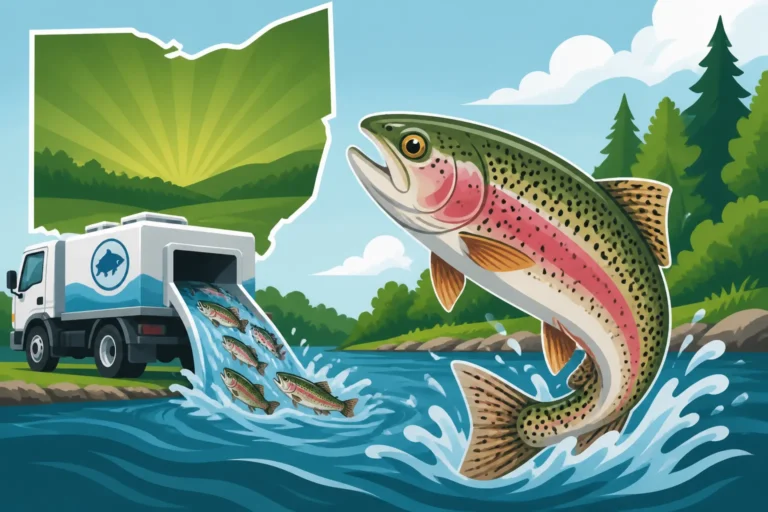
Ohio's steelhead fishery is largely sustained through a robust stocking program by the Ohio Department of Natural Resources (ODNR) Division of Wildlife. While there might be some limited natural reproduction in certain stretches of tributaries, the vast majority of the steelhead you encounter in Ohio's rivers are the result of these dedicated stocking efforts. The ODNR typically stocks millions of steelhead smolts each spring into several of Lake Erie's primary tributaries. These smolts are usually a specific strain, often adapted for growth in the Great Lakes environment, ensuring a healthy population for anglers. The success of this program relies on consistent stocking and the natural instinct of these fish to return to the streams where they were released, creating the "runs" that anglers eagerly anticipate.
These stocked fish thrive in Lake Erie's rich ecosystem, gorging on emerald shiners, gizzard shad, and other forage, leading to their rapid growth and strong fighting ability. The commitment to stocking ensures that despite environmental challenges and fishing pressure, there's always a new generation of powerful steelhead ready to make their pilgrimage up the rivers, offering consistent opportunities for anglers throughout the colder months.
Identifying Ohio Steelhead Trout
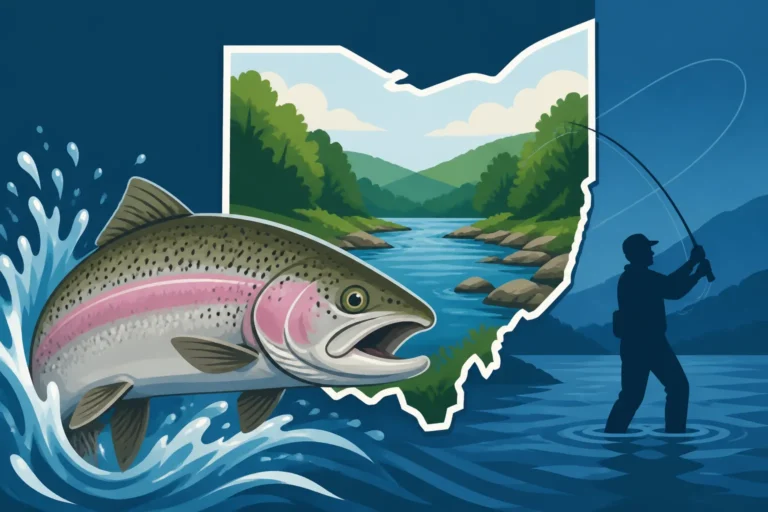
For the uninitiated, identifying a steelhead might seem straightforward, but it's important to distinguish them from other trout species or even other stages of rainbow trout. When fresh from Lake Erie, steelhead are often referred to as "chromers" due to their brilliant, almost mirror-like silver flanks. They'll typically have a dark, olive-green back that fades into this stunning silver, with a scattering of small, dark spots across their back, sides, and caudal fin (tail). As they spend more time in the rivers, especially as spawning season approaches, their coloration can change. Males, in particular, will often develop a prominent pink or reddish stripe along their lateral line, becoming more vibrant and pronounced, which is why they are often confused with resident rainbow trout.
Key identifying features include their deeply forked tail, streamlined body shape, and often, their larger size compared to river-dwelling rainbow trout that haven't migrated to the lake. While both are Oncorhynchus mykiss, the steelhead's anadromous lifestyle makes them a distinct and powerful adversary. Understanding these visual cues can also help you appreciate the journey each fish has made and understand if you're holding a fresh-run chromer or a seasoned, river-dwelling spawner.
Top Ohio Steelhead Rivers and Fishing Access
Ohio's "Steelhead Alley" is a magical place, a series of Lake Erie tributaries in the northeastern part of the state that draw these magnificent fish upstream. Each river has its own unique character, challenges, and rewards.
The Grand River: Northeast Ohio's Steelhead Mecca
The Grand River, particularly its lower sections in Ashtabula and Lake counties, is arguably the crown jewel of Ohio's steelhead fishery. It's one of the largest and longest rivers in Ohio's Lake Erie watershed, offering extensive stretches of prime steelhead habitat. The river features a mix of deep pools, gravel runs, riffles, and undercut banks, providing diverse holding water for staging and spawning fish. Its size means it can handle significant fishing pressure without feeling overcrowded, though popular access points can still get busy, especially during peak runs. You'll find numerous public access points, including state wildlife areas and county parks, providing opportunities for both wade and bank fishing.
Anglers often target the Grand's lower reaches near the lake early in the season, moving upstream as fish migrate. The river's varied structure and length demand a good understanding of where fish hold, but its consistent populations and the chance at truly large steelhead make it a must-fish destination. Whether you're drift fishing spawn sacs or swinging a fly, the Grand offers a quintessential Ohio steelhead experience. To dive deeper into this incredible fishery, consider exploring Grand River Steelhead Fishing in Ohio.
Rocky River: Urban Angling for Steelhead
The Rocky River, flowing through Cleveland Metroparks, offers an incredible opportunity for urban steelhead fishing, making it easily accessible for many anglers in Northeast Ohio. Despite its proximity to a major metropolitan area, the Rocky River boasts beautiful, rugged stretches of river with deep holes, logjams, and riffles that hold steelhead throughout the season. The Metroparks system has done an excellent job of providing numerous access points, parking, and trails, making it relatively easy to get to productive water. This accessibility means it can get crowded, especially on weekends and during peak runs, but patient anglers who are willing to walk can often find solitude and productive water.
The Rocky is well-known for its consistent fall and spring runs. Anglers here use everything from small jigs tipped with maggots to drifting spawn sacs and fly fishing. Its diverse conditions, from slow, deep pools to faster riffles, mean adapting your technique is crucial. The convenience of fishing so close to the city, coupled with the quality of the fishing, makes the Rocky River a truly special place. For specific details on where to find these fish, check out Fishing Rocky River for Steelhead.
Chagrin and Vermilion Rivers: Hidden Gems and Productive Runs
Beyond the Grand and Rocky, Ohio offers other fantastic, though sometimes less-pressured, steelhead opportunities. The Chagrin River, another beautiful Lake Erie tributary, is known for its clear waters and picturesque scenery. It offers excellent wade fishing opportunities, with good runs and pools that hold steelhead. Its character can be a bit more challenging due to its rockier bottom and sometimes faster flows, but it rewards diligent anglers. Access points are available through state lands and local parks, and while it sees less pressure than the Grand or Rocky, it's still a well-regarded fishery. You can find more information on this river by checking out Chagrin River Steelhead Fishing in Ohio.
Further west, the Vermilion River provides another compelling option. It's often described as a smaller, more intimate river compared to the Grand, with beautiful gorges and a good mix of shallow runs and deeper holes. Like the Chagrin, it can be a bit more challenging to navigate in spots but offers fantastic steelhead action, especially for those who enjoy wade fishing. Its flow can be more susceptible to rain events, rising and falling more quickly, so checking river levels is always a good idea before heading out. Both the Chagrin and Vermilion offer a chance to escape some of the larger crowds while still pursuing quality steelhead. For specific tips on the Vermilion, refer to Fishing Vermilion River for Steelhead.
Conneaut Creek: Extreme Northeast Opportunities
Venturing to the far northeastern corner of Ohio, nearly to the Pennsylvania border, you'll find Conneaut Creek. This tributary is a favorite among many hardcore steelhead anglers, known for its pristine waters and consistent runs. Conneaut Creek offers a classic steelhead stream experience, with miles of fishable water, including picturesque gorges, deep pools, and gravelly runs. It's often one of the first rivers to get a good push of fish in the fall due to its colder water temperatures, and it can hold fish well into the spring. Access is available through public easements and parks, and like many prime steelhead waters, patience and walking can lead to less-pressured areas.
The creek's smaller size in some sections makes it an excellent choice for fly fishing and lighter tackle. Anglers here often employ stealthier approaches, drifting small egg patterns or nymphs through its clear waters. Because of its location, it can sometimes be overlooked by anglers closer to Cleveland, offering a potentially quieter, yet highly productive, fishing experience. For details on how to tackle this gem, check out Conneaut Creek Steelhead Fishing.
Prime Steelhead Fishing Seasons in Ohio
One of the great things about Ohio's steelhead fishery is its extended season. While peak runs occur, you can find steelhead in the tributaries for a good chunk of the year, offering different challenges and rewards depending on the season.
Fall Steelhead Runs: The Initial Charge
The fall is often considered the start of the Ohio steelhead season, a time of immense excitement for many anglers. As early as late September, but more consistently in October and November, falling water temperatures and increased rainfall trigger the initial migration of steelhead from Lake Erie into the tributary streams. These "fresh run" fish are often referred to as chromers due to their brilliant silver coloration straight out of the lake. They are aggressive, strong, and haven't seen much fishing pressure yet. The initial pushes of fish are typically followed by more substantial runs after significant rain events, which raise river levels and encourage more fish to move upstream.
During this period, steelhead are focused on feeding and moving into the river system. They'll hold in deeper pools, current seams, and behind structure. Anglers often find success using aggressive presentations, such as drifting natural spawn sacs, beads, or casting bright spoons and spinners. The fall offers some of the most comfortable fishing conditions with vibrant autumn foliage, though dressing in layers is always a good idea as conditions can change rapidly. Many anglers consider this a prime time for sheer numbers and aggressive bites.
Winter Steelhead: Ice, Snow, and Persistence
Winter steelhead fishing in Ohio is a test of dedication and endurance, but it can be incredibly rewarding. While the crowds thin out considerably, the fish are still there, hunkered down in the deeper, slower pools of the rivers. Once the water temperatures drop significantly, and ice and snow become a regular feature of the landscape, steelhead become less active but are still catchable. They tend to hold in predictable lies: deep holes, behind large rocks, under logjams, and in slower currents where they can conserve energy. Access can be challenging with icy banks and snowy trails, requiring appropriate winter gear, including reliable studded boots and thermal layering.
Techniques shift to more subtle approaches. Slow drifts with very light weights, small egg patterns, tiny nymphs, or jigs tipped with wax worms or maggots become highly effective. The key is to get your bait down to the fish and present it slowly and naturally, often requiring lighter lines and sensitive rods to detect subtle bites. Despite the cold, a successful winter steelhead trip often yields some of the biggest, most beautiful fish of the season, and the solitude of the snowy river can be a truly peaceful experience. Finding the right gear for these conditions, especially quality waterproof and insulated boots and waders, is crucial and can often be found on platforms like Amazon.
Spring Steelhead: Spawning and Post-Spawn Action
As winter gives way to spring, typically from late February through April, Ohio's steelhead fishery enters another exciting phase: the spawning run. This is when the majority of mature steelhead complete their upstream migration and begin actively spawning on gravel beds in the upper reaches of the tributaries. Fish become very colorful, with males exhibiting vivid pink and red lateral stripes. They are highly concentrated in certain areas, making them relatively easier to locate, though catching them can still be challenging due to their focus on reproduction. Early spring also sees a fresh push of "new" steelhead entering the rivers from Lake Erie, adding to the numbers.
Techniques during the spawn often involve drifting egg patterns, beads, or small nymphs that imitate natural food sources or fish eggs. As the spawn winds down, usually in late April and early May, "dropback" steelhead begin their journey back to Lake Erie. These fish are often hungry after the rigors of spawning and can be very aggressive, providing some fantastic fishing opportunities. They'll actively chase streamers, spoons, and larger nymphs as they seek to regain their strength. The spring offers a fantastic mix of pre-spawn, spawning, and post-spawn fishing, making it a dynamic and productive time to be on the water. For a comprehensive overview of the annual cycle, consult the Ohio Fishing Season Calendar.
Essential Gear for Ohio Steelhead Fishing
Having the right gear isn't just about comfort; it's about efficiency, effectiveness, and safety on the often-challenging steelhead rivers. A good setup can make all the difference between a frustrating day and a memorable one.
Rod, Reel, and Line Setups
Choosing the right rod and reel combination is paramount for steelhead fishing. For most Ohio steelhead applications, a longer, sensitive rod is preferred.
- Spinning Setup: Many anglers opt for spinning gear. A 9-to-11-foot medium-light to medium power rod with a fast action is ideal for casting lighter baits and managing line in current. This length helps with line control, mending, and absorbing the shock of a powerful steelhead's run. Pair this with a reliable 2500 to 4000 series spinning reel spooled with 8-10 lb monofilament or fluorocarbon main line, or 10-15 lb braided line with a 6-8 lb fluorocarbon leader. The braid offers incredible sensitivity and casting distance, while the fluorocarbon leader provides invisibility and abrasion resistance.
- Centerpin Setup: Centerpin reels are increasingly popular, especially for drift fishing. These specialized reels allow for completely drag-free drifts, mimicking the natural movement of bait perfectly. They are typically paired with very long rods, often 11-15 feet, designed for precision line control and absorbing powerful runs. This setup offers unparalleled sensitivity and a direct connection to the fish, though there's a learning curve.
- Fly Fishing Setup: For fly anglers, an 8-to-10-weight fly rod, 9-10 feet in length, is common. Pair this with a large arbor reel capable of holding plenty of backing, as steelhead are known for their scorching runs. A weight-forward floating line is standard for nymphing, often with a long leader (9-12 feet) tapering down to 6-8 lb fluorocarbon tippet. For swinging streamers, a sink-tip line might be more effective.
Regardless of your chosen method, invest in quality gear that can withstand the demands of cold water fishing and powerful fish. You can find a vast selection of rods, reels, and lines on Amazon, often with helpful reviews from other steelhead anglers.
Waders, Boots, and Layering for Comfort
Staying warm and dry is absolutely non-negotiable when steelhead fishing in Ohio's cold tributaries. Hypothermia is a real risk, and being comfortable allows you to focus on fishing.
- Waders: Breathable chest waders made from durable materials like Gore-Tex or similar membranes are a must. These allow perspiration to escape while keeping river water out. Look for reinforced knees and seat areas for longevity, as you'll be kneeling and navigating rough terrain. Neoprene waders can be a good option for extremely cold conditions but offer less breathability.
- Wading Boots: A good pair of felt-soled or rubber-soled wading boots with cleats or studs are critical for traction on slippery, rock-strewn riverbeds. Many boots are designed to be worn over the neoprene booties of your waders, so size them accordingly. Stability and grip are paramount to prevent falls, which can be dangerous in cold water.
- Layering: This is the secret to staying warm. Start with a moisture-wicking base layer (merino wool or synthetic, never cotton). Add an insulating mid-layer like fleece or down for warmth. Your waders act as the outer shell on your lower body, and a waterproof, breathable wading jacket should be worn on top. Don't forget a warm hat, gloves, and wool socks. Having spare layers in your vehicle is always a good idea. Searching for "fishing waders with cleats" on Amazon will give you many options to compare.
Tackle Box Essentials: Baits, Lures, and Flies
Your tackle box or vest should be stocked with a variety of offerings to adapt to changing conditions and fish preferences.
- Natural Baits:
- Spawn Sacs: By far one of the most effective baits. Made from salmon or trout eggs, tied into small mesh sacs. These are irresistible to steelhead, especially during spawning periods.
- Live Bait: Maggots, wax worms, and occasionally small emerald shiners (where legal and available) can be deadly, particularly in colder water.
- Artificial Lures:
- Drift Beads: These mimic single fish eggs and are drifted under a float. A variety of colors and sizes (6mm-12mm) are essential.
- Jigs: Small marabou jigs (1/32 oz – 1/8 oz) in colors like white, black, pink, or chartreuse, often tipped with maggots or wax worms, are highly effective.
- Spoons: Casting spoons in silver, gold, or bright colors (e.g., Little Cleo, Krocodile) are great for aggressive fish and covering water, especially in deeper pools.
- Spinners: In-line spinners (e.g., Mepps, Rooster Tail) can also provoke strikes, particularly in faster water.
- Flies (for fly anglers):
- Egg Patterns: Glo-Bugs, Nuke Eggs, or similar in various colors (roe, orange, chartreuse) are crucial.
- Nymphs: Stonefly nymphs, Caddis nymphs, and attractor patterns like Prince Nymphs or Copper Johns can imitate aquatic insects.
- Streamers: Woolly Buggers (black, olive, white) and sculpin patterns are excellent for aggressive fish or post-spawn dropbacks.
- Dry Flies: While less common, in very specific conditions, a large attractor dry fly might get a look, but nymphing is generally more productive.
Always check Ohio Fishing Regulations Every Angler Should Know for any bait restrictions on specific rivers or during certain seasons. Stocking up on a variety of these items on Amazon can prepare you for any situation on the water.
Effective Ohio Steelhead Fishing Techniques
Steelhead fishing requires a nuanced approach, combining knowledge of fish behavior with precise presentation. Different techniques shine in different conditions and seasons. This is where you can truly refine your skills. You'll find more advanced tips and tricks in Ohio Steelhead Fishing Techniques.
Drift Fishing with Float and Spawn
Drift fishing with a float (often called "float fishing" or "trotting") is arguably the most popular and effective method for steelhead in Ohio's tributaries. The goal is to present your bait or lure naturally, allowing it to drift at the same speed as the current, mimicking a free-floating food item.
- The Setup: A long, sensitive rod (9-11 ft spinning or 11-15 ft centerpin) is crucial. A buoyant float (like a Drennan Piker, Raven, or Thill) is attached to your mainline, with split shot or pencil lead placed above a small barrel swivel, followed by a fluorocarbon leader (6-8 lb test, 18-36 inches long), and finally, your bait.
- The Drift: Cast slightly upstream and across the current, mending your line to eliminate drag and allow the float to drift unimpeded. The float should move at the exact speed of the current, without dragging or being pulled.
- The Bait: Spawn sacs are king here, but beads, small jigs tipped with maggots or wax worms, or even single trout eggs can be deadly. Ensure your weight is sufficient to get your bait down to the fish quickly but not so heavy that it causes unnatural drag. Steelhead bites can be subtle—a slight hesitation, a dip, or the float simply disappearing. Set the hook quickly and firmly.
This technique is versatile and effective in various conditions, from slow, deep pools to faster runs, allowing you to cover a lot of water and present your offering right in the fish's strike zone.
Casting Spoons and Spinners
For more active fish, especially early in the fall or for post-spawn dropbacks, casting spoons and spinners can be incredibly effective. These lures appeal to a steelhead's predatory instincts and can cover water quickly, making them great search baits.
- Spoons: Lures like the Little Cleo, Krocodile, or Castmaster in silver, gold, chartreuse, or orange are popular choices. Cast them across and slightly upstream, allowing them to sink briefly, then retrieve with a moderate, steady pace, adding occasional twitches or pauses to vary the action. Varying your retrieve speed and depth is key. Spoons are particularly effective in deeper pools or wider river sections where fish might be spread out.
- Spinners: In-line spinners such as Mepps Aglias or Rooster Tails in sizes #2 to #4 are excellent for twitchy, flash-driven strikes. Cast them similarly to spoons, allowing them to sink, then retrieve at a speed that keeps the blade spinning consistently. They work well in riffles, current seams, and around structure.
The flash and vibration of these lures can draw strikes from aggressive steelhead that might not be interested in a subtle drift. They're also a good option when water conditions are a bit off-color, as the visual and vibratory cues can help fish locate them.
Fly Fishing for Steelhead: Nymphing and Streamers
Fly fishing for steelhead in Ohio offers an incredibly engaging and rewarding experience, though it often comes with a steeper learning curve.
- Nymphing: This is the most common and often most productive fly fishing method. It involves drifting weighted nymph or egg patterns under a strike indicator, mimicking the float fishing technique but with a fly rod. A long, sensitive rod (9-10 ft, 8-10 weight) with a large arbor reel is standard. Use a weight-forward floating line with a long leader (9-12 ft) and fluorocarbon tippet (4-8 lb). Cast upstream, mend your line to achieve a drag-free drift, and watch your indicator for any subtle movement. Flies like Glo-Bugs, Stonefly Nymphs, or Copper Johns are staples. You'll find detailed guidance on specific patterns in Best Fly Patterns for Ohio Steelhead.
- Swinging Streamers: This technique involves casting a streamer pattern (like a Woolly Bugger, Sculpin pattern, or an articulated fly) across the current and allowing it to swing downstream, imitating a baitfish or large aquatic insect. The retrieve is often slow and steady, with occasional strips or pauses to impart action. This method can be incredibly effective for aggressive, predatory steelhead, especially fresh-run chromers or hungry dropbacks. It requires covering a lot of water and can be a more active style of fly fishing.
Both nymphing and swinging require precise casting, line management, and an understanding of how currents affect your presentation. The challenge and connection to the fish when fly fishing make it a cherished pursuit for many.
Reading the Water: Where Steelhead Hold
Regardless of the technique you employ, understanding where steelhead hold in a river is paramount. Steelhead, like most fish, seek out areas that provide a combination of food, cover, and favorable current conditions.
- Deep Pools: These are classic holding water, especially in colder temperatures or during periods of low flow. Fish will congregate in the deepest sections to conserve energy and find thermal stability.
- Current Seams: The transition zone between fast and slow water is a prime feeding lane. Steelhead will sit in the slower water, waiting for food to drift by in the faster current. Look for these seams around structure, bends, or changes in bottom contour.
- Logjams and Undercut Banks: These provide excellent cover from predators and strong currents. Steelhead will tuck into these areas, feeling secure and waiting for opportunities to feed.
- Riffles and Runs: Shallower, faster sections with gravel bottoms are often where steelhead spawn. During the spawn, you'll find fish actively staging or cutting redds in these areas. Outside of spawning, they might move through these areas quickly but can also hold in deeper pockets within them.
- Tailouts: The downstream end of a pool, where the water begins to speed up before a riffle, is a common staging area for moving fish.
- Mouths of Tributaries: Where smaller creeks or drains enter a larger river can create localized current breaks and introduce new food sources, attracting steelhead.
Always approach the water stealthily, especially in clear conditions. Observe the flow, look for structure, and try to visualize where a fish would logically position itself. Learning to read the water takes time and practice but is one of the most valuable skills an Ohio steelhead angler can develop.
Navigating Regulations and Ethical Angling
Understanding and adhering to fishing regulations is not just about avoiding fines; it's about preserving the fishery for future generations. Ethical angling practices ensure the health and sustainability of these magnificent fish.
Ohio Steelhead Size and Bag Limits
Ohio has specific regulations in place to manage its steelhead fishery, including size and bag limits. These limits are designed to allow enough fish to spawn and ensure a healthy population. Typically, steelhead in Lake Erie tributaries have a minimum length limit and a daily bag limit per angler. These numbers can change seasonally or annually, so it is absolutely essential to consult the most current Ohio Fishing Regulations booklet or the ODNR Division of Wildlife website before each fishing season. Never assume regulations remain the same year to year. Ignoring these rules can result in significant fines and the loss of your fishing privileges. For a detailed breakdown of all the rules, be sure to read Ohio Statewide Bag and Size Limits.
It's also crucial to accurately measure your fish. Have a reliable measuring device with you, and understand how to properly measure from the tip of the nose to the tip of the tail. When in doubt about a fish's legal length, it's always best to release it. These regulations are a cornerstone of responsible fisheries management and contribute directly to the fantastic steelhead opportunities we enjoy in Ohio.
Understanding Special River Rules
Beyond general statewide regulations, some Ohio steelhead rivers or specific sections of rivers may have special fishing rules. These can include:
- Restricted Baits: Certain stretches might be designated "artificial lures only" or "fly fishing only" to reduce pressure or protect spawning fish.
- Single Hook Restrictions: Some areas may require the use of single, barbless hooks to minimize harm to fish, particularly in catch-and-release areas.
- Closed Seasons: While steelhead fishing is generally open for an extended period, specific closures might occur in certain areas to protect spawning fish or critical habitat.
- Access Restrictions: Some private land adjacent to rivers may have specific access rules, or certain areas within parks may be off-limits to fishing.
Always look for posted signs at access points and carefully review the "Special Regulations" section of the Ohio Fishing Regulations booklet for the specific river you intend to fish. These localized rules are put in place for a reason, often to protect vulnerable fish populations or sensitive habitats. Being informed and compliant demonstrates respect for the resource and the efforts of conservation agencies. Your Ohio Fishing License Guide for Residents and Nonresidents will provide more information on required permits.
Catch and Release Best Practices
Steelhead are highly prized sportfish, and many anglers practice catch and release, especially for larger or spawning fish, to ensure they can contribute to future generations. Proper catch and release techniques are vital for the fish's survival.
- Minimize Fight Time: Use appropriate tackle to land the fish as quickly as possible, reducing stress and exhaustion.
- Keep Fish in Water: Avoid removing the fish from the water whenever possible. If you must, do so only for a quick photo, holding it horizontally with wet hands.
- Wet Hands: Always wet your hands before touching a fish to protect its delicate slime coat, which is crucial for disease resistance.
- Barbless Hooks: Crimp down the barbs on your hooks or use barbless hooks. This makes hook removal easier and quicker, causing less damage to the fish's mouth.
- Proper Hook Removal: Use hemostats or needle-nose pliers to carefully remove the hook. If the fish is deeply hooked, cut the line as close to the hook as possible rather than trying to rip it out.
- Revive Gently: Hold the fish upright in the current, supporting its belly, and allow water to flow over its gills until it regains its strength and swims away on its own. Never forcefully push a fish back into the current.
Practicing these responsible angling techniques ensures that the steelhead you catch today can live to fight another day, contributing to the health and vitality of Ohio's remarkable steelhead fishery.
| Season | Typical Conditions | Primary Techniques | Common Baits/Lures/Flies |
|---|---|---|---|
| Fall | Cooling water, rising levels, good flow | Float fishing, casting spoons | Spawn sacs, beads, bright spoons (silver, gold, orange) |
| Winter | Cold water, low and clear or high and murky | Float fishing (slow), subtle drifts | Small jigs (tipped w/ maggots), egg patterns, nymphs |
| Spring | Warming water, spawning activity, high flows | Float fishing, nymphing, streamers | Egg patterns, spawn sacs, large nymphs, streamers |
| Dropback | Post-spawn, fish returning to Lake Erie, hungry | Casting spoons/spinners, streamers | Flashy spoons, spinners, large streamers, aggressive jigs |
This article is for general informational purposes only and does not constitute professional advice. Laws, prices and regulations vary by location and change over time. Consult a qualified professional for guidance on your specific situation.