Ohio Crappie Fishing Guide
There's nothing quite like the subtle thump of a crappie bite on your line, especially when you've been searching for those elusive schools. Many anglers get frustrated trying to pinpoint crappie, especially as the seasons change and they move from shallow cover to deeper water. This guide is here to unravel the mysteries of Ohio crappie fishing, helping you understand their habits, find their hotspots, and master the techniques that will fill your cooler with these delicious panfish.
Understanding Ohio Crappie: Species, Habits, and Identification
Before you can truly master crappie fishing in Ohio, it helps to understand the fish themselves. Ohio waters are home to two main species of crappie: the black crappie and the white crappie. While they share many similarities, knowing their subtle differences and behaviors can give you a significant edge when you're out on the water.
Black Crappie vs. White Crappie: Spotting the Differences
At first glance, black crappie and white crappie can look quite similar, especially to the untrained eye. Both are beautiful panfish, often sporting a silvery-green to golden hue with darker markings. However, there are some key distinctions that veteran anglers use to tell them apart.
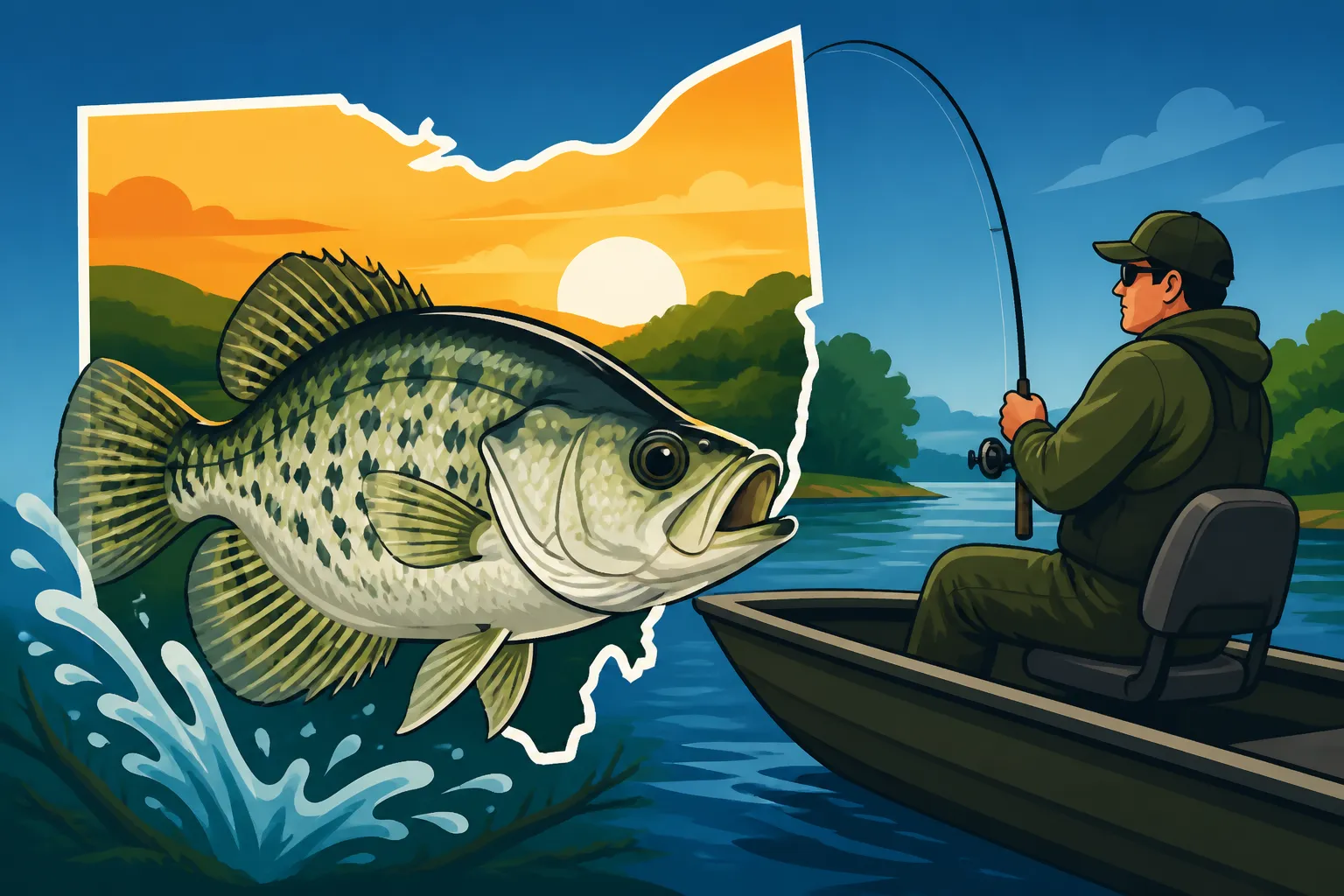
The most reliable indicator is often found on their dorsal fin. Black crappie typically have 7 or 8 dorsal spines, while white crappie usually have 5 or 6. Think of it like a little count; more spines, likely a black crappie. Another common differentiator is their body pattern. Black crappie tend to have more irregular, scattered black spots and speckles all over their body, giving them a "peppered" look. White crappie, on the other hand, often display distinct vertical bars or stripes along their sides, although these can sometimes be faint depending on water clarity and the fish's mood. Their body shape can also be a clue; black crappie tend to have a more rounded, deeper body profile, while white crappie are often a bit more elongated and slender. Both are fantastic to catch and even better to eat, so don't get too hung up on exact identification if they're biting! Understanding their subtle preferences, however, can lead you to more of one species over the other.
Crappie Behavior and Habitat Preferences
Crappie, regardless of species, are structure-oriented fish, and understanding this is fundamental to finding them. They love cover and anything that provides shade, ambush points, or protection from predators. This can include brush piles, submerged trees, docks, bridge pilings, rock piles, weed beds, and even subtle changes in bottom contour. They are also schooling fish, which is excellent news for anglers because if you find one crappie, you've likely found a whole school!
Black crappie tend to prefer clearer water with more vegetation and structure, often hanging closer to the thick stuff. You'll frequently find them nestled in dense submerged weeds, around standing timber, or under lily pads. White crappie are a bit more tolerant of murkier, more turbid waters and are often found in open water near channel drops, brush piles, or around bridge abutments in rivers and larger reservoirs. Both species are highly sensitive to light, which is why they often prefer shaded areas or deeper water during bright sunny days. Their activity levels, and thus their biting patterns, are heavily influenced by temperature, light, and baitfish availability. When water temperatures are comfortable and baitfish are abundant, crappie can be incredibly aggressive.
Life Cycle and Spawning Habits
Crappie have a fascinating life cycle that directly impacts where and when you'll find them throughout the year. Understanding their spawning habits is particularly crucial for successful spring fishing. As water temperatures rise in the spring, typically into the mid-50s to low 60s Fahrenheit, crappie begin to move from deeper wintering grounds to shallow waters to spawn.
During the spawn, male crappie will create nests in shallow areas, often near submerged brush, roots, or rocks, in water as shallow as 1-5 feet. They aggressively guard these nests, making them quite vulnerable and easy to catch. Females will lay their eggs in these nests, and then the males will protect the eggs until they hatch. This pre-spawn and spawning period, usually from April through June depending on the region and specific water body, is often considered the absolute best time of year to target crappie. Once spawning is complete, crappie will gradually transition back to deeper water as summer progresses, seeking out thermoclines and submerged structures where they can find comfortable temperatures and abundant food sources. In the fall, they often move shallower again as water temperatures cool, feeding heavily before retreating to deeper holes for the winter.
Top Ohio Crappie Fishing Spots: Where to Find the Best Action
Ohio is blessed with an abundance of fantastic crappie fishing opportunities, from massive reservoirs to quaint farm ponds and the backwaters of its rivers. Knowing where to start looking can sometimes feel like finding a needle in a haystack, especially with so many options. But trust me, with a little local knowledge and some persistence, you'll be on your way to crappie heaven.
Premier Lakes and Reservoirs for Crappie
Ohio boasts several large lakes and reservoirs that are renowned for their crappie populations. These waters often offer stable fisheries and the potential for some truly impressive slabs. Lake Erie, while famous for its walleye and perch, also holds decent populations of crappie in its shallower bays and tributaries, especially in the western basin. However, many inland reservoirs are more celebrated for their consistent crappie action.
Take for instance, Mosquito Creek Lake in northeast Ohio. This shallow, sprawling lake is a crappie paradise, known for its extensive standing timber and brush piles that offer prime habitat. Anglers often do very well here jigging around the timber or spider rigging along channel edges. Another standout is Indian Lake in Logan County. Its shallow, fertile waters are perfect for crappie, especially in spring, and there are numerous docks and submerged structures to explore. Alum Creek Lake near Columbus, famous for its muskie, also produces some excellent crappie, particularly around its many brush piles and submerged cover, often requiring anglers to explore deeper areas. Don't forget Buckeye Lake, which has made a fantastic comeback in recent years, offering abundant crappie populations around docks and in its many coves. These larger bodies of water, while intimidating at first, consistently produce great catches. Best Ohio Lakes for Crappie provides even more detailed information on specific locations.
Smaller Lakes, Ponds, and River Backwaters
While the big reservoirs get a lot of attention, don't overlook the incredible crappie fishing that can be found in Ohio's smaller lakes, local ponds, and river backwaters. These often less-pressured spots can be absolute gems, especially for those looking for a more relaxed fishing experience or quick access from urban areas.
Many Ohio State Parks feature smaller lakes that are regularly stocked and managed, providing excellent crappie opportunities. Places like Lake White or Rocky Fork Lake in southern Ohio, though not massive, can be incredibly productive, especially around any visible structure like downed trees or old docks. Beyond state parks, virtually every county in Ohio has local ponds, community lakes, or park lakes that hold crappie. These smaller waters are fantastic for shore anglers or those with kayaks and canoes. They often warm up faster in the spring, triggering the spawn earlier. For river anglers, exploring the oxbows, sloughs, and quiet backwaters of rivers like the Muskingum, Scioto, or Great Miami can yield surprising crappie catches. These areas often have less current and accumulate natural debris like log jams, creating perfect crappie habitat. Always check local regulations, as rules can vary by specific water body.
Crappie Fishing Near Major Ohio Cities
Living near a bustling city doesn't mean you have to travel hours to find great crappie fishing. Ohio's metropolitan areas often have fantastic fishing opportunities surprisingly close to home. This is a huge benefit for busy anglers or families looking for a convenient outing.
For those near Columbus, beyond Alum Creek, Hoover Reservoir offers good crappie fishing, particularly in its coves and around standing timber. Many of the Columbus and Franklin County Metroparks also feature ponds and lakes that are managed for fishing and can hold decent crappie populations. Near Cleveland, while Lake Erie dominates, inland lakes like Lake Rockwell or various municipal reservoirs can offer good crappie action. Exploring the tributaries and smaller lakes south and west of the city can also turn up overlooked spots. Anglers in the Cincinnati area can find crappie in the backwaters of the Ohio River, as well as in lakes like Caesar Creek Lake or Acton Lake in Hueston Woods State Park. Even Dayton has lakes like Eastwood Lake and various ponds within its park system that are worth exploring. The key in these urban areas is often asking at local bait shops or checking community fishing reports, as these smaller, local spots can be incredible but often fly under the radar.
Mastering the Seasons: When to Target Ohio Crappie
Crappie fishing in Ohio isn't just a spring fling; these fish can be caught year-round if you understand their seasonal movements and adjust your tactics accordingly. Each season presents unique challenges and opportunities, and knowing what crappie are doing underwater is your biggest advantage.
Spring Crappie: The Pre-Spawn and Spawn Frenzy
Ah, spring! This is the golden era for crappie anglers in Ohio. As the ice melts and water temperatures gradually climb into the 40s and then 50s, crappie begin their annual migration from deep wintering holes to shallower spawning grounds. The pre-spawn period, when temperatures are in the upper 40s to low 50s, sees crappie staging in slightly deeper water near their eventual spawning areas. They'll be hungry, feeding aggressively to build energy for the spawn. This is a fantastic time for tight-lining jigs or minnows along channel edges, points, or brush piles adjacent to shallow flats.
Once water temperatures hit the mid-50s to low 60s, the full-blown spawn kicks in. Crappie will be in extremely shallow water (1-5 feet) around visible cover like docks, submerged brush, lily pads, and standing timber. This is when fishing can be fast and furious! Small jigs (1/32 to 1/16 oz) under a bobber or slow-trolled minnows are incredibly effective. Look for males guarding nests, which are often dark, circular depressions. The bite can be aggressive, as they're protecting their eggs. Do Crappie Move Shallow in Spring in Ohio? is an excellent resource to understand this crucial movement. This is prime time to use lighter tackle, feeling every subtle tap as they inhale your bait. Many anglers consider this the easiest time to catch a limit.
Summer Crappie: Deep Water and Structure Fishing
As spring turns to summer and water temperatures soar into the 70s and 80s, crappie retreat from the shallow spawning grounds. Don't worry, they haven't disappeared; they've just gone deep! Summer crappie fishing often requires more specialized techniques and a good understanding of electronics. These fish will seek out cooler, more stable temperatures in deeper parts of the lake or reservoir, often holding tight to submerged structures.
Look for crappie suspending over deep channels, around main lake points, or clinging to the shady side of bridge pilings and deep brush piles. Often, they'll be in the thermocline if one exists, which is the layer of water where the temperature rapidly changes. Vertical jigging directly over these submerged structures with sensitive sonar is a highly effective strategy. You'll want to use heavier jigs (1/8 to 1/4 oz) or heavier weights with live minnows to get down to them quickly. Trolling with crankbaits or spider rigging with multiple rods at different depths can also cover a lot of water and help you locate schools. This is where a good fish finder from a brand like Humminbird or Lowrance really shines, helping you mark those submerged brush piles and schools of suspended fish.
Fall and Winter Crappie: Transitions and Ice Fishing Opportunities
Just when you think crappie fishing might be over, fall arrives with its cooling temperatures, and the fish often become active again. As the water cools from its summer highs, crappie will often move back into shallower areas, mirroring their spring movements, as baitfish also migrate. They'll feed aggressively to fatten up for the long winter ahead. Look for them around main lake points, channel swings, and brush piles in 10-20 feet of water. Jigs, minnows, and small crankbaits can all be effective during this transitional period.
When winter fully sets in and the lakes freeze over, crappie fishing takes on a whole new dimension: ice fishing! Ohio offers excellent ice fishing for crappie on many of its lakes. Crappie typically hold in deeper basin areas, near submerged humps, weed lines, or brush piles under the ice. Small jigs (1/32 to 1/8 oz) tipped with a wax worm, minnow head, or a tiny plastic tail are incredibly effective. Light lines (2-4 lb test) and sensitive rod tips are crucial for detecting the often subtle winter bite. Portable shelters and heaters can make the experience much more enjoyable. Always prioritize safety on the ice, checking thickness regularly. Ohio Ice Fishing Guide offers a comprehensive look into winter angling strategies, including for crappie.
Essential Techniques and Rigs for Ohio Crappie
Catching crappie consistently requires a versatile set of techniques. These fish can be finicky, changing their preferences based on water conditions, time of year, and even time of day. Having a few go-to presentations in your arsenal will ensure you're ready for whatever the crappie throw at you.
Jigging and Vertical Presentation
Jigging is arguably the most popular and often most effective method for catching crappie, especially when they are holding tight to structure or suspended in deeper water. The beauty of jigging is its simplicity and versatility. A small lead-head jig, typically ranging from 1/32 to 1/8 ounce, tipped with a soft plastic grub, tube, or minnow imitator, is all you need.
When crappie are shallow, a light jig under a bobber is incredibly effective. Cast it near cover, let it sit, and give it a slight twitch now and then. The bobber acts as both a strike indicator and a way to suspend your bait at a consistent depth. For deeper crappie, vertical jigging is key. This involves dropping your jig directly down to the depth where you're seeing fish on your sonar or where you know structure exists. Gently lift and drop the rod tip, imparting a subtle "dancing" action to the jig. The strikes can be very light, sometimes feeling like just a little extra weight on the line, so pay close attention. Experiment with different colors and jig head weights; chartreuse, white, and black/chartreuse are classic crappie colors. Many anglers swear by specific jig designs found easily on sites like Amazon, making it easy to stock up on your favorites. Best Jig Color for Ohio Crappie can give you more insights into what hues work best.
Live Bait Rigs: Minnows and Their Magic
While artificial lures are great, sometimes nothing beats the real thing, and for crappie, that often means a lively minnow. Live minnows are a classic crappie bait for a reason: they consistently produce fish, especially when the bite is tough or crappie are less active. Their natural scent and action are hard for a crappie to resist.
A simple hook-and-bobber rig is the most common way to fish minnows. Hook the minnow lightly through the lips or just behind the dorsal fin (be careful not to injure its spine) to allow it maximum movement. Suspend it under a small float at the depth crappie are holding. This is particularly effective in spring when crappie are shallow around cover, or in winter when they're lethargic under the ice. For deeper water, a simple drop-shot rig or a small split-shot rig can present a minnow naturally. The key is to use small, sharp hooks (Aberdeen or Kahle hooks in sizes 4-8 are common) that won't impede the minnow's action and will easily penetrate a crappie's papery mouth. How to Rig a Live Minnow for Crappie offers step-by-step guidance on setting up these effective rigs.
Spider Rigging and Trolling for Crappie
When crappie are spread out over a wide area or suspending in open water, covering ground is essential, and that's where techniques like spider rigging and trolling come in. These methods allow anglers to present multiple baits at varying depths and speeds, effectively "sweeping" an area to locate active fish.
Spider rigging involves using multiple rods (often 4-8 or more, depending on regulations) extending out from the boat, creating a "spider web" effect. Each rod typically has a minnow rig or a jig rig, set at a specific depth. The boat moves very slowly, often with an electric trolling motor, allowing the baits to cover a wide path. This is fantastic for targeting crappie that are suspended over a flat or along a subtle channel edge. You're essentially presenting a buffet to the fish, increasing your chances of finding a willing bite.
Trolling, on the other hand, often involves pulling small crankbaits or weighted jigs/minnows behind the boat at a slightly faster pace than spider rigging. This is effective for finding actively feeding crappie in large areas, particularly in bigger reservoirs during summer when they might be chasing baitfish. Experiment with different lure colors and diving depths until you hit the sweet spot. Both techniques require a bit more gear and boat control, but they can be incredibly productive for locating schools and racking up impressive numbers of fish once you dial them in.
Gearing Up for Crappie Success: Rods, Reels, and Tackle
Having the right equipment can make all the difference between a frustrating day on the water and a successful crappie limits. You don't need to break the bank, but investing in a few key pieces of crappie-specific gear will significantly enhance your experience and your catch rate.
Choosing the Right Rod and Reel Setup
Crappie fishing calls for light tackle. Their mouths are delicate, and their bites can be incredibly subtle, so sensitivity is paramount. A light to ultra-light action spinning rod is the standard choice for crappie anglers. Look for rods in the 5 to 7-foot range, with a fast or moderate-fast action tip that can detect those faint taps but still has enough backbone to handle a good-sized crappie. Longer rods are great for casting lighter jigs or for spider rigging, while shorter rods offer more control in tight quarters.
Pair your rod with a small, lightweight spinning reel, typically in the 1000 or 2000 series size. These reels are designed for light lines and offer smooth drag systems, which are essential when fighting crappie, preventing hooks from tearing out of their soft mouths. When you're browsing for gear, many reputable brands offer excellent entry-level and mid-range options that are perfect for crappie. You can often find great combos that match a rod and reel perfectly, making the choice easier, especially if you're just starting out, and online retailers like Amazon offer a vast selection.
Essential Lines, Lures, and Jigs
The line you choose is as important as your rod and reel. For crappie, light line is king. Most anglers use monofilament or fluorocarbon in the 4 to 6-pound test range. Monofilament is more forgiving with its stretch and is generally easier to handle for beginners. Fluorocarbon offers less stretch, greater sensitivity, and is nearly invisible underwater, making it a favorite for more experienced anglers. Braid can also be used, especially with a fluorocarbon leader, for ultimate sensitivity and strength, but it has no stretch, so you need to be careful with hook sets.
When it comes to lures, crappie jigs are a must-have. Stock up on a variety of jig head weights (1/32, 1/16, 1/8 oz) and colors. Pair these with soft plastic bodies like small grubs, tube baits, curly tail worms, and minnow imitations. Again, don't be afraid to experiment with colors like chartreuse, white, black, pink, and various combinations. Small spinnerbaits designed for panfish can also be effective, especially when crappie are aggressive. For live bait, ensure you have a good supply of small Aberdeen or Kahle hooks (sizes 4-8) and small split shots or bobbers. Having a diverse tackle box will ensure you're prepared for any crappie mood or condition.
Crappie Fishing Accessories and Electronics
Beyond the basic rod, reel, and tackle, a few key accessories and electronic aids can significantly improve your crappie fishing experience. A good pair of polarized sunglasses is invaluable for spotting submerged cover in shallow water and reducing glare. A long-handled landing net with soft mesh is also highly recommended; it makes landing bigger crappie much easier and is gentler on the fish if you plan to release them.
For boat anglers, a quality fish finder is almost essential, especially when targeting deeper or suspended crappie. Modern sonar units can show you baitfish, crappie schools, and submerged structures like brush piles and humps. Units with side imaging or down imaging can give you an even clearer picture of what's beneath and around your boat. A good electric trolling motor is also crucial for silent maneuvering and precise boat control, particularly when spider rigging or making multiple passes over a productive spot. Don't forget a comfortable seat, a reliable cooler for your catch, and perhaps a specialized crappie measuring board to quickly check your fish against Ohio's size limits.
Advanced Tips for Locating and Catching More Crappie
Catching a few crappie is one thing; consistently filling your livewell is another. It takes keen observation, an understanding of crappie behavior, and the ability to adapt. These advanced tips will help you go beyond the basics and truly unlock the potential of Ohio's crappie fisheries.
Reading Water and Identifying Crappie Structure
The single most crucial skill in crappie fishing is the ability to "read the water" and identify potential crappie holding areas. Crappie are ambush predators and require cover for both protection and feeding. Learn to look for visible signs of structure: boat docks, fallen trees, brush piles, standing timber, lily pad fields, and changes in the shoreline contour that suggest submerged features.
But it's not just about seeing the structure; it's about understanding why crappie might be there. During pre-spawn, they might be on a shallow flat adjacent to a deep channel. In summer, they'll be in the deepest, shadiest part of a brush pile. Consider light penetration; crappie hate bright light, so shady sides of docks, deep overhangs, or dense cover are often productive. Pay attention to changes in water color or current. Subtle depth changes (like a 2-foot drop-off near a flat) are often crappie highways. If you're on a boat, use your electronics not just to find fish, but to find the structure that holds them. Mark these spots on your GPS so you can return to them. Many of Ohio's best crappie spots, like the standing timber at Mosquito Creek Lake, are well-known for their abundant structure.
Adjusting to Weather and Water Conditions
Crappie are incredibly sensitive to changes in their environment, and successful anglers know how to adapt to prevailing weather and water conditions. A cold front, for instance, can shut down a hot bite almost instantly. When a cold front passes, crappie often become less active and move deeper, suspending or burying themselves in cover. In these situations, slowing down your presentation, using smaller baits, and focusing on deeper, denser cover is key.
Wind can also play a significant role. A light breeze can be beneficial, creating a "current" that positions baitfish and oxygenates the water. However, strong winds can make boat control difficult and muddy up shallow areas. On clear, sunny days, crappie will usually hold tighter to cover or move deeper, shying away from direct sunlight. Overcast days or low-light periods (dawn and dusk) often see crappie more active and willing to move out from cover. Water clarity and temperature are also critical. Dirty water might call for brighter, more contrasting jig colors or baits with more vibration. Knowing Best Time of Year for Ohio Crappie Fishing will often involve understanding these environmental shifts. Always be ready to change your bait, depth, retrieve speed, or even location based on what the conditions are telling you.
The Importance of Stealth and Patience
Crappie, especially larger ones, can be surprisingly wary. While they are often aggressive feeders, they can also be spooked easily, particularly in clear, shallow water. Approaching your fishing spot with stealth can make a huge difference. If you're in a boat, use your trolling motor sparingly and avoid loud noises. Casting from a distance to known cover before moving in too close is often a good strategy. For bank anglers, moving slowly and keeping a low profile can prevent startling fish.
Patience is equally vital. Crappie often bite in "waves." You might go 15-20 minutes without a bite, then suddenly catch three or four in quick succession. This is due to their schooling nature; a school might move through your area, or a feeding frenzy might suddenly kick off. Don't get discouraged by slow periods. Keep working your chosen spot, trying different depths and presentations. Sometimes, just leaving your bait motionless for an extra 10-20 seconds can be the trigger. Remember, if you find one crappie, there are usually more, so be patient and work the area thoroughly.
Ohio Crappie Regulations: Staying Legal on the Water
Fishing without understanding the local rules and regulations can quickly turn a fun day into a frustrating (and costly) one. Ohio has specific rules for crappie, just like other species, designed to protect the fishery and ensure sustainable populations for everyone to enjoy. It's every angler's responsibility to know and follow these guidelines.
Statewide Daily Limits and Size Restrictions
Like most game fish, crappie in Ohio are subject to daily bag limits and sometimes size restrictions. These limits are put in place by the Ohio Department of Natural Resources (ODNR) to manage fish populations and prevent overfishing. While specific numbers can vary over time, a general crappie daily limit is often quite generous, allowing anglers to keep a good number of fish. However, it's crucial to consult the most current Ohio fishing regulations booklet or the ODNR website before you head out, as these numbers can change annually.
The daily limit refers to the maximum number of crappie an individual angler can possess in one day. Once you reach your limit, you must stop fishing for crappie for that day. Size limits, when imposed, dictate the minimum length a crappie must be to be legally kept. For crappie, a common minimum length might be around 9 or 10 inches, but again, this can vary. Catching a crappie under the size limit means it must be immediately released back into the water unharmed. Ohio Crappie Daily Limit and Is There a Minimum Size Limit for Crappie in Ohio? are good resources to check the most current figures. Always keep a measuring device handy, and if there's any doubt about a fish's size, it's best to release it.
Special Regulations for Specific Lakes
While statewide regulations provide a baseline, many specific lakes or bodies of water in Ohio have their own unique, special regulations that supersede the general rules. These special regulations are often implemented to address specific conservation needs, improve fish quality, or manage unique circumstances within that particular fishery.
For crappie, this might mean a reduced daily bag limit on a particular lake that is experiencing pressure, or a different minimum size limit to promote the growth of larger fish. For example, a lake known for producing trophy crappie might have a higher minimum size limit to protect those larger breeding fish. Conversely, a lake with an overpopulation of stunted crappie might have no size limit or a higher daily limit to encourage harvest. Always check the "Special Regulations" section in your Ohio fishing guide for the specific lake you plan to visit. Ignoring these localized rules, even unknowingly, can lead to fines. Ignorance of the law is not an excuse. Familiarizing yourself with Ohio Fishing Regulations Every Angler Should Know will save you headaches.
Understanding Your Fishing License Requirements
Before you even cast a line for crappie in Ohio, you absolutely need a valid Ohio fishing license. This is a fundamental requirement for nearly all anglers, with very few exceptions. Licenses are crucial for funding conservation efforts, fish stocking programs, habitat restoration, and enforcement by wildlife officers.
Ohio offers various types of fishing licenses, including annual, multi-year, and short-term options for both residents and nonresidents. There are also special licenses and discounts for seniors, youth, and disabled veterans. Generally, anyone age 16 and older needs a license. Make sure your license is current and that you carry it with you while fishing, either a physical copy or an electronic version on your phone. Wildlife officers routinely check for licenses, and fishing without one can result in significant fines. Don't take the chance! Make sure you understand Ohio Fishing License Guide for Residents and Nonresidents and always have your license readily available.
Enjoying Your Catch: Caring for and Cooking Crappie
So, you've had a successful day on the water and your cooler is full of delicious Ohio crappie. Now what? Proper handling and preparation are key to ensuring your hard-earned catch tastes as good as possible. Crappie are renowned for their delicate, flaky white meat, making them a favorite table fare for many anglers.
Handling and Keeping Your Crappie Fresh
The care of your crappie starts the moment you catch them. The goal is to keep the fish as fresh and cool as possible to preserve their quality. The best way to do this is to immediately place them in a cooler filled with ice or in a livewell with fresh, aerated water. If using a livewell, try not to overcrowd it, as this can stress the fish and reduce their quality.
For ice, a good ice-to-fish ratio is important; don't just put a few cubes on top. Submerging the fish completely in an ice slurry (a mix of ice and a little water) cools them down rapidly and helps maintain their texture. Avoid leaving fish in the sun or in a dry bucket for extended periods, as this will quickly degrade the meat. If you're on an extended trip, consider bleeding your crappie immediately after catching them. A quick slit behind the gills will allow blood to drain, resulting in whiter, cleaner fillets and a better taste. The fresher you keep them on the water, the better they'll be when they hit your plate.
Cleaning and Filleting Crappie
Cleaning crappie is a relatively straightforward process, and with a little practice, you'll become a filleting pro in no time. You'll need a sharp filleting knife, a sturdy cutting board, and a clean bucket or bowl for your fillets. Most anglers choose to fillet crappie, rather than scale and gut them whole, as the fillets are boneless and easy to cook.
Start by making a cut behind the crappie's gill plate down to the backbone. Then, turn your knife and run it along the backbone towards the tail, separating the fillet from the rib cage. Once the fillet is off, you can remove the skin by laying the fillet skin-side down, holding the tail end firmly, and running your knife at a slight angle between the meat and the skin. Be sure to remove any dark red meat (the lateral line), as this can have a stronger, "fishier" taste. Rinse your fillets thoroughly in cold water to remove any scales or stray bits, then pat them dry with a paper towel. This process ensures you get clean, delicious, boneless pieces of fish perfect for cooking.
Delicious Crappie Recipes
Crappie's mild, sweet flavor and flaky texture make it incredibly versatile in the kitchen. There are countless ways to prepare them, from classic fried fish to healthier baked options. For a truly classic experience, you can't go wrong with pan-fried crappie.
Classic Pan-Fried Crappie: Dip your clean, dry crappie fillets in a milk or egg wash, then dredge them in a seasoned breading mix (cornmeal, flour, salt, pepper, and your favorite spices work great). Fry them in hot oil (vegetable, peanut, or canola oil work well) until golden brown and flaky, usually just 2-3 minutes per side. Serve immediately with tartar sauce, lemon wedges, and your favorite side dishes like coleslaw or hushpuppies.
For a lighter option, crappie fillets can be baked or broiled. Simply season them with salt, pepper, garlic powder, and a squeeze of lemon juice, maybe a pat of butter, and bake at 375°F (190°C) for 10-15 minutes or until cooked through. Crappie also shines in fish tacos, grilled in foil packets with vegetables, or even made into fish cakes. The key is not to overcook them, as their delicate flesh can dry out quickly. Enjoying your catch with family and friends is truly the best part of any fishing adventure!
| Crappie Species | Dorsal Spines | Body Pattern | Water Preference | Typical Habitat |
|---|---|---|---|---|
| Black Crappie | 7-8 | Scattered spots | Clearer water | Heavy vegetation, standing timber, docks |
| White Crappie | 5-6 | Vertical bars | Turbid water | Open water, channel edges, bridge pilings |
Disclaimer
This article is for general informational purposes only and does not constitute professional advice. Laws, prices and regulations vary by location and change over time. Consult a qualified professional for guidance on your specific situation.