Ohio State Record Steelhead Trout
It’s a thought that crosses every angler’s mind: what would it be like to hook into a fish so immense, so legendary, that it etched your name into the state record books? For those of us who spend our seasons chasing chrome, the idea of catching the Ohio state record steelhead trout is a powerful, almost mystical, dream. This guide isn't just about a number or a name; it’s about understanding the journey, the fish, and the immense satisfaction that comes with pursuing such an incredible challenge in Ohio's waters.
The Elusive Ohio State Record Steelhead Trout
Let's be honest, the pursuit of a state record isn't for the faint of heart. It requires an incredible amount of dedication, skill, and, let's face it, a healthy dose of luck. While many of us are thrilled just to land a beautiful 25-inch steelhead, the ones that become legends are in a league of their own. They're fish that have defied odds, outsmarted countless anglers, and grown to truly magnificent proportions.
What Makes a Steelhead a Record Breaker?
When we talk about a record-breaking steelhead, we're typically looking at exceptional weight and length. These aren't your average, run-of-the-mill fish. We're talking about individuals that have spent multiple years gorging themselves on Lake Erie's abundant forage, returning to the rivers as massive, muscular specimens. It's a testament to the health of the Lake Erie fishery and the stocking programs that support these incredible runs.
The criteria for a state record are pretty stringent, and for good reason. It's not just about catching a big fish; it's about catching the biggest documented fish of its kind. This involves careful measurement, accurate weighing on certified scales, and often witness verification. It’s a process designed to ensure the integrity of the record, making the achievement all the more prestigious. The sheer fight a fish of this caliber puts up is a story in itself, pushing tackle and angler to their absolute limits in the often powerful and unforgiving currents of Ohio's steelhead rivers.
The Current Ohio State Record Steelhead Details
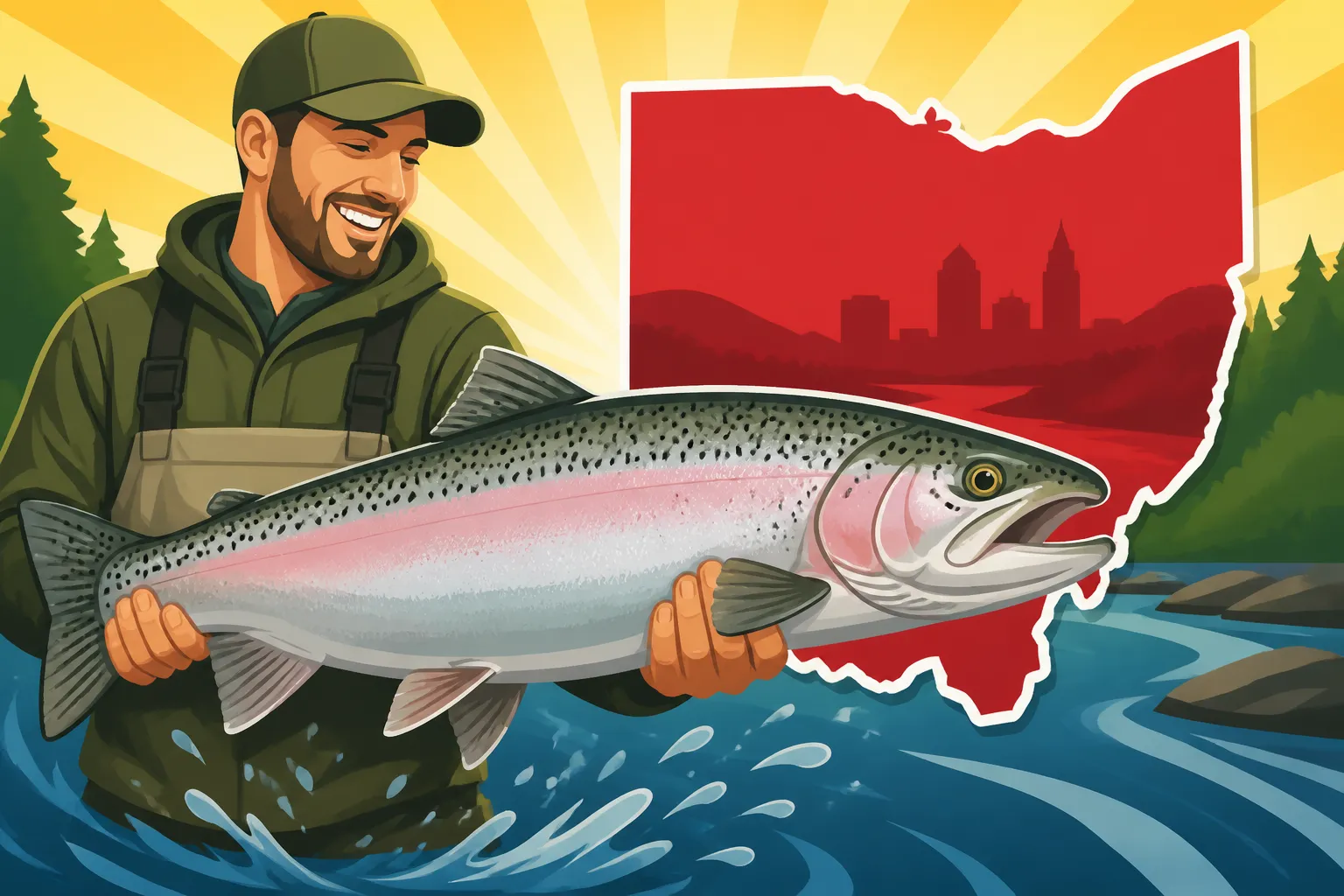
While the exact figures for state records can sometimes shift with new, monumental catches, the current Ohio state record steelhead stands as a legendary achievement in the annals of Ohio fishing. This wasn't just a big fish; it was a behemoth, a testament to what Lake Erie and its tributaries can produce. It’s the kind of fish that makes you re-evaluate your biggest catch and inspires dreams of what might be lurking in the next deep pool or swift run.
The angler who landed this incredible specimen undoubtedly had a story to tell, a battle etched into memory. Picture the scene: a cold, crisp Ohio morning, the rush of a tributary river, and then a sudden, violent strike that nearly rips the rod from your hands. The ensuing fight would have been an epic struggle, with the powerful steelhead using the current to its advantage, making blistering runs, and testing every knot and ounce of drag. Bringing such a fish to net, especially in the often-turbulent waters these fish inhabit, is a monumental accomplishment, requiring a blend of skill, patience, and sheer willpower.
Where Do Record Steelhead Come From in Ohio?
Ohio isn't just known for its football; it's renowned among anglers for its world-class steelhead fishery. These magnificent rainbow trout, which migrate from Lake Erie into its tributary streams to spawn, offer some of the most exciting and challenging fishing opportunities in the state. And it's from these very waters that record-breaking fish emerge.
Ohio's Lake Erie Tributaries: Steelhead Alley
The answer to where these colossal steelhead come from is quite simple: Ohio's Lake Erie Walleye Grounds and the incredible network of rivers that flow into it. Known affectionately as "Steelhead Alley," this region encompasses numerous rivers like the Grand River, Chagrin River, Rocky River, Vermilion River, and Conneaut Creek. These are the arteries through which steelhead migrate, presenting anglers with unparalleled opportunities. You can learn more about these specific rivers in our Best Ohio Rivers for Steelhead guide.
These rivers provide the perfect habitat for steelhead to complete their spawning runs. They offer varied water conditions, from deep pools to swift riffles, and plenty of cover. The Ohio Department of Natural Resources (ODNR) plays a crucial role in maintaining this fishery through regular stocking programs, ensuring a healthy population of fish returns year after year. While many fish are stocked as juveniles, they spend years growing to immense sizes in the nutrient-rich waters of Lake Erie before making their way back to these rivers. This unique life cycle contributes significantly to the trophy potential of Ohio's steelhead. If you're curious about their journey, our article on the Steelhead Trout Life Cycle in Lake Erie Tributaries dives deep into this fascinating process.
Factors Contributing to Trophy-Sized Steelhead
So, what makes a steelhead grow to such gargantuan proportions that it becomes a contender for a state record? A combination of factors contributes to these true giants of the freshwater world. Primarily, it's the rich and abundant forage base available in Lake Erie. Steelhead are opportunistic predators, and the lake offers a smorgasbord of baitfish, insects, and crustaceans, allowing them to pack on weight rapidly.
Secondly, these record fish are often older, more mature individuals that have survived multiple spawning cycles and evaded countless predators and anglers. Their longevity is a testament to their resilience and perhaps a bit of good fortune. Excellent water quality in both Lake Erie and its tributaries, coupled with well-managed stocking programs, ensures that these fish have the optimal conditions to thrive. Finally, the sheer number of steelhead stocked into Ohio's rivers means that statistically, there's a greater chance for some individuals to grow to exceptional sizes, creating the potential for those rare, record-breaking encounters.
Chasing the Dream: How to Target a Record Steelhead
Landing any steelhead is a thrill, but targeting a potential state record requires a different level of preparation, skill, and mental fortitude. These fish aren't caught by accident; they're the result of careful planning, relentless effort, and knowing exactly what it takes to tempt and land a true giant.
Essential Gear for Trophy Steelhead
You wouldn't bring a butter knife to a sword fight, and the same goes for targeting trophy steelhead. Your gear needs to be up to the task of handling a fish that could potentially weigh 15 pounds or more and possess incredible strength. A medium-heavy to heavy action rod, typically 9 to 11 feet in length, offers the backbone needed for powerful hook sets and controlling large fish in strong currents. Match this with a robust spinning reel, sized 3000-4000, or a capable centerpin reel, both with a smooth, reliable drag system.
Line choice is critical. Many anglers opt for a main line of 10-15 lb braided line for its sensitivity and strength, paired with a fluorocarbon leader of 8-12 lb test. Fluorocarbon is nearly invisible underwater and incredibly abrasion-resistant, which is essential when fishing around rocky river bottoms. Don't skimp on hooks either; sharp, strong hooks are non-negotiable. You can find a fantastic selection of all this essential gear, from sturdy rods and reels to a variety of lines and terminal tackle, readily available on Amazon to get you started. And when you finally hook into that monster, a large, deep landing net with a rubberized mesh is invaluable for safely bringing the fish ashore and minimizing harm. Our Best Lures for Ohio Fishing guide also has some great ideas for what to tie on.
Advanced Techniques for Big Steelhead
Trophy steelhead often hold in specific, deep pockets or behind large structure, making them challenging to reach and entice. Advanced techniques are often required to fool these wary giants. Float fishing, using a bobber to present your bait naturally with the current, is arguably the most popular and effective method. This allows your bait to drift naturally into strike zones without spooking the fish. For those who prefer a more direct approach, drift fishing with offerings like cured spawn bags, beads, or small jigs, meticulously weighted to tick the bottom, can be deadly. These baits mimic natural food sources the steelhead are accustomed to.
Fly fishing offers its own set of advanced challenges, particularly with spey casting, which allows anglers to cover vast stretches of water with minimal effort and present large flies like streamers or egg patterns. Understanding Steelhead Trout Diet and Feeding Habits is crucial here, as matching your presentation to what they're actively feeding on can make all the difference. Reading the water, identifying current seams, deep pools, and areas of cover where big fish might be resting, is a skill honed over countless hours on the river. Our comprehensive guide on Ohio Steelhead Fishing Techniques delves into these methods in more detail, and learning How to Read Steelhead Holding Water will significantly increase your odds.
The Importance of Persistence and Timing
If you’re seriously considering chasing a state record steelhead, prepare for the long haul. Persistence is not just a virtue; it’s a requirement. Steelhead runs can be notoriously inconsistent, heavily influenced by weather patterns, rainfall, and water levels. Some days the river will be quiet, the fish seemingly vanished; other days, it can explode with activity. Putting in the hours, often in less-than-ideal conditions, is what separates the dreamers from the achievers.
Timing is equally crucial. While steelhead are present in the rivers for an extended period, there are often peak windows when larger fish are more concentrated or actively feeding. Understanding When Ohio Steelhead Runs Start and how they progress through the seasons can give you a significant advantage. Furthermore, paying attention to sudden weather changes, like a warm rain that boosts river flows, can trigger new pushes of fish. Our article on the Best Time to Fish for Steelhead After Rain can help you capitalize on these events. The angler who consistently shows up, adapts to conditions, and learns from every outing is the one who puts themselves in the best position for that once-in-a-lifetime encounter.
The Process of Documenting a Potential Record Fish
The moment you realize you might have a state record on your hands is exhilarating, but it's also when meticulous attention to detail becomes paramount. It's not enough to simply catch a giant; you have to prove it, and the verification process is rigorous.
Catch, Care, and Measurement
First and foremost, safely landing the fish is critical. A large, rubberized landing net is your best friend here, as it protects the fish and helps you secure it quickly. Once landed, if you intend to keep it for a record, responsible handling is key. If you're not going for the record but still caught a monster, proper catch and release techniques, as detailed in our Best Way to Handle and Release an Ohio Muskie guide (principles apply across species), are vital for the fish's survival. For a record, speed and accuracy in measurement are paramount. You'll need an accurate measuring tape to get the total length and, ideally, the girth of the fish before placing it into a livewell or on ice if you intend to weigh it.
The clock starts ticking once the fish is out of the water. If you plan to register it as a record, it must be weighed on a certified scale, usually found at local grocery stores, bait shops, or meat processors. Before that, keep the fish cool and wet to preserve its weight and condition. Having a witness or two present during the weighing process is also highly recommended, as their testimony will be crucial during the official verification steps.
Official Verification Steps
Once you have your potential record-breaker safely measured and weighed, the next step is to contact the Ohio Department of Natural Resources (ODNR). They are the ultimate authority for verifying state fishing records. You'll typically need to fill out specific paperwork, which includes details about the catch (date, location, method), photographs of the fish, and sworn statements from witnesses and the certified scale operator.
The ODNR will review all submitted information, and in some cases, may even wish to inspect the fish or its remains (if kept) to confirm species identification. This thorough process ensures that all state records are legitimate and accurately reflect the incredible fishing opportunities available in Ohio. It's a testament to the integrity of the state's record-keeping program and the hard work of the anglers who chase these legendary fish. Knowing Ohio Fishing Regulations Every Angler Should Know can help you avoid any pitfalls during this exciting process. For an overview of other big catches, check out our Ohio State Record Fish by Species post.
| Characteristic / Method | Typical Ohio Steelhead | Trophy Steelhead (Potential Record) |
|---|---|---|
| Weight | 5-10 lbs | 15+ lbs (Legendary Status) |
| Length | 20-28 inches | 30+ inches |
| Age | 2-4 years | 5-7+ years |
| Gear | Medium-light spinning/fly | Heavy action spinning/fly, strong leader |
| Lures/Bait | Spawn bags, beads, small jigs | Larger spawn bags, bigger beads, streamers |
| Difficulty to Catch | Moderate | Extremely High |
| Likely Location | Any Lake Erie Tributary | Specific, deep holding pools, current seams |
The pursuit of the Ohio state record steelhead trout is more than just fishing; it's an adventure, a quest that combines skill, patience, and a deep understanding of these magnificent fish and their environment. While few of us will ever officially hold the record, the dream keeps us coming back, casting our lines into the cold, clear waters of Ohio's Steelhead Alley, forever hoping for that one legendary bite. The real prize, perhaps, isn't just the fish itself, but the thrill of the chase and the stories we gather along the way.
Disclaimer
This article is for general informational purposes only and does not constitute professional advice. Laws, prices and regulations vary by location and change over time. Consult a qualified professional for guidance on your specific situation.